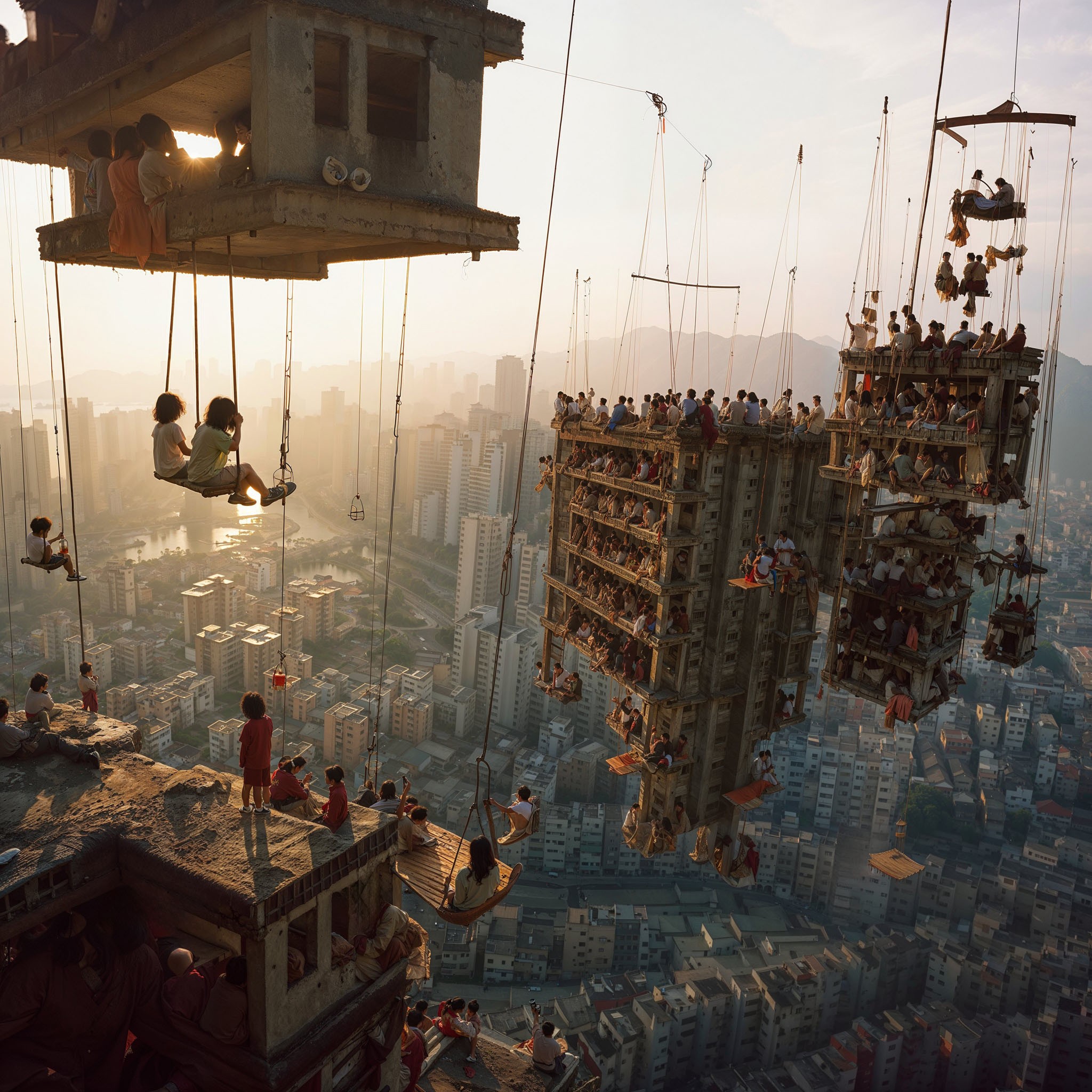
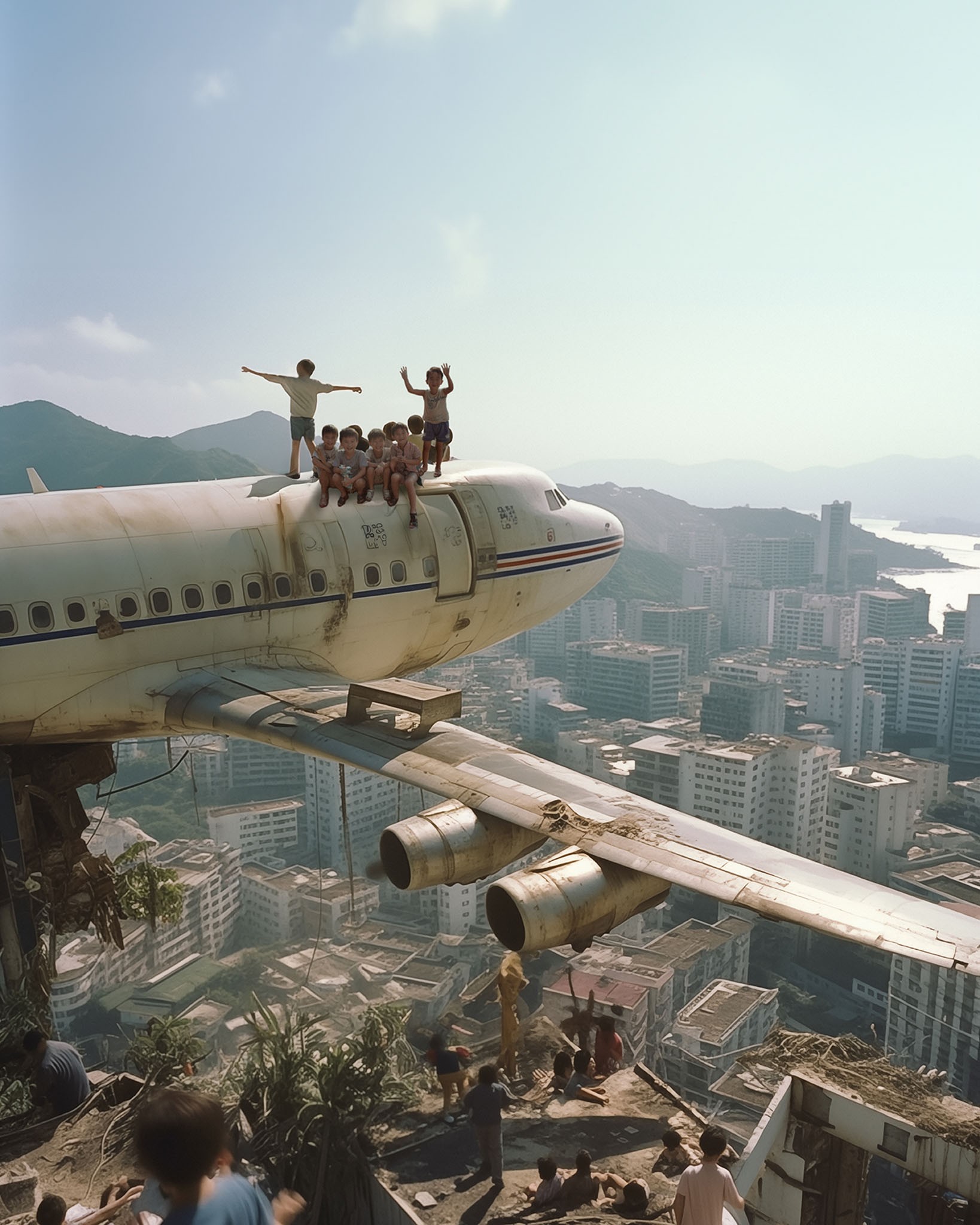
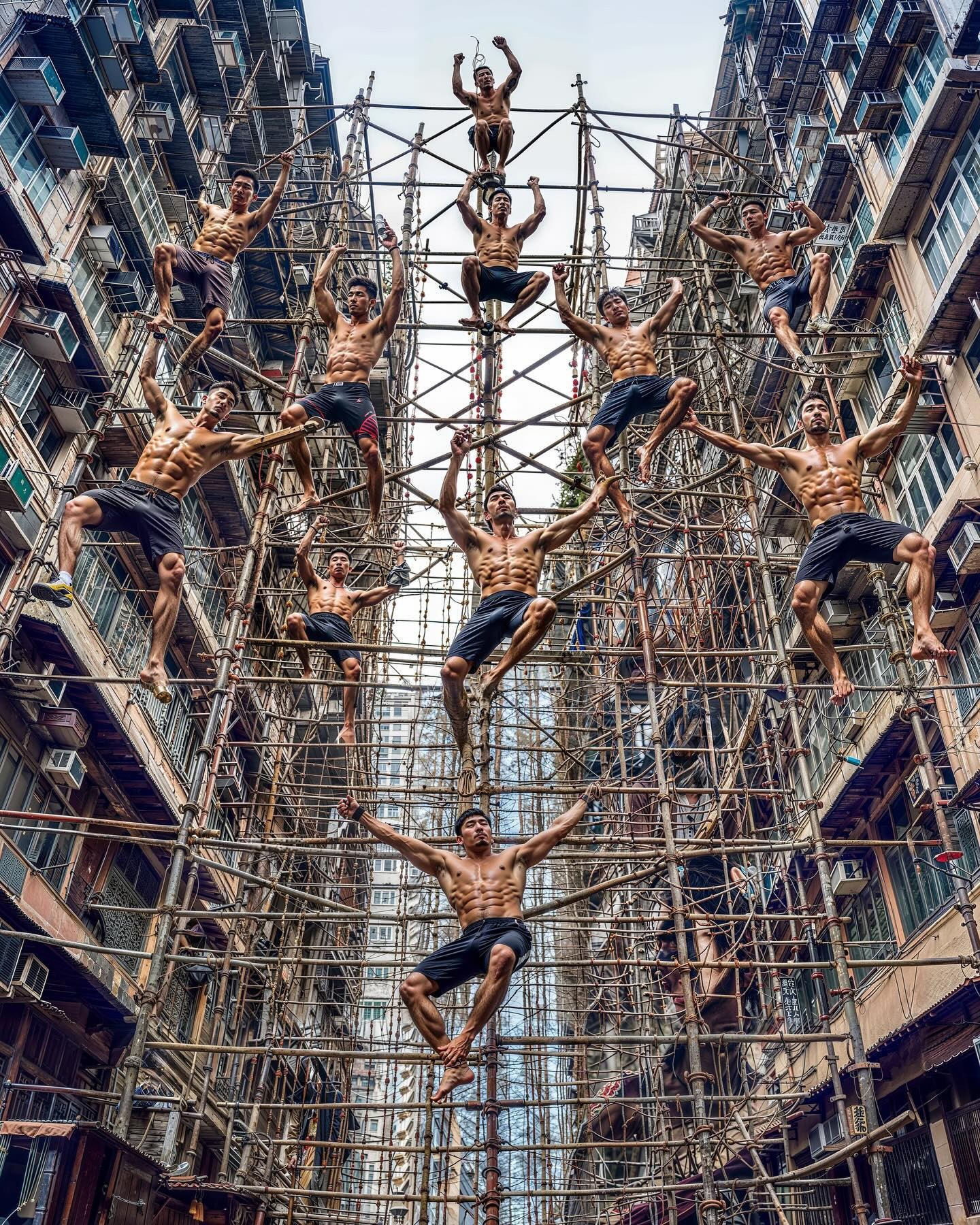
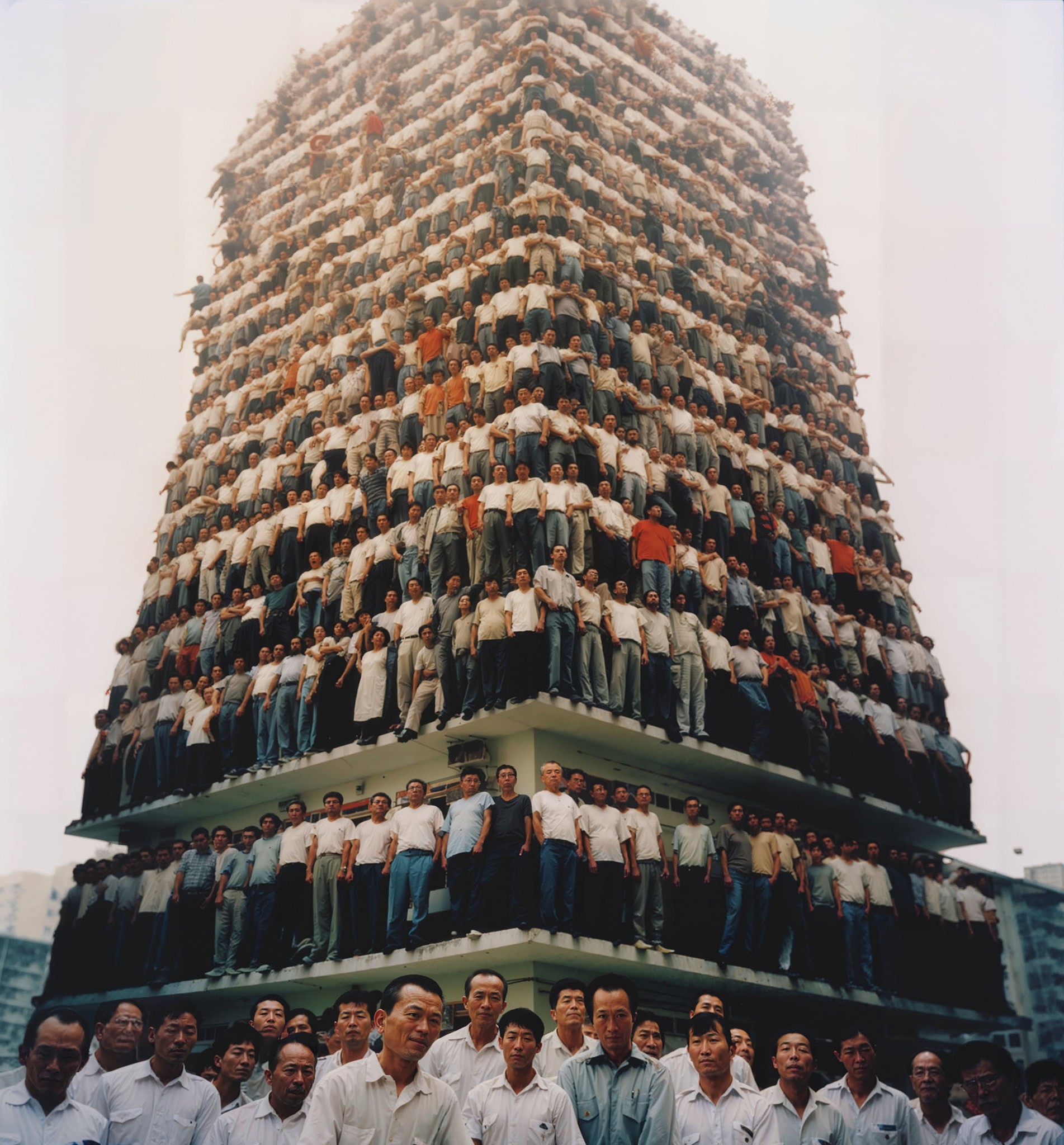
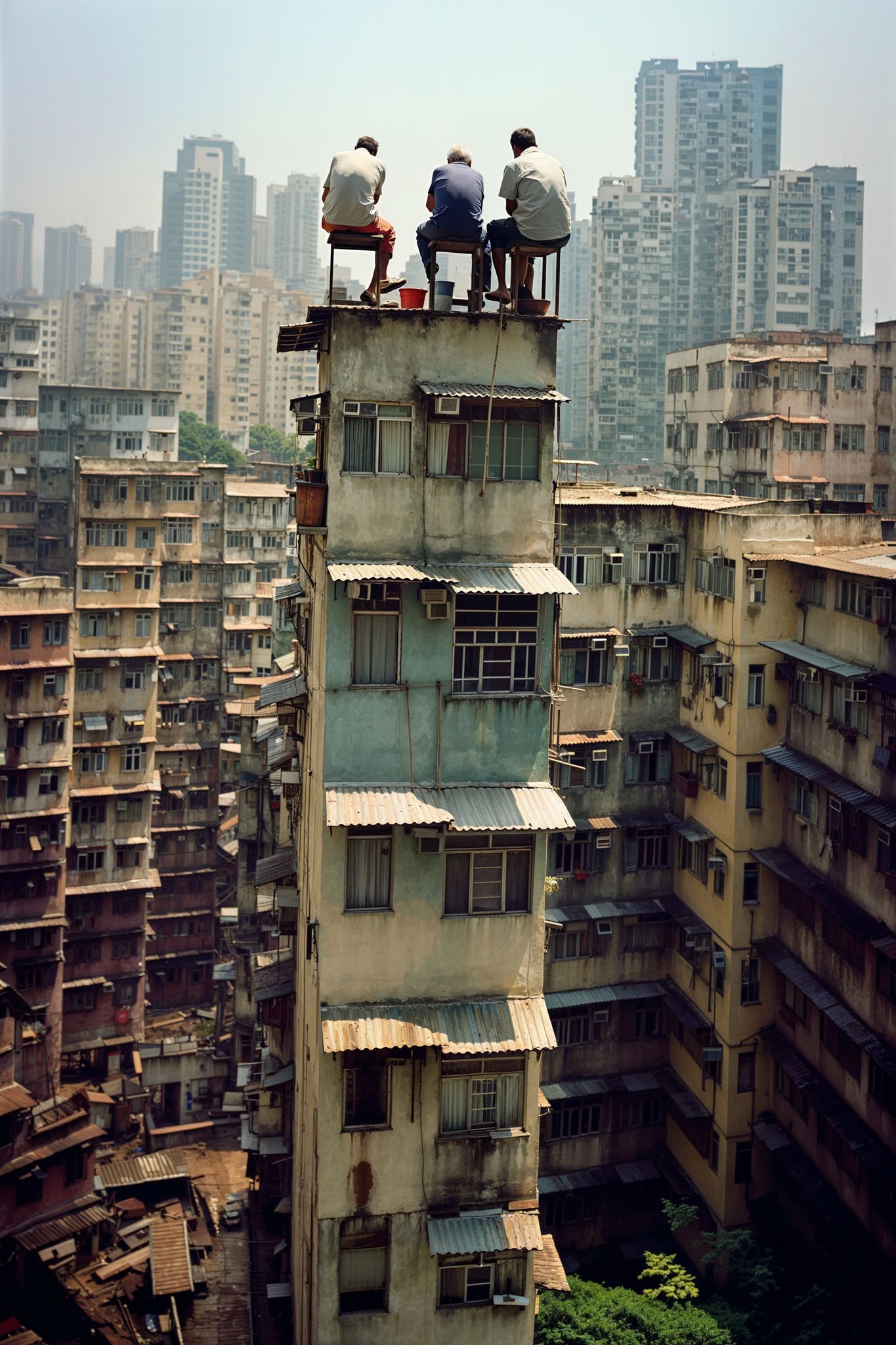
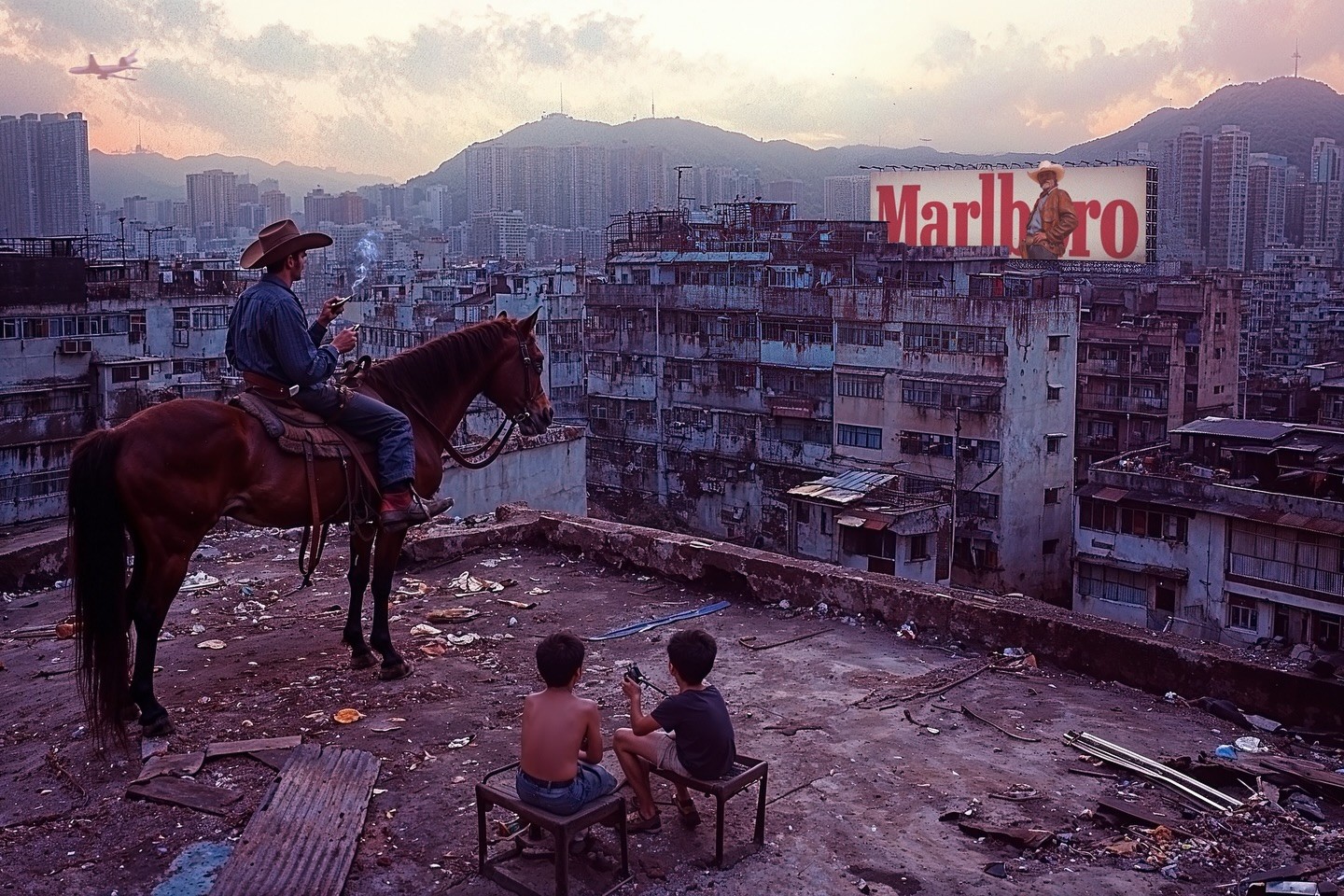
CNTRFLD. I guess you have seen the new Louis Koo film "Twilight of the Warriors - Walled In!" When did you first discover Hong Kong's Kowloon Walled City, the most infamous and misunderstood high-rise community? And what made you start recreating stories using AI?
BT. Yes, and I think most Hong Kongers watched it as well. It’s a very thrilling action movie, and I’m glad it brought the history of my city back into the spotlight. The site of the Kowloon Walled City was demolished in 1994, so I never had the chance to visit it. I knew nothing about the place until one day after school when I played my first PlayStation 1 adventure game, “Kowloon’s Gate,” which was designed based on the Kowloon Walled City. I was drawn into its eccentric world and developed an interest in discovering more about it.
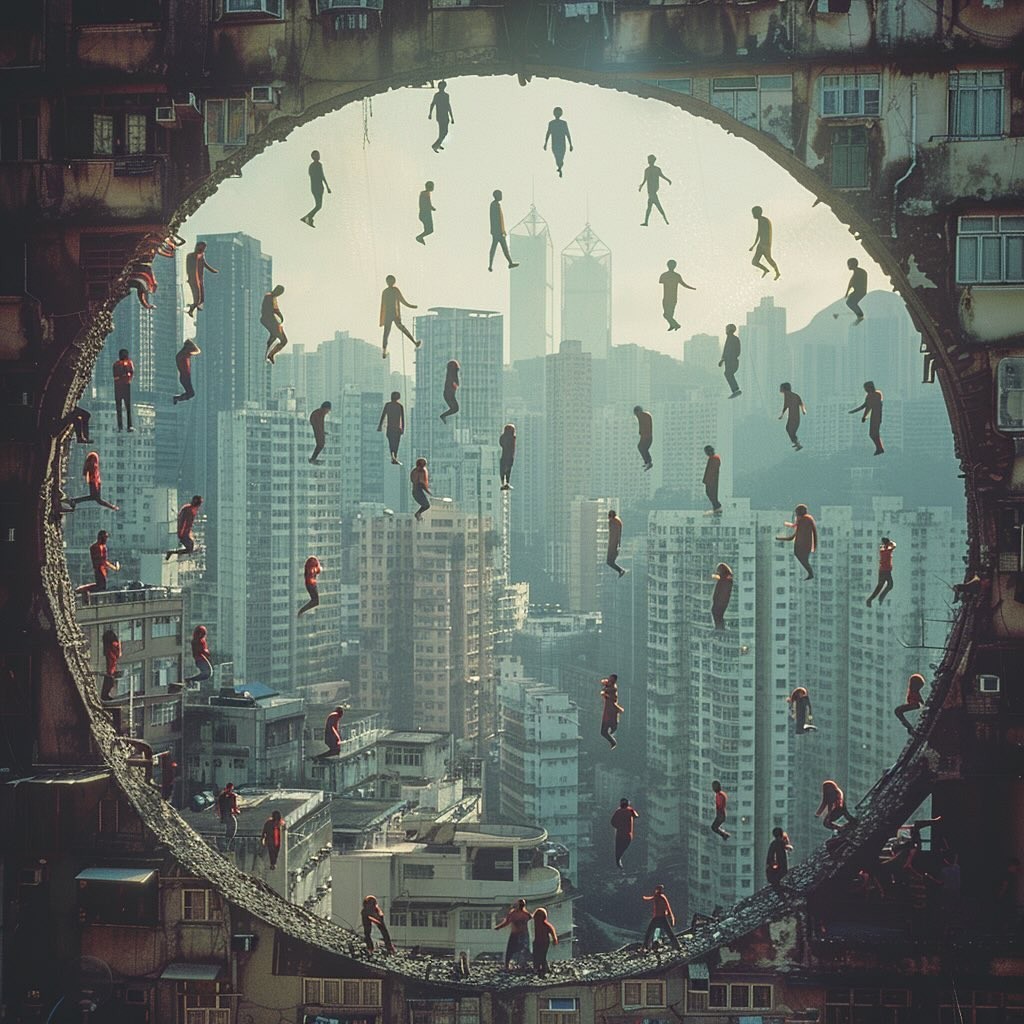
In fact, you can see its influence even without being there. The Kowloon Walled City inspired the Cyberpunk aesthetic and appears in the art direction of popular culture, anime, and movies, such as Batman and John Wick.
In real life, I’ve been working as an art director for more than 20 years. My use of AI image generation started out of FOMO because everyone was saying AI would take our jobs. So, I began learning to use the tool, starting with a topic that inspires me the most. Without too much planning, I started posting my works on Instagram and received positive feedback. Eventually, it evolved into a themed project.
CNTRFLD. Have you read *High-Rise* by J.G. Ballard? It's a story based on modern living in London, offering an abstract reflection of fears stemming from overpopulation, overcrowded spaces, and skyscrapers. Later, it was made into a dystopian sci-fi film about modern living, ending with affluent residents descending into violent chaos. In contrast, Kowloon Walled City was the most chaotic place to live and manage, yet a decentralised system seemed to work. Why do you think that is? Maybe it has something to do with the mindset of Hong Kong people?
BT. I haven't read "High Rise" by JG Ballard, but it seems its themes and narrative contrast with those of Kowloon Walled City. Despite its reputation as one of the most chaotic places to live, Kowloon Walled City functioned through a decentralised system that seemed to work for its residents. From the words of the people I interviewed, they lived next door to crimes, drugs, and prostitution, but they didn’t feel their everyday life was dangerous. In fact, their memories were warm.
Firstly, the majority of residents were low-income working families who had nothing to do with triad activities. Additionally, Hong Kong people used to have a strong sense of community, which could have fostered cooperation and mutual support despite the lack of formal governance. An ex-resident told me there was self-regulation in the Walled City, and the “gangsters” wouldn’t harm the people inside. I believe the resilience of Hong Kong people also played a crucial role in making the community work.
CNTRFLD. Can you describe a little about yourself, your childhood, and how you came to pursue a career as a creative and now artist? What was your journey in digital art and now AI, and were there pivotal moments or influences that shaped your artistic identity?
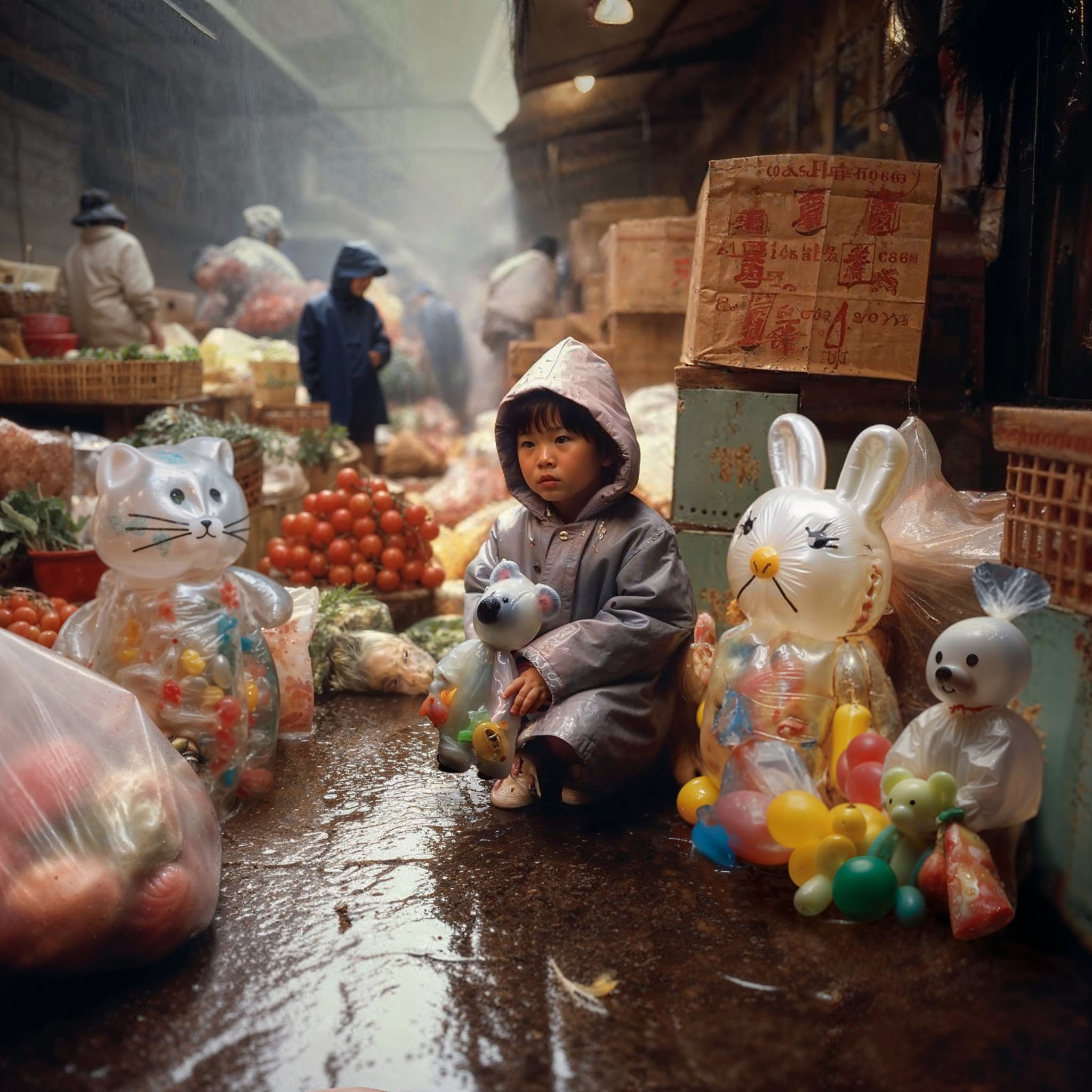
BT. I was born and raised in Hong Kong, a Gen Y. My upbringing was challenging—I still have vivid memories of living in temporary housing (later in public housing) in Fanling. Our family of five lived in a 100-square-foot metal-sheeted “hut” with a bunk bed. The poverty and small space make me feel connected to the stories about the Walled City. That said, my childhood memories were happy. I was three years old, riding a tricycle with my two-year-old sister in the back seat, traveling between alleys without parental supervision, or catching insects and chewing wildflowers in the bushes after school. Besides the stories of the Walled City, some of my works are about my childhood memories, like the little girl waiting in the rain with her imaginary plastic bag friends. My mother ran a frozen meat shop, and I often had to wait for her to finish work and take me home.
I didn’t have much entertainment as a kid, so I spent a lot of time at the public library reading illustrated books and drawing on paper. Naturally, I decided I liked "drawing things" and wanted to become an artist. I was accepted into the School of Design at Hong Kong Polytechnic University, and my first job was as an assistant art director at McCann Erickson. Although creating for commercials isn’t the same as creating “art”—it’s more of a customer service role—after many years, I felt I needed an outlet for creativity and artistic expression. Without much planning or intention, I started my page, and luckily, it got noticed. I have to say it all happened very randomly, but in a good way.
CNTRFLD. Have you met Greg Girard? His book City of Darkness is a great source for Kowloon Walled City.
BT. I’ve contacted Greg for approval to reference his photographs since I started the page. He has been very generous, and I was fortunate to meet him in person during his trip to Hong Kong for the M+ event this April. I’m very lucky that he agreed to an interview with me, which I then made into an AI movie. It was a very experimental crossover between traditional photography and AI photography, blending historical facts with fantasy, hopefully it can change the impression of those who thinks AI arts are “soulless” or “unoriginal”.
CNTRFLD. Can you share any specific artists, movements, or cultural influences that have played a significant role in shaping your artistic style and vision?
BT. I grew up in Hong Kong, and like many of us, I was heavily influenced by Japanese anime. I particularly admire the comic artist Hirohiko Araki and artist Hajime Sorayama, as well as the humour of Stephen Chow. You might notice that some of my works have a child-like quality, heavily inspired by popular culture, anime, and manga.
There are countless artists who inspire me, such as Chagall and Miró. I tend to be attracted to works that show childishness and innocence with a touch of playfulness. Recently, I admire James Jean.