“I think identity shouldn’t be fixed into one category. We can exist across many categories—even contradictions.”— Young-jun Tak
CNTRFLD. Your work at Singapore Biennale 2025, Love Was Taught Last Friday, explores how skills and knowledge are passed from one person to another through the body. The Biennale’s theme, Pure Intention, invites us to think about everyday rituals, care, and the values behind our actions. How does this work reflect your thoughts on intention, learning, and what we choose to carry forward?
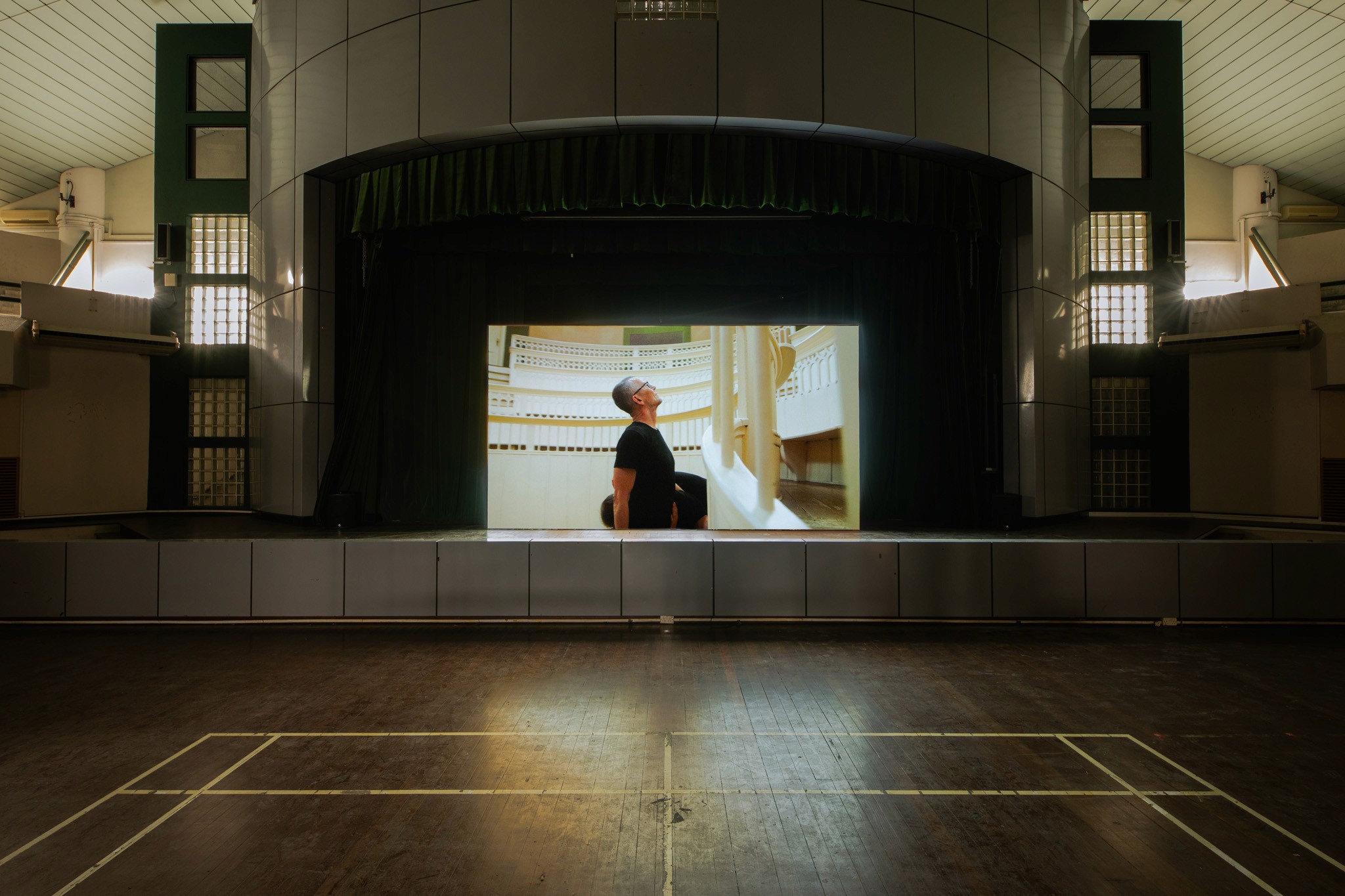
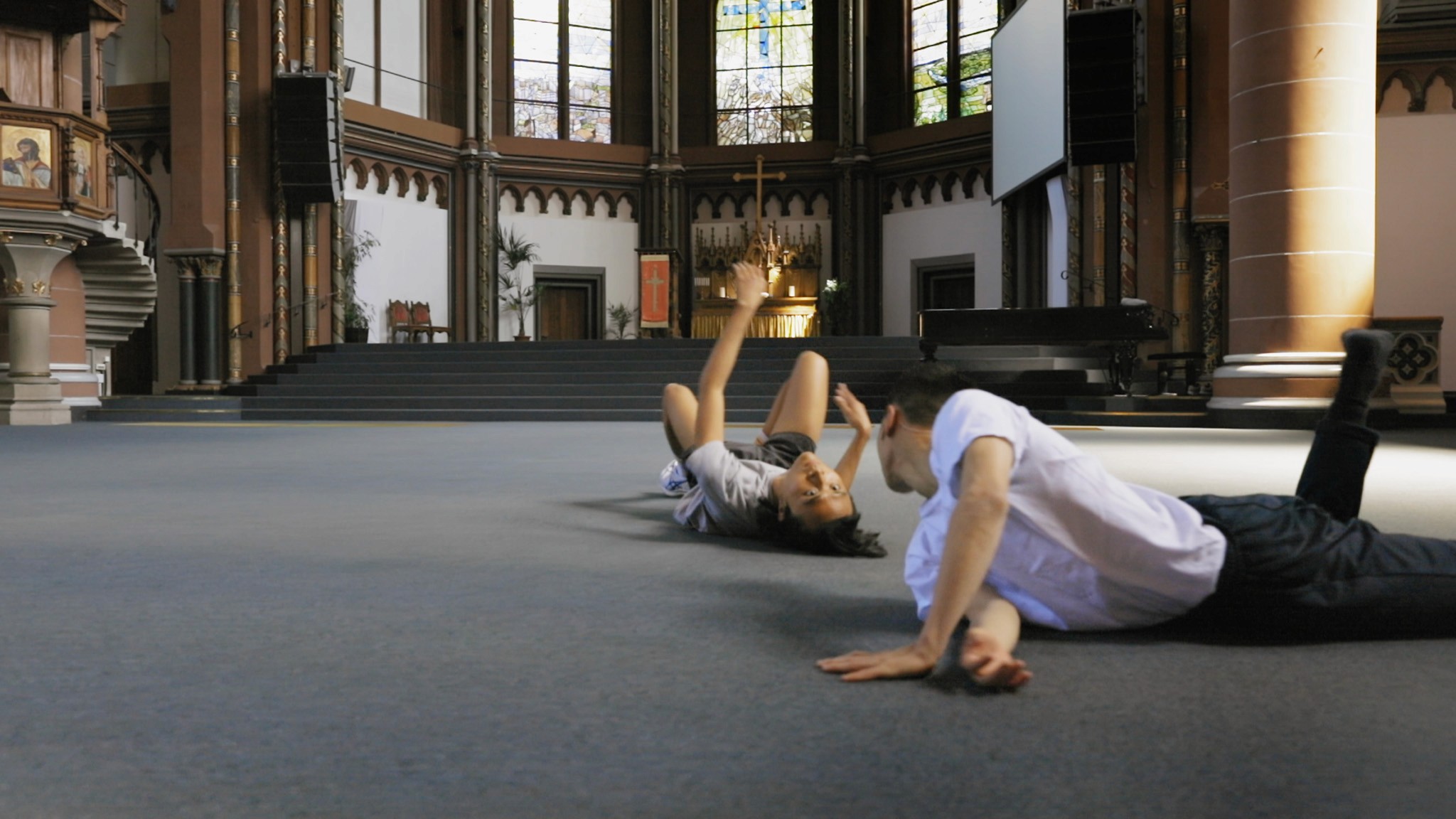
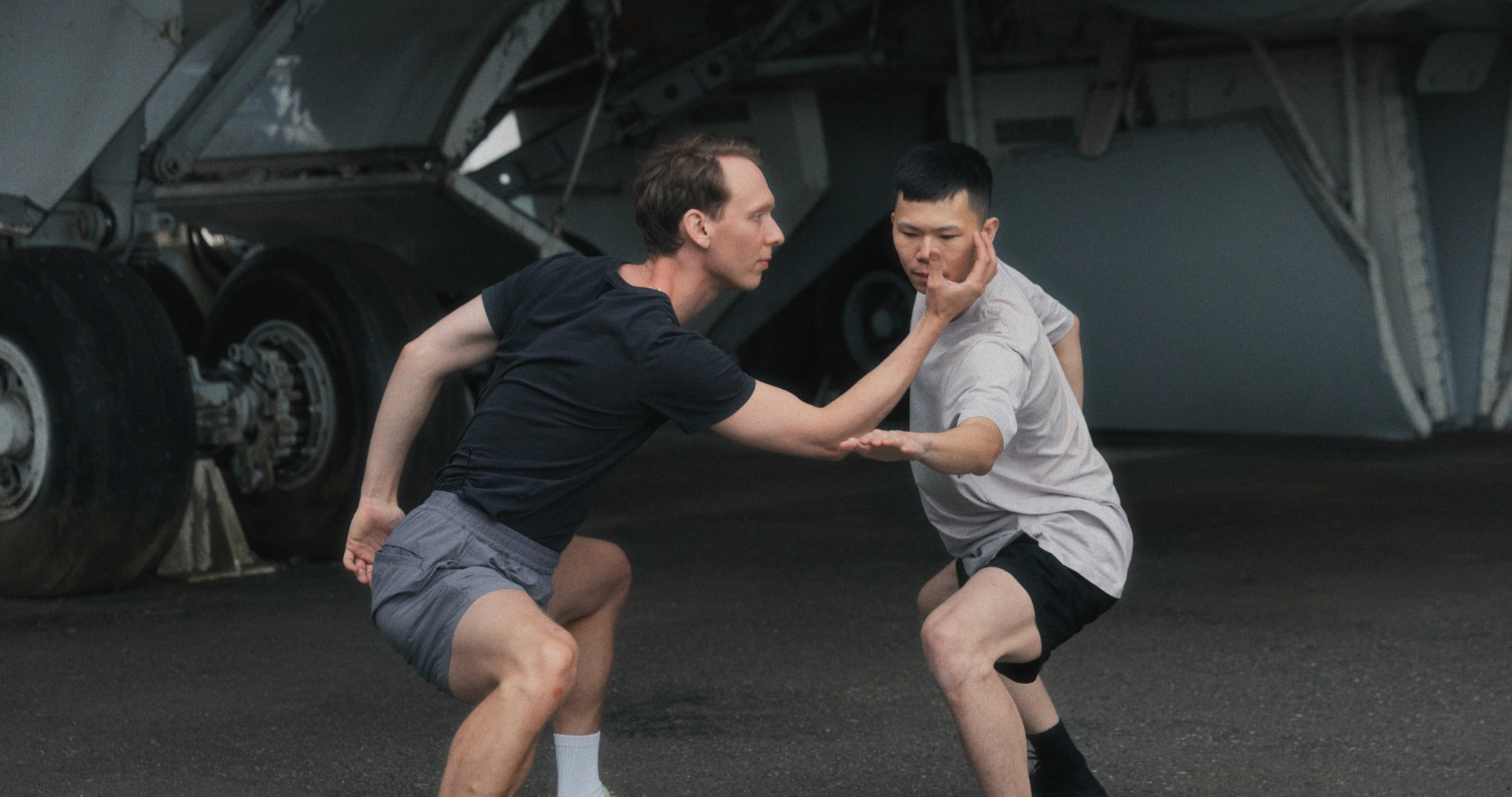
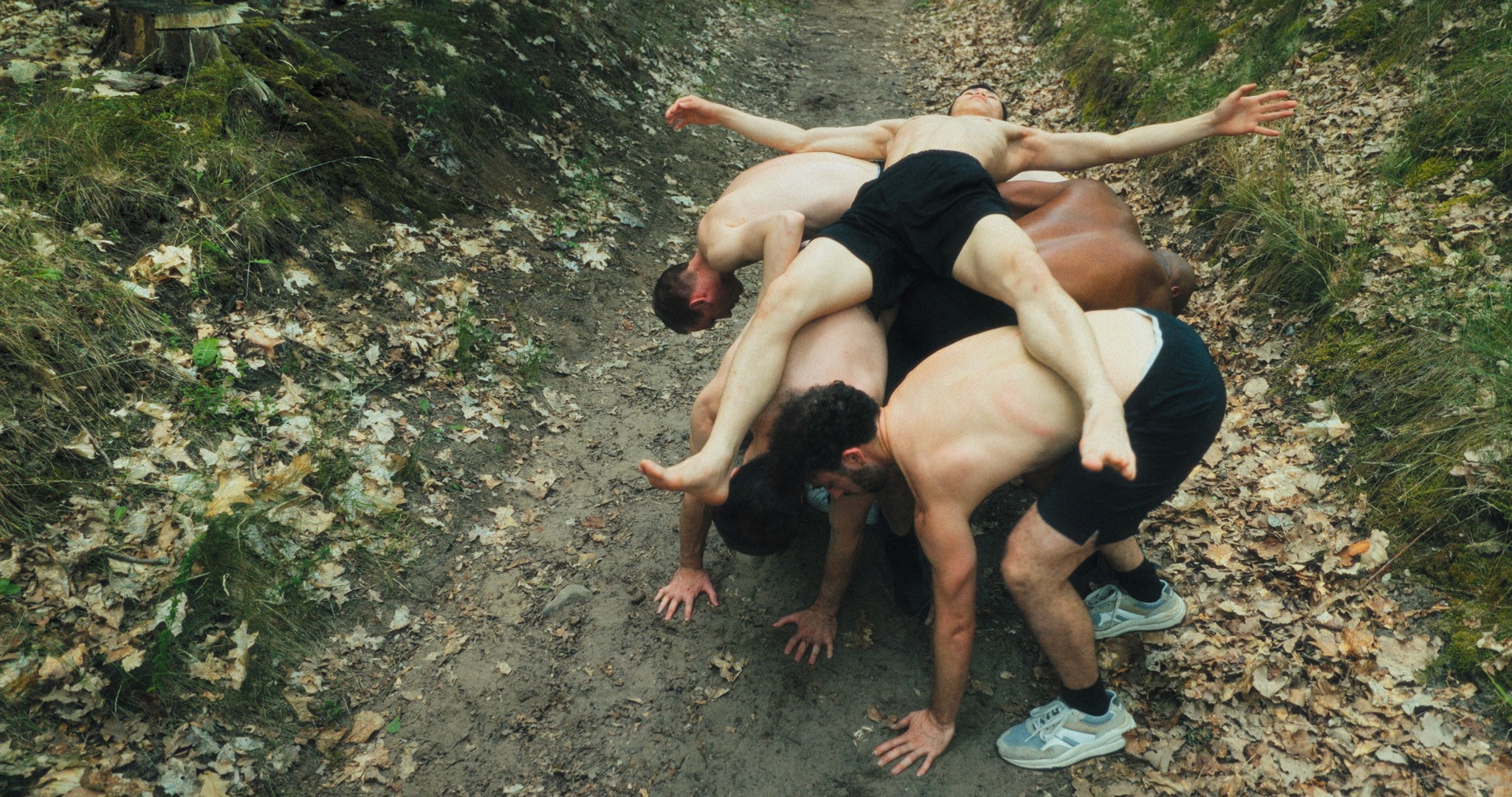
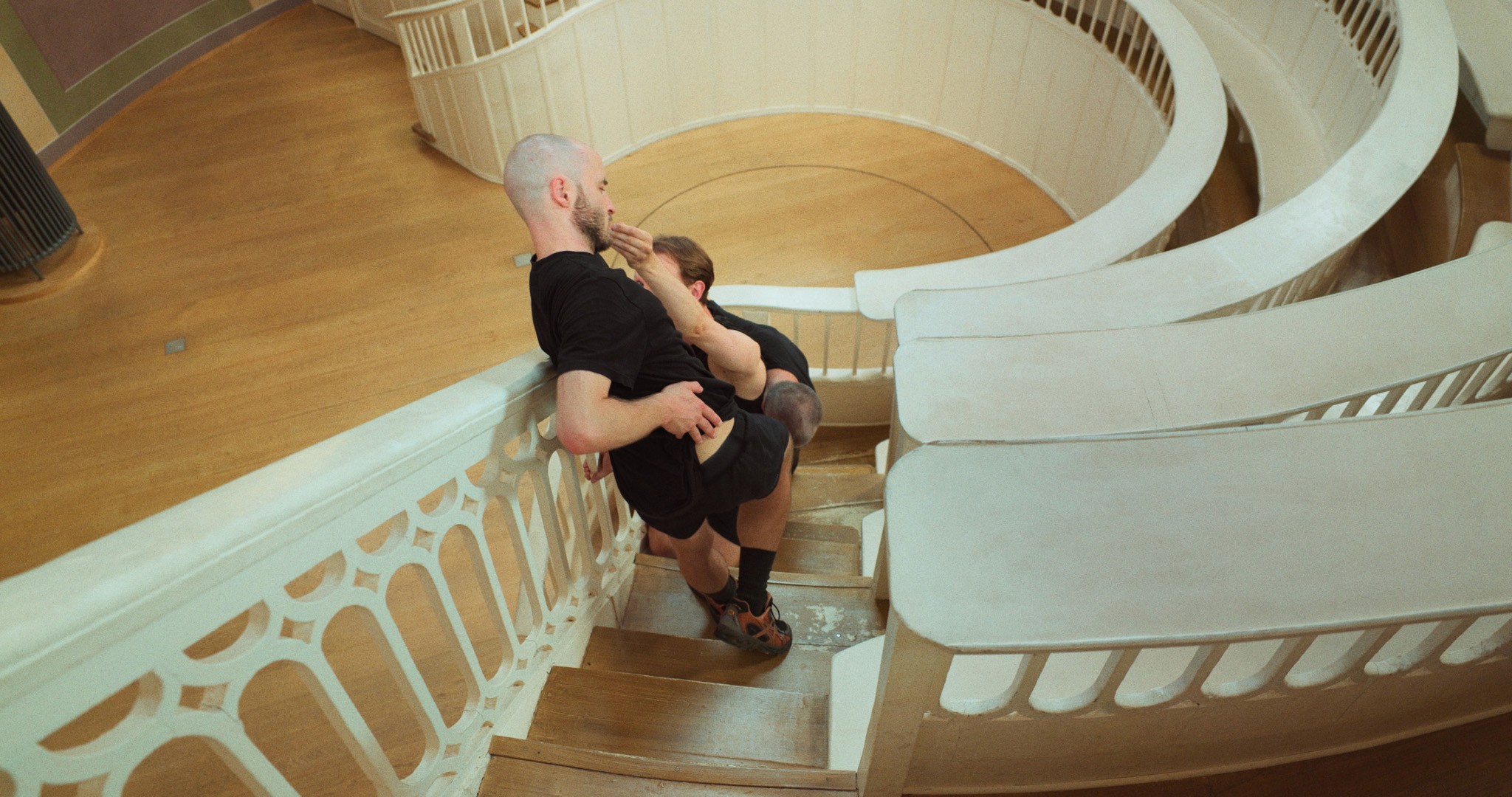
YT. Yeah, the theme Pure Intention is actually very broad. My focus was more on human connection. This particular work I’m showing at the Biennale is part of a much bigger, quite ambitious project—a choreography film series that will eventually consist of seven films. This is the fourth, the latest edition.
I met one of the curators, Duncan, in Sydney in 2024 when I had a solo exhibition there during the Biennale of Sydney. I presented the first film from the series, and he learned about the larger project. I had already been thinking about this new work, and we started talking about it. It developed over a long time, and the curatorial team felt it fit very well with the Biennale, so it became a commission.
This work kind of closes an inner chapter within the series—the four films that go closely together. They repeatedly feature the same dancers, so you also follow certain characters. The two dancers in my film had studied together in Toronto at the National Ballet. That fact stayed in my mind. Later, I met the choreographer Christopher House in Berlin, who was the former artistic director of Toronto Dance Theatre. I met him at an art event—it was quite unexpected. I’m not from the choreography field, but I wanted to continue the conversation, so I mentioned that I had made a choreography film and invited him to see it at Julia Stoschek Foundation.
He actually went over, and afterwards he told me, “Those two dancers in your film—they were my students.” That coincidence stayed with me. Around the same time, I went to see an Open Training at Staatsballett Berlin. They were showing their daily training process—from slow, controlled movements to very dynamic ones. There was a ballet master leading the session—an incredible dancer, but older. She was calling out ballet terms in French that I couldn’t understand, trying to demonstrate movements, but physically she couldn’t fully keep up anymore. She was out of breath.
There was a moment when everything paused, and the dancers around her started applauding her effort and commitment. I suddenly became very tearful. It was such a beautiful moment of human connection.
We all go through periods of learning and teaching, but usually only up to a certain age. Then we enter a more competitive, sometimes brutal society. But in some professions, like dance, that relationship continues regardless of age. There is always a teacher—a ballet master—training them every day.
When we’re younger, we can be quite rebellious towards teachers. But over time, a deeper understanding forms, and it creates a very strong bond. That made me think about bringing this kind of relationship—learning and teaching across generations—into the work. I returned to my dancers and their former teacher, and at the same time continued my sculptural research into traditional woodcarving, where intergenerational knowledge is also passed down—grandparents, parents, and children working together.
That’s how these elements came together.
CNTRFLD. The film brings together a father and son woodcarving workshop in South Tyrol with a group of dancers in Berlin. What drew you to place these two forms of learning side by side, and what do they reveal about devotion, discipline, and continuity?
YT. In my work in general, the core idea comes from my own position—being South Korean and having lived in Berlin for ten years. Society feels very divided now; polarisation has become almost normal worldwide. In Korea, division exists on many levels—not only North and South, but also financially, politically, culturally, even within art history.
I became quite tired of this way of thinking. My own life feels more like existing in the natural mixtures. We all live in these grey zones—we have to accept differences. I often work with Christian iconography and religious motifs. My earlier works were strongly critical of conservative Christianity, and I still carry that critical perspective. But at the same time, I love visiting churches and looking at Christian art. The art and the belief system are deeply connected—you can’t easily separate them. So, there’s a kind of contradiction within me.
And I think we all live with these contradictions. We must embrace them in order to understand others.
In my films, I often bring together two very different situations and merge them through queer bodies and choreography. In this work, the key difference was the generational gap. When I proposed this project to my dancers, one of them became very emotional—he hadn’t seen Christopher House for 20 years. Through this project, they were able to reunite. I thought it would be a very dramatic, emotional moment.
So, I prepared everything to capture that reunion on camera. But when they finally met, it was surprisingly calm—almost awkward. They were just asking each other simple questions, like “How are you?”
That made me reflect. If I met a teacher from 20 years ago, of course there would be excitement, but also nervousness and awkwardness. It’s not always the emotional reunion we imagine. It’s similar with the woodcarvers. From the outside, we might romanticise a father and son working together for decades. But in reality, it could also involve dullness.
This relates to Pure Intention—what we intend versus what is actually lived. Sometimes we approach things with very beautiful ideas, but the reality is different. People’s lived experiences don’t always match our expectations.
From there, we find a middle ground—and that’s where conversation begins.
CNTRFLD. Across your practice, you often bring together radical Christian groups and queer communities—two worlds usually portrayed as being in conflict. What first motivated you to explore the connections between them rather than their differences?
YT. I’m not religious myself—my father’s family is Buddhist, my mother’s is Christian, but they decided to raise me without religion. Still, growing up in South Korea, you constantly encounter Protestant Christianity in public space.
The strongest experience for me happened in 2014, at the Seoul Queer Culture Festival. It was my first Pride parade, and the first time radical Christian groups physically blocked the event. They formed a human barricade—linking arms, lying on the ground—and the confrontation lasted for hours. The police didn’t intervene much. The fanatics were chanting, crying, singing, saying that queer people would destroy the future. They covered the ground with leaflets.
I felt a mix of emotions—fear, anger, confusion. But at the same time, I realised they weren’t so different from people I knew. They weren’t monsters—they looked like my family and friends. I started picking up the leaflets and reading them. The language was extreme, but it made me think: why do people invest so much energy into this?
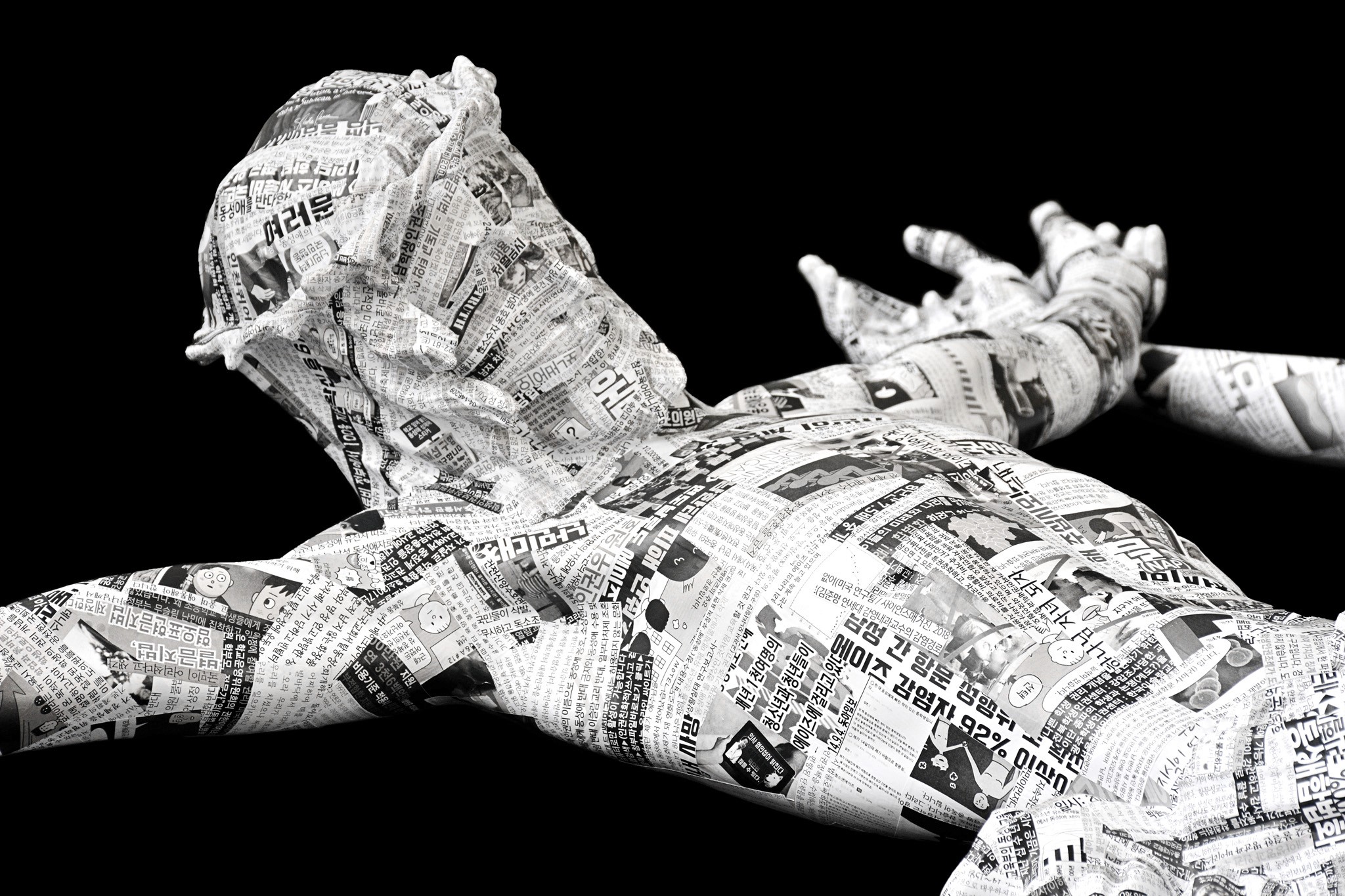
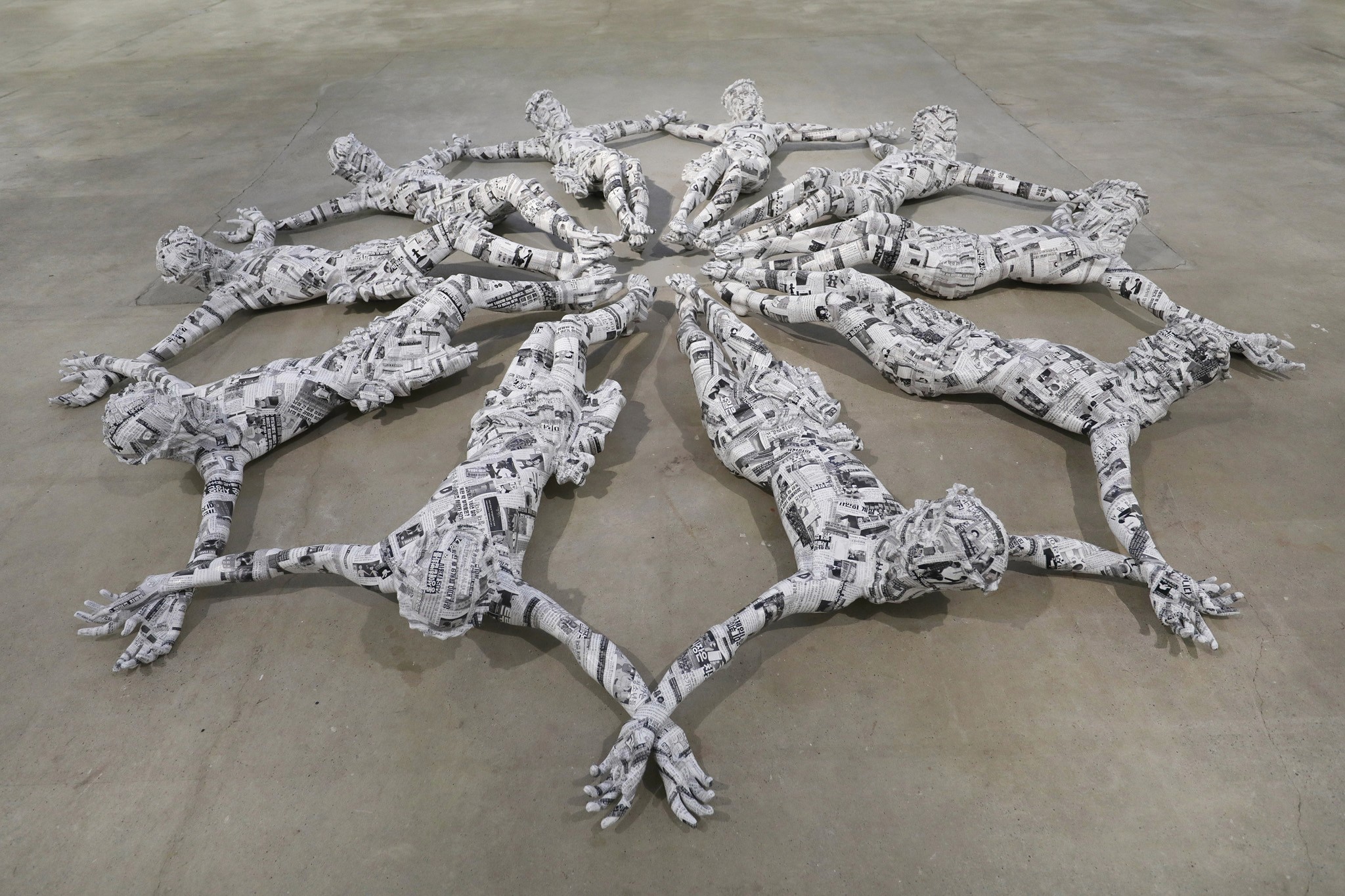
While I prepared to move to Berlin, I began researching this more deeply —visiting Christian unions and so-called conversion therapy centres, collecting materials. That research became my first sculpture.
That’s how this line of inquiry began.
CNTRFLD. You frequently work with Christian iconography alongside anti-LGBTQi printed materials, creating a strong sense of tension. What do you hope viewers will feel or reconsider when encountering these juxtapositions?
YT. One example is the first film in the choreography series, which I made during the pandemic, when communal spaces like churches and clubs were closed.
I worked with two groups—a choreographer and dancer for each—and asked them to create choreography: one for a church, the other for a queer club. But on the shooting day, I swapped the locations without telling them.
The film captures their struggle—how to adapt choreography meant for one space into another.
My idea was that these spaces are not so different. People go to both churches and clubs to nourish themselves—emotionally, spiritually, physically. They are both spaces where behaviour changes the moment you enter.
One of the most meaningful responses I received was from a heterosexual couple during my opening in Copenhagen. The wife told me that while watching the film, her husband said, “I didn’t know there were so many different types of masculinity.”
She was shocked—he had never spoken like that before.
That moment felt very special to me. If the work can open even a small shift in perception—towards understanding differences—that’s enough.
CNTRFLD. Ideas of belonging recur throughout your work… What fascinates you about the commitments people make to be part of a community?
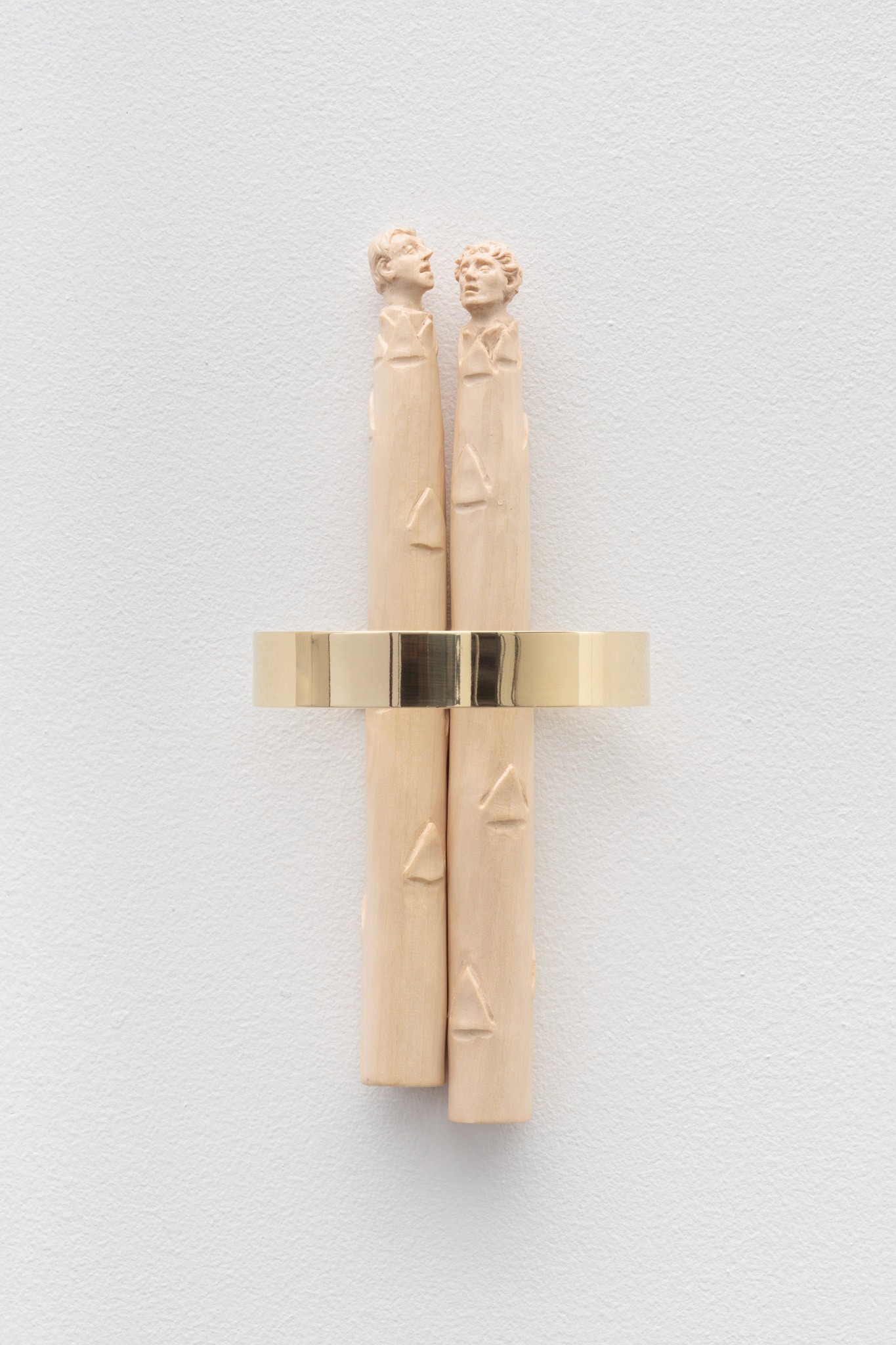
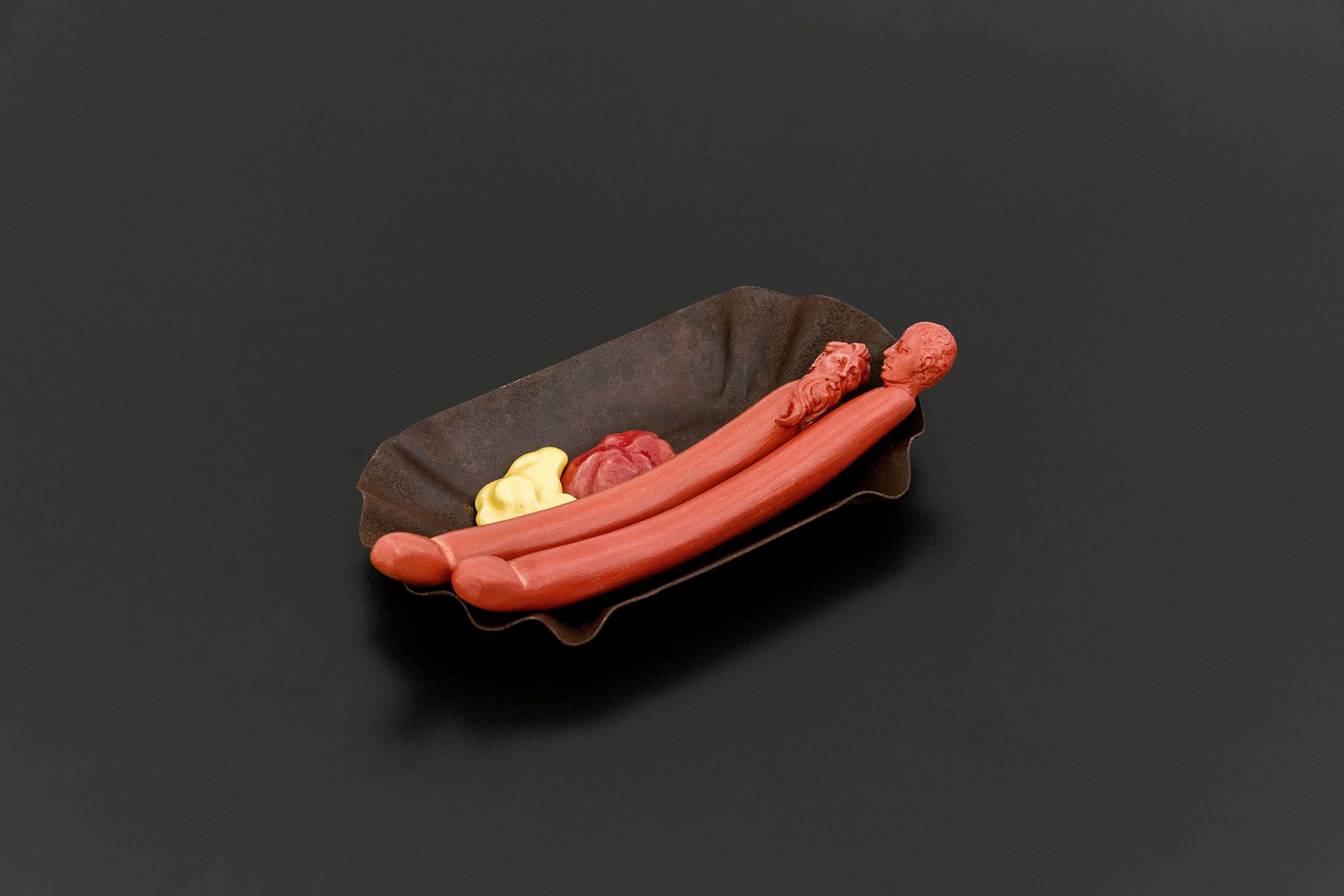
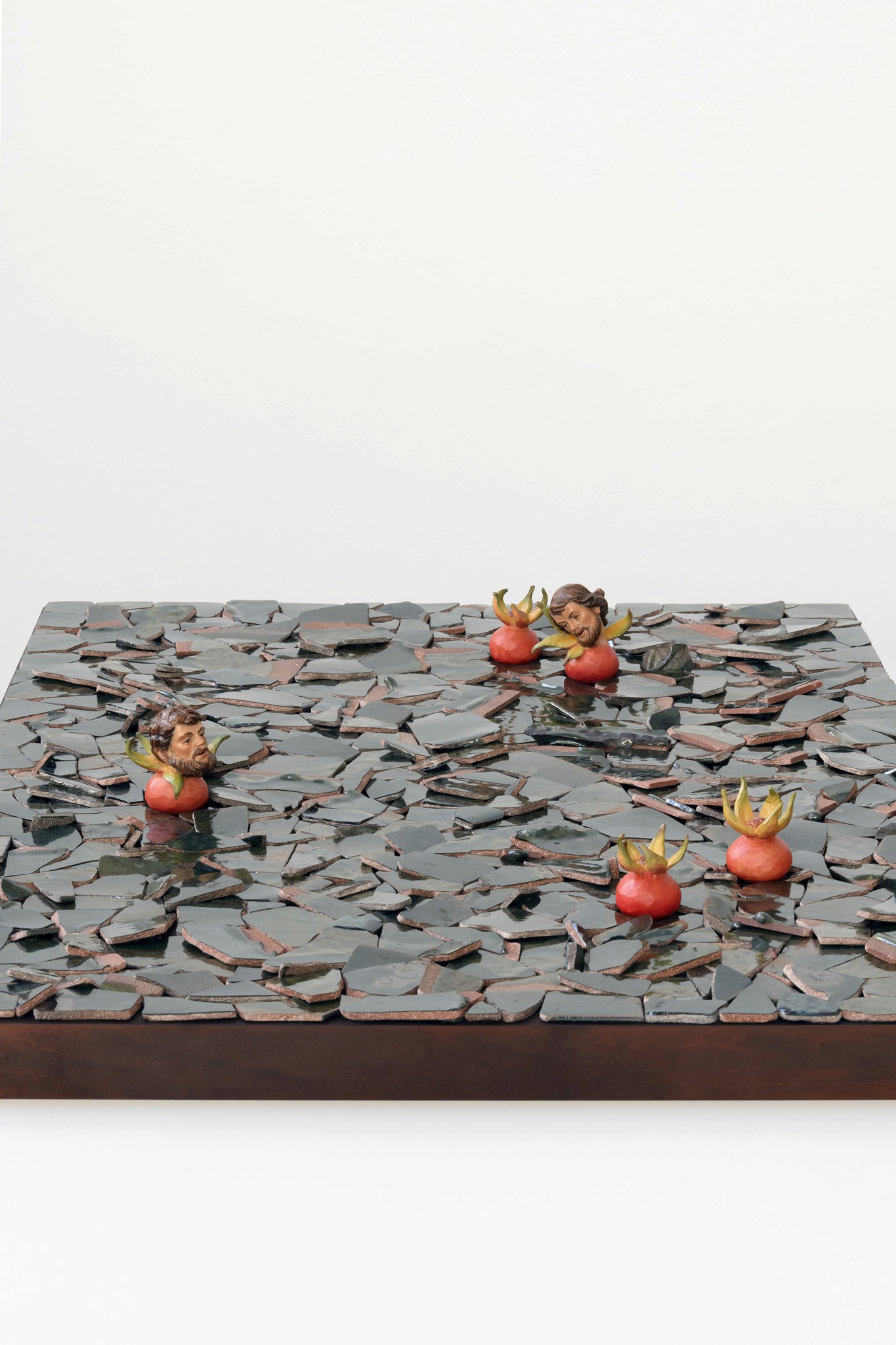
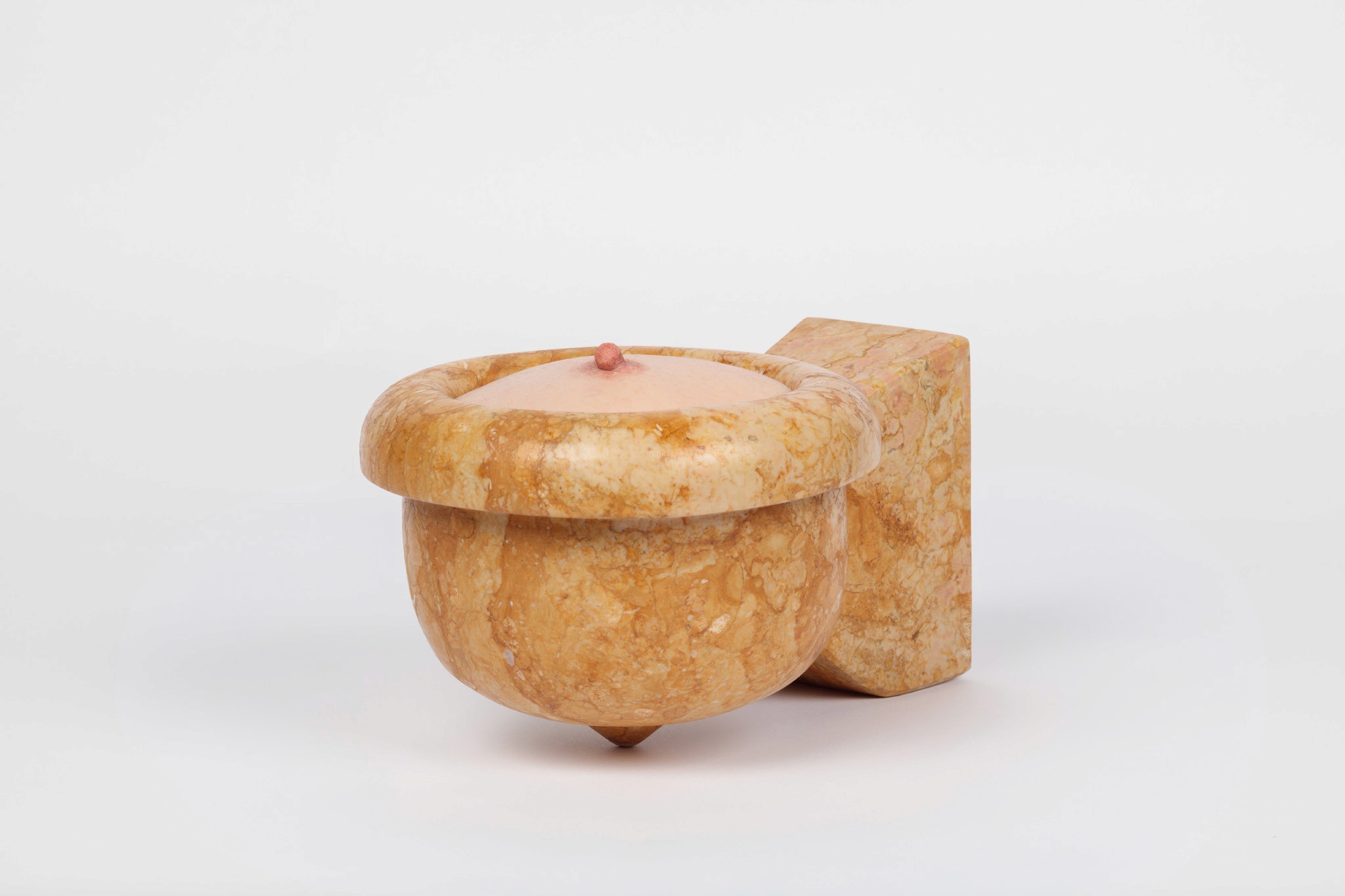
YT. In one of my sculpture series, I combine food with saints—for example, white asparagus with Saint John the Baptist.
Coming from South Korea, my experience of Germany was very different. In Korea, identity is often strongly expressed. In Germany, because of history, nationalism is more restrained—but the sense of belonging still exists. It just appears in everyday things: seasonal food, traditions, habits.
White asparagus, for example—it becomes almost like a ritual every spring. People celebrate it in a very devoted way.
I became interested in how this kind of everyday devotion connects to religious symbolism. So, I brought these elements together into sculptural forms, sometimes transforming them into something like a cross.
It’s about how belonging can be expressed in subtle, unexpected ways.