Material memory and ecological inheritance
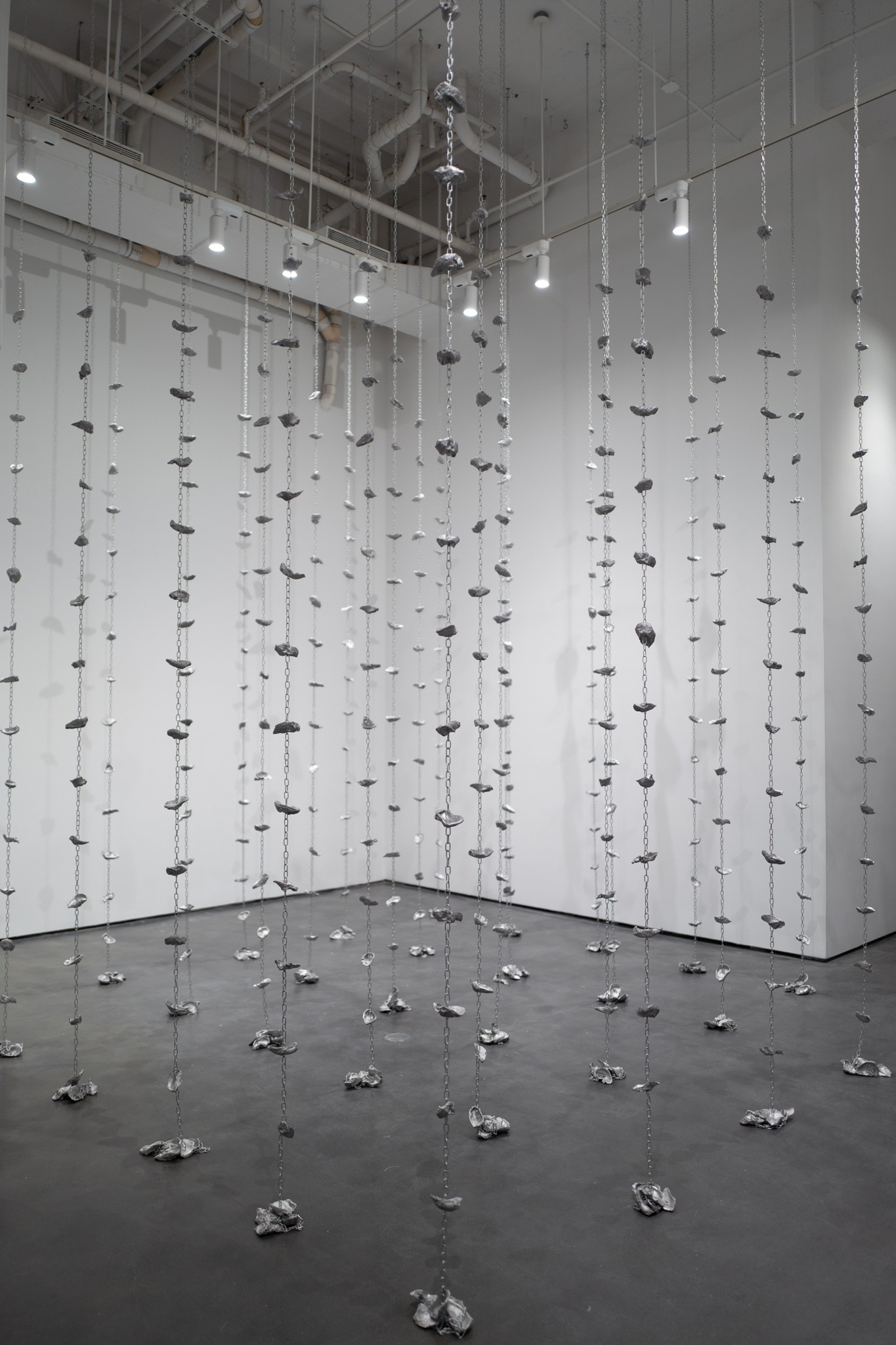
London-based Filipino artist Nicole Coson opens the exhibition with Some place, within here (2024), a suspended constellation of aluminium-cast oyster shells linked by metal rings. The work draws from aquafarming structures in the Philippines, where oysters grow on submerged lattices shaped by tides, labour and ecological cycles. Transplanted into the gallery, these shells become carriers of displaced knowledge — vernacular forms that shift meaning as they move across geographies.
Coson’s practice consistently resists fixed legibility. By translating familiar objects into altered materials and surfaces, she foregrounds how memory and identity are mediated rather than preserved intact. Here, the oyster shells operate as quiet witnesses to migration — of materials, of people, of cultural practices — suggesting that “home” is not a stable origin, but something assembled through accumulated traces.
Growth, excess and technological pressure
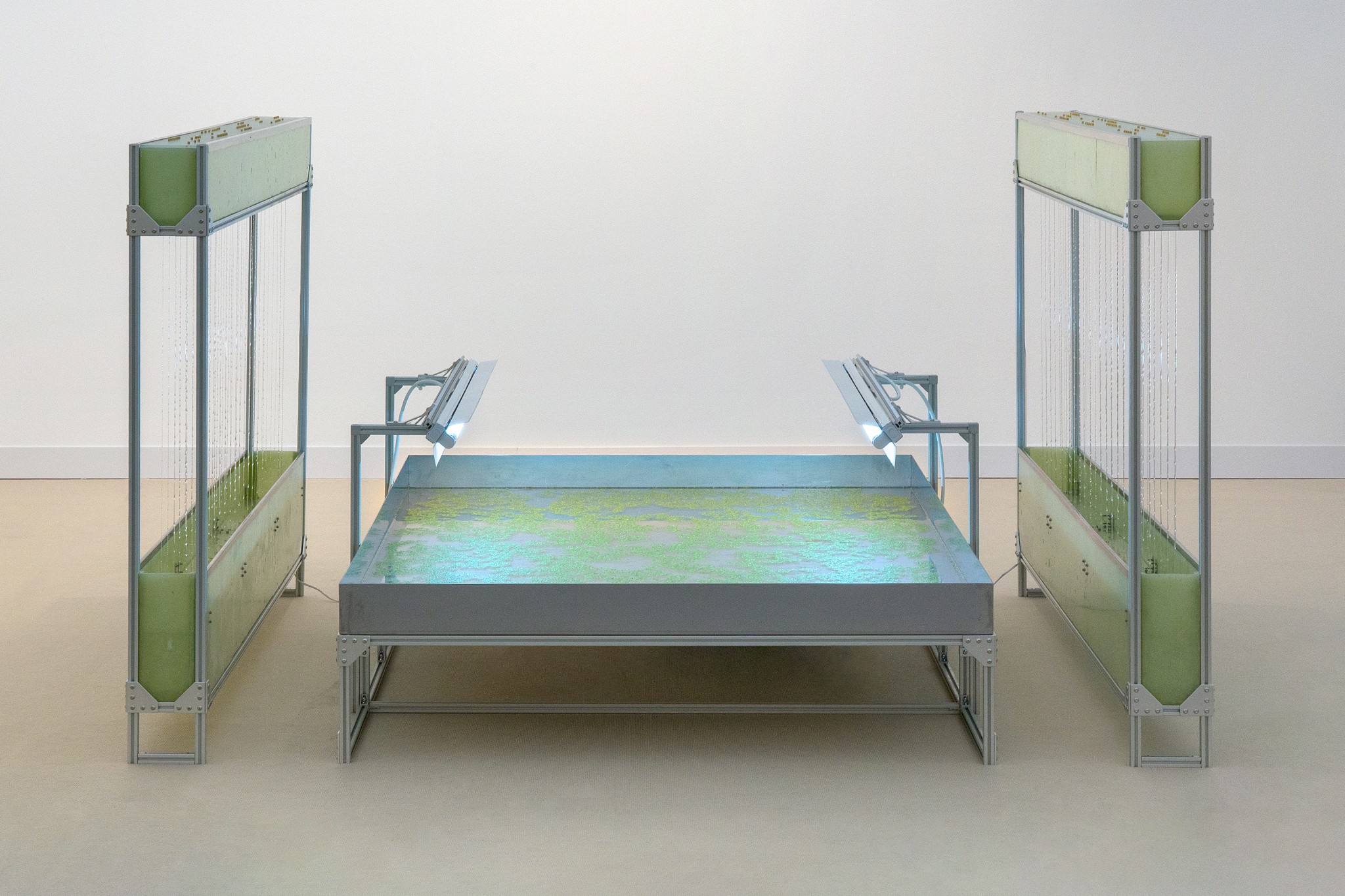
In Insomnia (2025), Xin Liu constructs a self-contained micro-ecosystem where duckweed — a fast-replicating aquatic plant — spreads across the surface of a steel tank, fed by viscous liquid streams from mechanical towers above. Duckweed is both invasive and promising: capable of choking ecosystems, yet also identified as a potential future resource for food and fuel in outer space.
Born in Xinjiang and now based in London, Liu’s work often examines the afterlives of scientific ambition. In Insomnia, unchecked growth becomes a metaphor for how natural processes are distorted under technological and social acceleration. The work echoes diasporic tension: adaptation as survival, but also as risk. What does it mean to thrive in an environment that was not designed for you — and at what cost to the surrounding ecology?
Intertidal identities and queer futurity
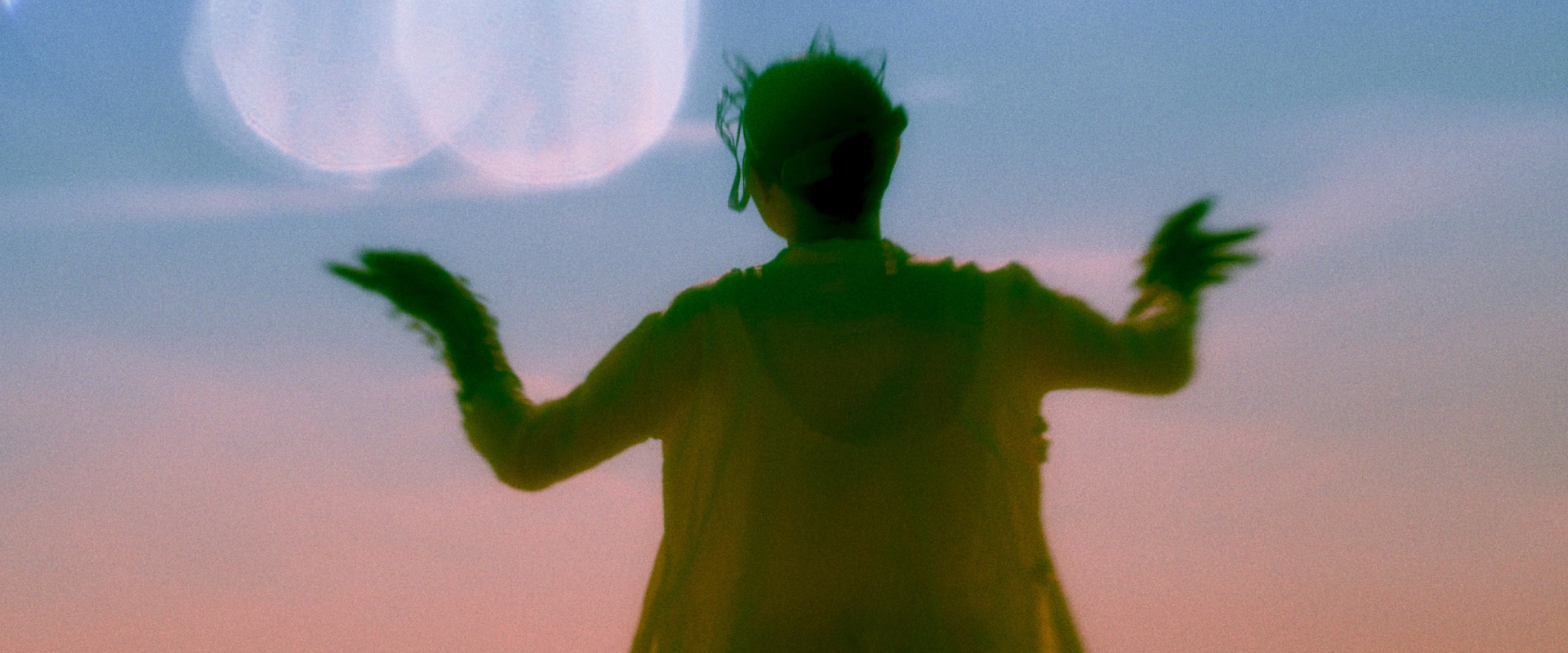
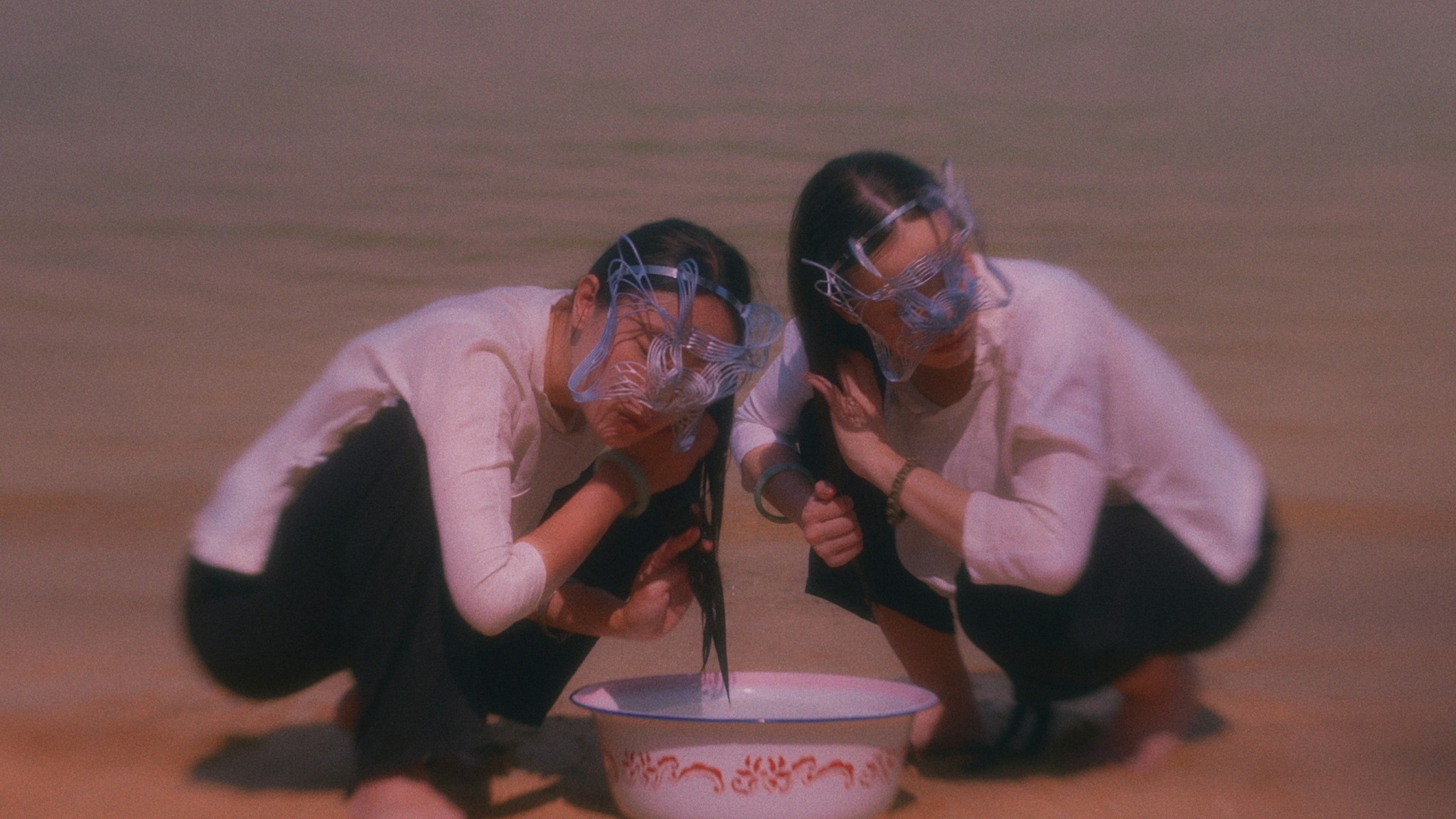
Berlin- and Singapore-based artist Charmaine Poh brings together personal testimony, myth and infrastructure in The Moon Is Wet (2025), a multi-channel installation that moves between mangroves, reclaimed coastlines, data centres and financial districts. Drawing on figures such as Majie domestic workers, queer Southeast Asian caregivers and the sea goddess Mazu, Poh frames identity as an intertidal condition — neither fully submerged nor fully visible.
Poh’s diasporic and queer lens treats memory as something enacted rather than archived. Her work acknowledges how histories are often withheld, erased or rendered opaque, particularly within Southeast Asian contexts shaped by colonialism and state control. In this shifting landscape, care emerges as a political act: a way of sustaining connection amid displacement. “Home” here is provisional — something formed through ritual, longing and collective imagination rather than territorial certainty.
Architectures of solitude and vulnerability
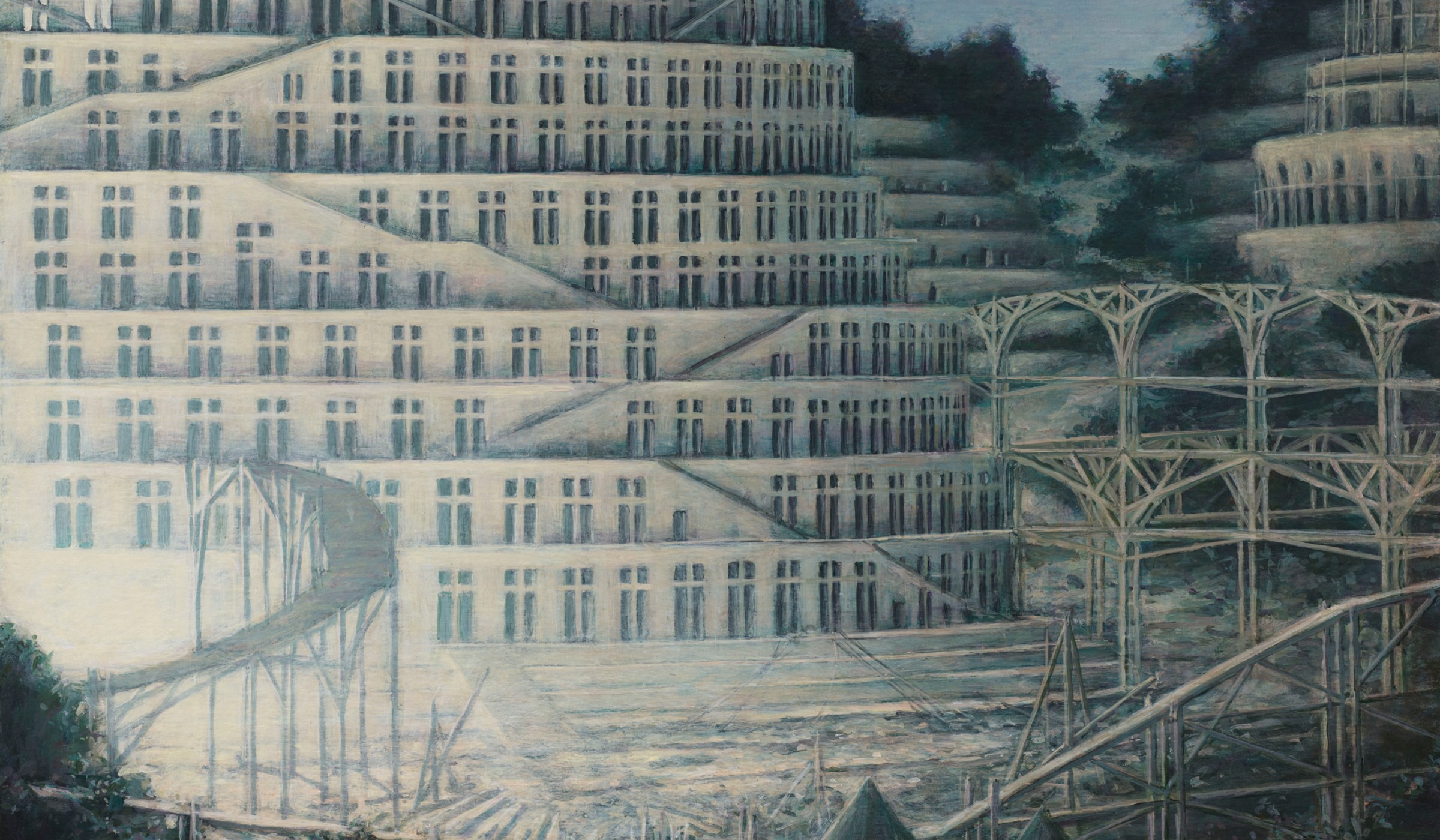
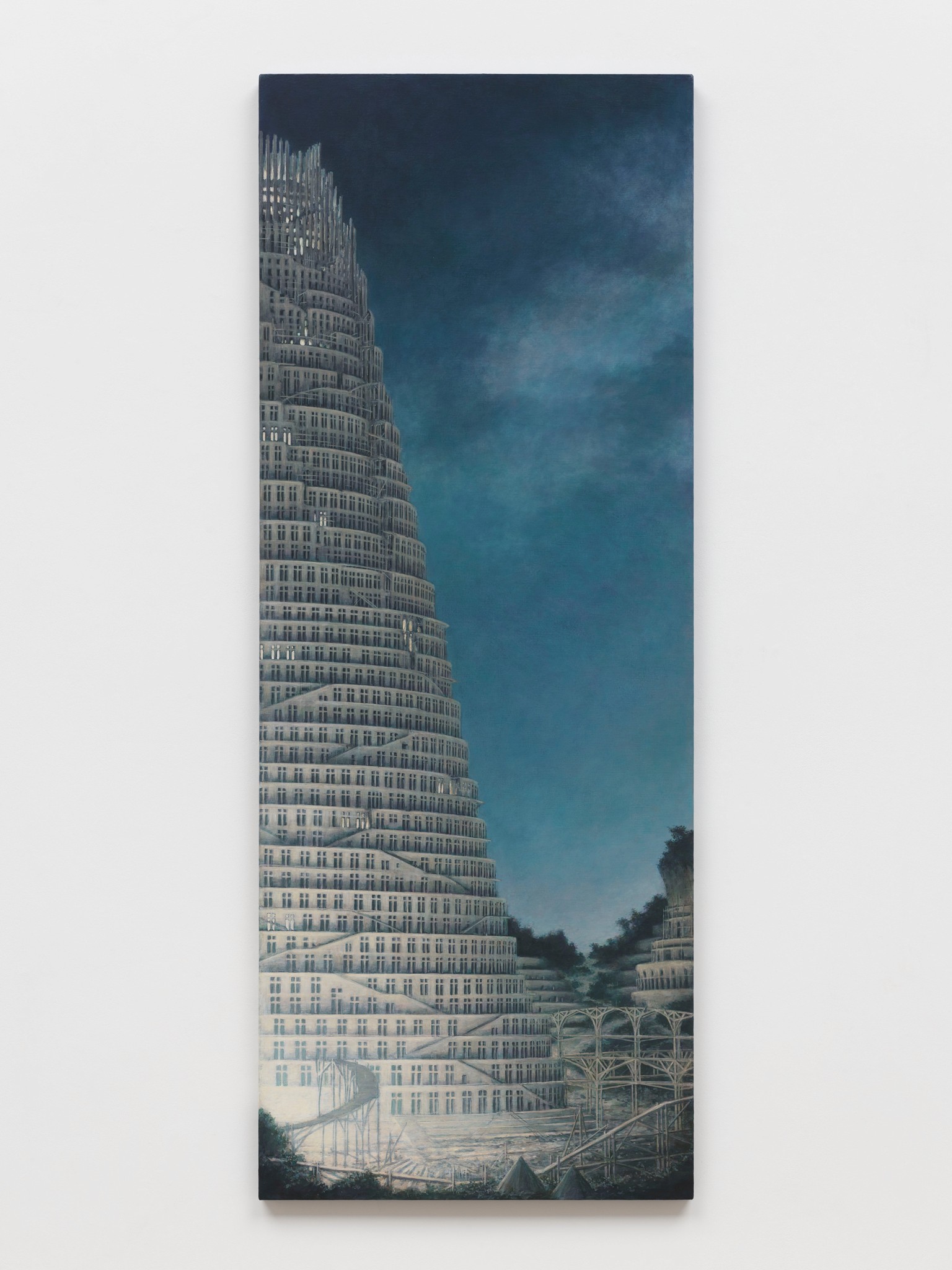
In contrast to Poh’s layered narratives, Tokyo-based painter Minoru Nomata offers stark, solitary architectures. His diptych Resonance–1 and Resonance–2 hover between ascent and collapse: one suggesting speculative verticality, the other a landscape marked by erosion and fragility. Though devoid of human figures, Nomata’s structures feel deeply psychological — interiors projected outward.
Nomata’s work resonates with post-war Japanese anxieties around modernity, resilience and environmental precarity. These imagined architectures seem to exist after function, after occupation — monuments not to power, but to vulnerability. Within Thresholds of Becoming, they act as quiet pauses, reminding us that transformation often leaves behind empty shells, spaces waiting to be re-inhabited.