“Don’t be afraid to dig deep into yourself, even when it feels uncomfortable. The most powerful work often starts within. At the same time, don’t do it alone—build communities, nurture friendships, and create your own spaces instead of waiting for permission to enter someone else’s.”—Erika Mayo
CNTRFLD. Can you tell us a bit about your childhood and upbringing? How did those early experiences shape your path as an artist?
EM. I was born in Bacolod City and raised in Bayawan, a quiet town in Negros Oriental that, at the time, felt small and underdeveloped. Only when I left for high school in another city did I begin to recognize its quiet influence on me. My relationship with my mother was layered and difficult, often keeping me from seeing how my surroundings had been shaping me into the artist, the woman, and the mother I would later become. Raised in the midst of traditional and religious values, yet confronted with contradictions within my maternal figure, I grew up navigating a complex duality. What once felt confusing as a child, became in adulthood, a gift: the ability to perceive both sides, to witness the tension between faith and doubt, tradition and rebellion, love and distance. This space in between fuels my work. It is where my curiosity lives, constantly investigating how opposites coexist, how black and white blur into gray, and how personal and societal expectations intertwine with memory and desire.
CNTRFLD. How do your identity and heritage influence your work? Are there personal stories or memories that continue to guide your practice?
EM. My work always circles back to identity, heritage, and the psychology woven through them. I return to these themes so often it sometimes feels excessive, even egotistic. But for much of my life, I moved through the world unaware of myself, and that unawareness caused harm not only to me, but also to the people I love. Painting has become my way of confronting that truth.
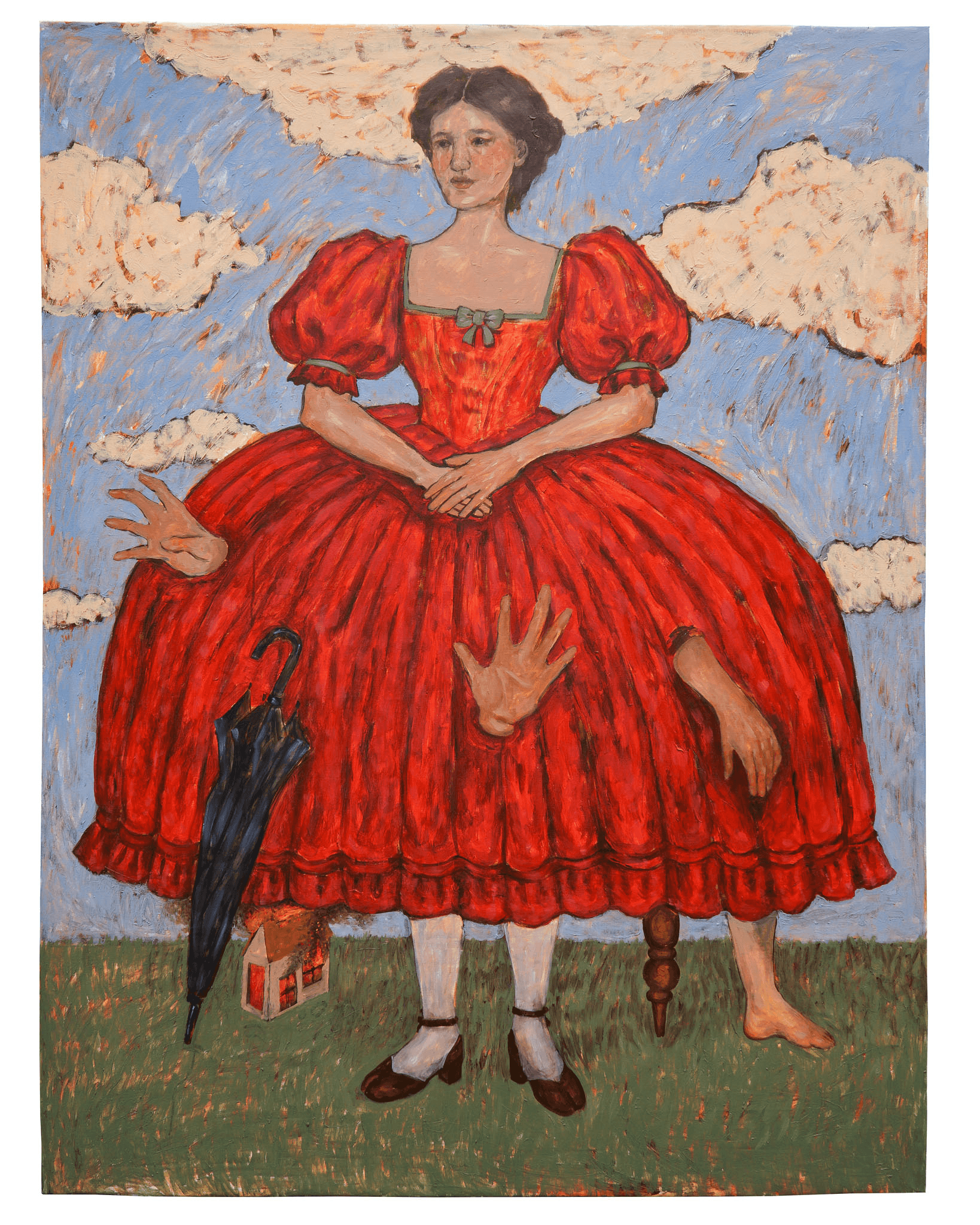
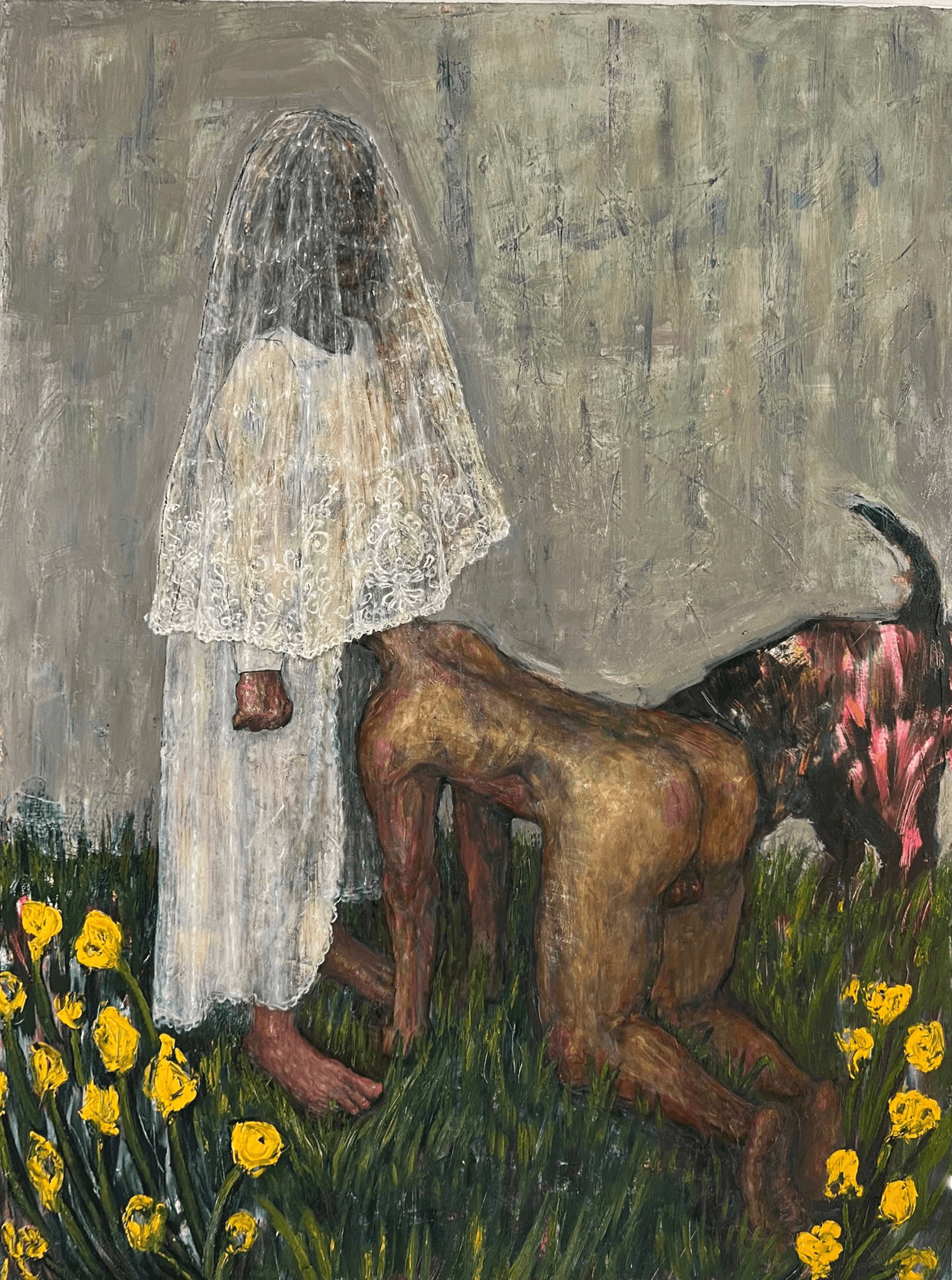
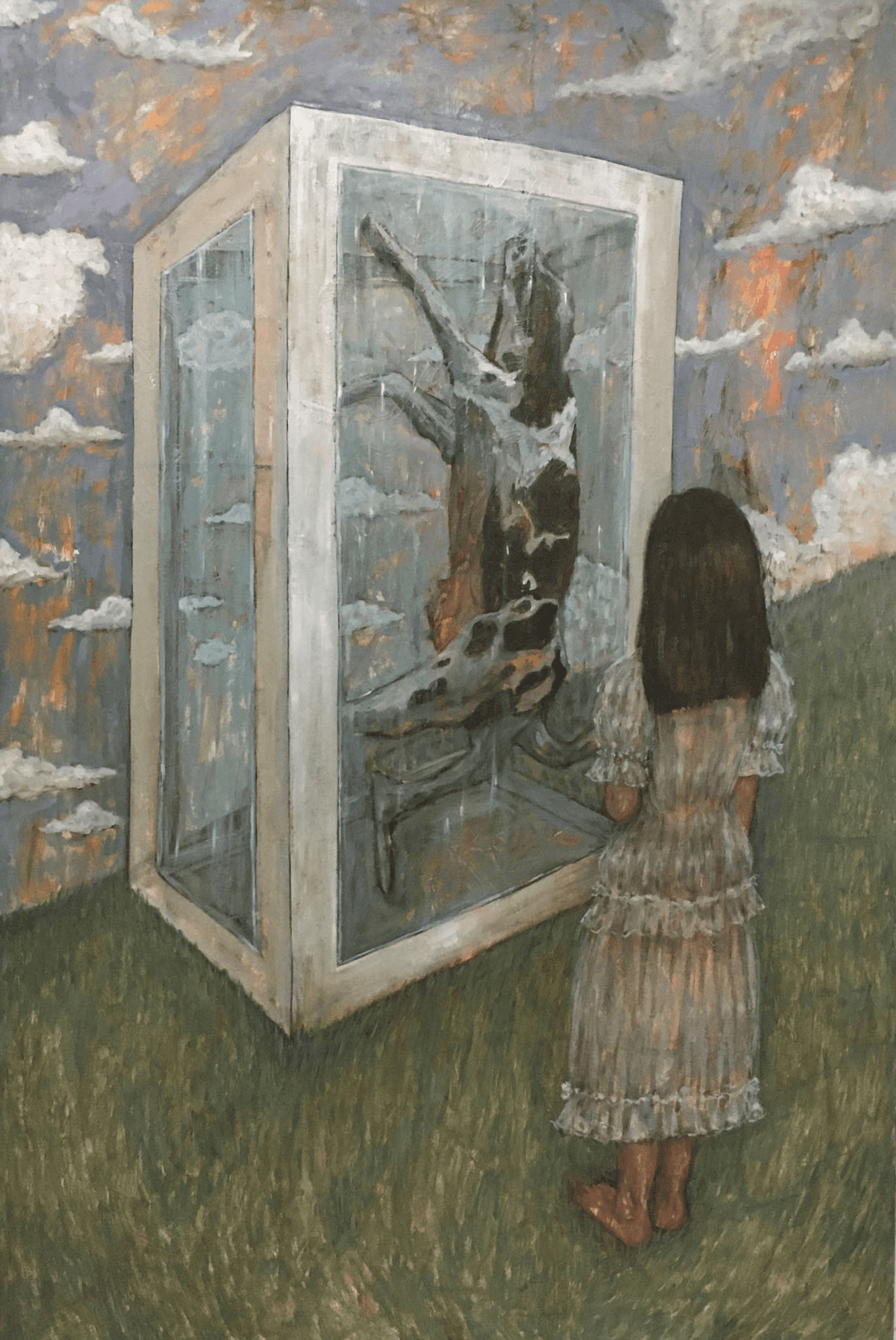
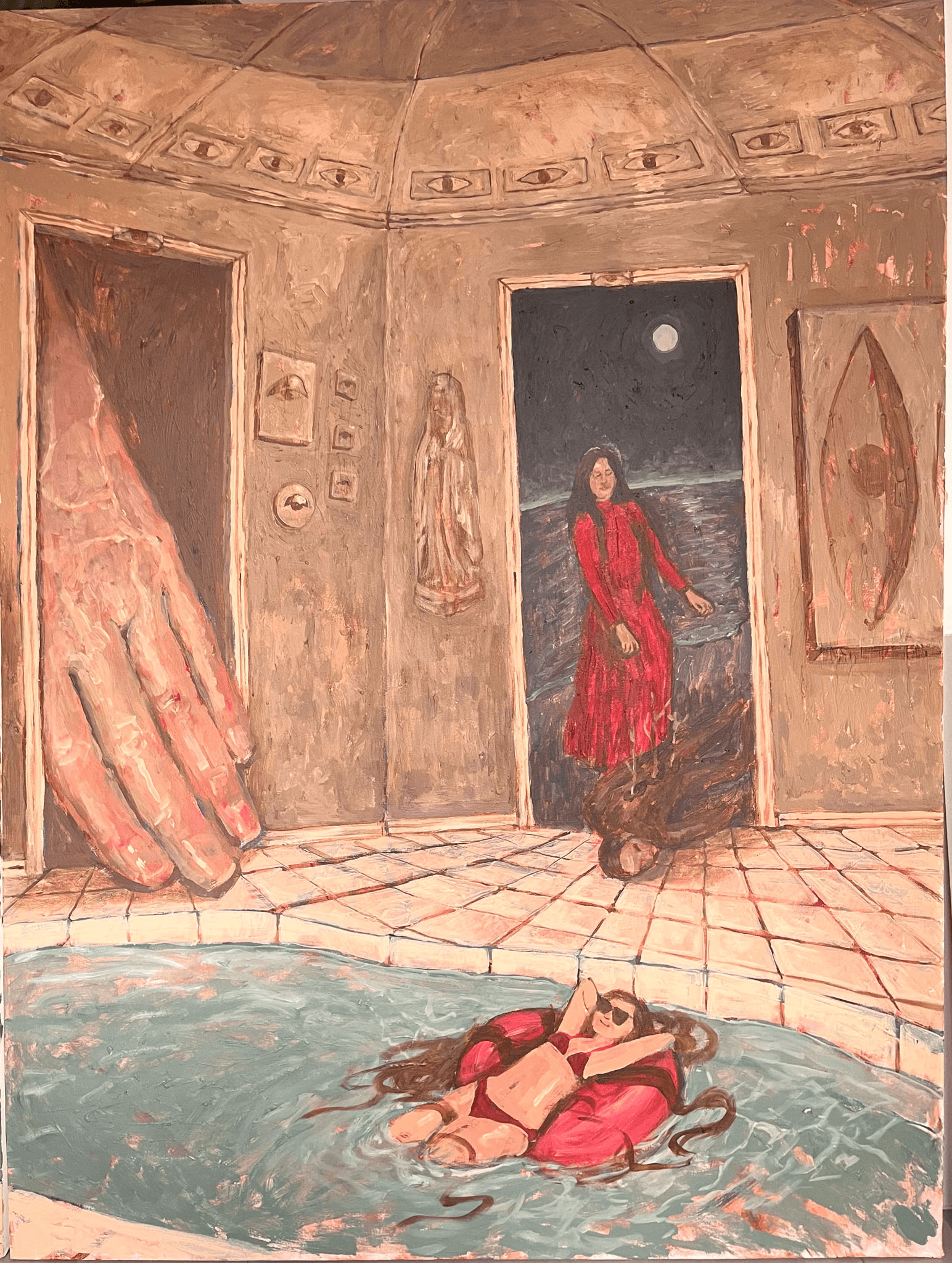
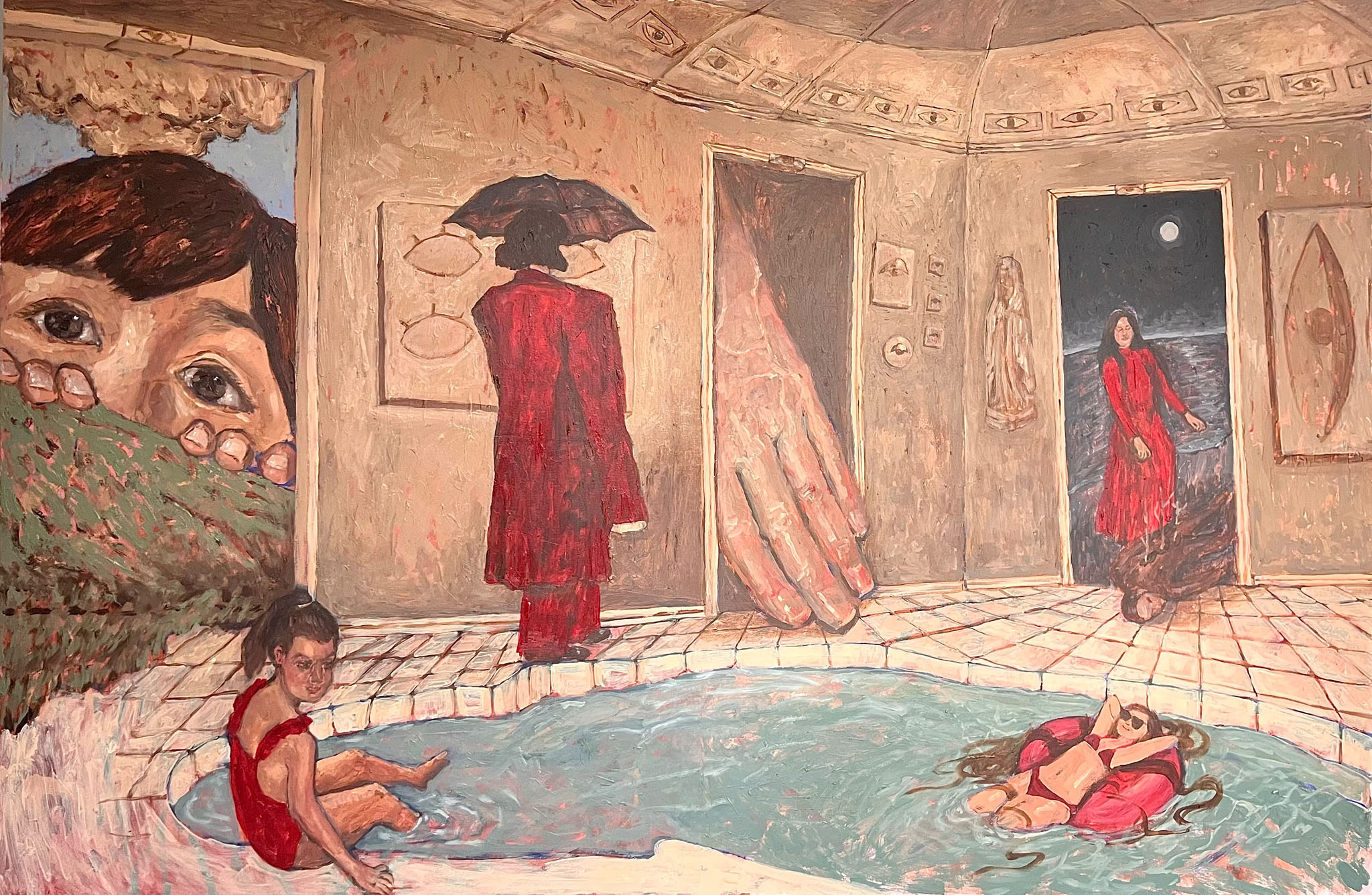
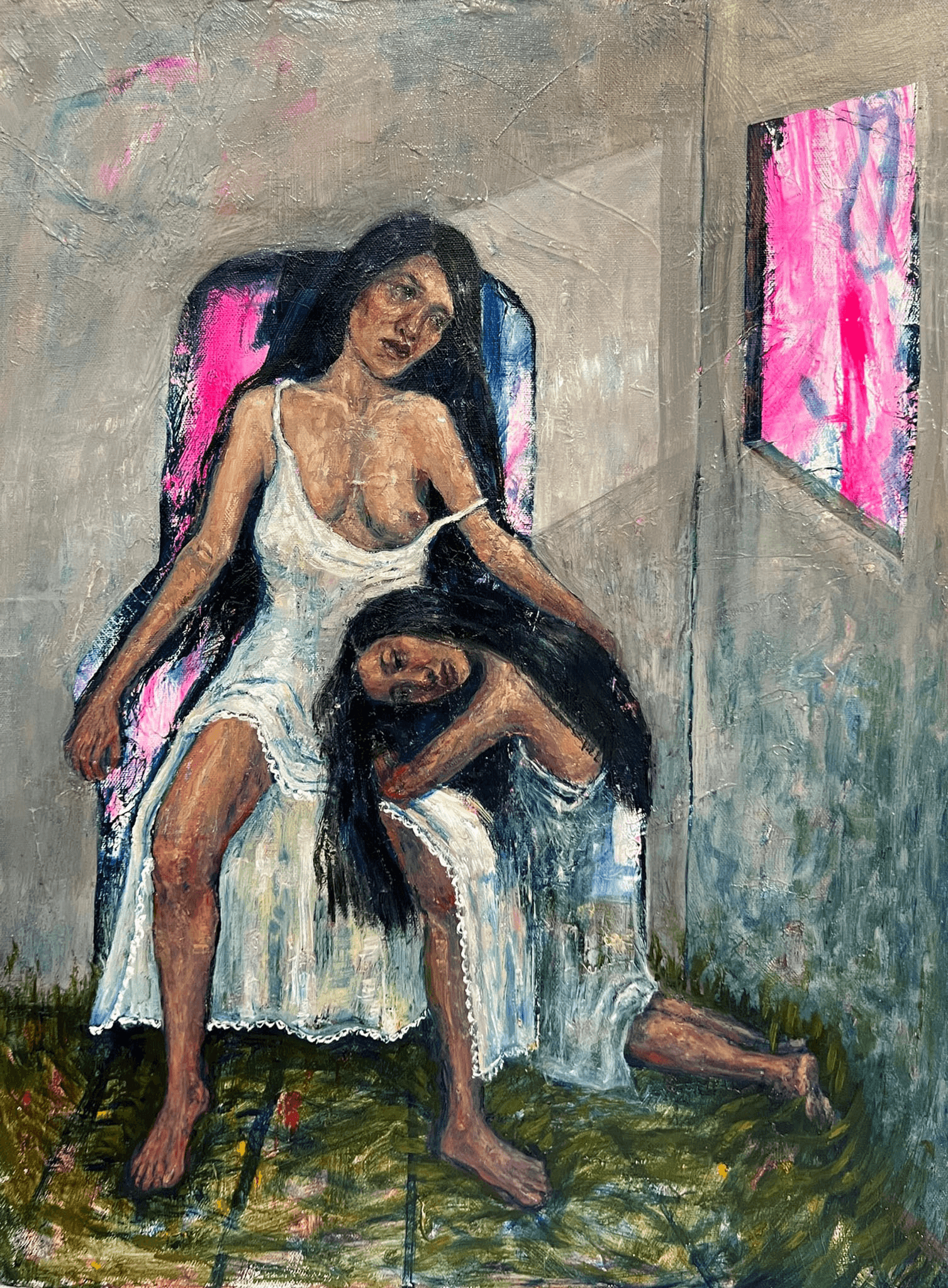
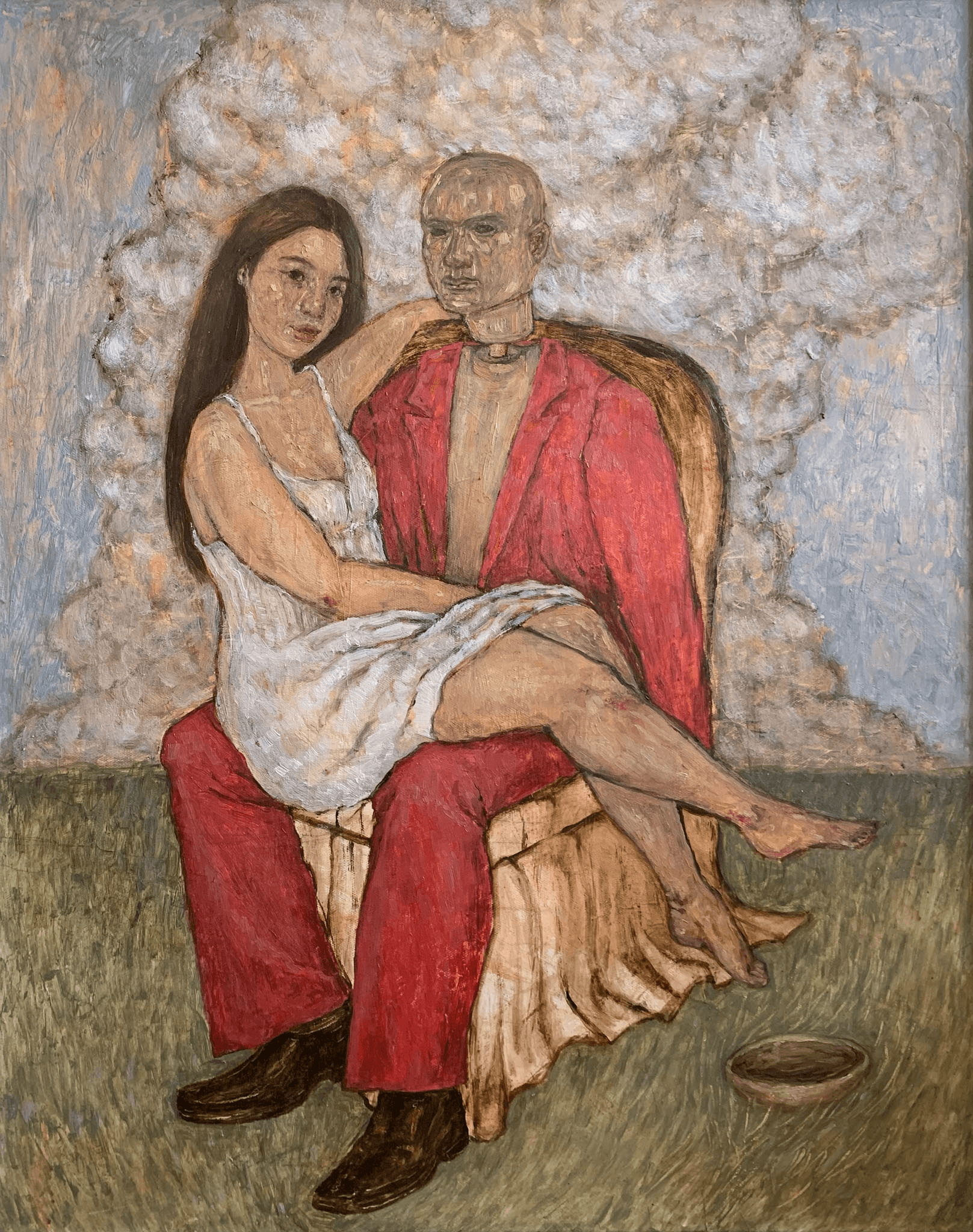
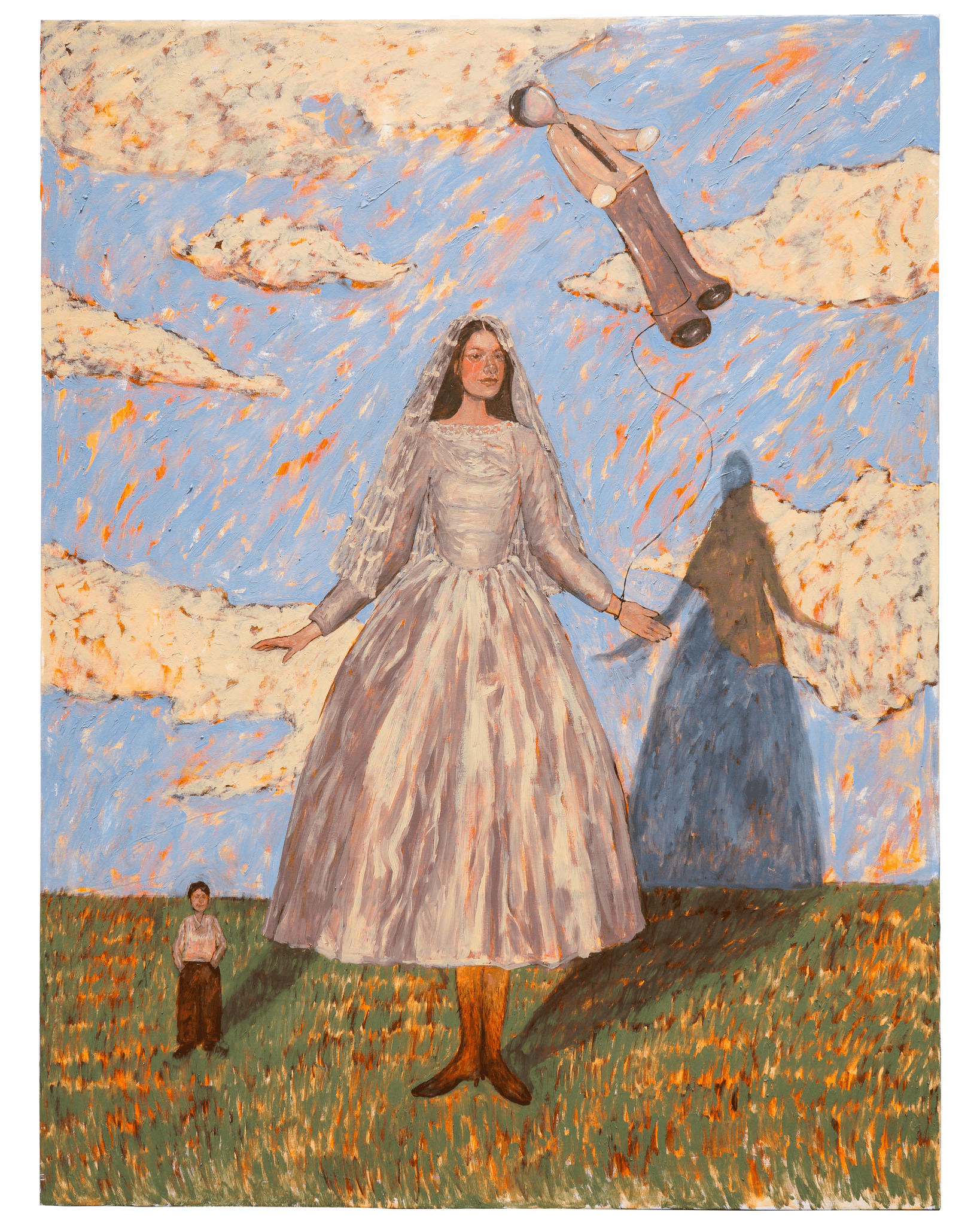
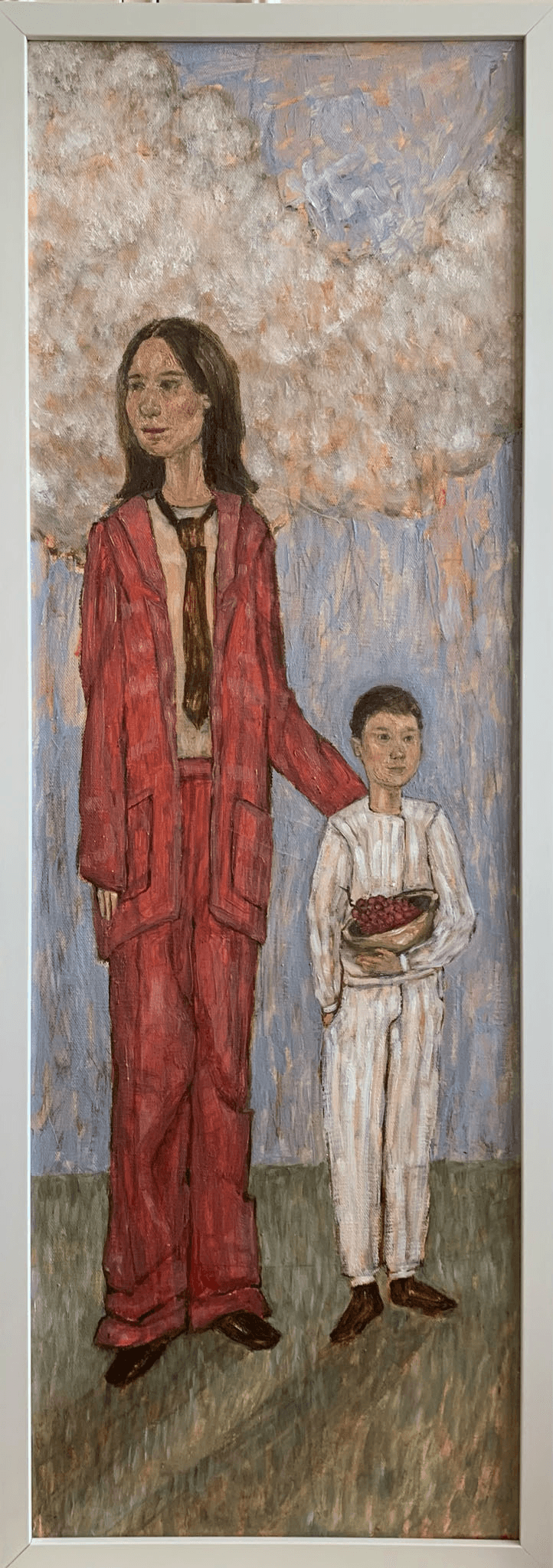
As a child, I carried strong opinions and rarely backed down, even with elders. This defiance often led to clashes with my mother. In the middle of our fights, she would repeat the same words: “Makasabot ra ka if naa na kay anak! Sobra pa imong maabtan nga gaba!”— “One day, when you have a child of your own, you will understand. You will suffer worse karma than I ever did.” Those words clung to me, planting a quiet fear of motherhood. What if I turned out just like her? What if my words left scars on my child? What if I abandoned them for men, the way I once felt abandoned? Would I also abandon myself? As I grew older, those fears began to echo in my own life. Falling in love too easily, clinging too tightly, losing myself in cycles of codependency and yearning, desperate for validation and belonging. They were the very patterns I resented in my mother. To me, she was a towering figure, physically larger than me, someone I believed should have protected and cared for me unconditionally. Yet in my own journey into motherhood, the tower began to look eerily familiar. What I once saw as hers alone started to resemble my own, built from the same walls of expectation and silence. I came to see “gaba,” or “karma,” not as fate, but as a form of cultural control, a kind of propaganda that conditions women to fear choosing lives beyond caregiving, beyond being wives who forgive everyone but themselves.
I began to understand that what I inherited was not karma, but an unconscious shaping, a legacy of internalized misogyny passed down from my mother, her mother, and the women before them. It dictated that women must always mold themselves for the benefit of men: how we look, how we act, even how we fold the laundry. In my mother’s words, and her mothers before her: “How will you find a husband if you don’t know how to fold the laundry?” Yet the more urgent question was never asked: why must the laundry be folded for him at all?
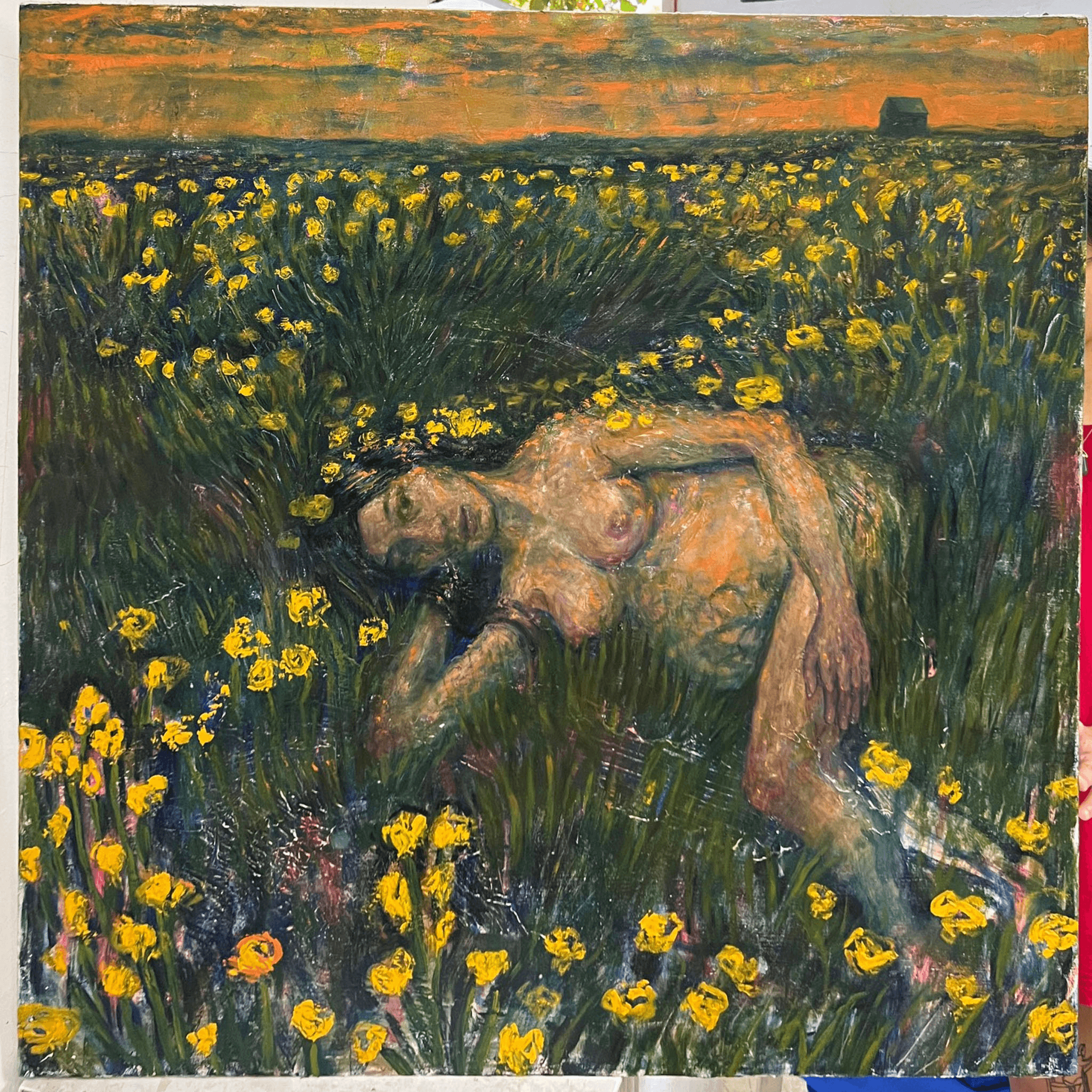
This is the curse I now recognize and the one I am determined to break. My mother’s struggles, and the mothers before her, were not punishment or “karma.” They were the weight of society itself. Over the past few years, this reckoning, understanding myself and the structures that shaped me has become the core of my practice. Each work is both a study and a form of redemption, an attempt to untangle memory, contradiction, and silence. I paint as a way of making sense of what I once ignored, piecing together fragments of the past in search of clarity, meaning, and perhaps even forgiveness.
CNTRFLD. Your exhibition Kill Your Darlings at Orange Project deals with themes of maternal absence and womanhood. What inspired this body of work, and what do you hope viewers take from it?
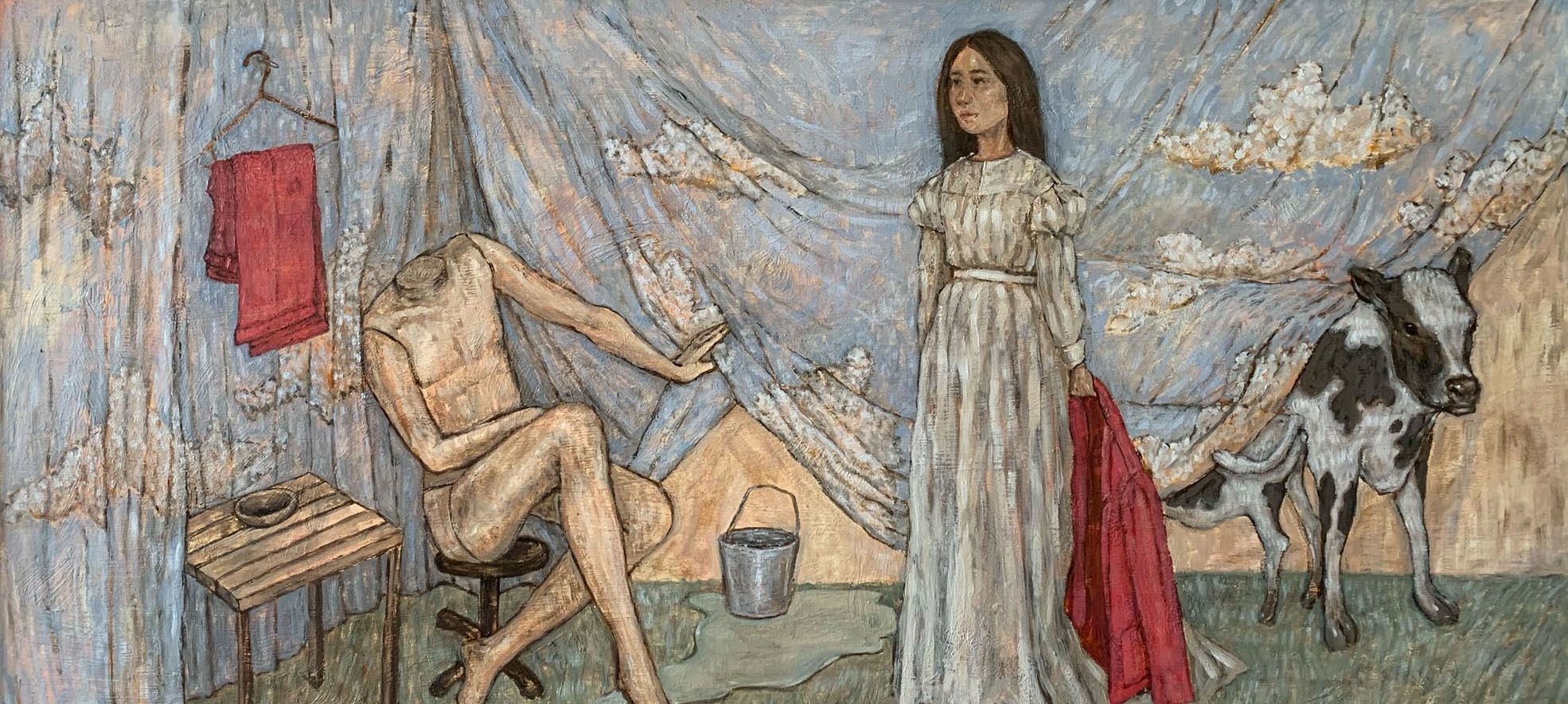
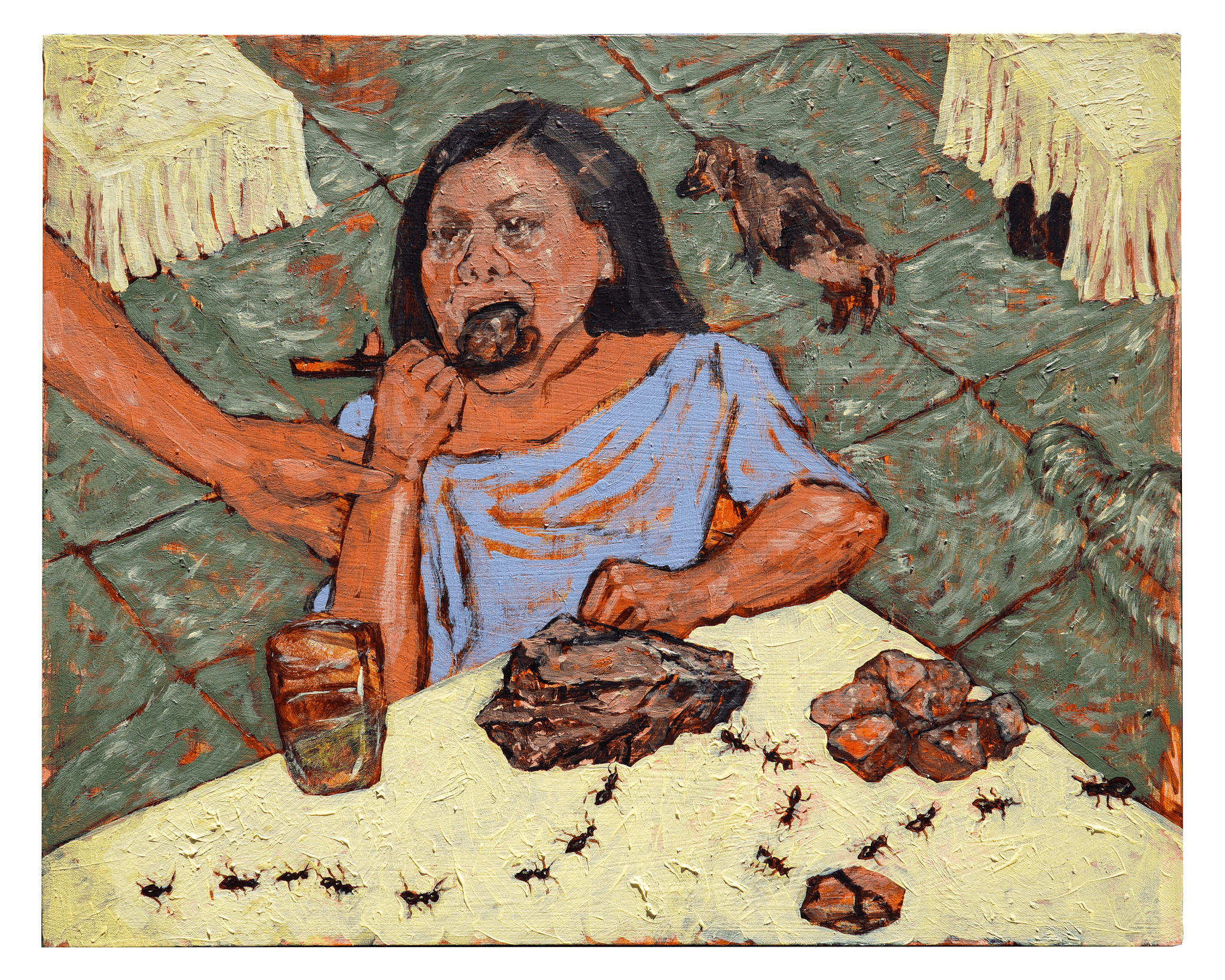
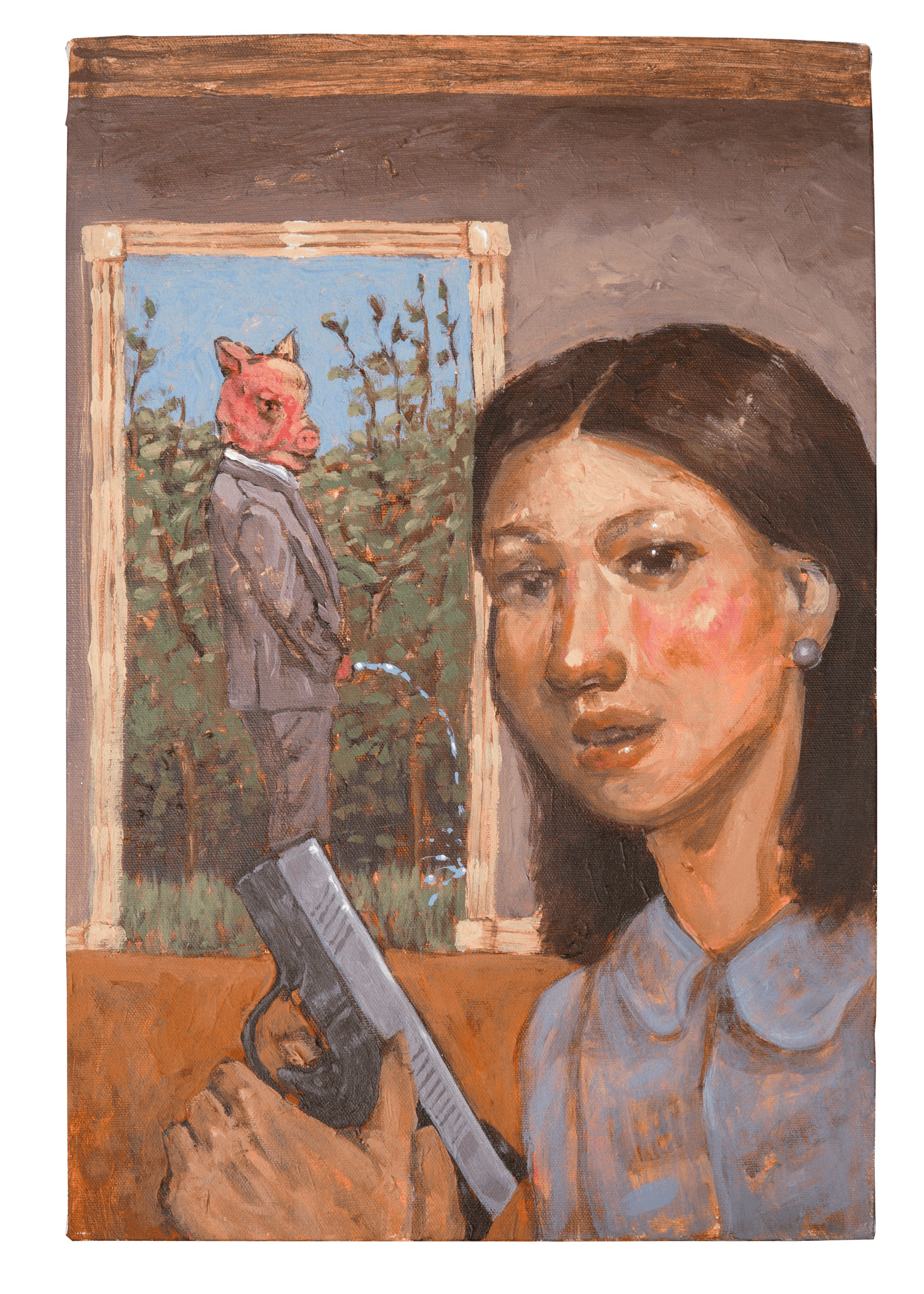
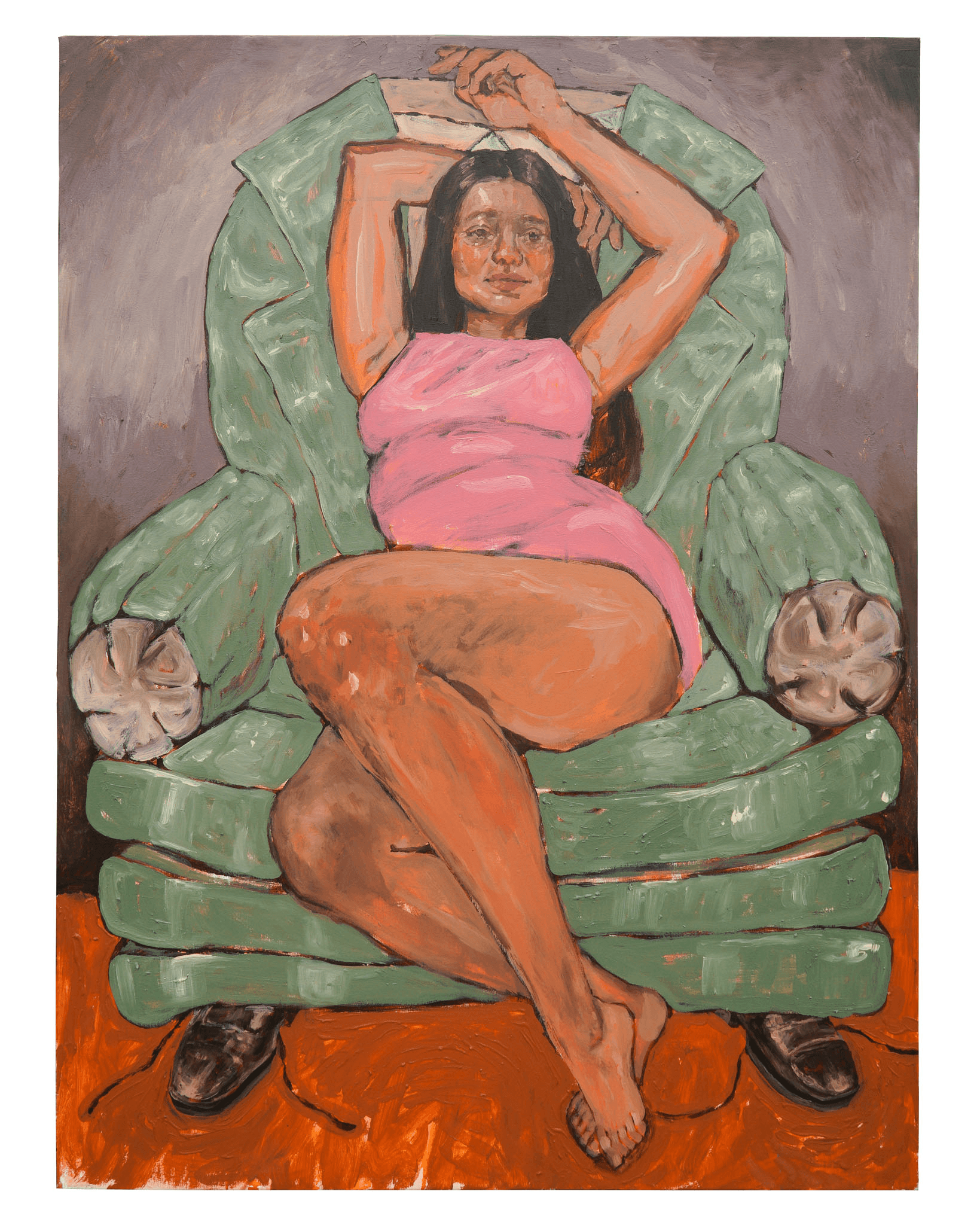
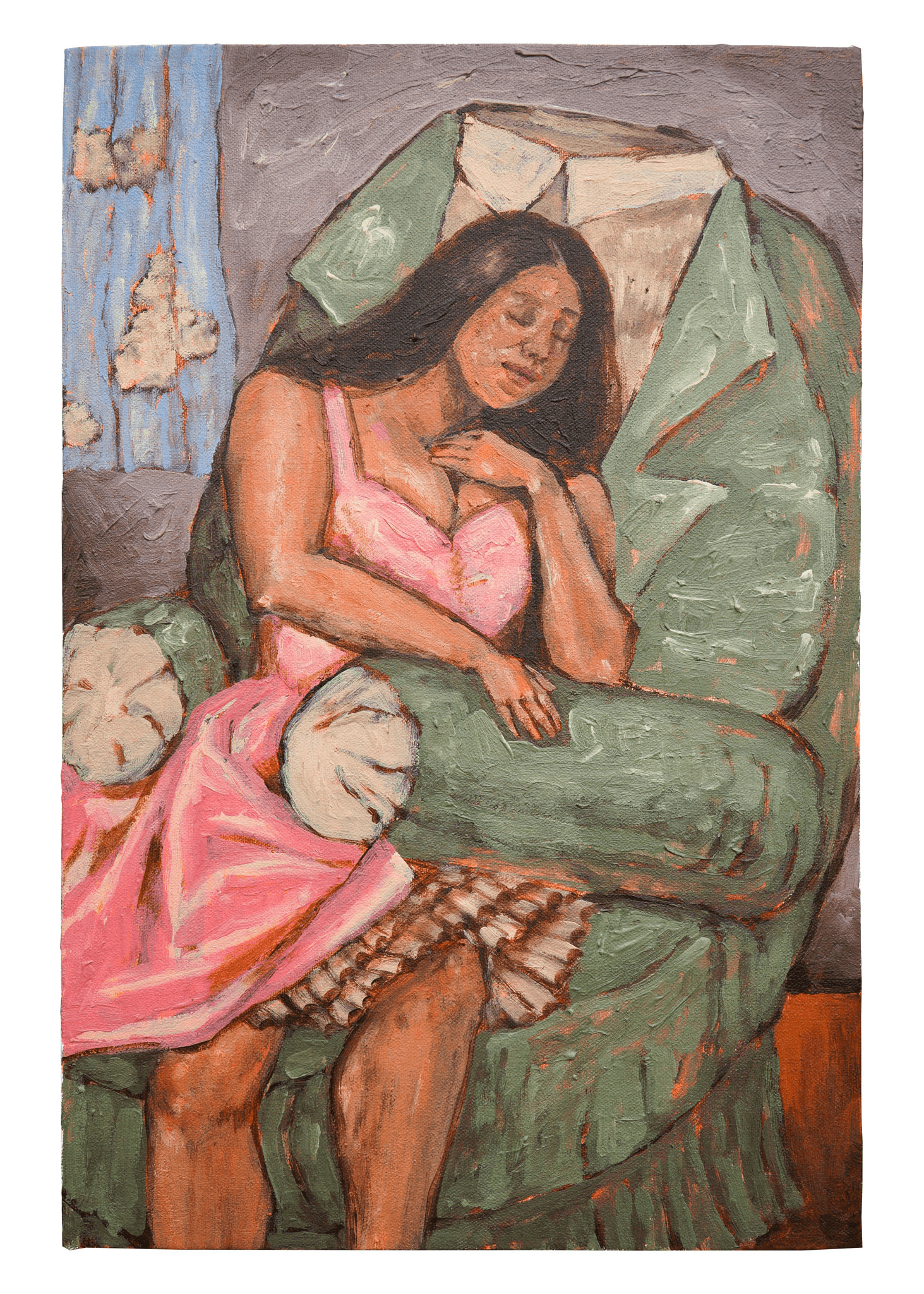
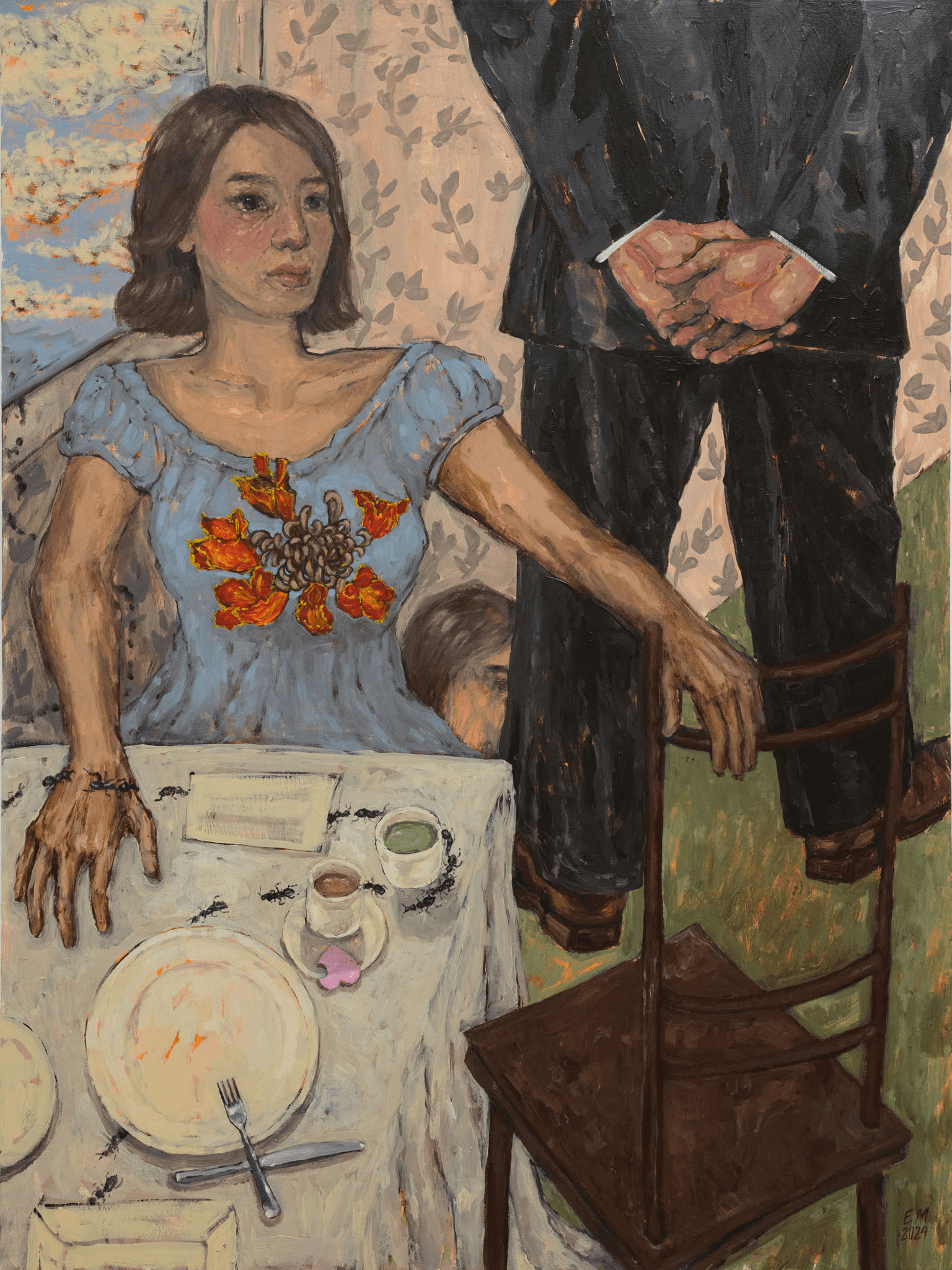
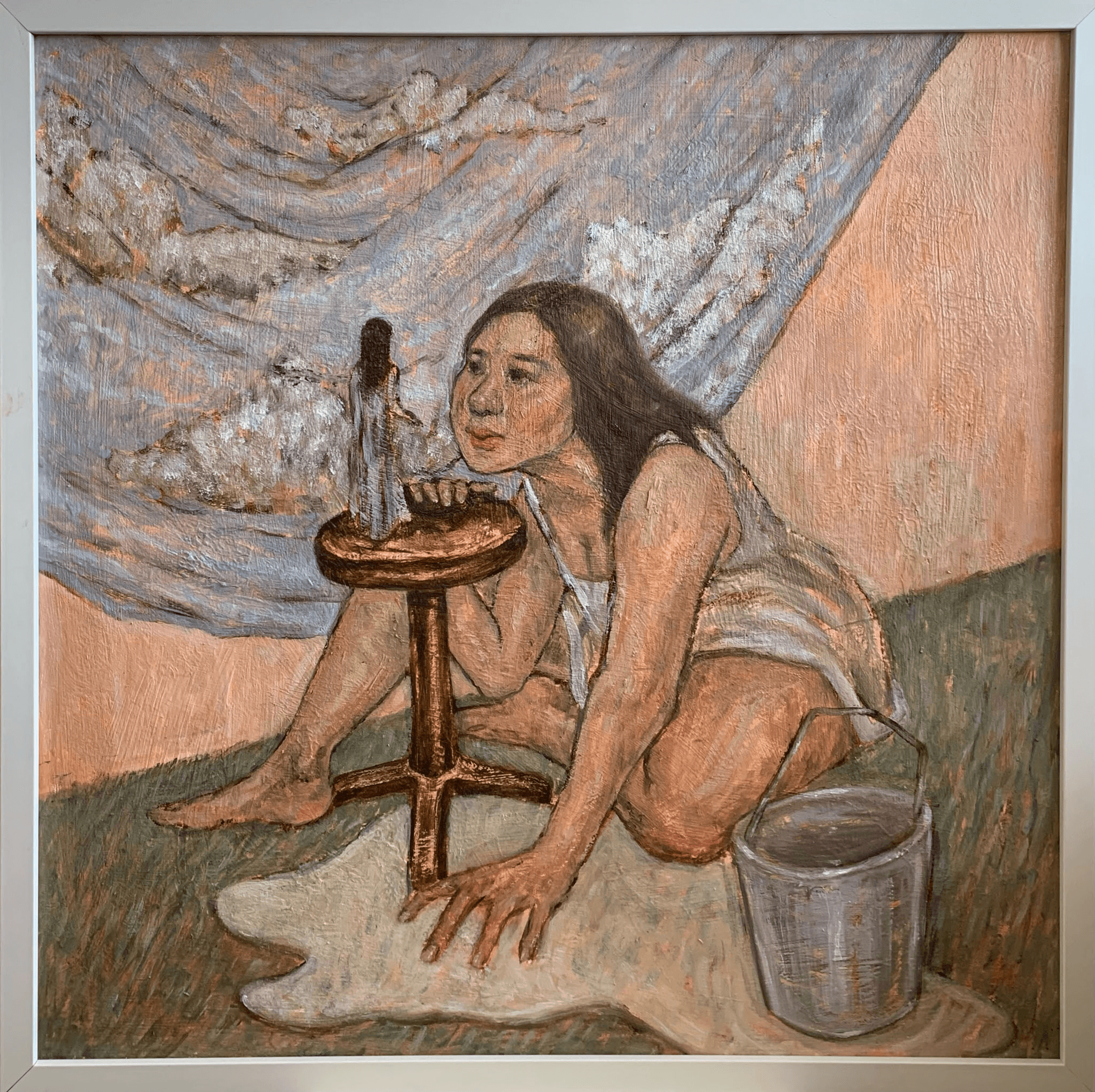
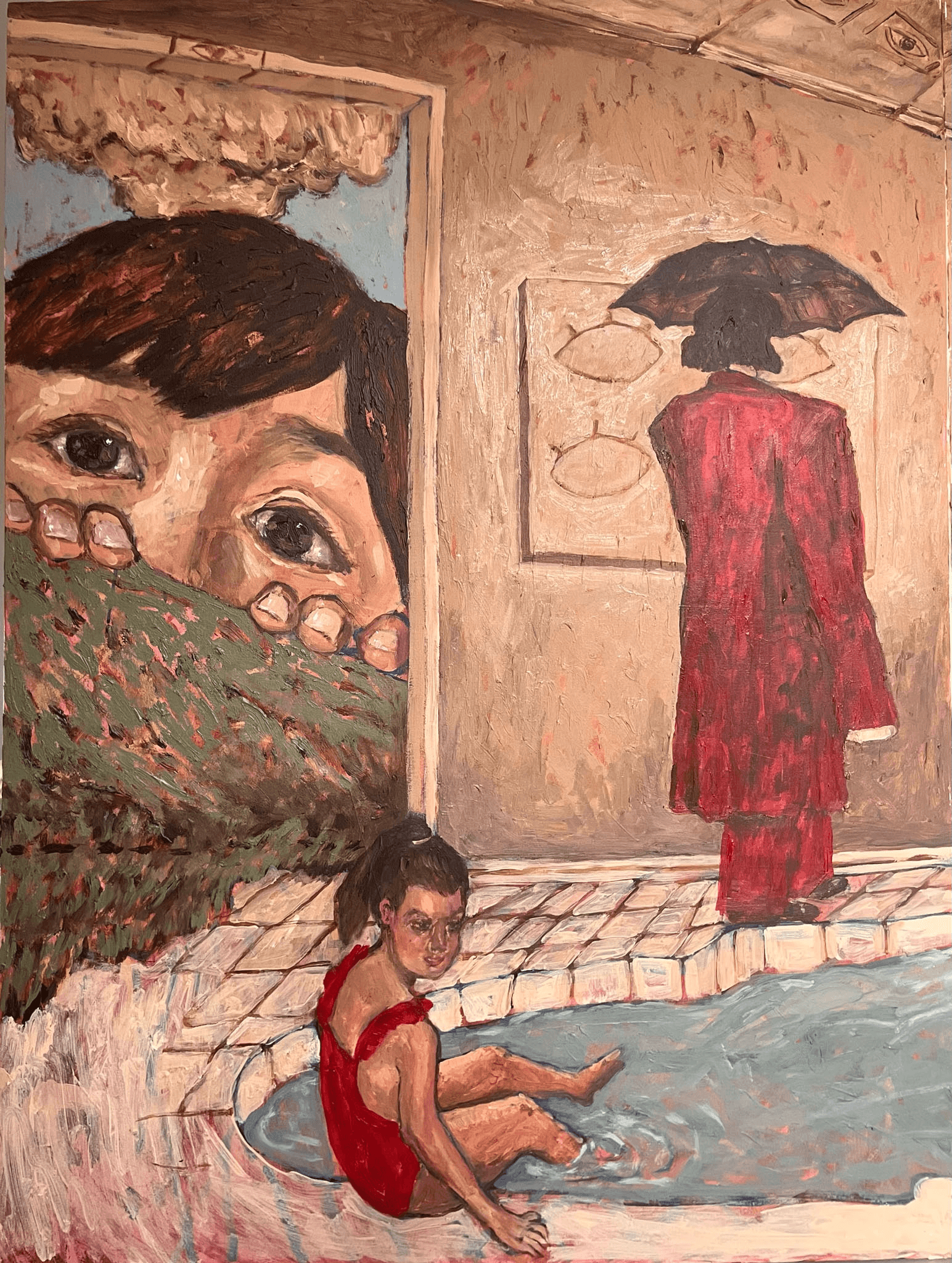
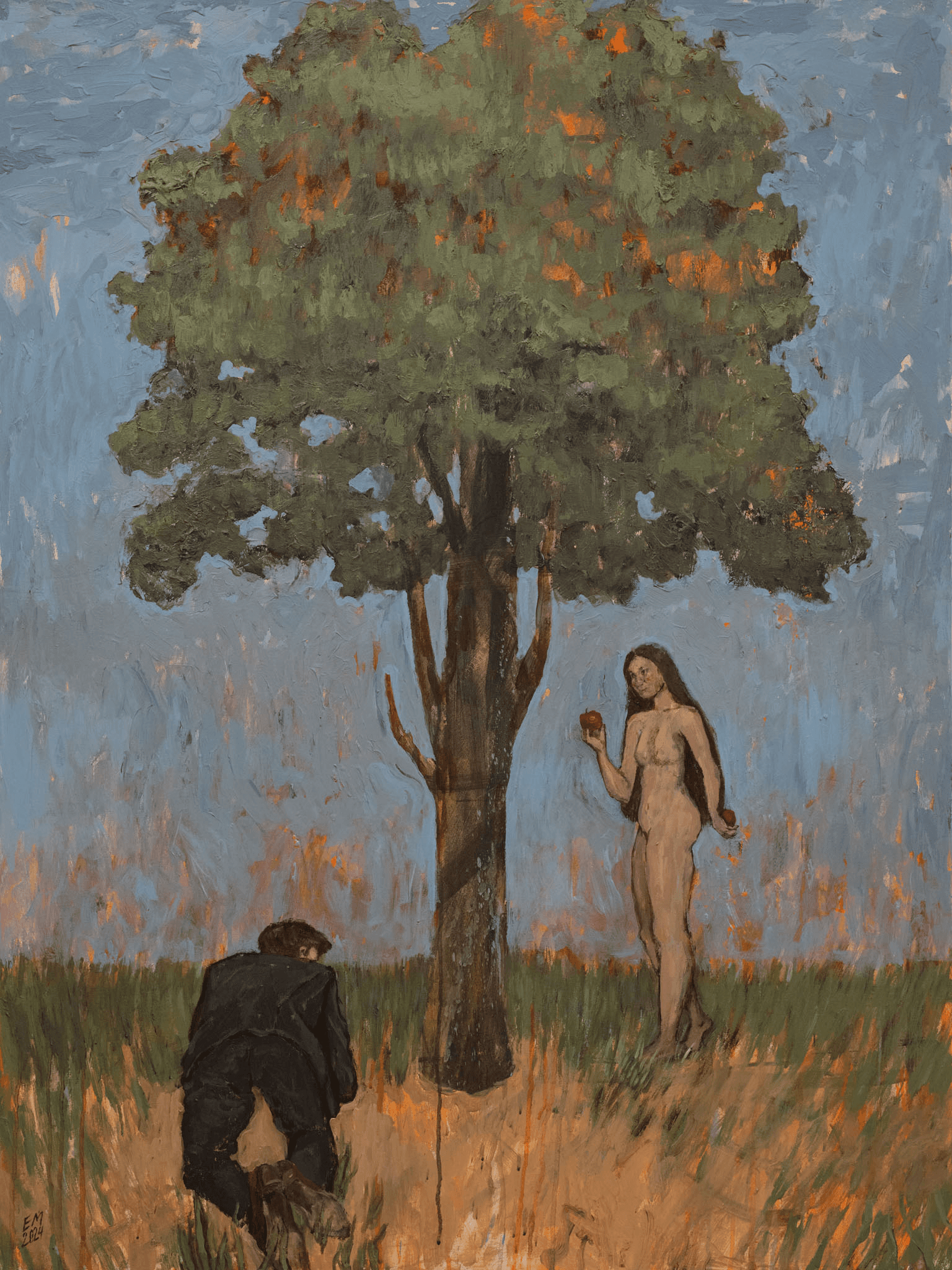
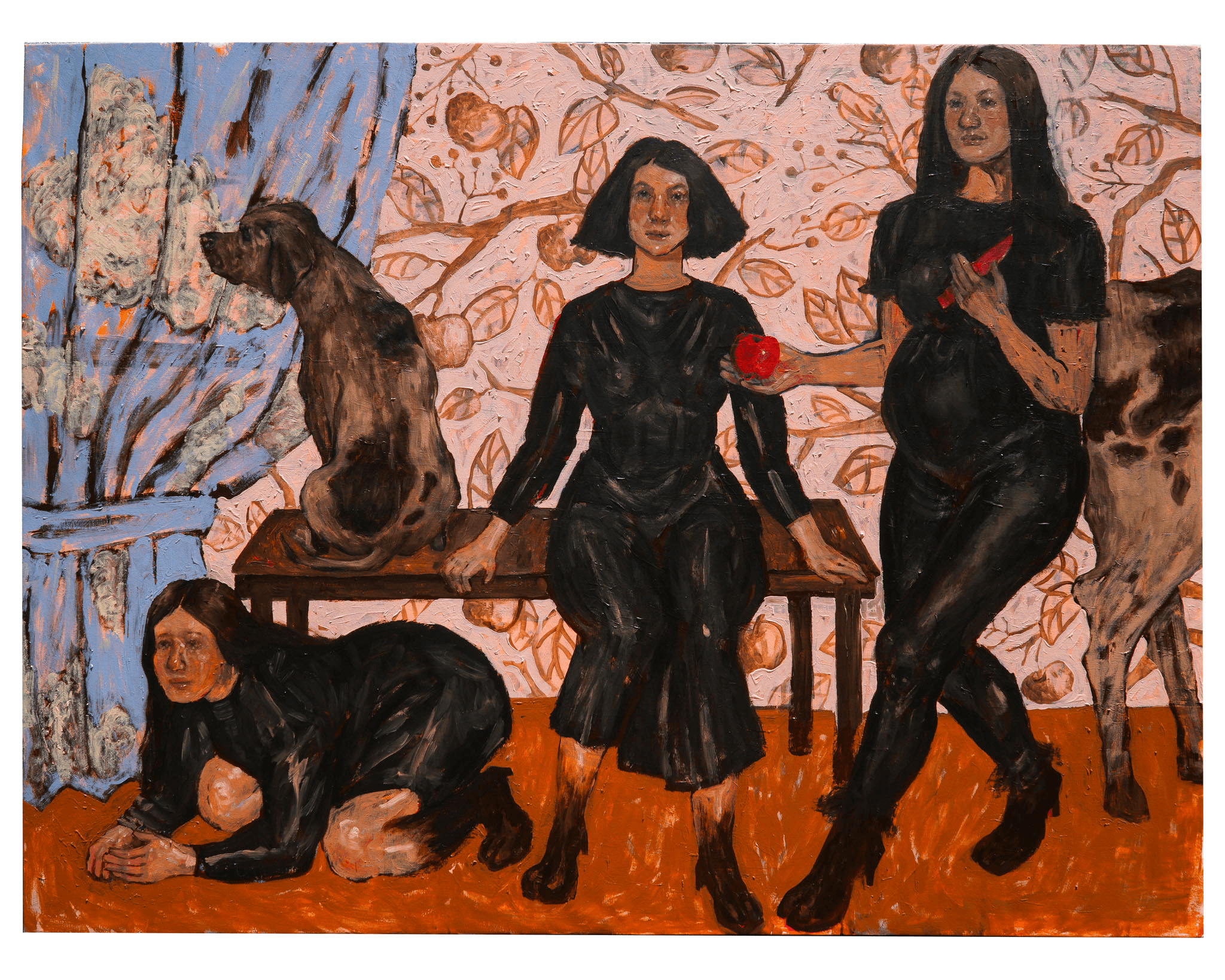
EM. Kill Your Darlings takes its name from the familiar advice given to writers: to let go of unnecessary storylines, characters, or sentences, no matter how attached you are to them. In many ways, I see my own practice as a kind of writing or storytelling. With this show, I wanted to be as raw as possible, laying bare the many storylines and narratives that exist within my ongoing journey as a woman. It isn’t my place to impose or preach a singular truth; instead, I want to show that everything remains subjective, and that each viewer has the choice of which “darling” in their own story to keep, and which to let go. My hope is that this process opens a space for self-reflection because, in the end, that is the real goal of this show.
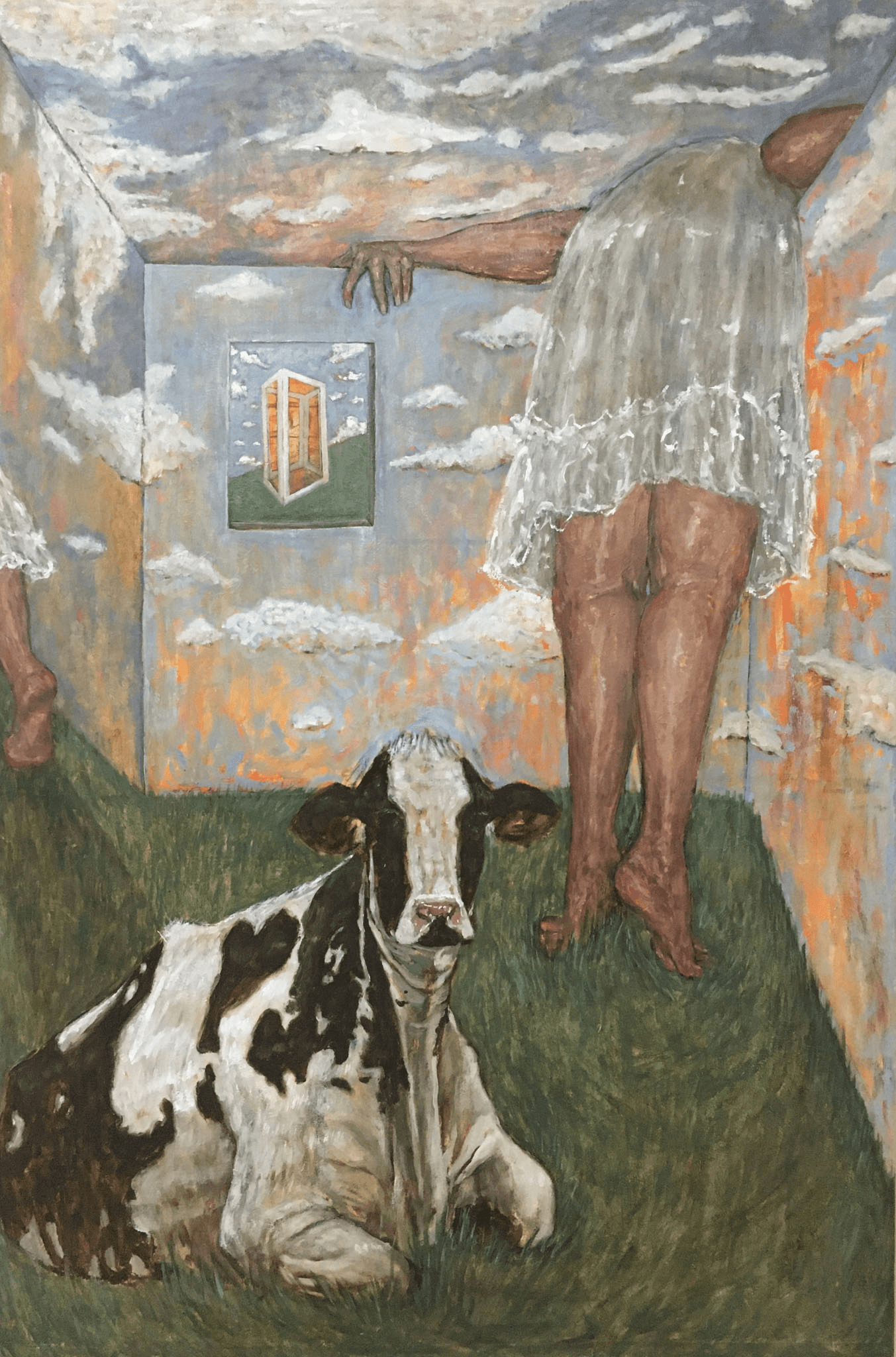
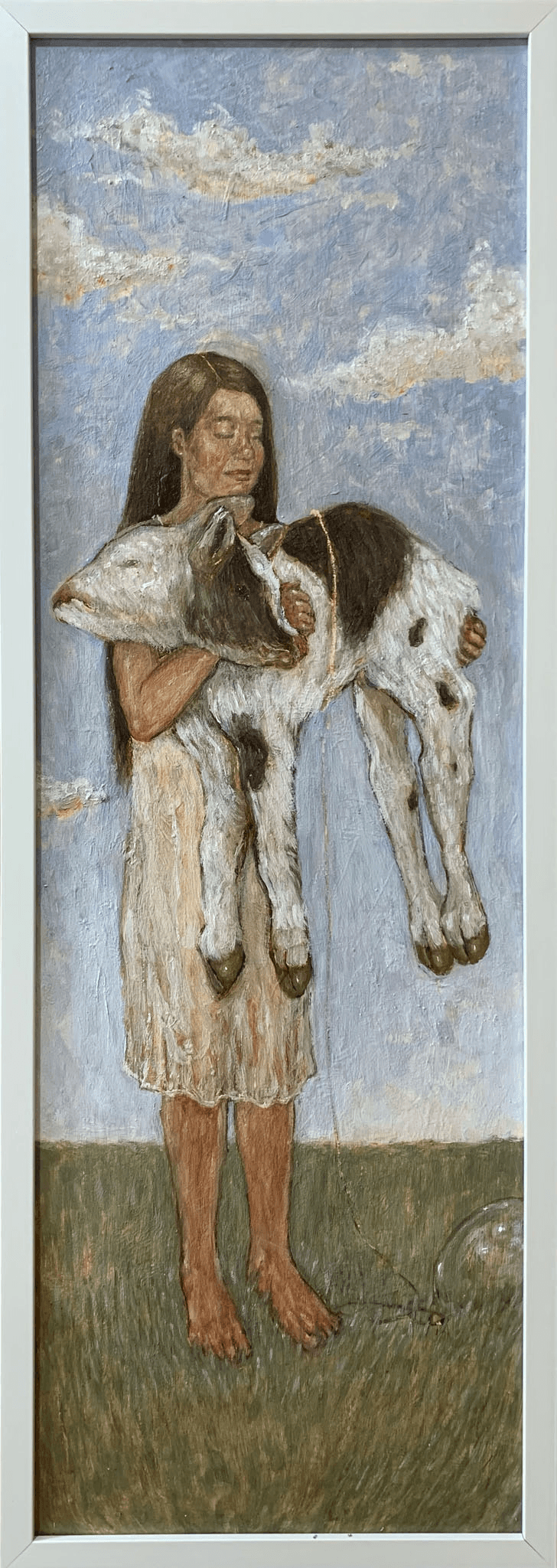
CNTRFLD. The cow motif in the exhibition seems to reflect both domestic life and the complexities of motherhood. How did you develop this idea, and what does it mean to you personally?
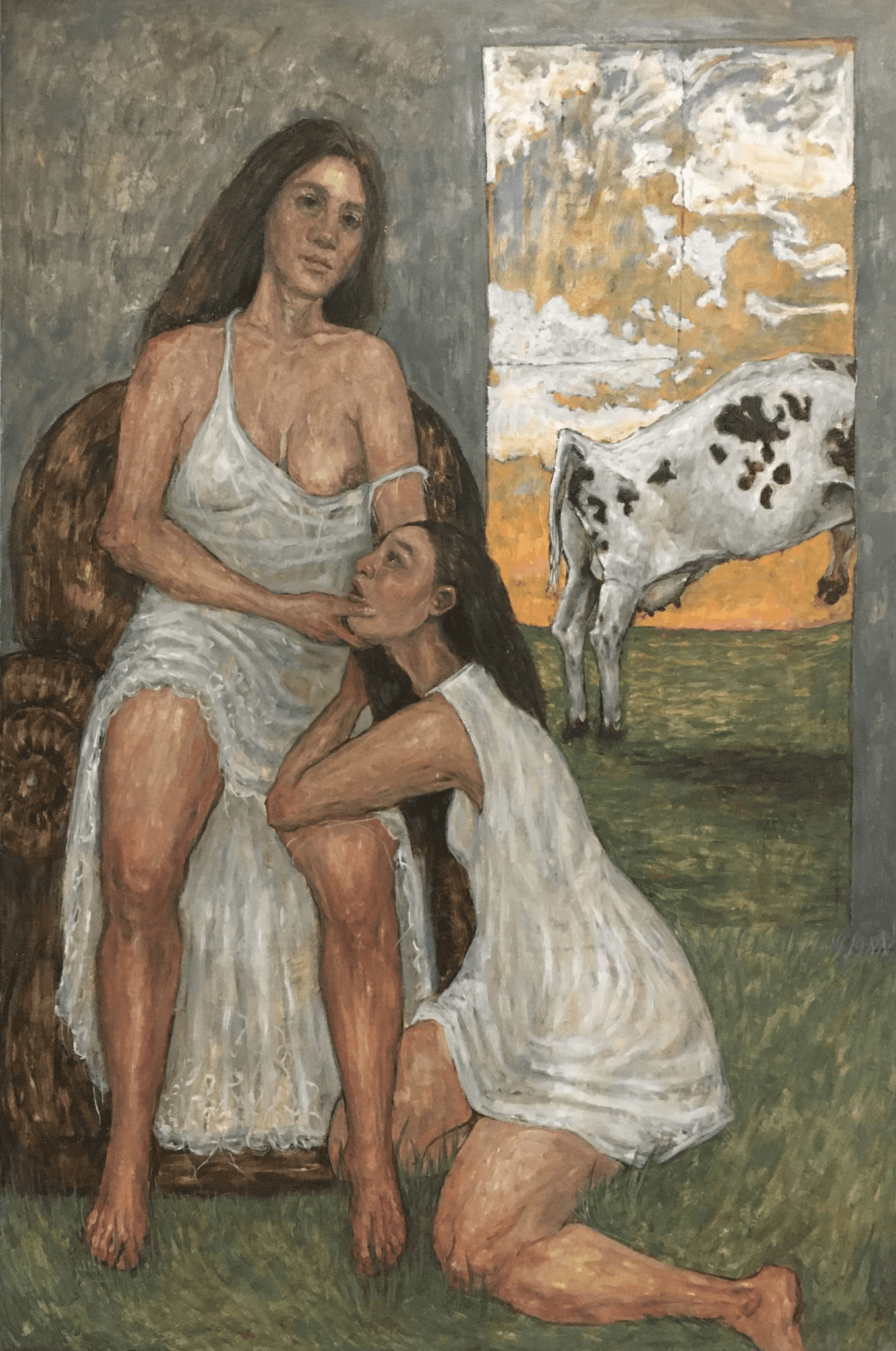
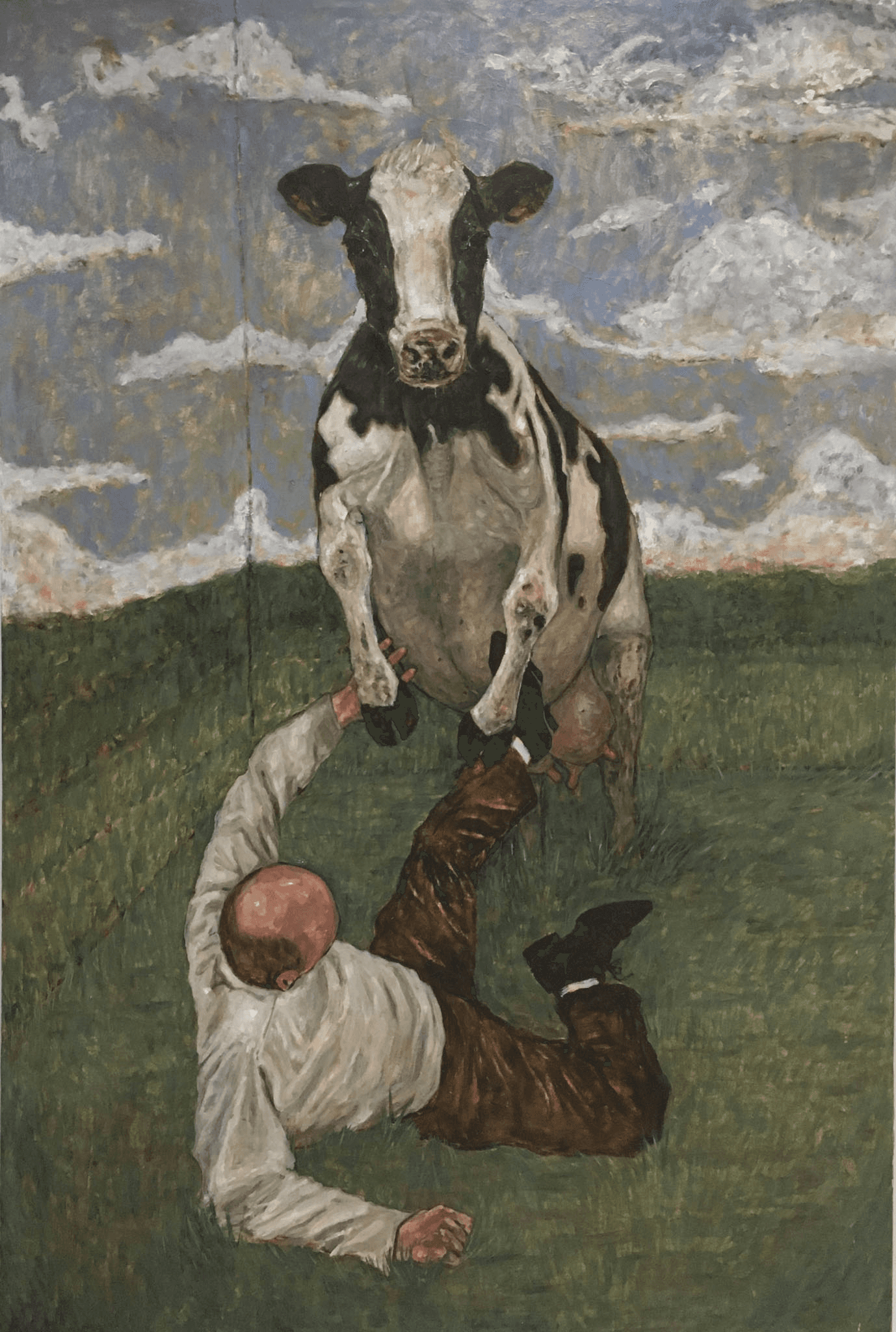
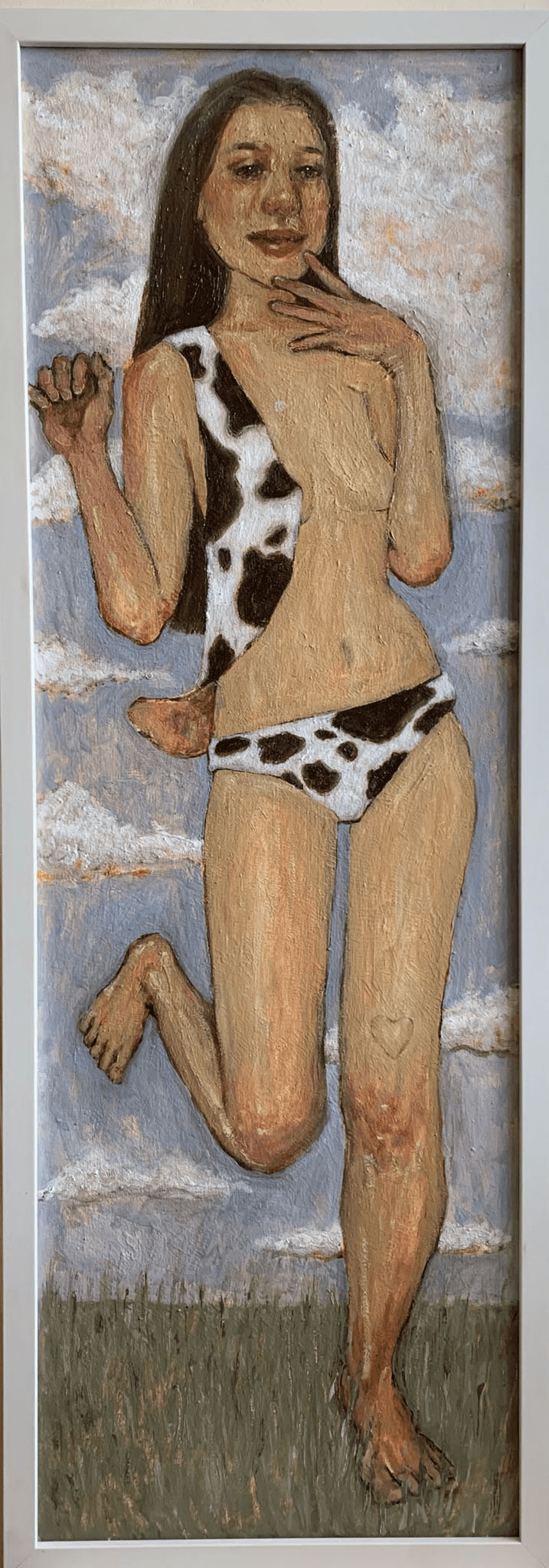
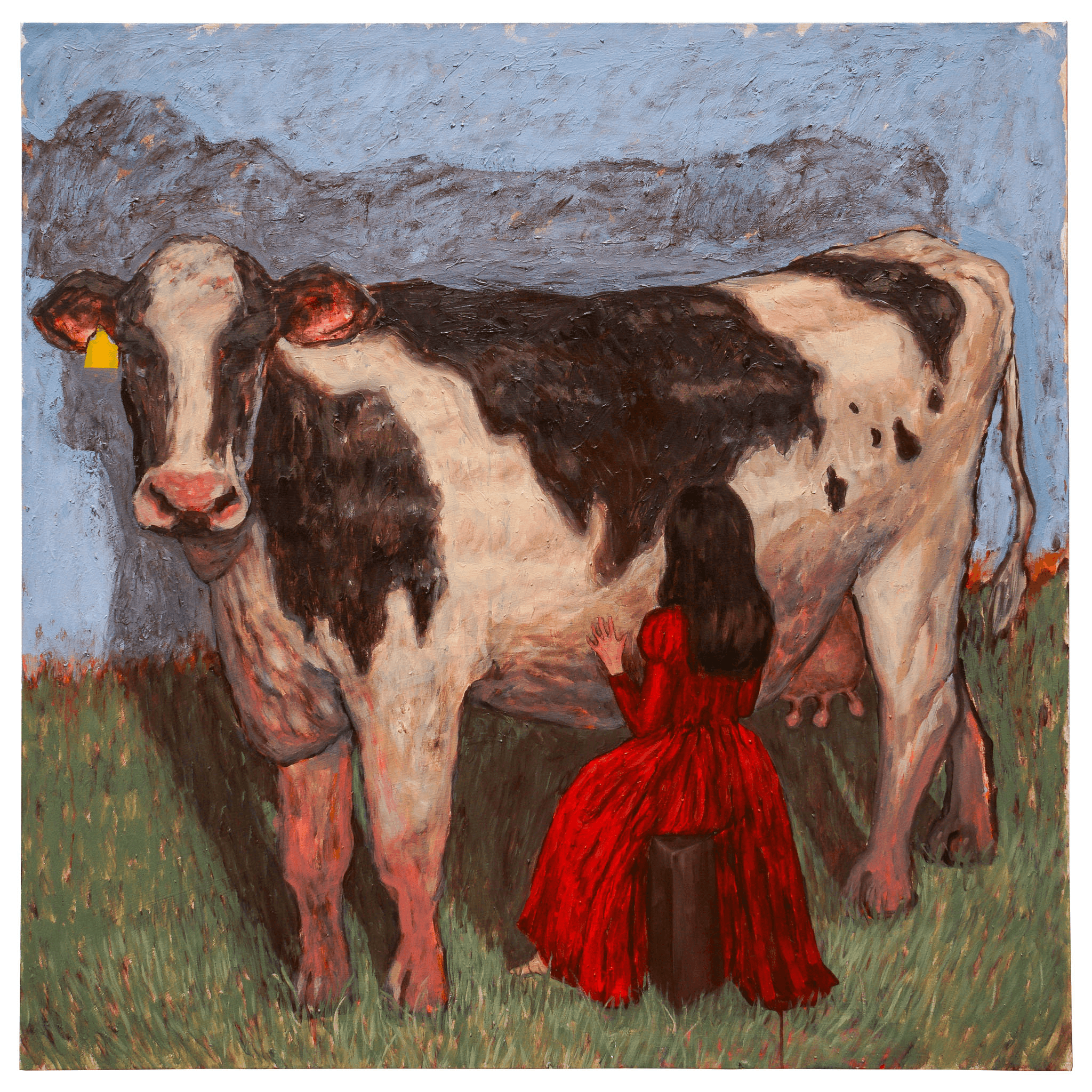
EM. The cow as a symbol in my work came from a chance encounter. Growing up in the Philippines, the cows I knew were always white or brown. But during one of my runs back in my hometown, I came across a cow that looked different, like it didn’t belong among the rest. It wasn’t extraordinary in itself, but it stayed with me. At the time, I was home for the holidays, something I usually avoided, but that year I had returned to grant my grandmother’s wish to spend time with my mother. Being in the same house as her was triggering; I coped by staying out as much as possible, only coming home for dinner and sleep. Whenever I was home, it felt like I wasn’t in my own body. That’s when the cow became more than just an image, it became a symbol. In many cultures, cows are seen as nurturing and majestic, yet they are also treated as mere sources of milk and meat, often to the point of exploitation. I began to see a parallel in how society views women: revered as sustainers, yet reduced to their roles as caretakers, their full potential stifled within a narrow framework of service and sacrifice. The cow, for me, became a reflection of this contradiction both sacred and expendable, both powerful and diminished.
CNTRFLD. As a woman in the contemporary art scene in the Philippines and Southeast Asia, what challenges or opportunities have stood out to you?
EM. Honestly, one of the hardest things is that as women, we’re still expected to serve first as daughters, wives, mothers before we’re seen as individuals or artists. When I was in Kuala Lumpur for my residency in 2023, I noticed that in some places, these expectations are even tighter, and it made me realize how much more progressive we are here in certain ways. That weight follows you everywhere, even into the art world. But at the same time, it’s what pushed me to dig into my own history and contradictions. In a way, that challenge became an opportunity to use art to break cycles, question inherited narratives and make room for stories that are usually kept quiet.