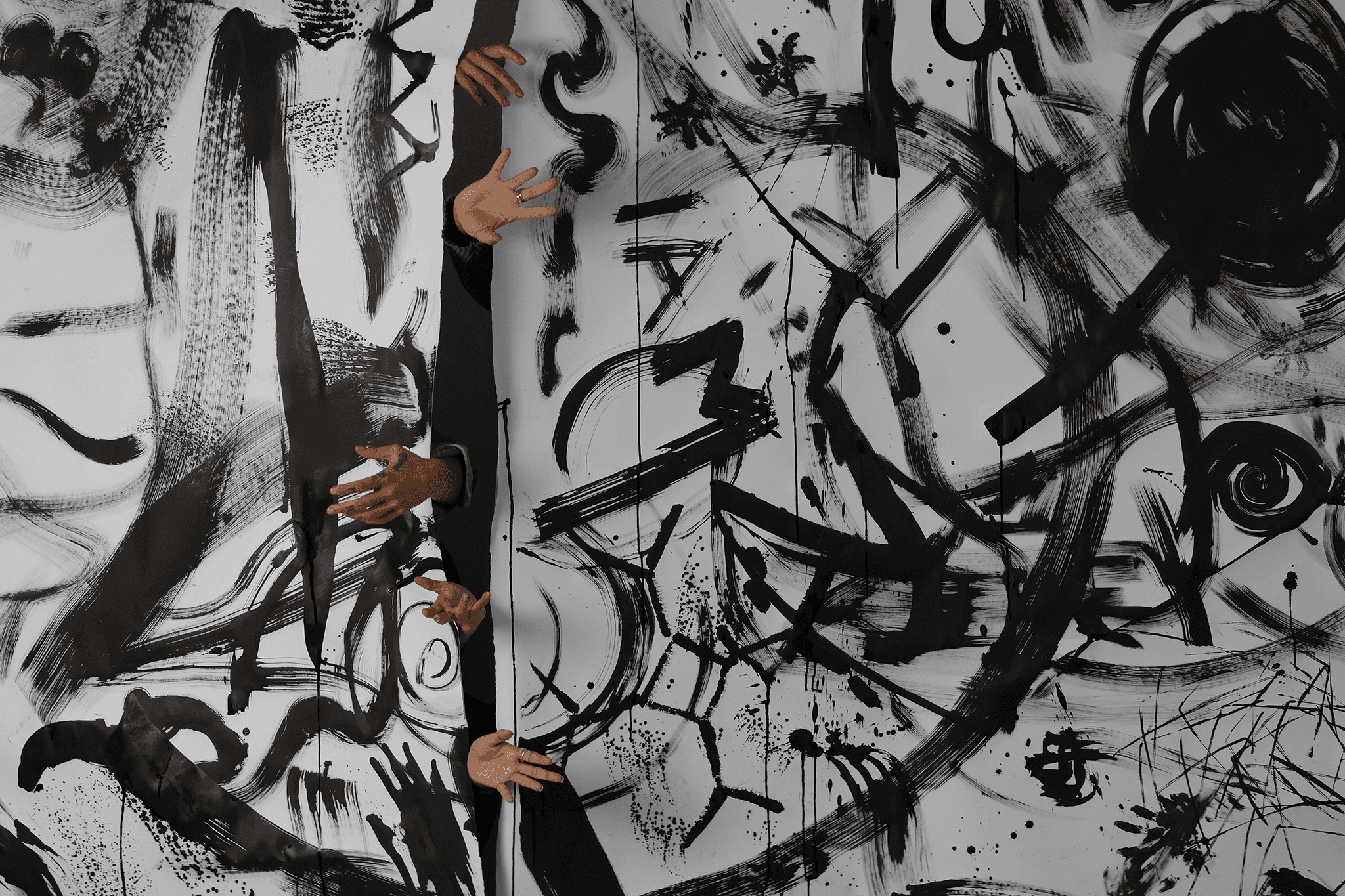
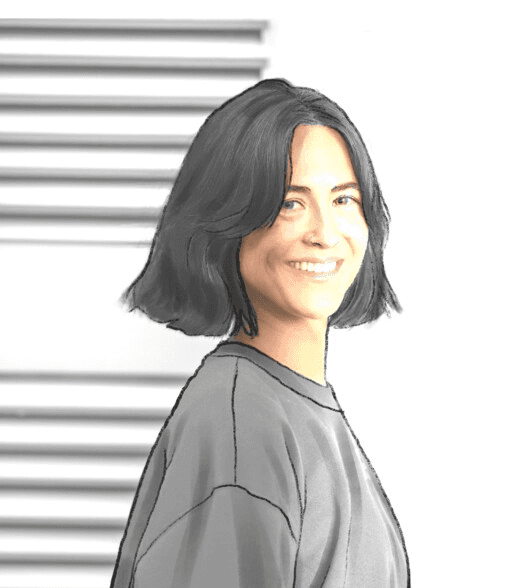
"Navigating the contemporary art world as a woman of mixed heritage brings challenges: visibility, cultural translation, disconnection, and the pressure to access platforms without tokenism or compromising authenticity. These experiences have clarified my role in creating space for intersectional, diasporic stories that are often overlooked."
—Lynda Lorraine.
CNTRFLD. You began your creative journey in fashion before moving into contemporary art and filmmaking. Looking back, how did your upbringing and heritage as a British Anglo-Filipina shape that path, and what inspired the transition across disciplines? Were there early influences—family, cultural traditions, or mentors—that sparked your interest in creativity?
LL. Growing up British Anglo-Filipina gave me a dual lens on culture, aesthetics and storytelling. My childhood was steeped in the textures, sounds and rhythms of Filipino family life alongside British cultural and historical influences. Nurturing a curiosity for contradiction, overlap and experimentation. Fashion became my first formal medium of self-expression, teaching me about materiality, performance and narrative through the sculpting of and around the body. Alongside this, I continued life drawing and photography from my formative years, so moving into contemporary art and filmmaking felt like a natural extension of translating lived experience into visual work. I wanted to explore identity, memory and belonging on a broader canvas. Where narrative, performance and image could intersect more fluidly and reach wider audiences. Early influences came from family storytelling, my British father’s accounts of early 20th century life contrasted with my mother’s stories of the Philippines, often told through food and living culture. The resilience, improvisation and ceremony inherent in diaspora life shaped my experimental approach. Equally formative were mentors: from my school art teacher Bruce Tompkinson, who first opened the world of fine art, classical artists and galleries to me. To Louise Wilson, Course Director of my MA in Fashion at Central Saint Martins, whose fierce approach to life, purpose and artistry deeply influenced my practice. Ultimately, my time working at the Royal College of Art since moving into contemporary art and filmmaking taught me to embrace hybridity using experimentation across disciplines as a way of inquiring into self and community
simultaneously, and recognising art as both a sustainable creative force and a way of living.
CNTRFLD. As a second-generation Filipina growing up in the UK, how have questions of identity, belonging, and diaspora informed your work? Do you find these themes shifting as your practice evolves?
LL. Questions of identity and diaspora are at the core of my practice. Growing up across multiple cultural contexts, family memory, language, belonging, the sense of ‘home’ and heritage were always entangled with contemporary experience. My father’s passion for British history contrasted with my mother’s perseverance,
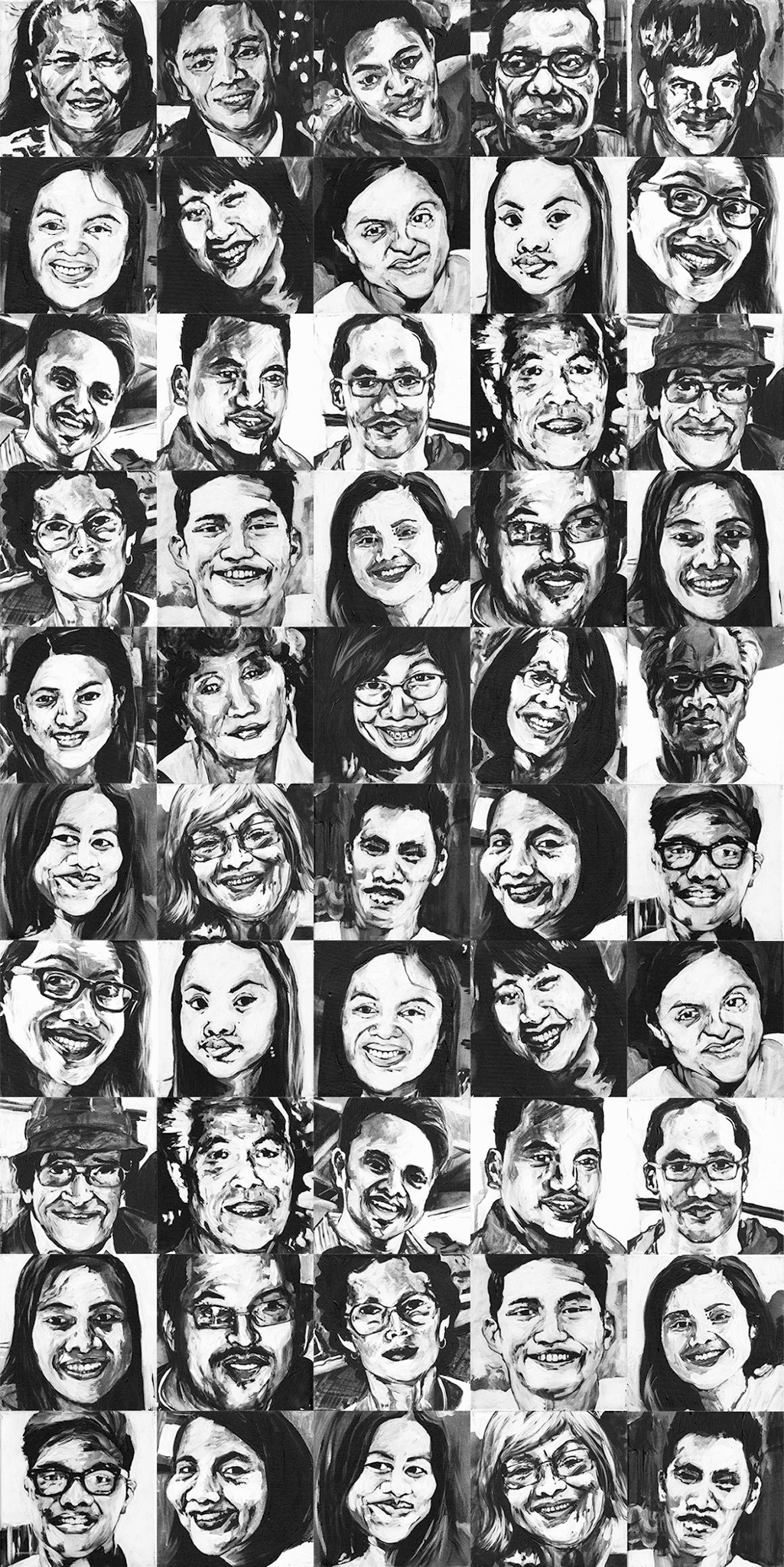
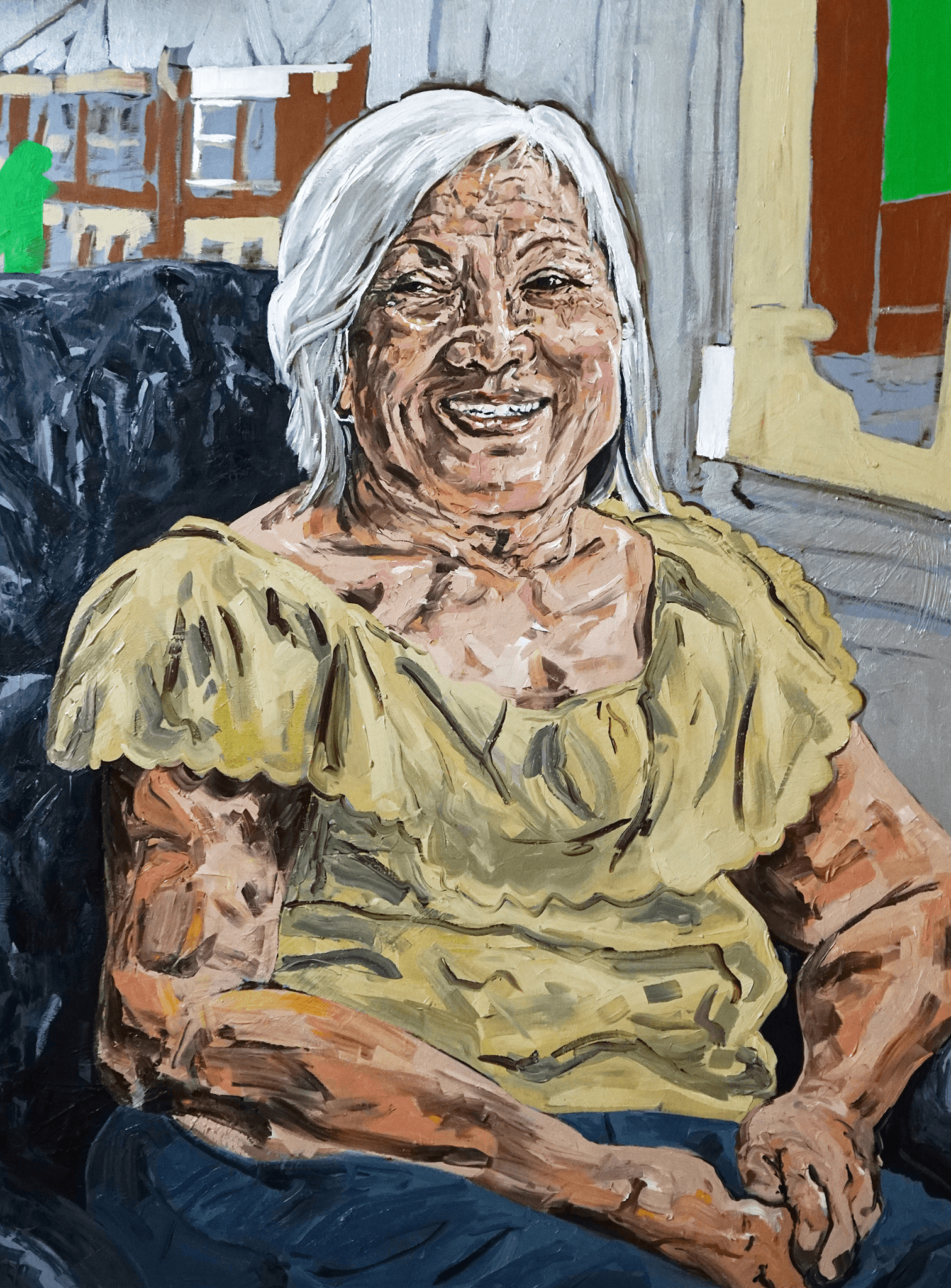
sacrifice and resilience as an economic immigrant, navigating life far from the culture and family that shaped her. Early projects explored these personal and family histories: displacement, migration and memory. Over time, my work has expanded to address broader questions of self-agency within a Western-centric global cultural landscape, drawing on pre-colonial traditions and mythologies as counterpoints to colonial narratives. Alongside this, I have developed community-based and educational projects, exploring how self-agency and shared storytelling can foster dialogue across difference. Experimentation with language and indigenous Filipino concepts is a central tool for both self-expression and connection with audiences. I see my practice as both personal and collective: documenting the shifting nature of diasporic identity across generations while creating spaces for reflection on contemporary histories. Making and sharing become acts of cultural preservation and creative innovation, shaping new forms of institutional storytelling and expanding my role in cultural translation.
CNTRFLD. What has your experience been as a woman of mixed heritage navigating the contemporary art world, and how do you see your role in reshaping narratives within western-centric spaces? Are there challenges you’ve faced, or moments of breakthrough, that stand out?
LL. Navigating the contemporary art world as a woman of mixed heritage brings challenges: visibility, cultural translation, disconnection, and the pressure to access platforms without tokenism or compromising authenticity. These experiences have clarified my role in creating space for intersectional, diasporic stories that are often overlooked. At times, I benefit from privileges tied to whiteness that grant access my kababayan [compatriots] may not have, while simultaneously facing suspicion and barriers for not fitting dominant ideas of whiteness. This tension revealed how Western narratives dominate contemporary art, often silencing or marginalising mixed-heritage and diasporic voices even when we are present at the table. Breakthroughs come when projects resonate beyond my own experience. Such as the Hidden and Heart of the Nation exhibits I participated in. Where audiences connected with the artworks’ themes of memory, migration and family history. Validating authenticity over conformity. Increasingly I hear from members of the Filipino diaspora, both online and in person, who express the joy of seeing themselves reflected in my work. These messages are deeply affirming, but they also carry grief for what has been erased or rebuilt under cultural and lived brutality. These moments drive me to keep building my studio and creative practice as a platform for cross-cultural storytelling. Spaces where intersectional identities can be seen, heard and celebrated on their own terms.
CNTRFLD. Through Lynda Lorraine Studio, you’ve created a platform that bridges art, education, and community. What do you see as the most important role of the studio in fostering dialogue, cultural reconnection, and self-expression? Could you share an example of a project or collaboration where you saw that vision come alive?
LL. Lynda Lorraine Studio acts as a laboratory for interdisciplinary practice, combining commissioned art, performance and film with pedagogy rooted in identity and memory. At its core is the belief that creative practice can empower participants, especially for diasporic artists, to connect heritage, language and personal history. Reclaim erased narratives and transform visual traditions into acts of visibility and reconnection. The most rewarding moments come when participants uncover and express their own stories on their own terms, rather than shaping them to fit expectations or safety. For example, a recent hybrid workshop I designed and facilitated invited members of London’s Filipino community to experiment with sound, text and visual storytelling in both native and adopted languages. By the end they had co-created performances and installations that were at once deeply personal and collectively resonant. Embodying the Studio’s mission to bridge education, art and community. Alongside this, my postgraduate study on the PG Cert in Creative Education at the Royal College of Art informs the Studio’s approach. Through the ‘Experiments in Learning’ module, I am developing an accessible, decolonial pedagogy that draws on indigenous Filipino psychology, self-agency and the power of spoken and visual language as tools for empowerment.
CNTRFLD. You’ve spoken about education as a cornerstone of your practice, particularly empowering those of diasporic identity. How do you bring decolonial frameworks and creative exploration into learning environments? Have you noticed any shifts in how students or participants respond when they’re given that space to explore identity?
LL. Decolonial frameworks are embedded in my teaching through language, indigenous Filipino concepts and narrative exploration. I encourage students to interrogate histories, memory and identity while experimenting across disciplines. When participants are given space to explore their own cultural or diasporic narratives, after initial hesitance they often respond with confidence, originality and joy. These processes spark self-discovery and community dialogue, showing how creative exploration can be a powerful tool for empowerment. In this way, Lynda Lorraine Studio functions as a safe zone for experimentation. Blending critical thinking with creative freedom and offering nurturing spaces to those who may not traditionally have access to them.