CNTRFLD. You’ve balanced high-profile commercial projects with your personal fine art practice. How do you navigate the tension—or synergy—between these worlds? Are there moments when commercial work has informed your personal projects, or vice versa?
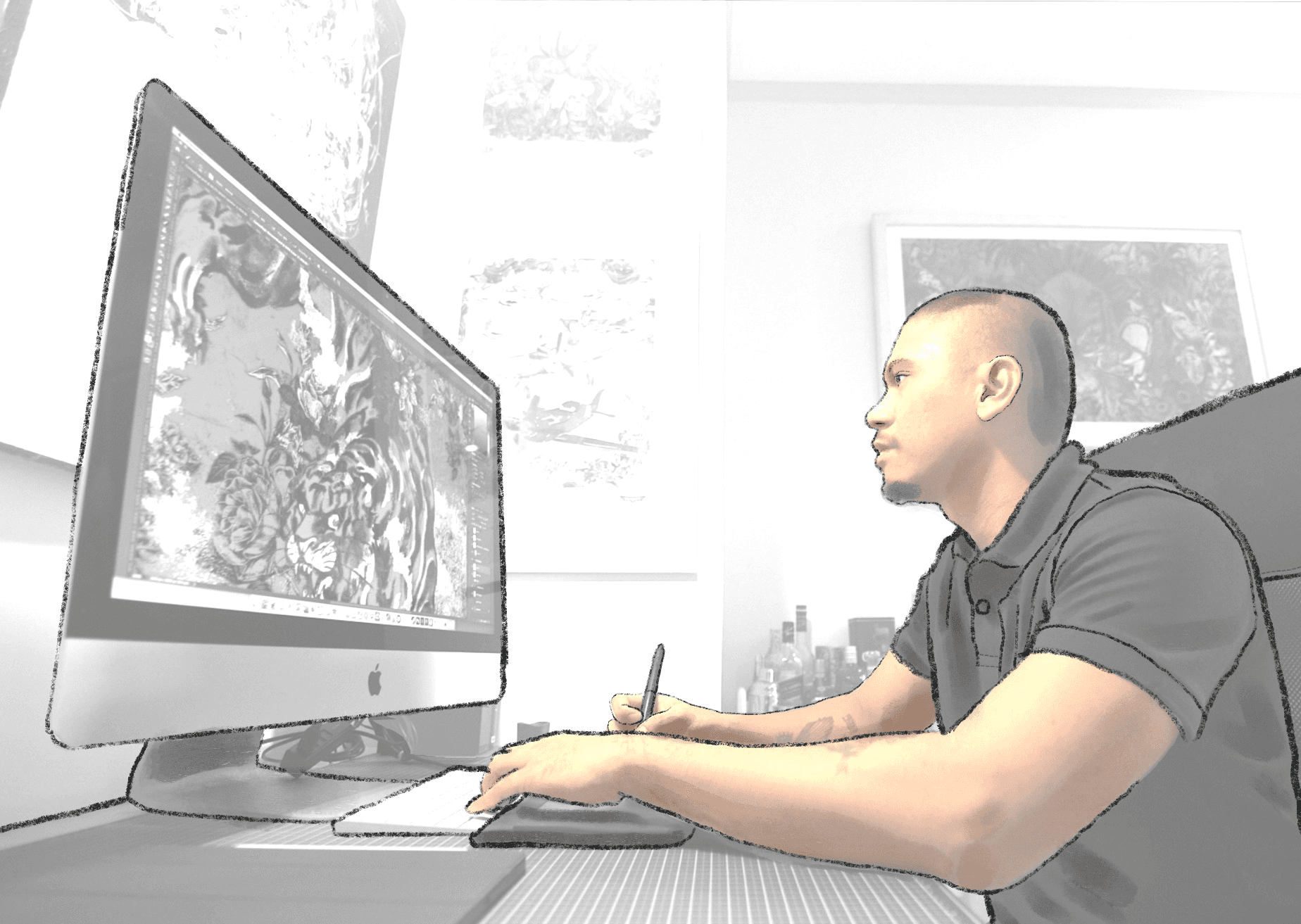
DF. When I had my first solo exhibition in 2014, I consciously tried to separate my commercial work from my gallery practice. At the time, I wanted to be taken seriously as a visual artist, and I carried this notion that coming from illustration, design, or digital fields might not be taken seriously within a fine art space. I also felt that my work was too commercial for a gallery context. Because of that, I created a clear boundary between the two practices, hoping to define them as entirely separate.
Over time, though, maintaining that division became exhausting. As my practice evolved, I began to realize that these two worlds didn’t have to compete, they could coexist and even strengthen each other. I started to see how the discipline, clarity, and adaptability I developed through commercial work informed my personal projects, while my fine art practice gave more depth and intention to the commercial work. Embracing that overlap allowed me to work more honestly and fluidly, without forcing myself into rigid categories.
CNTRFLD. Fashion and luxury brands often appear in your work. How has your interest in fashion shaped your visual language, and what draws you to integrate these references? Do these references function more as narrative, symbolic, or purely aesthetic elements in your compositions?
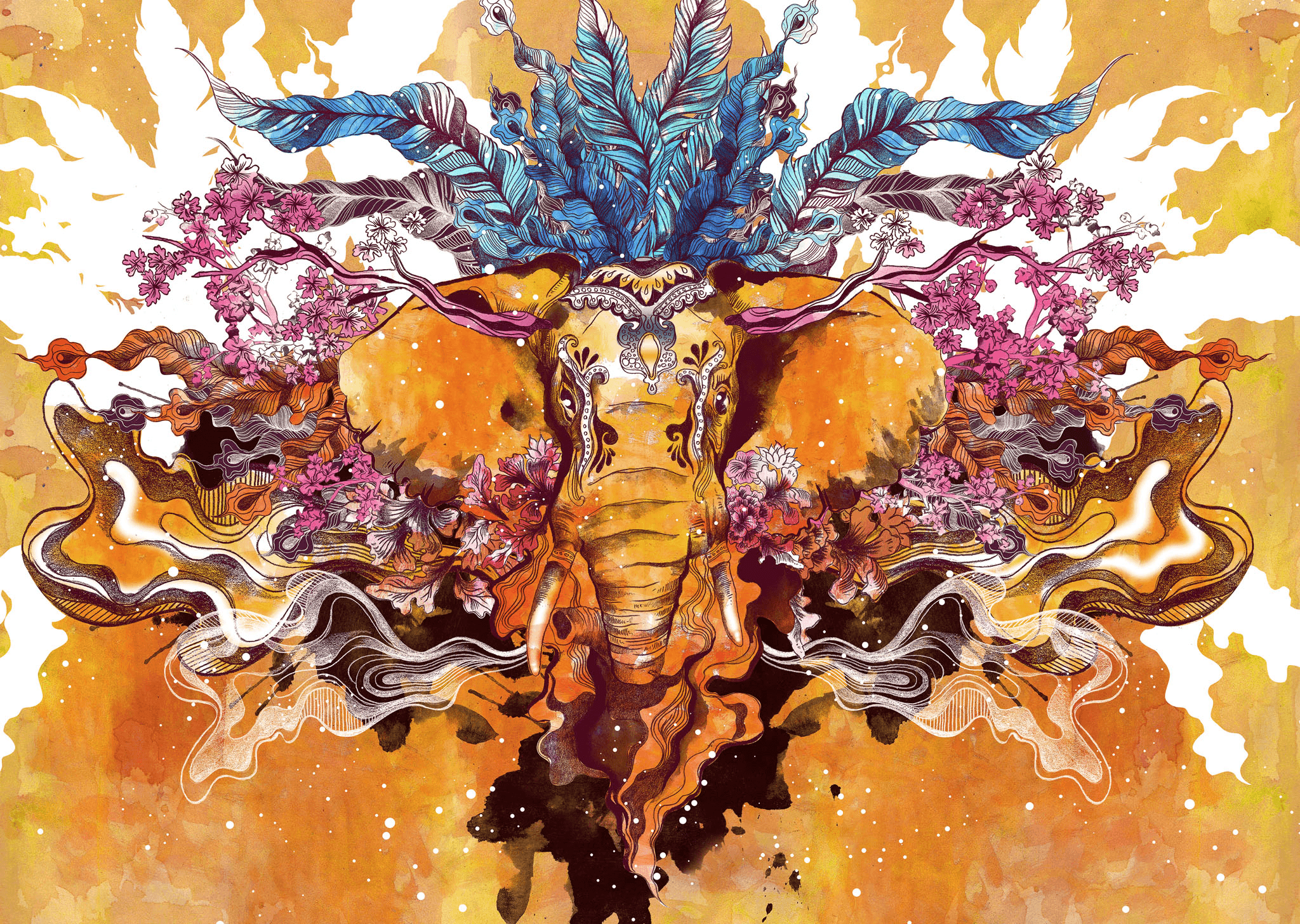
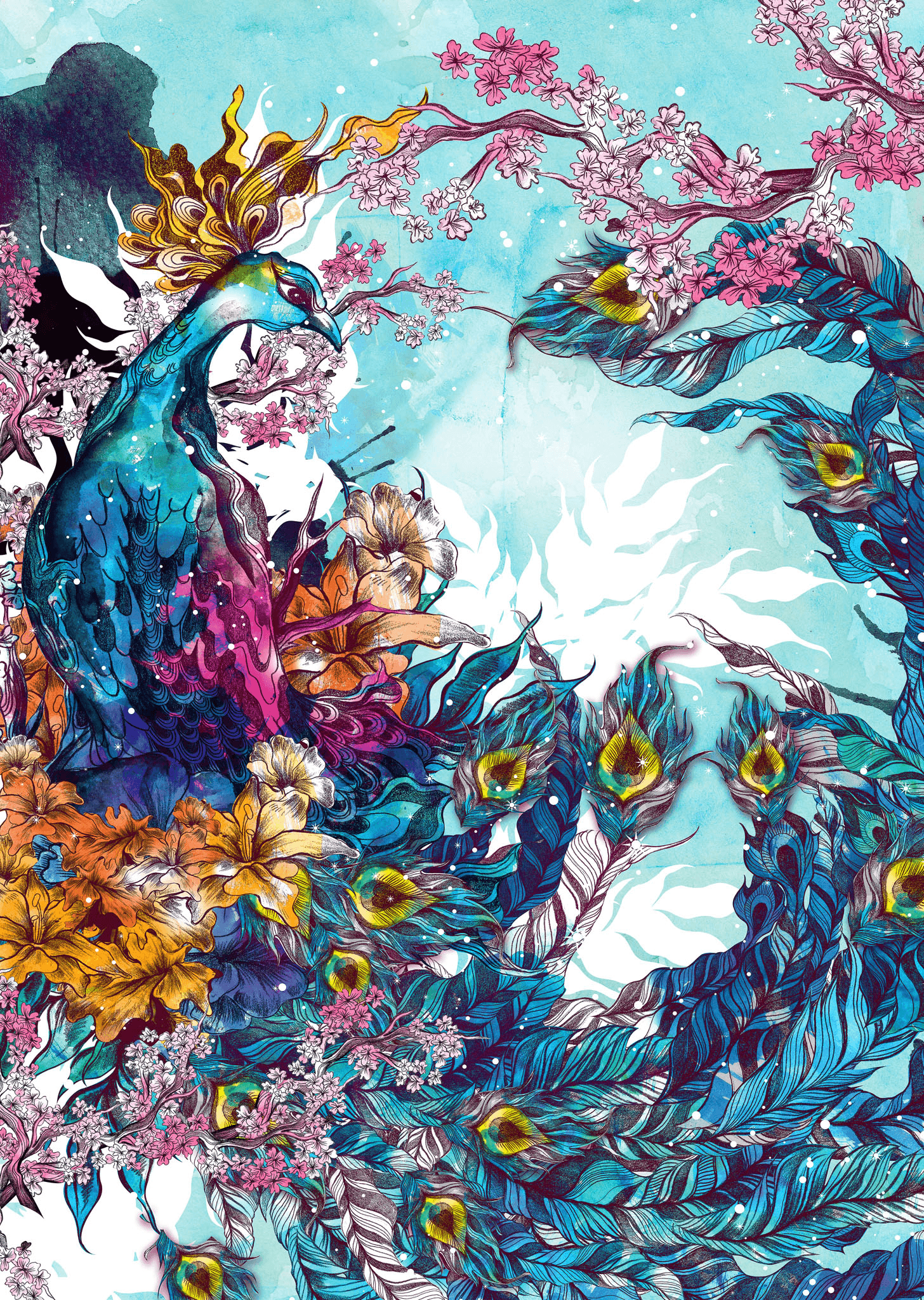
DF. It began when I did this personal project Brands in Full Bloom where I adorned luxury brand logos with floral motifs that fit to their personality. It gained a lot of traction and led me to my first luxury client, one of LVMH’s subsidiaries luxury retailer DFS Group. I created the illustrations of their Spring/Summer 2013 campaign which was rolled out across 14 major international airports. For a time, this work shaped the kinds of projects that followed, and I found myself doing mostly fashion-related collaborations.
It felt a bit limiting overtime, so I explored how my style could translate across different industries such as beauty, spirits, music, and food and beverage. Even in client work, I try to inject elements of my own culture, whether through color choices or composition. That said, commercial projects are always collaborative, the final vision isn’t solely mine, but something shaped together with the brand.
CNTRFLD. Alongside international collaborations, you continue to work with local Bacolod brands. What do these projects offer creatively, and how do they connect you to your community? Are there particular projects that stand out for their intimacy or impact?
DF. While I was doing mostly commercial work, I didn’t have many local collaborations. Most of my projects were international, but part of me always hoped to work more with people and brands locally. It was Fresh Start Organics & Farm, a Negros Island–based brand focused on sustainable, certified organic agriculture, who became my first local client in 2017. I did a large-scale illustration that still hangs at their restaurant, Lanai, to this day. From there, I began working with more local brands like Café Bob’s Flagship and Coffee Culture. There’s a deep sense of fulfillment in working with something homegrown and seeing my work exist here. It keeps me grounded and connected to home.
CNTRFLD. Wayfarer marks your first solo exhibition in ten years. What motivated your return with this show, and how did your thinking about colour, scale, or medium evolve during your time away from solo exhibitions? Were there experiments or personal projects that directly led to this series?
DF. After my last solo show in 2015, I lost some motivation and decided to focus more on my design career, though I continued to participate in group exhibitions. I told myself that if I were to have another solo show, it had to be something I truly felt confident presenting. In early 2024, I began doing studies with the possibility of a solo exhibition in mind, already preparing myself mentally for that. So, when Orange Project asked later that year if I would be open to doing the final show of 2025, I said yes, and promised myself to fully commit. I made a conscious decision to consistently join gallery exhibitions leading up to the solo show, which helped me build momentum and regain confidence in my practice.
The exhibition also became a celebration of my first ten years as a creative. It’s been a challenging path, and I’m deeply grateful that I’m still here, still making work. Through this show, I wanted to reflect on what I’ve learned over those ten years, particularly how I’ve finally found a middle ground where my different creative disciplines can exist in the same space, something I’ve struggled with for a long time.
CNTRFLD. The exhibition explores travel, displacement, and belonging. How did revisiting your childhood and migratory experiences inform the works on display? Are there recurring visual motifs or symbols that reflect these experiences, and do you see the exhibition as a personal reconciliation, a universal story, or both?
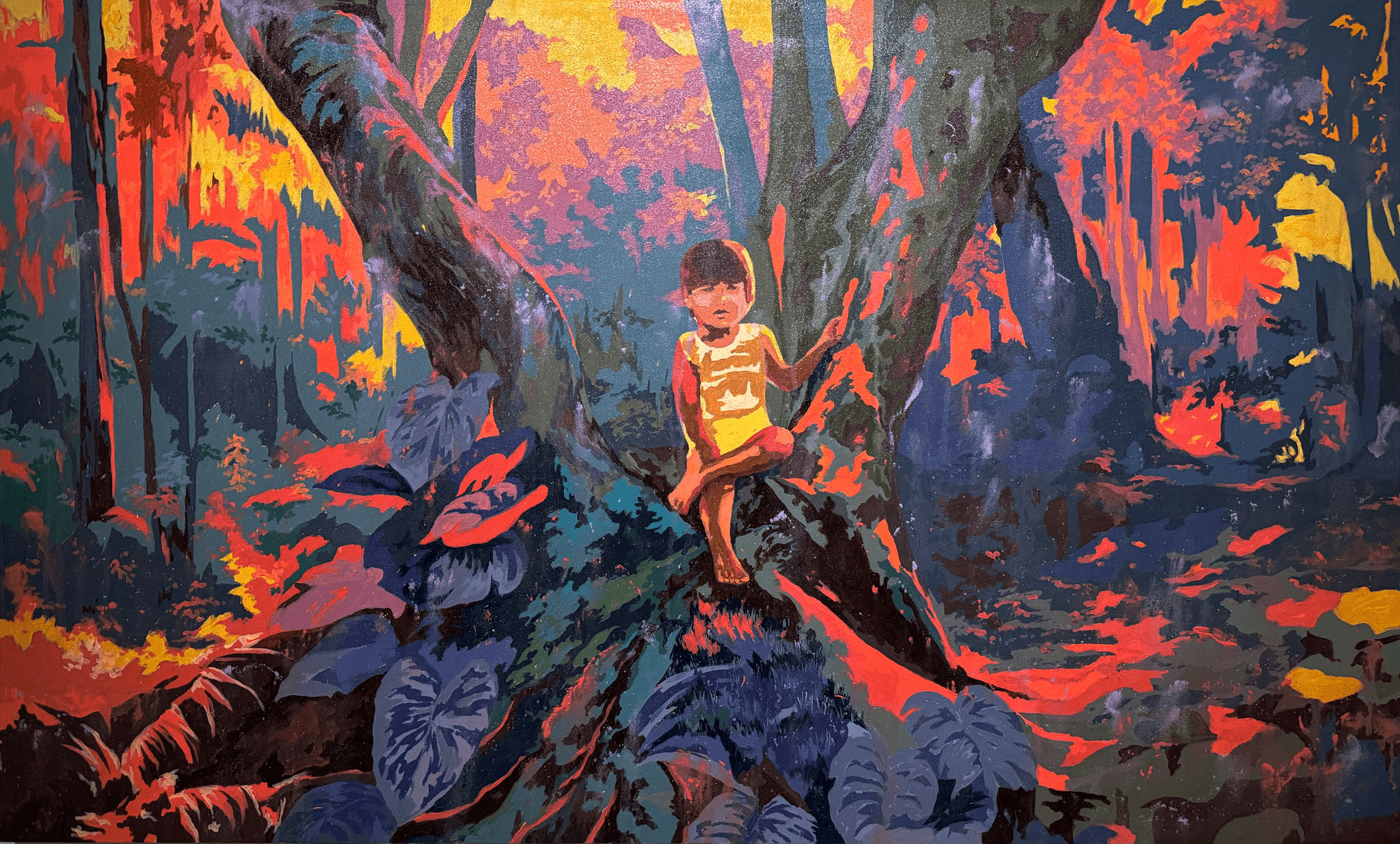
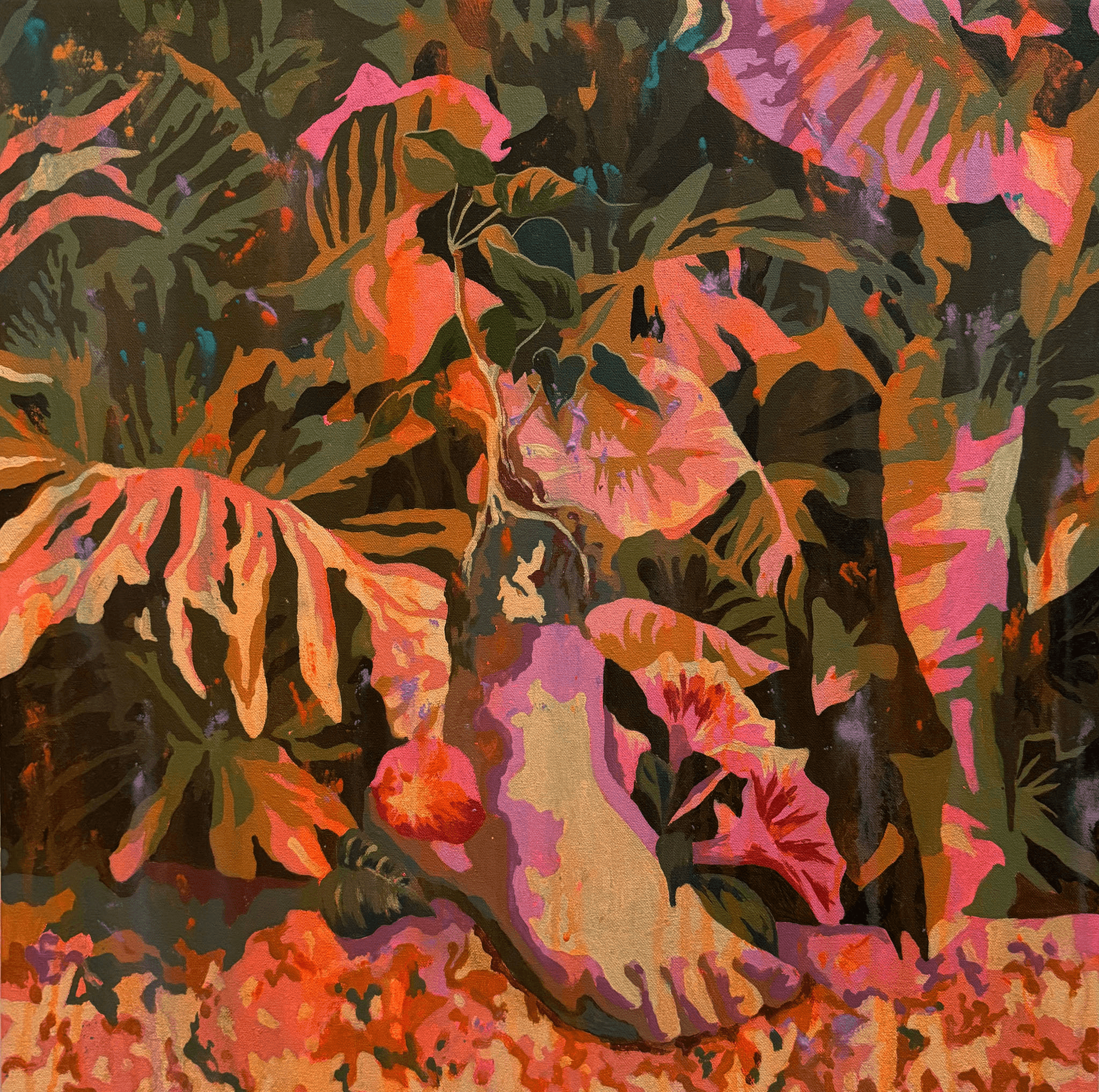
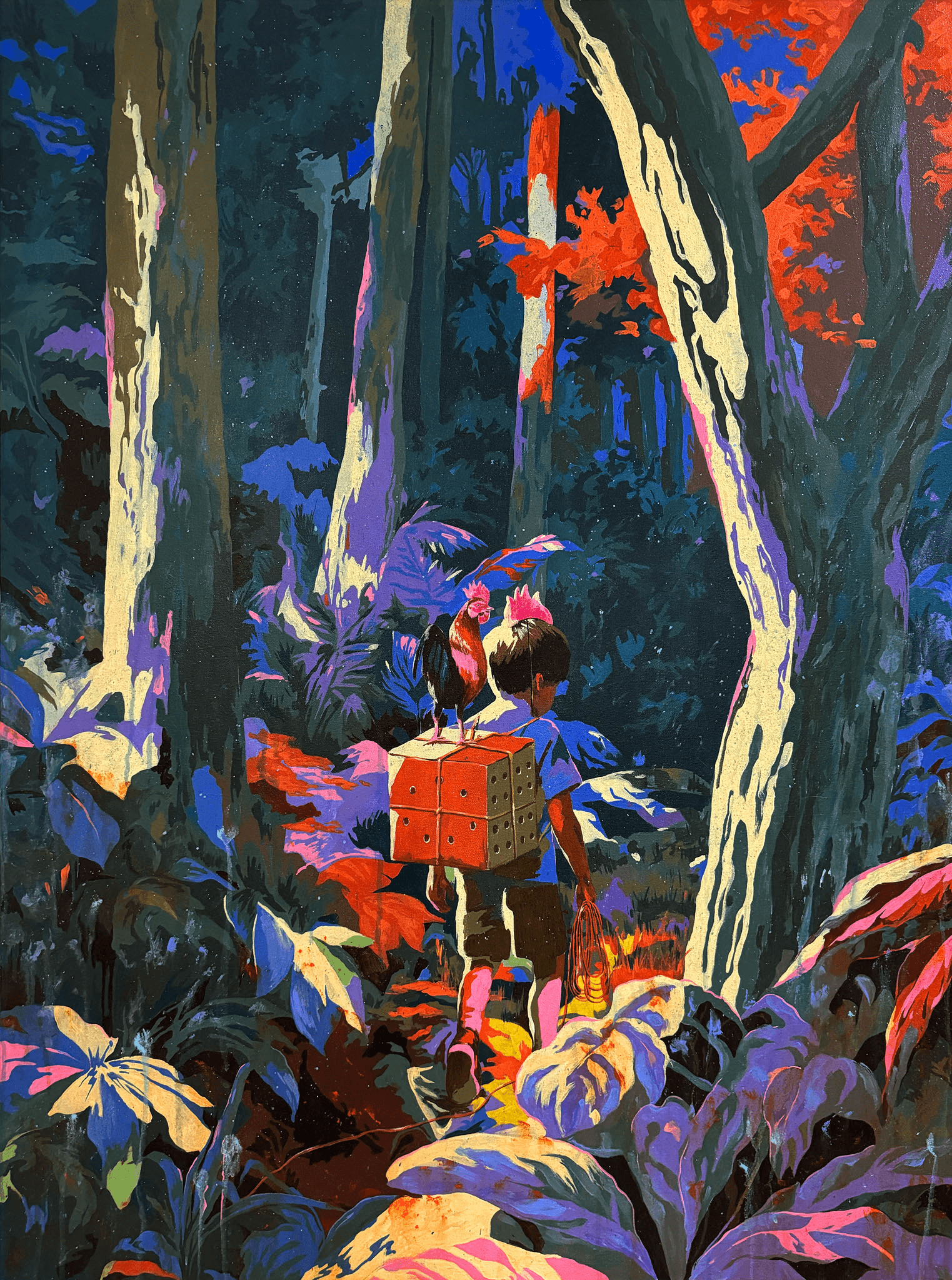
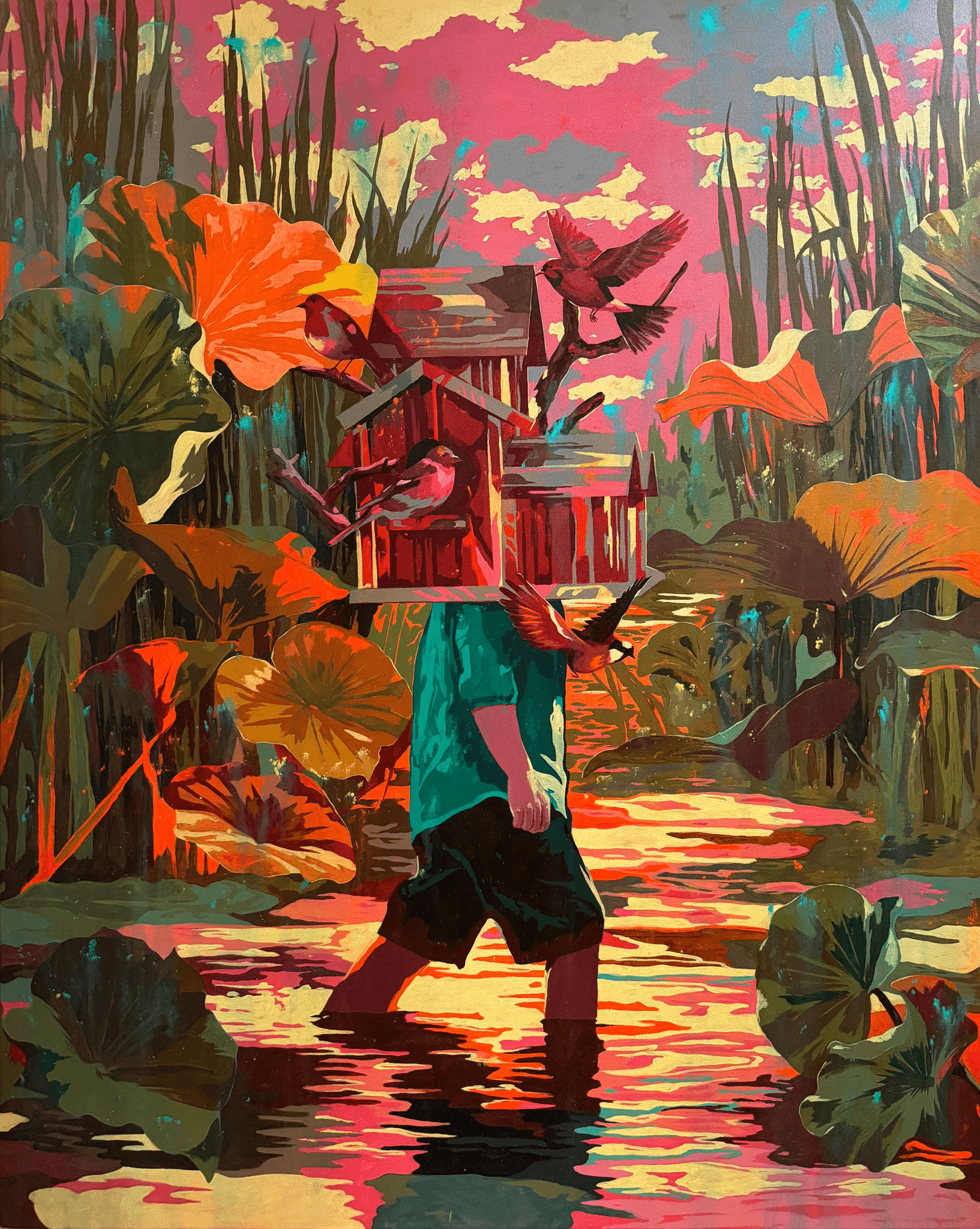
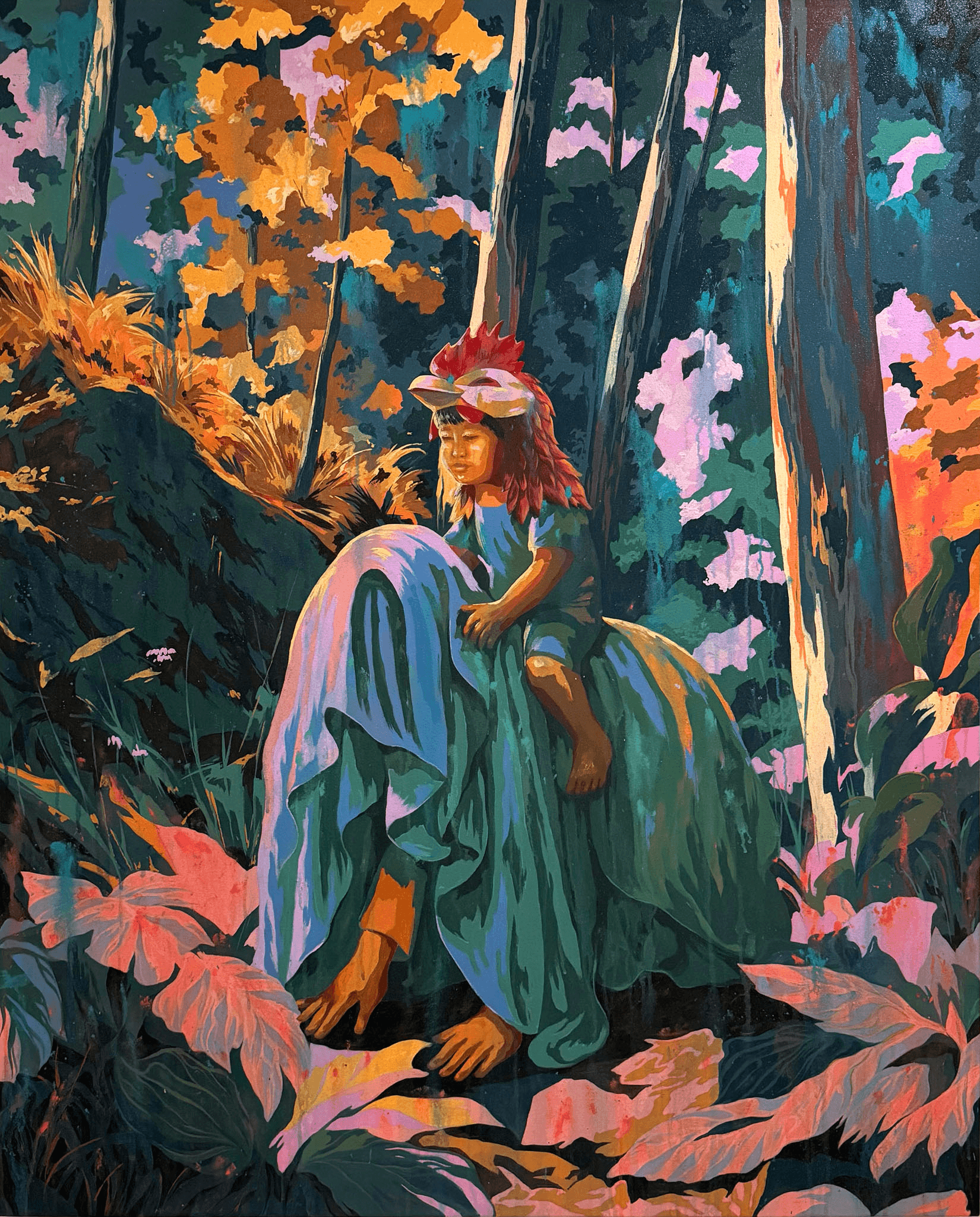
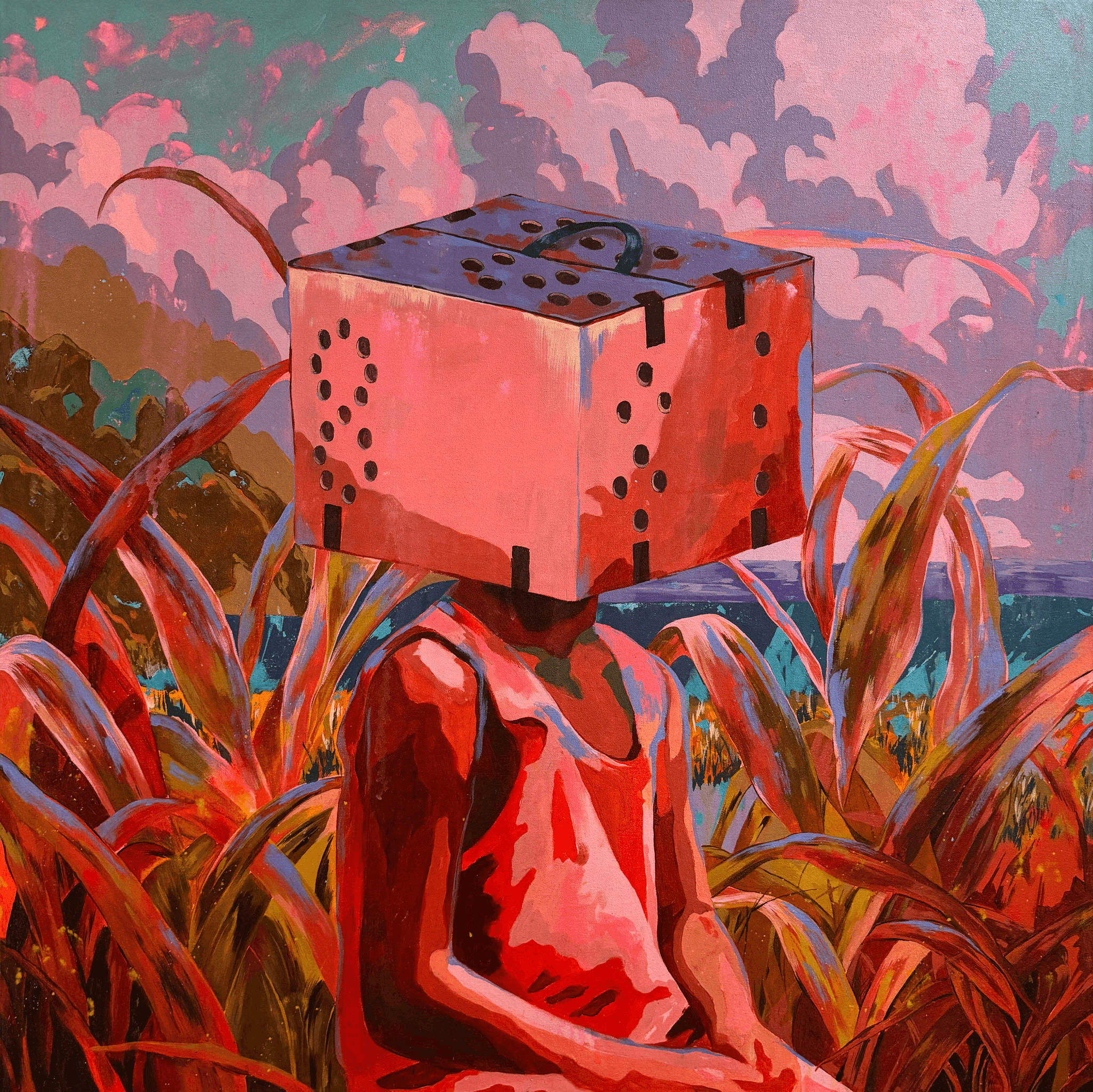
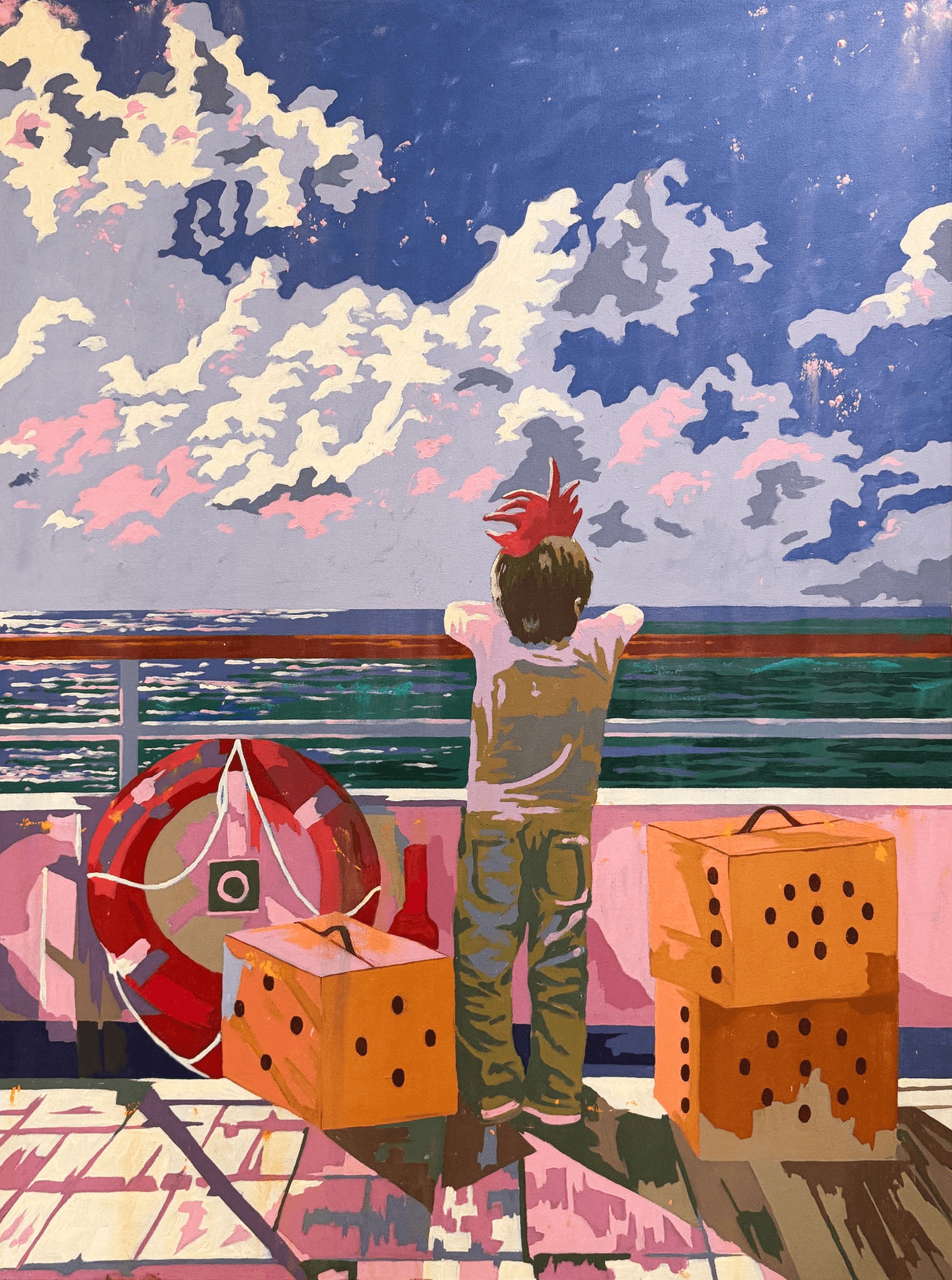
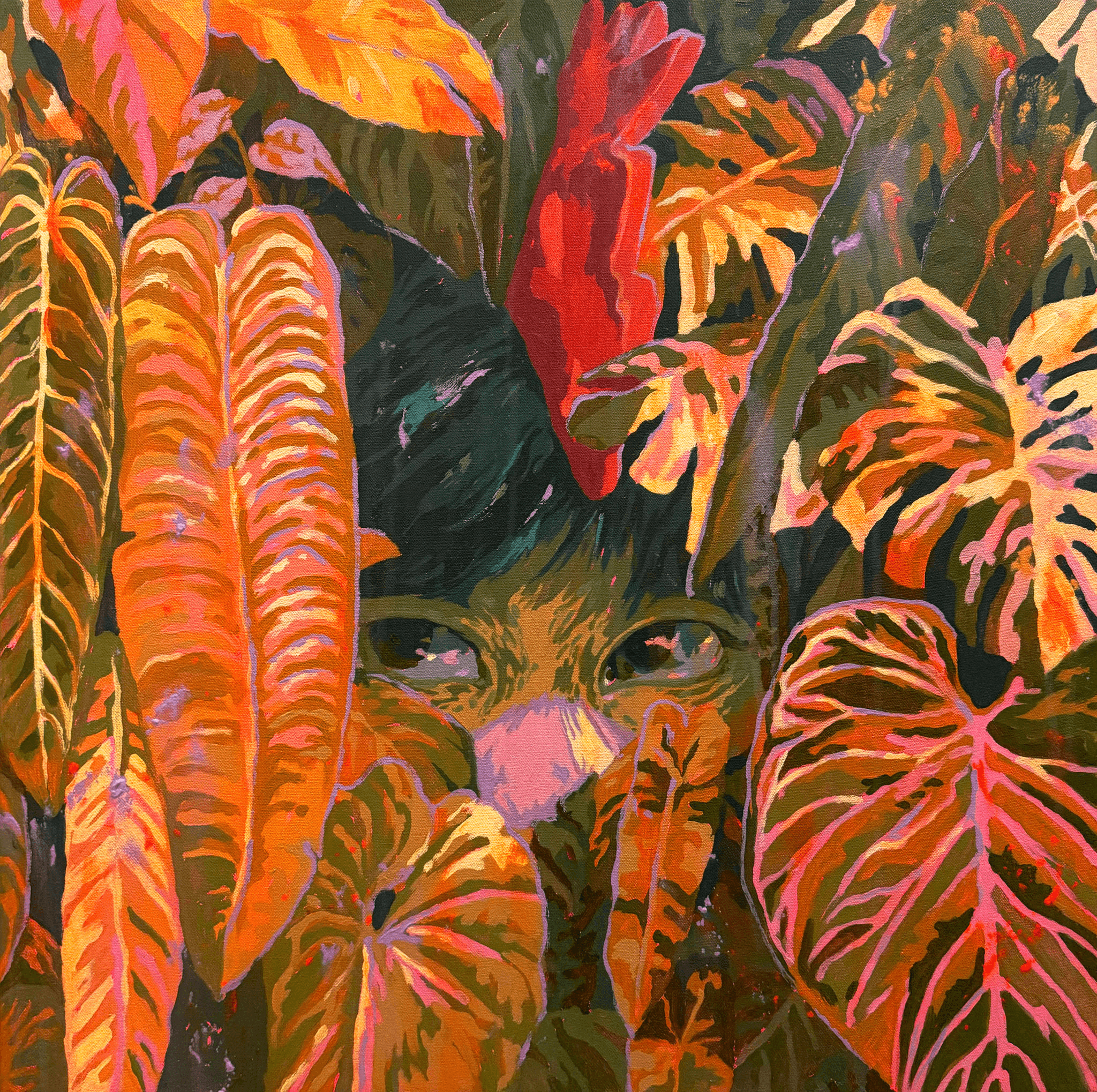
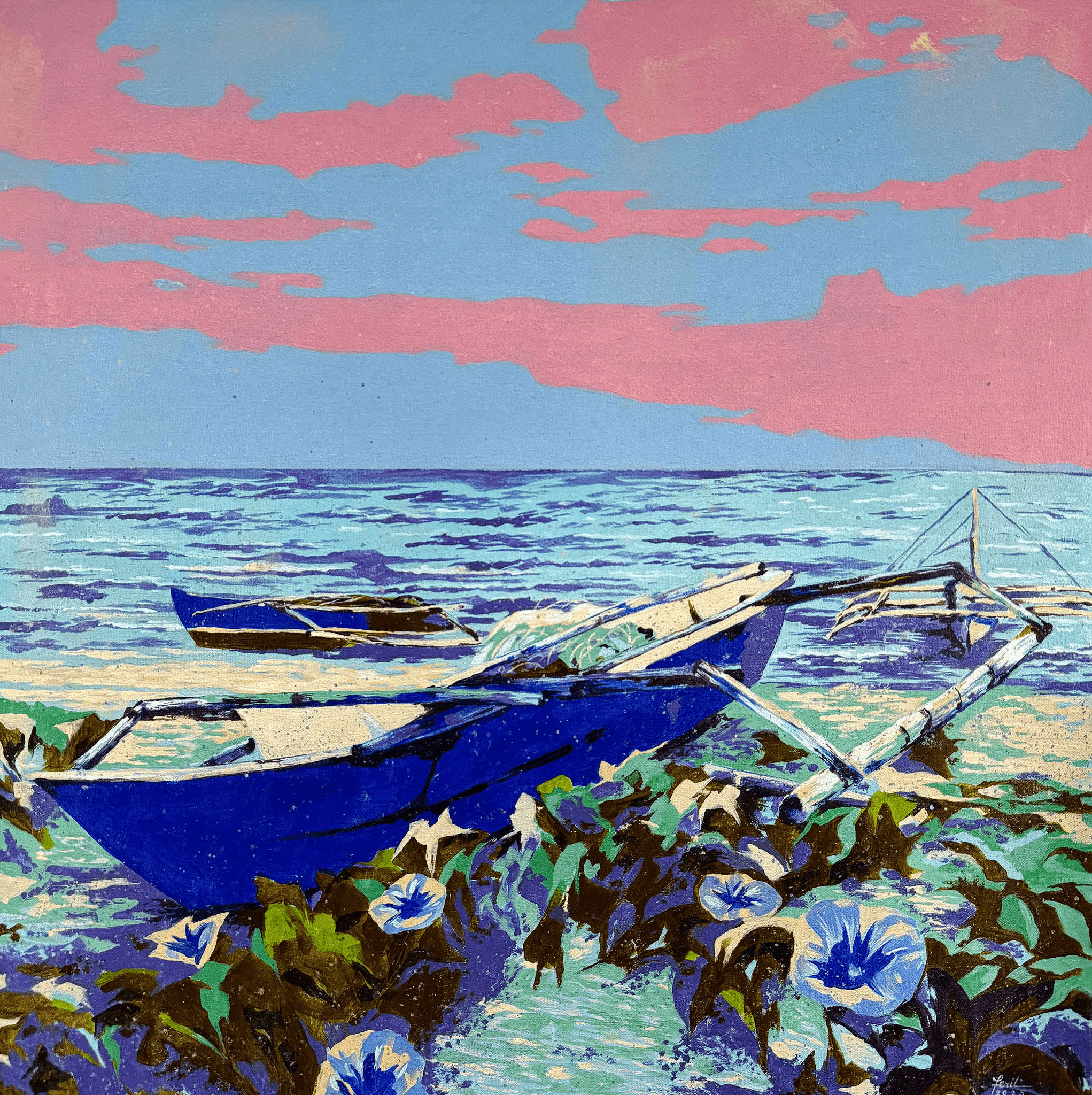
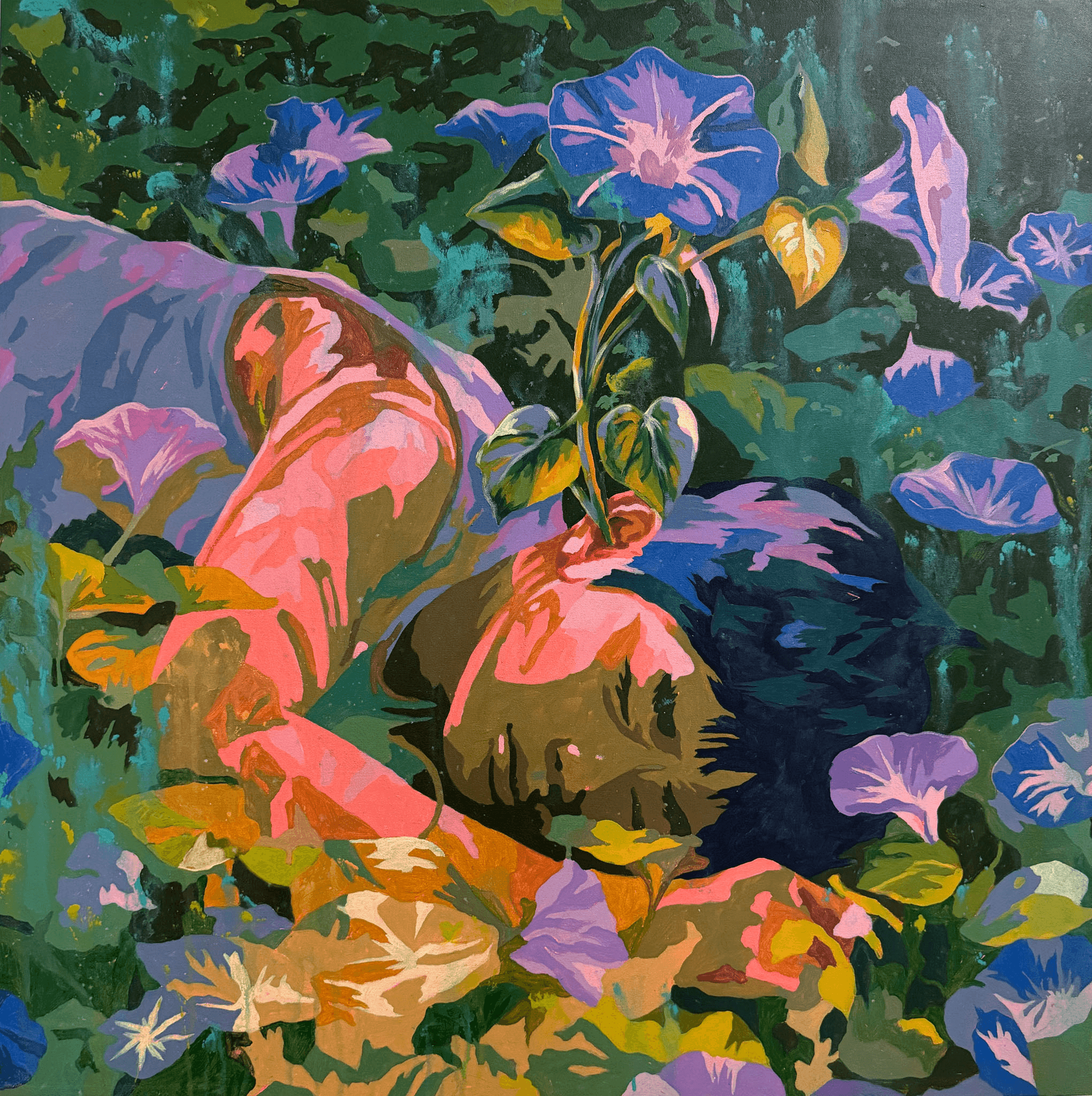
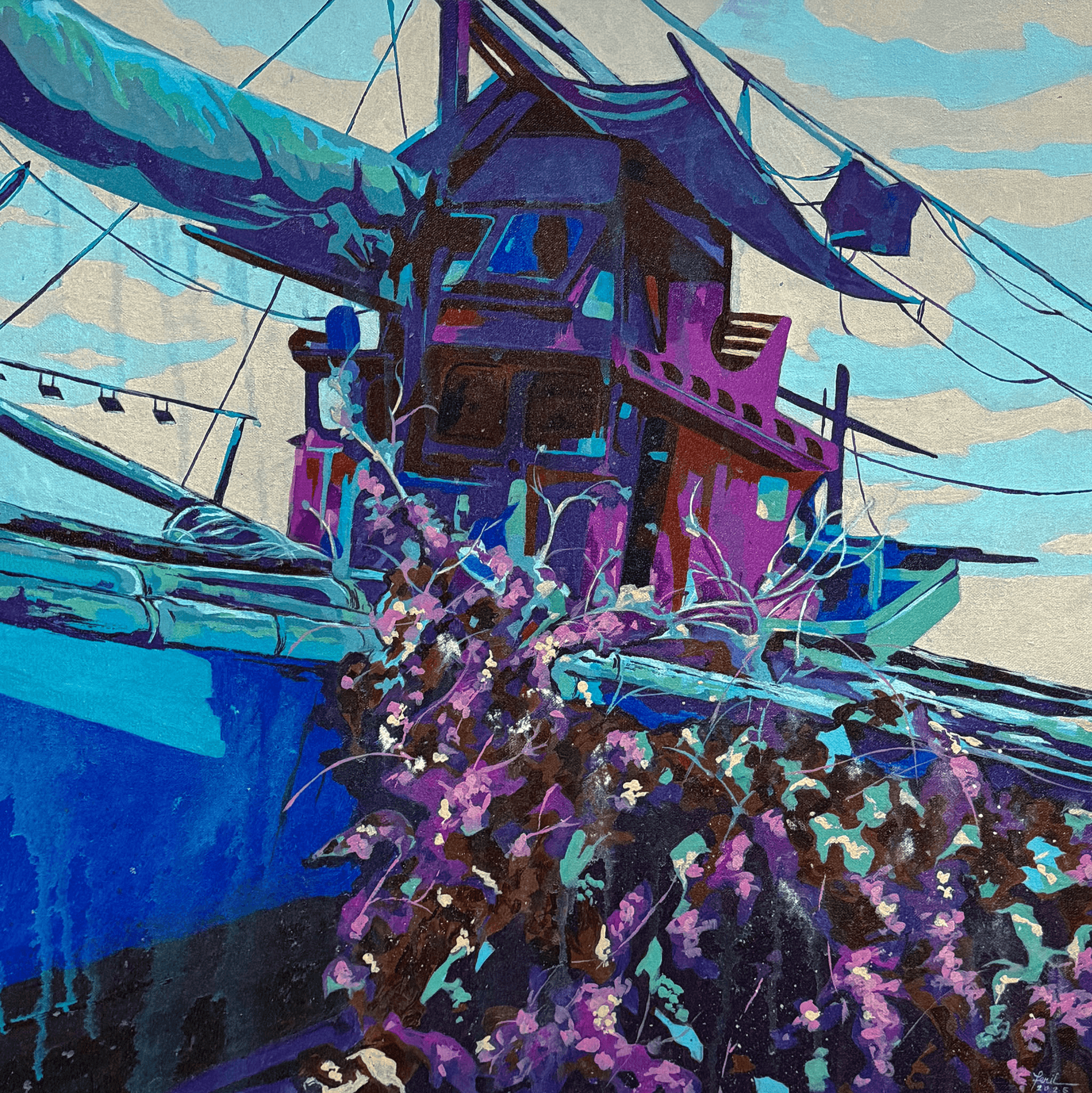
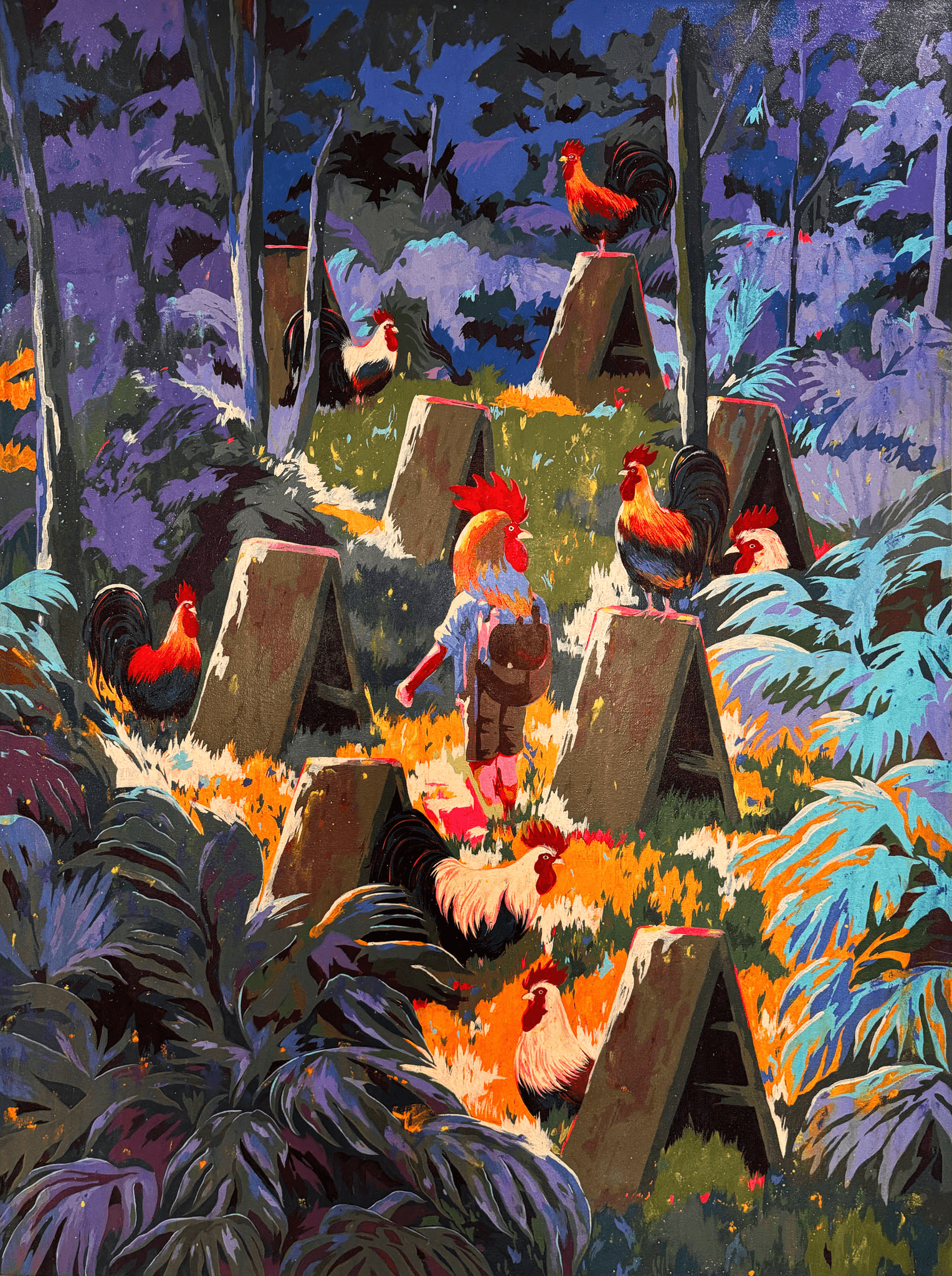
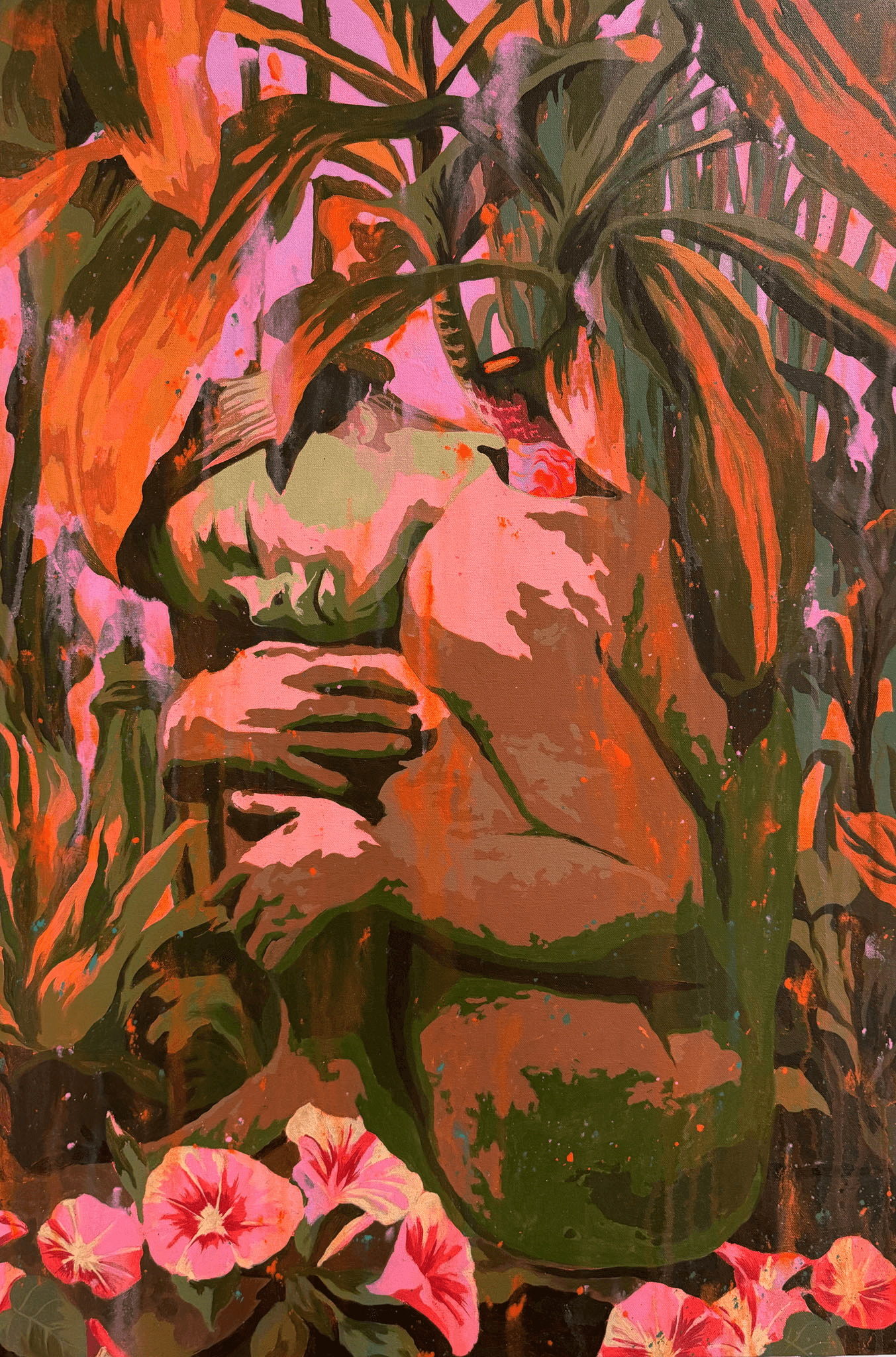
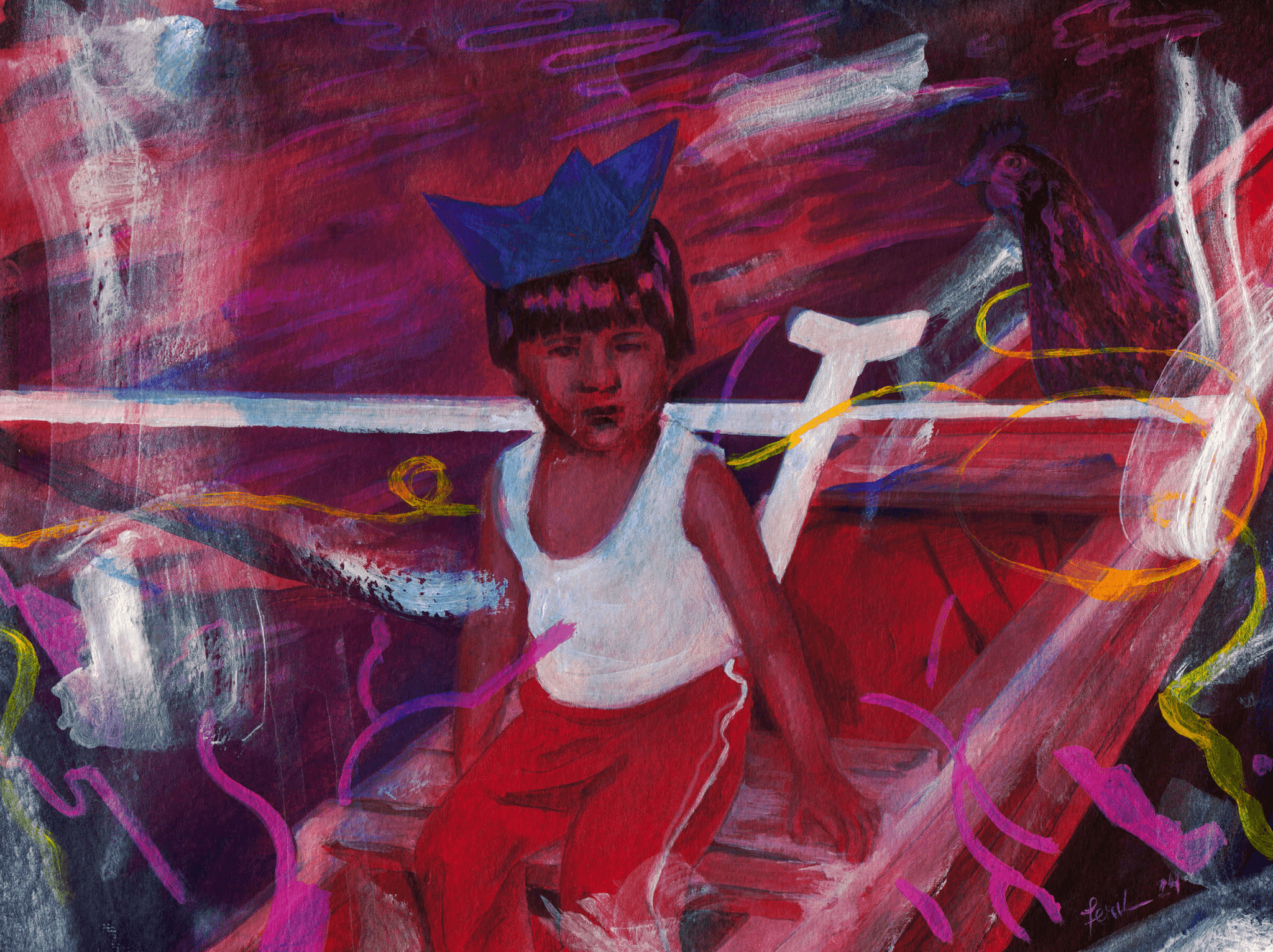
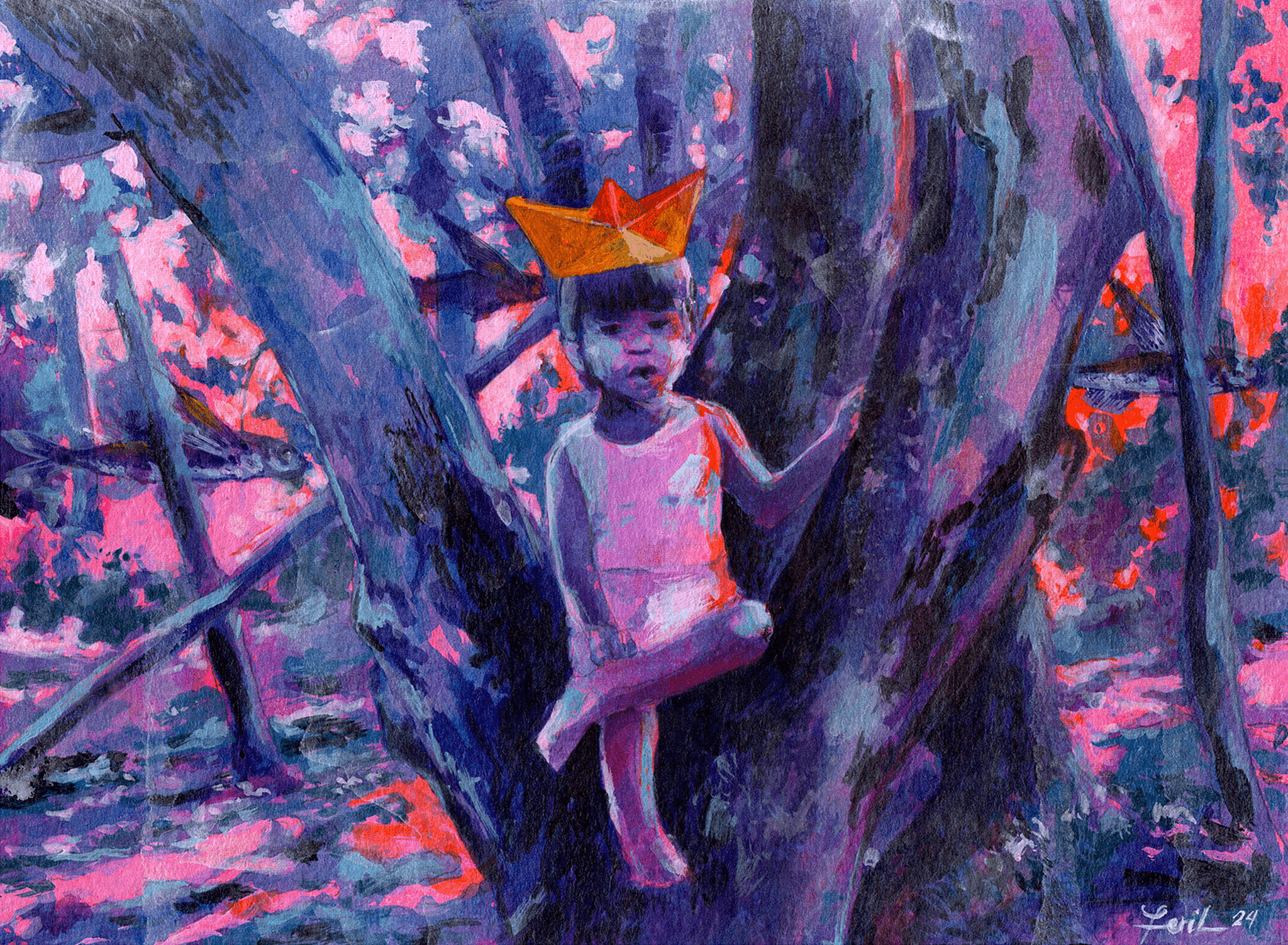
DF. My father used to do film photography, so my childhood was well documented. Those images became the starting point for Wayfarer. I wanted the exhibition to feel like a reintroduction to my work, which meant it had to be deeply rooted in where I came from. It became a way of bringing to the surface how my experiences growing up shaped my creative practice, and how these early memories continue to influence my work. Symbols of boats, birdhouses and roosters are majority present in my latest works that I often associate with movement, belongingness and masculinity.
Growing up, I rarely encountered people who shared similar experiences, and this exhibition became a way to open a dialogue about how parts of our past quietly carry into different areas of our lives often without us realizing it. Creating Wayfarer helped me understand myself more clearly and come to terms with how recurring images from my childhood have shaped my work. I hope it also offers comfort and recognition to those who feel like they’re constantly navigating different worlds and searching for connection.
CNTRFLD. Looking forward, what advice would you give to young artists navigating multiple cultures or balancing commercial and personal practice? Are there upcoming projects, directions, or collaborations that you’re particularly excited to explore next?
DF. Patience is one of the most important lessons I’ve held onto throughout my career. In an industry where new talent is constantly emerging, longevity can be difficult to sustain. I believe it’s important to keep reinventing yourself while staying rooted in your core. Don’t be afraid to let your work move beyond your usual medium and always value the relationships you build along the way, these are the same people who will support you when you need it.
At the moment, I’m managing a creative space with my friend and fellow creative, Faye Abantao, through Werever Projects, Art & Design Store. It’s a platform that gives local artists a space to showcase their merchandise and help them explore different approaches for their work. I’m also aim to take on more art residencies, as these spaces allow me to explore new ways to present my ideas. Alongside this, I’ll continue my commercial work, which allows me to sustain and fund my personal projects.
Throughout this journey of making Wayfarer, I’ve learned that patience isn’t just about waiting, it’s about trusting the pace of your growth, and allowing your work to unfold in its own time.