CNTRFLD. Upbringing and Heritage
How did growing up in Chengdu and attending the Sichuan Fine Arts Institute influence your artistic perspective and the themes you explore in your work?
EM. “I grew up with mum, she was my mum, my dad, my rock. “This was a sentence from my autobiography, and it appeared many times in my performances. My relationship with my family is the roots of my artwork. Our home was in the busiest city centre, surrounded by newly built 30 floor high rises, the optimistic desires for modernism distended me. I prefer the old China, the old ChengDu. This all makes me a sensitive and nostalgia little girl. But to make my mum proud I was always a monitor. Sichuan Art Institute was changing point in my life, at age of 15. It was the first time I lived in a different city.
The Chinese art institute was welcome to new ideas and ways of expression. This is where I watched The Wall, a music film by Pink Floyd, and “Dance in Dark “by Lars Von Trier. Inspired so much by the cinematic storytelling, I directed my first play “The Pram”. Sadly, all the excitement of contemporary art could only be explored after heavy schoolwork and political lessons, hidden inside piles of sketchbooks. Like many Chinese people, our family endured long historical and social changes.
My heritage was from three grandfathers’ life stories. One was a translator, one was a Chinese medicine doctor, one was a Guqin musician, and my uncle, a newspaper director. But it was the struggles of the women in my family that became my true inspiration-their silence, strength, and survival formed the core of my work.
CNTRFLD. Artistic Journey
What inspired you to choose a life as an artist, and how did your time at Central Saint Martins and the Royal College of Art shape your artistic practice?
EM. Education was always my mother’s priority. After her divorce in 1987, she decided to send me to a boarding communist school. I was only four years old. As an army-trained nurse, she believed that strict discipline would help me grow away from my gangster father’s chaotic lifestyle and allow her to focus on her work as an accountant. I was a quiet child, often lost in thought, staring into space.
Drawing became my escape, the one thing that held my isolating personality together. When I was first introduced to still life drawing, I was completely absorbed in the universe of shadows and light, shapes and forms. Chinese art education was deeply rooted in Russian realism, and this rigorous academic training fascinated me. My first art teachers were a professor couple from Sichuan Fine Arts Institute-one specialized in printmaking, the other in oil painting. Their love and passion for life and art still move me to this day.
Central Saint Martins had been a dream ever since I first heard about it in China. But my family never had money, so after my first year of studying for my BA, I had to get married. It wasn’t a sacrifice-I was happy, life felt light and full of possibility. I worked for five years as a window dresser and fashion illustrator, but something was missing. My once sincere soul felt lost in the world of colourful costumes and glamorous club nights. I began to long for my younger self-the one who believed art could change the world. Returning to CSM and applying for the Royal College of Art cost me my marriage. After seven years together, we realized we had grown apart. This separation unfolded alongside my father’s final chapter in life, making my two years at the RCA a parallel journey of recovery-both personal and artistic. It was there, in the midst of grief and reinvention, that I fully embraced performance art. I am deeply grateful to those two institutions, especially a few remarkable tutors who gave me trust, encouragement, and care when I needed it most.
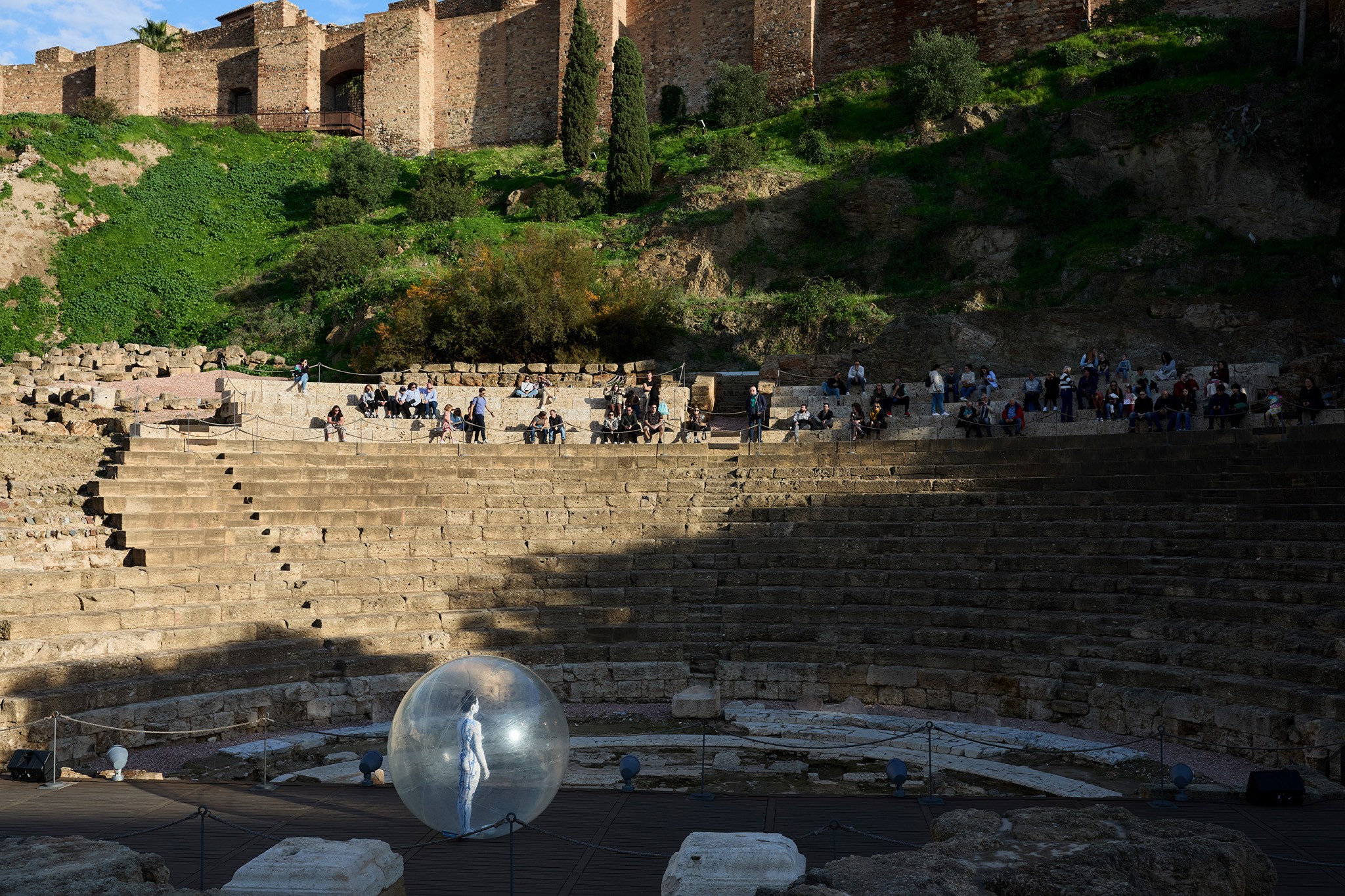
It’s important to highlight that I have a very supportive family now. I met my husband, Jamie Baker, two weeks after my separation from my first marriage, and I’m so grateful that he documented both my heartbreak and my journey of rebirth. Performing as a mother was also challenging , but as a family, we navigated it together-trying to perform while pregnant, breastfeeding, and balancing it all. Now, our sons are 8 and 10 years old, and in my latest video Collapsing Home from Málaga, the footage merges both professional recordings and our boy’s video work. I feel incredibly lucky to be surrounded by love and care-it has shaped a unique path for me to continue my journey.
CNTRFLD. Medium of Expression
Your work incorporates diverse materials like Chinese ink, lipstick, and even breast milk. How did you come to select these unconventional mediums, and what do they signify in your artistic narrative?
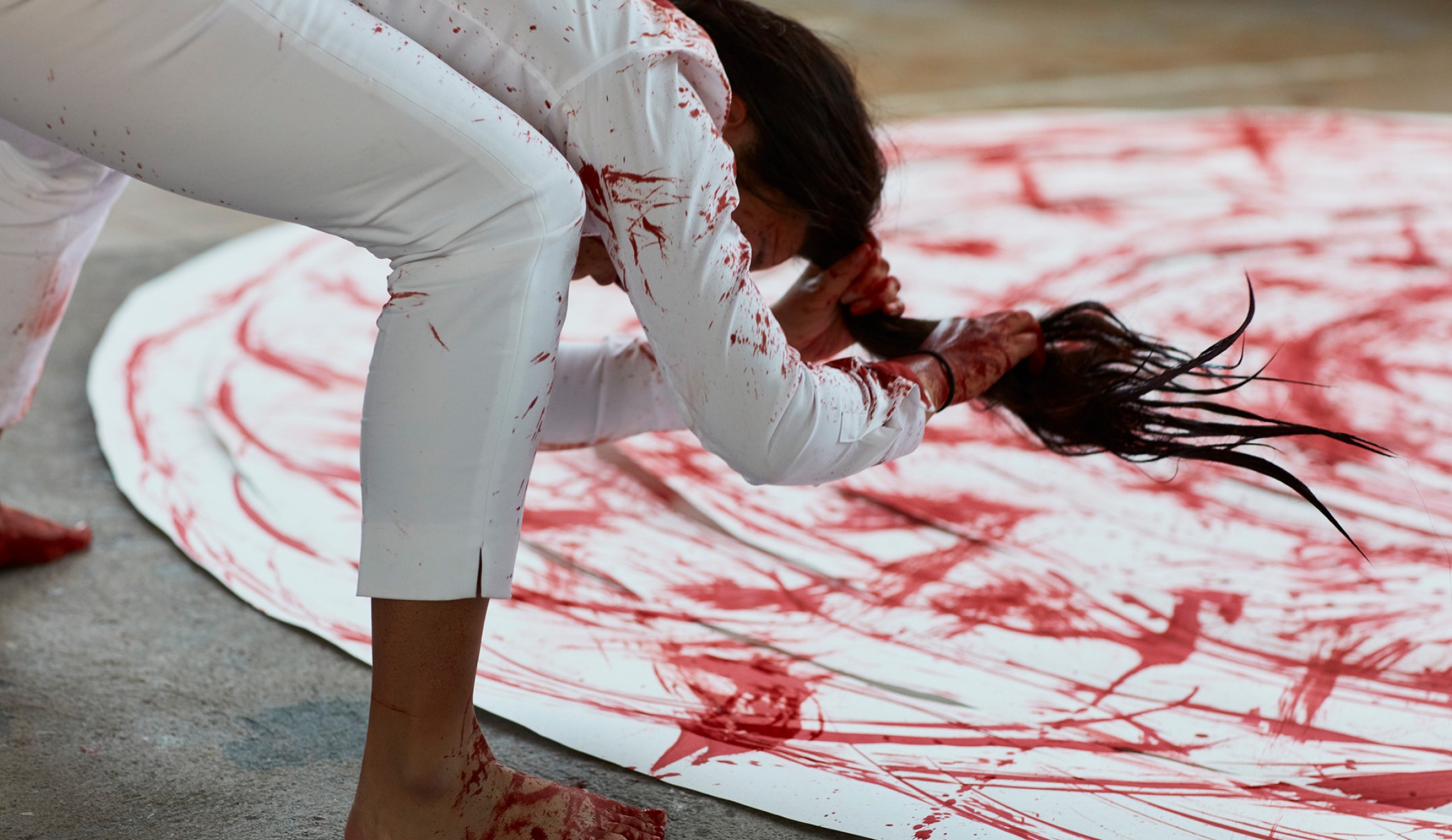
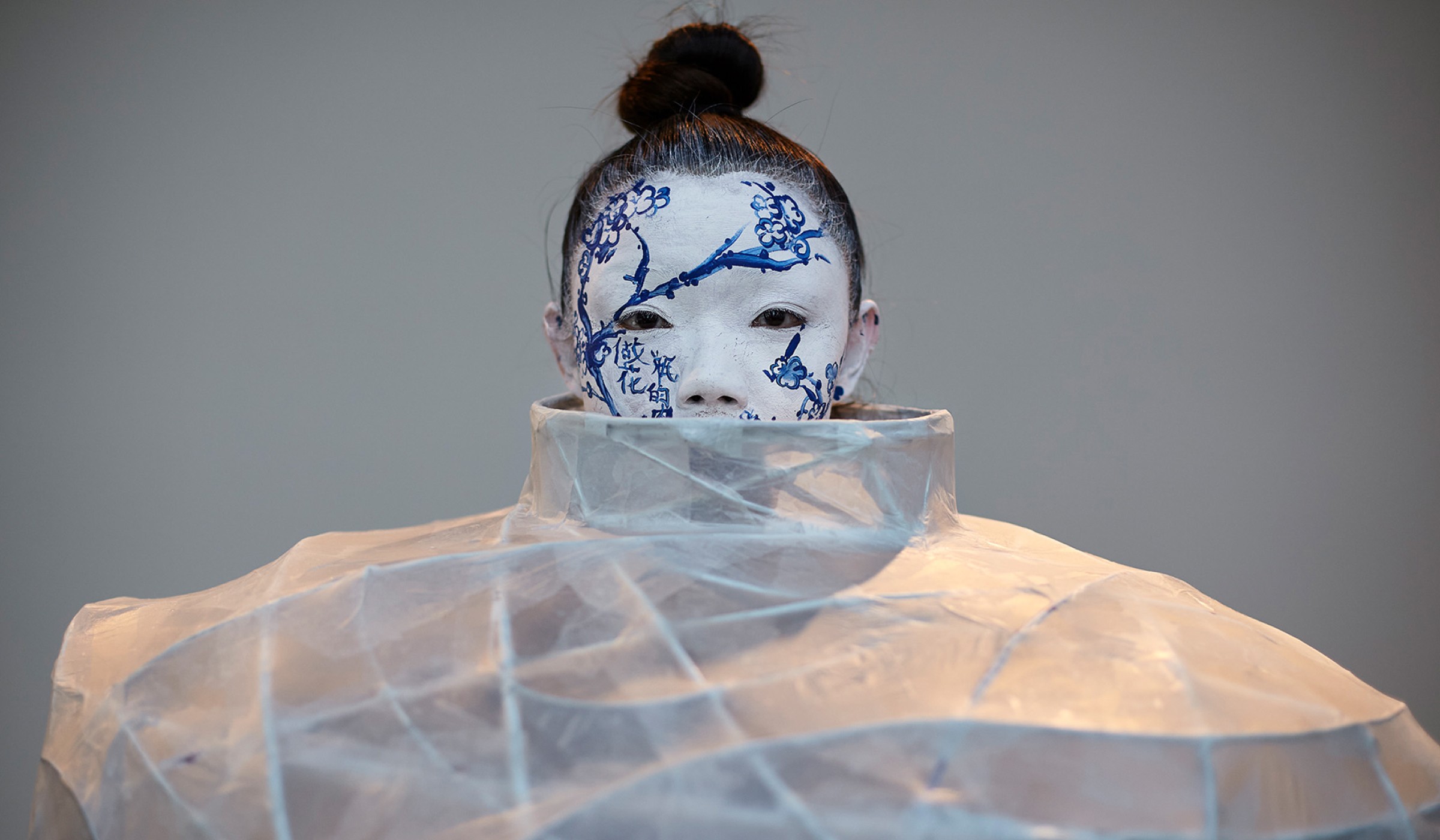
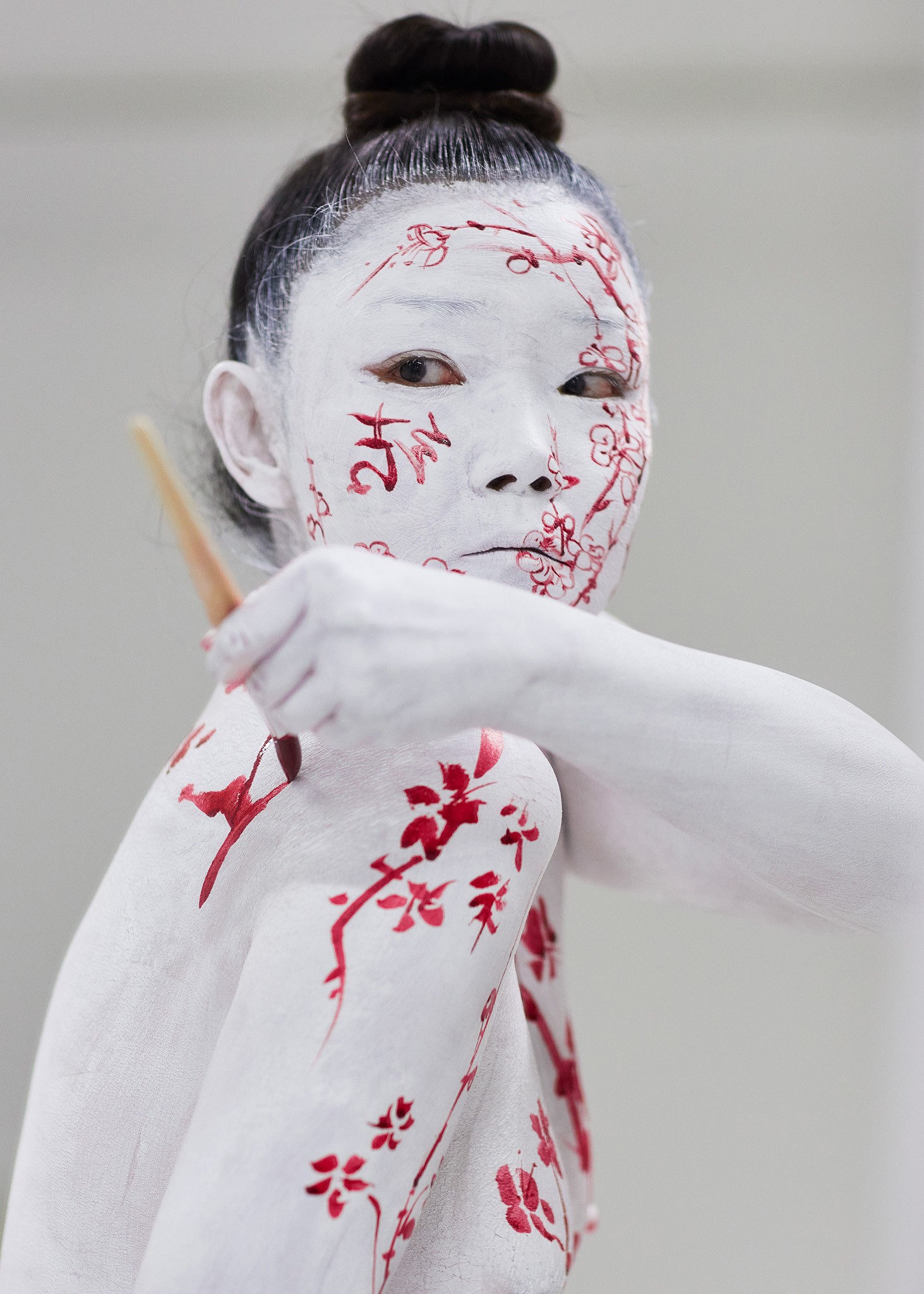
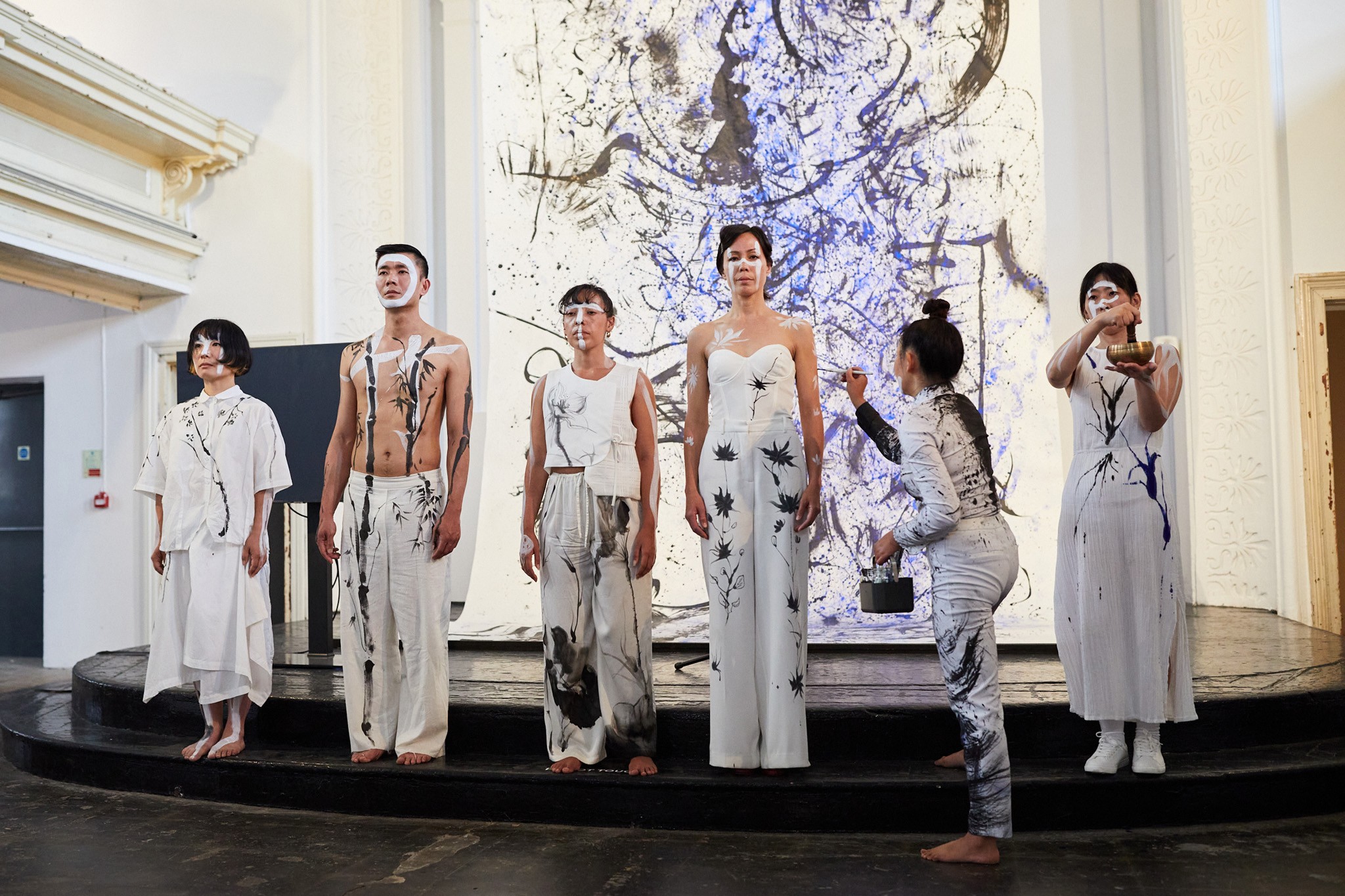
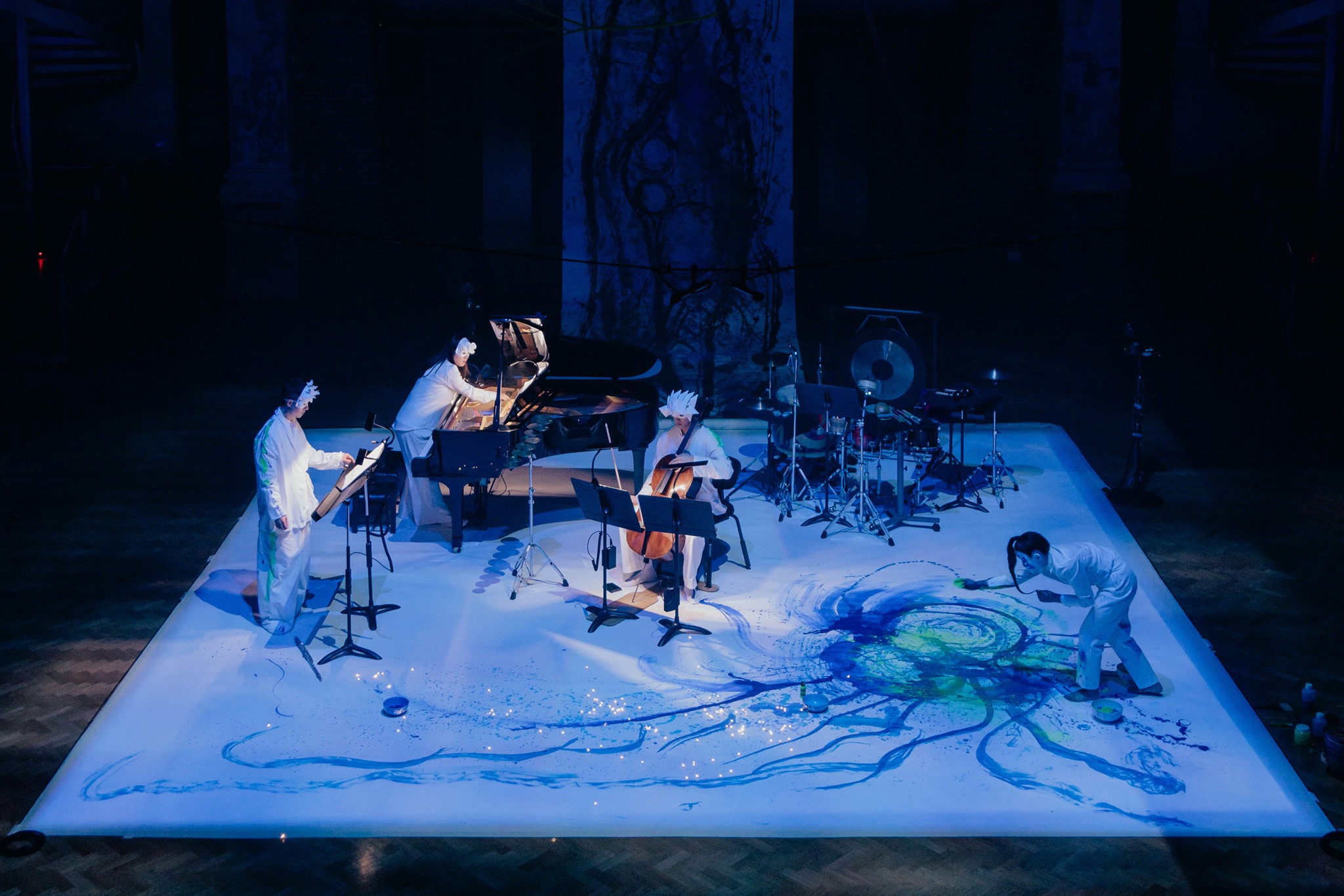
EM. My work is rooted in Action Art, where the artist’s body is the center of the work. The Fluxus movement is also important to me-art that refuses to settle, art as a social healing force. Every material I use is directly tied to my life at that moment.
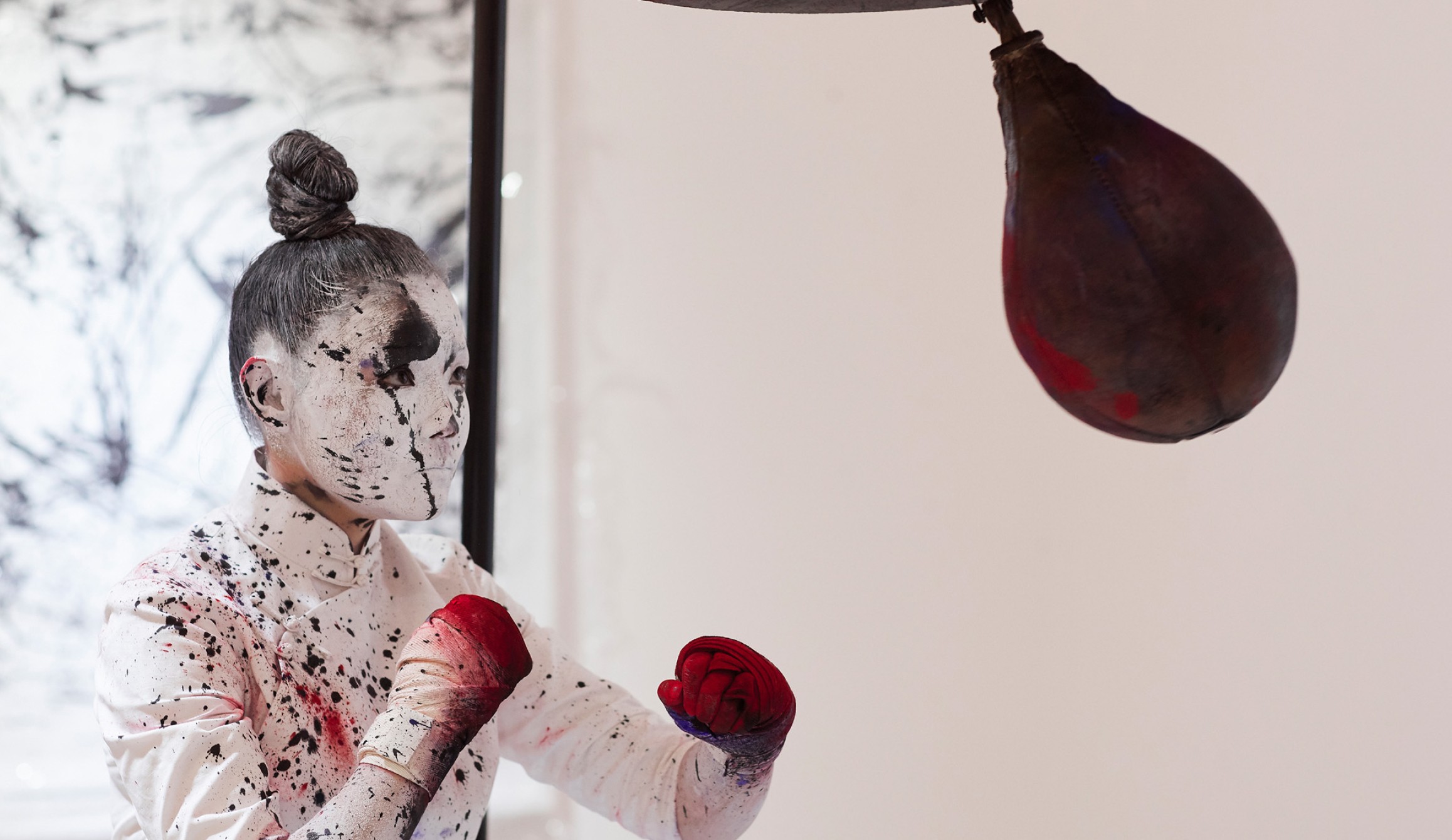
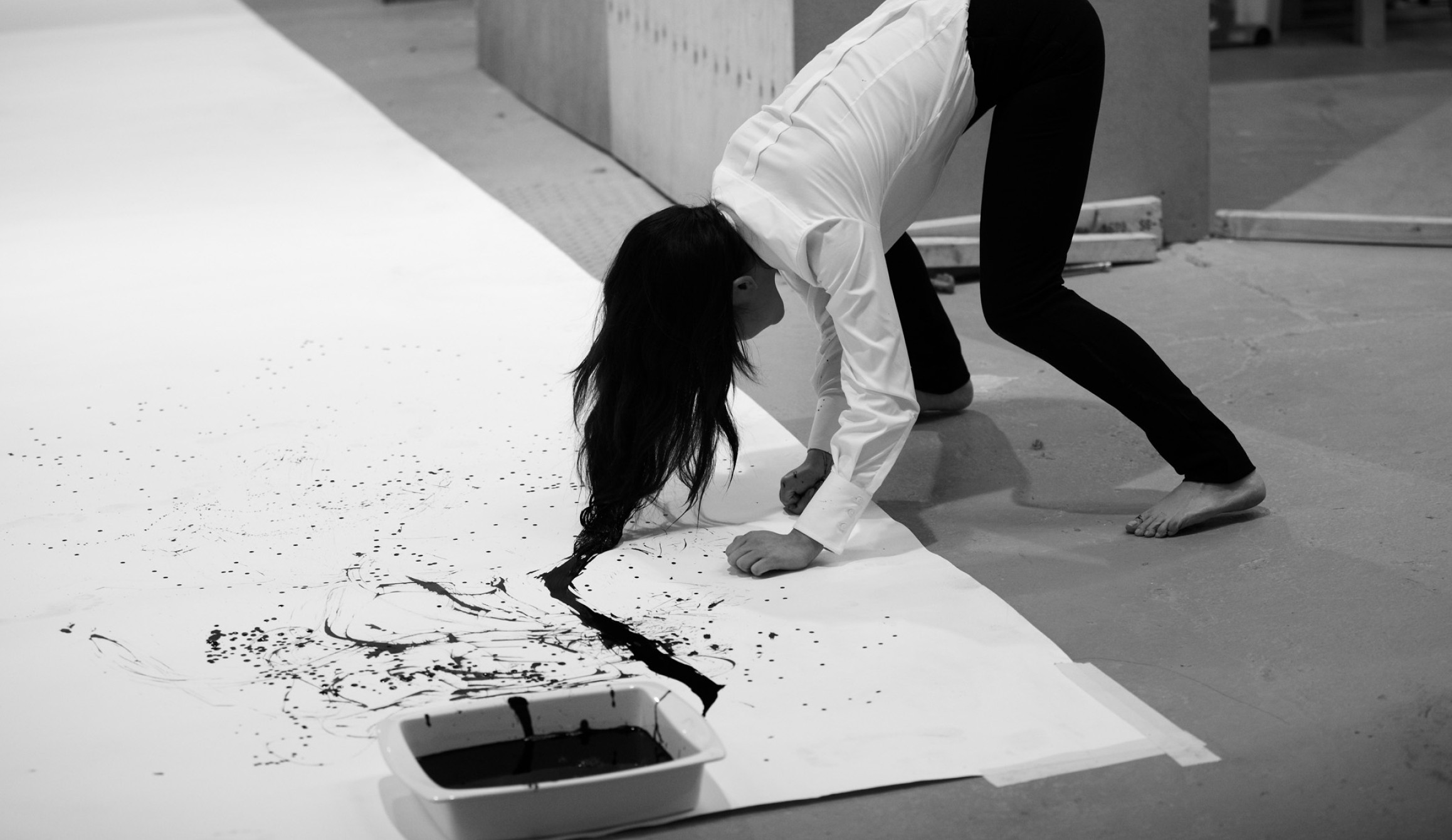
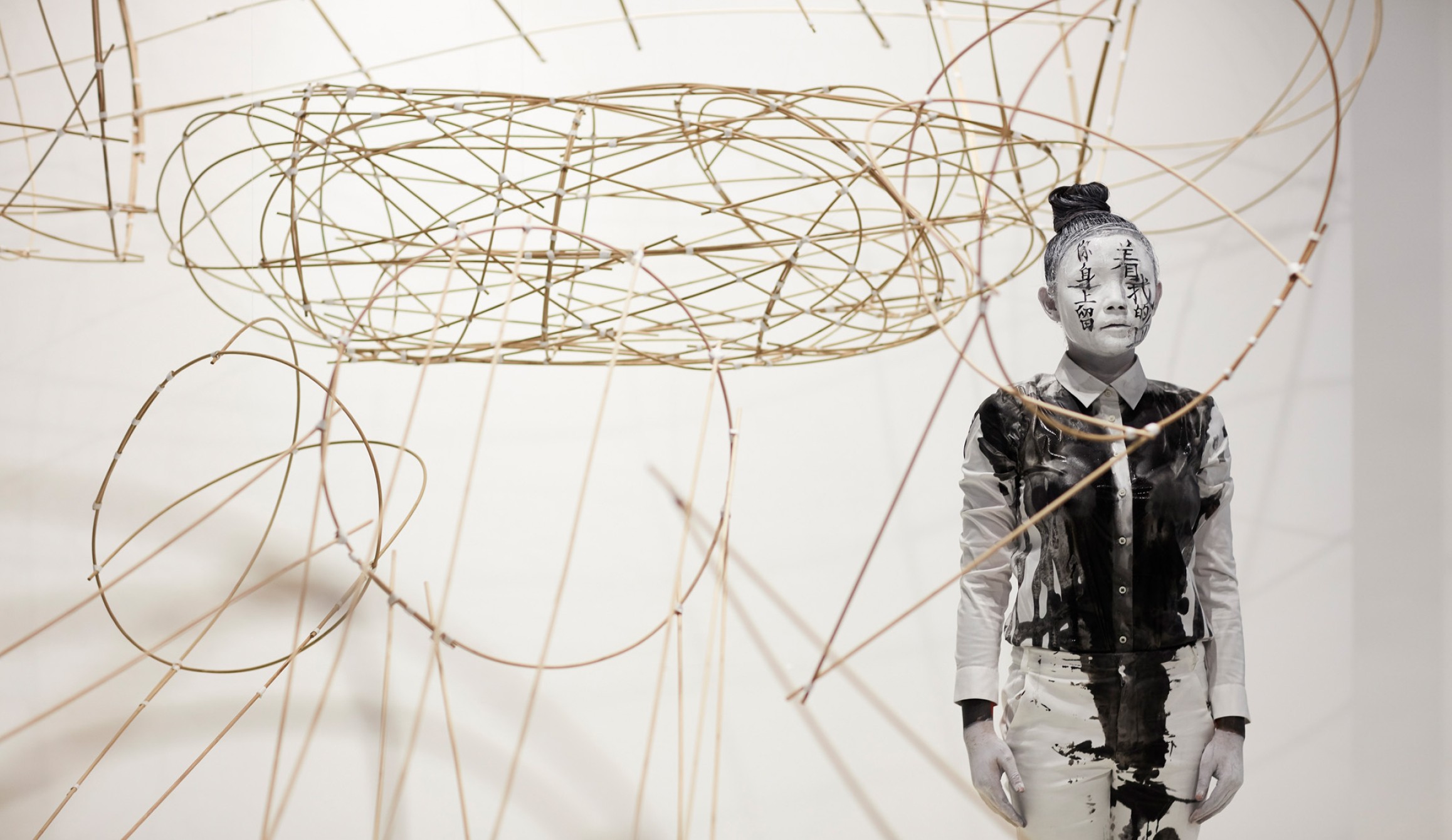
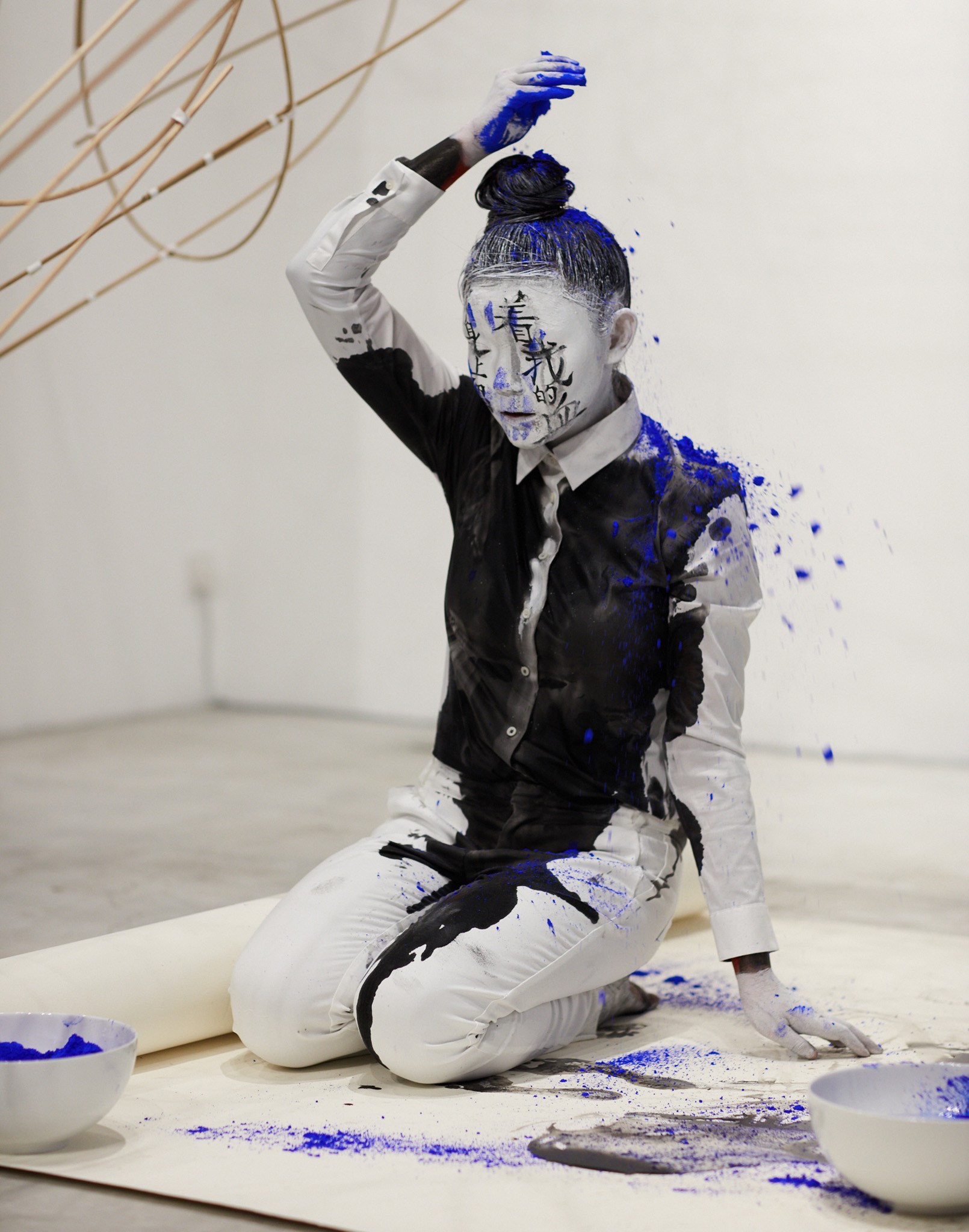
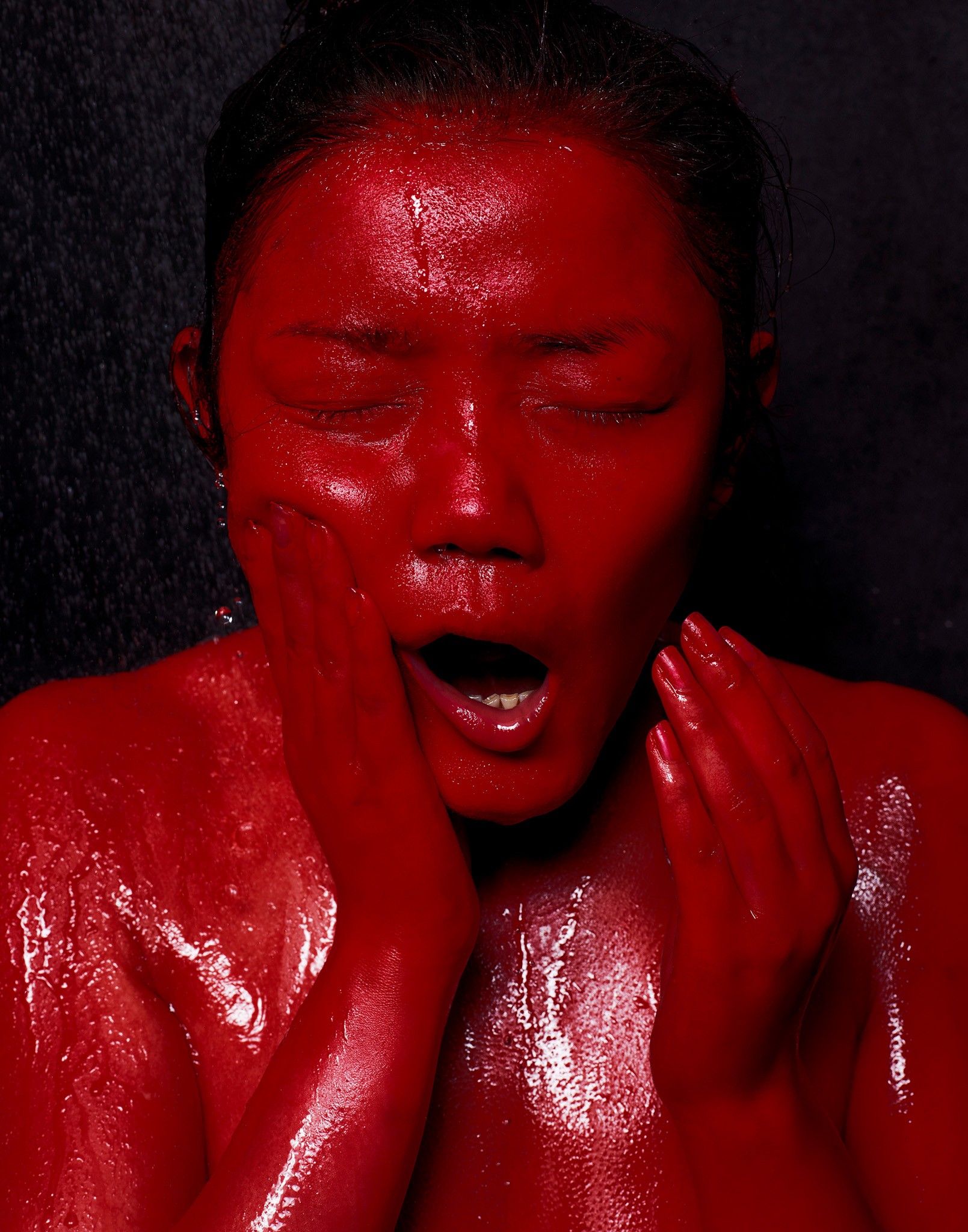
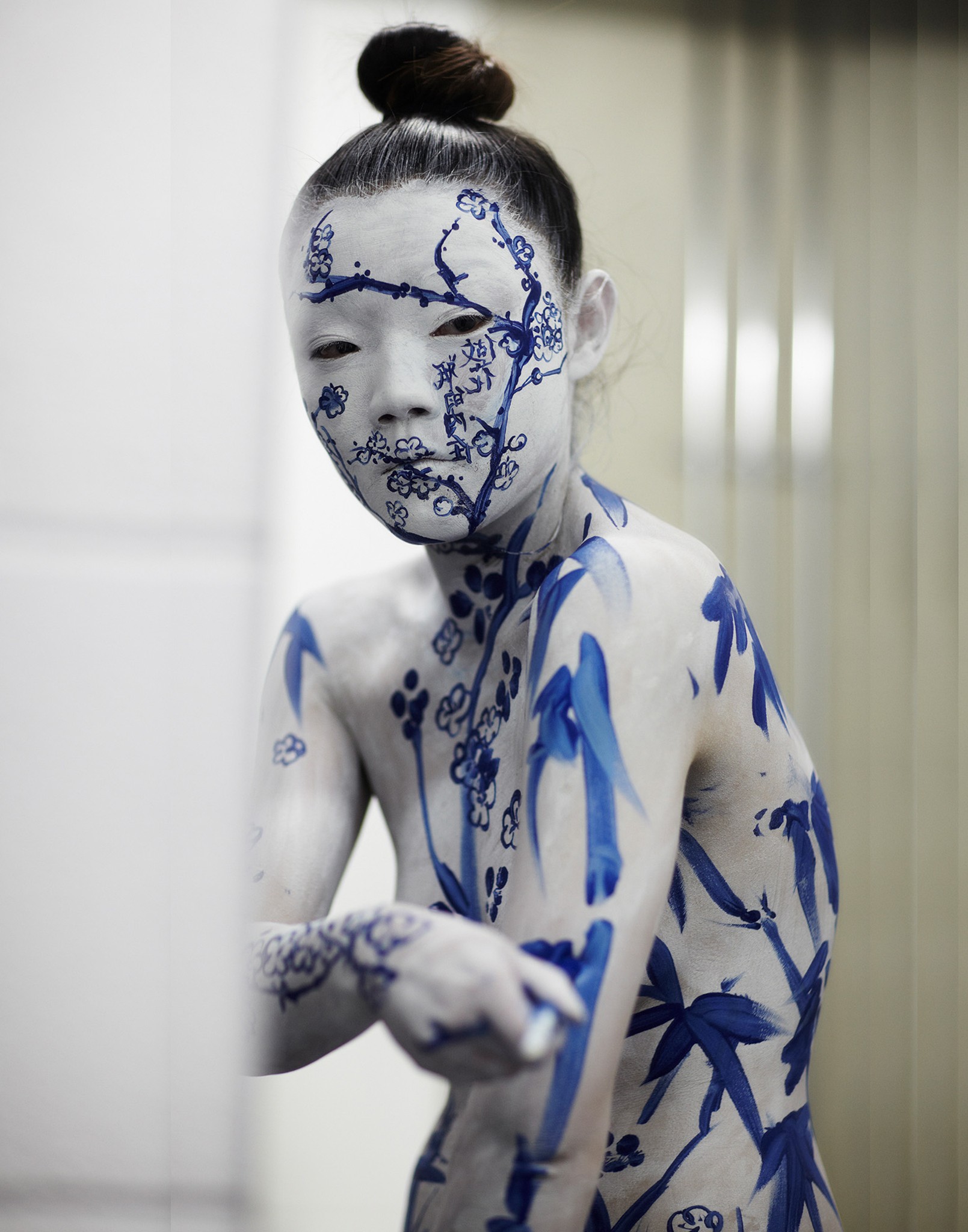
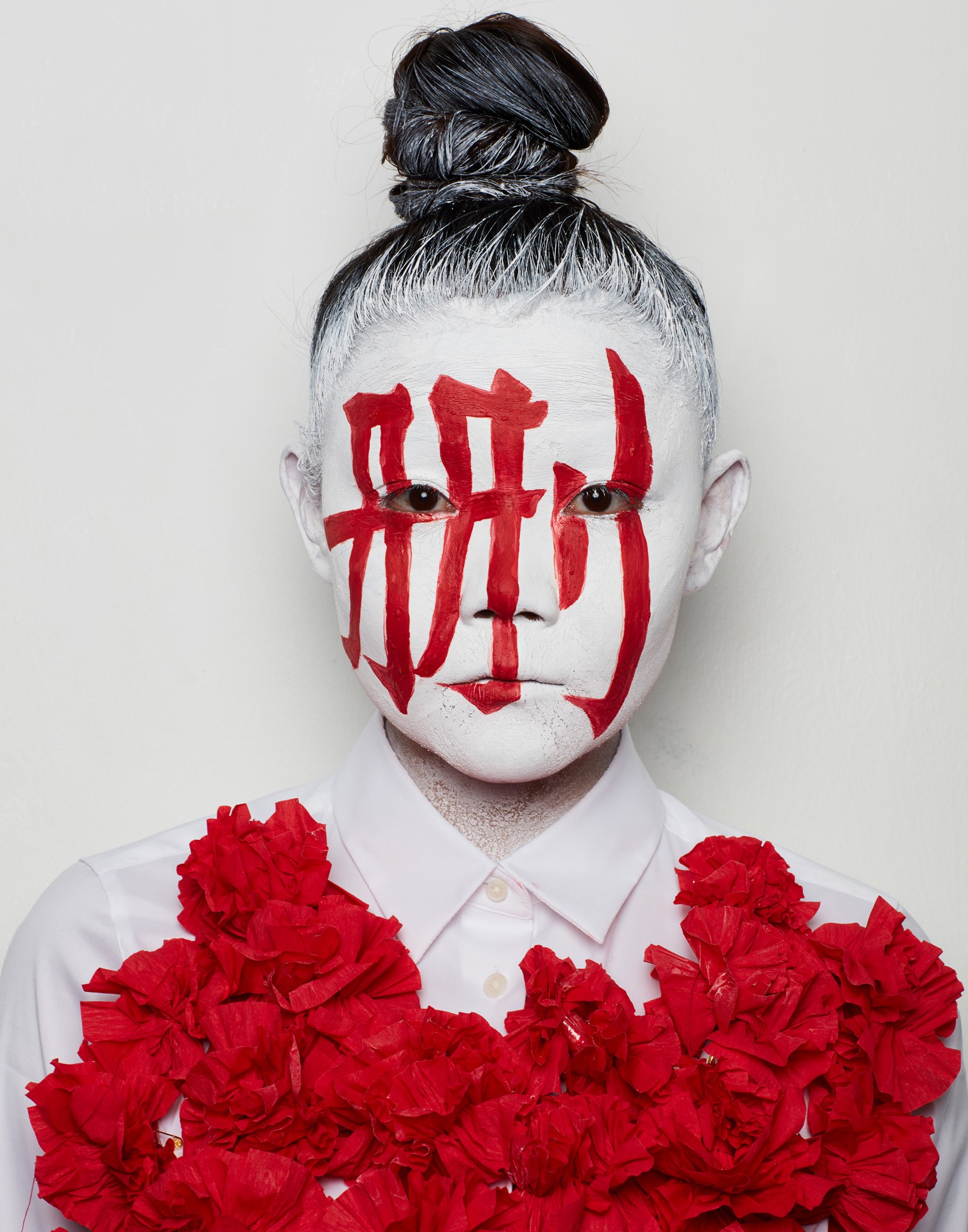
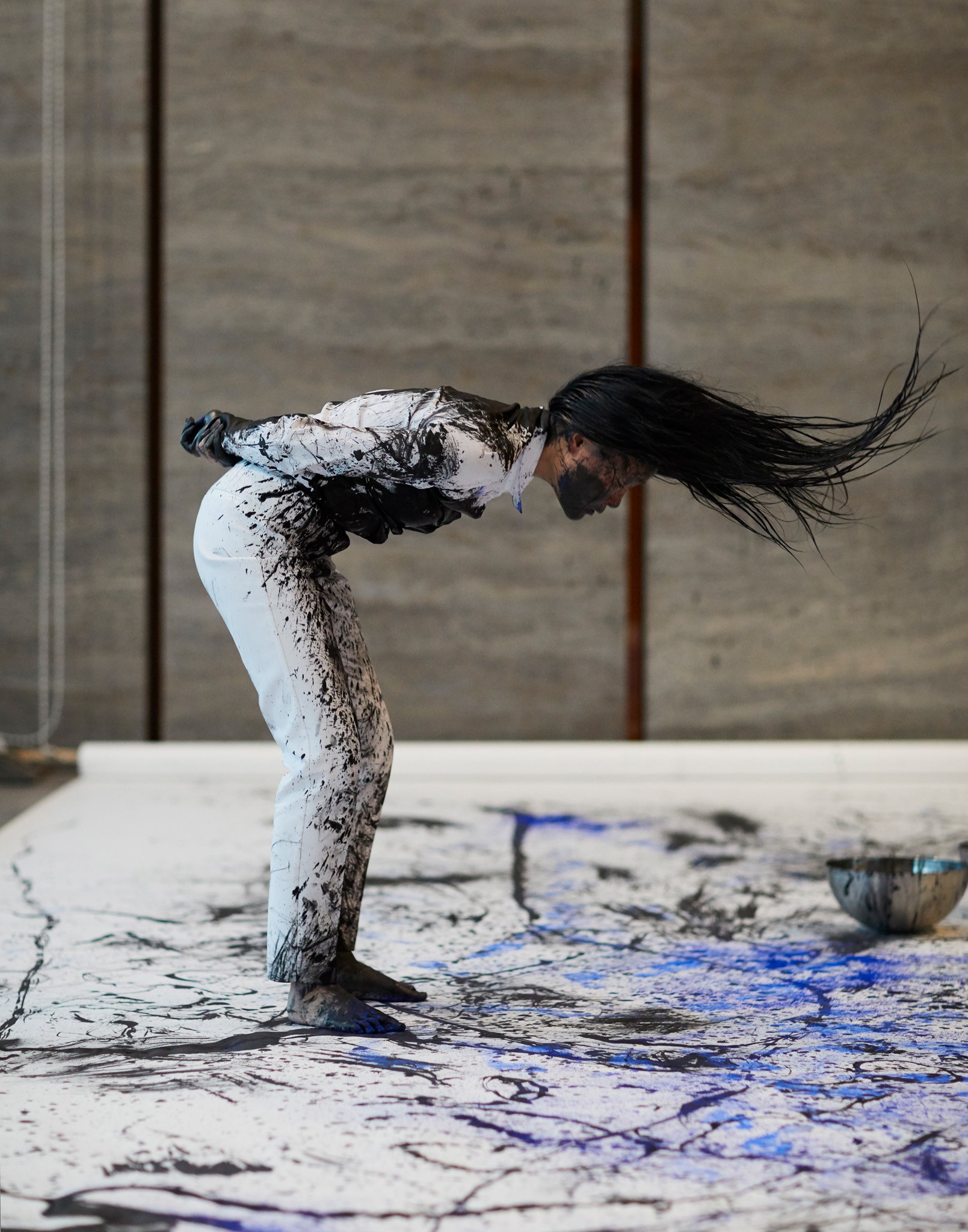
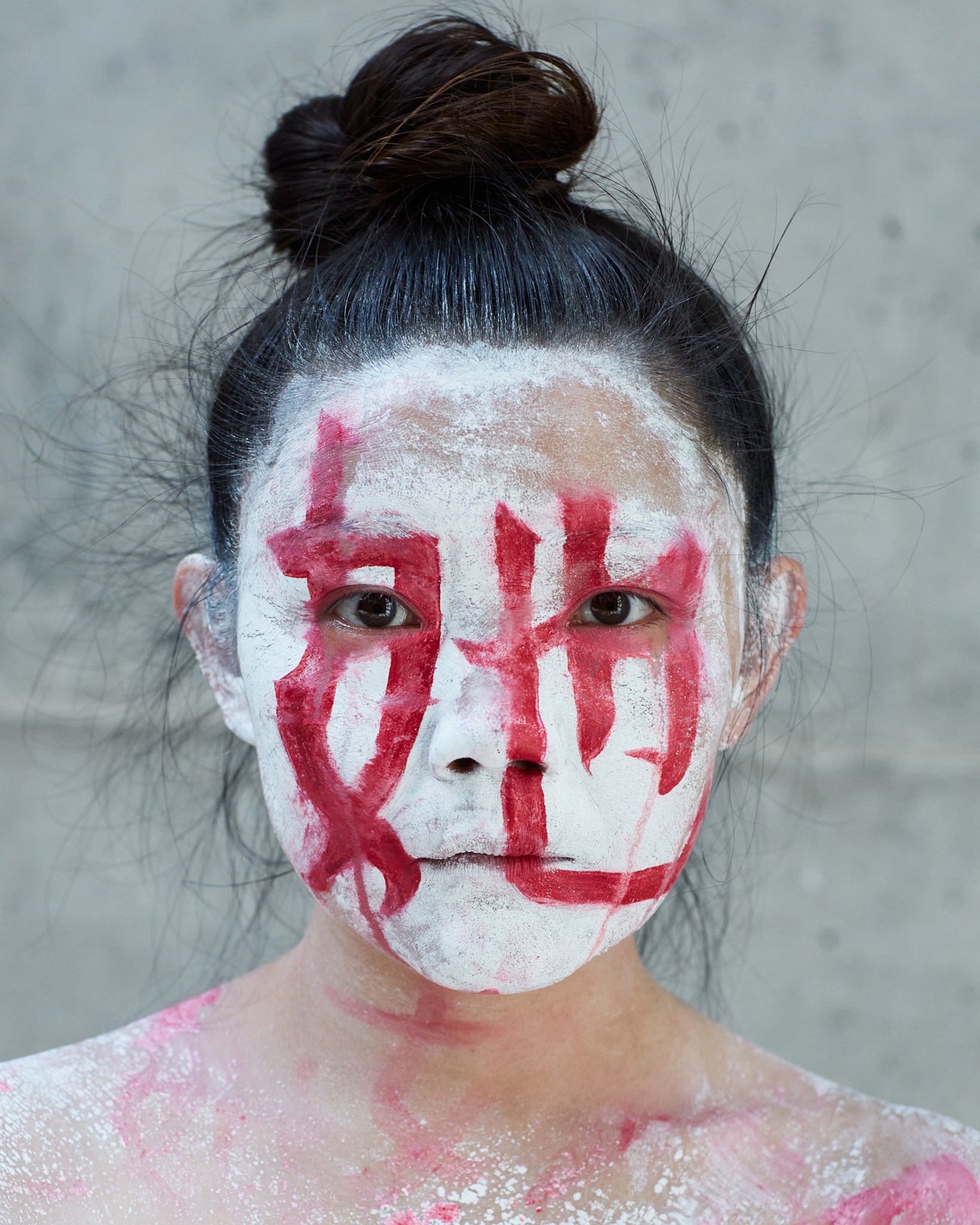
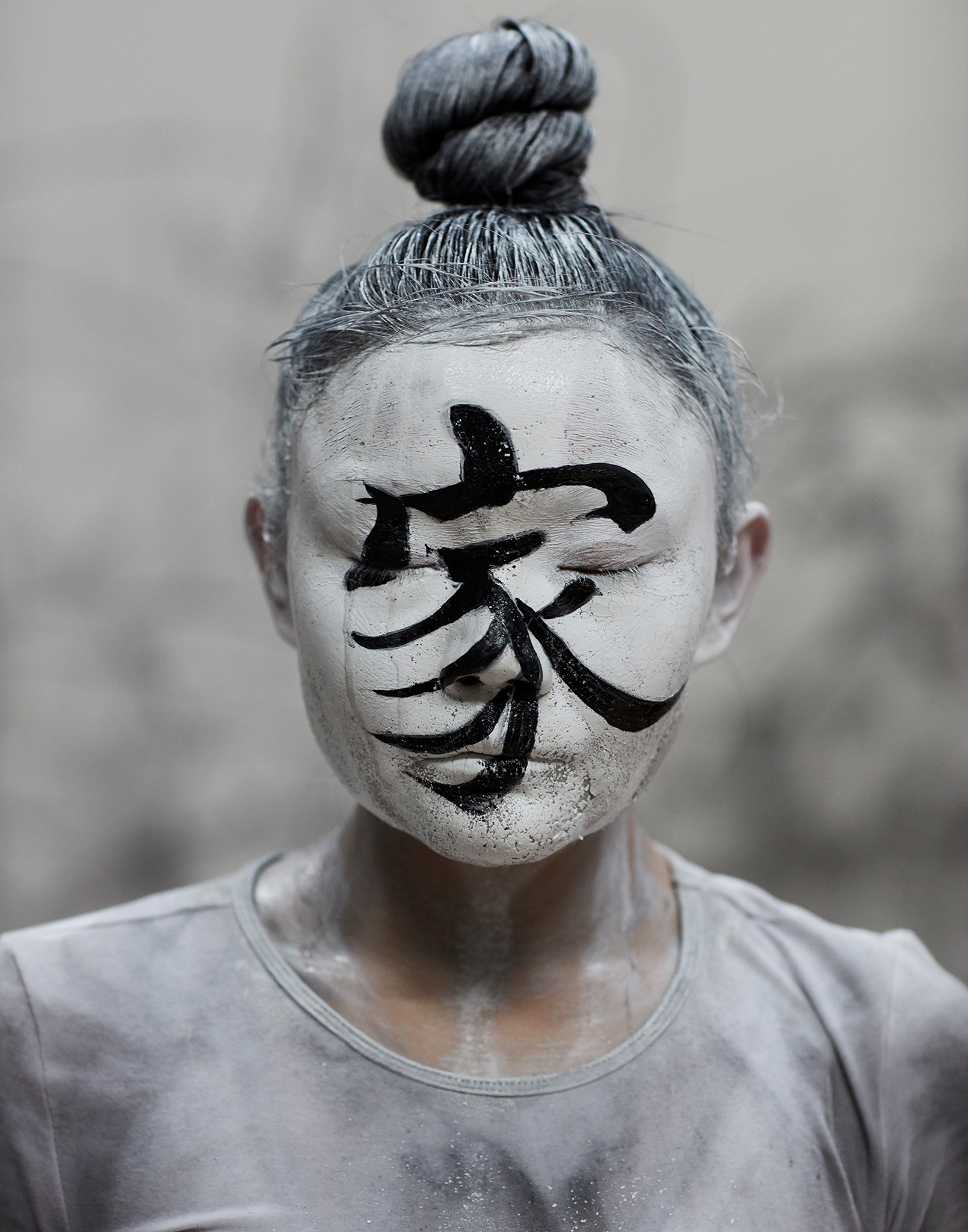
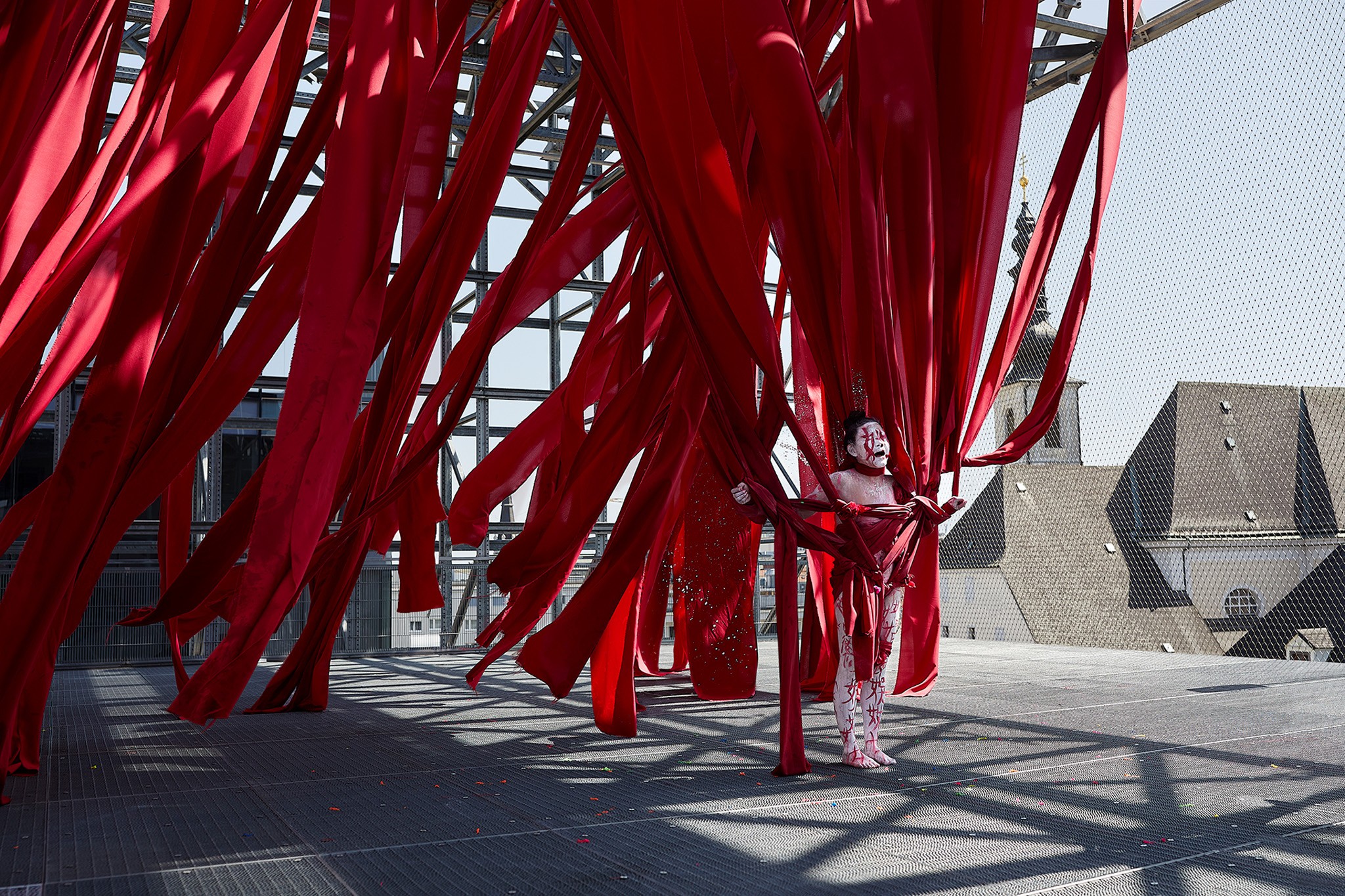
Ink has been the constant thread, connecting all points. The smell takes me back to my grandfather’s humble, self-built studio, where he practiced Chinese calligraphy. The fluidity runs like my blood. Red lipstick was used in Little Red Flower, where I revisited my kindergarten years from 4 to 7. I was once a very proud red flower, often representing my year, school, even my city, performing about Communist beliefs. But in 2011, after visiting Russia, I began to question many of my childhood heroes and global consumer culture. So, I covered my entire body with different brands of red lipstick. Same as breast milk-three months after giving birth, my first performance with a mother’s body, my strange, swollen breasts. Many times, decisions are raw and practical. I was breastfeeding. I produced a lot of milk. So that was my fountain, a natural gift, white ink.
CNTRFLD. Identity and Representation
As a woman of Chinese descent working in the arts, how have your experiences shaped your perspectives on identity and representation in your performances and visual work?
EM. At Central Saint Martins, I was introduced to Context Studio-it changed my direction completely. To choose a topic for essay research, we were asked to draw a Venn diagram with three circles: skills/education, life experience/important events, and conceptual frameworks. The idea was to find the intersection, the unique center-the core of you.
Identity appeared again and again in my self-discovery. That was when I realized-I wasn’t a designer. My need to express went beyond function or aesthetics. Identity becomes so present, so precious, when you are placed in a different culture, a different race, a different space. Foreignness becomes vivid.
My work started as a survival journey. At first, I wasn’t thinking about representation-I was just trying to exist. But I love art history, I love research, and I became aware that my personal story was resonating with others, becoming encouragement, shaping cultural shifts. That awareness comes with responsibility. Because of education, I feel lucky to be able to make work, to reflect on my experiences, to teach, to share my understanding. I want to use the small platforms I have to amplify struggles that are often voiceless.
CNTRFLD. Cultural Contexts
Having worked in both China and the UK, how do you view the differences in the support and reception for artists in these two cultural contexts? Why did you ultimately choose London as your base?
EM. My work is personal, and sometimes I perform naked-this remains a taboo in China, both philosophically and culturally. Last summer, I presented my work in front of my mother for the first time. It was a profound moment when she spoke about her personal struggles and her own sense of rebirth through her love for me.
One of the reasons I left China was the deeply ingrained patriarchal structure of its society. After my talk this summer, a young female curator shared her perspective, saying that the male intellectuals in the room should acknowledge how my work challenges their authority. She described the difficulties of being a young female curator in China, where opportunities are dictated by networks and background, and how a small circle of senior male figures continues to dominate the Chinese art world.
In contrast, I deeply appreciate London’s inclusiveness. I have studied, worked, and built a family here for over 20 years. London is home-a place where many sensitive souls can find freedom and community.