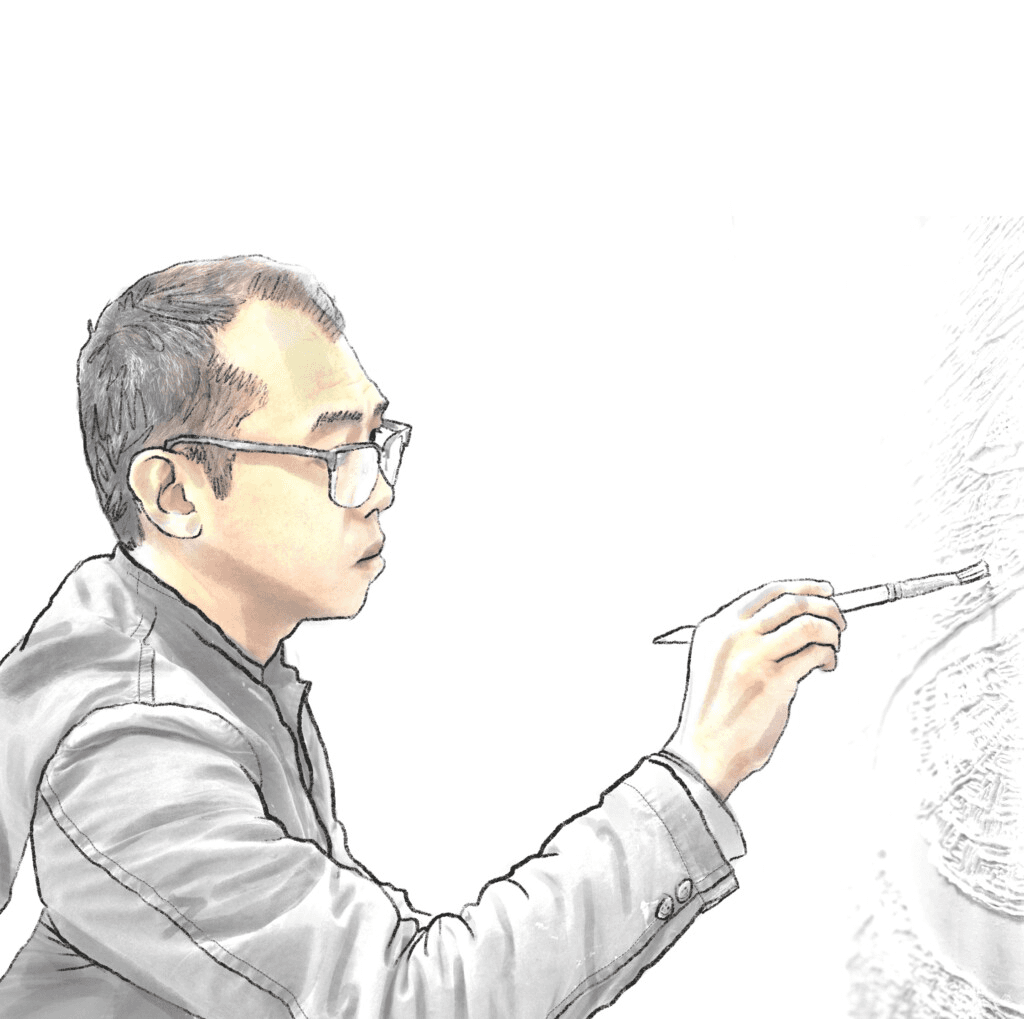
CNTRFLD. Can you describe a little about yourself, your childhood, and how you came to pursue a career as an artist? What was your journey to becoming an artist, and were there pivotal moments or influences that shaped your artistic identity?
GC. I was born in London 1975, growing up through the Brixton race riots. My parents were immigrants from Hong Kong when it was a British colony and came to the UK in order to find prospects to build a life. When I was a student at Central Saint Martins, I witnessed in 1997 the return of Hong Kong back to China. British education did not provide me with the historical knowledge of how Hong Kong became a colony and the teaching of the British Empire only touched briefly on the colonial crimes against humanity such as the Opium wars.
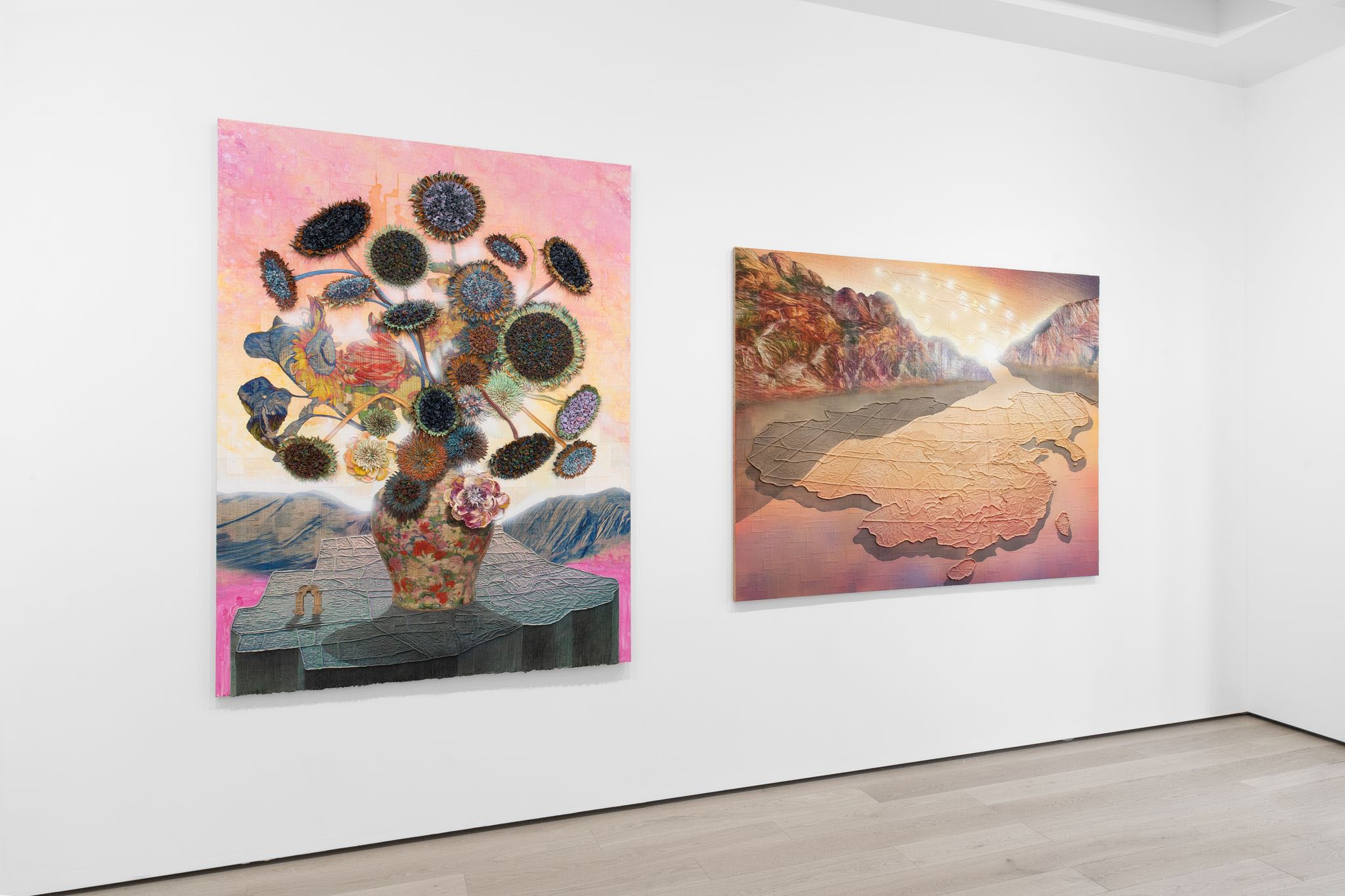
I have learnt to embrace my in-between identity as a positive in that I can be a bridge of understanding between cultures. These experiences inform my interests in questioning belief, power systems and histories written by victors. I create visual languages in my art to express the human condition framed by geopolitics. A core part of my practice is to create visual structures and processes that question fixed notions of categories. For example, when I was at Central Saint Martins, I decided to paint without paint by substituting paint for information and the brush for technology. Both my British and Chinese backgrounds feed into my work. I am 29th generation from the Cheung clan. I know this because my father’s clan has recorded the family tree in the village that he comes from in the New Territories, Hong Kong. The founder is Zhang Jiugao who was the Director of the Palace Administration in the Tang Imperial court, and he was primarily known as the younger brother of Zhang Jiuling, the Chancellor during the reign of Emperor Xuanzong and also a prominent poet and calligrapher. In Chinese calligraphy, the brush simultaneously represents word, poetry, and image. I created a parallel structure in which I was using the text of the stock market like it was paint, and in that way, it was simultaneously paint, image and poem. This ambiguity of simulating painting was a creative foundation for making my art to question the identity of painting itself and through this space, question our past, present and future histories.
These are some of the key themes and events in my life that have informed and strengthened my conviction to be an artist. When I was a kid there was only one brief moment where I thought I wanted to be an astronaut and would pretend to slowly move in zero gravity. Otherwise making art was always the one thing I loved to do, and I remember the sheer disbelief with floating wonder at being able to devote myself completely to it when I got into art school. Seeing how hard my parents worked helped me to also pursue my dream of making art full time and I’ve been lucky to this day in that respect.
CNTRFLD. We met in Hong Kong, but can you tell us about your experience living and working in London? How does the city's dynamic environment differ from other places you've lived, and in what ways has it shaped your artistic vision and approach?
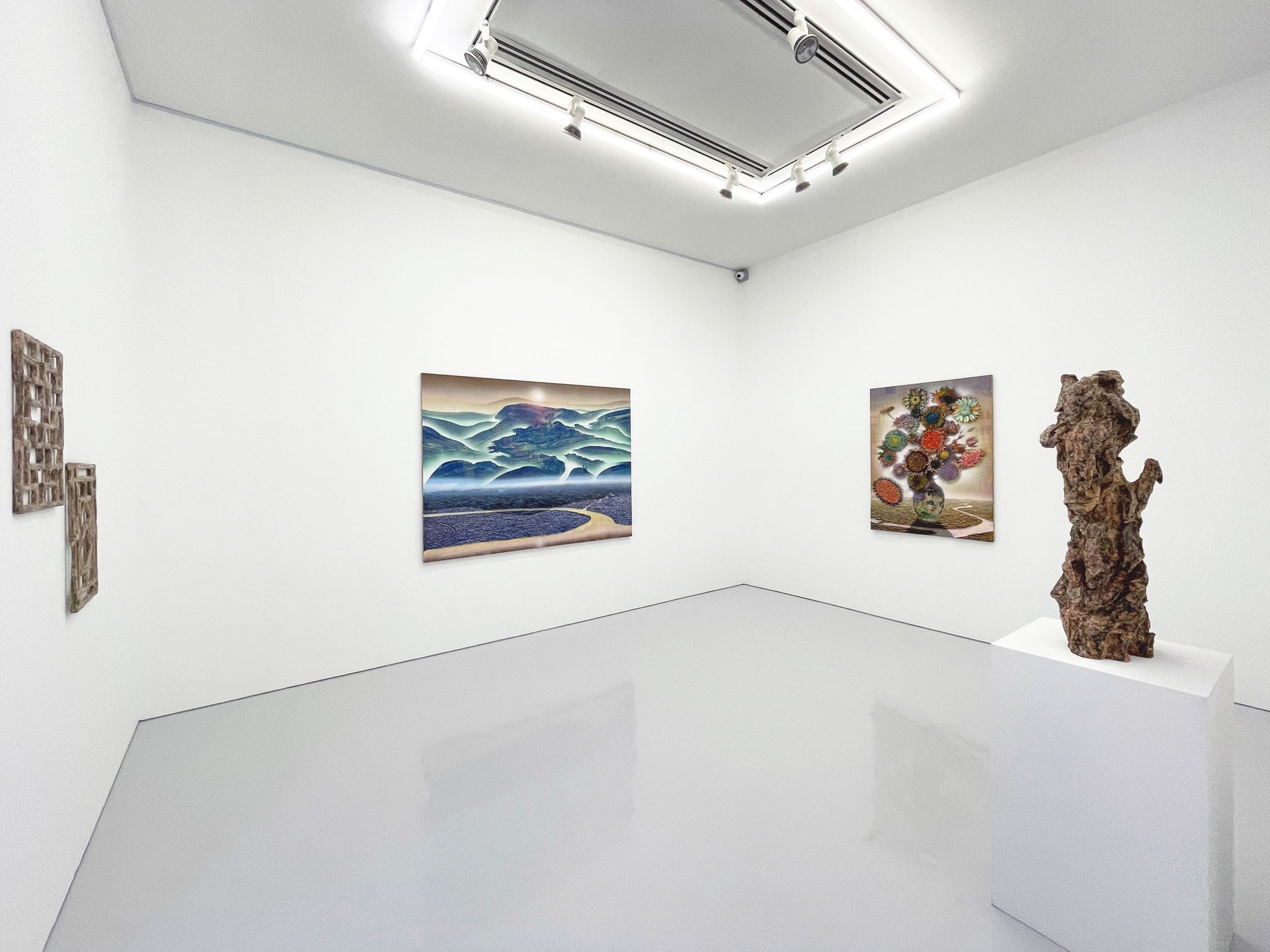
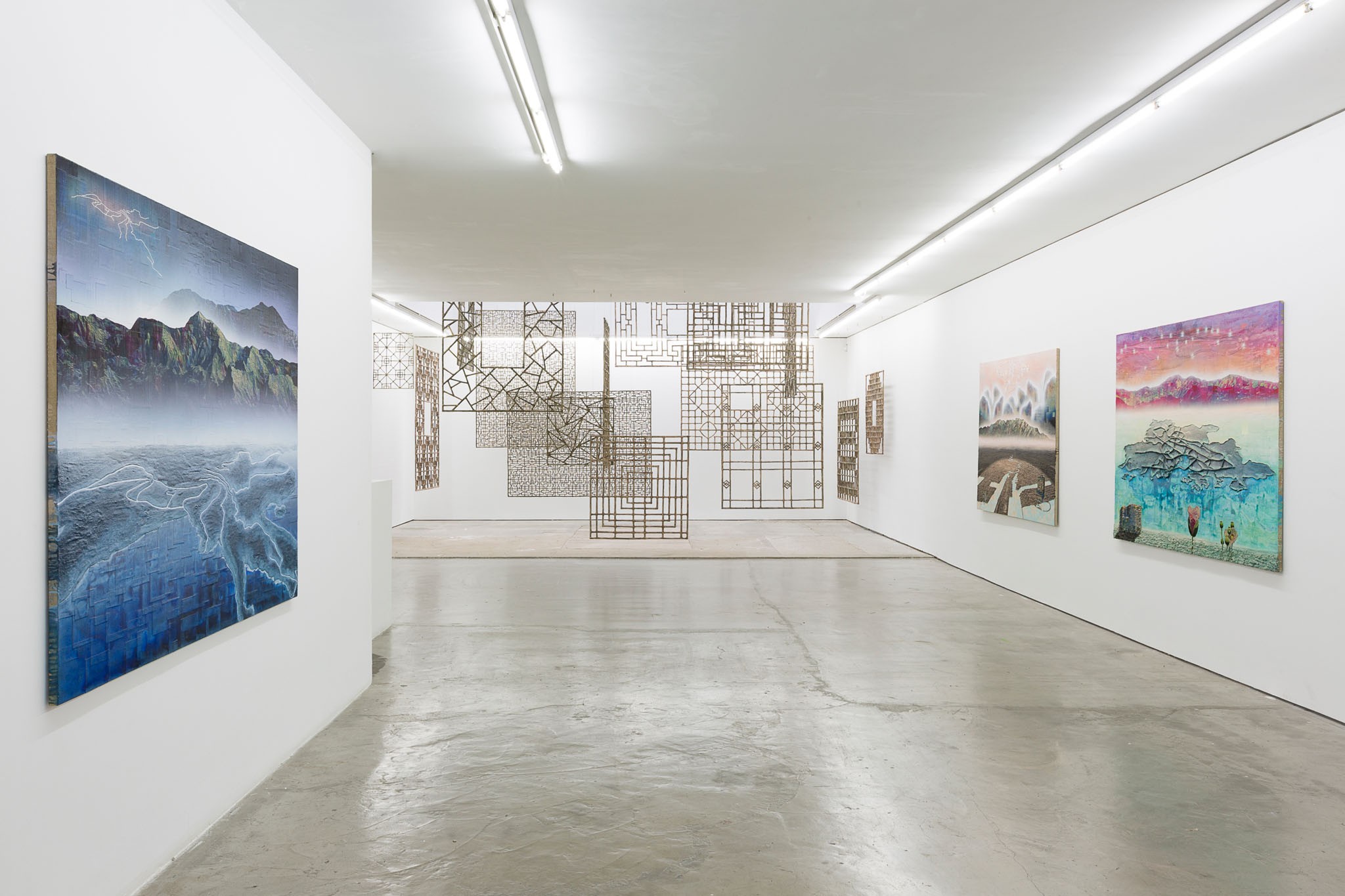
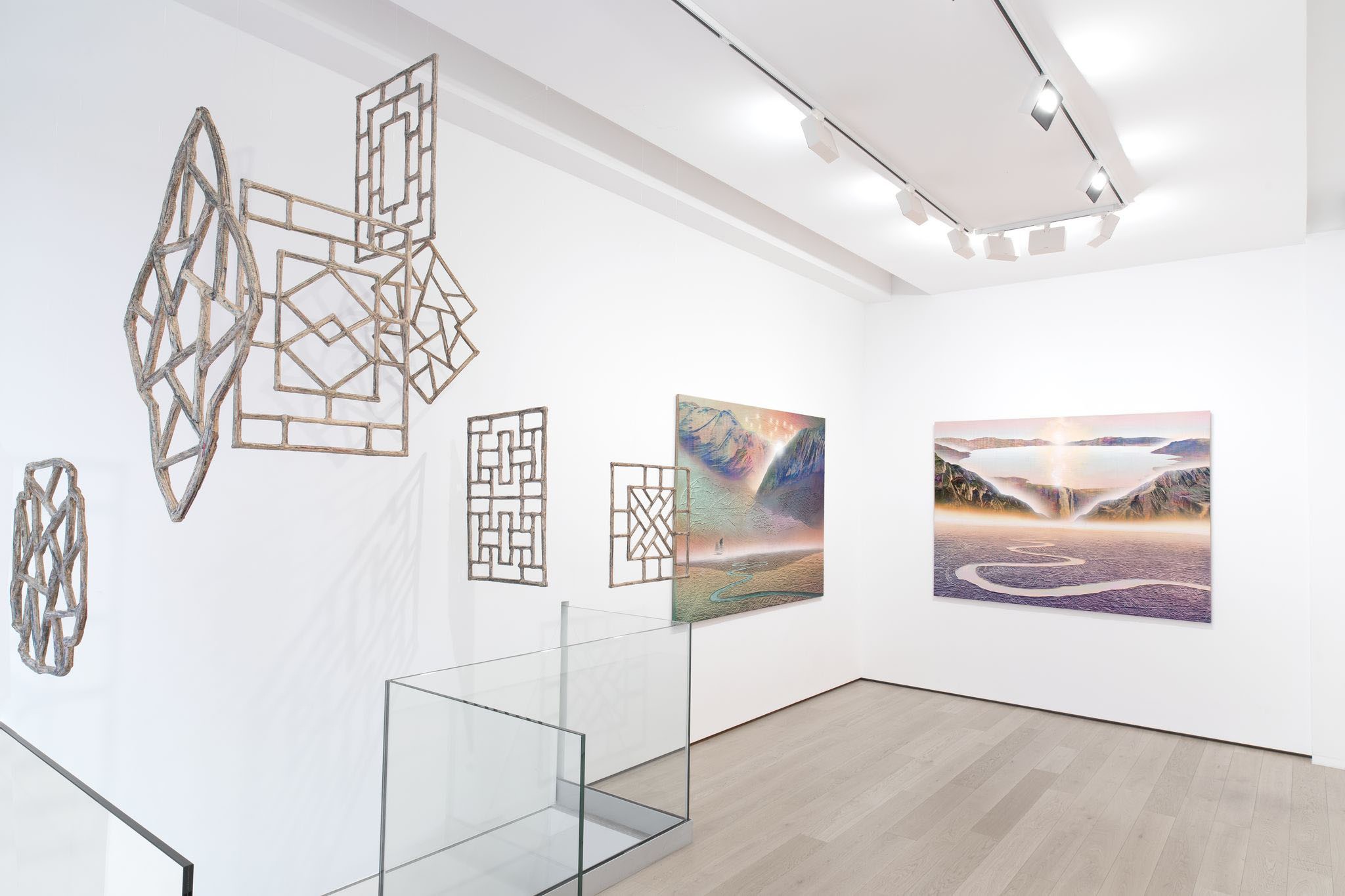
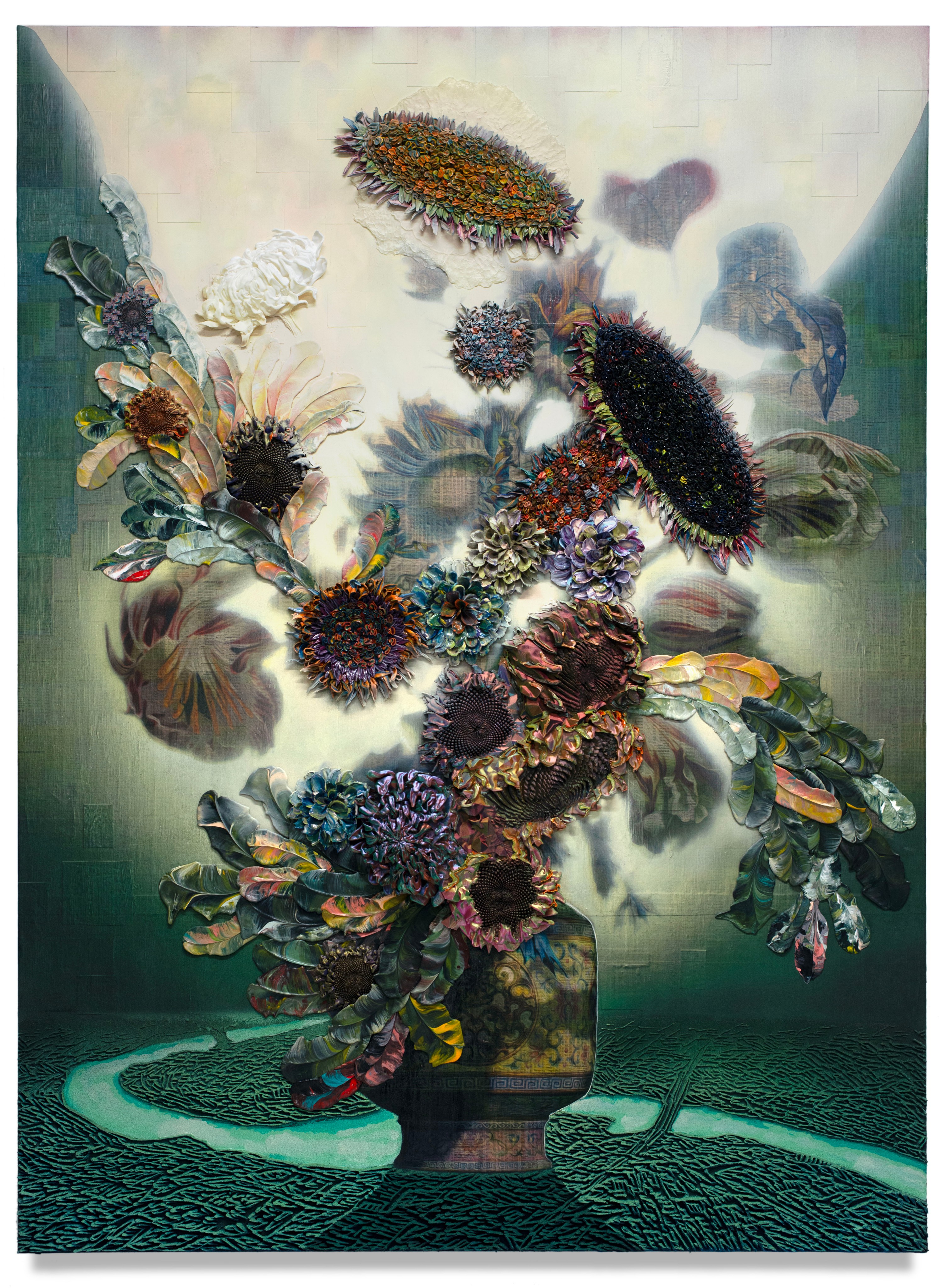
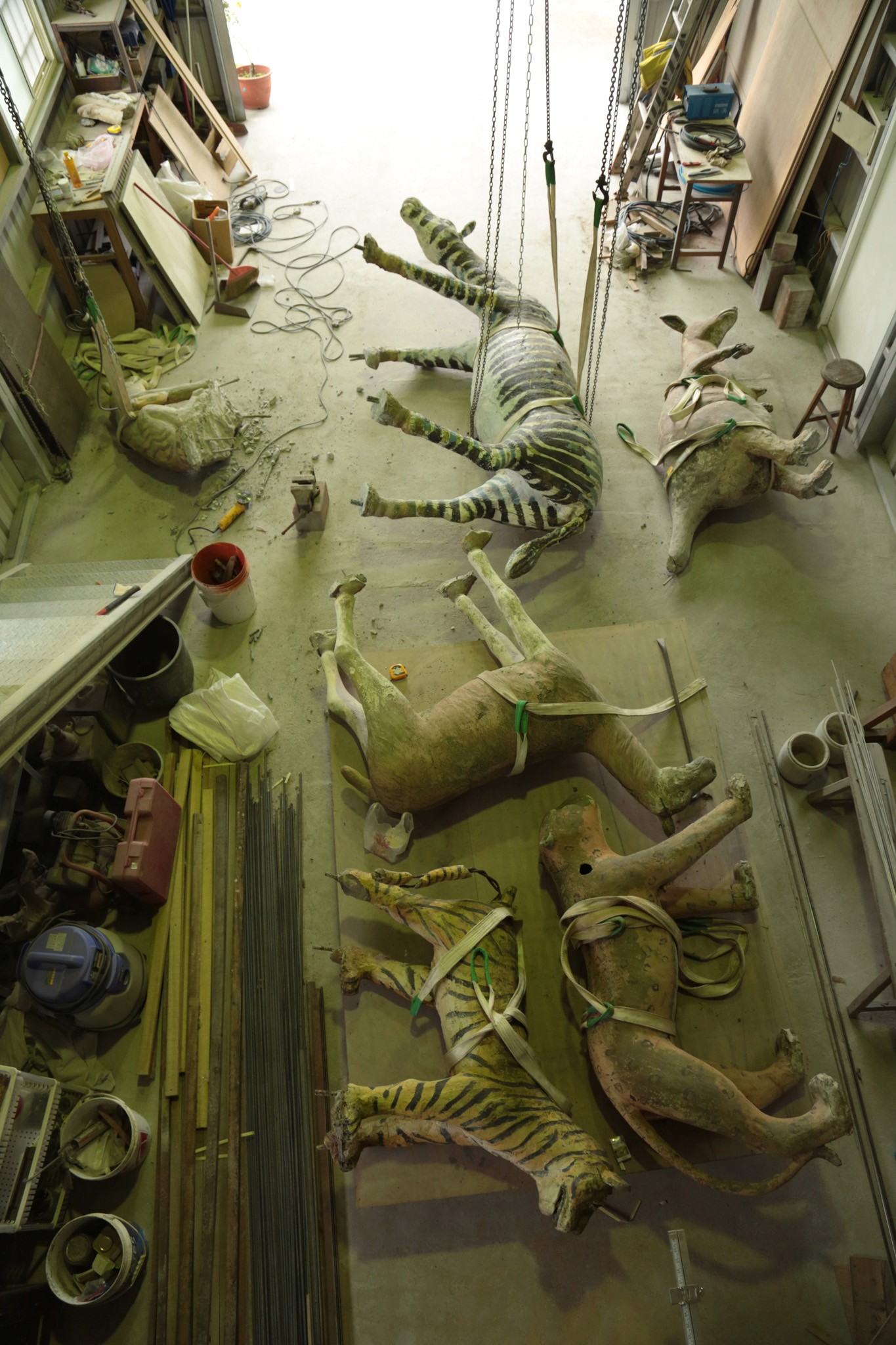
GC. While I was an art student at Central Saint Martins, Charing Cross Road, it used to be in the vibrant energetic heart of London. I have always loved the racing pulse of a city and I’ve never lived anywhere else, so I am not really able to make a comparison in respect to having lived in another city. But Hong Kong was always a place that I visited, and my parents helped make me feel it was also a home even though I have never lived there. Although I love London, as I have become older, I increasingly prefer the weather and food in Hong Kong. The energy in Hong Kong is even more densely vibrant. It helps that Hong Kong has also had a huge influx of galleries settling and that the contemporary art scene is growing with increasing confidence with its own identity and purpose. This has shaped my artistic vision by consciously rooting it in my in-between identity, leading me to often invent unconventional methods to make art and in the last 10 years my vision and thoughts have turned towards Asia. In particular the last 5 years focussing on learning more about my ancestral roots for which I intend to gather together into my solo show at GDM gallery in Hong Kong that I will call ‘New Territories’ in reference to my ancestry, the colonial past between Britain and Hong Kong and also to exploring new mediums like 3d printed porcelain sculptures made in Jingdezhen otherwise known as the porcelain capital of China.
CNTRFLD. We notice the concept of finance and stock prices plays a large role in your work. Can you expand on this?
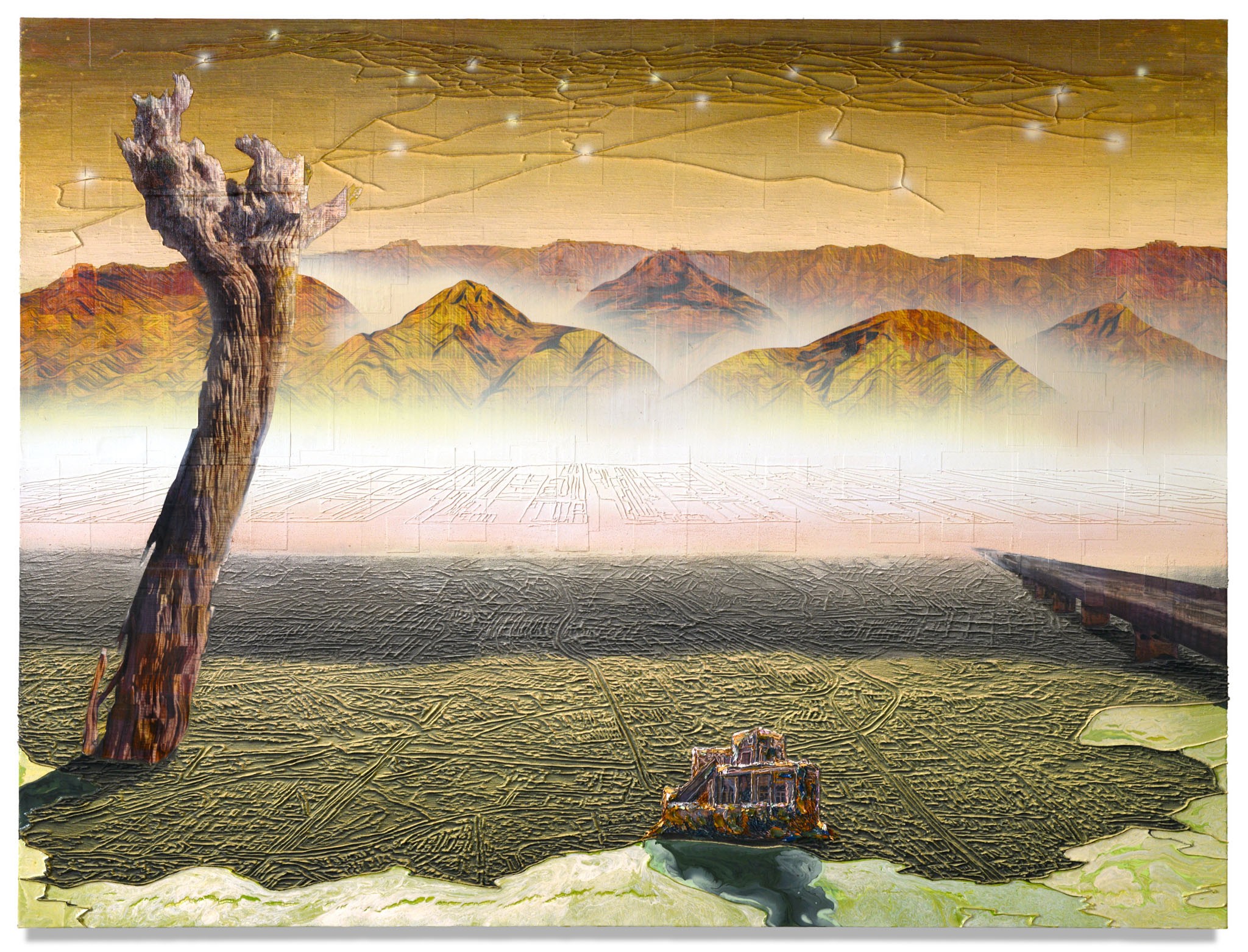
GC. When I was at art school in the mid-nineties, it was during the digital communications revolution. The internet was becoming available – cyberspace, digital frontiers, information superhighways, global villages were just some of the buzzwords being used to describe the advent of a technological new world revolution. It was a fascinating moment that I wanted to capture in my work, through this fairly archaic form of art: painting. Western painting abstraction at the time, I thought, was mostly self-interested in its own esoteric language, an insular dialogue about the medium itself and wasn’t really talking about the wider history of humanity and civilisations. I wanted to acknowledge but also sidestep that cultural conversation by removing paint and then substituting that with what I was compelled to connect to, which was the stuff of the everyday, maps and the stock listings of the Financial Times – information. I was using the principles of painting, to paint without paint, in order to philosophically open up the question of what is painting and to reflect on how the technological revolution was reconfiguring our perceptions of time into a state of constant flux. I substituted paint for collage and technology for the brush to reflect upon the light speed transmissions of trillions in Capital and wherever it accumulated created Utopias or Dystopias.
CNTRFLD. From your perspective, how has Asian arts influenced today's culture over the years, and what is your opinion on the importance and impact of this movement in the global artistic landscape?
GC. When I was a student at Central Saint Martins School of Art in the 90s, I naively thought I could choose a gallery to represent my work. However, my search revealed how few Chinese names were on gallery rosters, and those that came primarily from mainland China. It dawned on me that there were extremely limited positions in the London art world for someone with a British-born Chinese identity. With Chinese individuals making up only about 0.8% of the UK population, I realised I needed to take control of my career.
In my second year of my BA, I began organising exhibitions with friends, deciding when and where to show our art. This continued through to 2000, when I was at the Royal College of Art, where I organised, a show featuring over 172 artists in two disused Victorian school buildings. During this period, there was a significant shift in what Western galleries were showing regarding Chinese artists. They moved from focusing on the politically charged and critical avant-garde of the 80s to more diverse expressions influenced by globalisation and economic reform.
Exhibiting Asian arts beyond their homelands can facilitate cultural exchanges and promote understanding and appreciation of diverse artistic traditions. However, it can also reinforce Western stereotypes. As Australian art critic Robert Hughes noted about Abstract Expressionism, art can be a cultural weapon. The gradual increase in exposure to Asian arts among Western audiences helps foster a nuanced understanding of different cultures.
There has been a notable push to move away from the centre-periphery model that views Western art as central and Asian art as peripheral. This shift may reflect the broader transition from a unipolar world towards a new multipolar world order. Scholars and art critics advocate for recognizing the unique contributions of Asian art without always comparing it to Western standards. This shift aims to highlight the diverse narratives and cultural contexts within which Asian artists operate, fostering a more balanced and inclusive global art discourse. Nonetheless, there is still a long way to go in the Euro-American art world.
CNTRFLD. I first saw your work in a Vogue feature that was AR digital lions for restaurateur Andrew Wong’s hoarding during his restaurant renovations. Can you share the digital process and elaborate on how you began experimenting with this creative process? Will we be seeing more digital works in Web3 or NFTs?
GC. The project with Andrew Wong was born from the pandemic and the ensuing Asian hate due to the irrational politicisation of COVID being called the China Virus. Andrew and I wanted to create something positive during this difficult time so I made an artwork with the help of HK based MetaObjects that wrapped around the restaurant's conservatory dining area in which the images of lucky Chinese motifs warding off evil could be animated via augmented reality on the phone. Coincidentally, to everyone’s joy during the project, Andrew’s restaurant won his 2nd Michelin star.
I continued experimenting with digital works in web3 and NFTs in part from my interest in blockchain technology and to explore the relationship between capitalism, the environment, and civilization. My art has always been in the digital realm rooted in the digital and communications revolution of the internet and now into the threshold of the blockchain revolution with recent ventures into NFTs and augmented reality (AR).
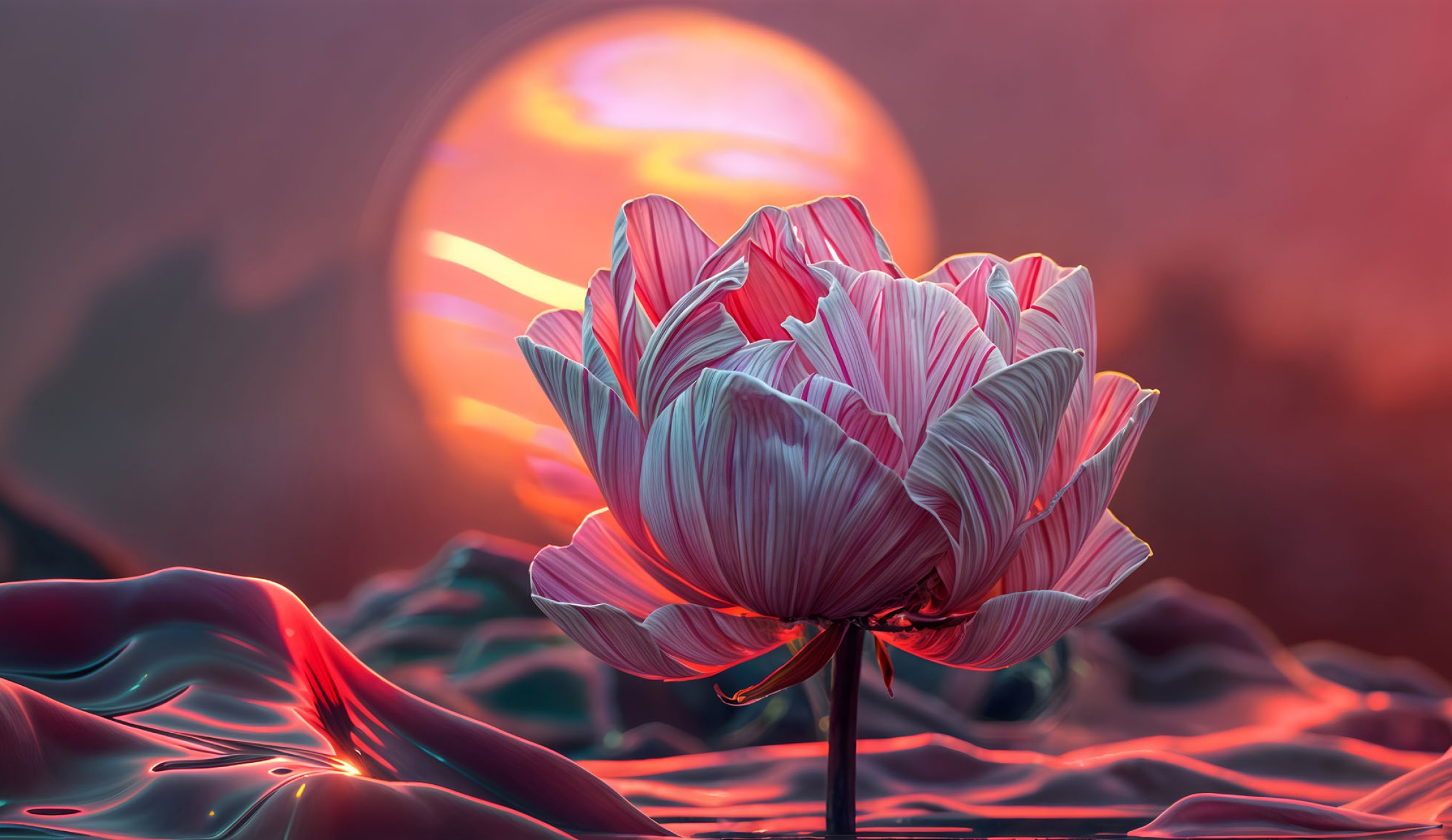
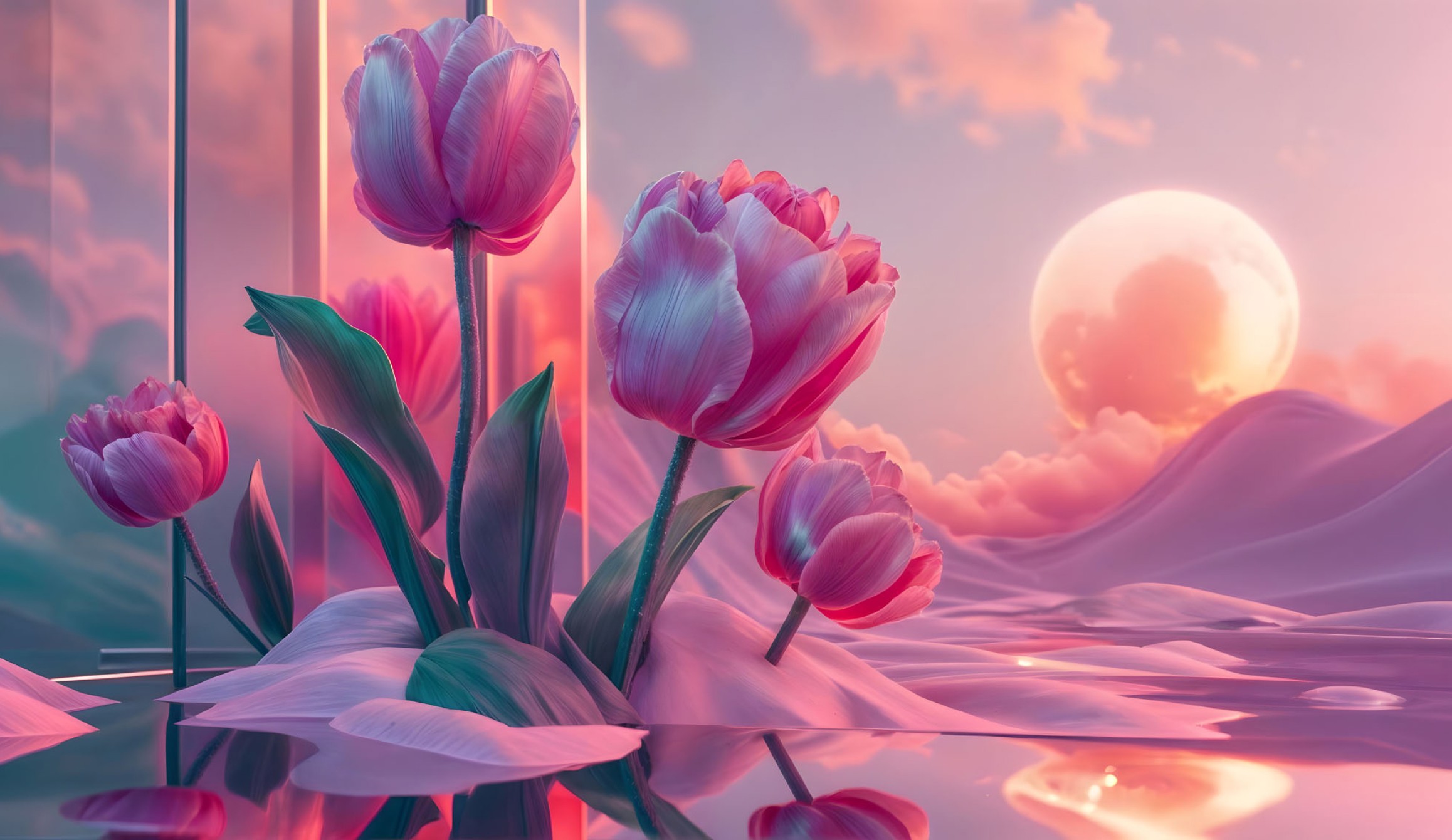
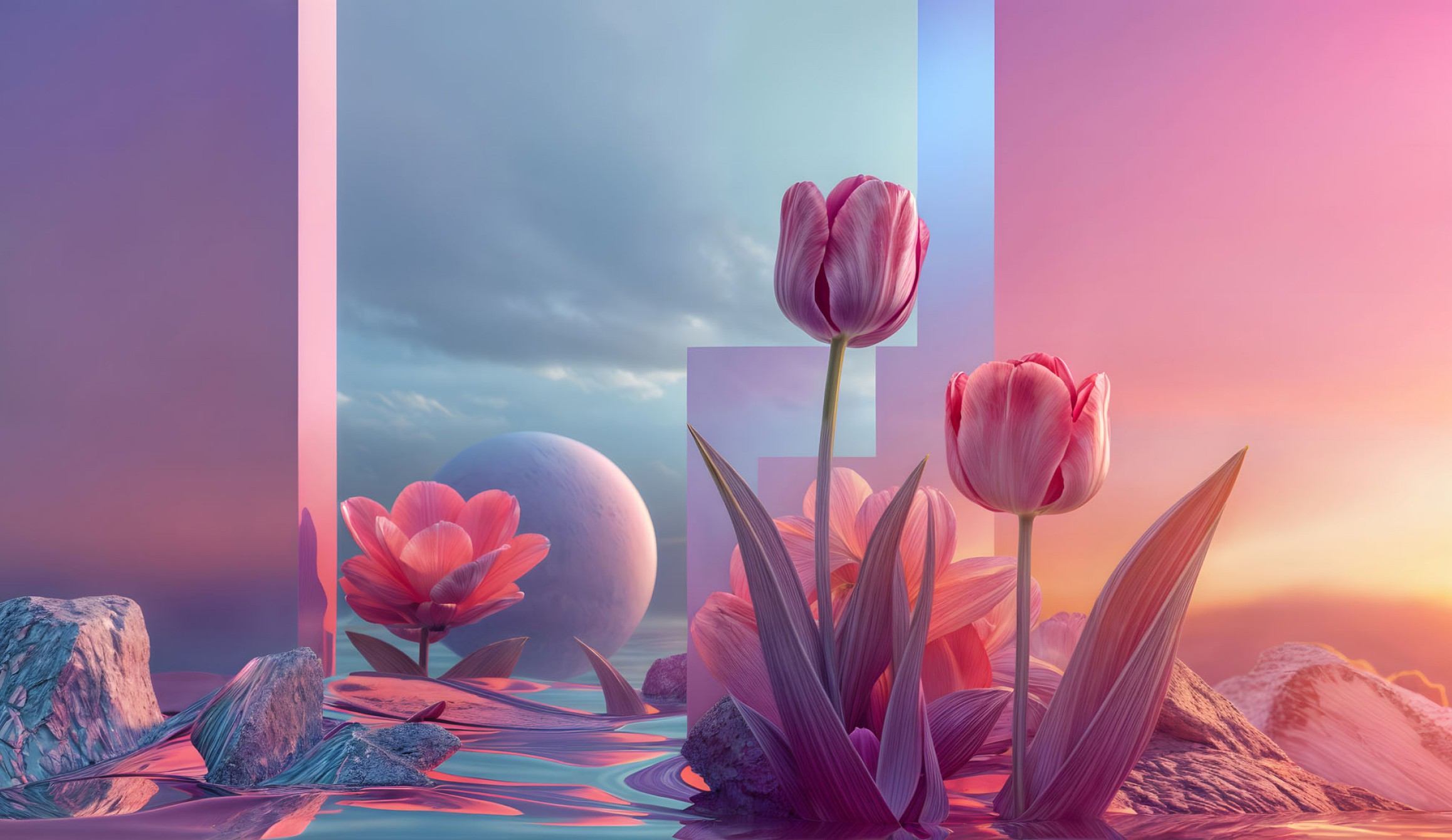
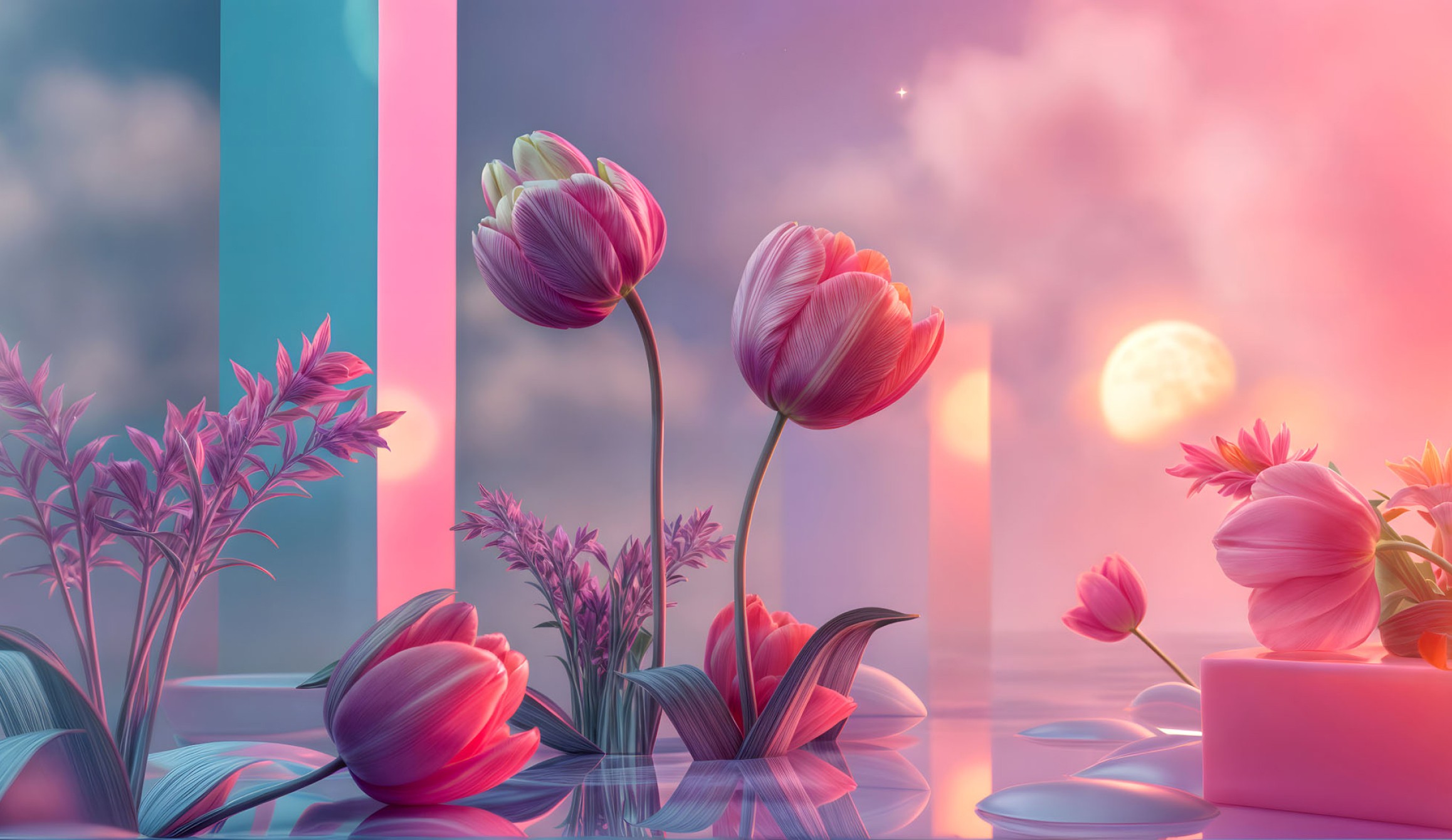
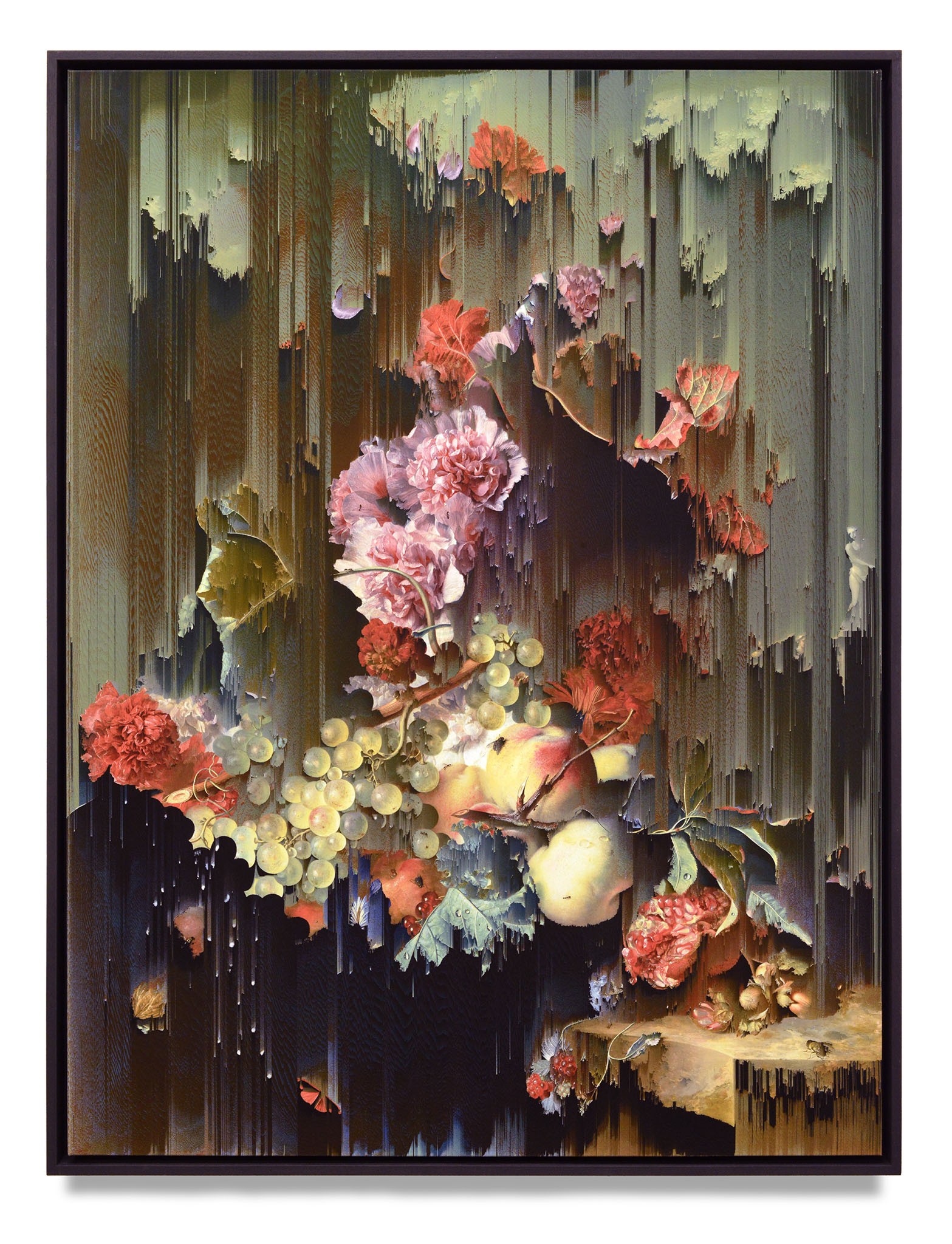
Meta’s London HQ then commissioned “Power, Corruption and Lies", where I used a sorting algorithm to non-destructively reorder pixels in a photograph of a still life painting, creating what I call a "digital sands of time" effect. This technique reflects on history's repetition and our data-saturated era's impact on memory and history. Inspired by the 2008 financial crisis, my work references the first recorded economic bubble, Tulipmania, using high-resolution images from the Rijksmuseum.
NFTs have been part of my artistic journey for several years. ``Tulip Maniac," in 2021 was my first NFT, combining 3D modelling, machine learning, and algorithms, using Bitcoin data to animate tulip bulbs. I am now working on the release of “Tulip Futures," My NFT collection. This collection symbolises our evolution from nature to the digital world and the rise of blockchain technology.