CNTRFLD. There’s No Place also highlights the impact of the COVID-19 pandemic. How did the pandemic shape your practice and inspire recent projects like Phayao-a-Porter?
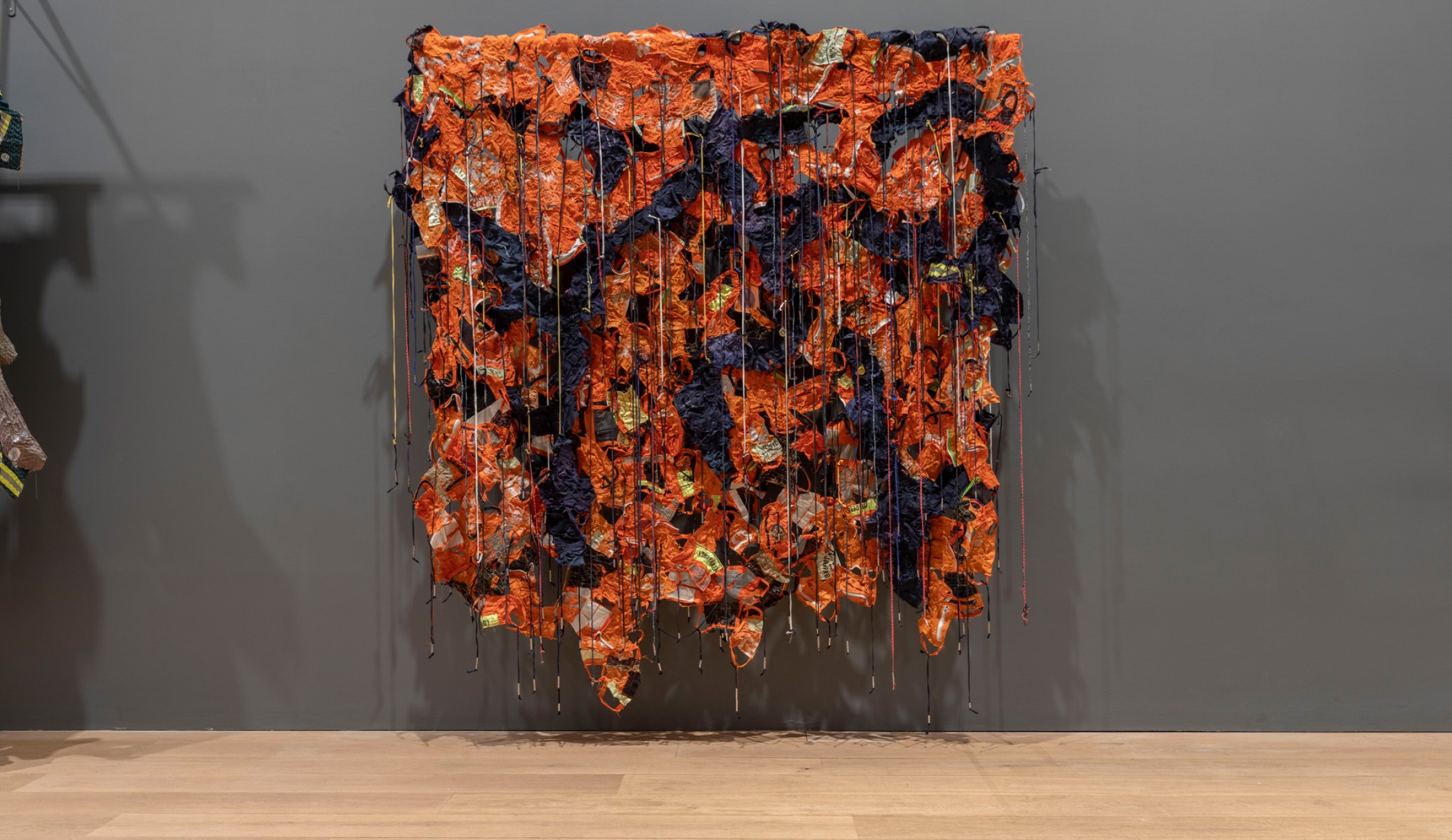
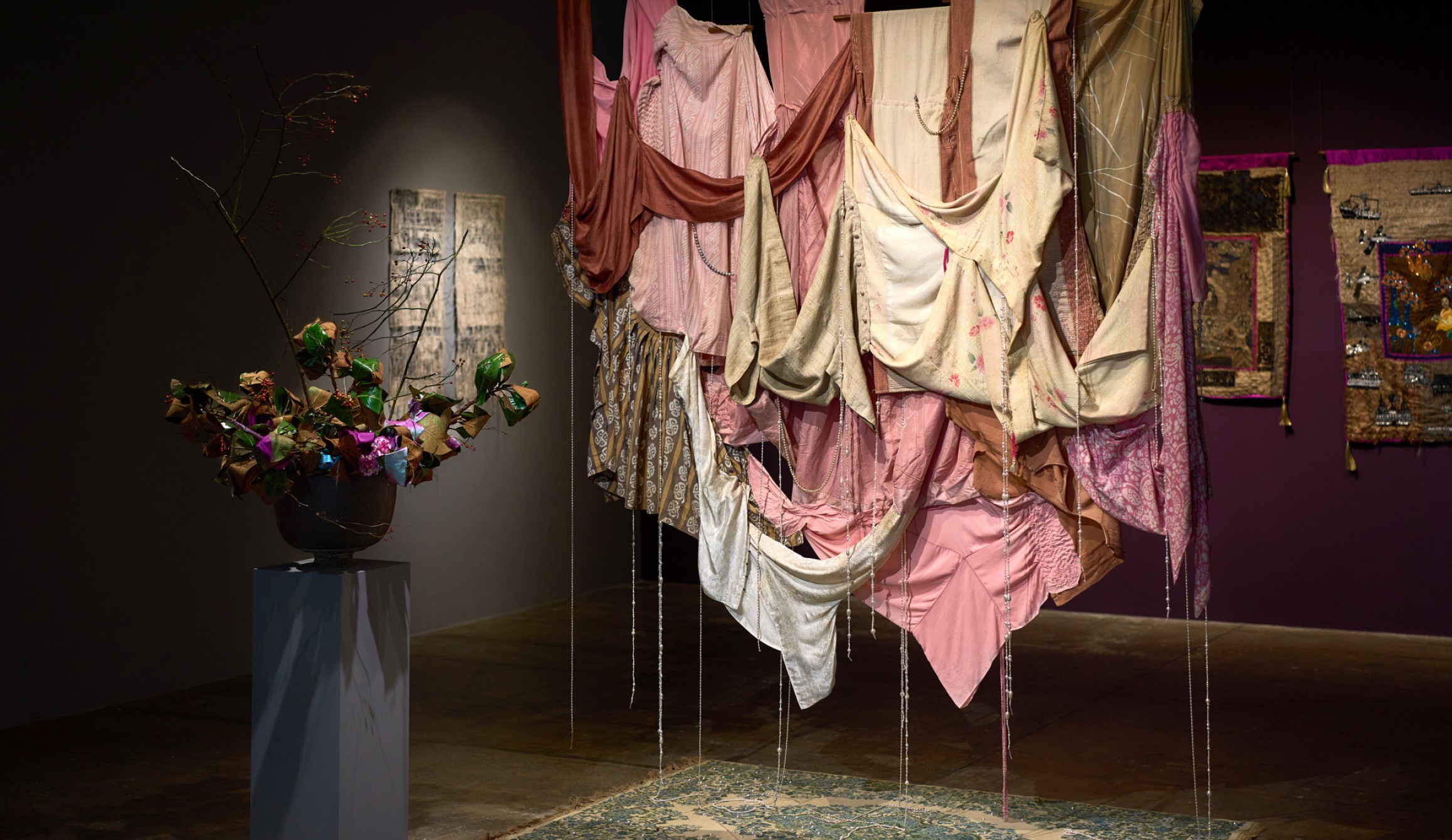
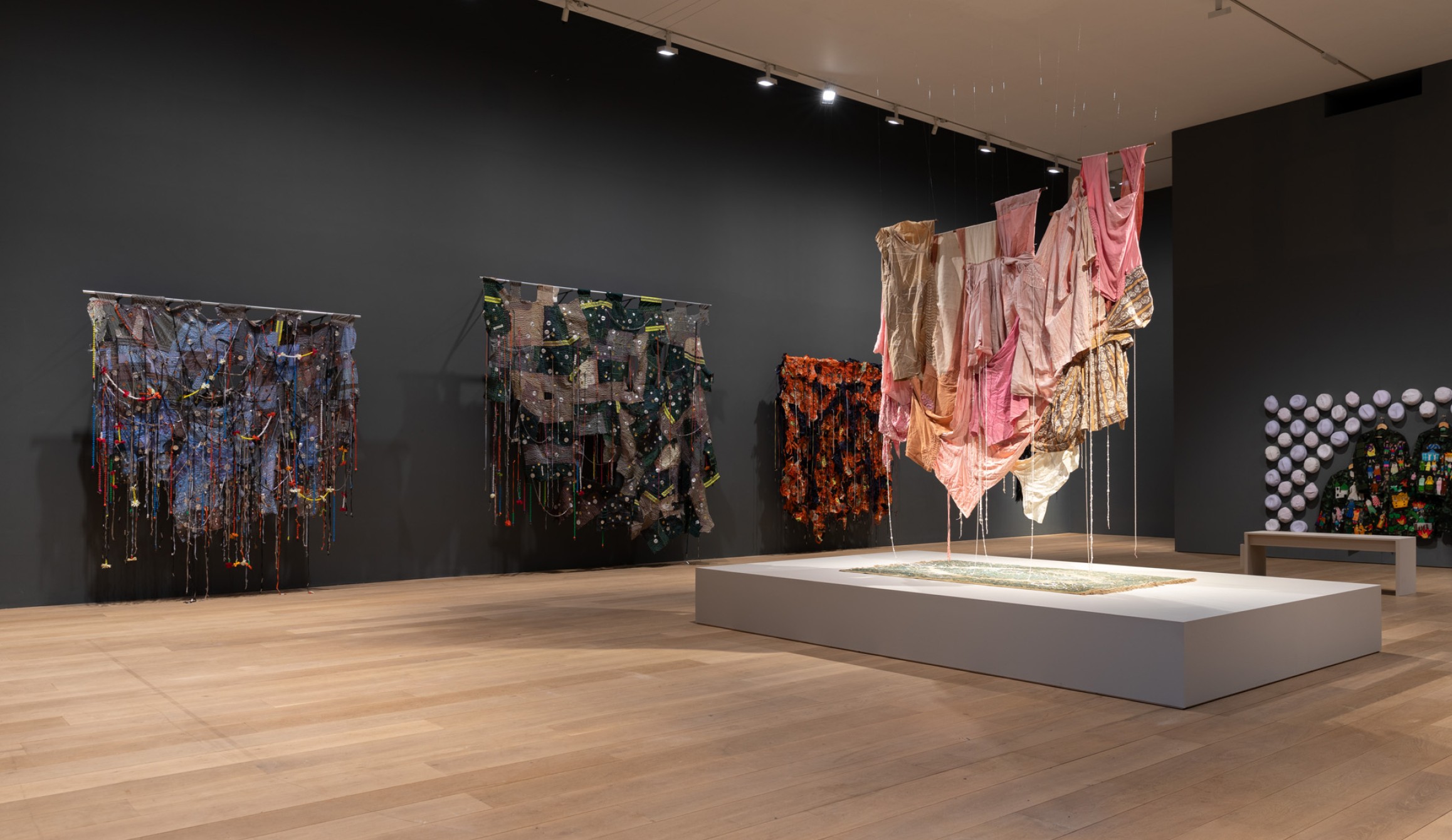
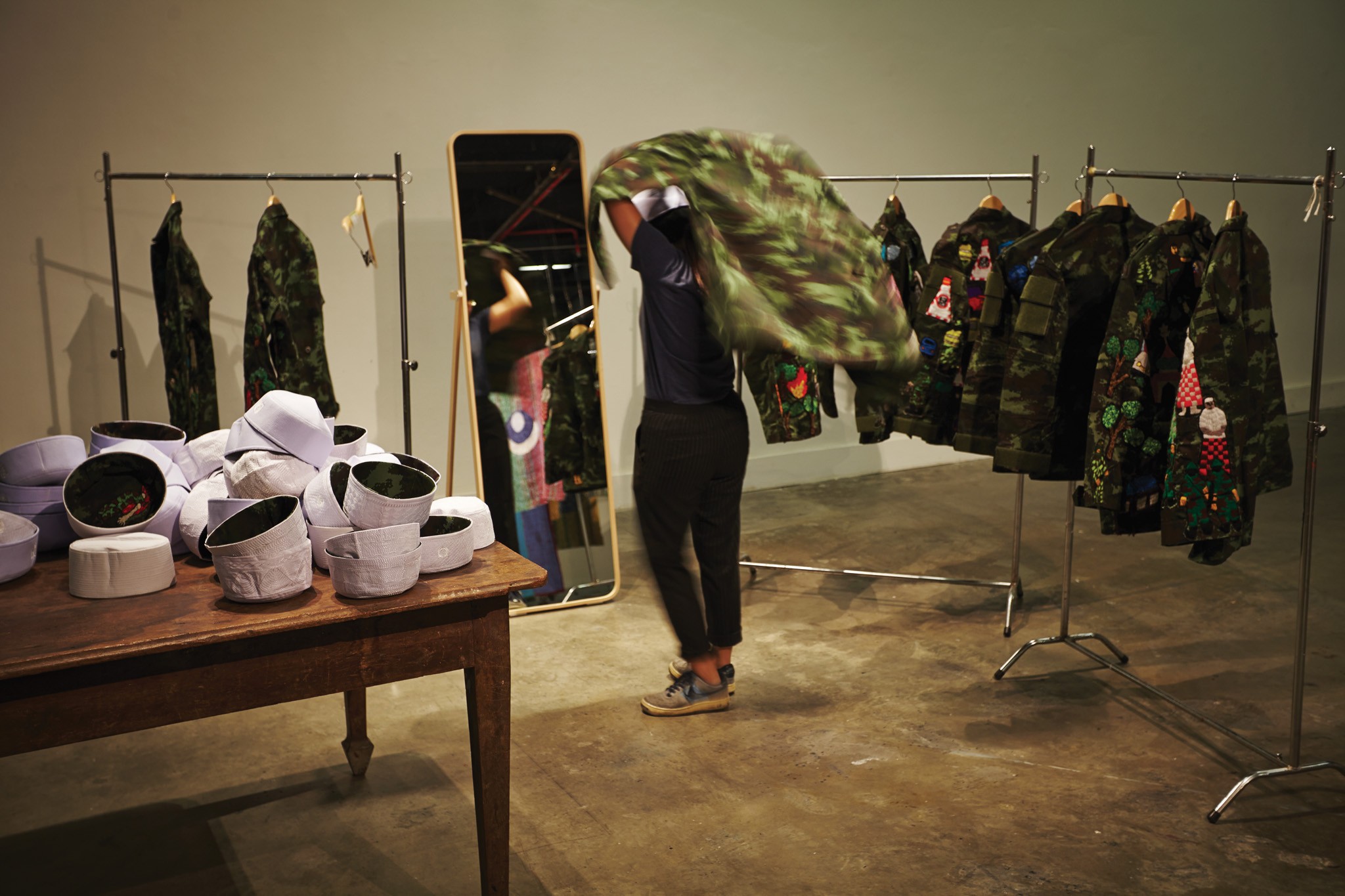
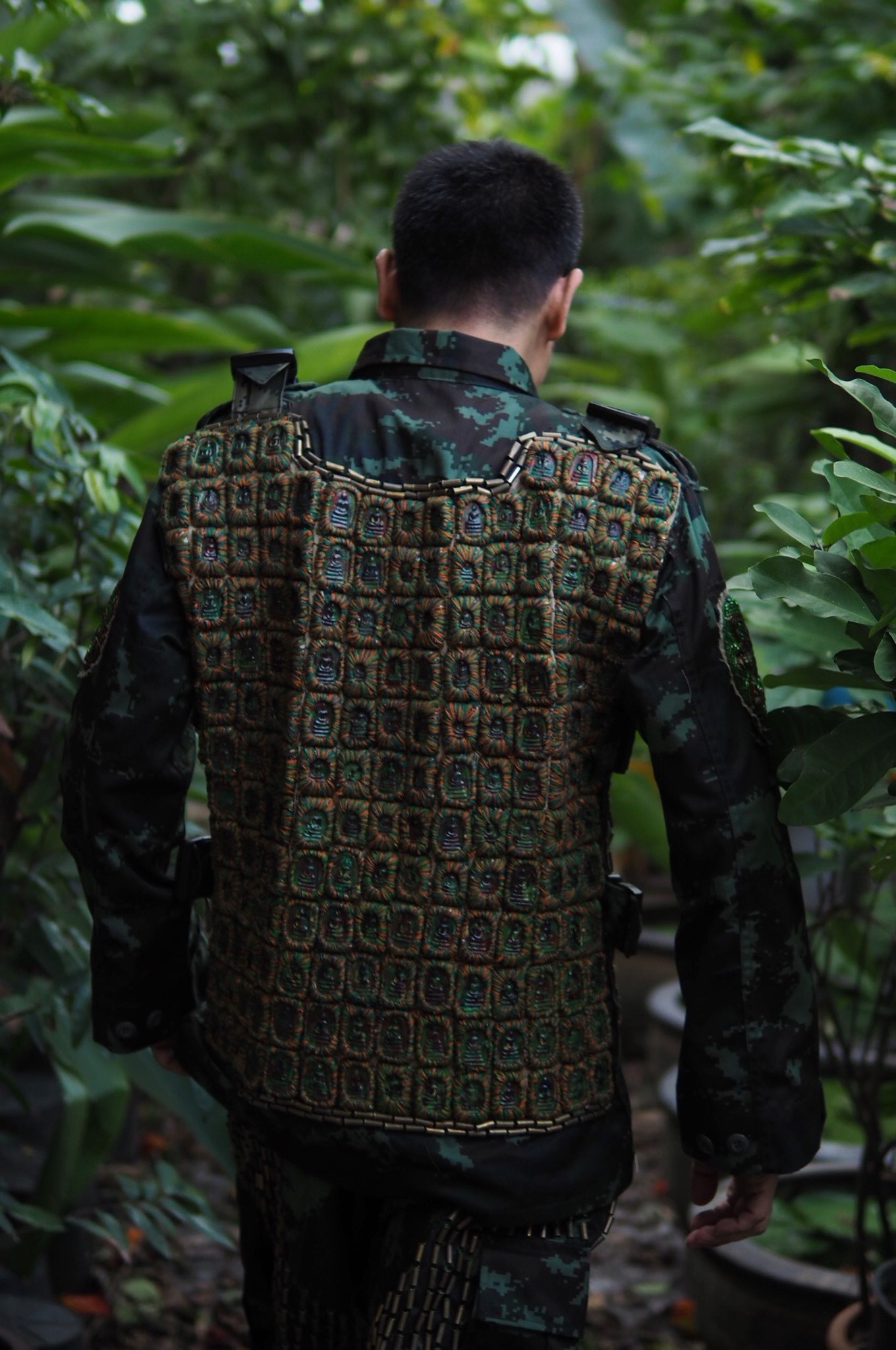
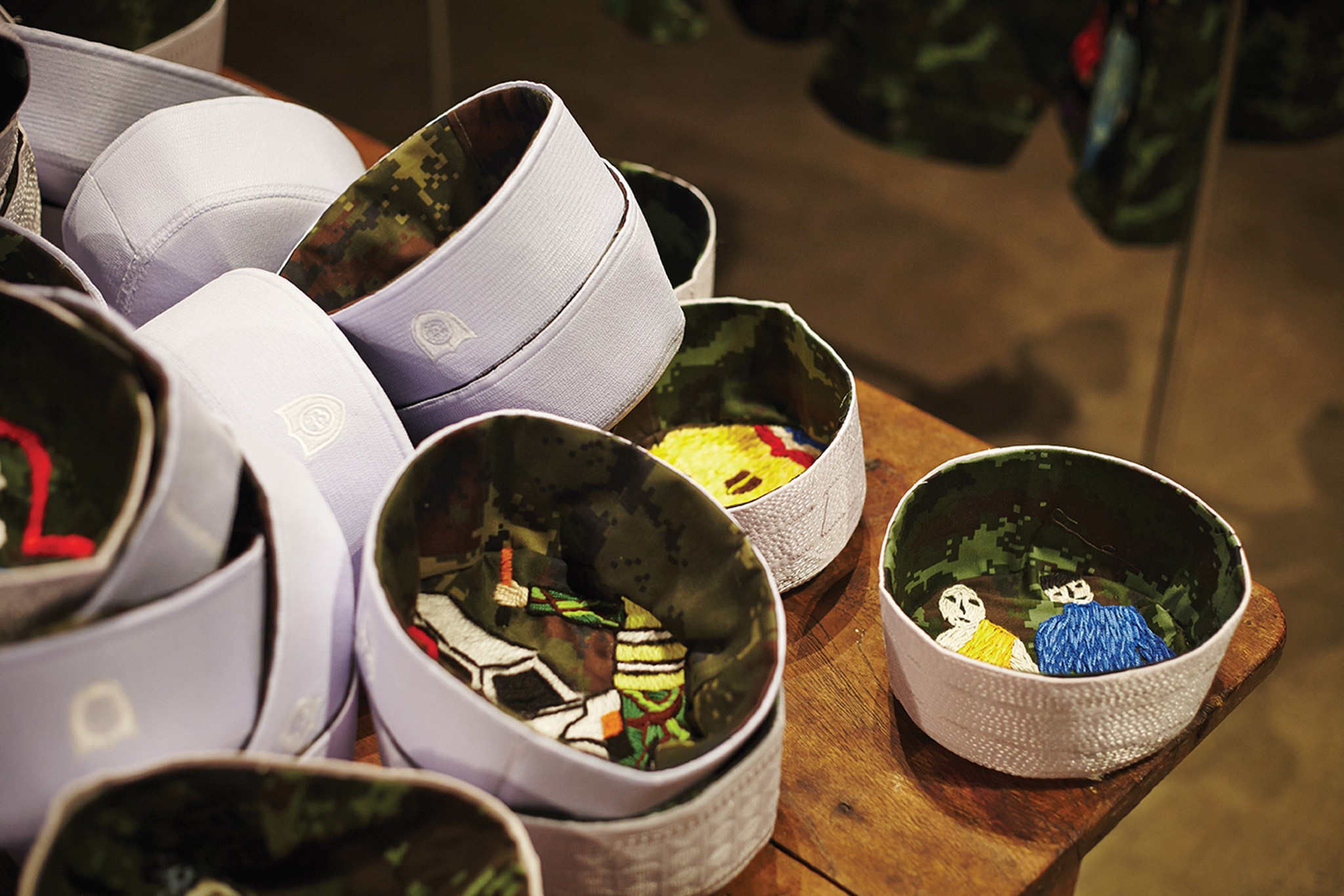
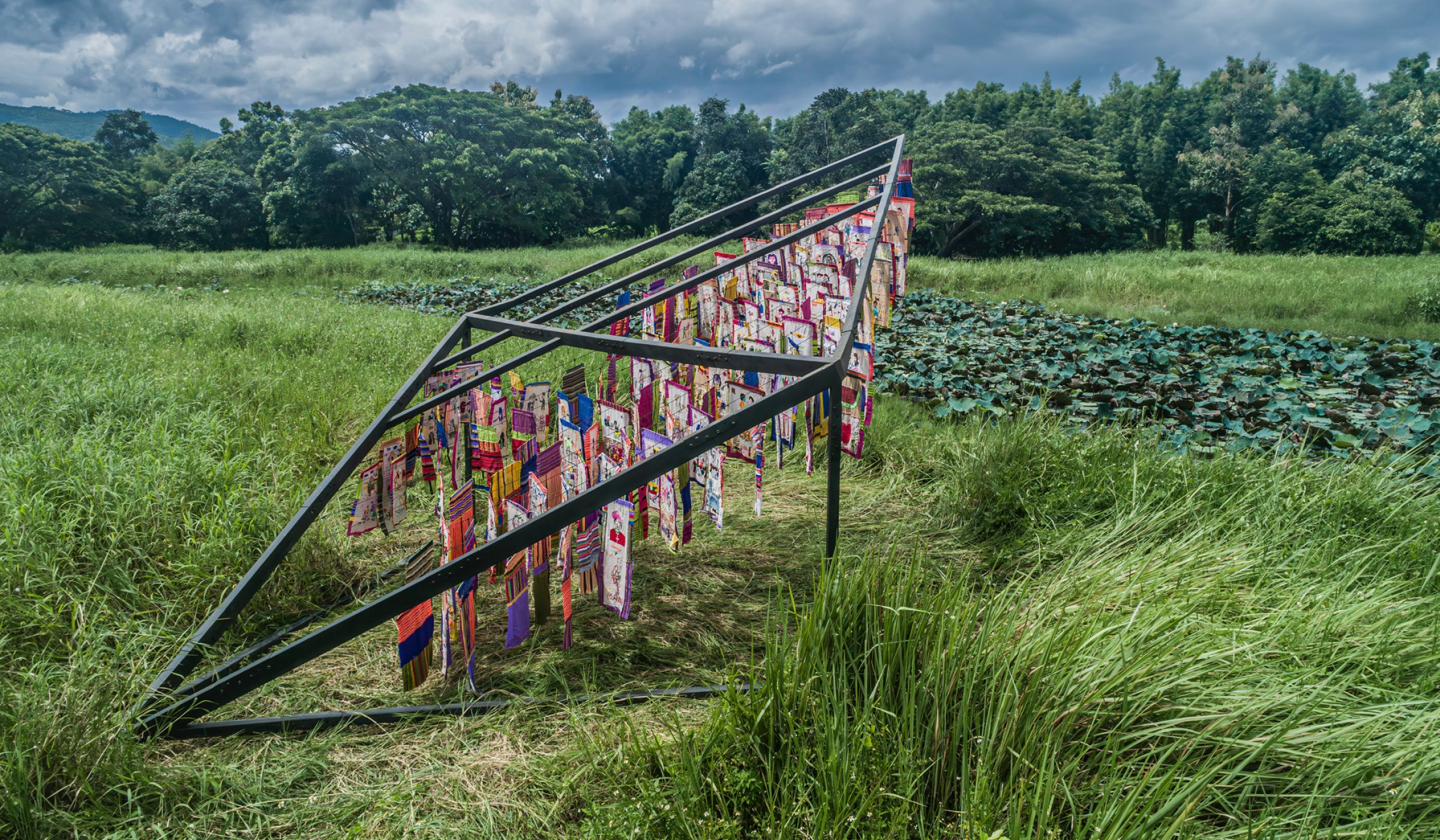
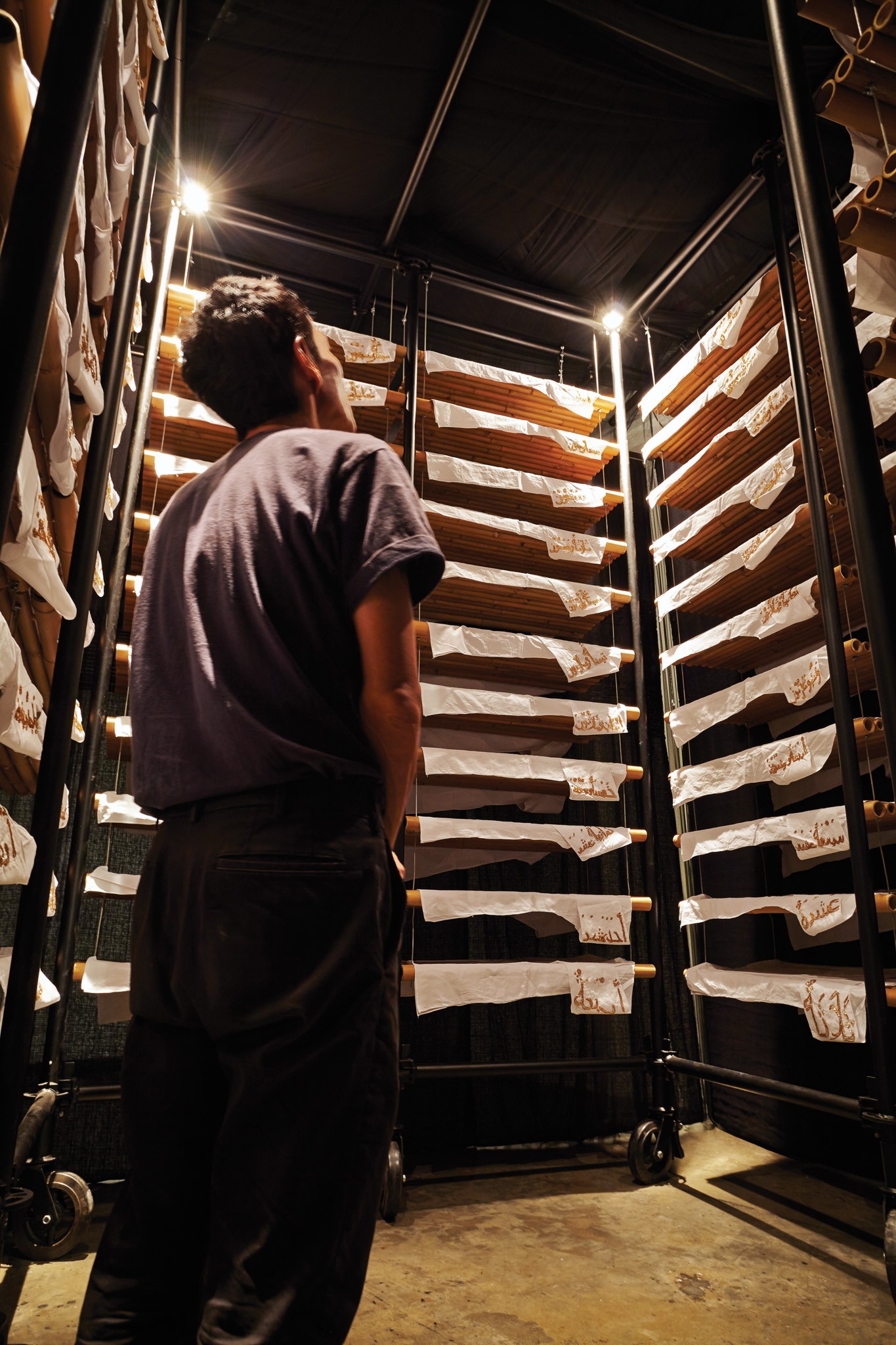
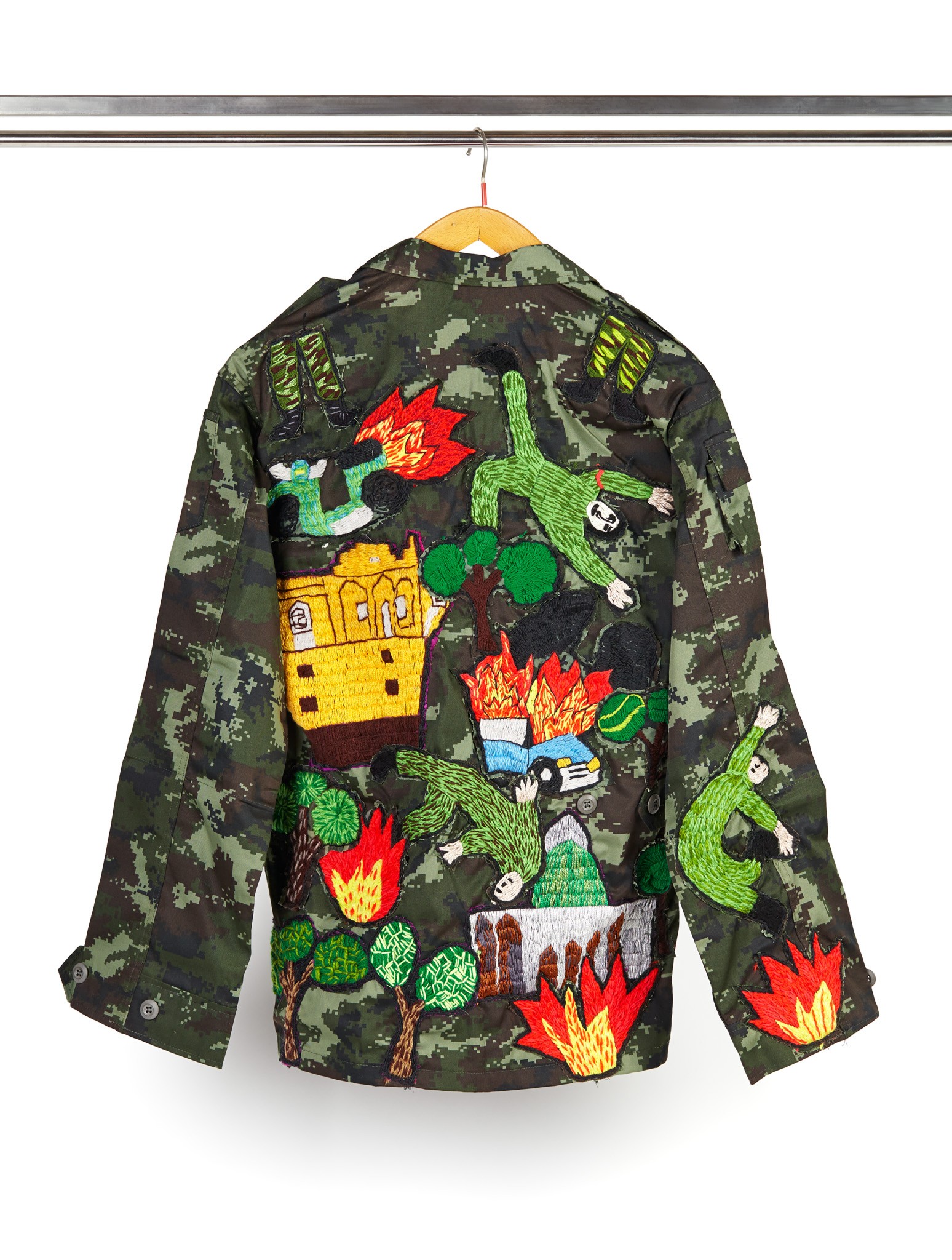
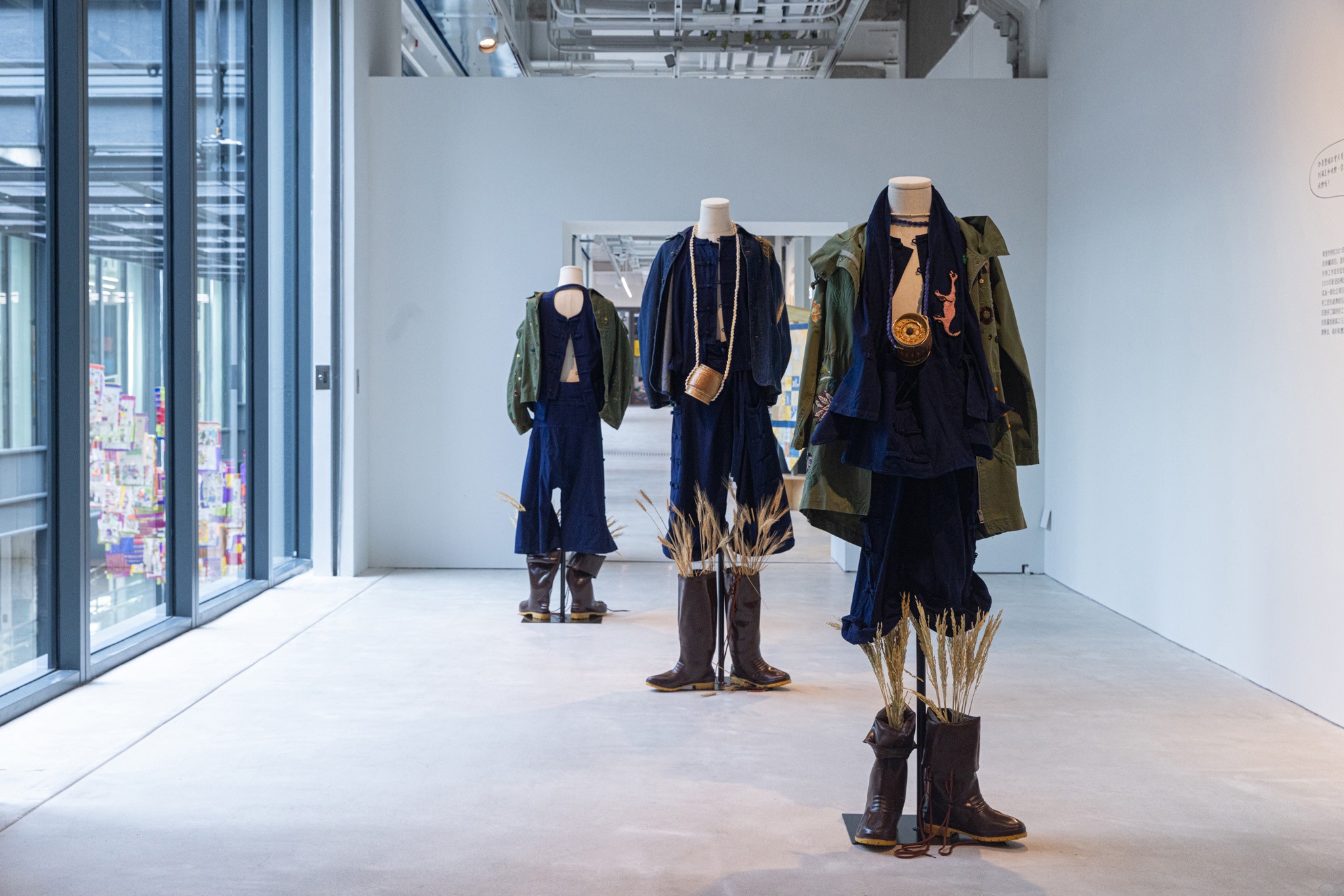
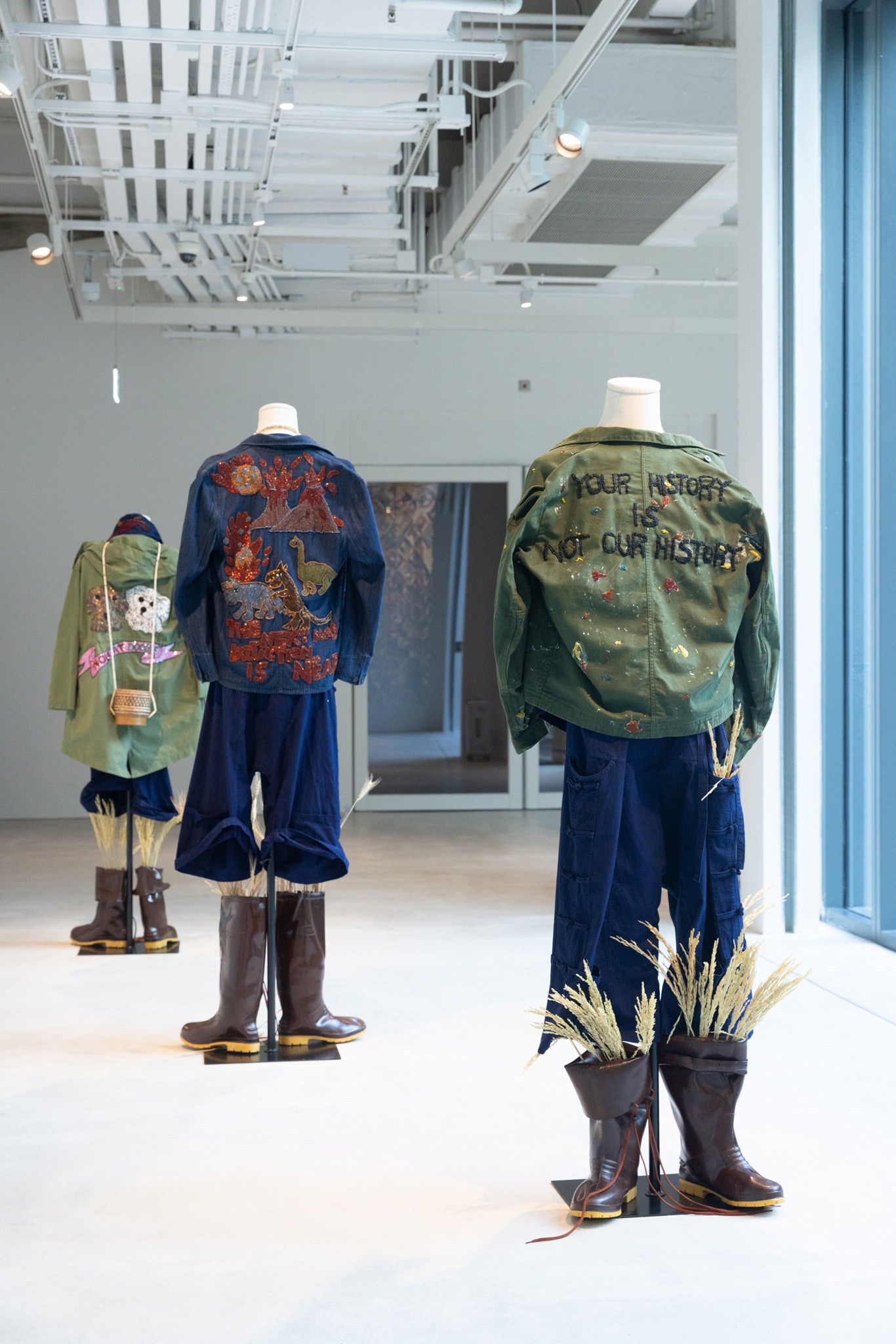
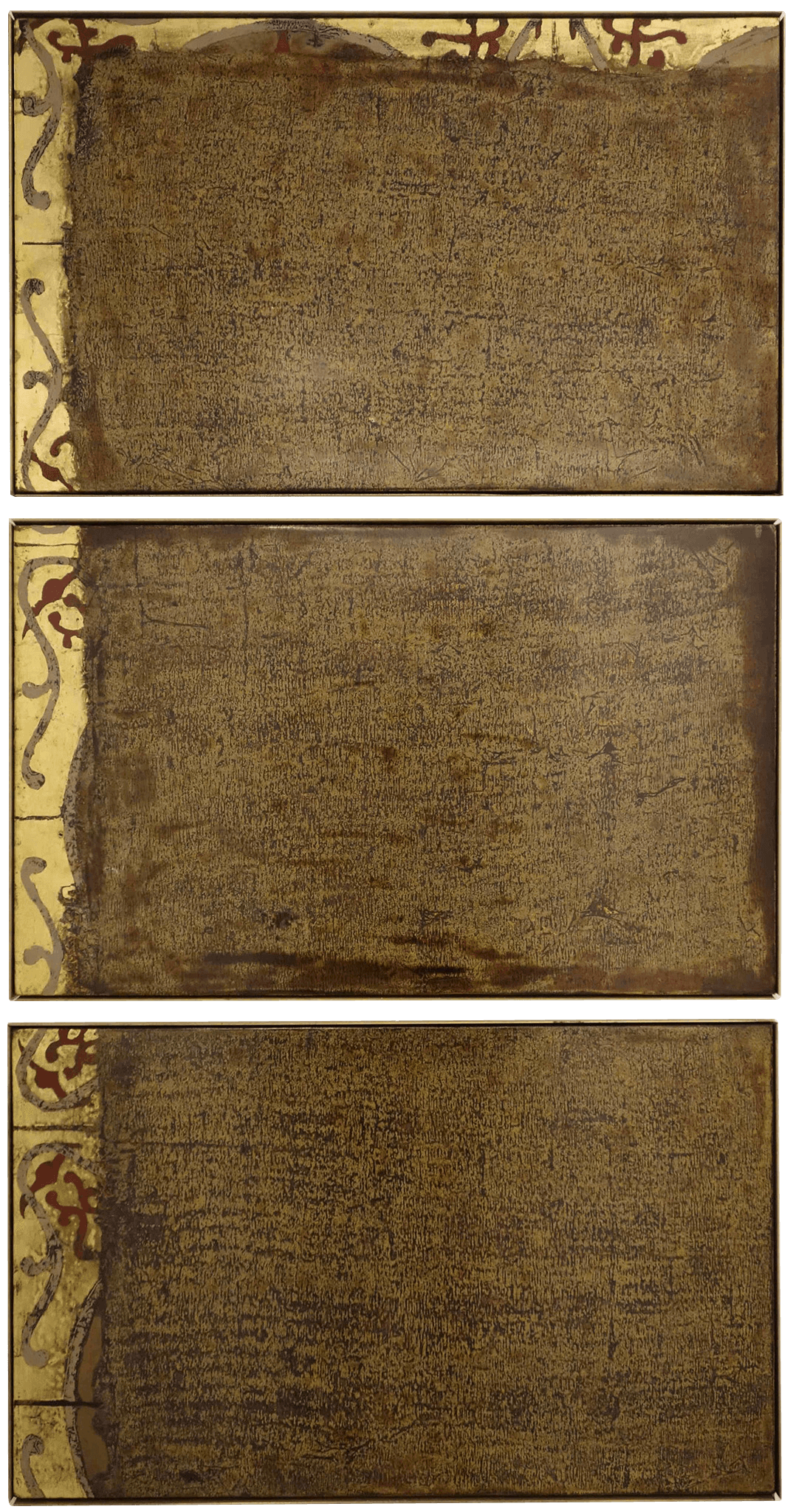
JS. Works from the Airborne and Outworn Series, created during the pandemic are included in the exhibition. During that same time, I also started Phayao-a-Porter project, a limited series of one-of a-kind commissioned jackets to keep my studio assistants busy during the 2020 lockdown and later expanded to the remote northern province of Phayao to help women artisans whom I’ve previously collaborated with and have suffered economically during the pandemic. The project offered them some temporary employment for their craft and 30% from the sales from each garment return to the community as scholarships, welfare and emergency funds.
CNTRFLD. You’ve explored the interaction between Buddhism and materialism in Thailand. How has your cultural background shaped this exploration, and what do you hope audiences take away from it?
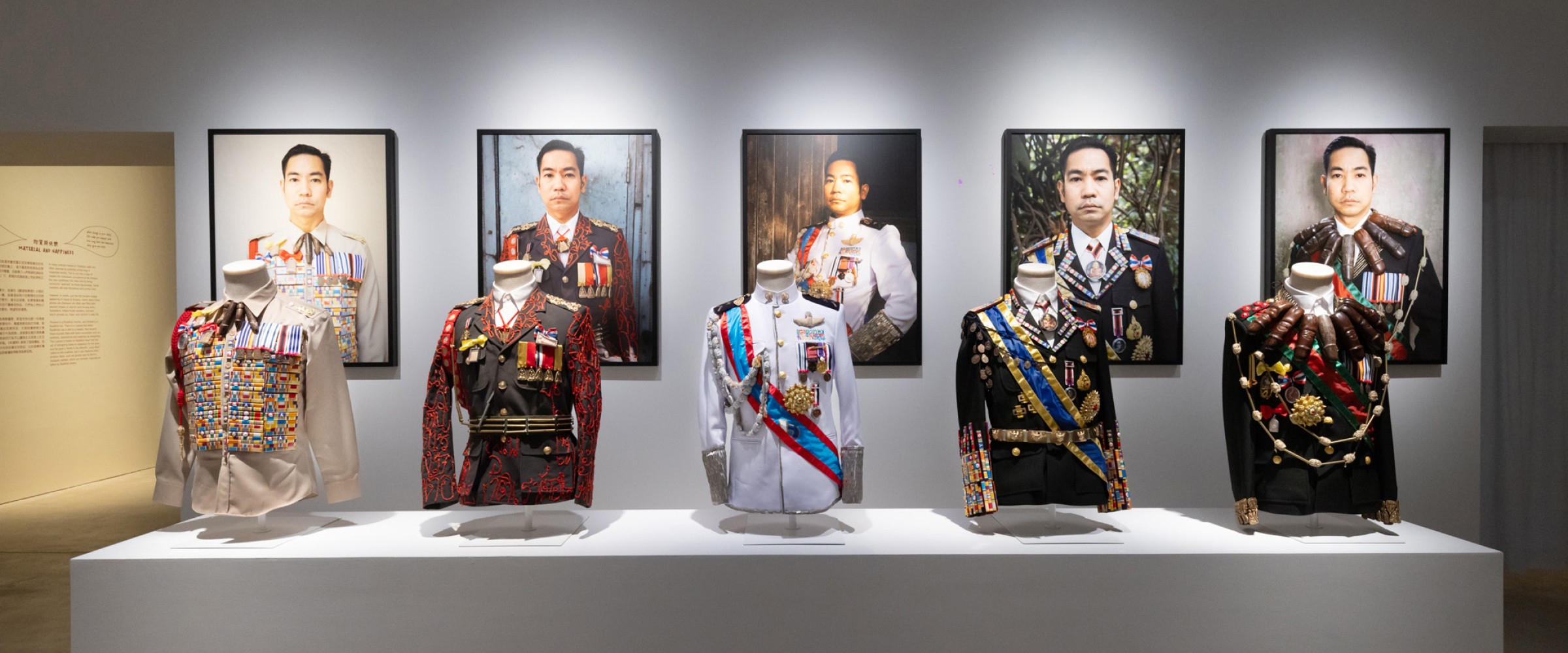
JS. Having spent ten years abroad, when I came back to live in Thailand at the age of 25, I was seeing my own country through the lens of a fifteen-year-old boy, especially Thai Buddhism. And I started to question these aspects of our religion through my work. Later did I learn that Thai Buddhism is a very syncretic religion deeply influenced by animism, Hinduism, Brahmanism, ancestral worships among others. So, a lot of what I’ve explored in my work- religion, history, politics really stemmed from my own ignorance.
CNTRFLD. Your projects often involve collaboration with local communities and artisans. Why is this collaborative element important to you, and how does it shape the narratives you tell?
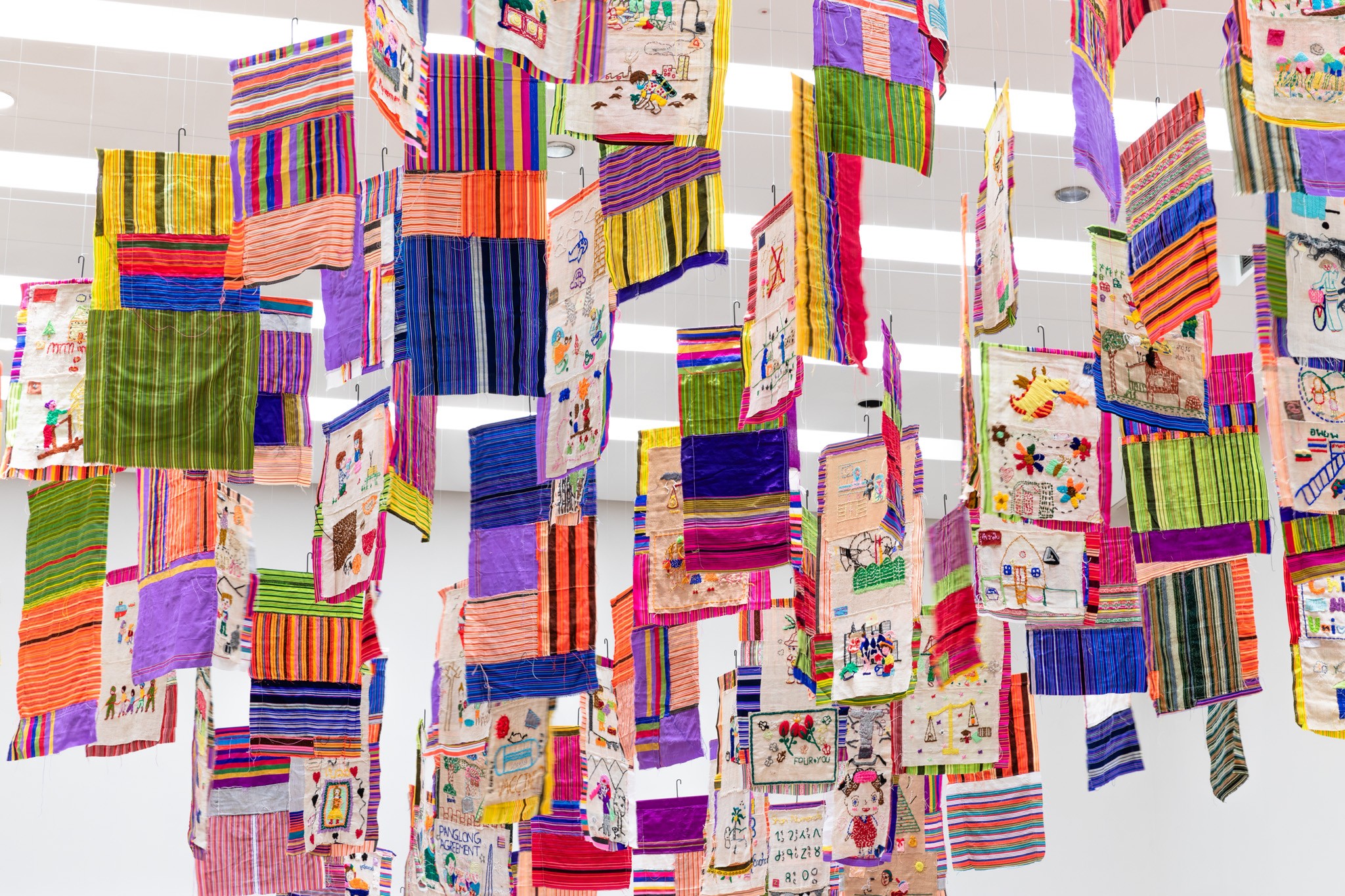
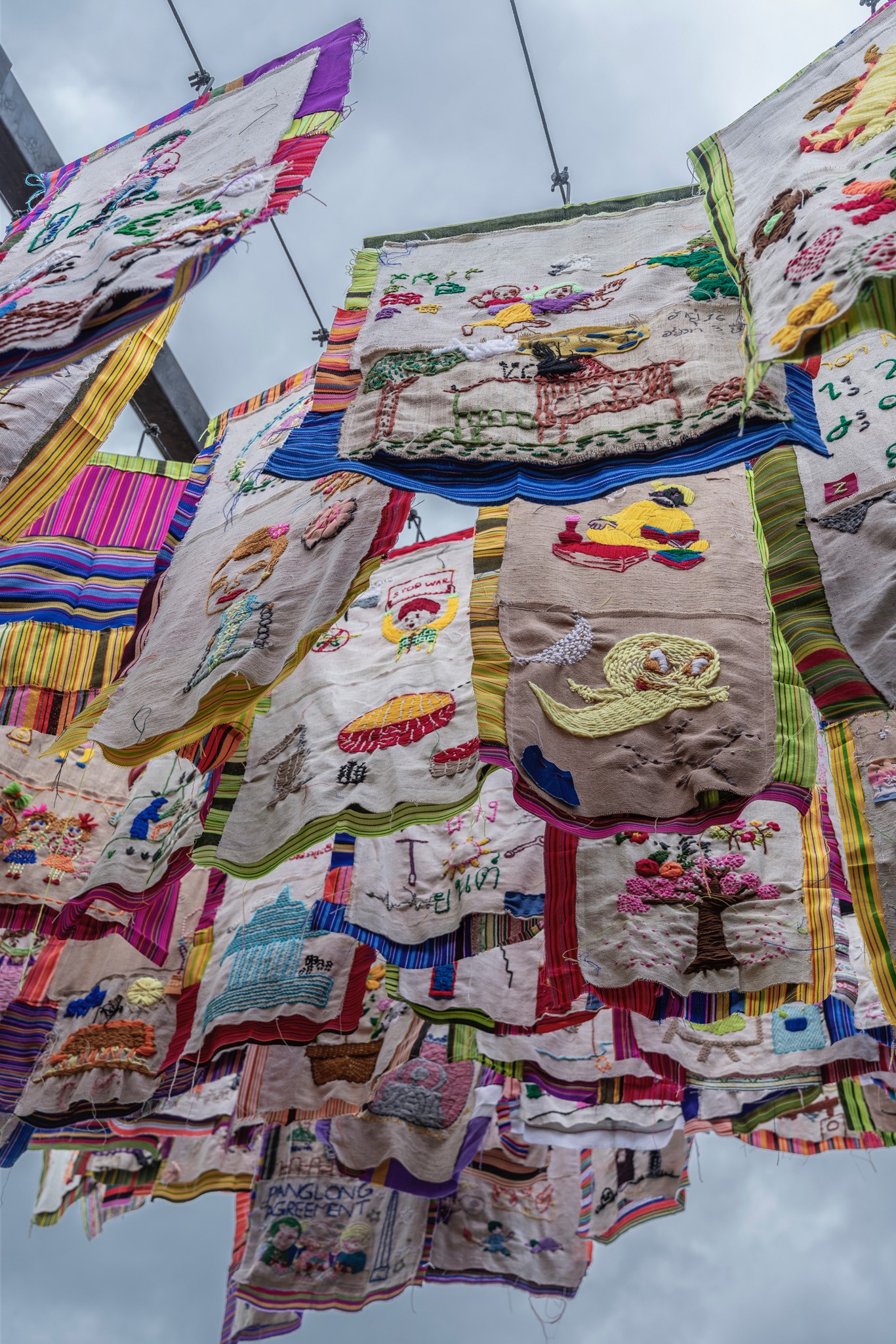
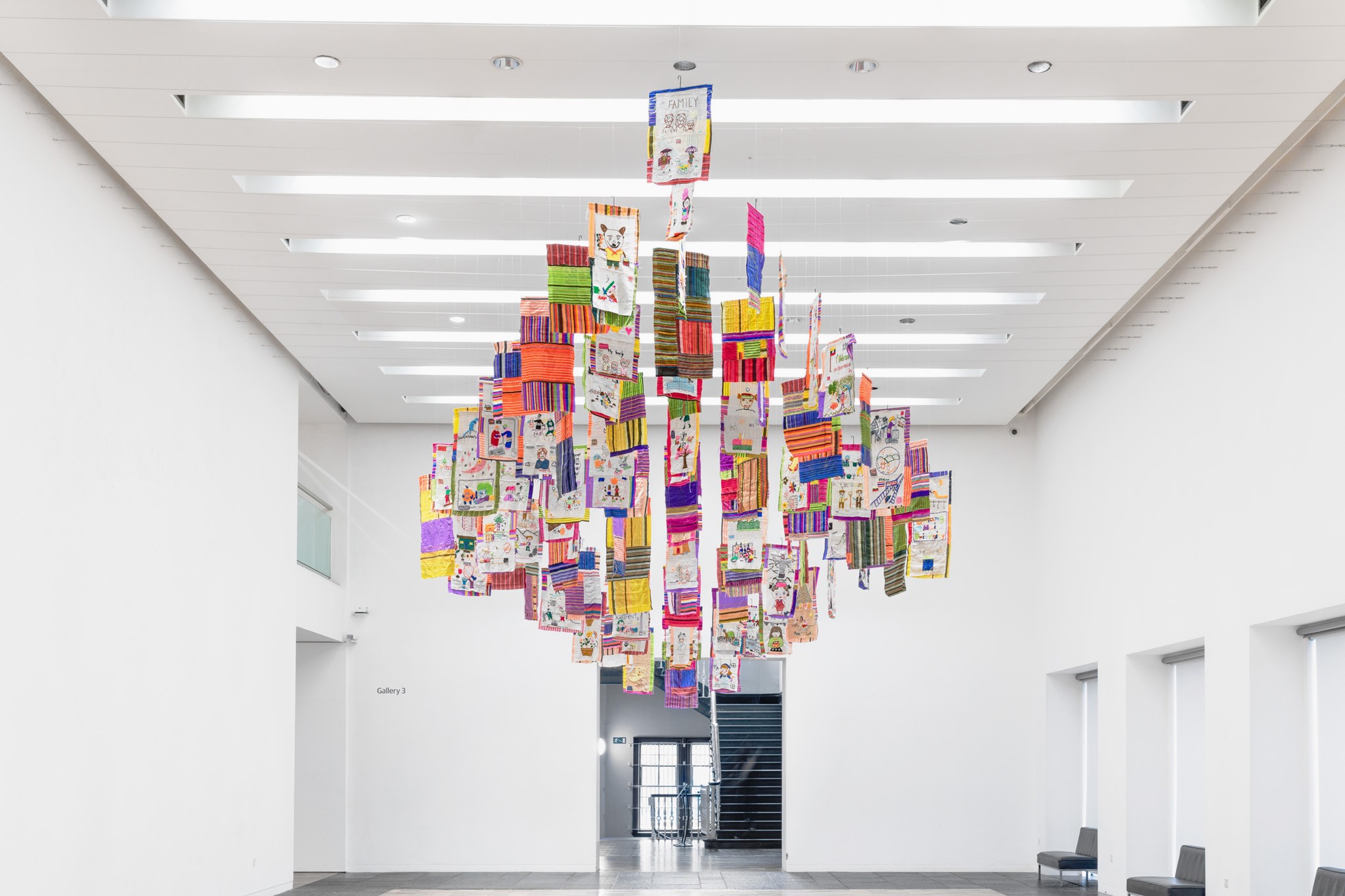
JS. My parents have always insisted that their children must always contribute to society in some ways. My mother always felt that because of her privilege upbringing which became some kind of guilt, especially in a country such as Thailand, she had to give back. She was involved with so many charity organizations. One of the core emphases of the United World College was also community service so this principal is deeply rooted in me and even while I was in college, I wanted to work for international organizations that work with communities in need. These narratives are told through empathy, and I feel extremely fortunate that at this point in my life, I’m able to contribute to society in some way through my art practice.
CNTRFLD. You’ve exhibited across the globe, from Singapore to Venice to San Francisco. How do different cultural contexts influence your work and its reception?
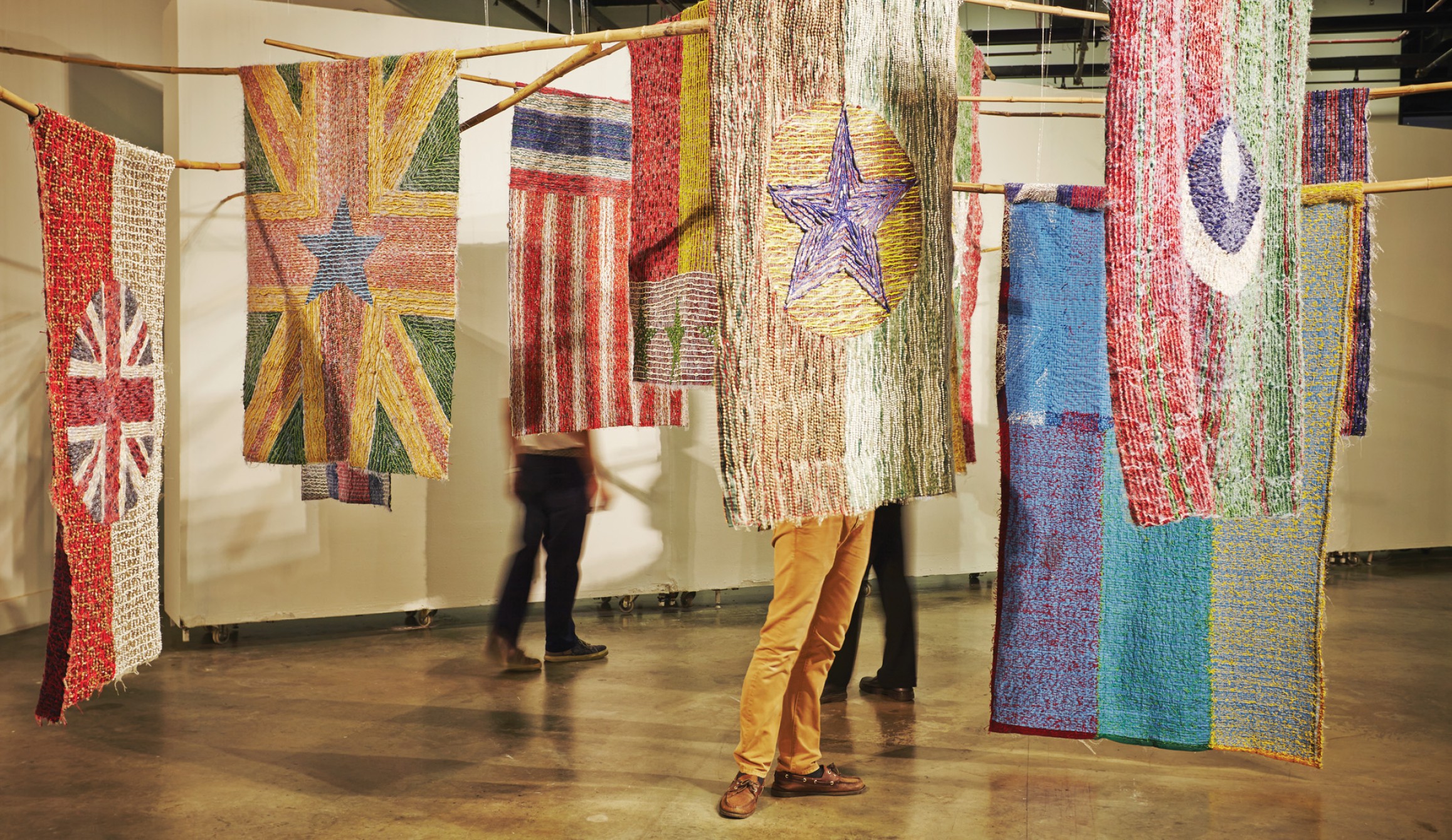
JS. At first glance, my audience outside of Thailand may view my work to be Thai centric. Many of the inspirations, influences and narratives surely come from the Southeast Asia region. But I believe that we all share mutual experiences whether it’s the corruption of religion, political polarization, displacement, history or even the notion of loss and grief.
CNTRFLD. What advice would you give to emerging artists, particularly those from Southeast Asia, who are striving to build careers in the contemporary art world?
JS. Choose to tell stories that are close to the heart. Don’t make work according to the trends. Don’t rush and don’t quit even if it means you must juggle two or more jobs. With some luck and a lot of hard work, opportunities will come.