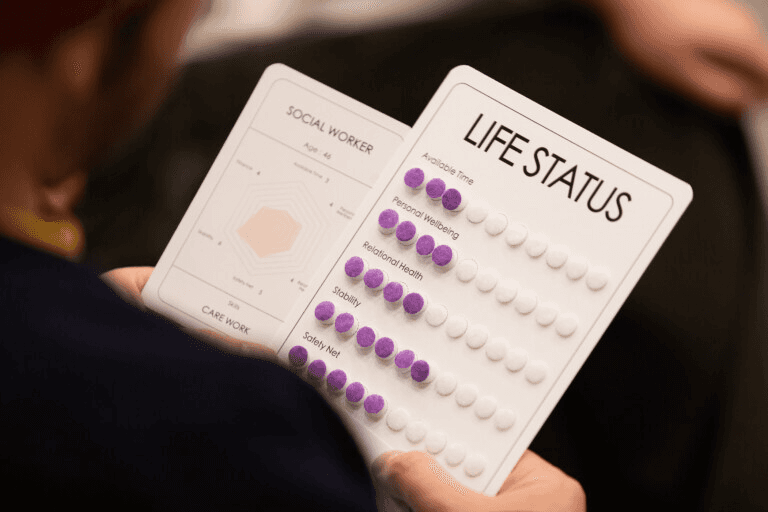
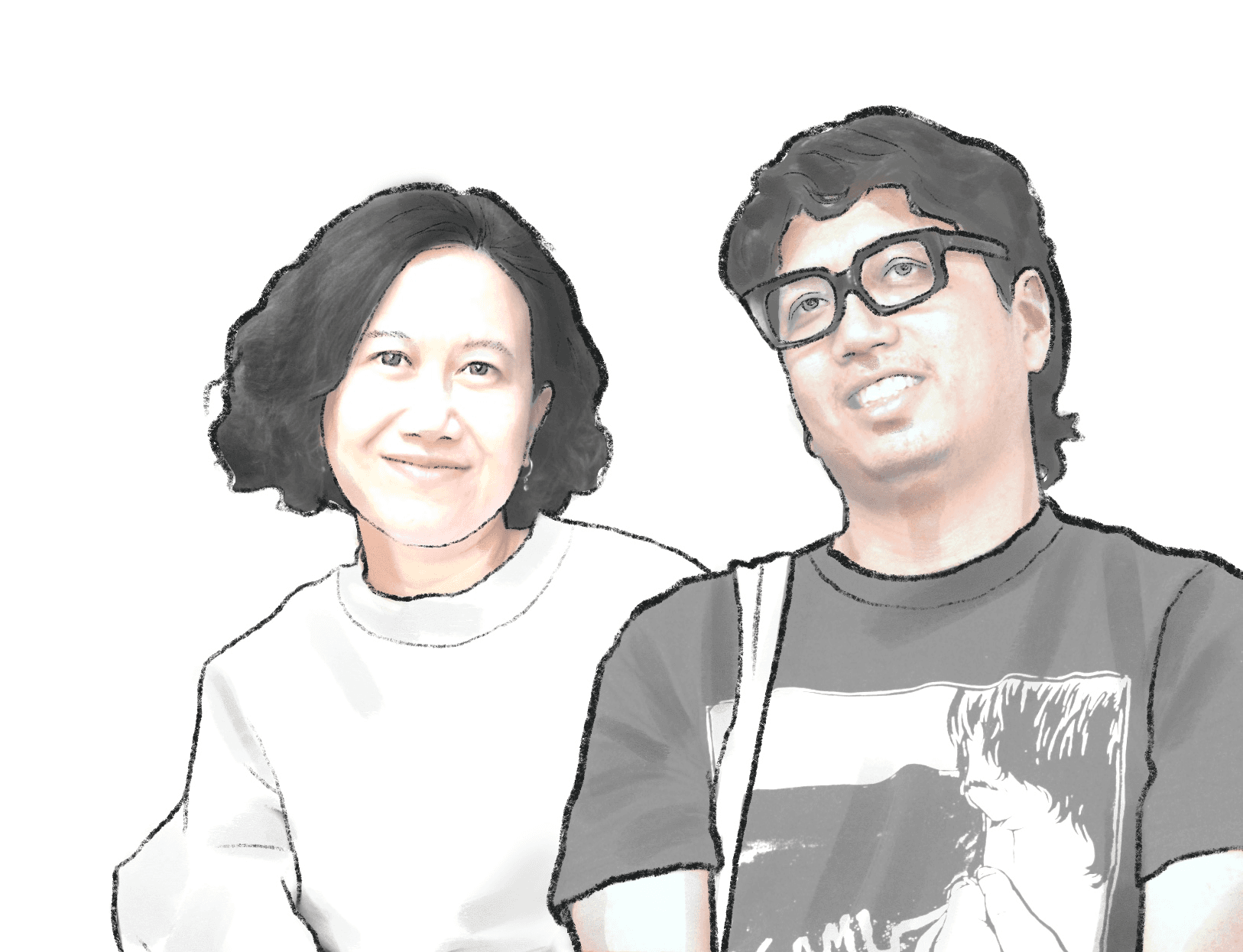
Bagus Pandega and Elia Nurvista illustrated by Maria Chen. Inspired by original photography by Nicolas Gysin and Giulia Del Piero.

DATE

03/2026

ARTICLE

Maria Chen

PHOTOS

Courtesy of Singapore Art Museum

Breathing With the Earth: Elia Nurvista and Bagus Pandega on Extraction, Labour, and Memory in Southeast Asia

In conversation with the Indonesian artists behind Elia Nurvista and Bagus Pandega: Nafasan Bumi ~ An Endless Harvest at Singapore Art Museum — reflecting on palm oil, nickel mining, ecological systems, and the invisible labour shaping our everyday lives.


What does it mean to live inside systems we rarely see?

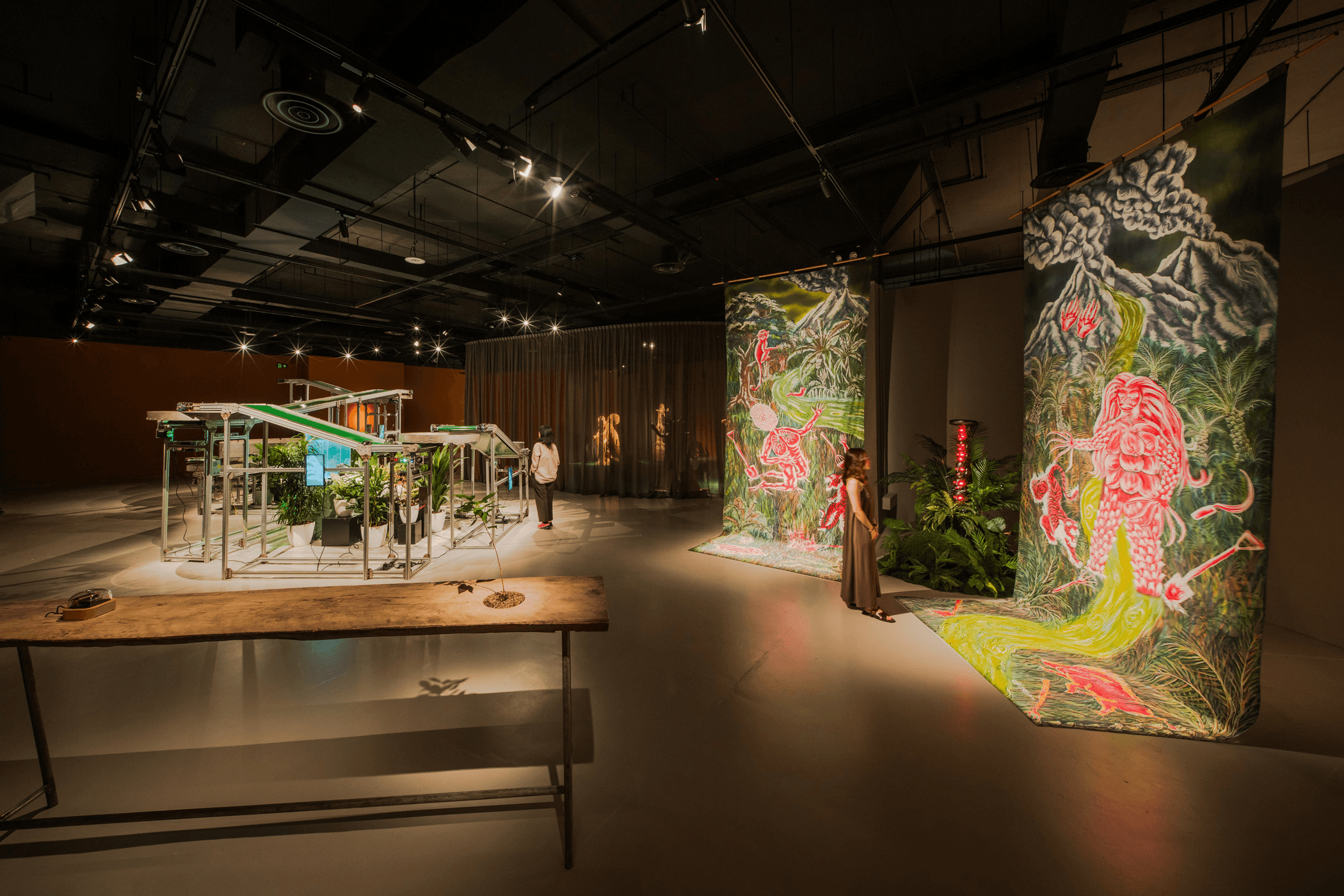
In Elia Nurvista and Bagus Pandega: Nafasan Bumi ~ An Endless Harvest, currently on view at Singapore Art Museum, Indonesian artists Elia Nurvista and Bagus Pandega invite visitors to step into the mechanics of extraction that quietly shape contemporary life across Southeast Asia. From palm oil plantations to nickel mines feeding the global energy transition, the exhibition traces how landscapes, labour, and materials become entangled within the infrastructures of modern industry.

Presented as part of SAM’s Material Intelligence series, the exhibition unfolds through immersive installations, moving image works, batik textiles, and kinetic systems that connect machines, plants, and human bodies. Palm wax melts into sculptural forms. Conveyor belts circulate nickel ore in endless loops. Residues from plantation economies become both medium and message.

For Nurvista, whose practice investigates the politics of food and the colonial histories embedded in global commodities, the work reflects years of research into palm oil’s complex networks of labour, migration, and capital. Pandega, known for building mechanical environments that merge industrial systems with living ecologies, turns his attention to the infrastructures of extraction that underpin the promise of “green” technologies.

Together, their works ask a quietly unsettling question: if the systems sustaining modern life depend on continuous extraction, what remains after the harvest never ends?

In this conversation with CNTRFLD.ART, Nurvista and Pandega reflect on growing up in Indonesia, the materials that shape their artistic languages, and the deeper ecological and human histories embedded within everyday commodities. Speaking from the perspective of artists living within the very systems they examine, they explore how memory, labour, and landscape continue to breathe through their work.

Previous

Next

CREDITS

All works courtesy of the artist

“The objects we consume—food, textiles, fuel—carry accumulated labour within them. Once that connection is acknowledged, our relationship to those materials can no longer feel neutral.”—Elia Nurvista

CNTRFLD. Nafasan Bumi ~ An Endless Harvest feels deeply connected to Indonesia — its landscapes, histories, and material realities. Could you talk about how your heritage and early environment shaped your journey into becoming artists, and how those roots continue to show up in your work today?

BP. I was born and raised in Jakarta. I grew up in a city that does not really function through a clear, centralized system. There is no proper centralized water system, so many people drill their own wells without real regulation. There is no real garbage cycle or recycling structure. Most waste ends up in landfills. Public transportation, buses, cars, motorcycles fill the air with smoke every day. That was normal for me growing up.

You do not question it at first. It becomes your environment. Over time, you start to see how everything operates in fragments. Systems exist, but they are partial. Infrastructure is uneven. People create their own solutions because they have to.

That condition shaped how I see structure and responsibility. I became interested in how systems are built and who maintains them. Even when my work deals with land or extraction, I approach it through that understanding. I think about circulation, waste, energy, and where resources go after they are taken. Growing up in that environment made me aware that every system has consequences, even when those consequences are normalized.

EN. My relationship to Indonesia is not only geographical but deeply historical and familial. I grew up with stories of migration and development, just like my father’s family which did urbanization and witnessed the early expansion of large-scale plantations in the 1970s. Although my family was not directly dispossessed, they were indirectly shaped by the economic shifts brought by extractive infrastructures, including plantation. Those early narratives of opportunity, mobility, but also silence around land conflict that formed an early awareness that landscapes are never neutral. They are structured by power.

Since from many years ago I have been interested with food politics, so Indonesia’s material realities, from their nature and the agricultural systems, which is cycles of extraction, have always felt close to the body for me. Food, land, and labour were not abstract concepts but part of everyday conversation. Over time, I began to understand that everything with observable value is constructed, such as what is framed as ‘modern’ or “development” often carries invisible costs: ecological degradation, erased labour, and unequal mobility. That awareness gradually shaped my artistic trajectory.

My roots continue to appear not as nostalgia, but as a critical lens. Indonesia is both a lived environment and a contested terrain of global capital. The work grows from that tension: between intimacy and infrastructure, memory and geopolitics, landscape and body.

CNTRFLD. Your practices are closely tied to specific materials — from palm oil and batik to machines, plants, and industrial systems. What first drew you to these mediums, and how do they help you tell stories that other forms might not?

BP. Machine and kinetic systems have been part of my practice since the early stage of my career. It did not appear instantly. There was a long process of learning, testing, failing, and rebuilding. I was interested in movement, in how mechanical parts rely on each other, in how energy flows through a structure. That became my language.

The ecological concern grew stronger during the pandemic. That period made me think more seriously about supply chains, resource dependency, and how fragile our systems are. Since then, I have been paying closer attention to extraction.

Palm oil was one entry point because it is embedded in daily life here. But currently, nickel mining is a bigger concern for me. Nickel is framed as part of a green future, especially for batteries and electric vehicles. But the extraction process is still destructive. Forests are cleared, land is reshaped, and waste is produced. The impact is immediate for ecosystems and communities.

The materials I choose are not only symbolic. They are directly connected to real industries and real consequences. Through kinetic systems, I reconstruct part of their logic. Extraction is about movement, transfer, processing, repetition.

At the same time, I try to imagine what happens if these industrial systems are entangled with nature instead of fully controlled by humans. What if the machine does not stand above ecology, but operates within it? That tension between control and entanglement continues to shape the work.

EN. I always choose materials based on what I am researching and engaging with at a given time. My interest has long centred on food systems, and since 2020ish I have been particularly focused on palm oil. I initially approached it as a food ingredient, something present in everyday consumption. Gradually, my lens shifted toward a broader investigation: how palm oil functions as a commodity, and how its economic value is constructed within global systems.

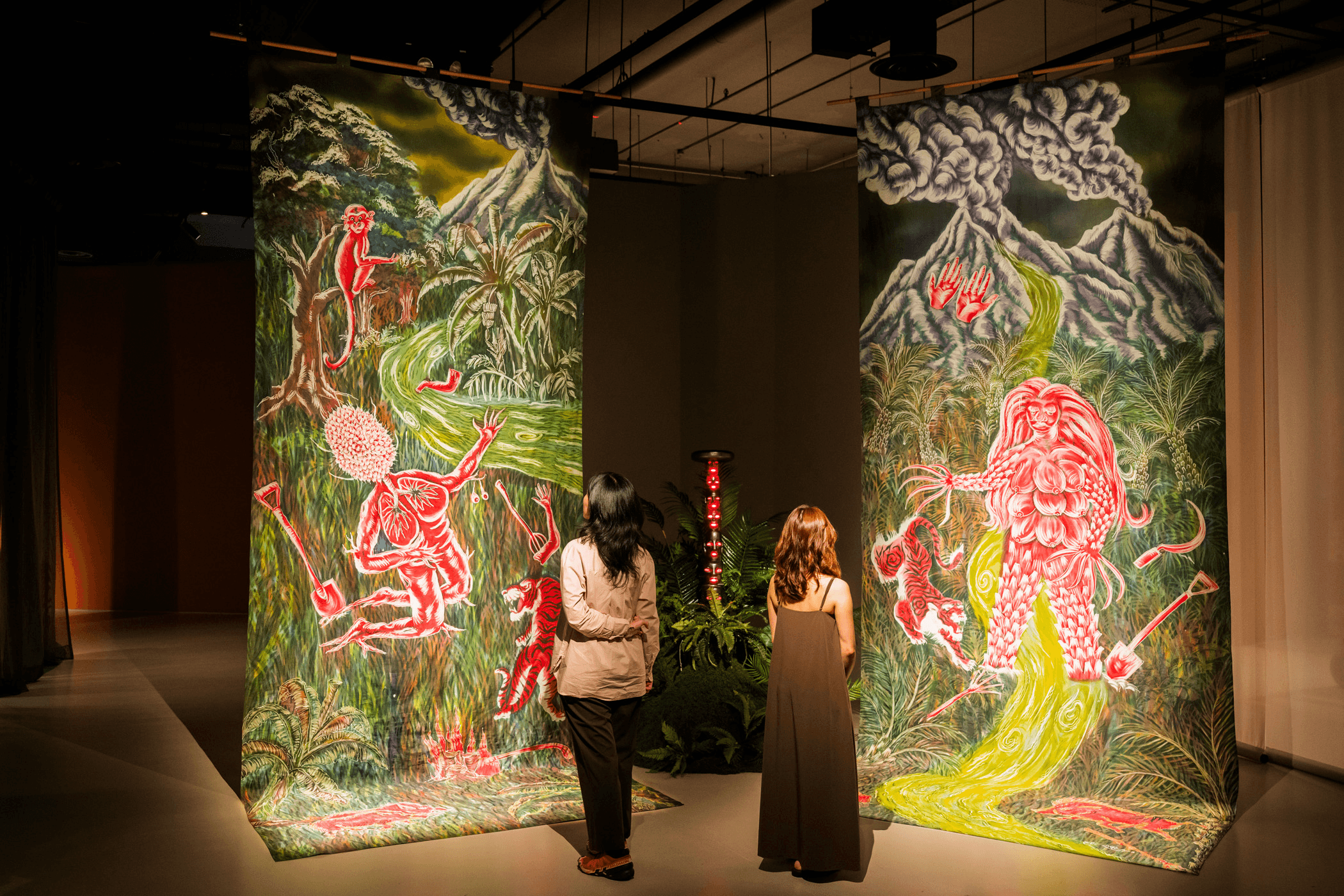
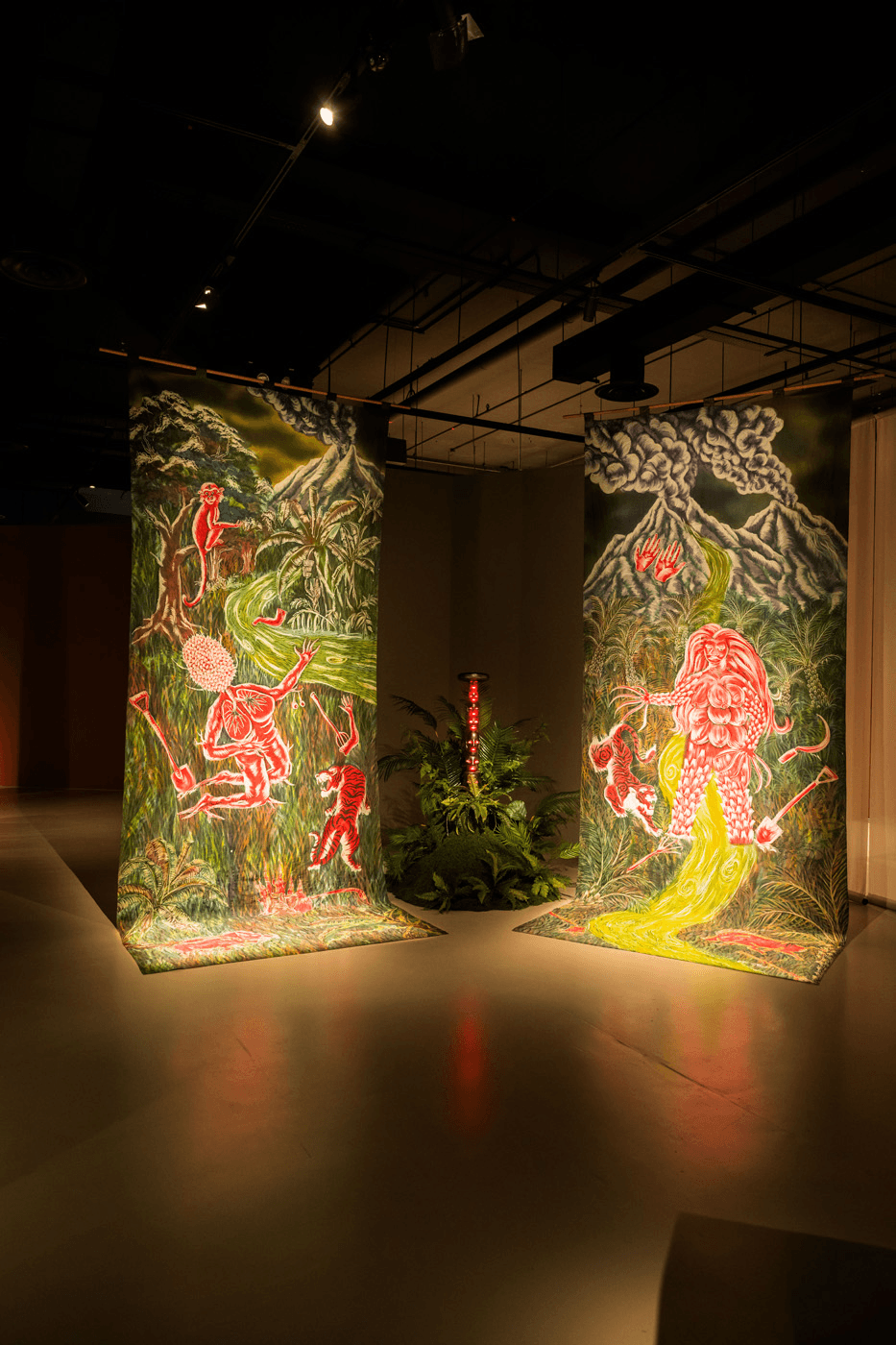
For example, one of my first batik works, The Route, emerged from this inquiry. Using the batik technique, the work traces the entangled histories of migration and displacement between palm oil and Dutch wax textiles. Oil palm was endemic to West Africa. Following its so-called “discovery” by Europeans in the 15th century, it entered European markets through the infrastructures of slavery. Palm oil became a highly profitable industrial material, adaptable into multiple products. When large-scale cultivation in West Africa did not develop as expected, investors redirected their attention to Sumatra and the Malay Peninsula, establishing major plantations under Dutch colonial rule. In parallel, Dutch textile companies in the 19th century industrialized Javanese batik techniques and distributed wax-printed textiles to markets along the Atlantic coasts of Africa. These movements reveal how commodities, labour, and cultural forms were reorganized across continents, and it was presenting through the palm-wax and the textile itself.

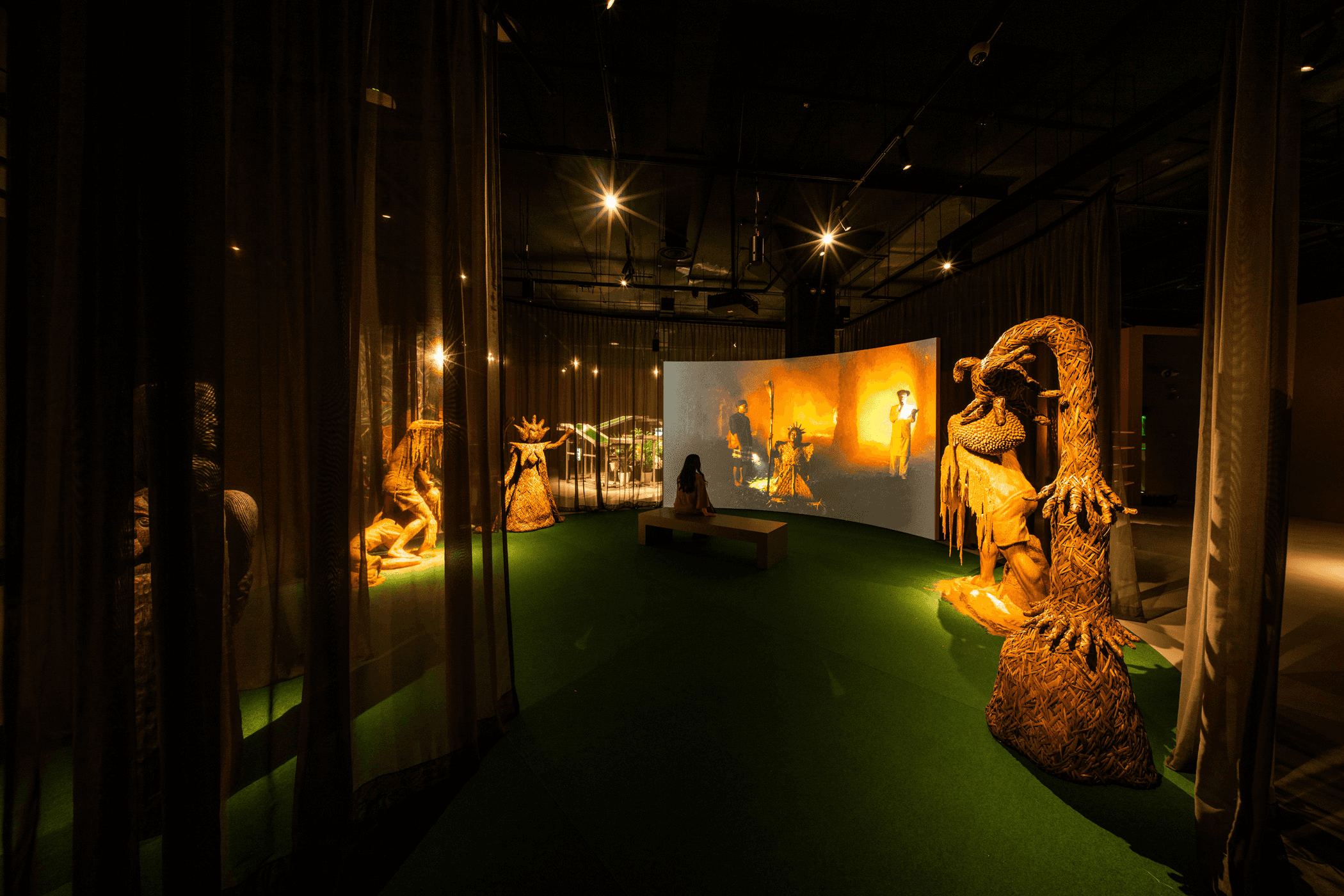
Similarly, the materials in my more recent sculptural series Bodies of Penumbra are derived from residues of oil palm plantations. The sculptures do not simply depict plantation labour; they are materially formed by its afterlife.

What draws me to these mediums is their embeddedness. They are not neutral carriers of meaning. They already contain economic, ecological, and political tensions. By working through them rather than representing them from a distance, I allow the material itself to complicate the narrative.

CNTRFLD. This exhibition explores cycles of extraction, labour, and memory in ways that feel both personal and systemic. When you began developing Nafasan Bumi, what questions were you sitting with — and did your thinking shift as the works evolved?

BP. When I started developing Nafasan Bumi, I was thinking about extraction as a continuous system. It is never just one action. There is always a source, a process, distribution, and consequences. The system works because it keeps moving.

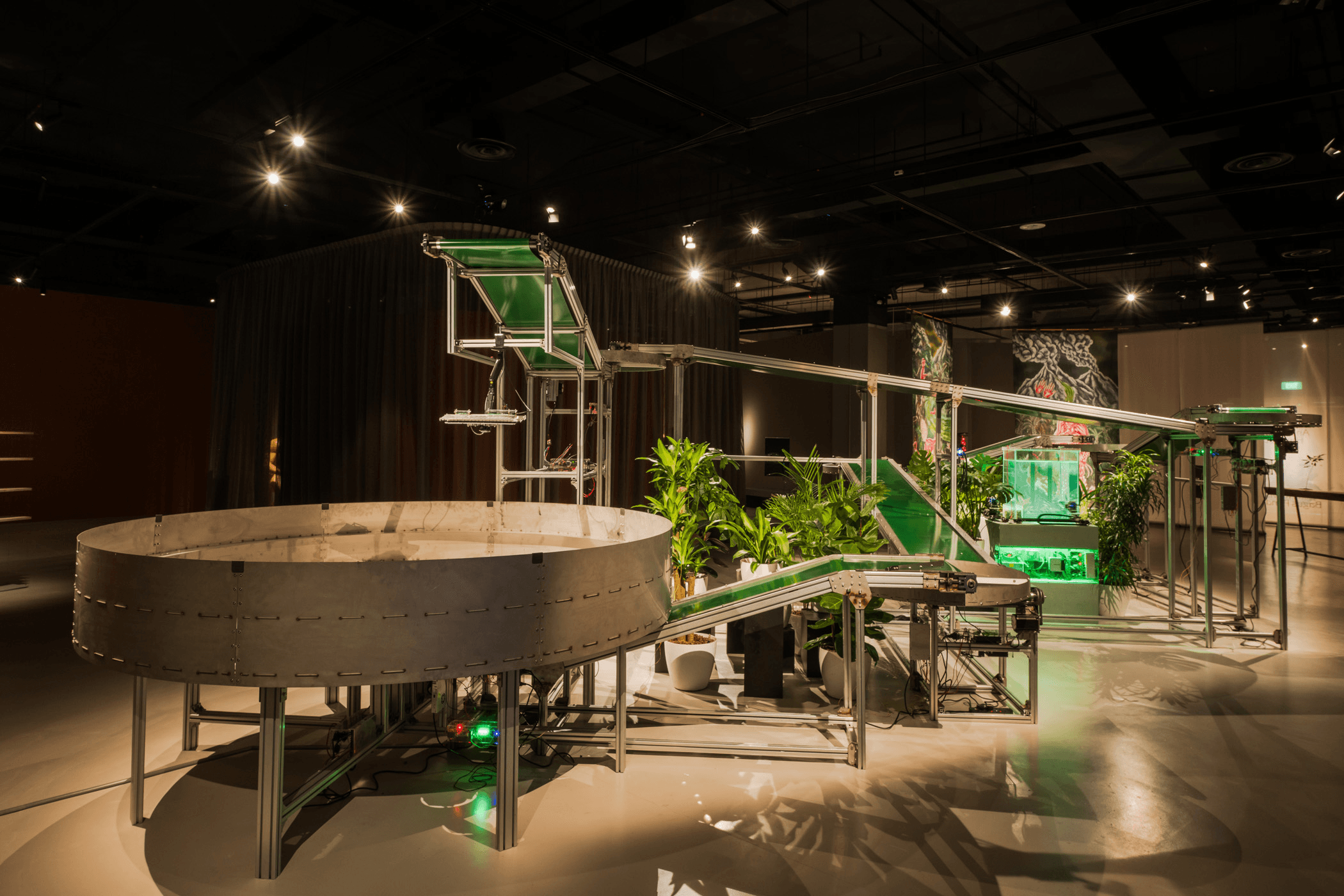
Since my practice is rooted in mechanical structures, I approached this idea physically. I built a loop inside the exhibition space where one installation connects to another. Movement and material circulate across the room. I wanted the audience to see the source and the effects within the same environment, as part of one operating structure.

In the beginning, my focus was on constructing the mechanism and making sure the circulation worked. But as the work developed, I started questioning what “endless” really means.

An endless harvest is not only about taking resources. It is about designing a system that demands continuous input and produces continuous output. The output does not return to regenerate the source. Nothing goes back to restore the earth. The loop continues, but it is not balanced.

That imbalance became central to the exhibition. The system runs smoothly, but it reflects a condition where extraction sustains itself without restoring what it takes. I want people to experience that condition directly, not just as a statement but as a working mechanism that surrounds them.

EN. When I began developing Nafasan Bumi, I was sitting with a persistent question: how does a system sustain itself even when its violence is widely known? The plantation is no longer hidden. Reports, certifications, sustainability frameworks all exist. Yet extraction continues. I was interested in that endurance. What allows it to adapt, to rebrand, to circulate through new moral vocabularies?

At the same time, I was thinking about proximity. My connection to these landscapes is not abstract. They are tied to family migration, to food, to everyday consumption. I asked myself how to position the work between the intimate and the structural. How can memory operate without becoming nostalgia? How can critique avoid becoming distant?

As the works evolved, my thinking shifted from exposure toward embodiment. Initially, I was focused on revealing infrastructures, from logistics, certification systems, into industrial language. But through the sculptures and the film, I became more attentive to fatigue, repetition, and breath. Extraction is not only economic; it is temporal and bodily. It produces exhaustion that accumulates across generations.

I also began to consider whether the plantation is simply a historical structure, or a flexible logic that continues to reorganize itself under the language of sustainability and transition. That realization made the project less about a single geography and more about a recurring pattern.

The exhibition ultimately holds both positions. It remains grounded in specific landscapes and histories, but it also reflects on a systemic cycle that exceeds them. My questions did not resolve; they became more layered. And perhaps that layering is the work itself.

CNTRFLD. Many works in the exhibition reflect on what happens after — the afterlives of materials, labour, and environmental impact. What kinds of reflections or feelings do you hope visitors carry with them after spending time in the exhibition?

BP. I’m not trying to leave people with a specific emotion like guilt or hope. What I want is awareness.

When you stand inside a working system, you start to notice duration. Repetition. Sound. Friction. You realize that nothing is isolated. Materials don’t just appear. Energy doesn’t come from nowhere. Output always comes from somewhere.

I hope that awareness stays with them after they leave the space, even in small ways. When they charge a device. When they see construction. When they hear about electric vehicles or the green transition. To understand that even solutions still have extraction behind them.

The exhibition is not about blaming the audience. It is about recognizing that we are all inside these systems. We benefit from them. We depend on them. The question is whether we are conscious of the chain of effects that continues beyond what we see.

EN. I do not expect visitors to leave with a clear conclusion. If anything, I hope they leave with a slight disturbance.

The works reflect on afterlives — of materials that continue circulating long after forests are cleared, of labour that disappears from view but persists in the body, of environmental damage that does not end when production stops. I hope visitors begin to sense that “after” is never truly after. It lingers in objects, in air, in habit.

Rather than producing instant provocation and moral lesson, I am interested in a slower realization. A recognition that everyday materials, such as wax, textile, food derivatives, are saturated with histories. That what feels distant is materially close. If there is a feeling I hope remains is our awareness that we all are not standing outside this system. We participate through consumption, mobility, investment, convenience. The system is not somewhere else; it runs through us

CNTRFLD. You both live and work in Indonesia while exhibiting internationally. How does being based where you are, influence your practice? What does it feel like to share this work in Singapore — so close, yet culturally distinct?

BP. Being based in Indonesia keeps my work grounded in lived conditions. The issues I am dealing with are visible and present. Extraction, pollution, infrastructure expansion, these are not distant topics.

Development here moves quickly, but regulation and long-term ecological planning do not always move at the same pace. That tension influences how I think about structure and sustainability in my work.

Showing the work in Singapore is interesting because geographically it is very close, but structurally it feels different. The infrastructure is more controlled and regulated. But economically and regionally, we are connected. Resources move across borders.

Presenting the work there highlights that connection. Even if extraction is not directly visible, the dependency is shared.

EN. Being based in Indonesia means that the questions I work with are not abstract research topics. They are part of everyday life. The plantation economy, food systems, informal labour, environmental degradation, all of those are not distant case studies. They shape the air, the price of goods, migration patterns, even family histories. Working from within that context creates a certain accountability. The work cannot romanticize or simplify what it is entangled with.

At the same time, exhibiting internationally introduces a shift in scale. The materials and histories I engage with are already global — palm oil, textiles, logistics, capital — but audiences encounter them from different proximities. Presenting the work in Singapore feels particularly layered. It is geographically close to Indonesia, yet economically and infrastructurally distinct. Singapore operates as a financial and logistical hub within the same regional networks that structure plantation economies.

Sharing this work there creates a different tension. The distance is not far enough to feel foreign, but not close enough to feel identical. That in-between space is important. It allows the work to resonate regionally, while also exposing how interconnected these systems are. The plantation is not confined to rural landscapes; it extends into ports, trade routes, investment flows, and urban consumption.

Showing the work in Singapore, therefore, does not feel like exporting a story from one place to another. It feels like revealing a shared structure — one that links our geographies, even if their surfaces appear different.
CNTRFLD. CNTRFLD.ART often explores how artists engage with heritage, identity, and ideas of home. In what ways does Nafasan Bumi connect to your own sense of belonging — whether to land, community, or shared histories?

BP. I don’t separate myself from the systems I’m questioning. That is where belonging begins for me.

I grew up within rapid development, extraction, and uneven infrastructure. That condition shaped how I understand structure and responsibility. So, when I build a working system in the exhibition, I am not pointing outward. I am reflecting a reality that I am already part of.

Nafasan Bumi connects to my sense of belonging because it acknowledges that proximity. I use electricity. I use metal. I rely on the same supply chains that depend on extraction. The work does not create distance between myself and these systems. It makes that connection visible.

For me, belonging is not about identity in a symbolic sense. It is about recognizing that I stand inside the mechanism, not outside of it.

EN. Belonging, for me, has never been a stable category. It is layered and often contradictory. I belong to Indonesia as a place of birth and language, but also to histories shaped by plantation economies, migration, and economic restructuring. That awareness complicates any simple attachment to land. The land can feel like home, yet it is also a site structured by power.

Nafasan Bumi emerges from this tension. It does not approach land as a romantic origin, but as a terrain shaped by policy, capital, labour, and ecological transformation. At the same time, these systemic forces are inseparable from intimate experience. Food, breath, atmosphere — they are everyday realities. The exhibition moves between those scales: from infrastructure to body, from economy to memory.

In terms of community, my practice has long been shaped by collective research and dialogue, particularly through food studies and collaborative work. This has influenced how I understand belonging — less as ownership and more as shared entanglement. We are connected through what we consume, through supply chains, through environmental consequences that circulate beyond borders. Belonging is not only about identity; it is about participation.

Nafasan Bumi reflects a form of critical belonging. It acknowledges attachment to land and shared histories while also confronting the violence embedded within them. It asks how we remain connected without simplifying what that connection entails. Home, in this sense, is not a fixed territory. It is an ongoing negotiation between memory, responsibility, and the systems that shape our lives.

CNTRFLD. Labour appears throughout the exhibition as something lived — across bodies, machines, and landscapes. How do you hold space for the human stories within these larger systems, and what conversations do you hope this opens about our everyday relationship to the materials we depend on?

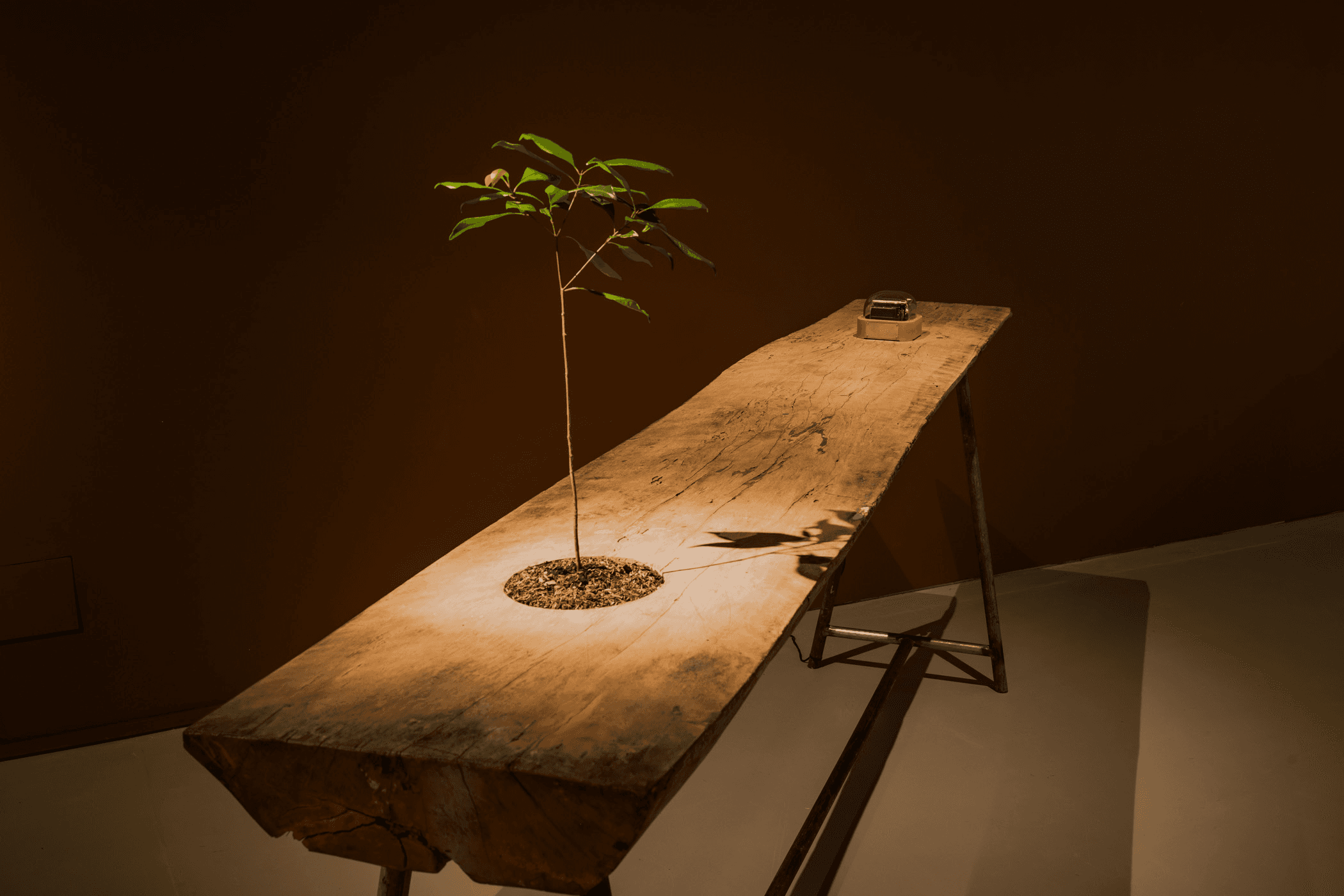
BP. In this exhibition, the system is influenced by plants. The machine does not operate as a fully autonomous industrial structure. Its behaviour is affected by natural elements inside the space.

That shifts the usual hierarchy where humans control everything. The system has to respond. It is not fully in command.

This is metaphorical, but also structural. It suggests a different way of imagining industry, where nature is not only a resource to extract from, but an active force within the system.

Human labour is still embedded in every industrial process. Extraction, processing, maintenance all requires physical work. By placing mechanical systems in relation to plants, I want to question the idea that industrial systems are separate from ecology.

EN. Labour in the exhibition is not treated as an illustration of hardship, but as a condition that shapes bodies, time, and perception. I am careful not to reduce workers to symbols within a larger critique of capitalism. Instead, I try to hold space through material and form through repetition, weight, residue, and fatigue. In Bodies of Penumbra, for example, the sculptures do not represent specific individuals. They suggest presence through partial visibility, through forms that appear emerging or dissolving. This ambiguity is intentional. It acknowledges that labour is often rendered invisible yet never absent.

In my film, labour is also distributed across systems:  machines, logistics, maintenance, certification. This reflects how contemporary extraction is no longer confined to a single body in a field. It extends through infrastructures and bureaucracies. By situating human presence within this expanded field, I hope to avoid isolating suffering from the systems that produce it.

What I hope this opens, is a more grounded conversation about our everyday intimacy with materials. The objects we consume — food, textiles, fuel — carry accumulated labour within them. That labour is rarely visible at the point of consumption. The exhibition asks viewers to consider not only where materials come from, but whose time and bodies have been reorganized to make them available.

If there is a space I try to hold, it is one that neither romanticizes labour nor distances it. Instead, it recognizes labour as a lived condition embedded in the materials we depend on. Once that connection is acknowledged, our relationship to those materials can no longer feel neutral.

CNTRFLD. For aspiring artists or those interested in socially and materially engaged practices, what would you say to someone just starting out? What has helped you stay grounded and committed as your practice continues to grow?

BP. Patience is important.

When I started working with kinetic systems, it took time. There was trial and error. Motors failed. Structures collapsed. That process is part of building your language.

If you work with materials and systems, understand them physically. Know their limits. Know how they behave. Concept is important, but material knowledge is just as important.

Stay curious about what is happening around you. Not only in art, but in industry, infrastructure, and daily life. The work grows from that observation.

EN. For someone just starting out, I would say: begin with what you genuinely care about, even if it feels small or very personal. You do not need to solve a big issue immediately. Stay with a question long enough for it to deepen. Often the most meaningful work grows from sustained attention rather than grand statements.

What has helped me stay grounded is remembering that practice is a long process. There will be moments of visibility, but most of the work happens quietly like reading, observing, listening, revising. But also, you need to stay connected to your friends, colleagues, collaborators, communities, to build the conversations that has always been important for my practice. It reminds me that the work is not only about personal expression, but about shared realities.

It also helps to accept uncertainty. You will not always have clear answers, especially when working with complex social and material issues. Allowing space for doubt can keep the practice honest.

Commitment, for me, comes from returning to the core questions that first moved me. As long as those questions still feel alive, the work can continue to evolve.

CNTRFLD. Bagus, your installations connect machines, living systems, and human activity in surprising ways. How do you think about the relationship between technology and ecology in your work, especially within Indonesia’s context of rapid industrial growth?

BP. I see technology and ecology as already deeply interconnected, especially in Indonesia. Industrial growth here directly transforms forests, coastlines, and communities.

Nickel mining, for example, is essential for batteries in electric vehicles and renewable energy storage. It is framed as part of a green transition. But the extraction process still involves land clearing, heavy machinery, waste production, and water pollution. Even green technology depends on material extraction.

In my work, I use mechanical systems to expose that logic. A machine needs constant input. It consumes energy. It produces output. It generates waste. By isolating that structure in the exhibition space, I make it visible.

At the same time, the system is influenced by plants. The machine is not fully dominant. It has to respond. This suggests another way of thinking about industry, not as separate from nature but entangled with it.

My work does not propose a solution. It creates a space to examine how technology and ecology are already connected, and what that connection demands from the land.

CNTRFLD. Elia, your work often brings attention to food systems, plantation histories, and forms of labour that are rarely visible. How does your perspective as an Indonesian woman shape the way you approach these themes, particularly around care, endurance, and resistance?

EN. My perspective as an Indonesian woman shapes the work in ways that are often subtle rather than declarative. Growing up in a context where care work and food preparation are frequently gendered responsibilities, I became attentive to forms of labour that are repetitive, sustaining, and often overlooked. Care, for me, is closely tied to maintenance, to the continuous effort required to keep things functioning, whether households, relationships, or systems. This understanding also informs how I work within my collective, Bakudapan. All its members happen to be women, though we do not position ourselves as a women’s collective. Still, the practice of maintenance, like organizing, cooking, researching, hosting discussions and so on has shaped how we sustain our work over time.

These experiences influence how I approach plantation histories and food systems, not only as economic structures, but as conditions sustained by invisible forms of care and endurance. In many plantation narratives, labour is framed through productivity and output. I am interested in what enables that productivity: the maintenance of bodies, the emotional resilience required to continue, the small acts of adjustment that allow survival within unequal systems.

As an Indonesian woman working within and beyond national borders, I am also conscious of how certain regions are positioned primarily as sites of extraction. That awareness influences how I frame the work — carefully, without simplifying the communities involved or speaking over them. I try to hold space for complexity rather than presenting a singular narrative.

Care, endurance, and resistance in my practice are not abstract ideas. They are embedded in processes, like in the slow layering of batik, in working with plantation residues, in collaborative research. They reflect a way of thinking about resistance not only as confrontation, but as sustained attention and the ongoing labour of not looking away.

BP. Bagus Pandega

EN. Elia Nurvista

About the artists.

Bagus Pandega (b. 1985, Jakarta) is an artist based in Bandung, whose practice interrogates Indonesia’s ecological and socio-political conditions. He incorporates elements such as programming, industrial machines, sound systems, and plant biofeedback into immersive kinetic systems. Through this dynamic interplay, Bagus reveals the entangled legacy of Indonesia’s colonial history and its abundant natural resources, highlighting how extractive economies have shaped both landscapes and lives. His installations not only trace the scars of environmental degradation but also give voice to the lived realities of communities across Indonesia, surfacing the tensions between technological progress, capitalism, industrialisation, and human existence.  Bagus received his Bachelor of Arts in Sculpture in 2008 and his Master of Fine Arts in 2015 from the Faculty of Art and Design at Institut Teknologi Bandung. Recent notable exhibitions include solo presentations, Daya Benda (2025) at Swiss Institute, New York and Sumber Alam (2025) at Kunsthalle Basel, Switzerland, WAGIWAGI (2022) at Documenta 15 in Kassel, Germany, and the 10th Asia Pacific Triennial (2021–22) at QAGOMA, Australia.

Elia Nurvista (b. 1983, Yogyakarta) is an interdisciplinary artist whose practice scrutinises the politics of food, exploring its relationship with the power dynamics and socio-economic inequalities in this world. Utilising a wide range of media, including sculpture, batik, performance art and video installations, she engages with the social implications of the food system to critically address wider issues such as ecology, gender, class and geopolitics. In 2015, Nurvista initiated Bakudapan, a study group collective that undertakes community and research projects on food’s broader role within culture. She is also part of Struggles for Sovereignty: Land, Water, Farming, Food, a collective platform that aims to build lasting solidarity between Indonesian and international groups who are engaged in struggles for the right to self-determination over basic resources.  Elia was awarded the 2025 Villa Roman Prize. Recent exhibitions include Diriyah Biennale, Saudi Arabia (2024); Sharjah Biennial (2023), UAE; Karachi Biennale, Pakistan (2019); and the 9th Asia Pacific Triennial of Contemporary Art at QAGOMA, Australia (2018), amongst many others. She has exhibited widely in group and solo exhibitions around the world.


About the exhibition.

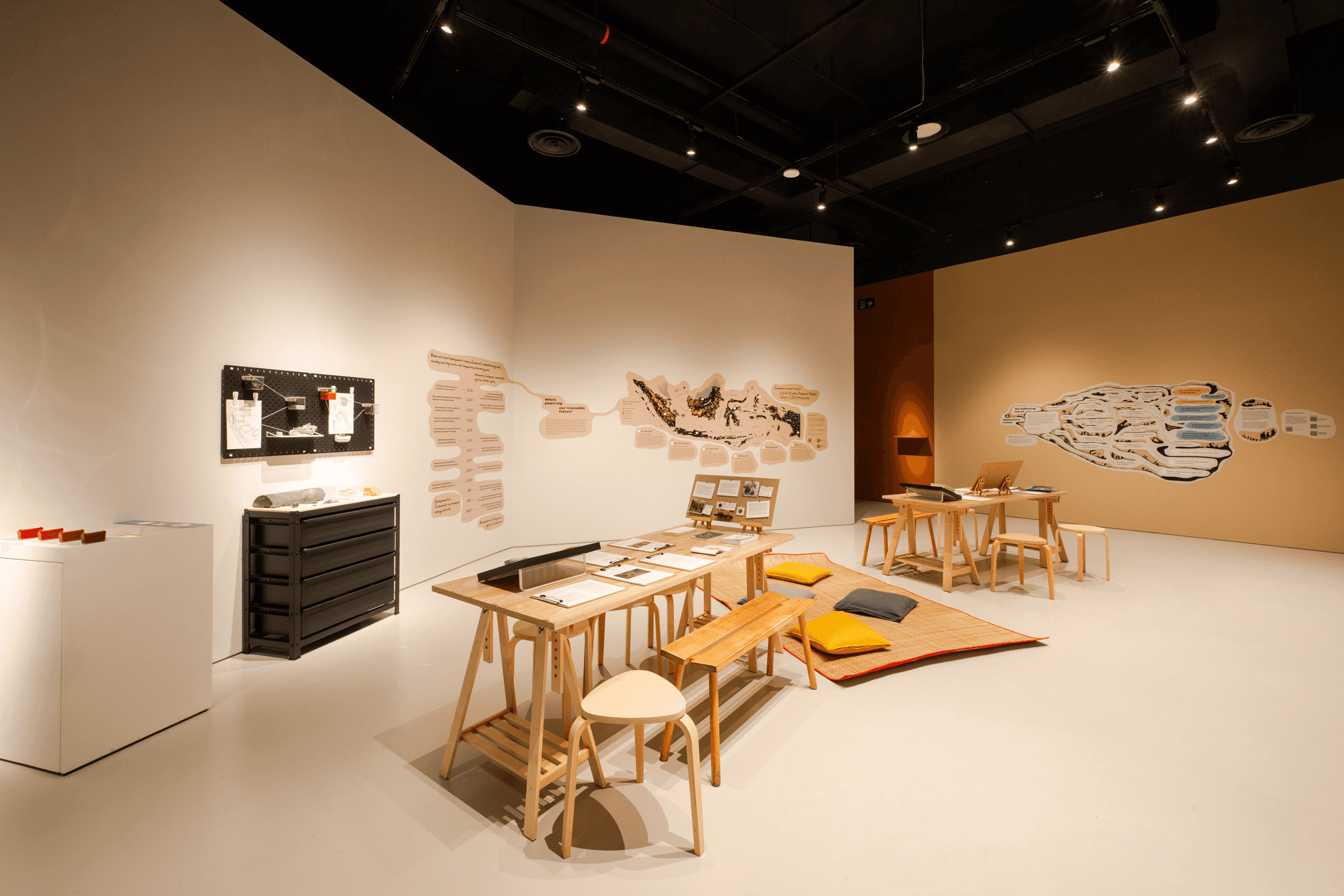
The exhibition Nafasan Bumi ~ An Endless Harvest marks the Singapore debut of Indonesian artists Elia Nurvista and Bagus Pandega at the Singapore Art Museum. Presented as the third instalment of SAM’s Material Intelligence series, the exhibition examines how the materials that underpin modern industry—particularly palm oil and nickel—shape everyday life, labour systems, and ecological futures across Southeast Asia.

The title brings together the Indonesian phrase Nafasan Bumi (“breath of the Earth”) with the notion of “an endless harvest”, juxtaposing the cyclical vitality of planetary life with the relentless extraction that drives global production. Through immersive installations, moving images, and kinetic systems, the exhibition reflects on how the demands of industrial growth permeate landscapes and bodies alike—from oil palm plantations to nickel mines supplying the global technology and energy sectors.

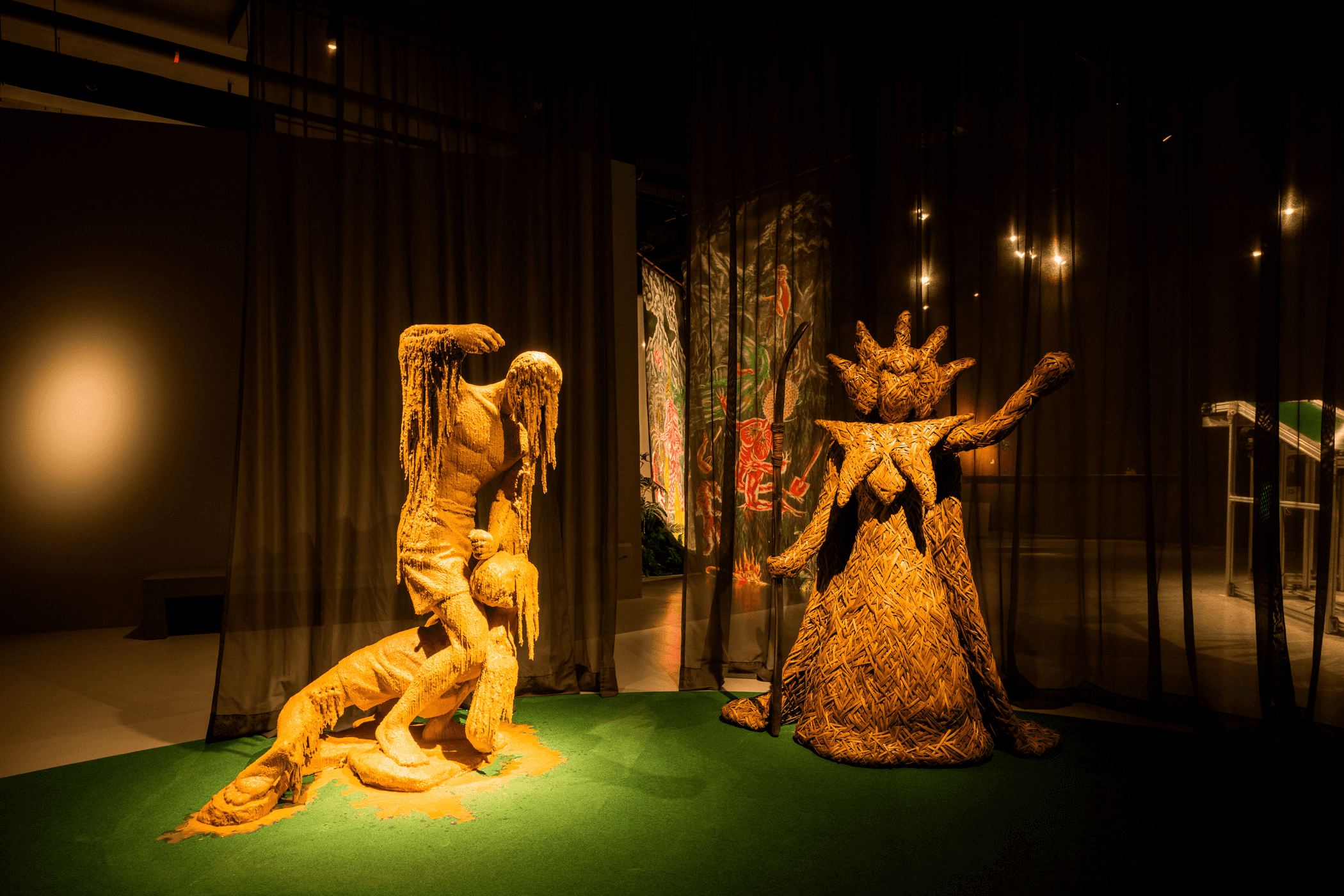
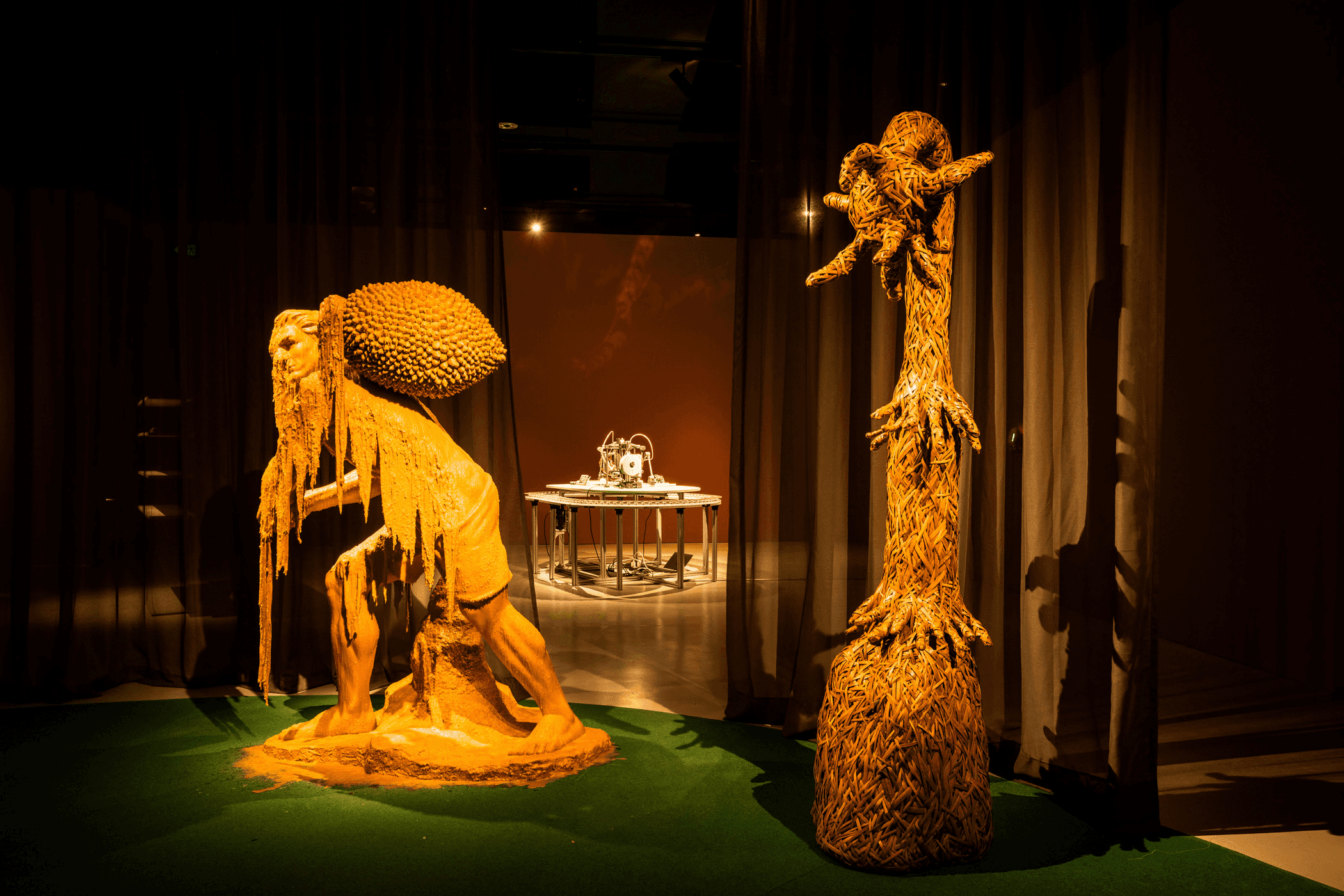
Nurvista’s contribution draws from her long-running research into food politics, labour, and colonial histories embedded within plantation economies. Working with residues from the palm oil industry, she transforms materials such as palm wax, fronds, and charred trunks into sculptural, and textile works that trace the often invisible labour sustaining these global commodities. In Bodies in Penumbra: The Soft Machinery of Light (2026), figures cast from palm-derived materials appear to melt and dissolve, destabilising classical ideals of permanence while referencing the fragility of plantation labour. Her batik work Exhausted (2026) uses palm oil wax as a medium to evoke the endurance of women workers in plantation environments, linking Southeast Asian production histories to wider colonial trade networks.

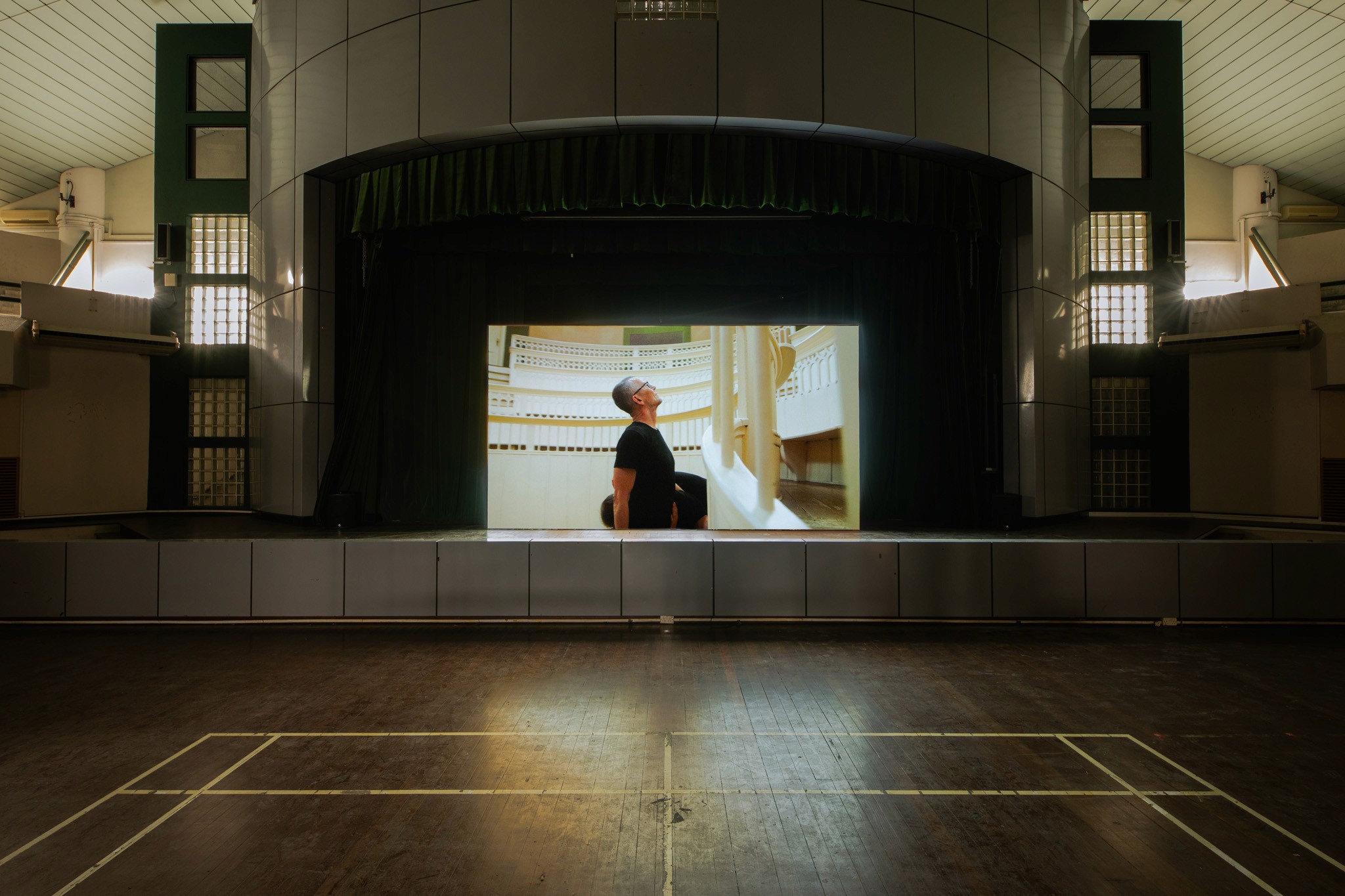
Nurvista also presents Plantation Tragedy (2026), a speculative film set in a future oil palm plantation where humans, machines, and plants enter surreal dialogues about justice, productivity, and rest. The narrative culminates in a fictional “strike” by the palms themselves—an allegory that imagines what might happen if the natural world refused the endless demands placed upon it.

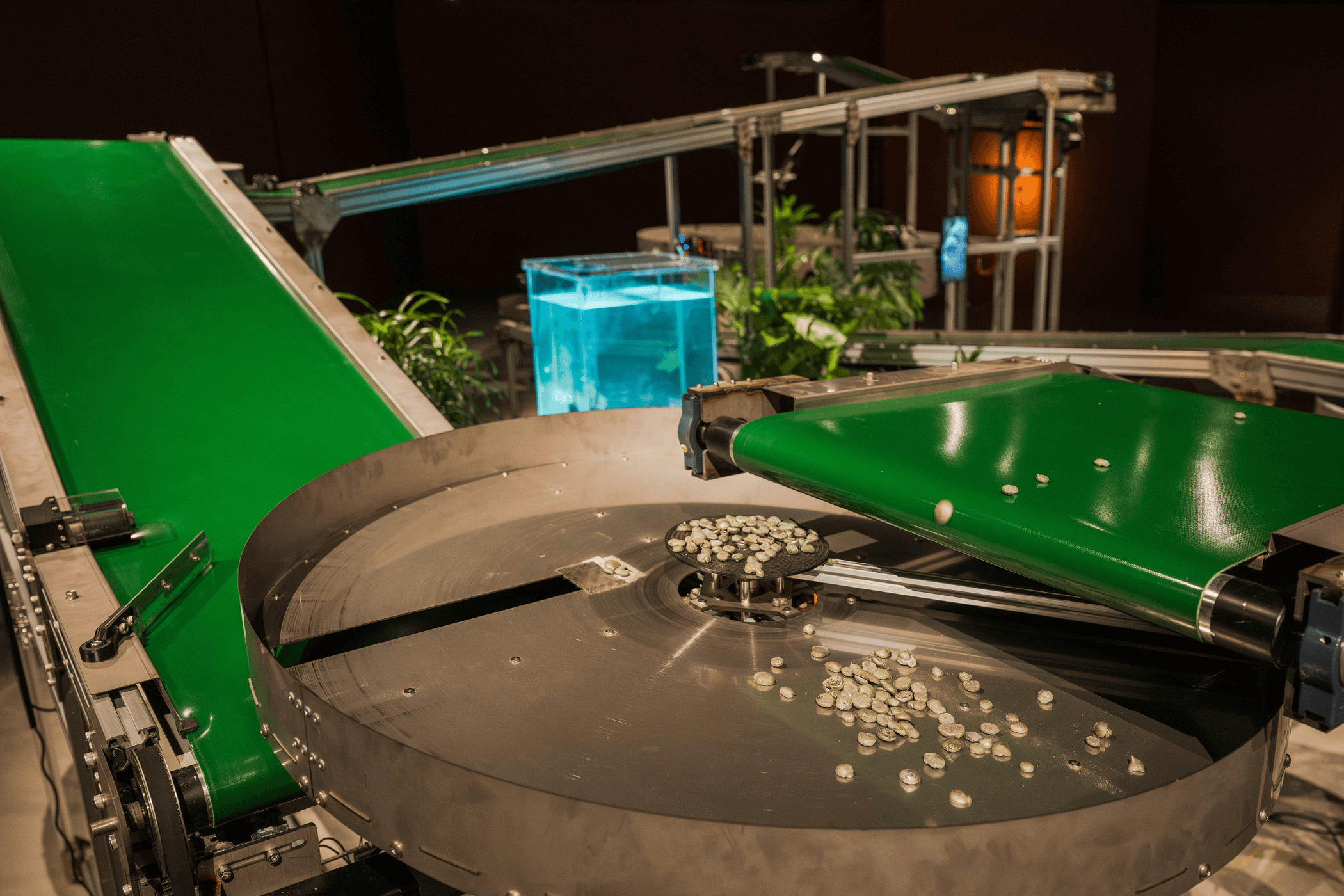
Pandega’s installations, by contrast, focus on technological systems and the cycles of extraction tied to Indonesia’s mineral resources. His work frequently integrates industrial mechanisms with living organisms and environmental data. In L.O.O.P (Less Organic Operation Procedure) (2026), a ten-metre conveyor belt transports fragments of nickel ore, with its tempo regulated not by human control but by biofeedback signals from surrounding tropical plants. Each time the ore falls into a metal basin, the resulting resonant sound marks the passage of time, creating a meditative loop between machine, mineral, and plant life.

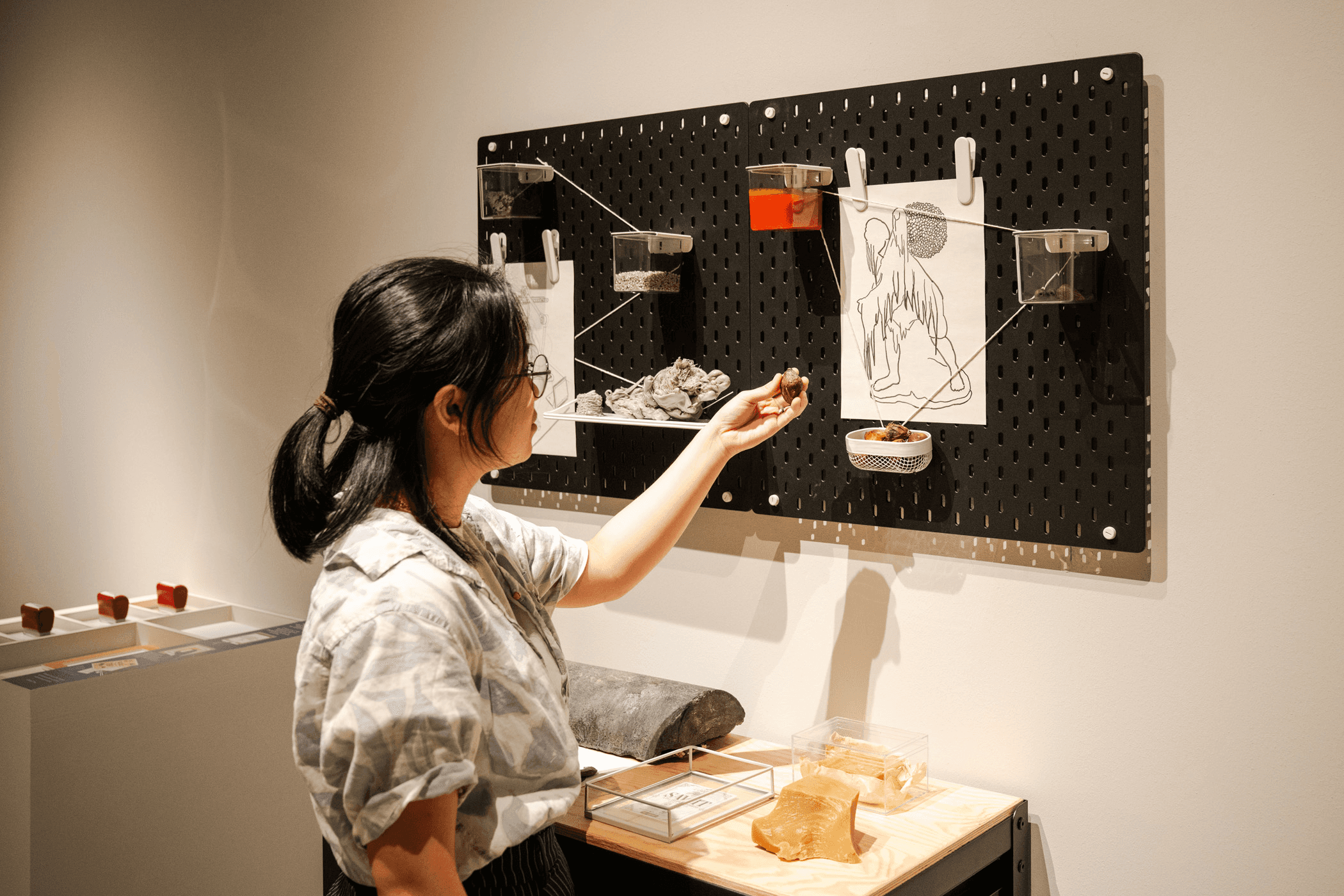
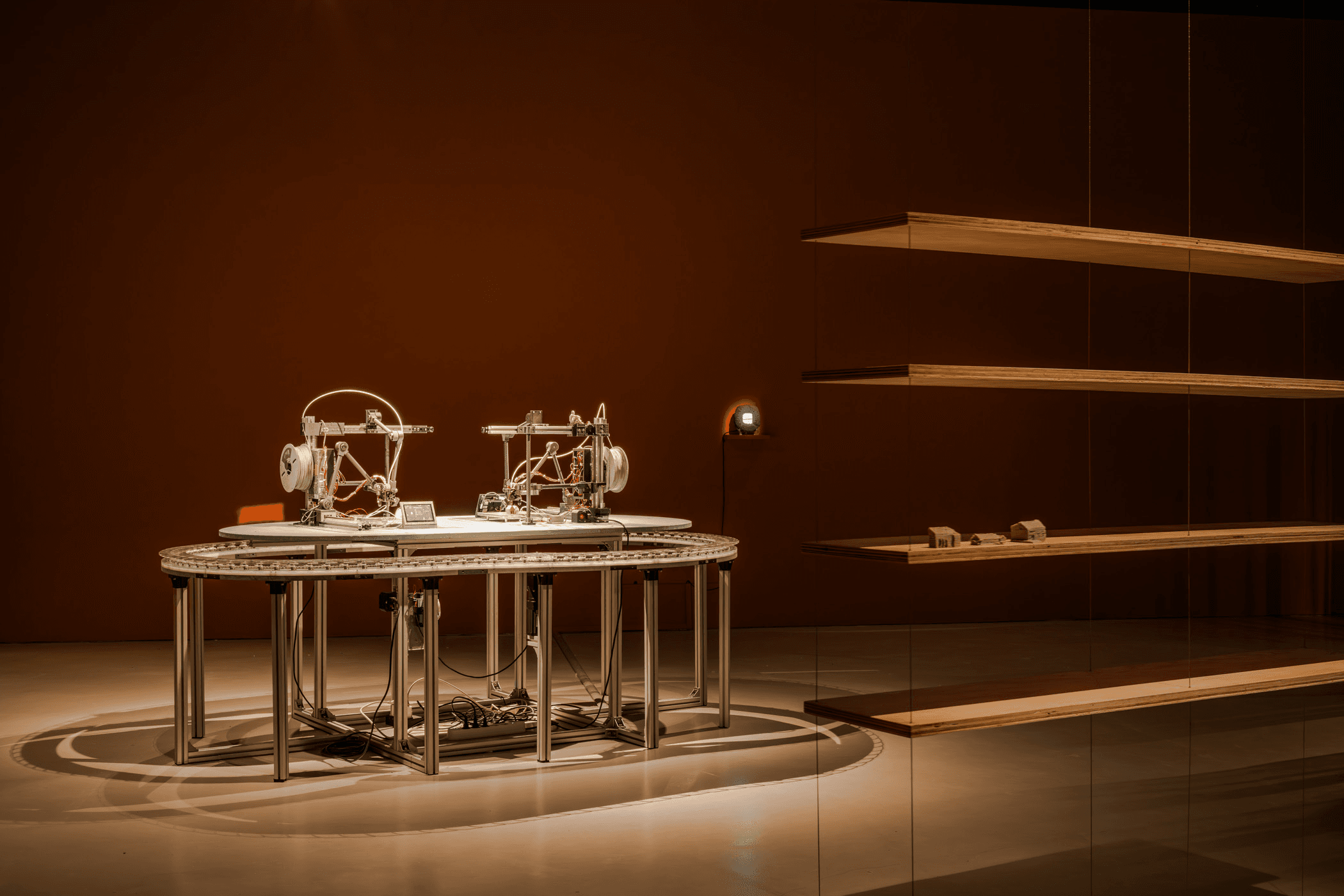
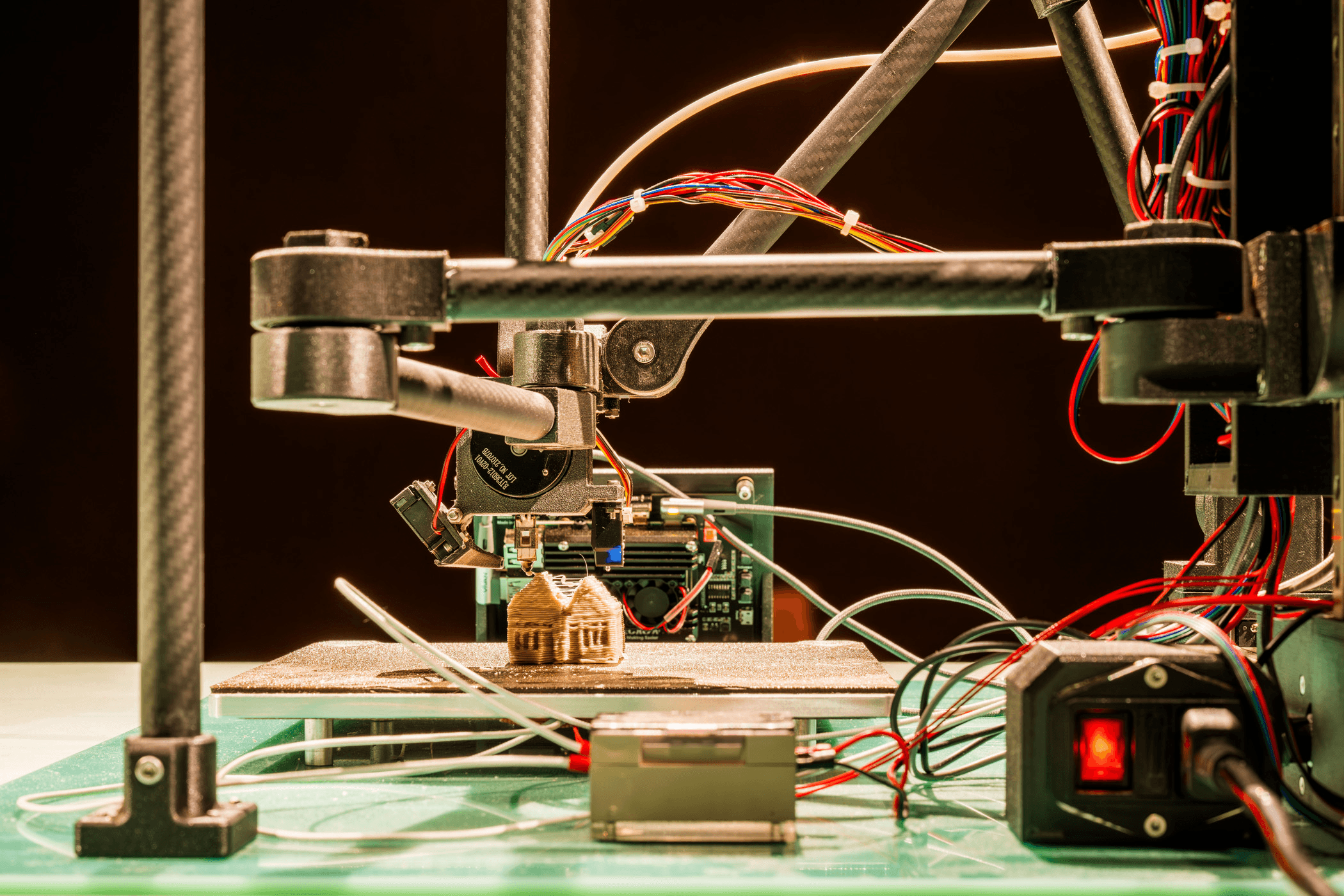
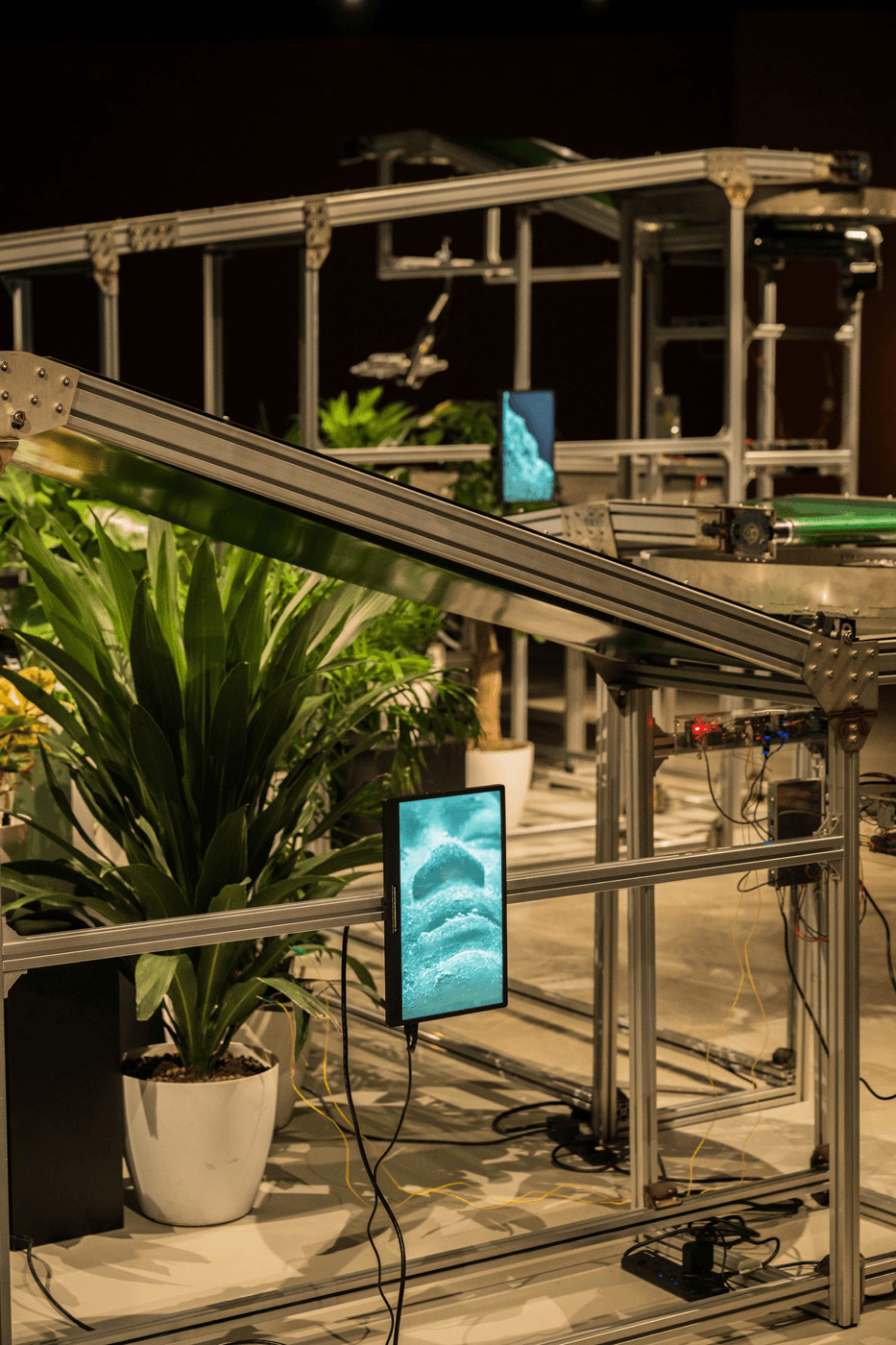
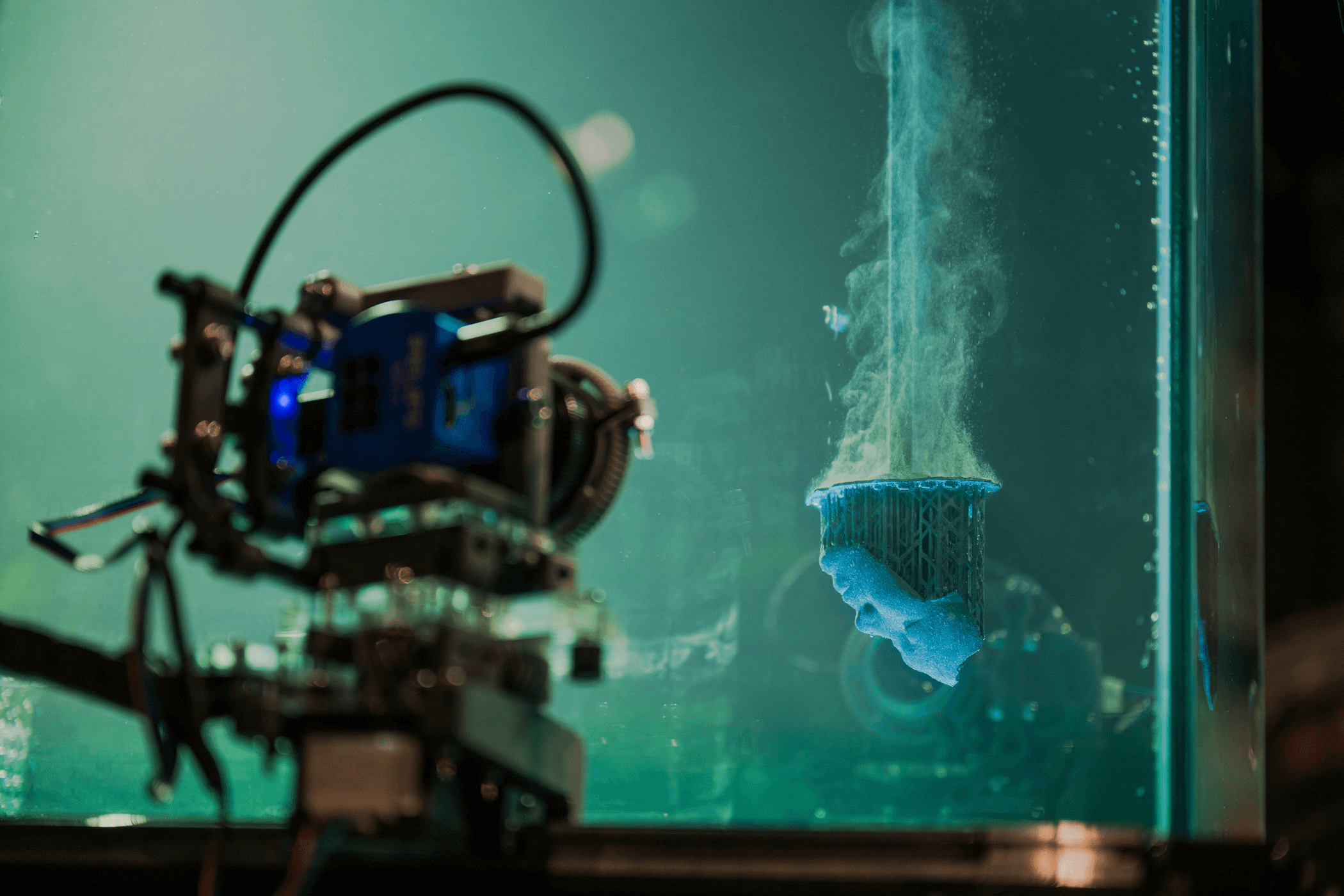
Across the gallery, related installations expand this circuit. In Fabric of the Earth (2025), small 3D-printed sculptures—made using filament produced from mud from the 2006 Sidoarjo mudflow disaster—move slowly along a conveyor, forming an evolving archive of displacement. Meanwhile Gurat Lara (Scars) (2026) shows a copper-coated sculpture of a mining worker gradually plated with nickel through a chemical process broadcast live on surrounding screens, reflecting on the social and environmental consequences of Indonesia’s position as the world’s largest nickel producer.

Together, the works in Nafasan Bumi ~ An Endless Harvest trace how humans, machines, and ecosystems have been drawn into intertwined cycles of extraction and production. By foregrounding the afterlives of materials—from palm oil residues to nickel ore—the exhibition asks what histories these substances carry and what futures they might yet shape in an era increasingly defined by ecological crisis.


Nafasan Bumi ~ An Endless Harvest

Elia Nurvista and Bagus Pandega
16 January – 31 May 2026
Singapore Art Museum at SAM at Tanjong Pagar Distripark, Singapore

Share Article

Share Article

More to Read

Create a free website with Framer, the website builder loved by startups, designers and agencies.