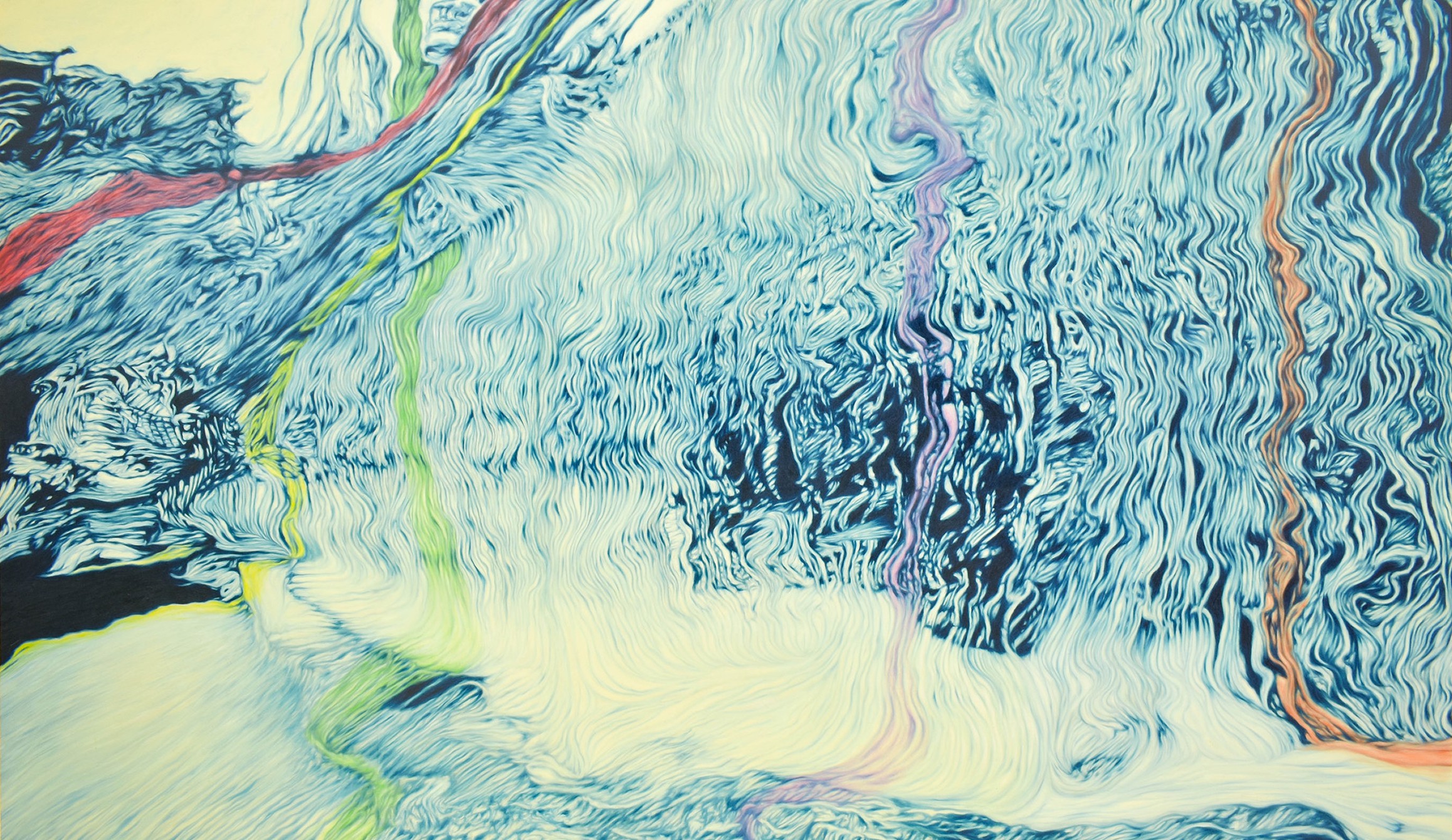
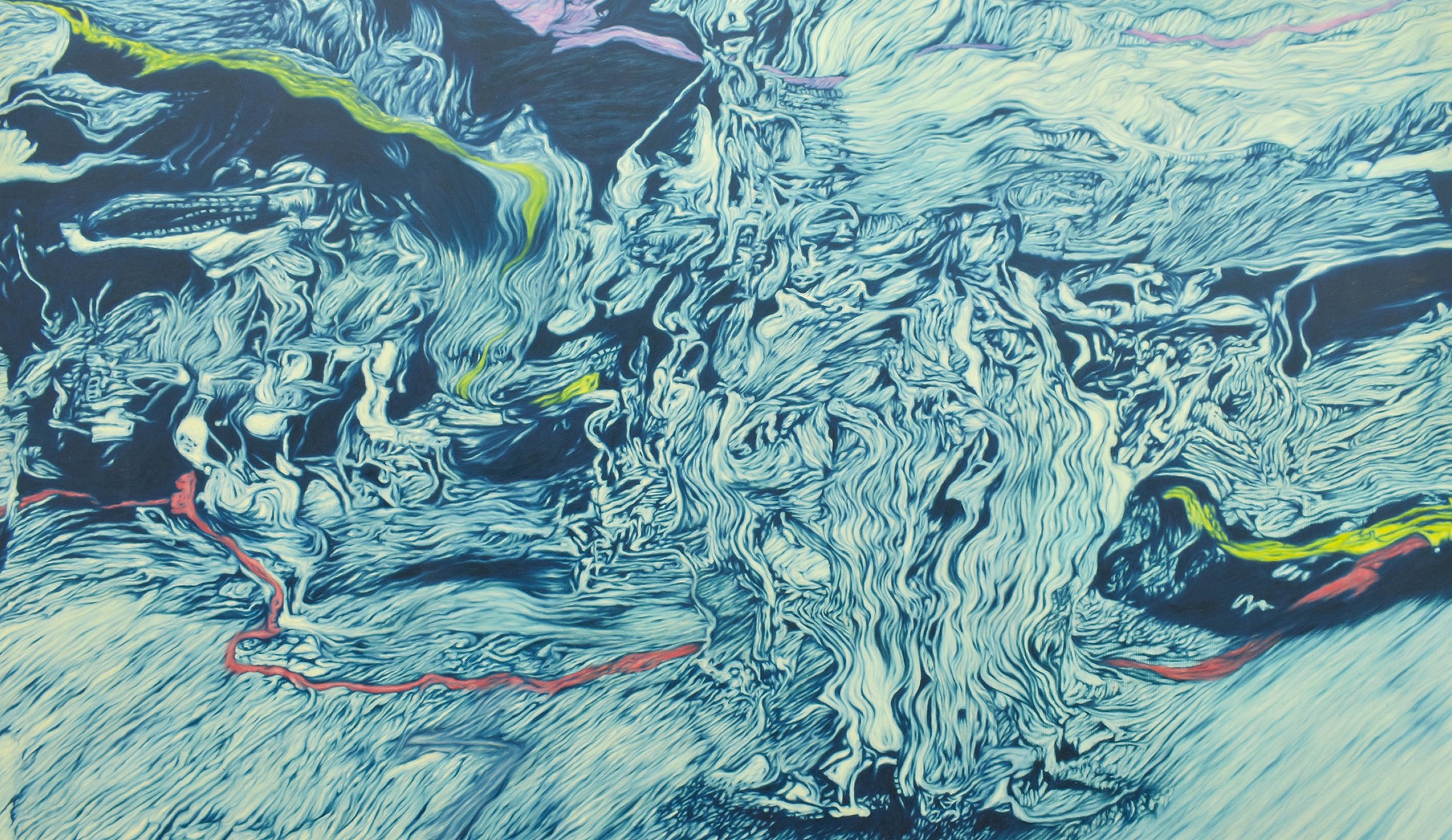
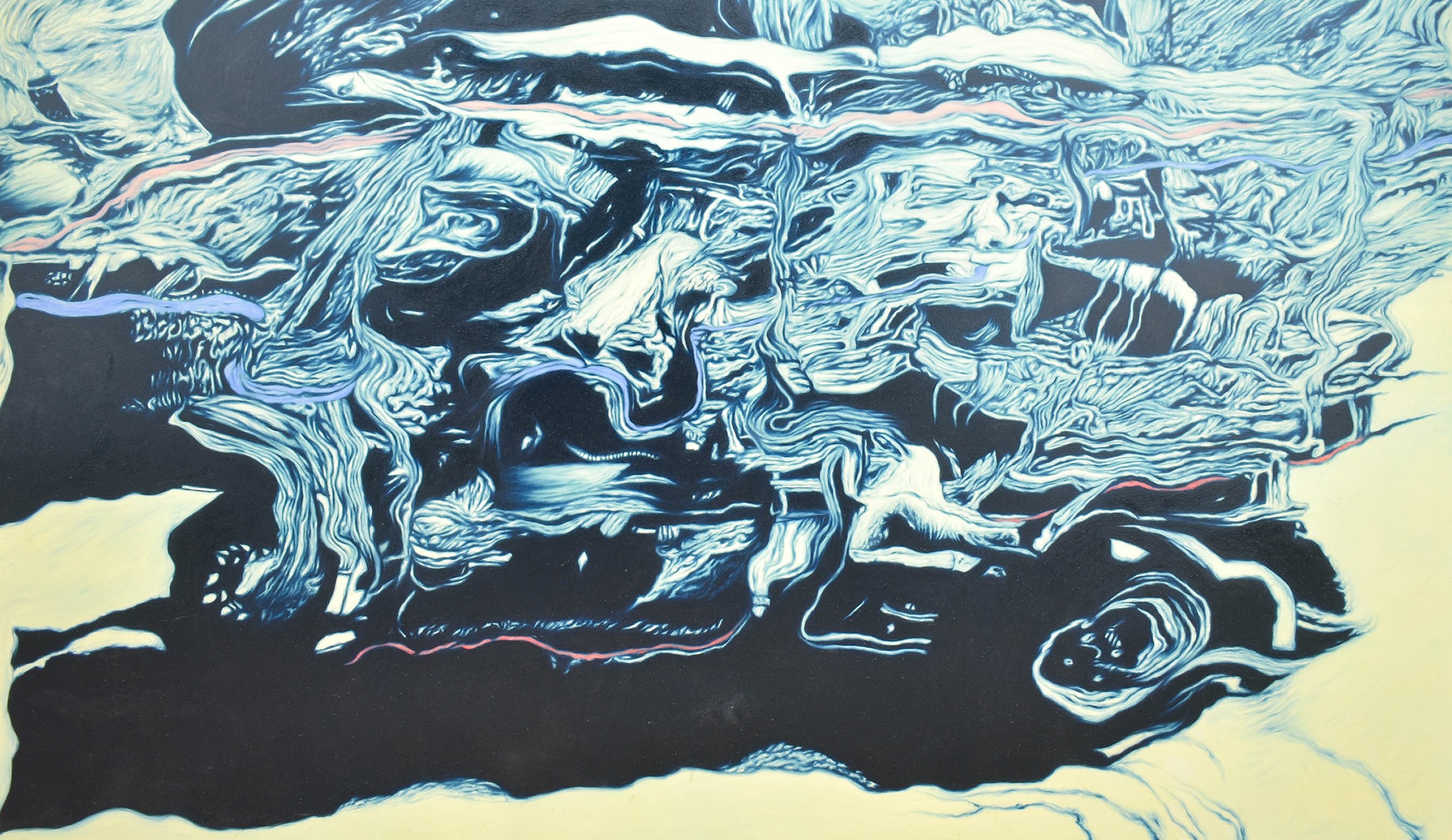
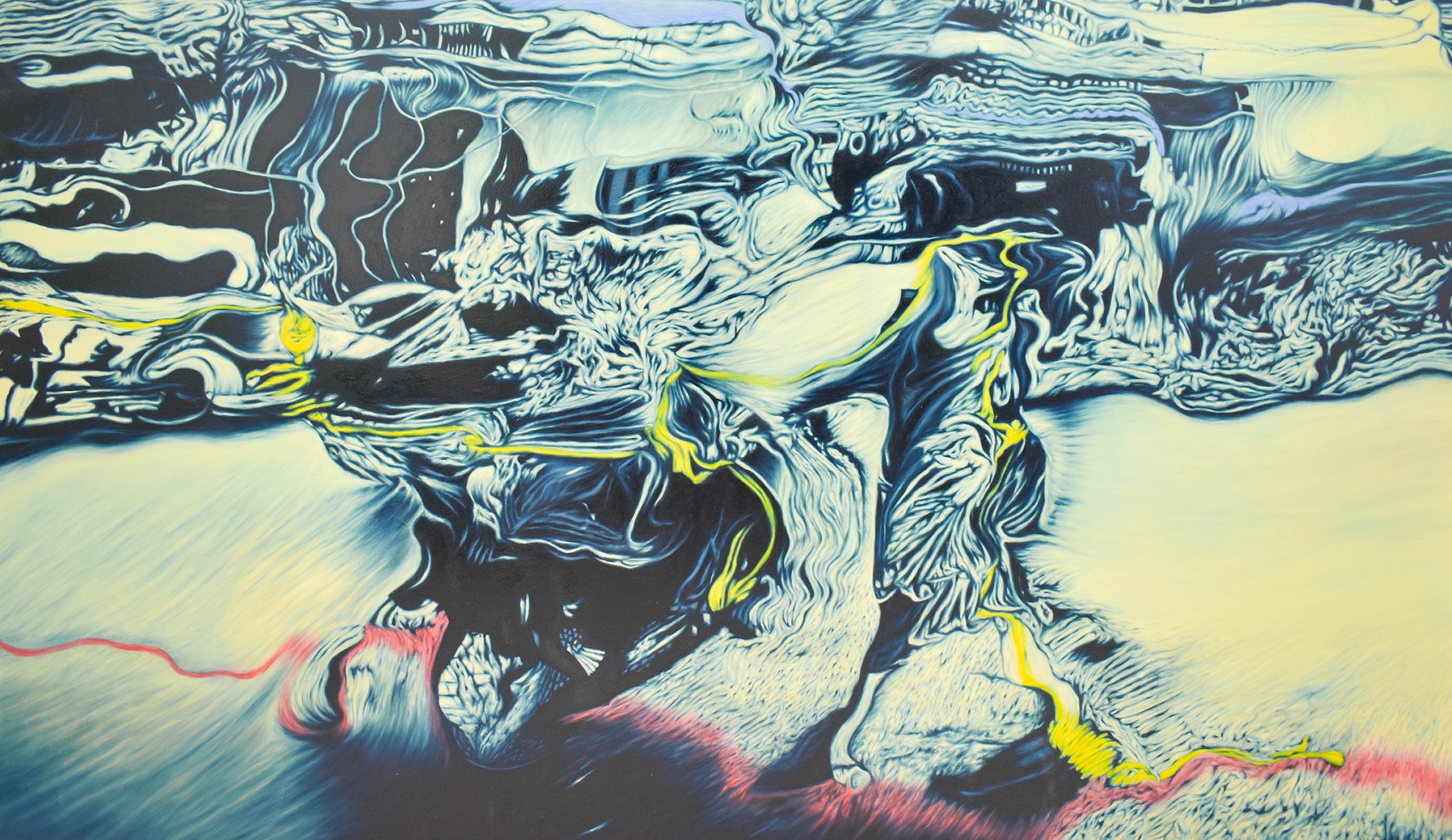
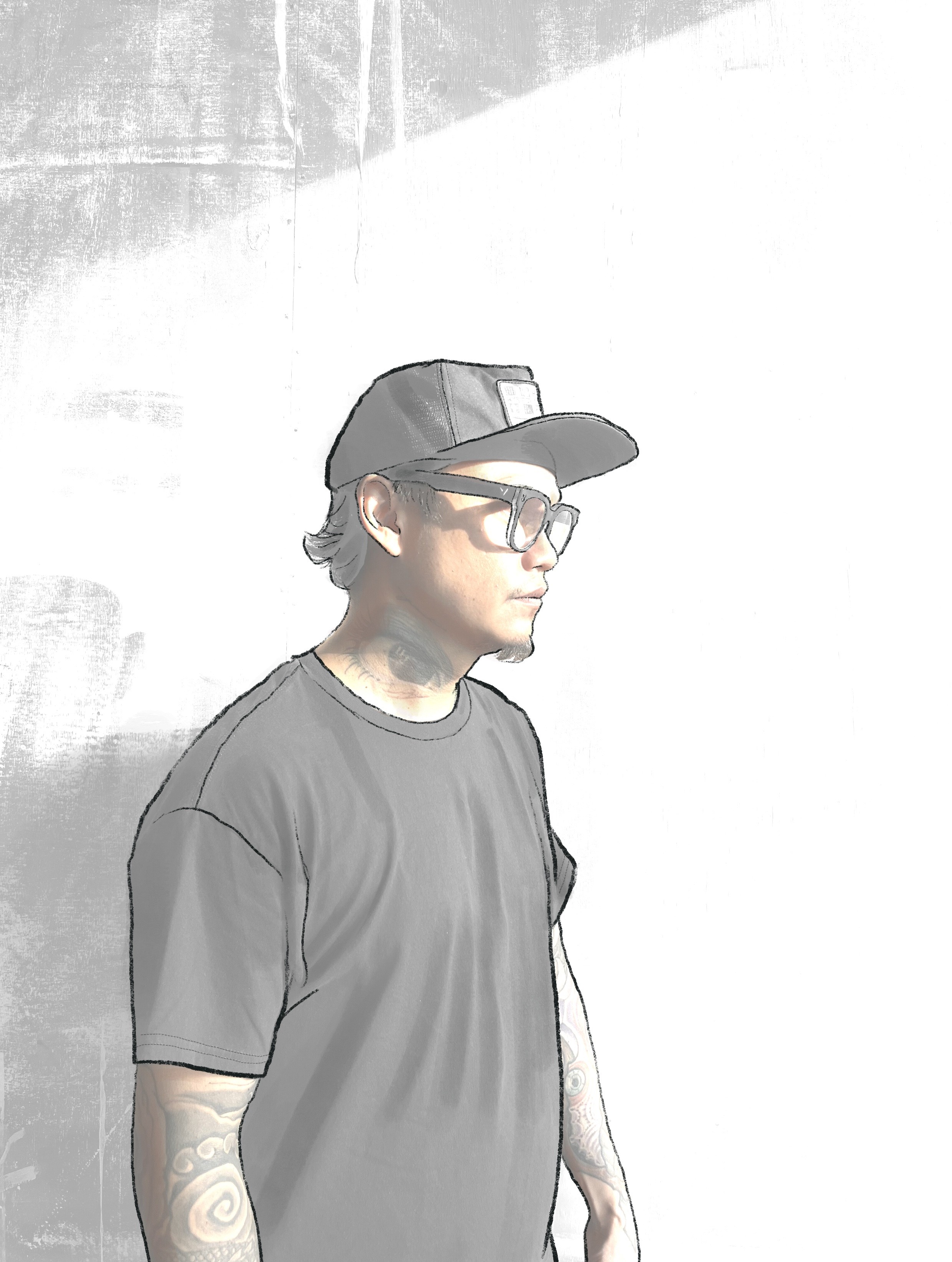
Frelan Gonzaga, illustrated by Maria Chen.

DATE

03/2026

ARTICLE

Maria Chen

PHOTOS

Courtesy of the Artist

IN CONVERSATION: FRELAN GONZAGA PAINTING RESILIENCE IN BACOLOD

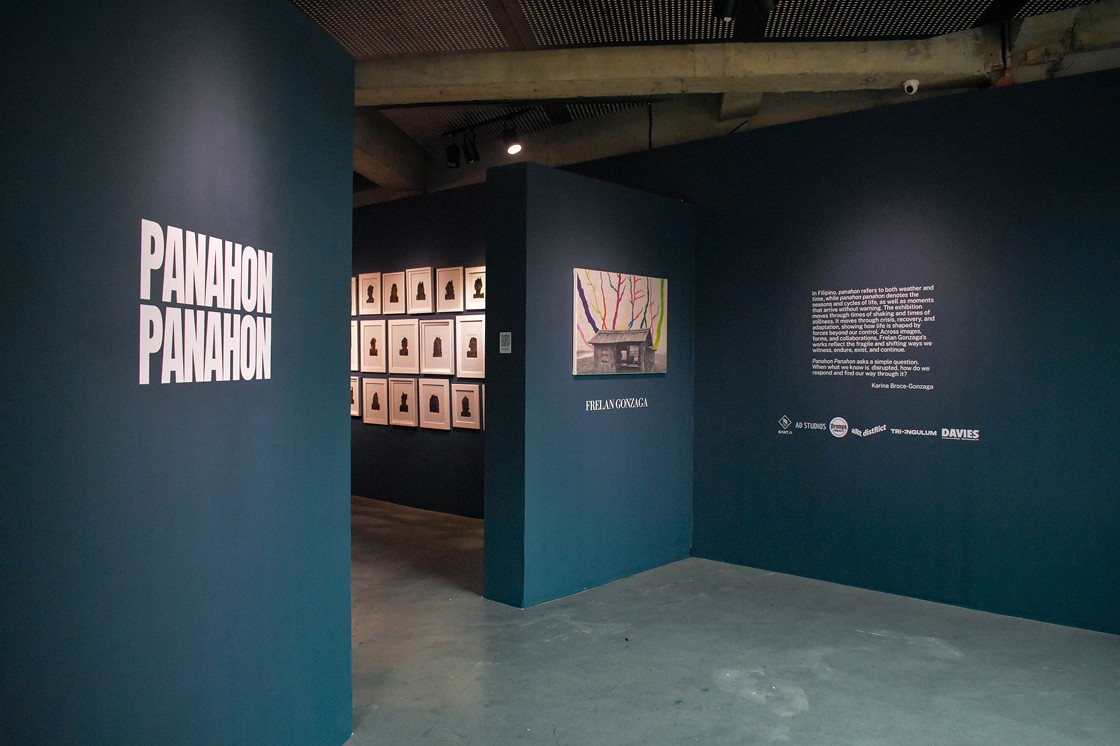
The Filipino contemporary artist discusses community, collaboration, and his solo exhibition Panahon Panahon at Orange Project.

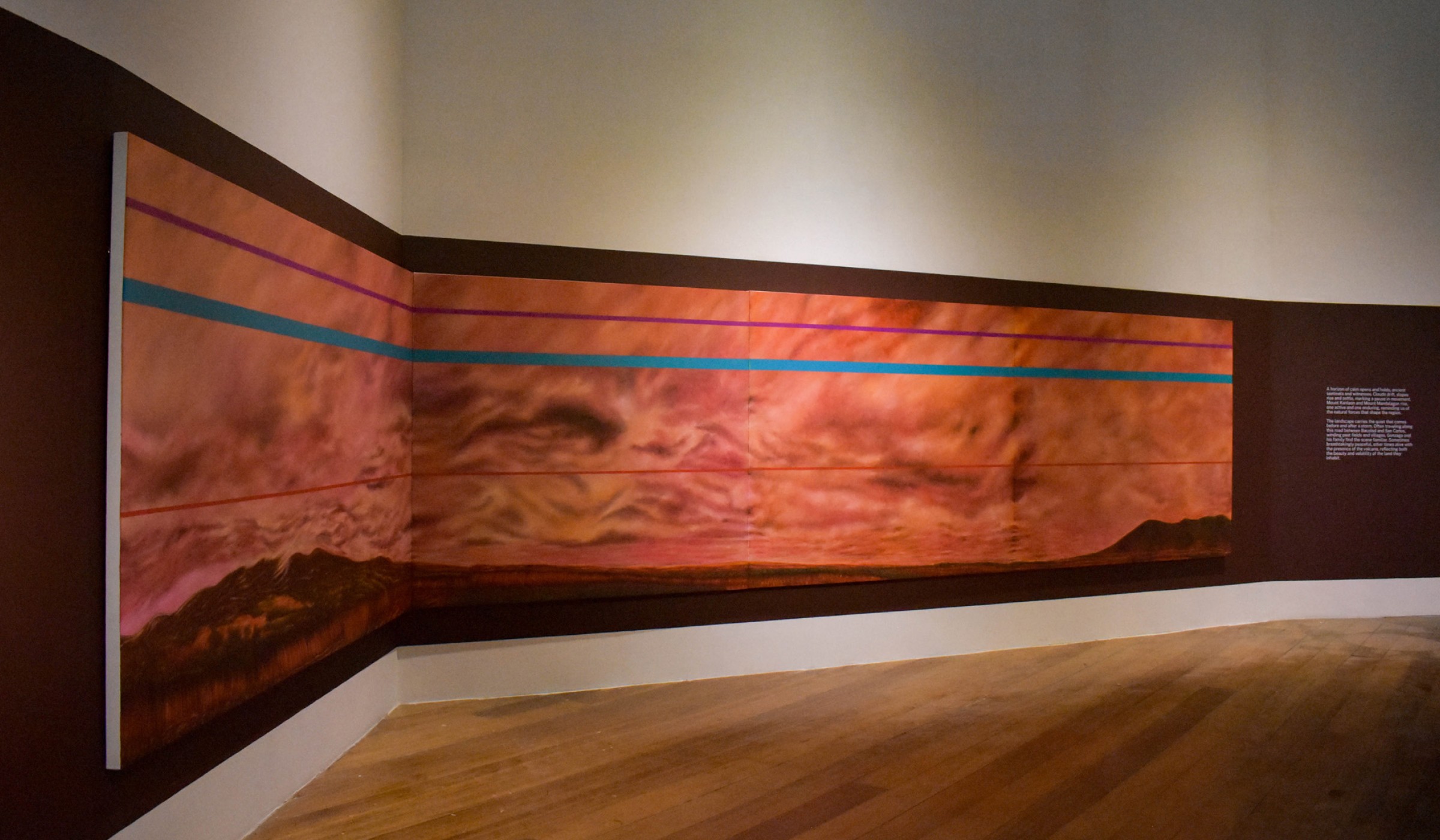
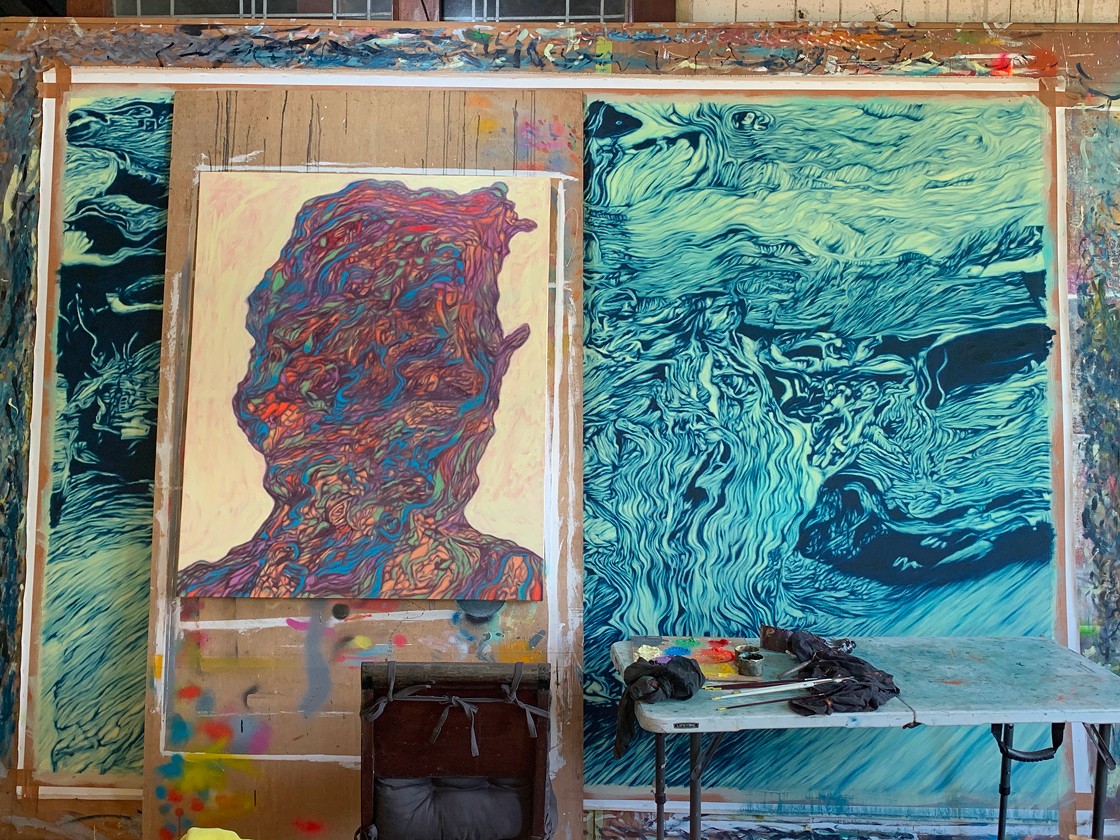
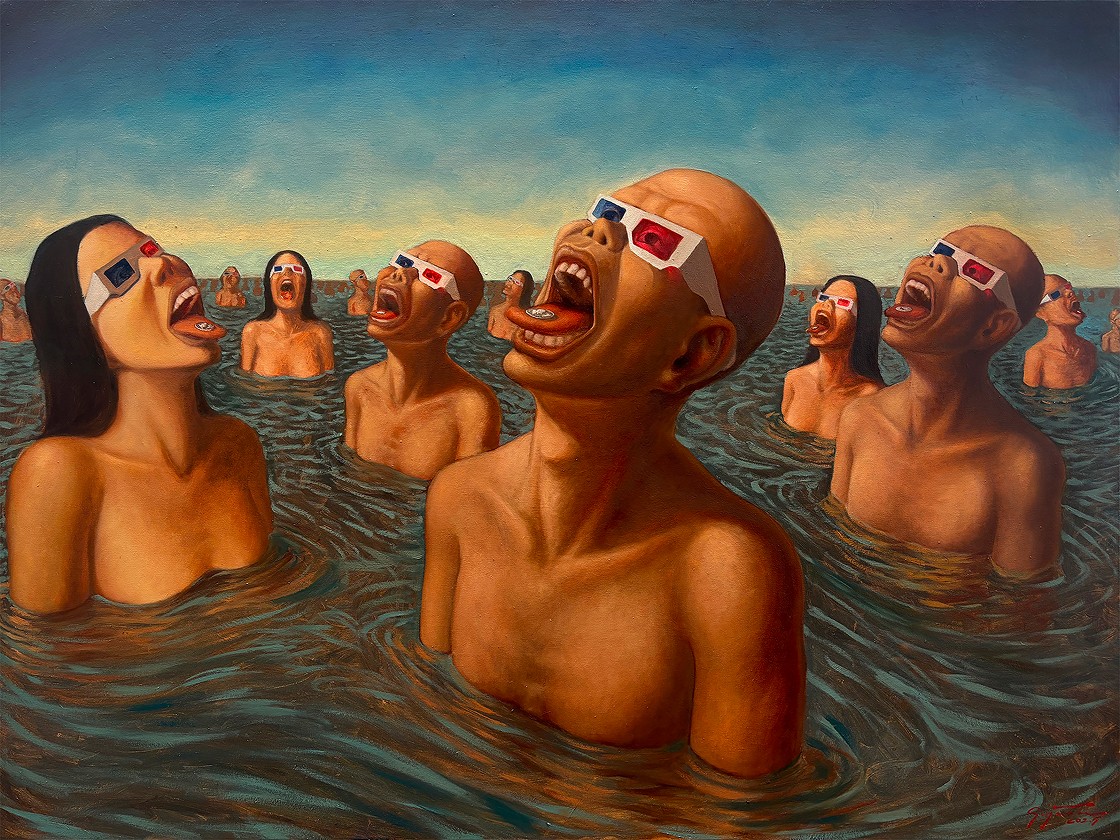
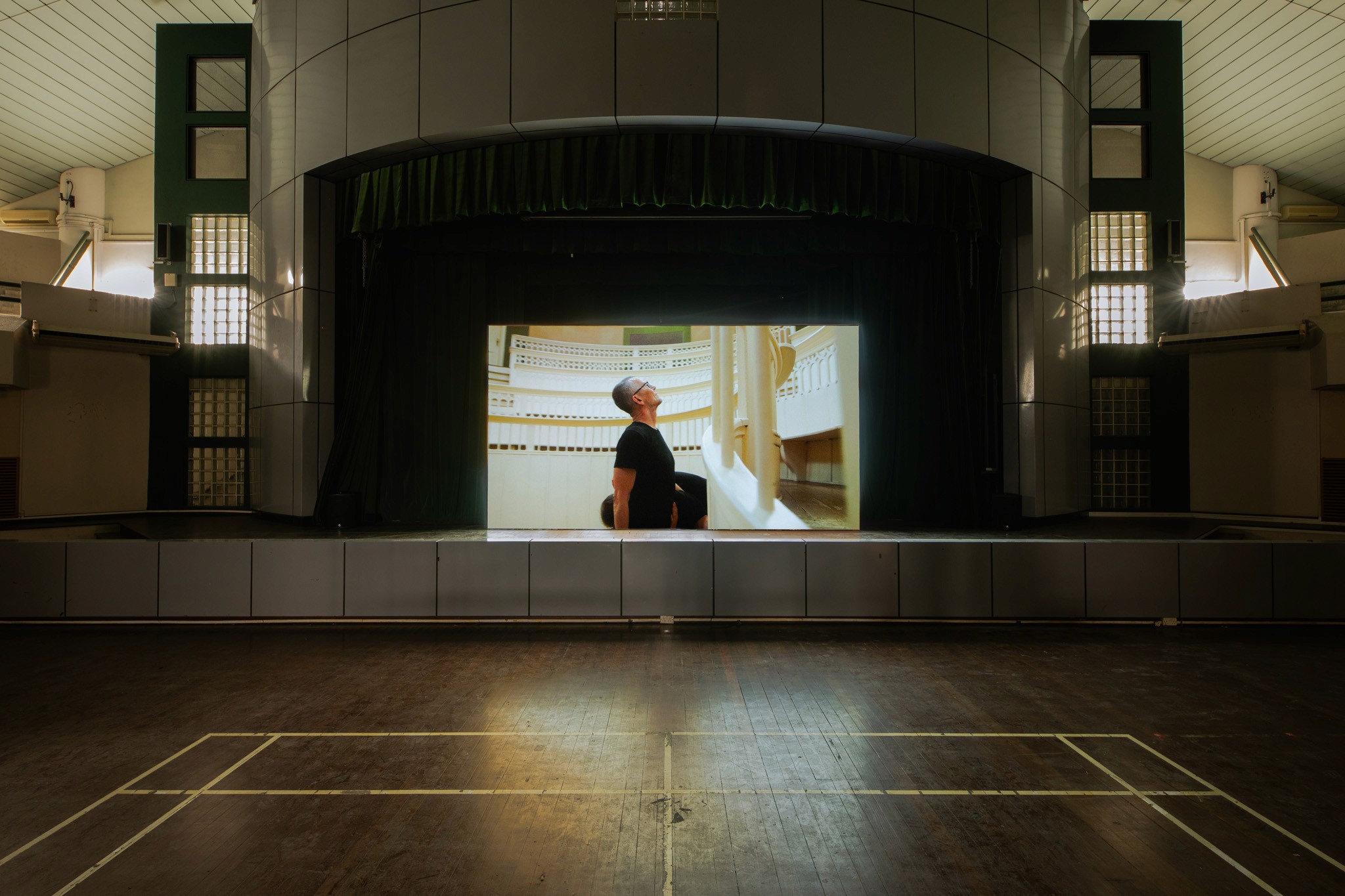
In Bacolod City, Filipino contemporary artist Frelan Gonzaga has spent years observing the quiet resilience of everyday life—vendors, workers, parents, and neighbours whose perseverance shapes the rhythms of the street. These lived experiences form the foundation of his paintings, which often explore dignity, faith, and survival among communities living at the margins of Philippine society. In his latest solo exhibition Panahon Panahon at Orange Project, Gonzaga reflects on time, uncertainty, and the fragile ways people endure disruption. Drawing its title from the Filipino word panahon, meaning both weather and time, the exhibition brings together painting, drawing, sculpture, photography, and collaborative works that trace moments of upheaval and recovery—from earthquakes and personal memory to the shifting seasons of life. In this conversation with CNTRFLD.ART, Gonzaga discusses the experiences that shaped Panahon Panahon, the role of collaboration and community in his practice, and how growing up in Bacolod continues to guide his reflections on resilience, representation, and the everyday stories that often go unseen.

Previous

Next

CREDITS

All works courtesy of the artist and The Orange Project

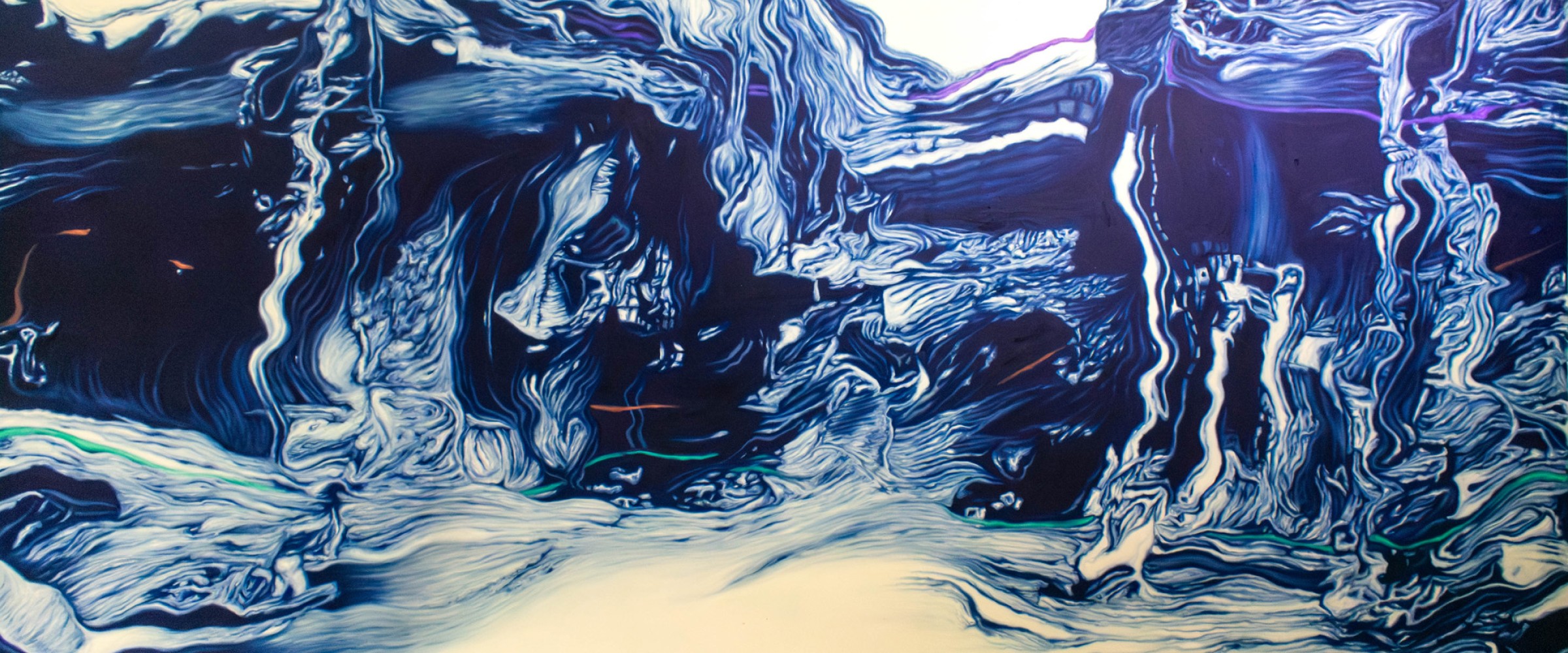
Header: The Conditions of a Moment in Motion VI

Slide 1-4: The Conditions of a Moment in Motion VI

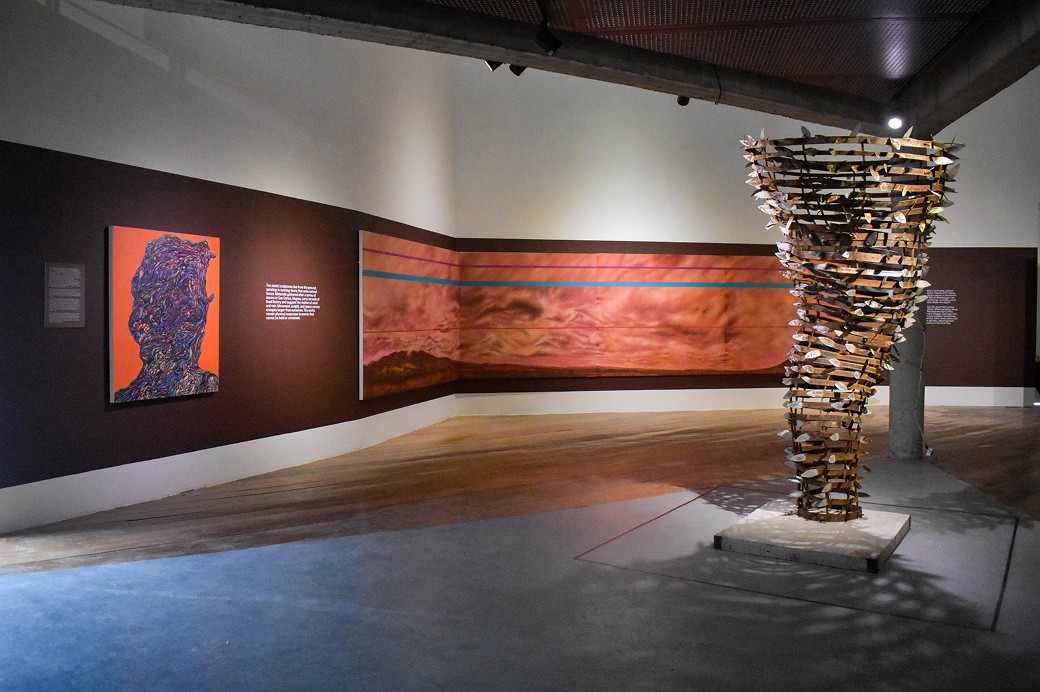
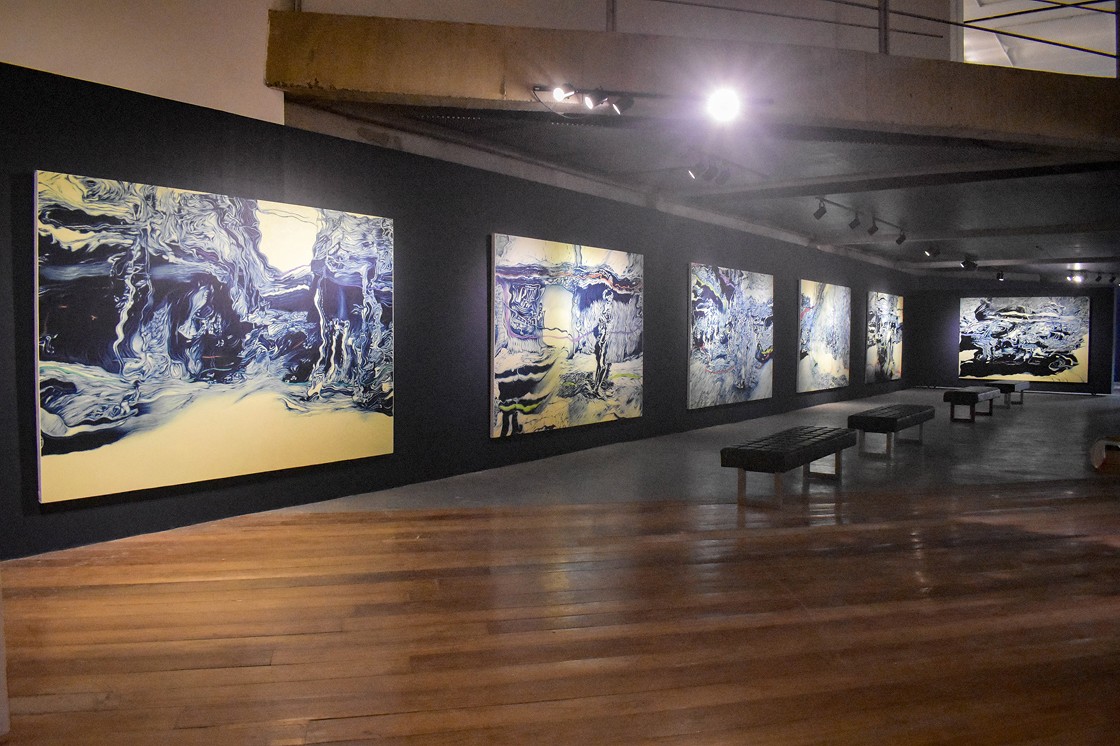
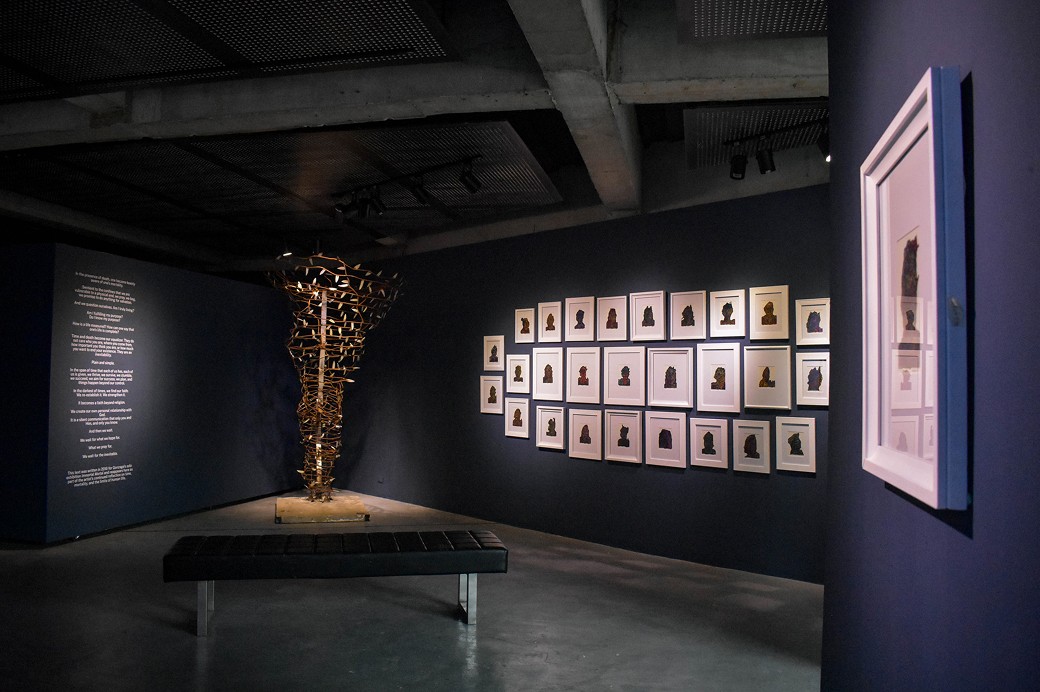
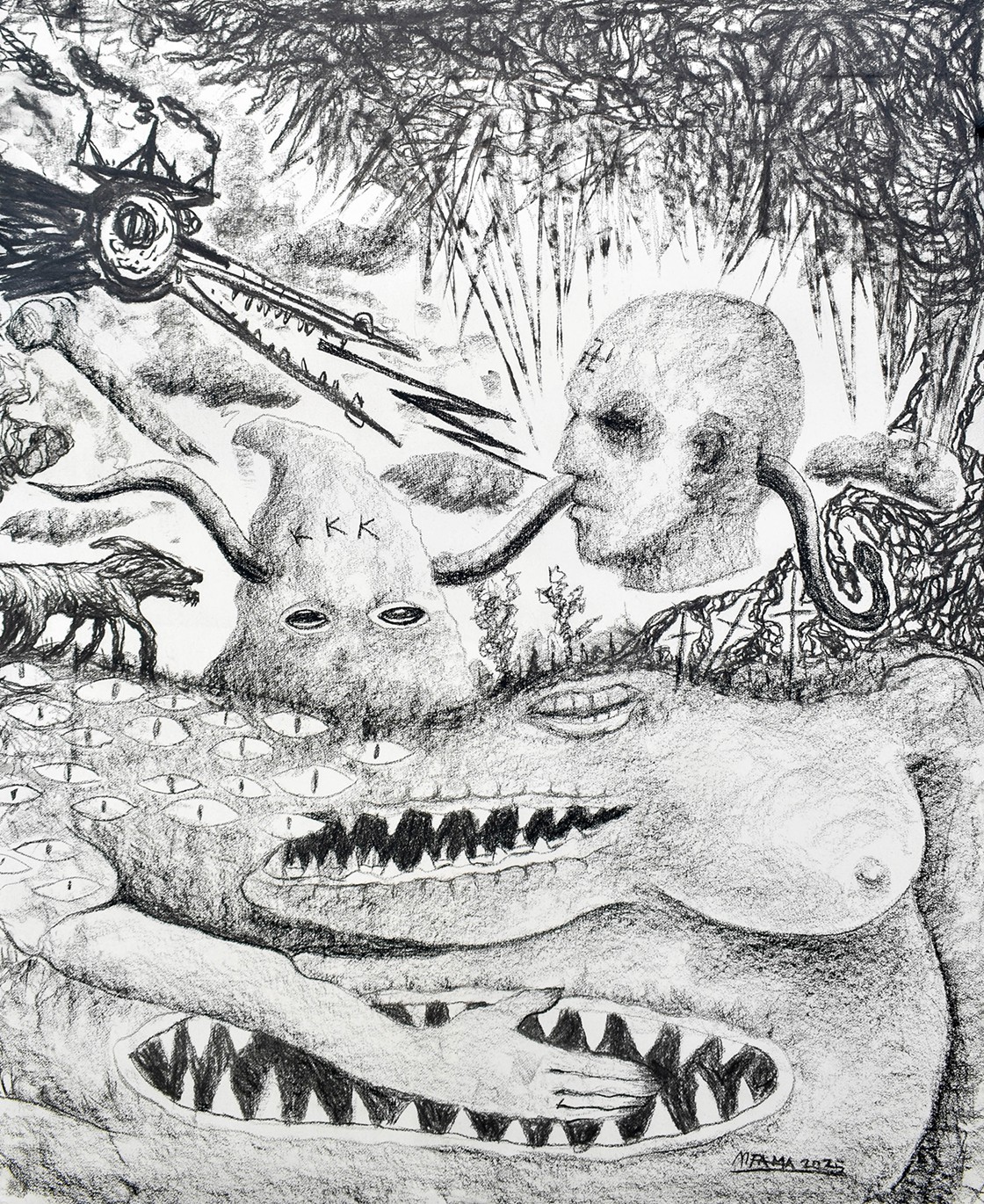
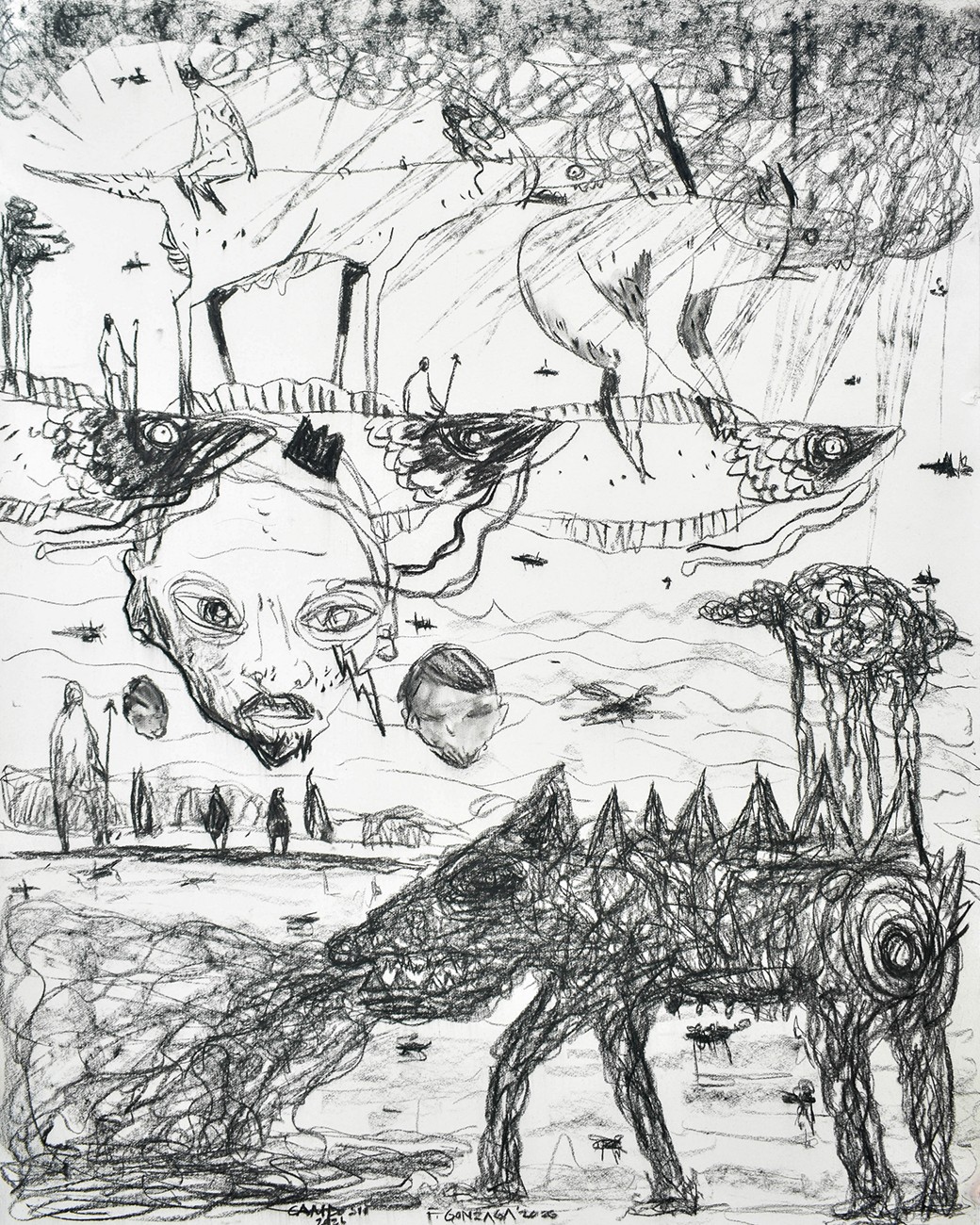
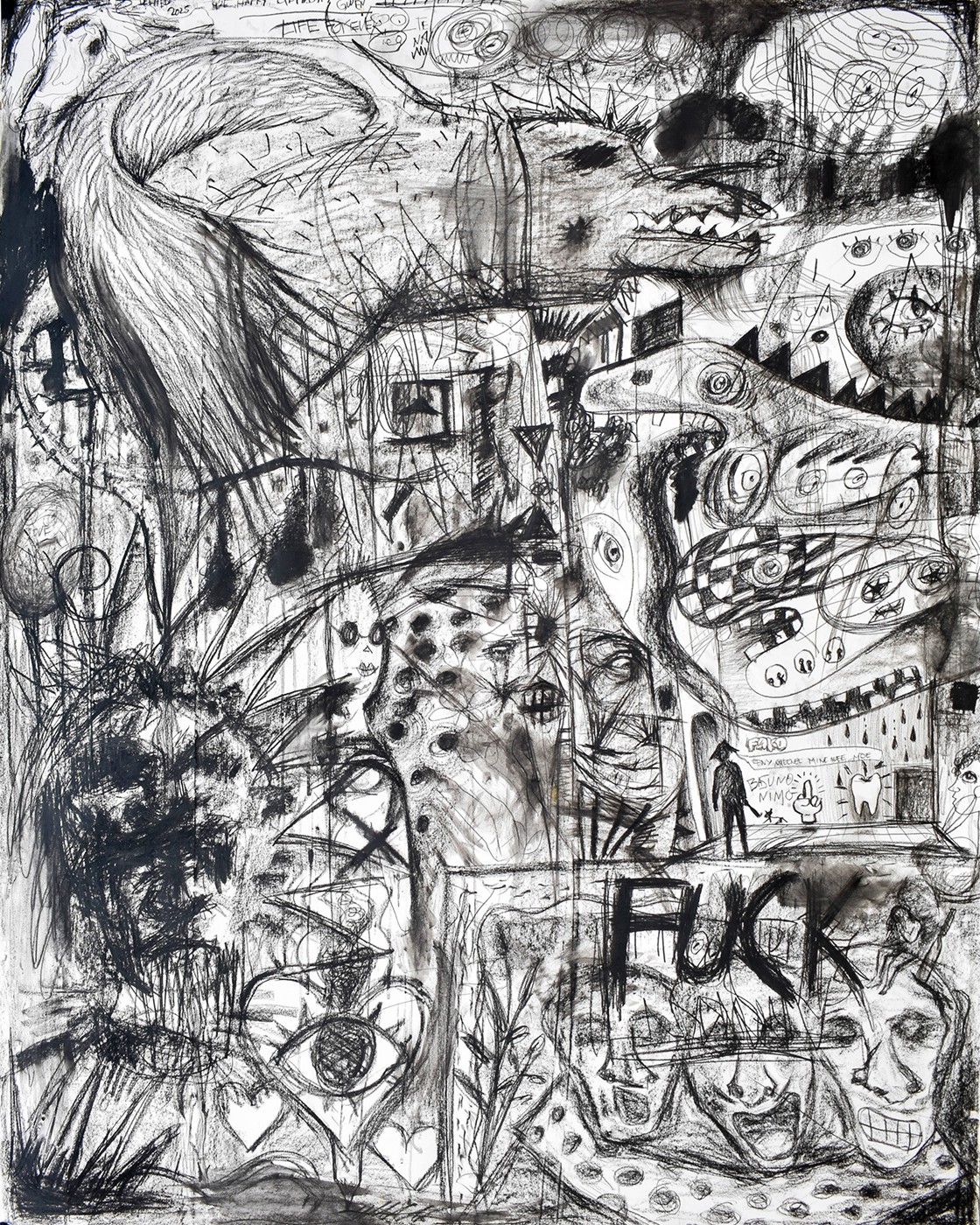
Image 1-4: Panahon Panahon Exhibition. Images courtesy of the artist

Divider: Panahon Panahon_Exhibition. Images courtesy of the artist

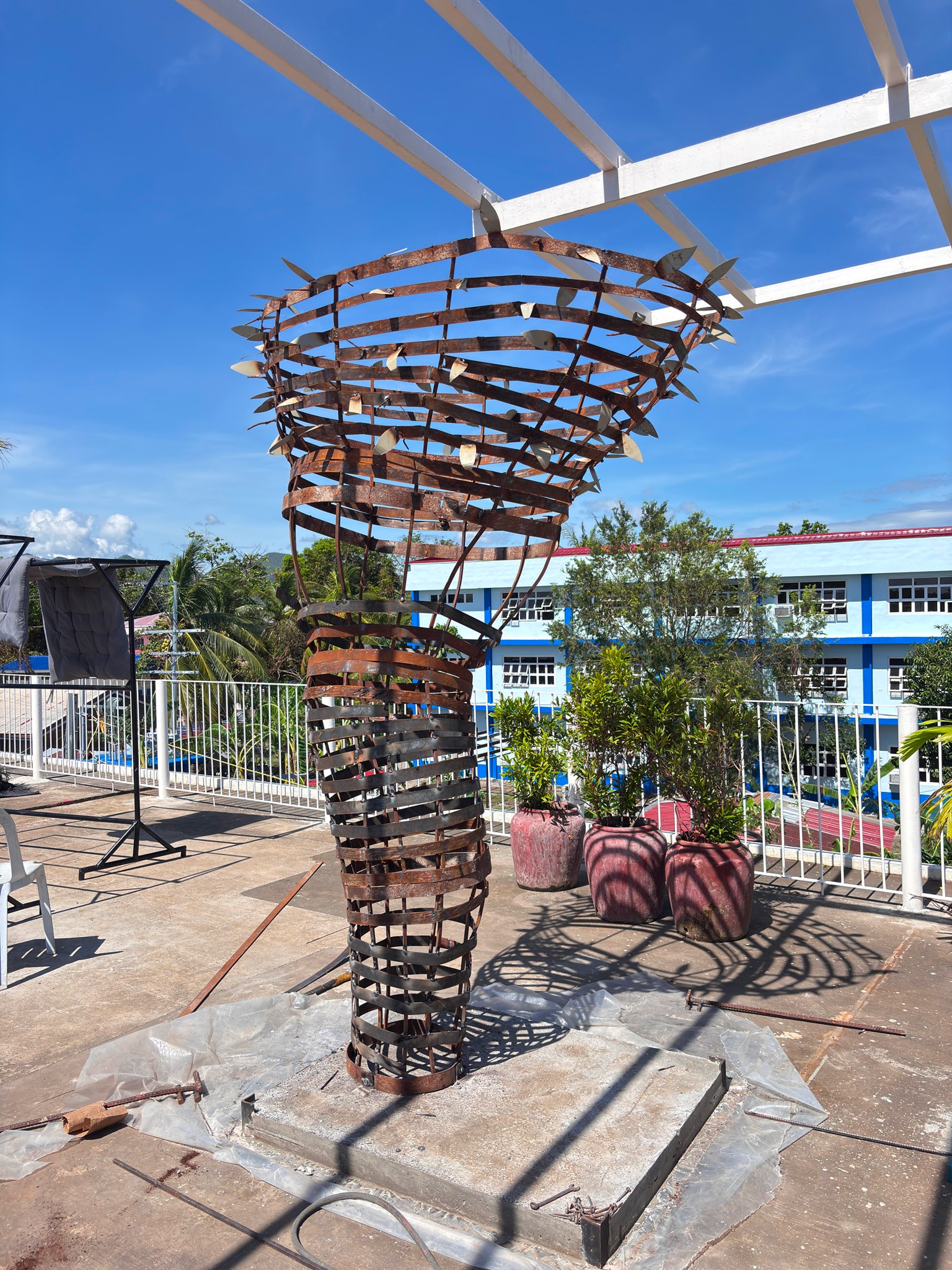
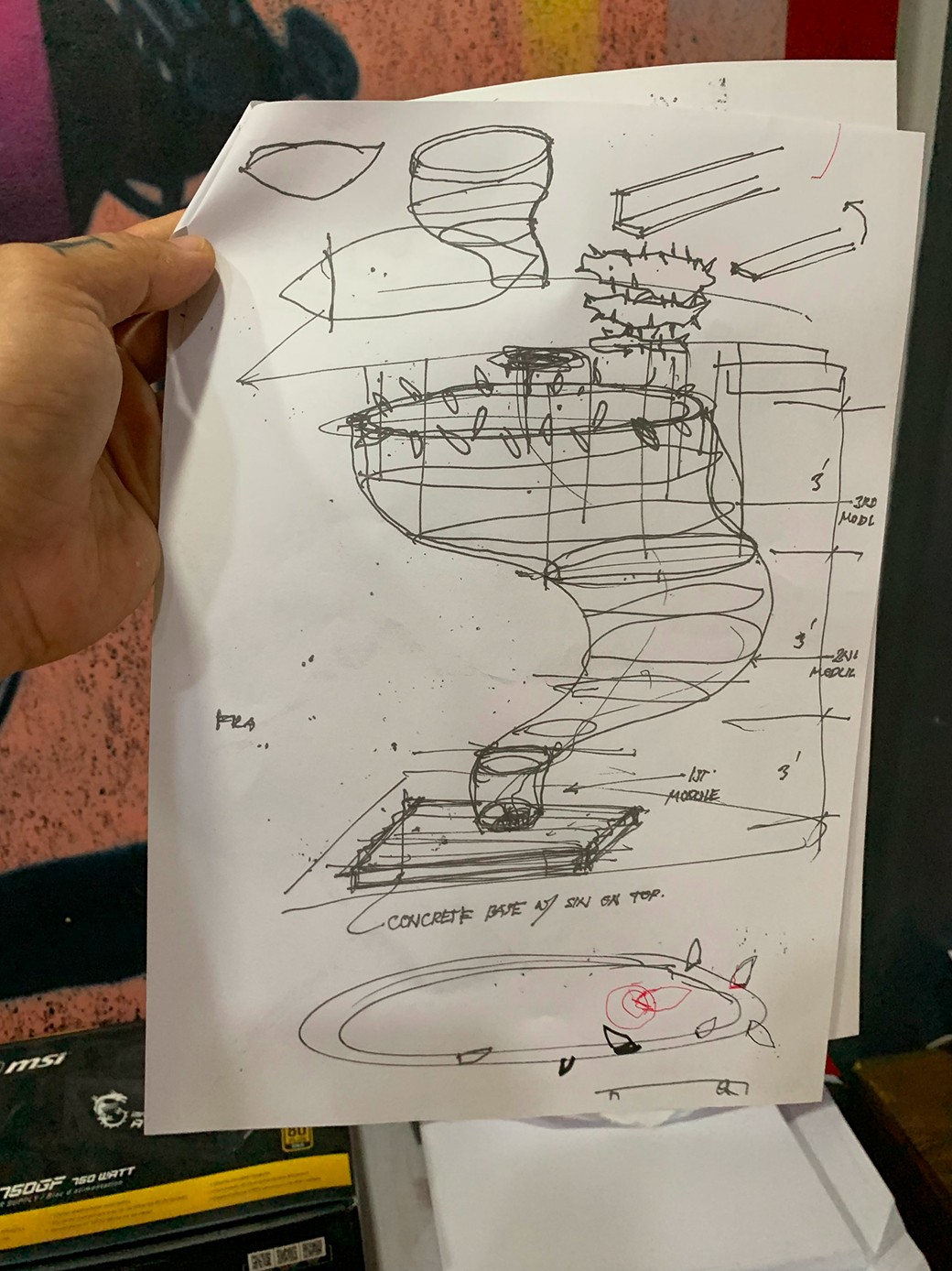
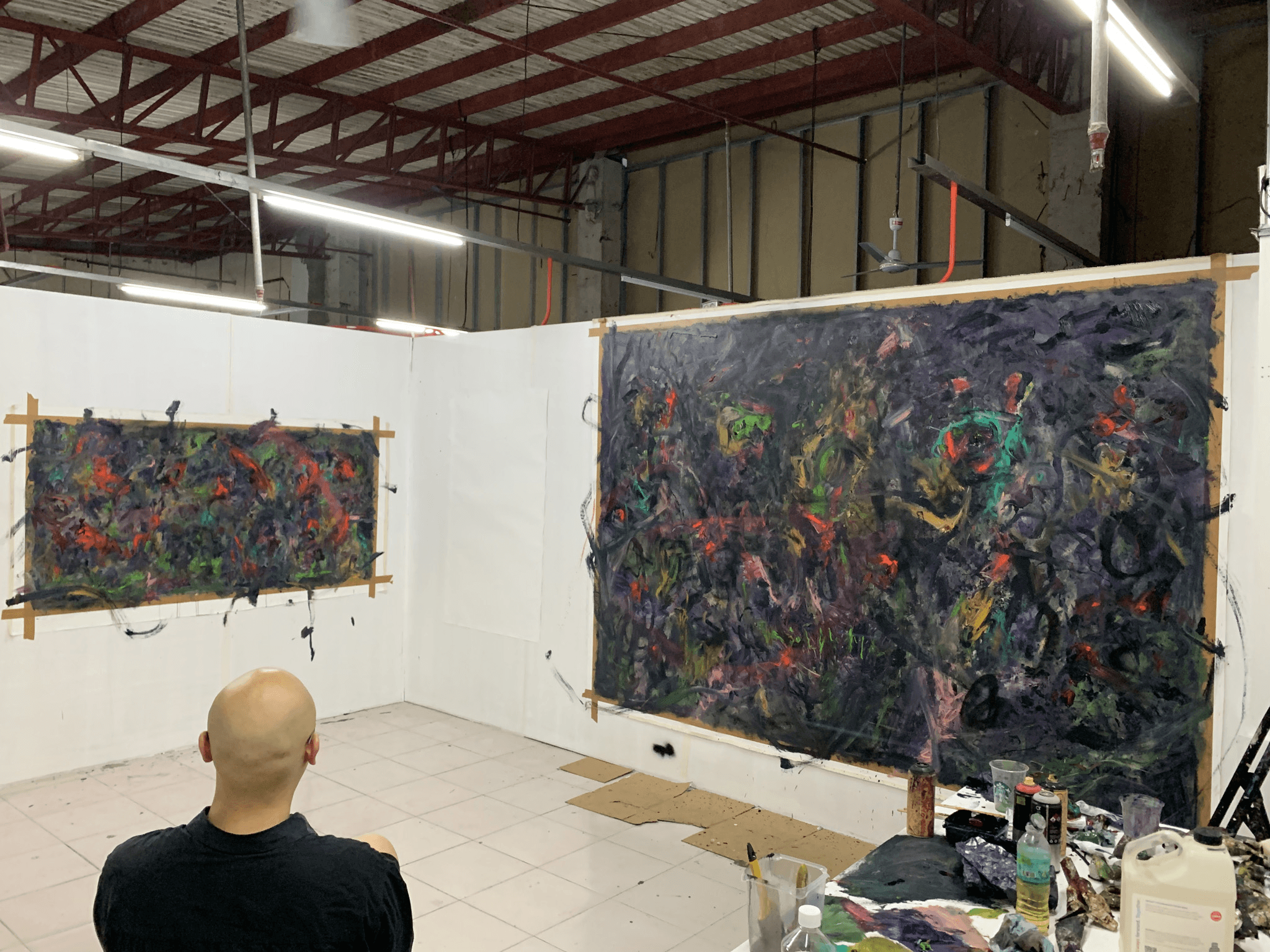
Image 1-12: Work in progress

Image 13: On Shared Ground

Image 14: Along the Same Line

Image 15-16: Forms in Exchange, At Play

“As I grew older, I became more interested in how ordinary lives carry quiet strength and dignity… giving space to moments that might otherwise go unnoticed.”
Frelan Gonzaga

CNTRFLD. Panahon Panahon brings together ideas of time, weather, and uncertainty—how did this exhibition take shape for you, and what felt most important to express at this moment?

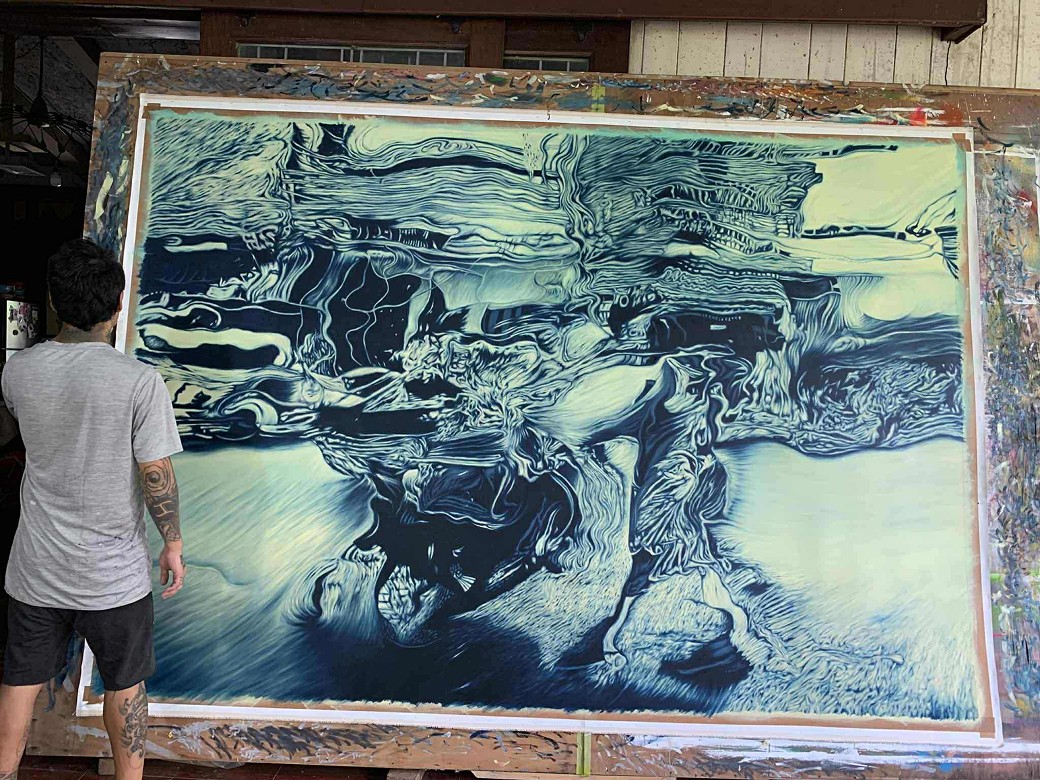
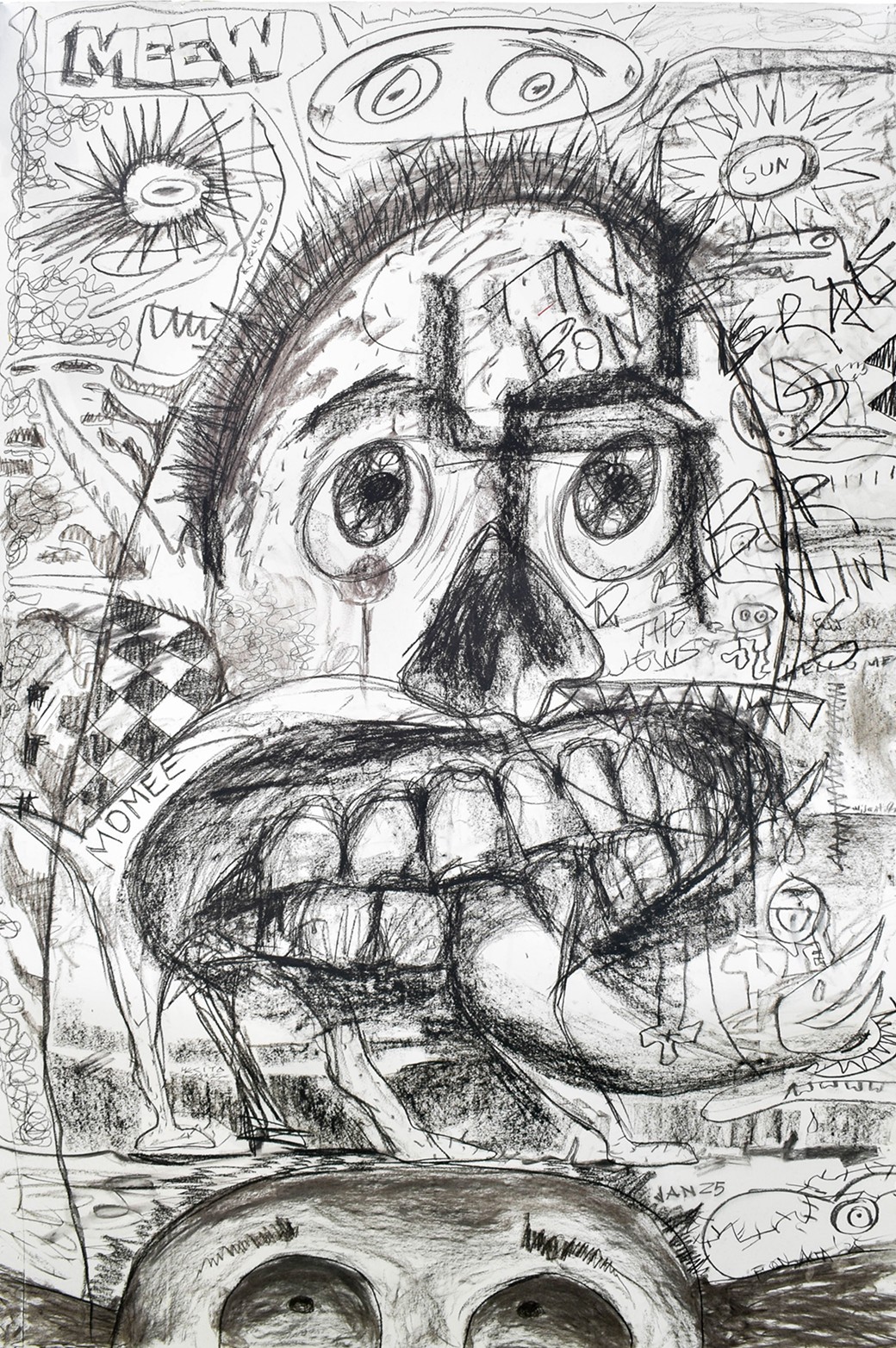
FG. The exhibition began through conversations and observations that slowly came together. More than a year before the show, I was sharing early studies with my wife while we were in San Carlos, Negros Island. At the time I was experimenting with distorted figures and layered images. Our conversation turned to sound waves and how sound might appear visually. As a musician, the idea of distortion immediately caught my interest and became the starting point for the imagery.
Not long after, I saw in the news that a building I had photographed during a trip to Bangkok had collapsed just weeks after we had been there. Months later, we experienced a strong earthquake in Bacolod. I remember looking at a mirror and seeing my reflection blur as the house shook. Those moments stayed with me and made me think about how quickly things can change.

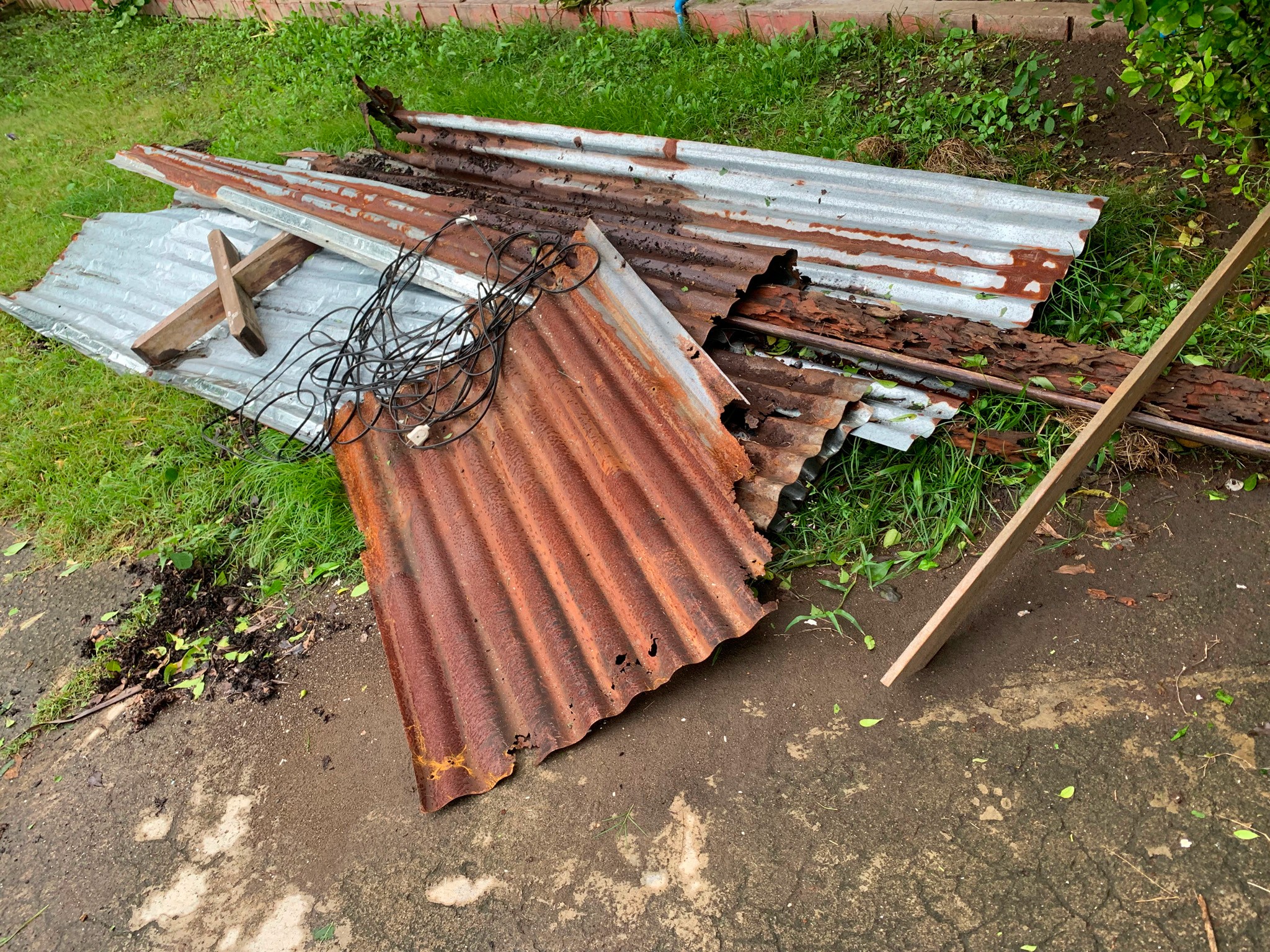
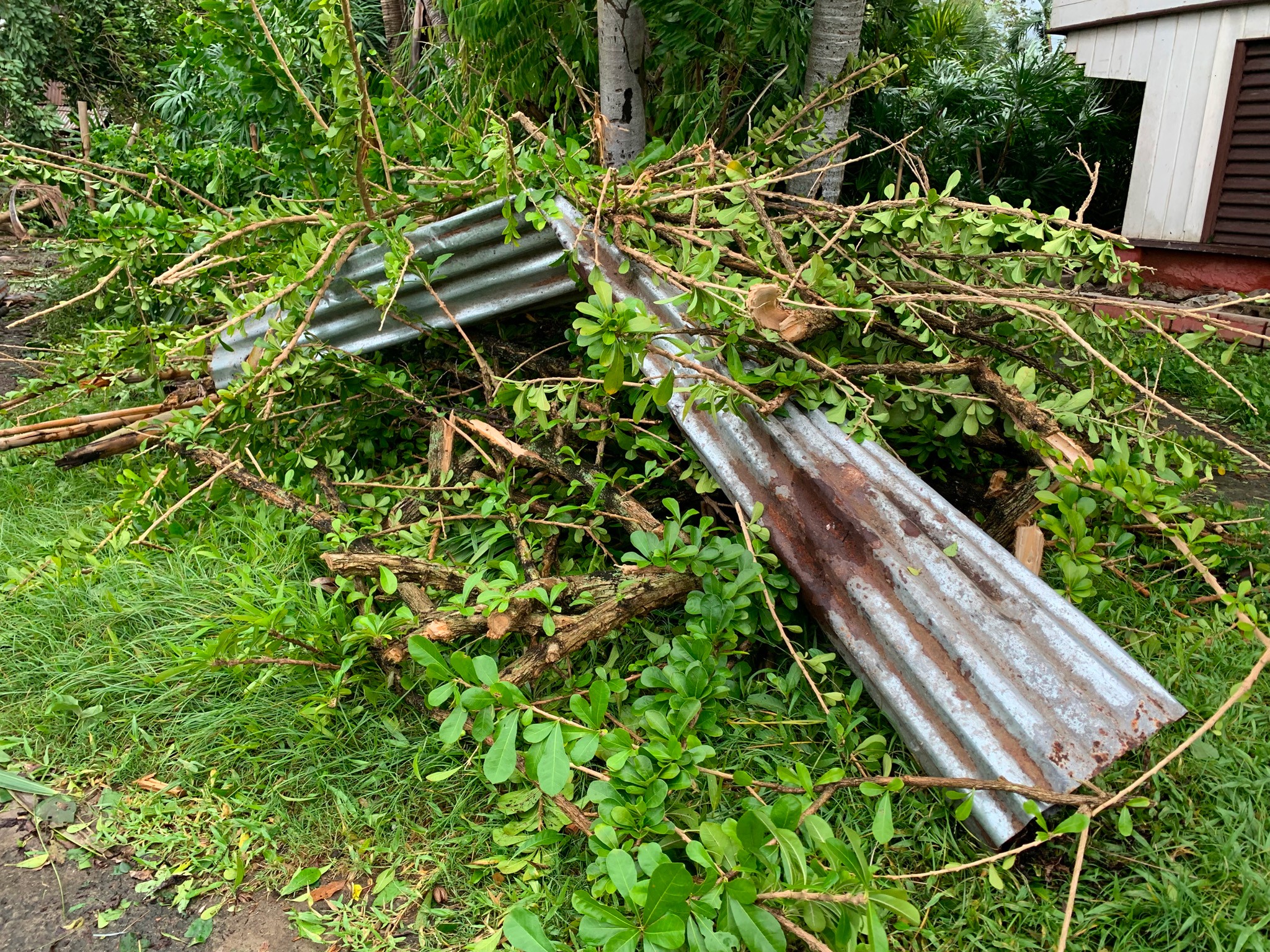
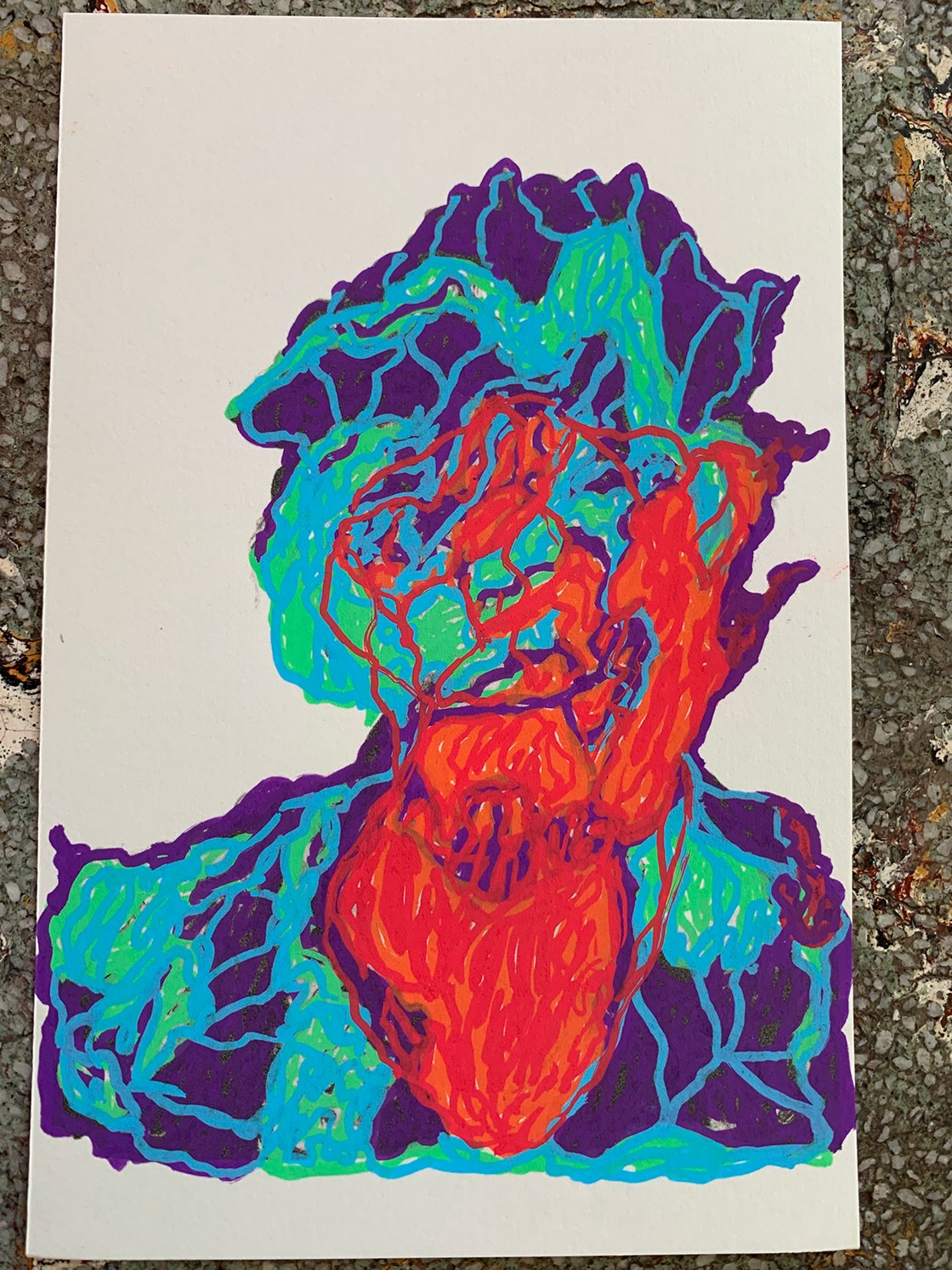
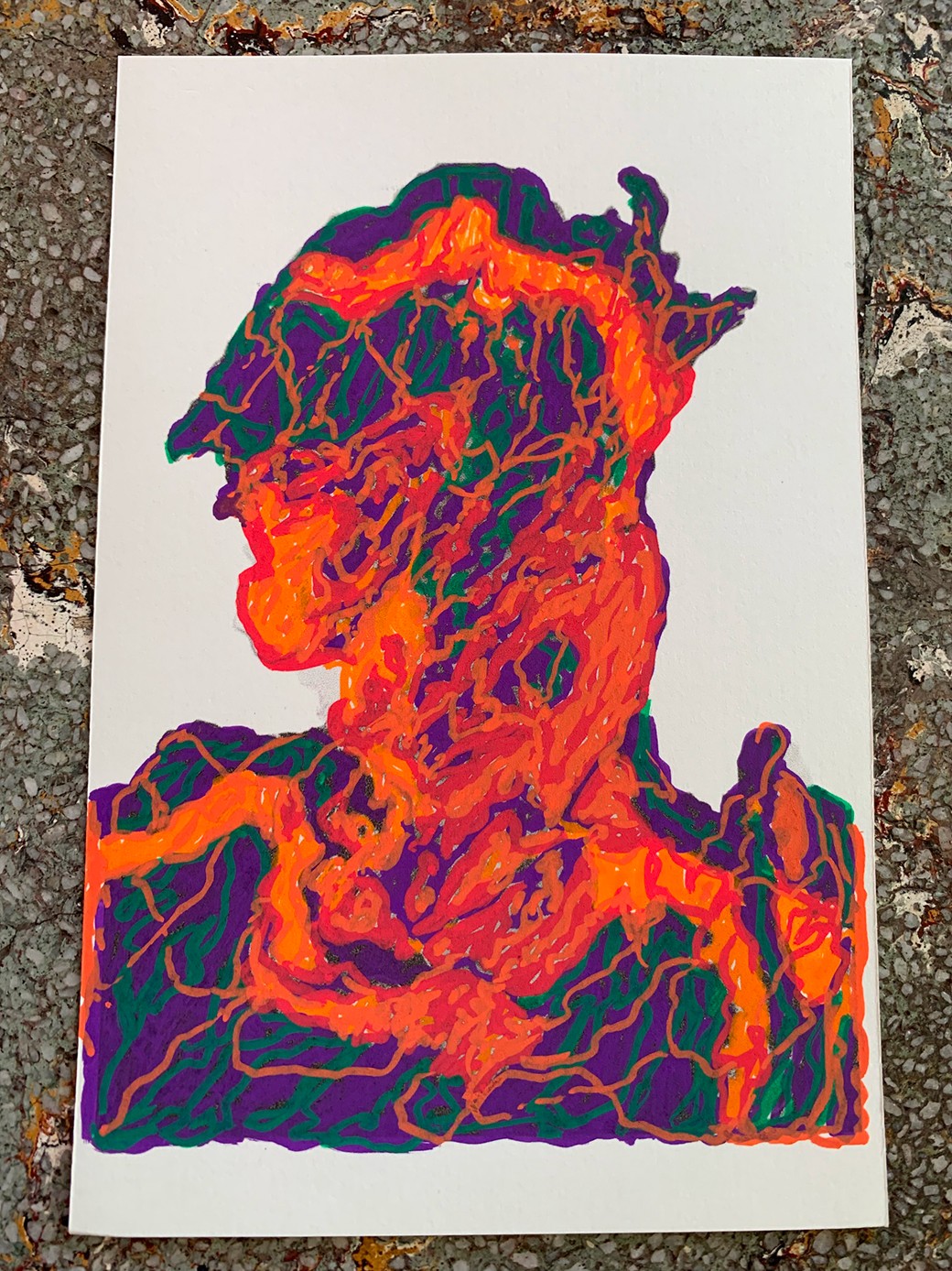
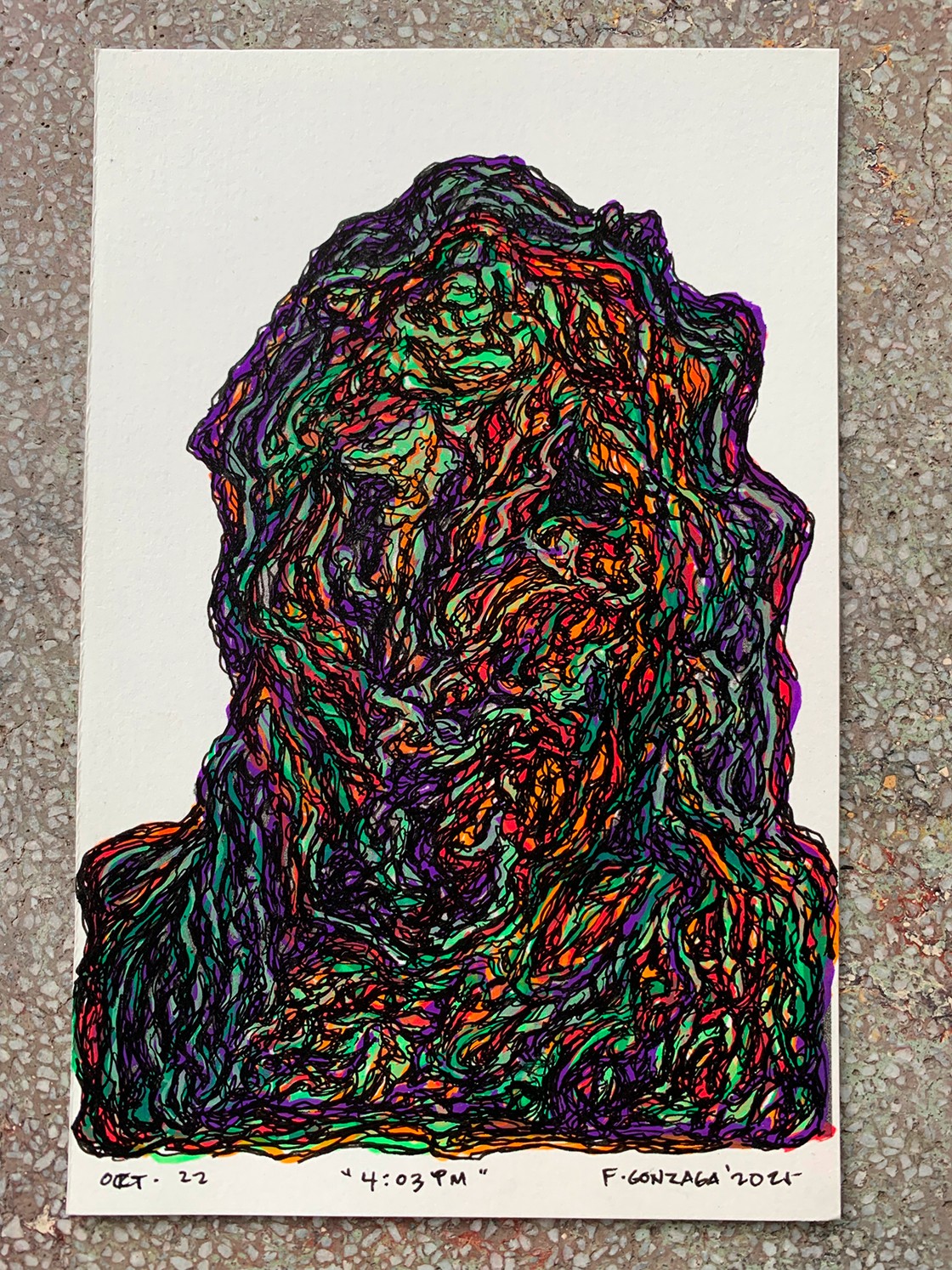
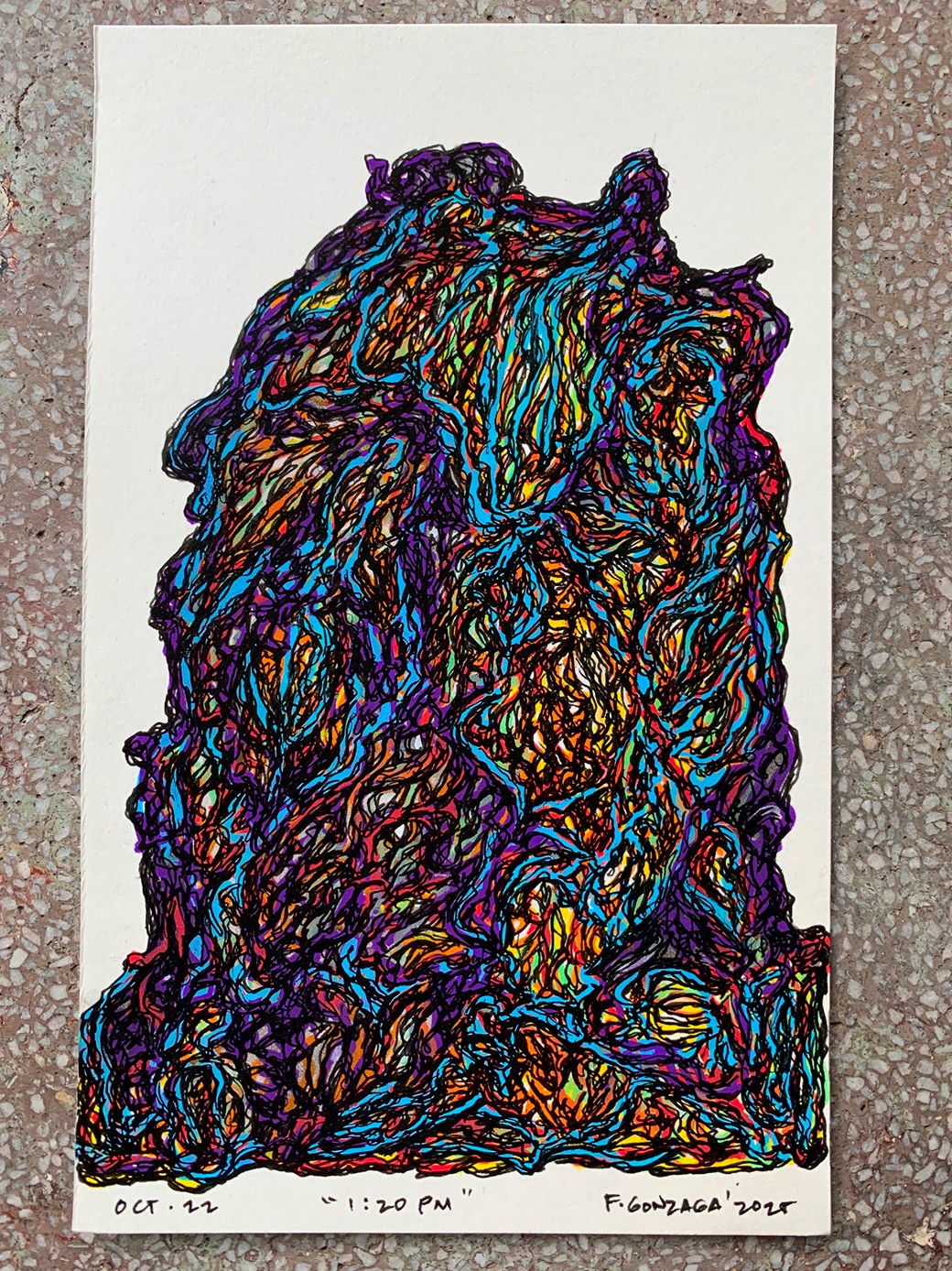
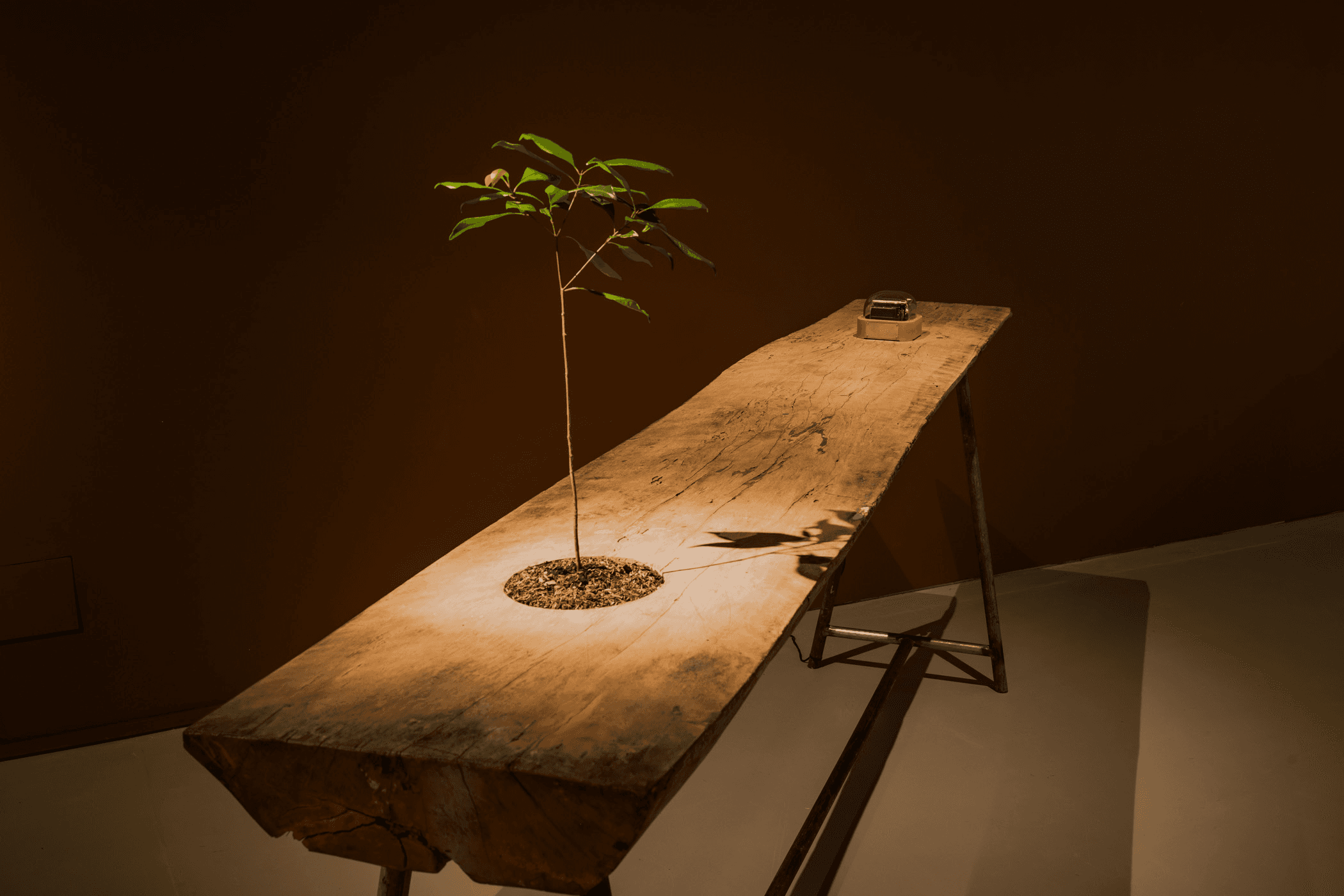
This led me to revisit portraiture from my 2016 solo exhibition Immortal Mortal. In this exhibition I continued that idea through a series called On Time. After finishing each distorted portrait, which was based on photos of people who experienced earthquakes in Negros, I noted the exact time and used it as the title of the work. Together with sculptures made from storm debris collected in December 2025, the works reflect on disruption and uncertainty. What felt most important to express is how we move through changing seasons of life and how we find our way when the familiar suddenly shifts.

CNTRFLD. Many of the works in the show reflect on disruption, recovery, and living through forces beyond our control. How have your own experiences shaped the way you think about resilience and response?

FG. I have a motto that I sometimes joke about but also believe in: “kaya gani ang indi kaya, ang kaya pa.” It roughly means that even when something feels impossible, there is still something that can be done. It reminds me to keep moving forward and focus on what remains possible.

I grew up on a street with two public elementary schools and a high school. My parents wake up before dawn every day to cook and sell food in their small carinderia. The street is full of vendors, trisikad drivers, and parents waiting for their children. People often talk about how hard life is, but they laugh, keep working, and move through the day. Watching that taught me that resilience often lives in ordinary routines.

When I was about thirteen, the house my parents worked so hard to build burned down. I remember my mother telling me that everything would be okay and that we would find a way through it. Watching my parents rebuild their lives shaped how I see hardship. Resilience, for me, is not about avoiding disruption but about continuing forward and finding a way through it.

CNTRFLD. Collaboration plays a strong role in Panahon Panahon. What does working with others bring to your practice that you might not arrive at alone?

FG. Working with others allows me to learn how different artists think and work. I become curious about their processes, their techniques, and how they arrive at an idea. Collaboration pushes me beyond what I might try on my own and helps me overcome the fear of trying something new.

I also see collaboration as a space for experimentation. There is always an element of surprise because the result is never fully predictable. When I work alone, I am mostly in conversation with myself. When I collaborate, the work grows from dialogue, shared ideas, and human connection.

Having worked with Orange Project for almost two decades, I have also seen how collaboration builds community. As part of the team that handled many exhibition setups, I had many chances to talk with artists and curators about their work. Those exchanges shaped my curiosity and continue to influence my own practice.

CNTRFLD. Your work often centres on everyday life and the quiet persistence of people around you. Looking back, how did your childhood in Bacolod—especially growing up around your family’s food businesses—shape what you choose to paint today?

FG. Growing up on the street, I learned to observe people from an early age. I saw parents and neighbours quietly working to support their families. They faced hardship but continued to move forward. These are people who rarely receive recognition, yet they keep the world moving.

I remember hearing a young man give a graduation speech at the school across the street. He shared how his father, a trisikad driver, would bring him to school, return with food during recess, take him to lunch, and pick him up again in the afternoon, all while working the whole day. That young man shared he became an engineer. I admired the persistence and care behind that story.

Experiences like and seeing this in my neighbourhood shaped how I see everyday life and inspired me to paint the quiet determination I have witnessed in people for many years.

CNTRFLD. You’ve explored different materials over the years but continue to return to oil painting. What keeps drawing you back to it, and how does it help you tell these stories?

FG. Around 2003, I saw my wife, who was my girlfriend then, preparing a school project using oil paint. At that time, I had a music gig and decided to paint an image on my shirt. I bought a few tubes of oil paint and brushes, painted the shirt, and left it under the sun to dry. When I went to wear it later that afternoon, it was still wet. That moment fascinated me and made me curious about the medium.
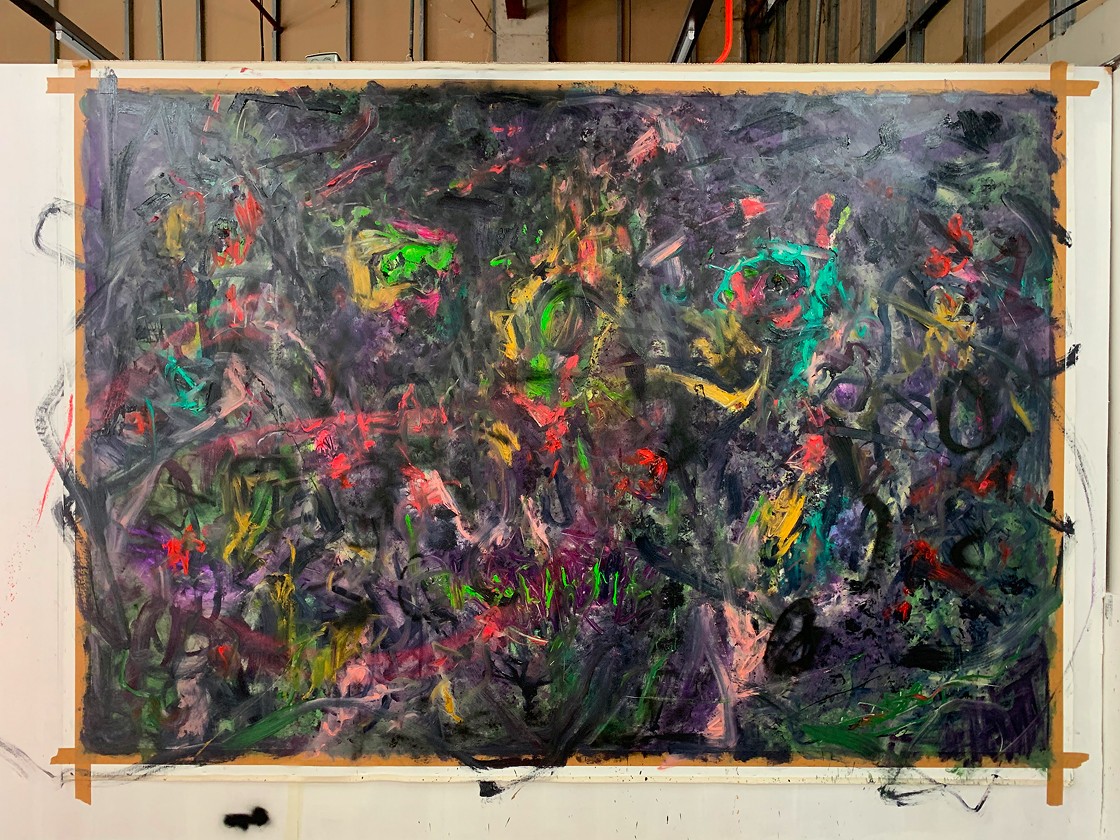
After many years of experimenting and learning, I found that oil paint allows me to tell the stories I want to tell. It gives me time to sit with the work, build it in layers, and let the painting develop slowly.

Most of the people I paint live on the margins of society. Oil painting allows me to approach their stories in an unhurried way and give the subject the attention it deserves.
CNTRFLD. Across earlier exhibitions like Immortal Mortal and Interconnected, there’s a recurring reflection on life, faith, and human connection. How do you see your practice evolving over time, and where does Panahon Panahon sit within that journey?

FG. When I look back at my earlier exhibitions and major works, I realize I have been telling one story all along. It is the story of life on earth and the human experience. Many of the stories are not directly mine, but they resonate with me deeply.

I value hard work, family, and caring for the people close to you. These ideas often appear in my work.

Panahon Panahon comes after many years of observation and practice. I see conflicts within families and communities, national and global upheavals, and natural disasters. Yet each of us is only a small part of this larger world.

Most of the time I do not overthink what I want to paint. Ideas come from things happening around me, things that affect my family or the world. In many ways, I feel that I become a mirror for some of these experiences.

CNTRFLD. Your work often engages with people living on the fringes of society. How do you think about representation, responsibility, and care when working with these narratives?

FG. I try to approach the work with respect and care. Many of the people in my paintings are people I see every day. They are vendors, workers, parents, and people simply going about their day. I am also one of them.
These scenes are familiar to me because I grew up around them, especially on a street with several schools where people gathered throughout the day.

I paint these people because they are part of the world I know. As I grew older, I became more interested in how ordinary lives carry quiet strength and dignity. Through colour and composition, I sometimes try to bring light into these scenes and give space to moments that might otherwise go unnoticed.

CNTRFLD. You’ve lived and worked primarily in Bacolod, while also exhibiting internationally. How has staying rooted in your hometown shaped your identity as an artist, and your perspective on being Filipino?

FG. Living and working in Bacolod and the Visayas has shaped how I see myself as an artist.  Being away from the centre of the Philippine art world means you have to stay committed to your practice if you want your voice to be heard. At the same time, it allows me to remain close to the everyday life that influences my work.

Being part of the community around Orange Project has been very important to my development. Through the encouragement of Charlie Co and many other artists, I saw that it is possible to build a strong artistic voice while staying rooted in the region.

The spirit of Visayas Islands Visual Arts Exhibition and Conference also helped create space for Visayan artists to be seen and heard beyond Manila.  My wife and I also run B17 Art Space in the Art District. It has become a home for many artists and creatives in our community, a place where we support each other while allowing our work to grow and travel beyond Bacolod.

CNTRFLD. From running B17 Art Space to participating in residencies and exhibitions abroad, you’ve experienced different kinds of artistic communities. What have you learned about support systems in the arts, and what makes a meaningful one?

FG. Through these experiences, I learned that a strong artistic community is built through people working together. I started at Orange Project, then called Gallery Orange, helping with exhibition setups and handling artworks. That experience allowed me to see how artists, curators, writers, gallery staff, and organizers work together to bring an exhibition to life.

Those experiences influence how my wife and I run B17 Art Space, how we approach our practice, and working with others such as with Triangulum. In the capacity of B17, we see ourselves as exhibition organizers and open our doors for collaborations to the best of our ability and limited resources.

When people see the artworks on the wall during an opening, everything looks easy. But there is a lot of work behind the scenes. That process gave me deep respect for everyone involved.  For me, a meaningful support system is one where people learn from each other and support each other’s growth.

CNTRFLD. Looking ahead, what are you currently working on—or excited about next? And what advice would you share with younger artists who are just starting to find their path?

FG. I am looking forward to several projects with my art unit Triangulum. We are small in number, but we continue to move forward. One thing I can share now is we are preparing for an exhibition at Orange Project in January 2027.

After my solo exhibition closes at the end of March, I plan to continue making new work, both individually and through collaborations. My wife and I also work together under the name FreAK, and we hope to develop more projects this year.
For younger artists, my advice is simple. Keep producing work. Through making, you slowly discover what you want to say and how you want to say it. Every artwork becomes part of that journey.

About the Artist.

Born in Bacolod City in 1981, Filipino painter Frelan Gonzaga draws deeply from the everyday street life that shaped his childhood. Growing up along a busy road lined with schools serving working-class families, Gonzaga spent much of his youth observing the rhythms of daily survival—vendors, tricycle drivers, parents, and labourers moving through the neighbourhood, many of whom were also customers at his mother’s small food stall and later her carinderia. These early experiences continue to inform his paintings, which often centre on people living at the margins of Philippine society while reflecting on values he considers fundamental: hard work, faith, dignity, and hope. Largely self-taught as a painter after first training in photography, Gonzaga began painting in 2003 and has remained committed to oil as his primary medium, occasionally incorporating spray paint, charcoal, acrylic, and ink. Based in Bacolod, he has presented numerous solo exhibitions across the Philippines and participated in over a hundred group shows internationally, while also co-founding B17 Art Space with his wife, Karina Broce-Gonzaga, in 2017, where he continues to support the local art community alongside his studio practice.

With thanks to Princess Lira Alvarado and Orange Project for facilitating this conversation.

Share Article

Share Article

More to Read

Create a free website with Framer, the website builder loved by startups, designers and agencies.