“I’ve always existed in this in-between space—never quite from here or there—and my art became the language I used to make sense of it all.”—Katarina Ortiz
CNTRFLD. Your Filipino Spanish heritage and experiences growing up have undoubtedly shaped your artistic sensibilities. Can you share how your upbringing influenced your journey to becoming an artist?
KO. Heritage goes beyond being a static relic; it instead serves as a generative ontology where I attempt to understand and articulate my position in the world. It constitutes a mutable epistemic scaffold, mediating the corporeal while simultaneously inciting a critical introspection into selfhood, affiliation, and the politics of belonging. My positionality emerges from entangled lineages, histories shaped by displacement, migration, globalisation, and the recursive interplay of nature and nurture. Far from offering a monolithic identity, it functions as a contested site wherein the performativity of identity is constructed and deconstructed into a dynamic ground of becoming. A sense of cultural stability is embedded in historical maps tethered to fixed spaces and the linear narratives of nation-states. These constructs, predicated on anthropocentric paradigms, are irreducibly contingent. This confluence has produced a condition of hypervisibility and cultivated an acute awareness of alterity, rendering my subjectivity legible through a lens of deviation. It can be considered an interruption within normative taxonomies of identity, as to inhabit this interstitial terrain is to dwell within states of liminality. It is a threshold space where fixed categories seemingly dissolve or meaning can be generated through the oscillation of perspectives and the tensions of gaze. Yet these tensions, like binary poles (self/other, origin/diaspora, presence/absence), are destabilised by the very geometry of the world, whose spherical form resists linear dialectics, not to mention the cyclic nature of heavenly bodies. It proposes a recursion: a turning back, a folding in, an eternal return. The DNA of my practice is situated within these loops and spirals of thought and form. I am navigating the circularities and contradictions that constitute contemporary subjectivity. Through this lens, making becomes both inquiry and intervention: a means of charting un-mappable terrains of identity, memory and becoming.
CNTRFLD. You studied at Central Saint Martins in the UK before returning to the Philippines. How did this international experience shape your artistic perspective, and what were the biggest contrasts between the art scenes in London and Manila?
KO. The geological anchors of London and Manila have functioned as epistemological and ontological sites that have profoundly shaped my conceptual evolution. Let us analogise my practice as a canvas: Manila constitutes the chromatic origin, the palette of lived experience, affect, and ancestral grounding that initiated the arc of my inquiry. It is the locus where my practice’s foundational questions emerged primarily rooted in a deeply situated cultural consciousness, sensibility attuned to the complexities of postcolonial identity, social entanglements, and the poetic quotidian. London, by contrast, introduced the instruments, methodological apparatuses and critical frameworks through which these inquiries could be articulated and expanded. As a metropole of artistic infrastructure and intellectual exchange, London offers an immersive ecology of pedagogical rigour, institutional critique, and cross-cultural dialogue. The interplay between academic discourse, curatorial practices, studio experimentation and global art networks has allowed for a continual reframing of self and context. This dynamic convergence has catalysed a mode of thinking that privileges trans-local hybridity, reflexivity, and the pursuit of new epistemic configurations. As socially embedded and historically contingent ecosystems, Manila and London’s respective art scenes mirror the lived conditions and socio-political climates from which they emerge. They operate as discursive and productive sites where art reflects but also interrogates, contests, and reconfigures the prevailing realities of their respective contexts. While each city’s artistic milieu functions with its own internal logic, they are united in their capacity to generate critical dialogue and cultural meaning. Manila inspires artistic practices often from a deeply embedded engagement with national histories, socio-political urgencies, and localised narratives. The focus tends to gravitate toward internal complexities such as governance issues, class stratification, historical amnesia, and the negotiation of postcolonial identity. In this way, art is a witness. London, by contrast, operates within a globalised framework shaped by its cosmopolitan centre as a post-imperial metropolis where art can traverse geographies, temporalities, and epistemologies. A multiplicity of diasporic voices, transnational concerns and intersecting identities contribute to the diversity inherent in the cultural fabric. It enables the emergence of practices that are at once situated and globally resonant because the plurality facilitates expansive discourses abundant in intersectionality, fostering critical negotiations across cultural, political, and aesthetic boundaries.
CNTRFLD. Your work deeply explores identity and origin, often engaging with symbolism and re-appropriation. What draws you to these themes, and how has your understanding of them evolved over time?
KO. My gravitation toward themes of identity and origin stems from a desire to interrogate the conditions under which the self is rendered intelligible or obscured. Symbolism and (re-)appropriation have become tools of representation and disruption. They allow for dismantling hegemonic narratives and contest the sedimented meanings ascribed to their presence as signifiers. Symbols are never neutral; they are charged containers of memory and then of possibility. I seek to activate latent meanings, to fracture their perceived stability, and to insert ruptures through which alternative readings may emerge to facilitate newness. My engagement is instinctual, effectively responding to the dissonance of inhabiting multiple cultural ontologies and evolving into more deliberation, operating at the intersection of autoethnography, critical theory, and material experimentation. I understand identity not as a fixed essence but as a porous, contingent, and performative construction, much like art, always in flux, always mediated by external gazes and internal negotiations.
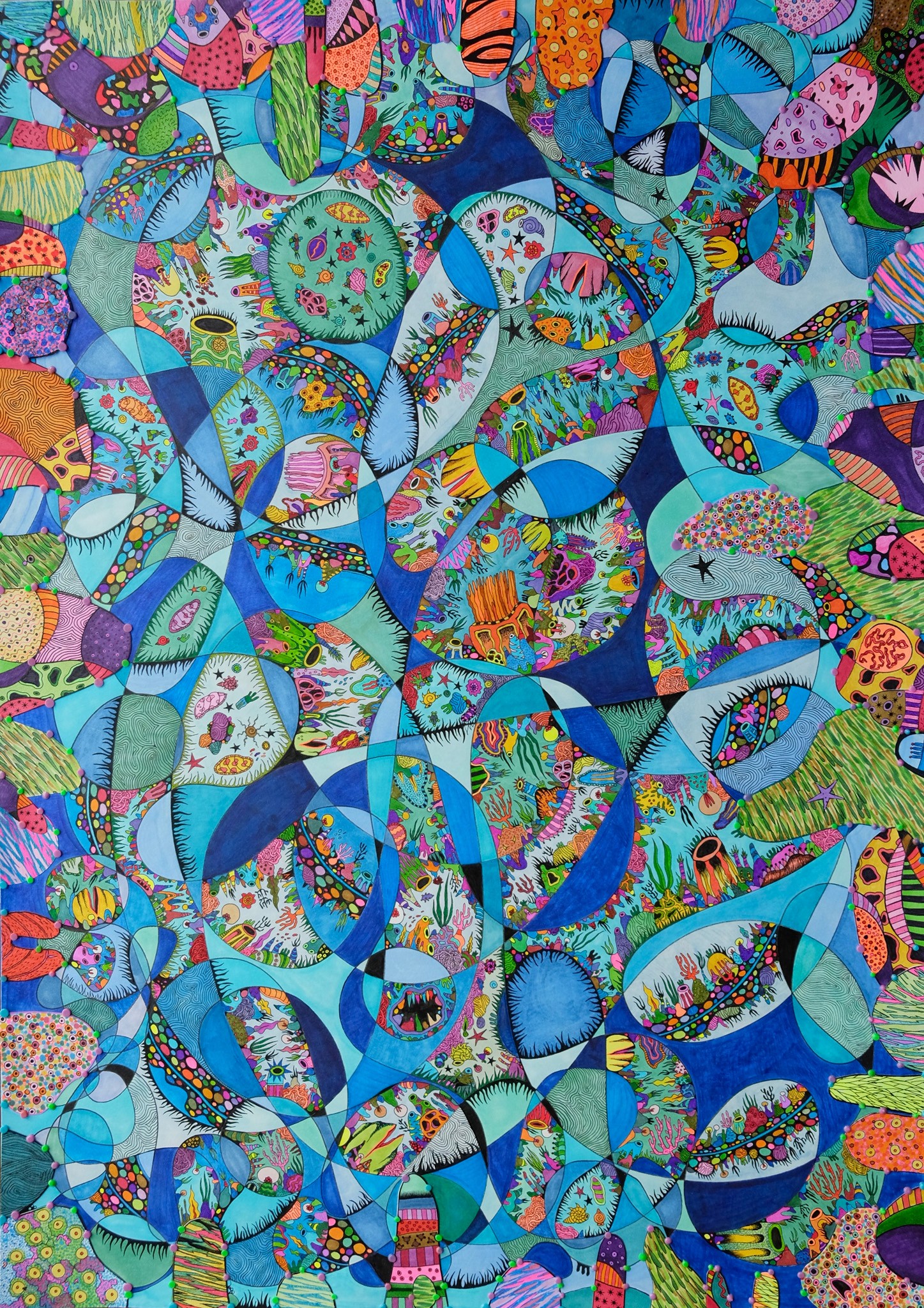
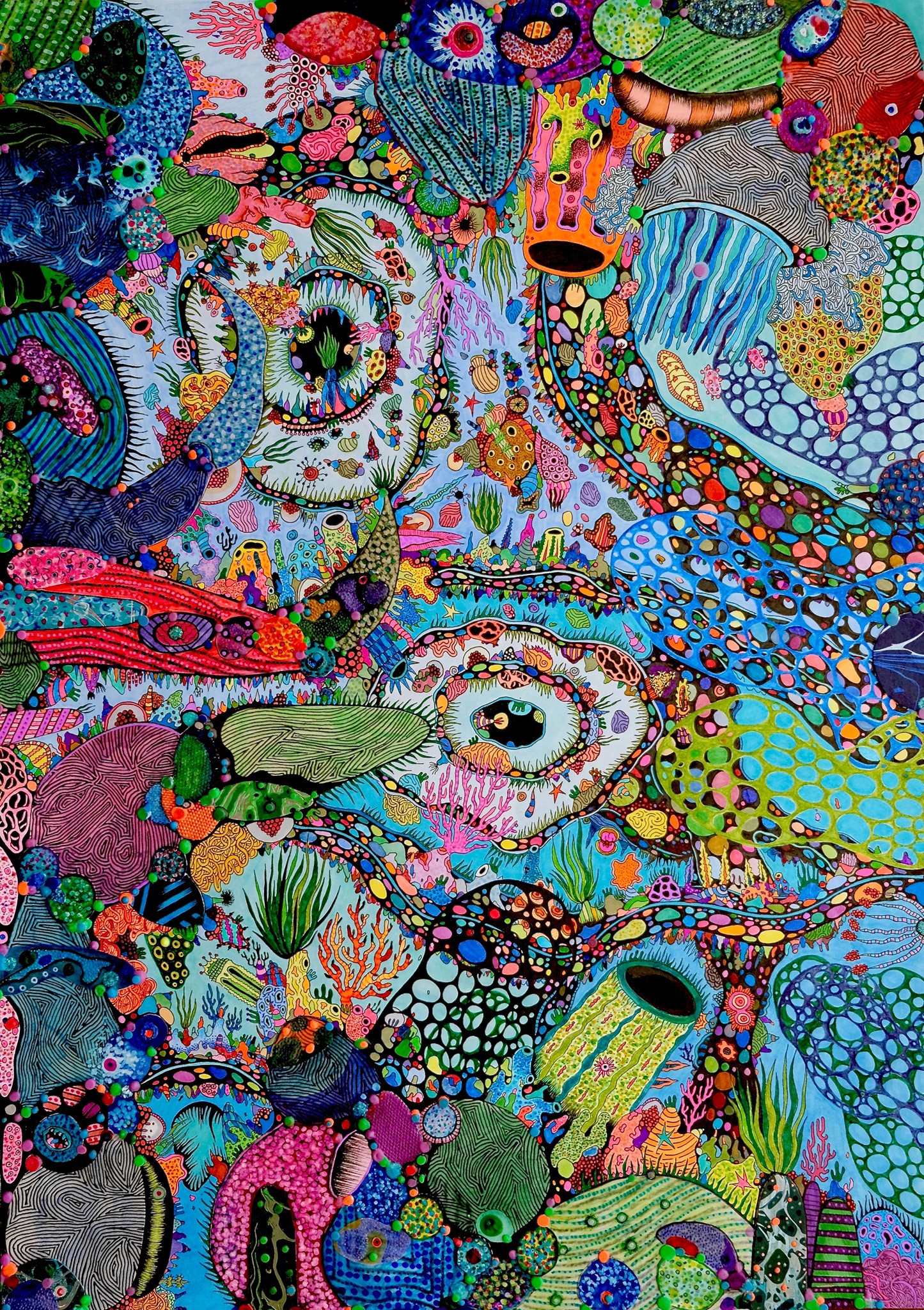
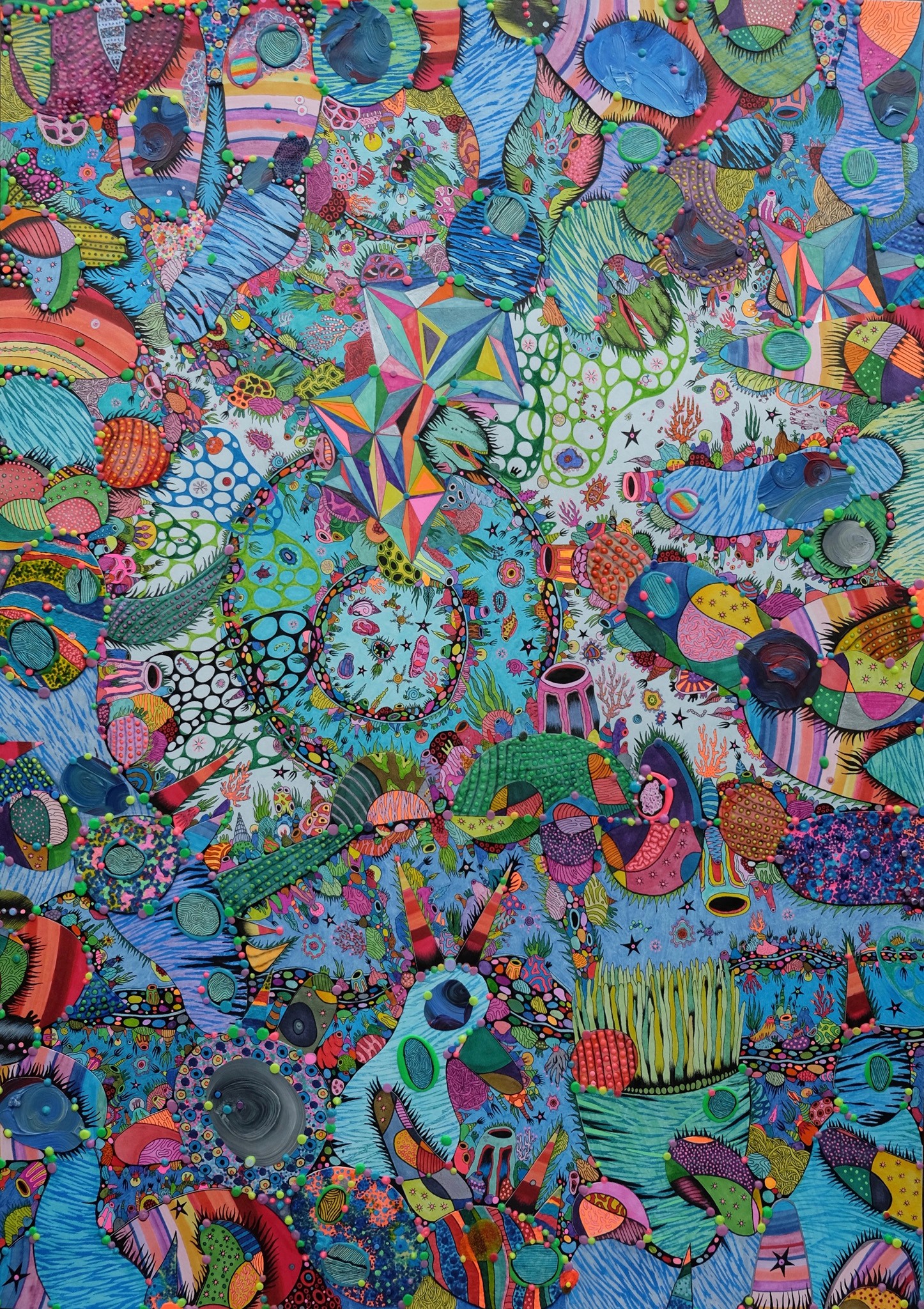
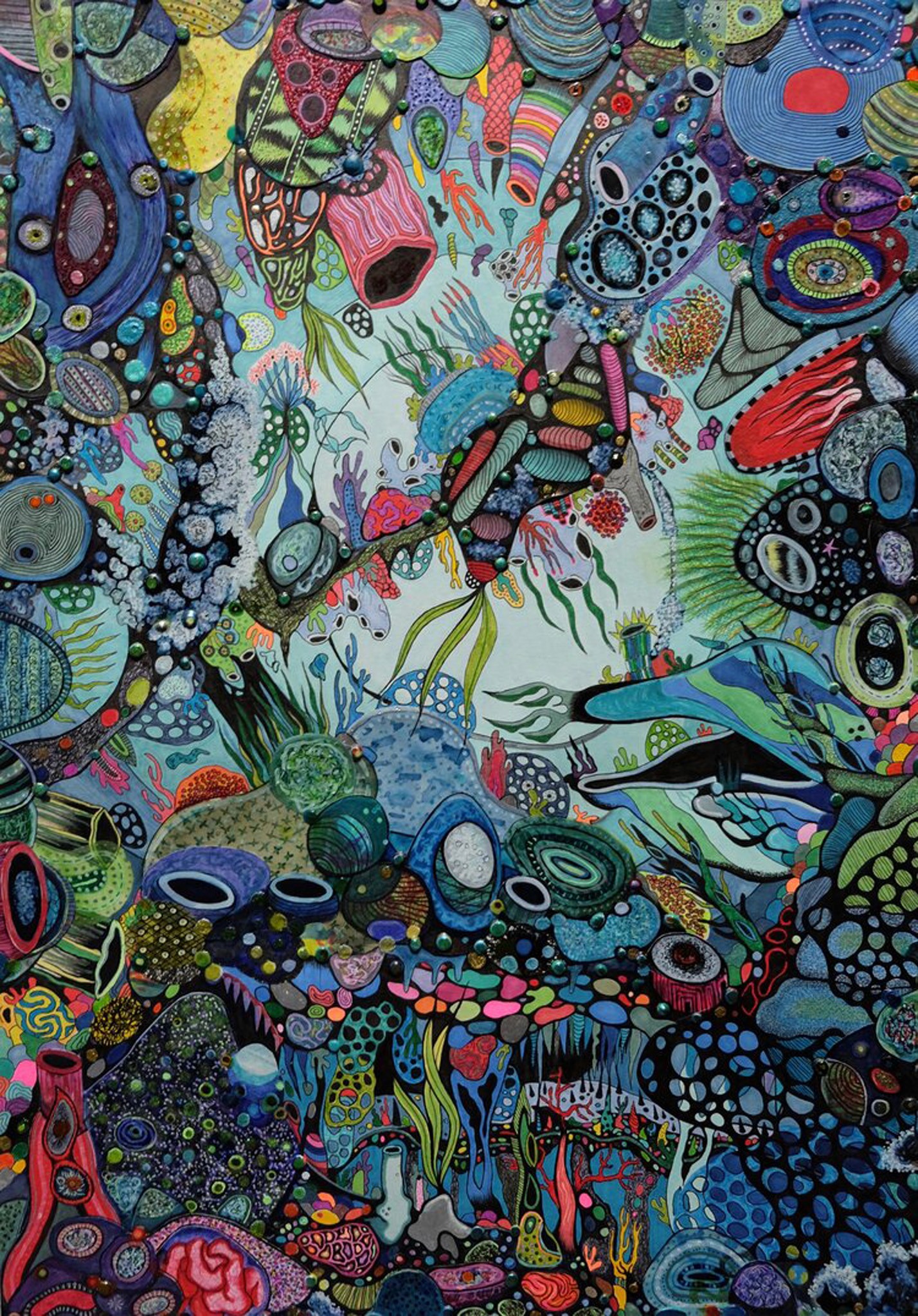
CNTRFLD. The “Aquarium” series emerged during the pandemic as an exploration of isolation, society, and symbolism. Can you discuss how this period shaped your creative process and how the themes of the series continue to resonate with you today?
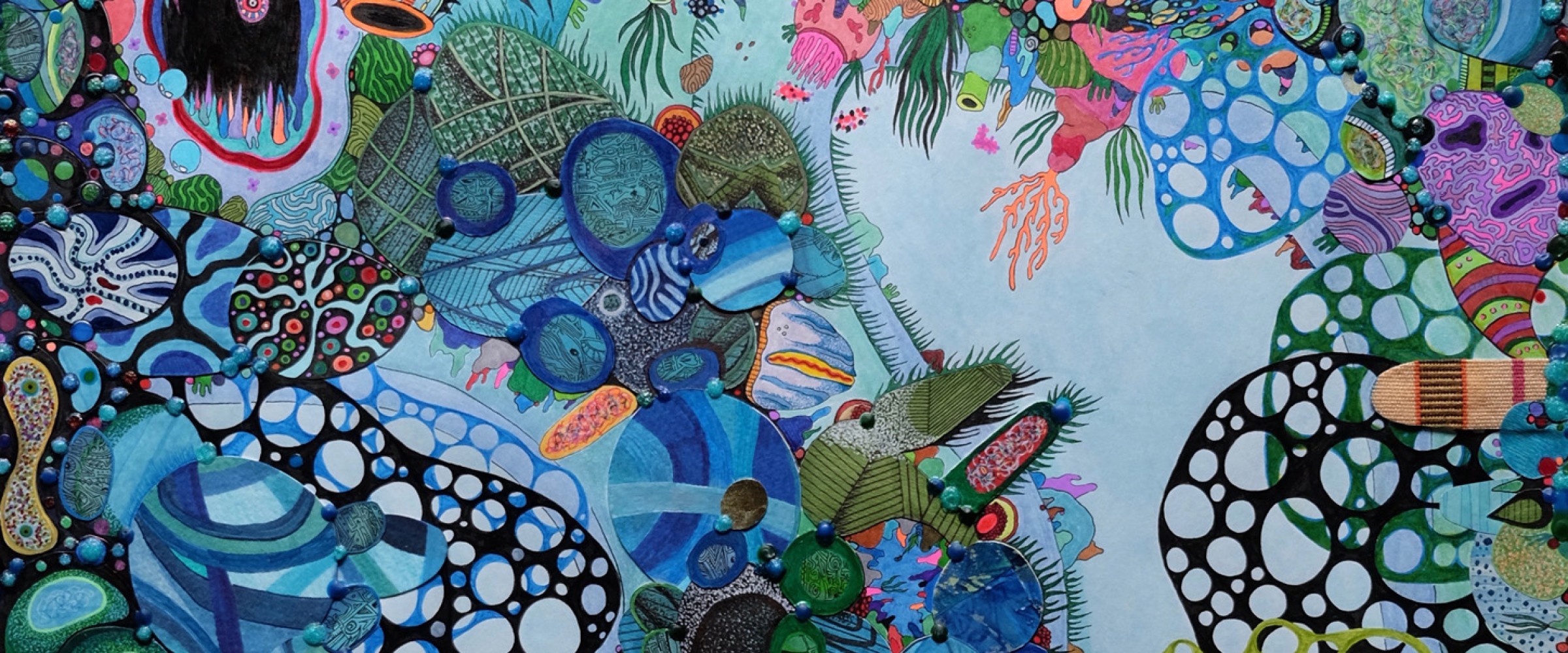
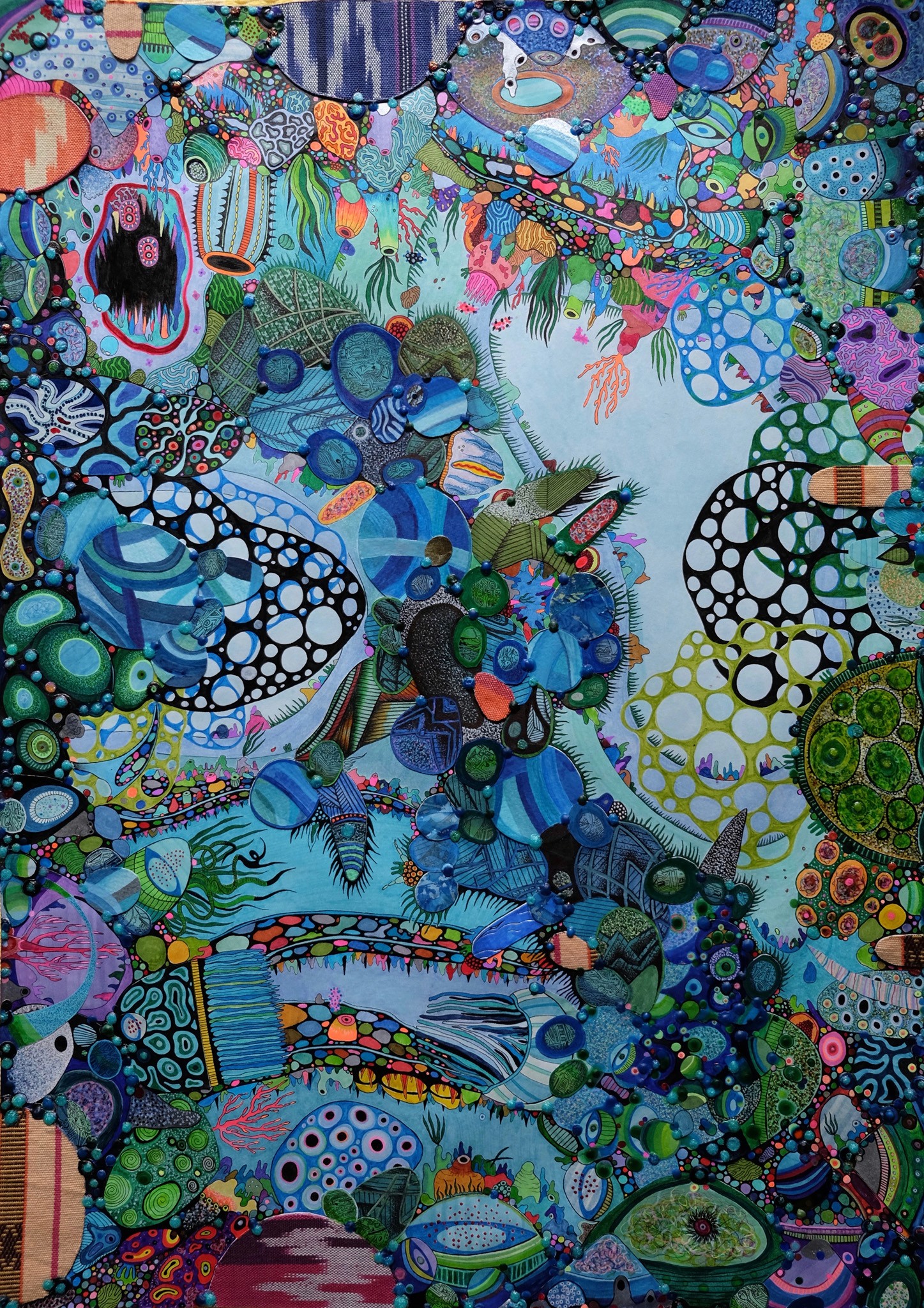
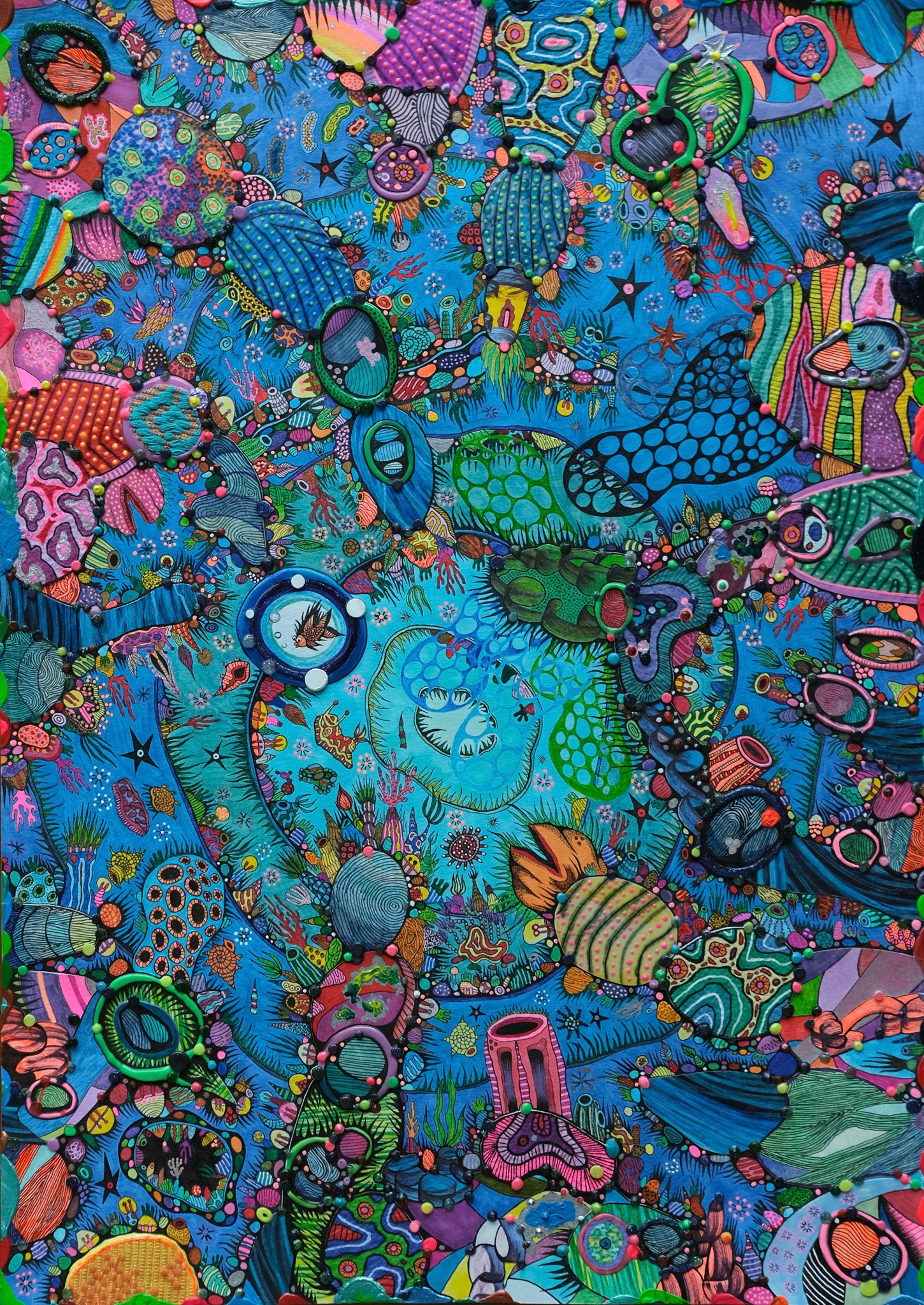
KO. The “Aquarium” series emerged during profound global stillness and introspection. The COVID-19 pandemic imposed physical and psychological enclosures, disrupting habitual rhythms and severing access to the external world, communal spaces, and material resources. It constituted a rupture transcending geographic, political, cultural and psychological borders. The experience of isolation became a phenomenon enacted on a world stage, collective, synchronised, and profoundly disconcerting. Within these constraints, the domestic interior became a site for internal excavation, and the imposed stillness intensified recurring visual motifs that reflected inner states and external socio-political conditions. The Philippines had one of the longest lockdowns in the world, and the containment sparked deeper engagement with symbolic language, material sensitivity, and emotional resonance that navigated themes of detachment, voyeurism, and the fragility of constructed psychological, architectural, and ecological environments. Then came the metaphor of an aquarium: a transparent boundary containing a living ecosystem that allows for observation without much participation, encapsulating a condition of suspended visible separation. The aquarium operated not merely as a personal metaphor but as a structural analogue to broader social dynamics: containment, surveillance, alienation, and tenuous trust in systems of care and governance. Among these, the coral emerged as a potent symbol. This sessile organism often displays its most vivid and fluorescent colouration under duress or upon the brink of death before bleaching. The coral embodies a paradox: the saturated colours of life on the verge of total collapse into the unknown. This became a powerful metaphor for individual and collective endurance and further articulated the surreal vibrancy of isolation, the strange clarity that emerged from stillness, the intensity of interior worlds, and the haunting beauty of resilience forged under pressure. What began as a meditation on solitude has since evolved into a broader inquiry into constructing and negotiating thresholds. The series asks what it means to inhabit a porous world where interior and exterior, visible and invisible, self and other, continually intersect and blur. As we collectively navigate the aftermath, visibility, care, and connectedness questions remain urgent. In this way, the “Aquarium” series can be an ongoing conceptual framework to explore the fragile architecture of contemporary experience.
CNTRFLD. In “Divine Dichotomy,” you examine opposing forces—light and shadow, freedom and constraint. Do you see these tensions reflected in your own experience as an artist, particularly in navigating different cultural identities?
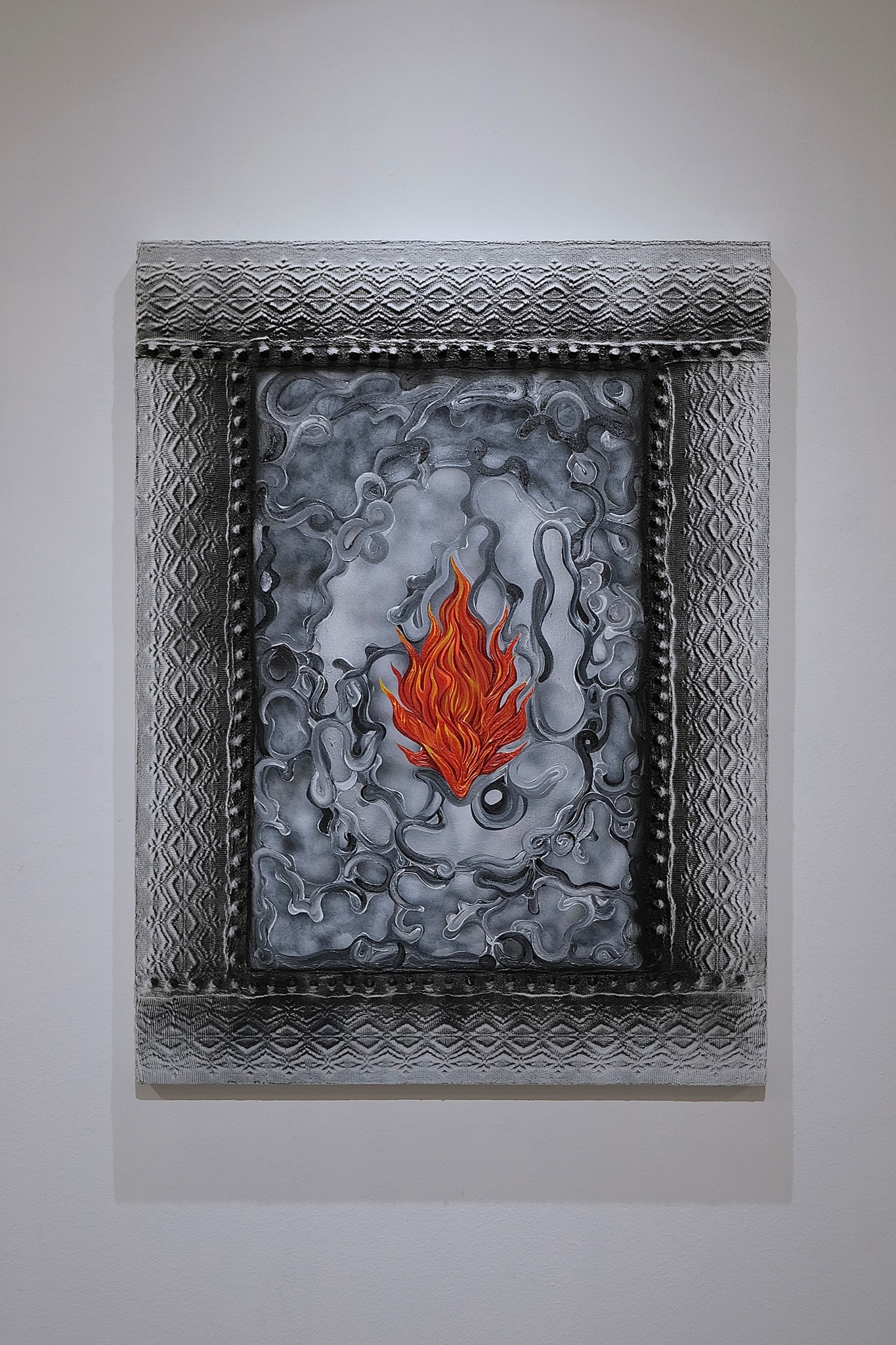
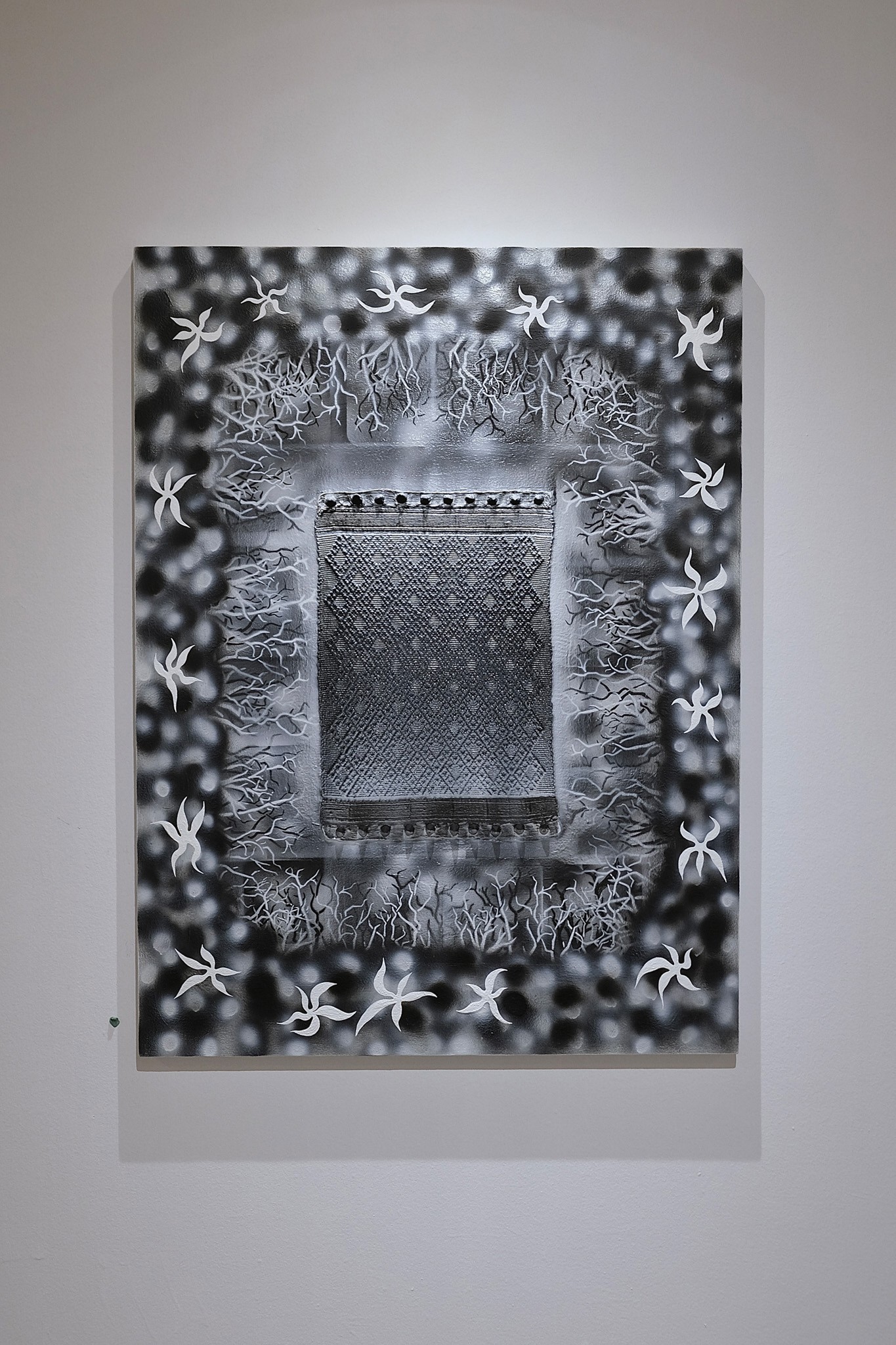
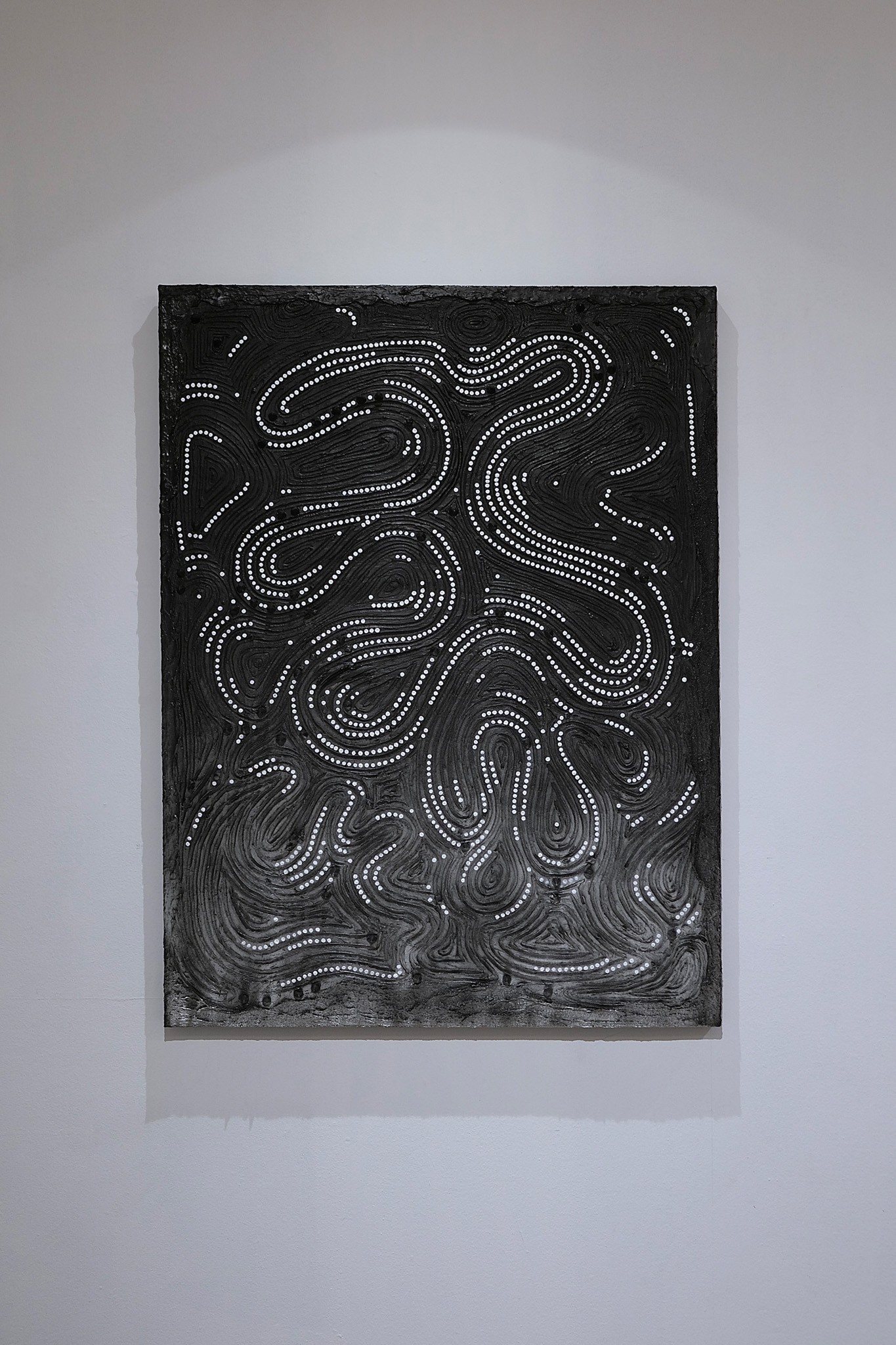
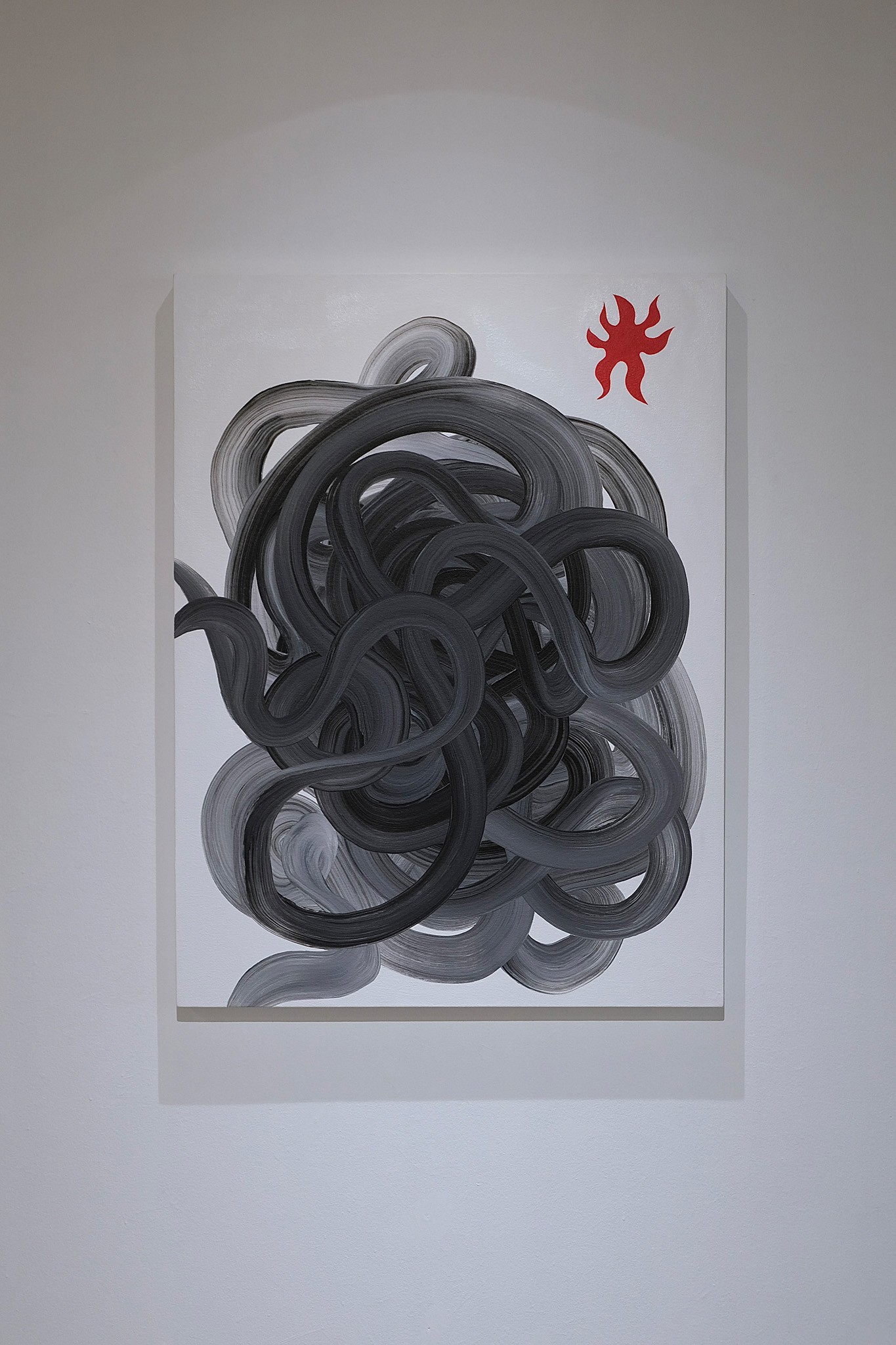
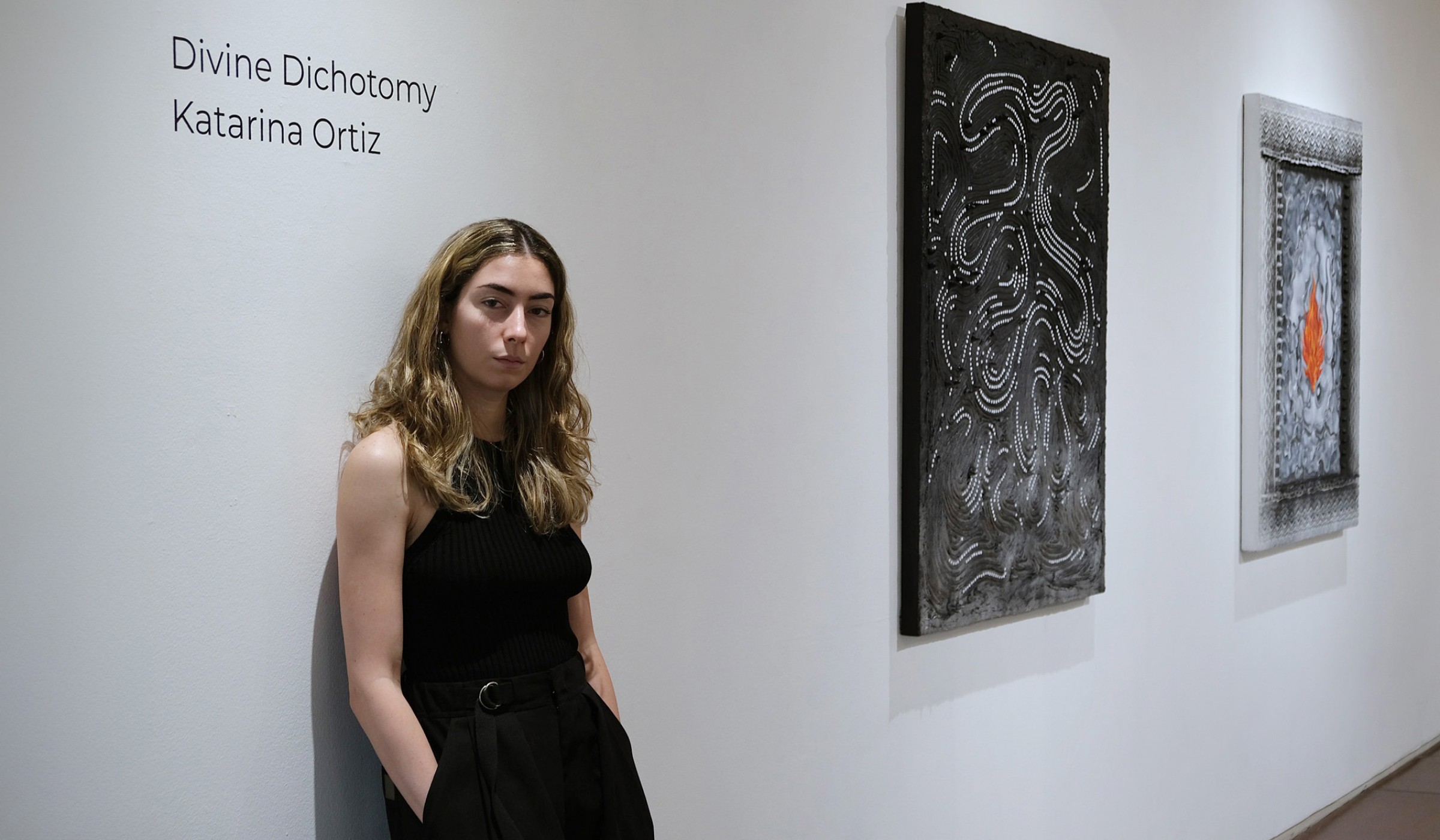
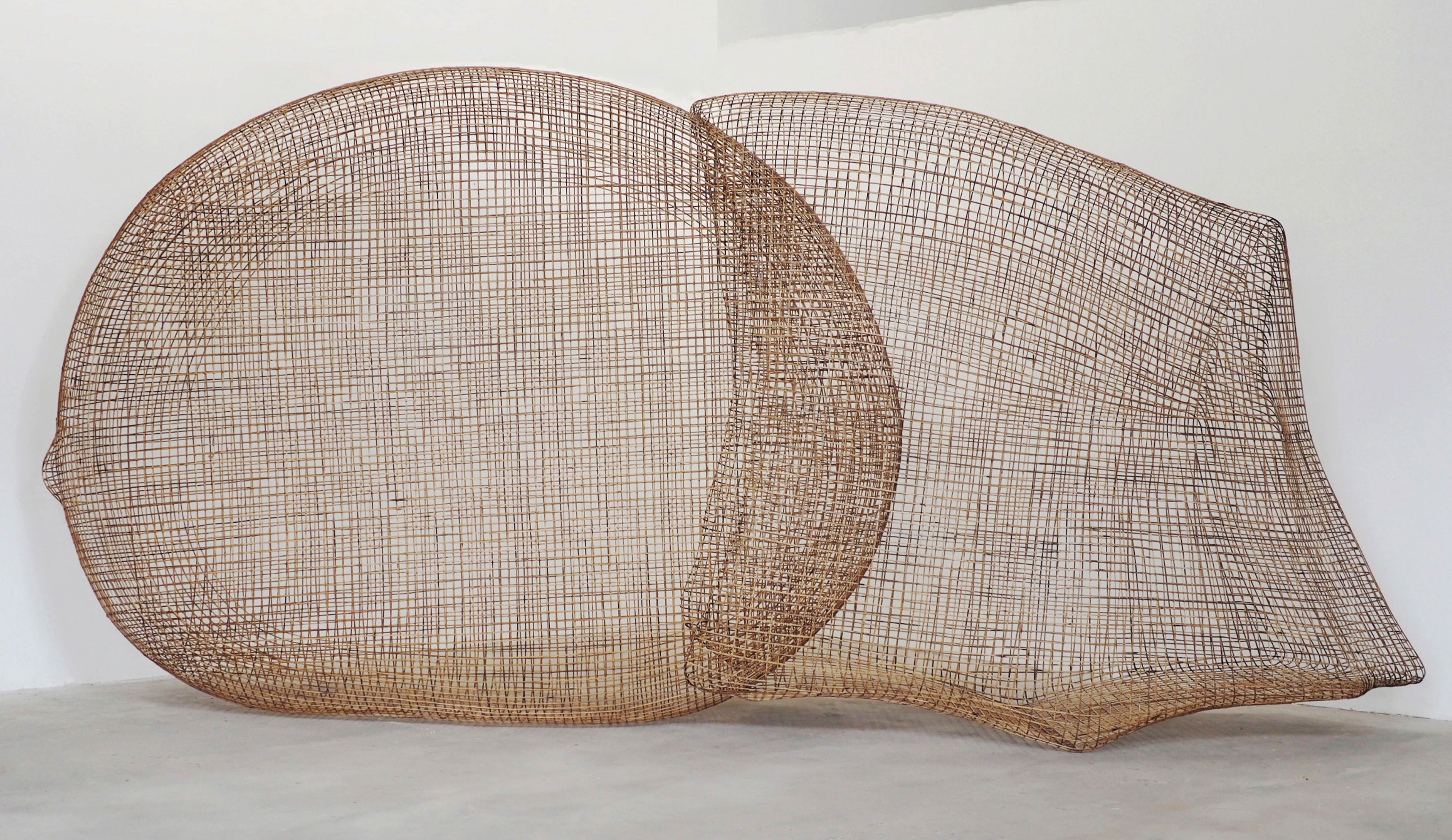
KO. “Divine Dichotomy” seeks to evade classification as a strictly formal or thematic exploration. It articulates lived tensions and questions the paradoxes inherent in hybrid subjectivity. As a practitioner influenced by diverse cultural backgrounds, this experience of being in between is fertile and disorienting. It created friction that sparked the essence of the work that arises from this internal landscape. The canvas serves as a space to express contradictions: the desire for coherence in the face of differences and the quest for autonomy while being drawn in and building from inherited systems. The series dwells within them rather than seeking to reconcile or resolve. The woven elements, traditional textile idioms, are re-situated within contemporary mixed-media contexts and serve as both material and metaphor, foregrounding the simultaneity of continuity and rupture. These gestures resist narrative closure; instead, they propose paradox as a generative methodology that privileges entanglement over clarity and multiplicity over synthesis. “Divine Dichotomy” functions as both aesthetic inquiry and epistemological stance that insists on the validity of ambiguity and the necessity of spaces where contradiction is acknowledged and made productive. This is not a retreat from coherence but an invitation into a more capacious understanding of self, history, and form where difference is not a problem to be solved but a living condition.