CNTRFLD. Your upbringing in Sarawak, Malaysia, seems to play a significant role in your work. How has your childhood and the multicultural environment in Borneo shaped your artistic perspective?
MK. The truth is that I grew up in a Malaysian Chinese community where I was sent to Chinese vernacular schools and mostly interacted with Chinese peers in my childhood. So, when I was told that a big part of the Malaysian national identity is that it is multicultural, I used to always feel a bit of a dissonance between reality and what I need to write down for my civics exams. We were never really thought about the language to speak about conflicting feelings like these growing up but I definitely felt misunderstood and questioned the relevance of my lived experience and how I fit into the concept of my country.
I think most of my artistic research still revolve around this line of thought of trying to figure out projected realities and lived lives. I am trying to recognize myself from the eyes of how others see my identity coming from Borneo, where I place my own truths and how I communicate them to find understanding.
CNTRFLD. You started your career in graphic design and advertising before shifting to textiles. Can you share what drew you to textiles, and how you chose this medium as your primary form of artistic expression?
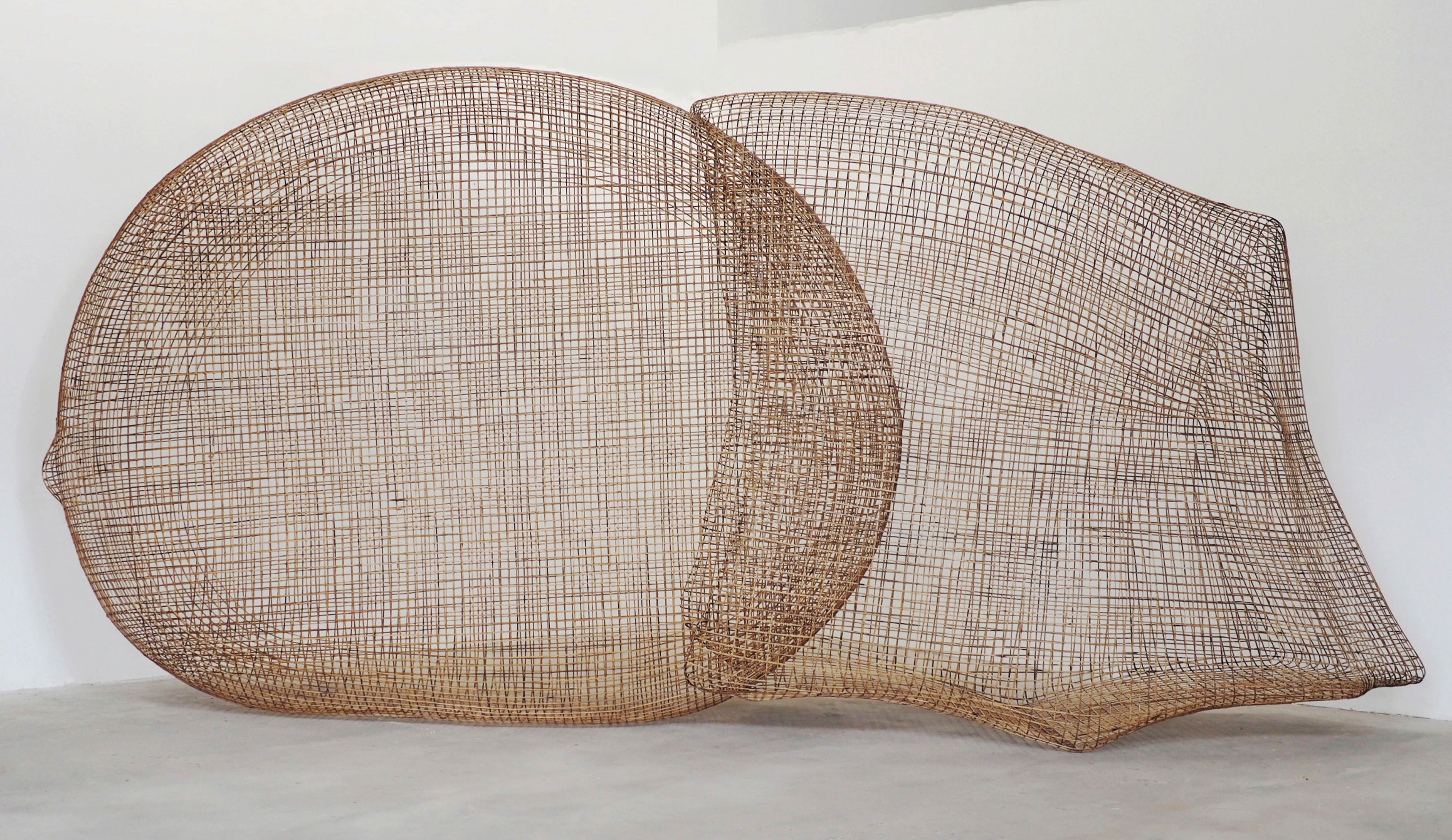
MK. I always had a deep fascination on what it means to do graphic design growing up in Borneo. Like most art academies in the world, I was educated in movements of the West such as the Bauhaus or Art Nouveau but always wondered why I am constantly being taught history that I had no direct context of but was seldom taught about the history of local movements or visual culture that is just right outside of the classroom. My curiosity led me to do a lot of studies and documentation of native expressions of visuals – basketry, bead work and of course textiles.
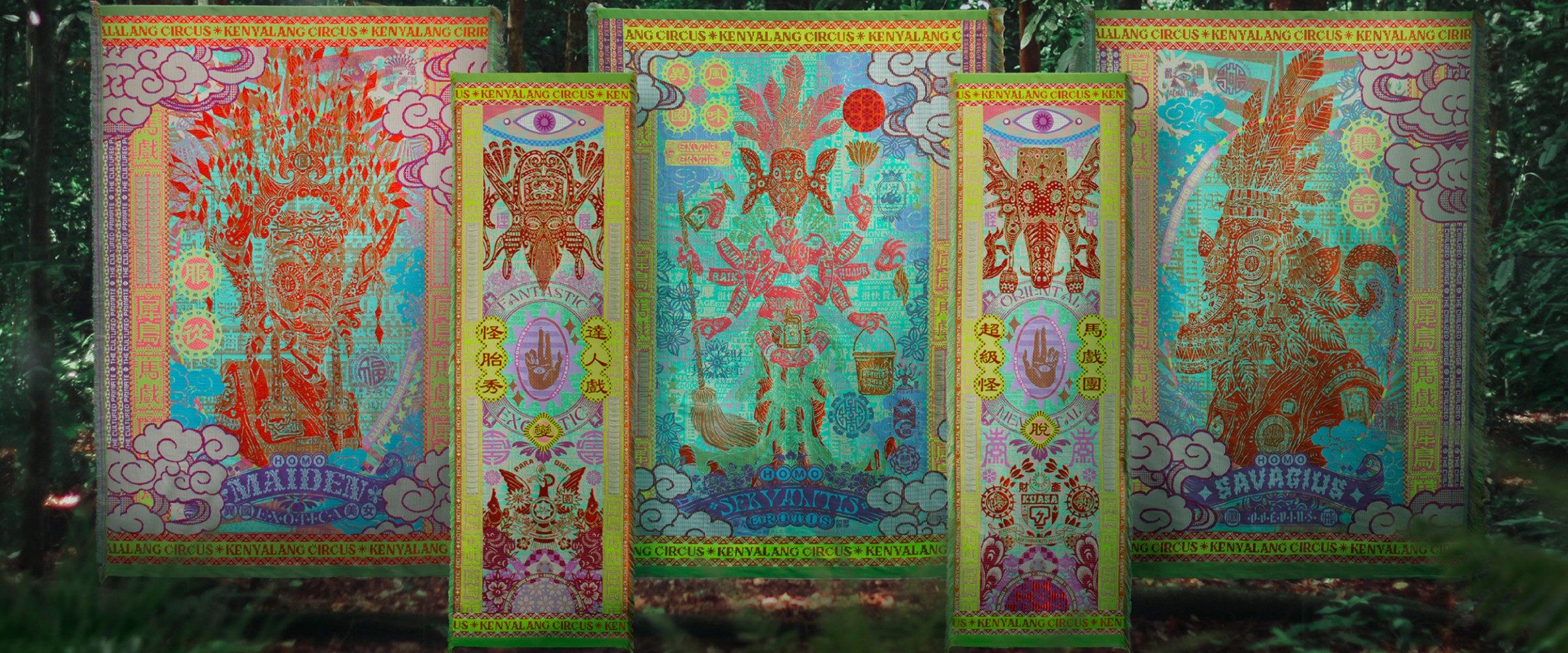
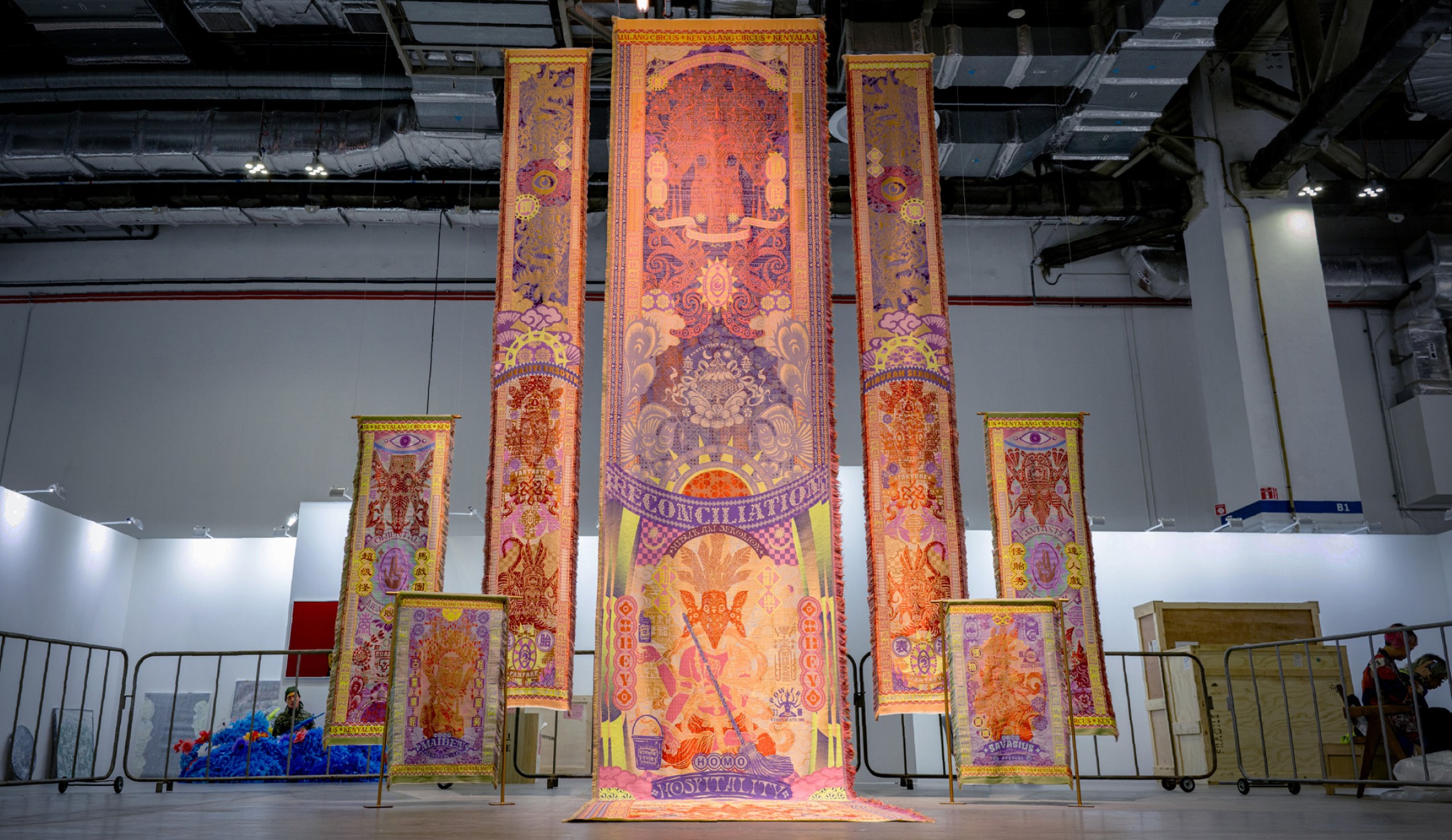
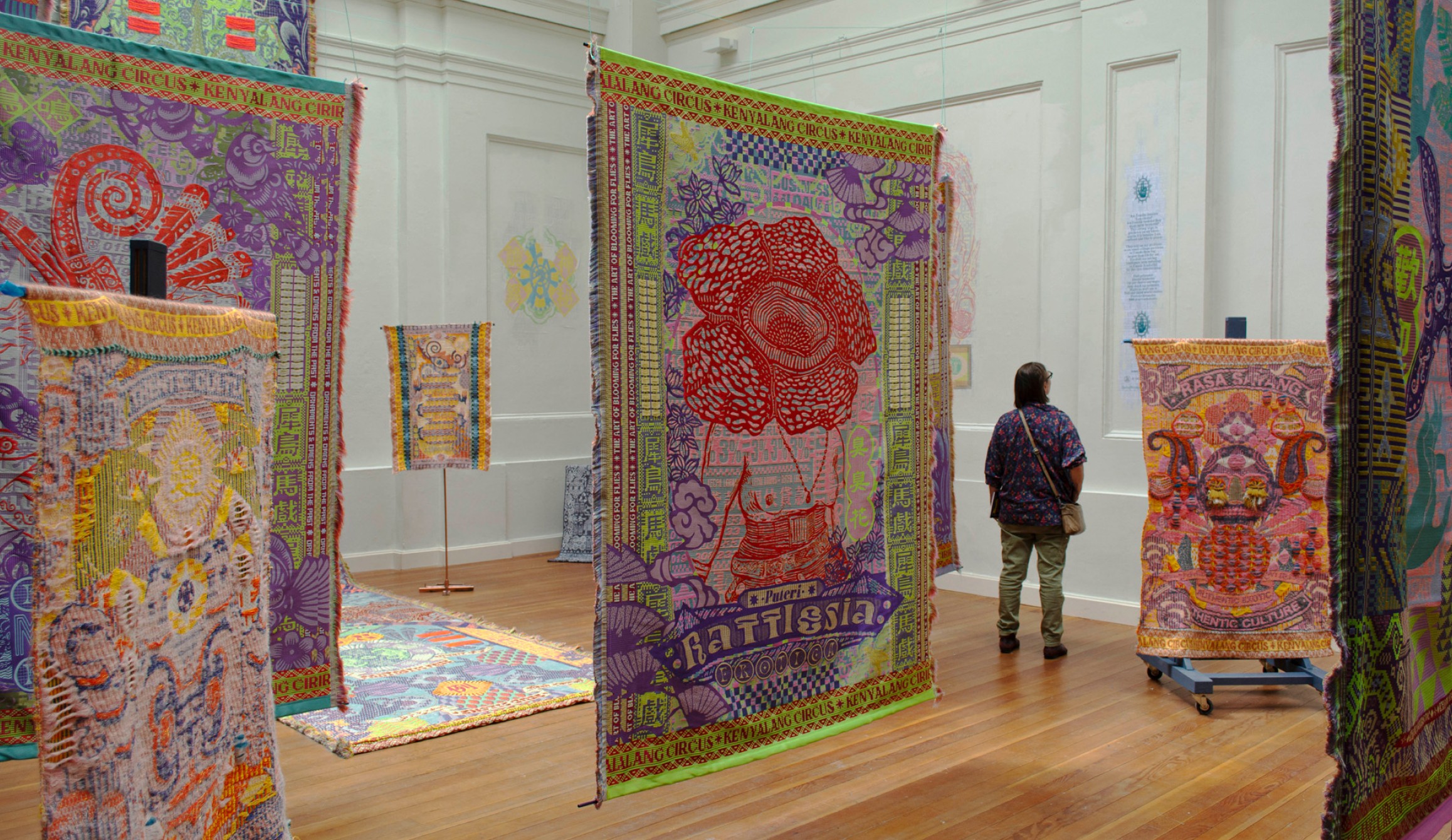
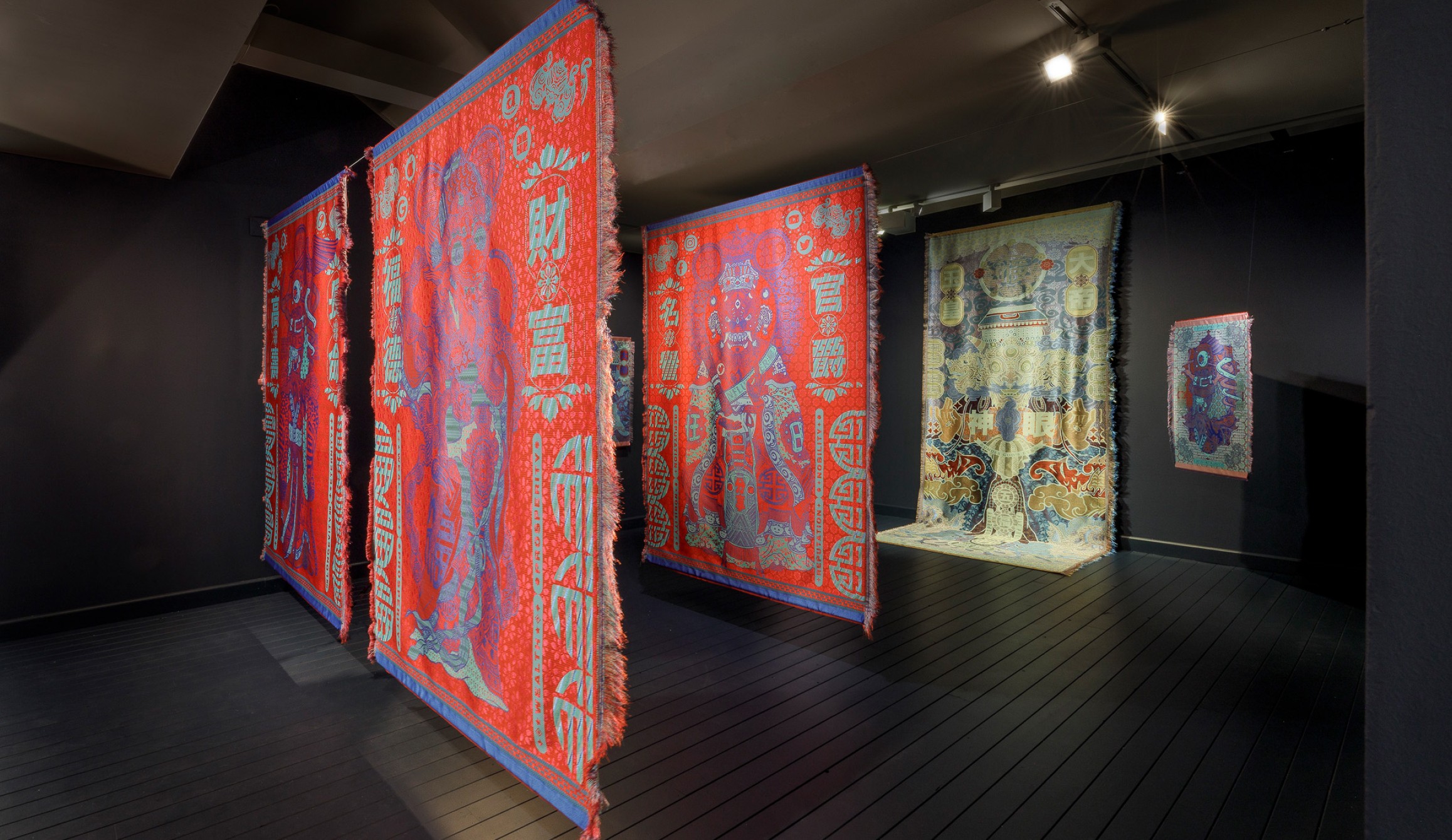
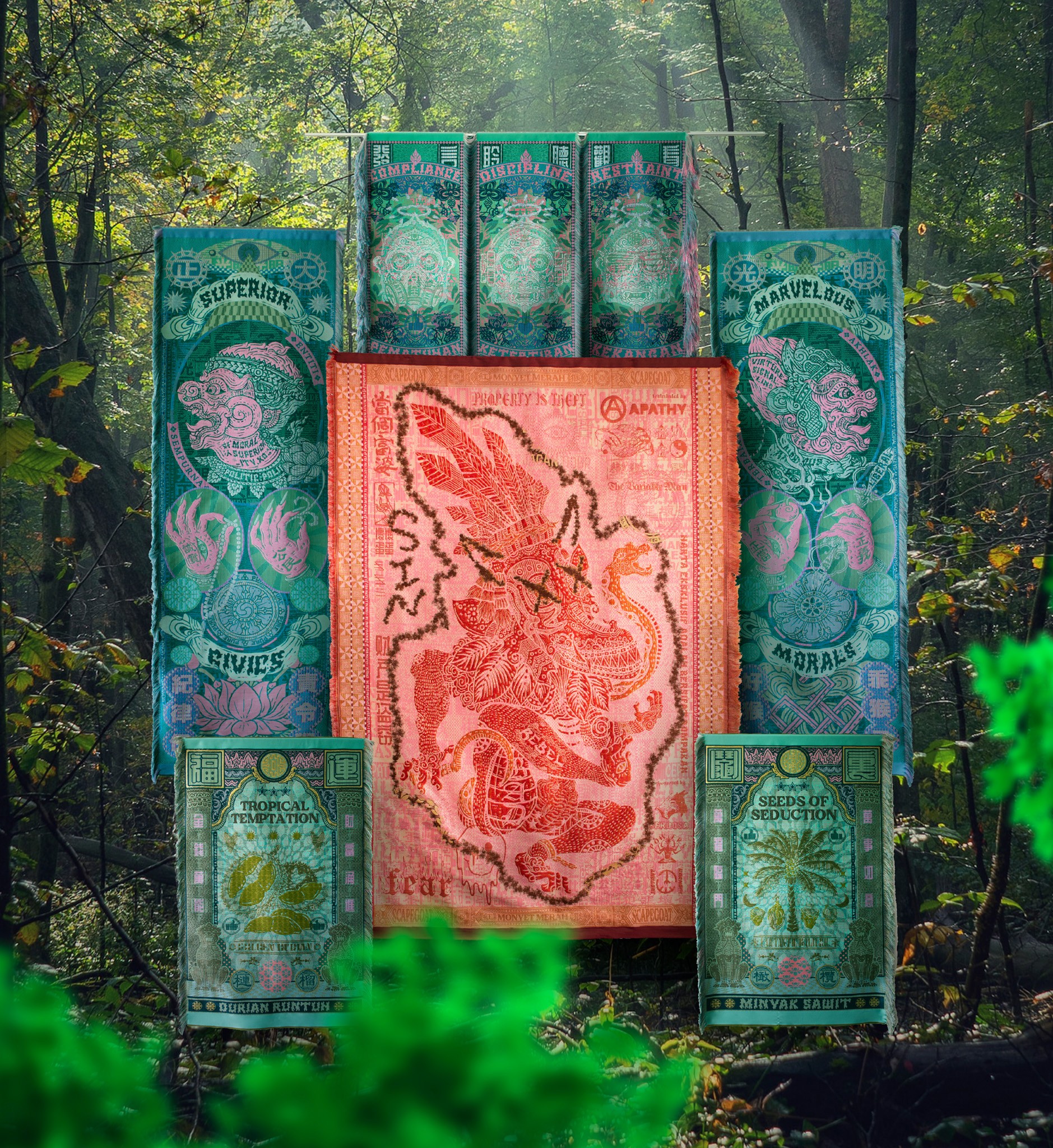
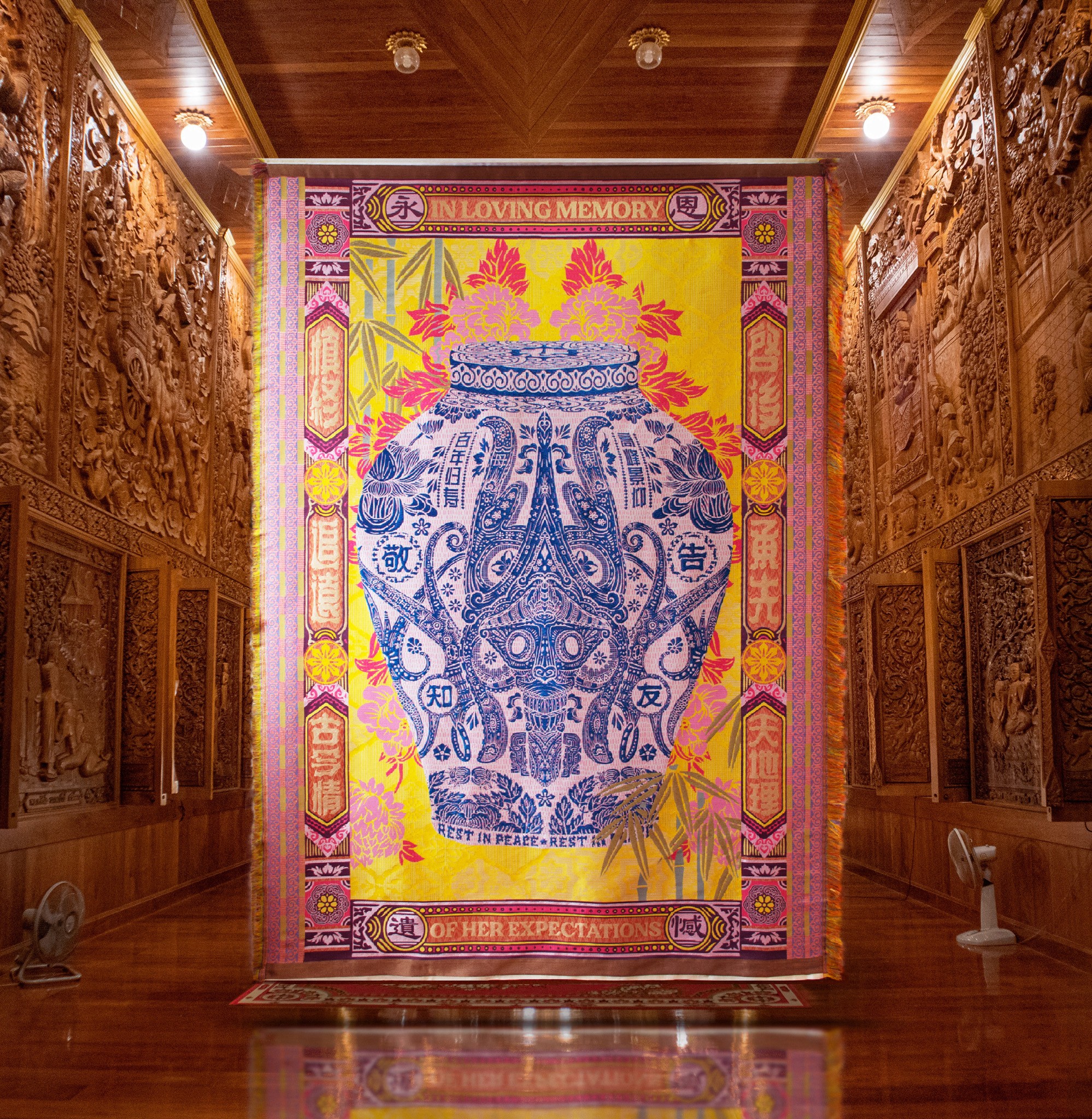
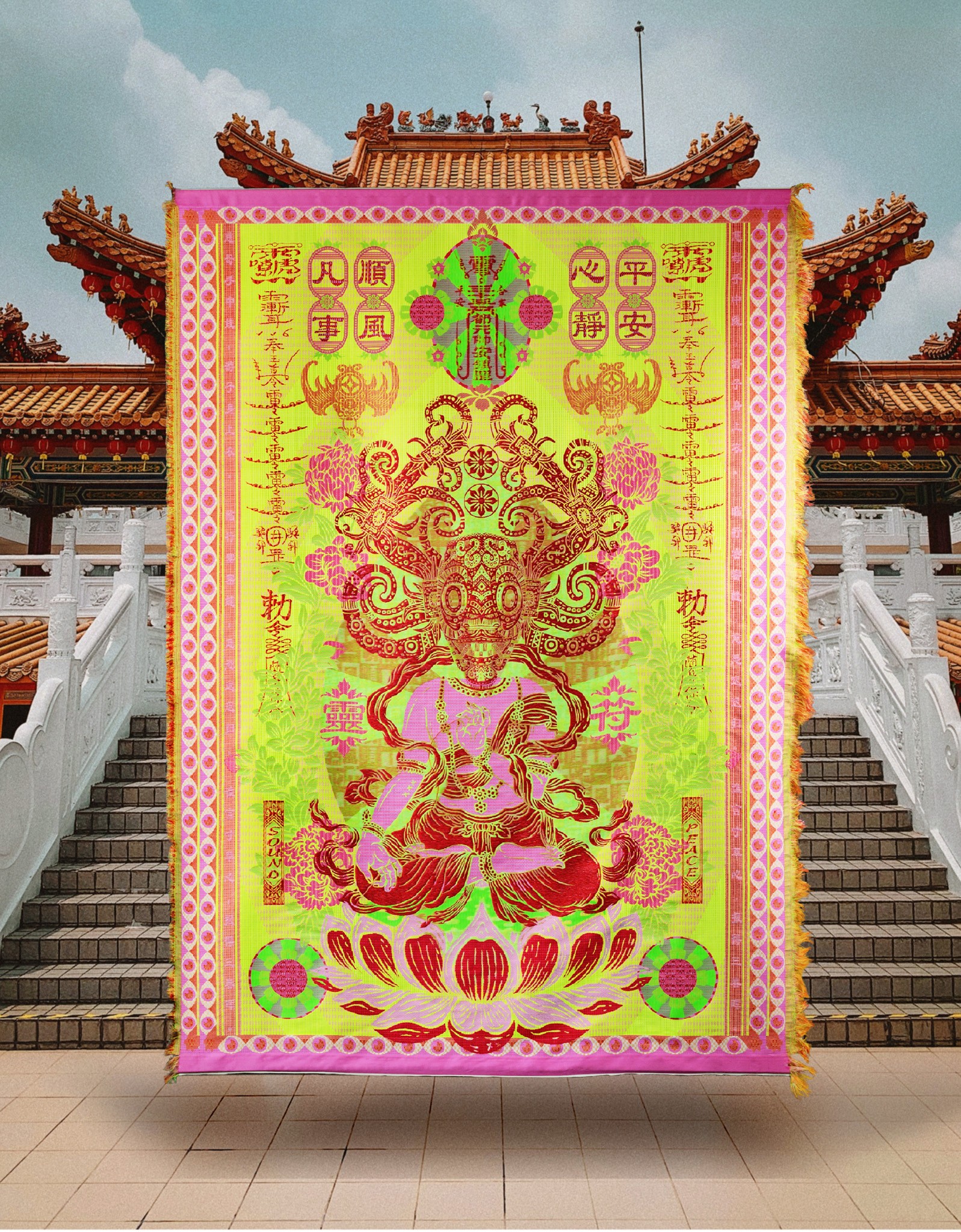
Textiles has always been a material of choice to express dreams, myths and stories before the arrival of paper, paint or the pen. I think there is something romantic about carrying on that practise of narrating through fibres, especially since a lot of my work explores on the topic of post-colonial thinking.
CNTRFLD. As someone deeply influenced by traditional Bornean weaving techniques, how do you integrate these traditions with modern, industrial textile processes in your work?
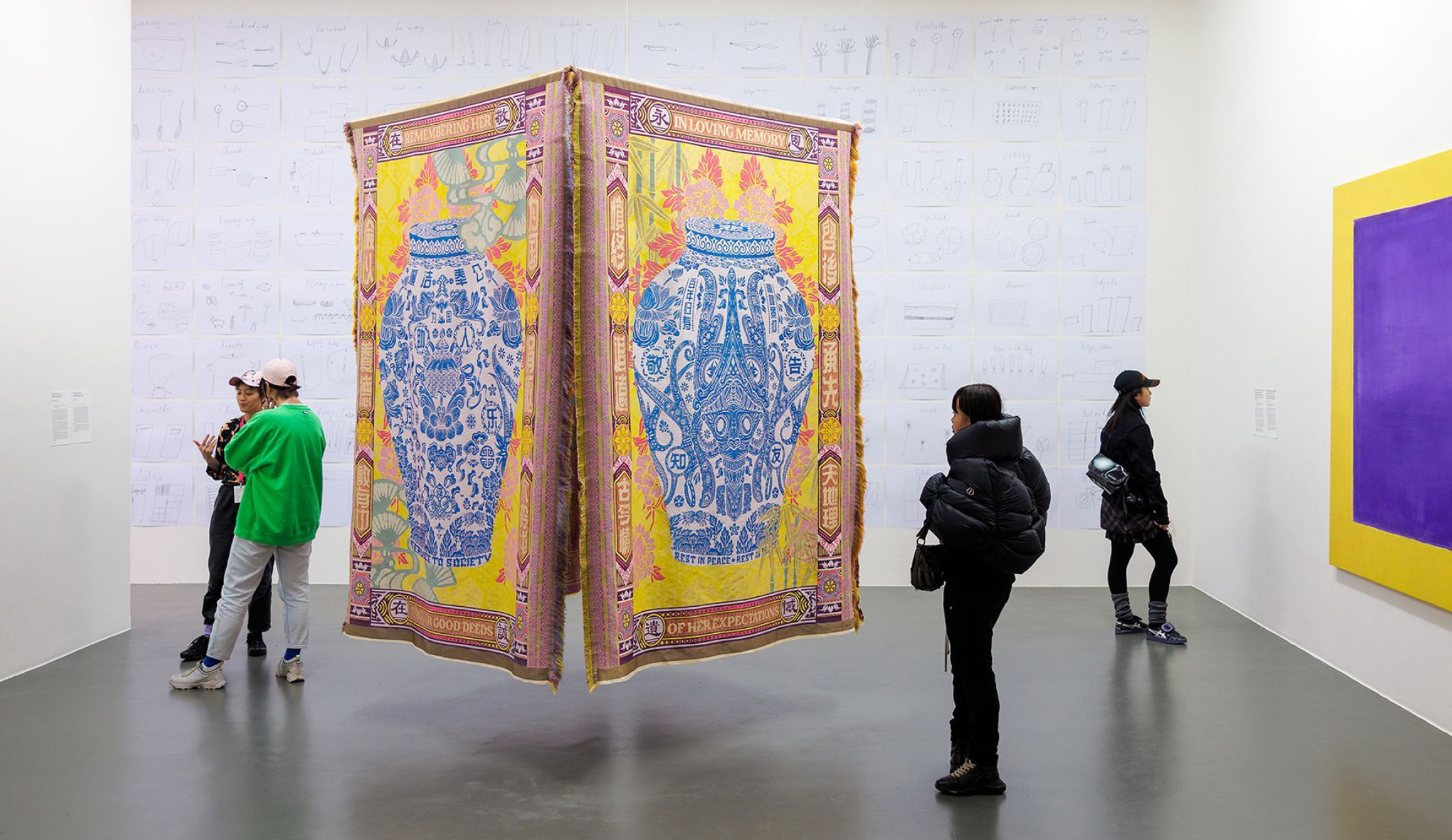
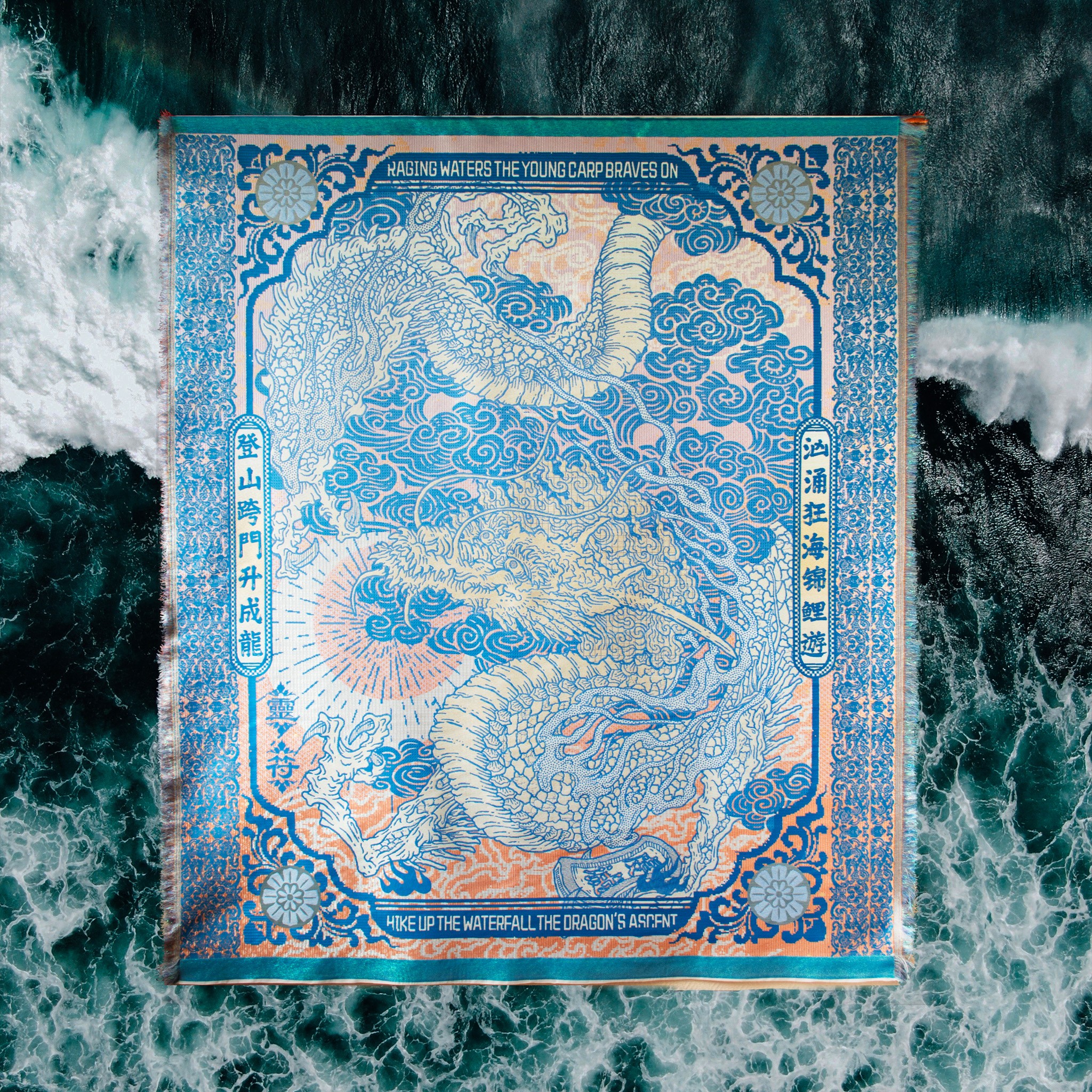
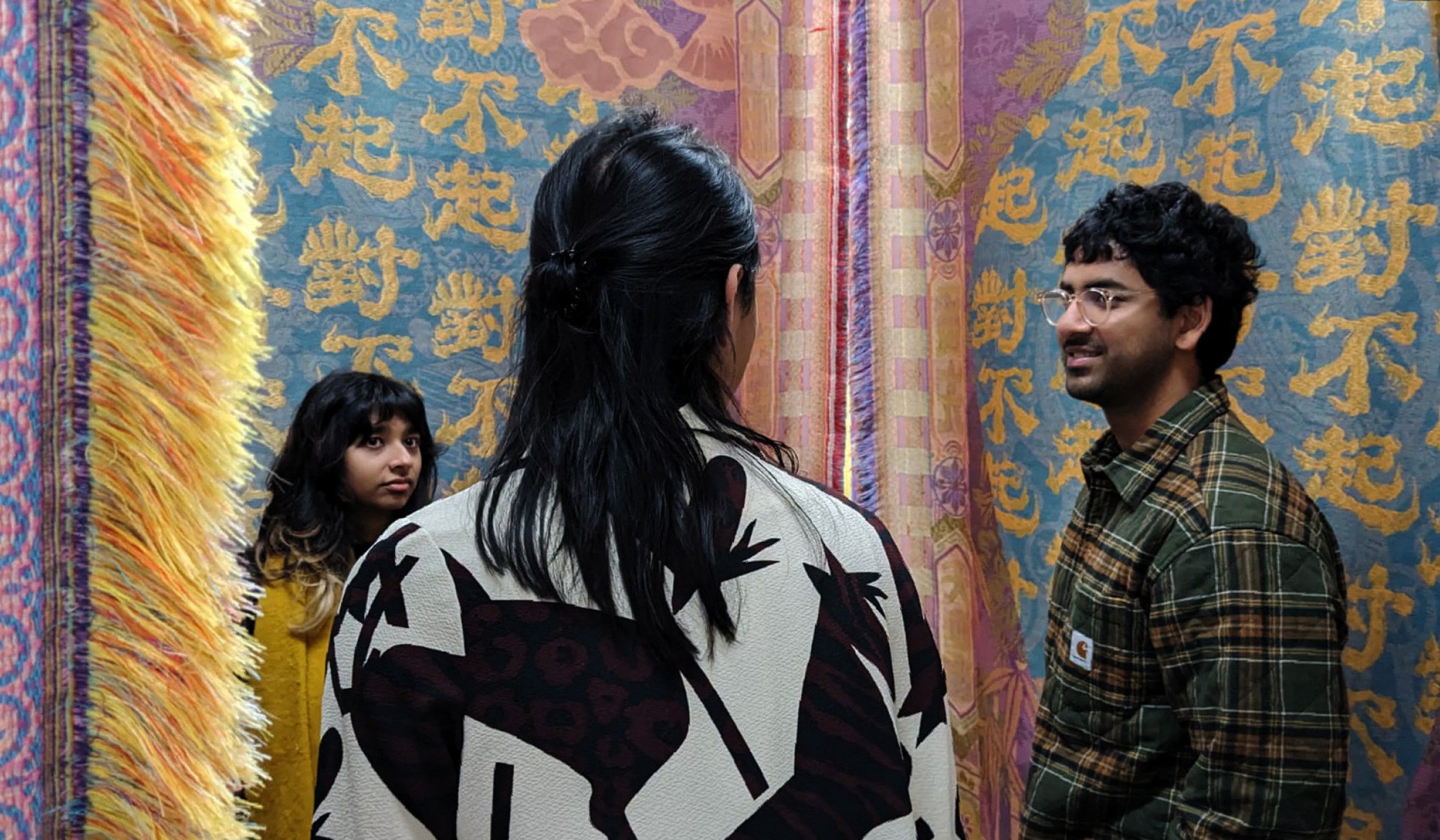
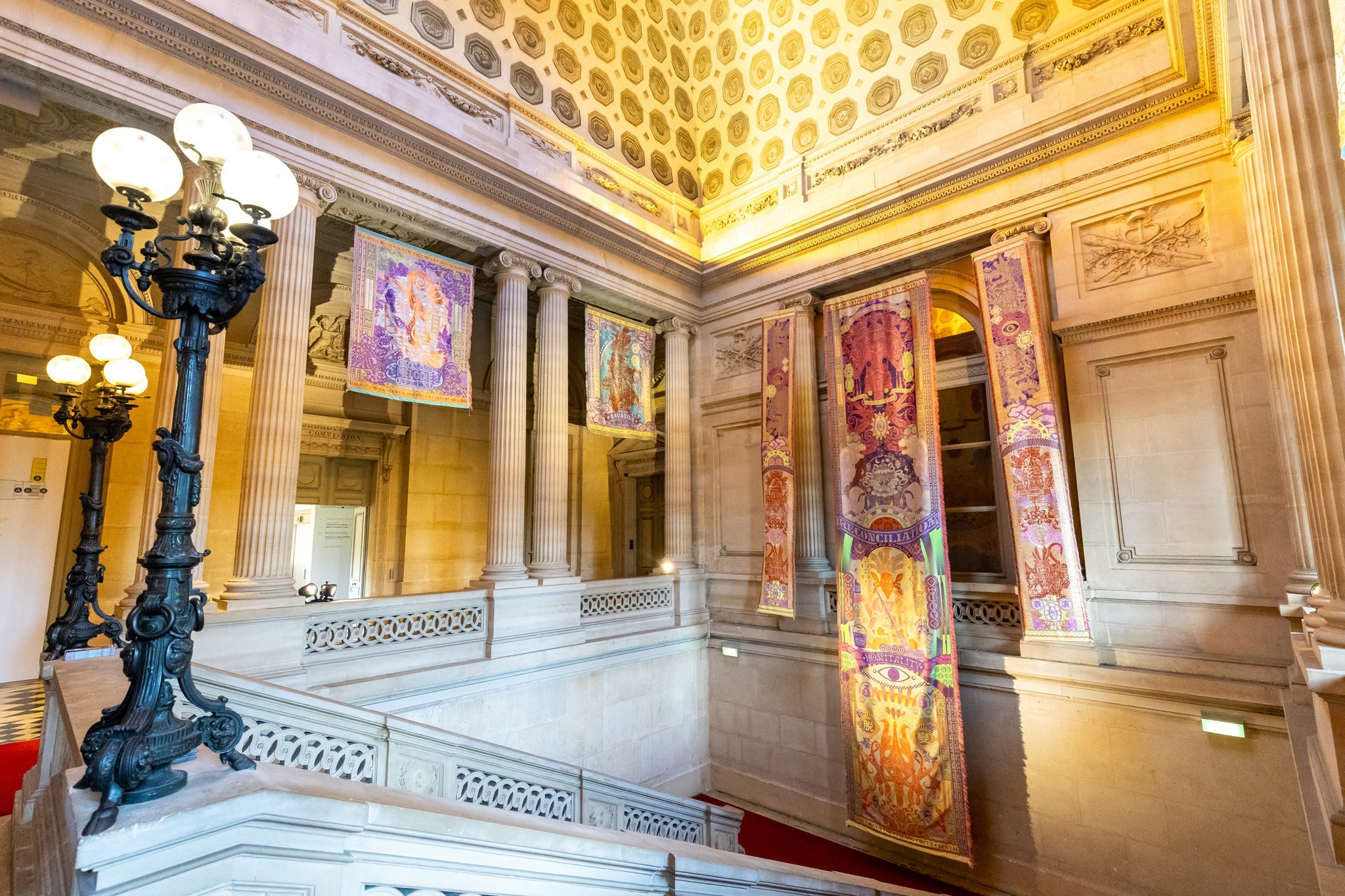
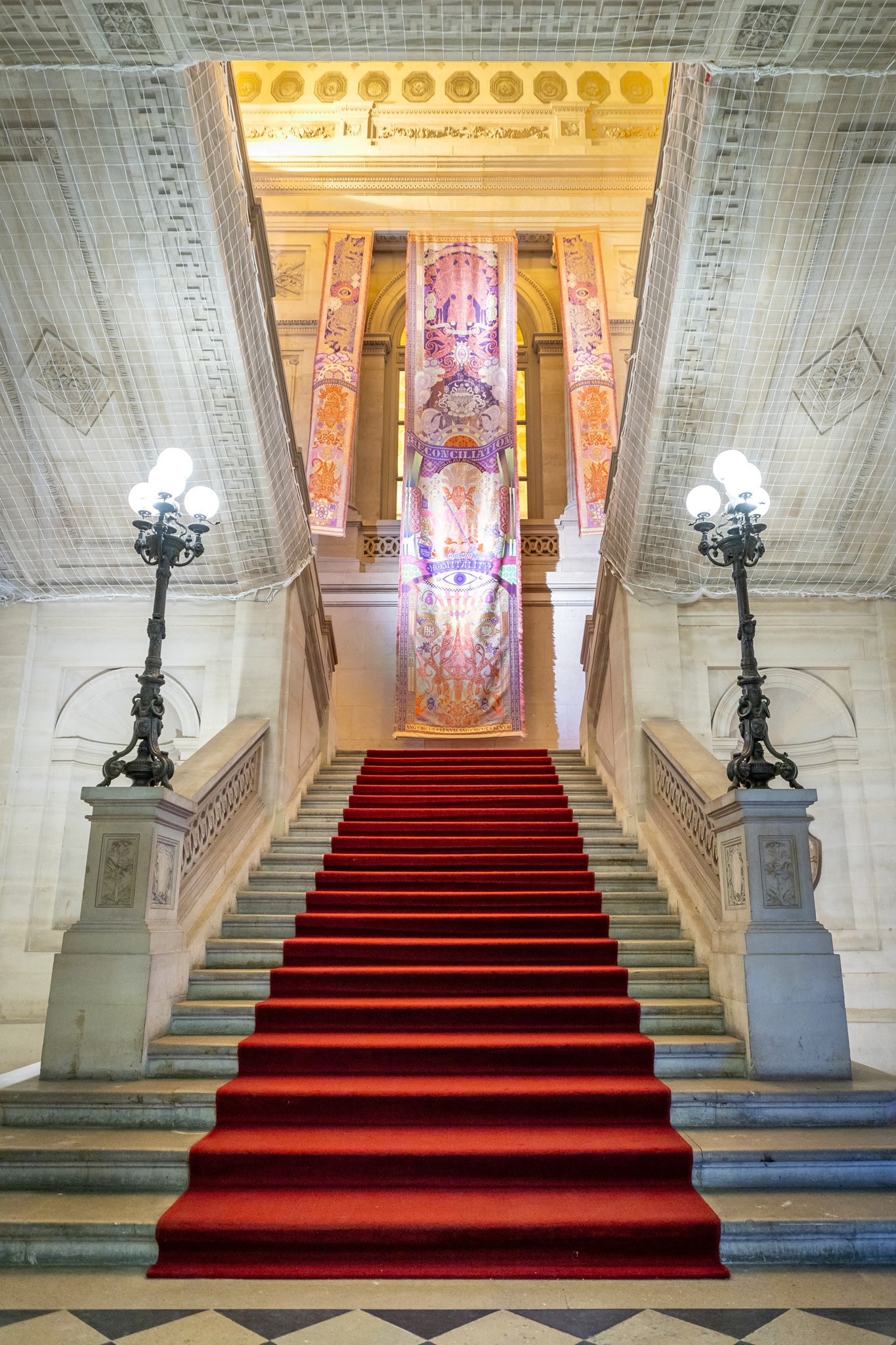
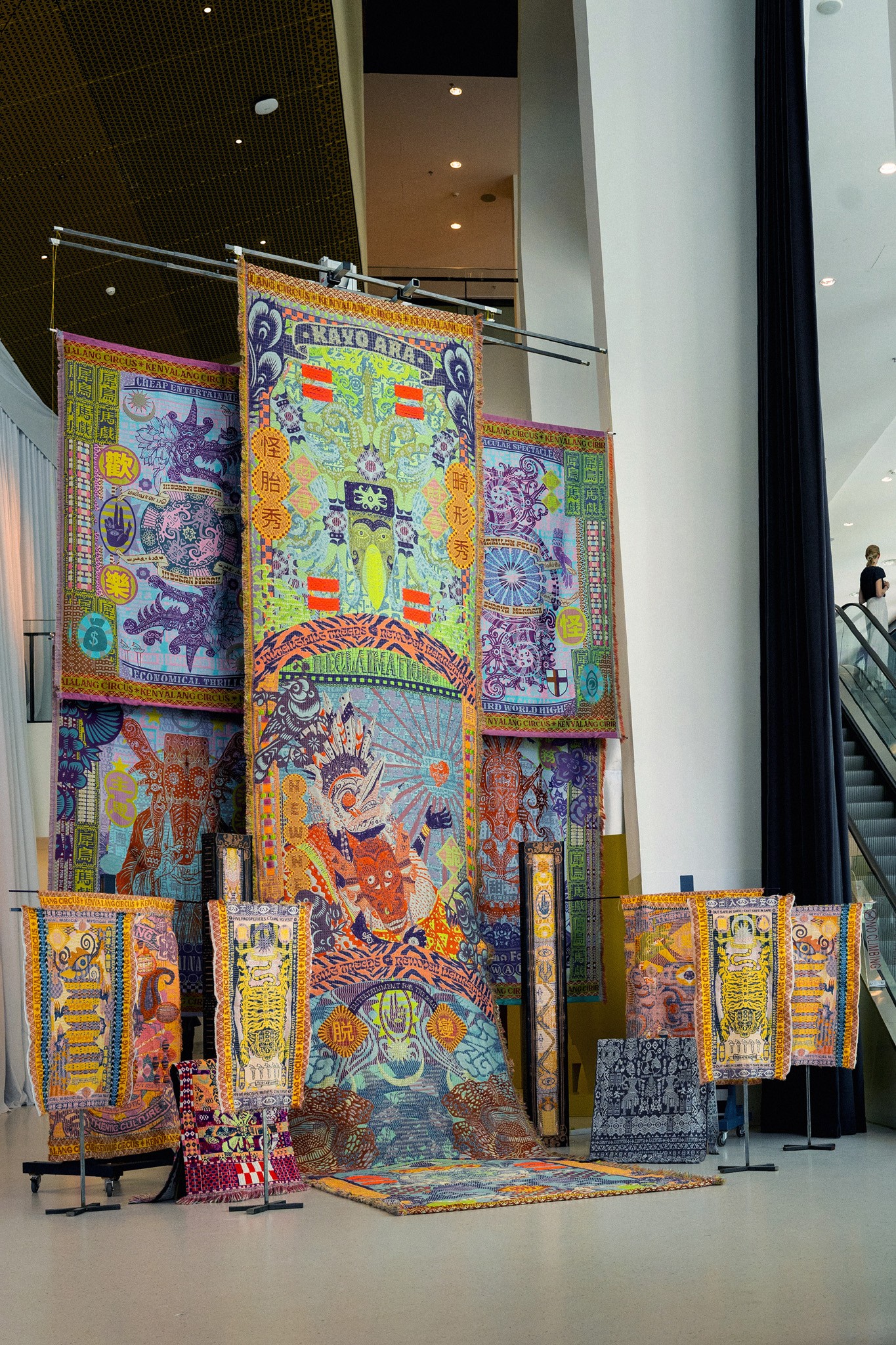
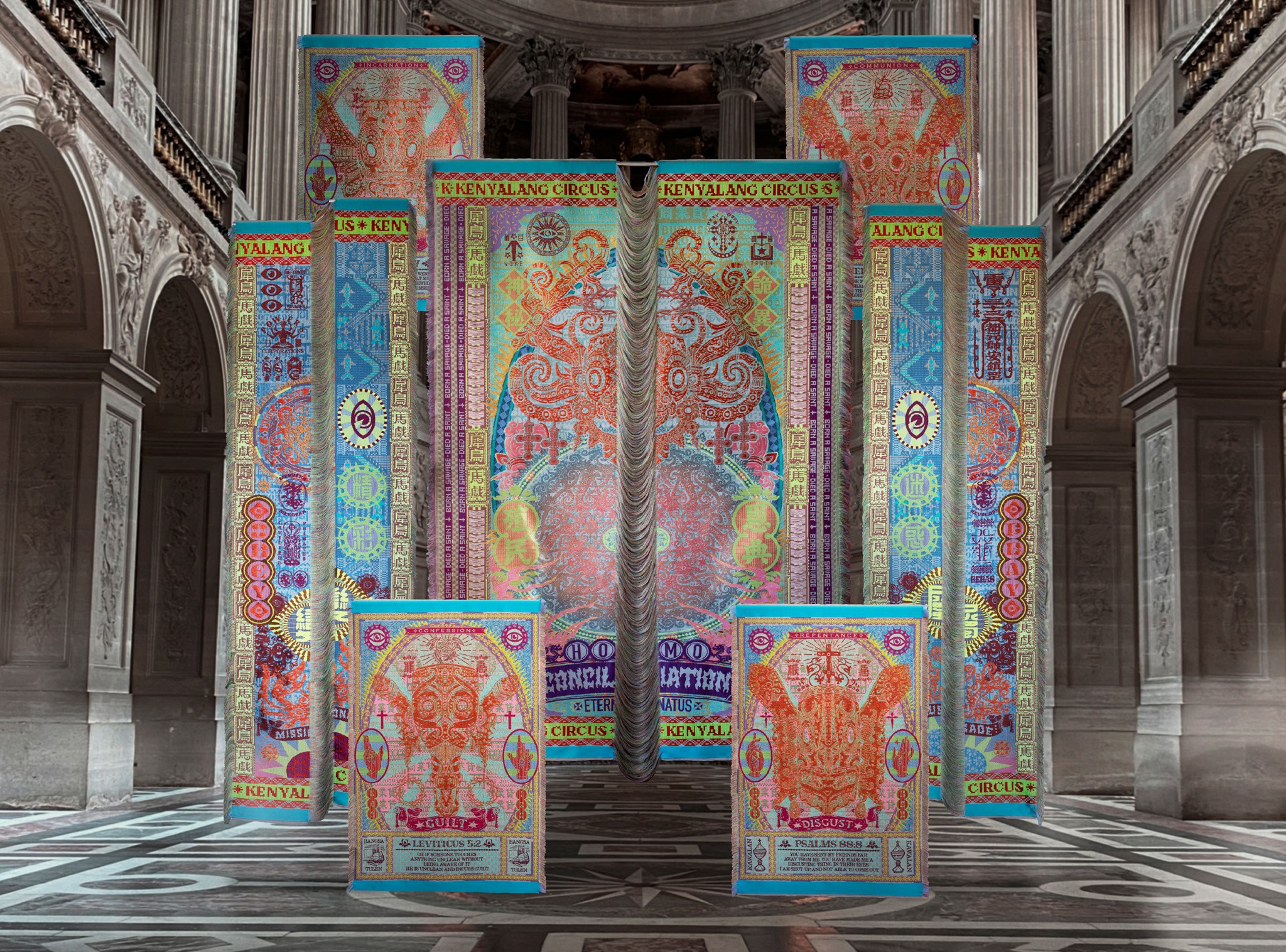
MK. The foundation of all my industrial techniques is based on the weaving sequences and calculation system of the songket weaving technique that is pretty common in the Southeast Asia region. I did my apprenticeship first in a weaving workshop back in hometown Sarawak before I had the opportunity to intern in a weaving factory in the Netherlands. Initially the experiment was about trying to program the sequences of indigenous weaving techniques on the industrial weaving loom to study if we could add more diversity in how we produce industrially woven textiles. It later developed into many variations and styles which can be seen in the details of my works.
I think in the technical world of weaving, it is also possible to develop a signature weave. Experienced weavers can tell the difference between a fabric woven by a Taiwanese indigenous community and the ones from Borneo based on the structure of the weaves and the materiality of the work; when we look at Vincent van Gogh’s painting, we are able to roughly tell the style of the work based on the brush strokes.
CNTRFLD. What were some of the challenges you encountered while transitioning from graphic design to textile art, especially while studying and working abroad in the Netherlands?
MK. The hardest part about the transition is really getting over the stereotype of what it means to be a weaver. Before having to courage to pick up the loom at 23, I have always studied and observed weaving as an academic. It would have been crazy if I told my parents that I wanted to do weaving as a career as it is still tied to the myth of the underprivileged and uneducated from the villages.
I think there is a fundamental shift in mentality when you switch to thinking with your hands. I always imagine it as if I am connected to a mindset that goes back to the beginning of civilization when we first figured out that we could fabricate just by manipulation tensions with our hands and crossing fibres. There is something very sophisticated and emotional about that image in relation to the misunderstandings we have on this craft.
CNTRFLD. Living and working in Europe as a Malaysian artist, how do you navigate the differences in cultural and artistic environments between the Netherlands and your home in Sarawak?
MK. The first time I encountered the word “decolonization” was actually at the age of 24 in Mauritshuis, where they showing an exhibition critically reflecting on the building’s colonial past. I was there on an assignment and when I had to report about the exhibition to my lecturers, I was so overwhelmed that I was crying the whole presentation. I think the liberation from knowing that there is a name to the internal oppression all of us have to carry from a developing country is a gift – many of us carry this burden to our graves without having the chance to forgive ourselves for thinking that we are only secondary to our past oppressors.
Sarawak will always be my motherland but I am also appreciative of the fact that there is enough curiosity from the community of The Netherlands to encourage me to participate in the dialogue that the country had the grace to open up. A lot of these topics would not be something that we are able to discuss institutionally as it might not be an emphasis of the culture of my hometown at the moment.
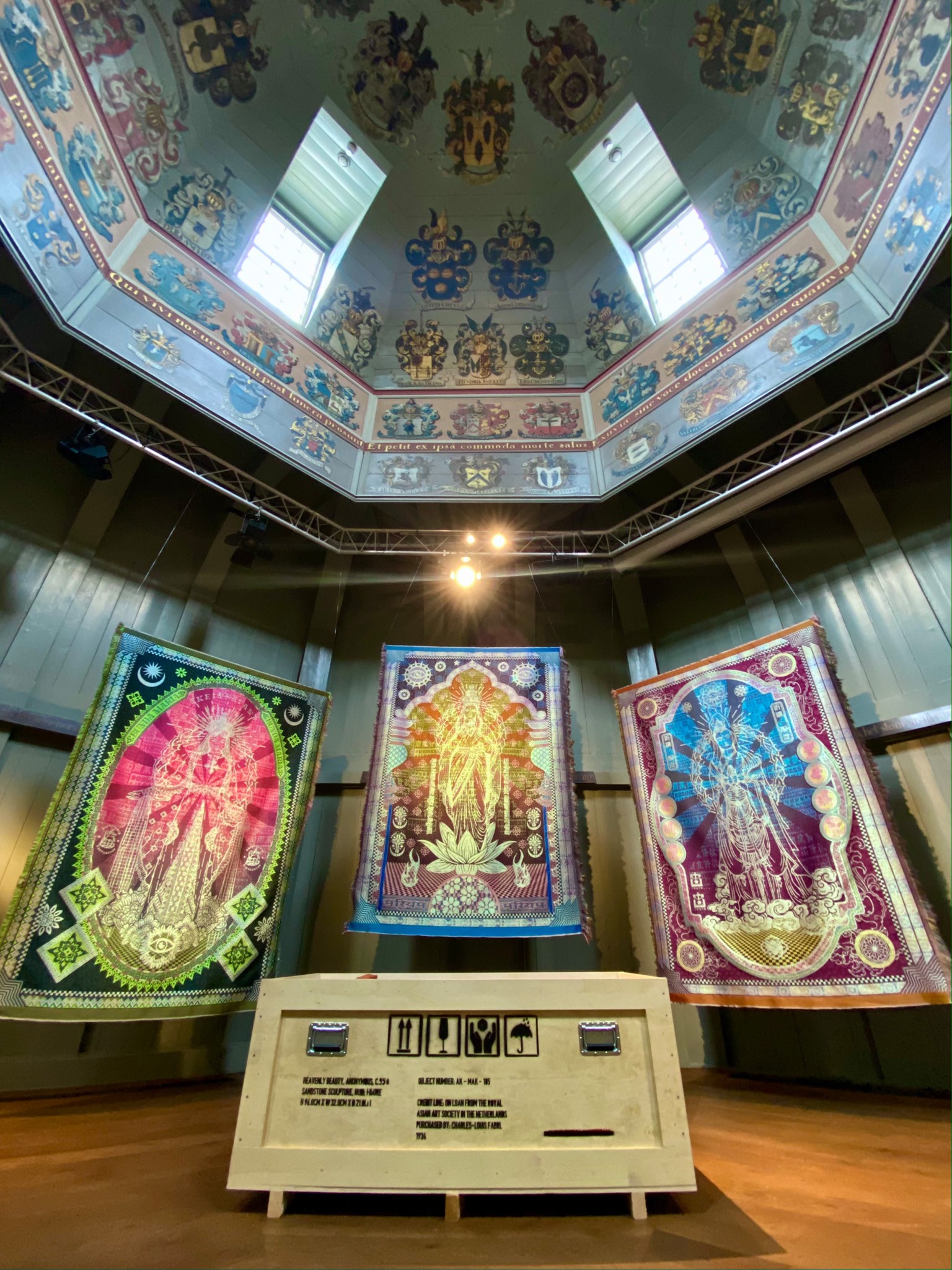
Artistically, I think there is a way of working where you code switch between cultures by understanding that different visual cues connotates to different things based on different cultural perspectives. I always use the posters of human zoos as example. The printed promotion of ethnological expositions in the 19th and 20th century will mean different things to the coloniser and the colonized in different eras of our history even though the object is the constant. Navigating between two cultures and how it interplays with contemporary times then becomes part of the art.