"The further you drift away from home, the more complex becomes your relationship to notions of home, belonging and solidarity with other citizens."
—Ming Wong
CNTRFLD. As a Singaporean artist who has lived and worked in London, Berlin, and across the globe, how have these diverse cultural contexts shaped your understanding of your Singaporean identity? In what ways has distance deepened or complicated your connection to home?
MW. My early works dealt with personal questions about my own cultural identity and place in the world; living in London sensitised me on wider issues about post-colonial representation; my time spent living, working and researching in other parts of the globe gave me perspectives on parallel struggles by people marginalised in different ways across the world. The further you drift away from home, the more complex becomes your relationship to notions of home, belonging and solidarity with other citizens.
CNTRFLD. The AP60 exhibition invites artists to reflect on what it means to be Singaporean in a globalised world. How does your presentation for this exhibition explore the nuances of diasporic identity, belonging, and cultural memory?
MW. Identity is always, and should be, in flux. Who we are, is an ever evolving process, from birth to death and even in our legacies. I have learnt that one becomes a different person in different cultural, national or social contexts; one becomes a different person even when one speaks a different language. We can strive to present ourselves the way we would like to be, whether or not it is in accordance to structures of social organisation. The challenge is to acknowledge the important role that culture and history play in allowing people to form their own identities and personal journeys that span the past, present and future.
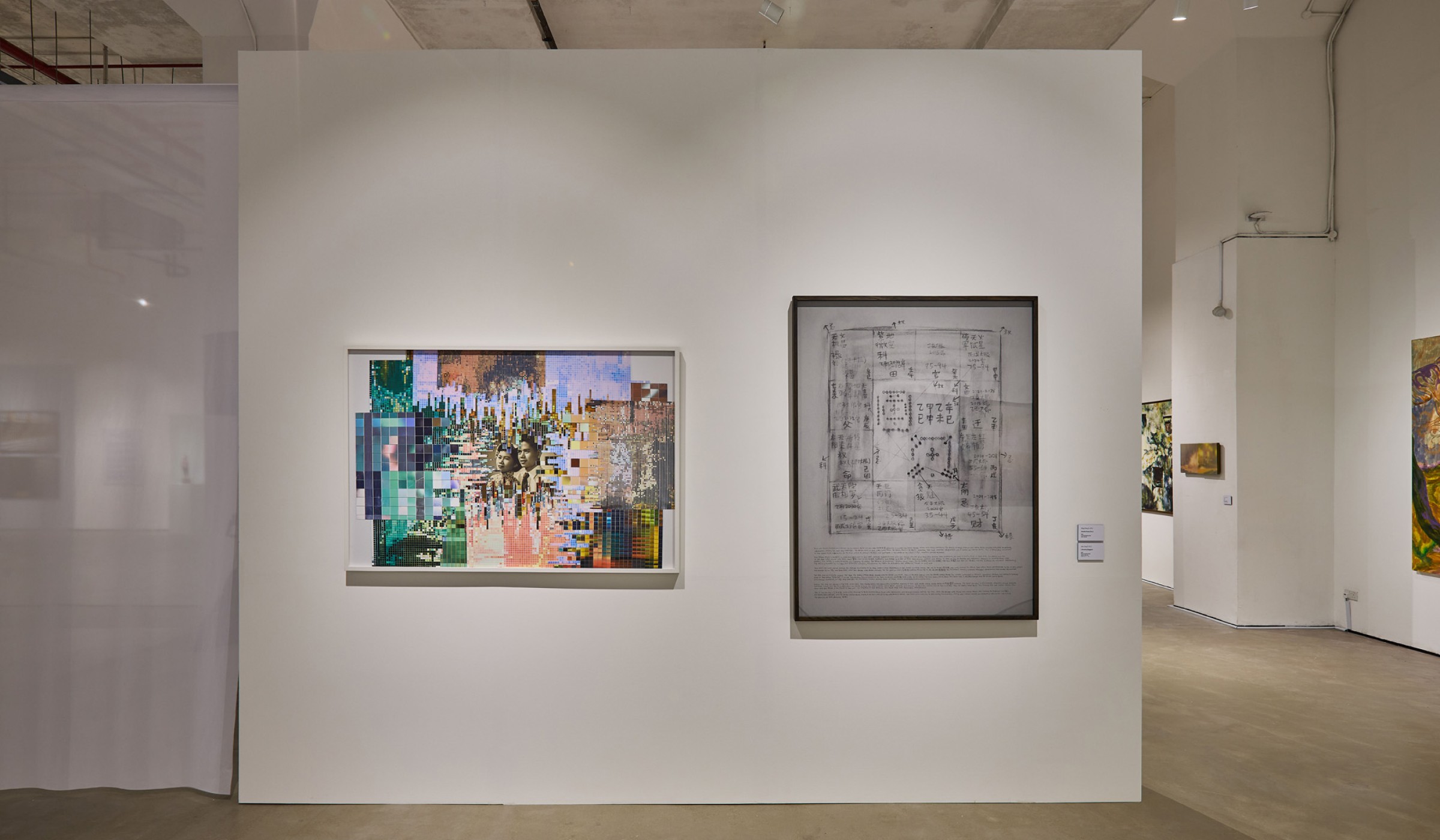
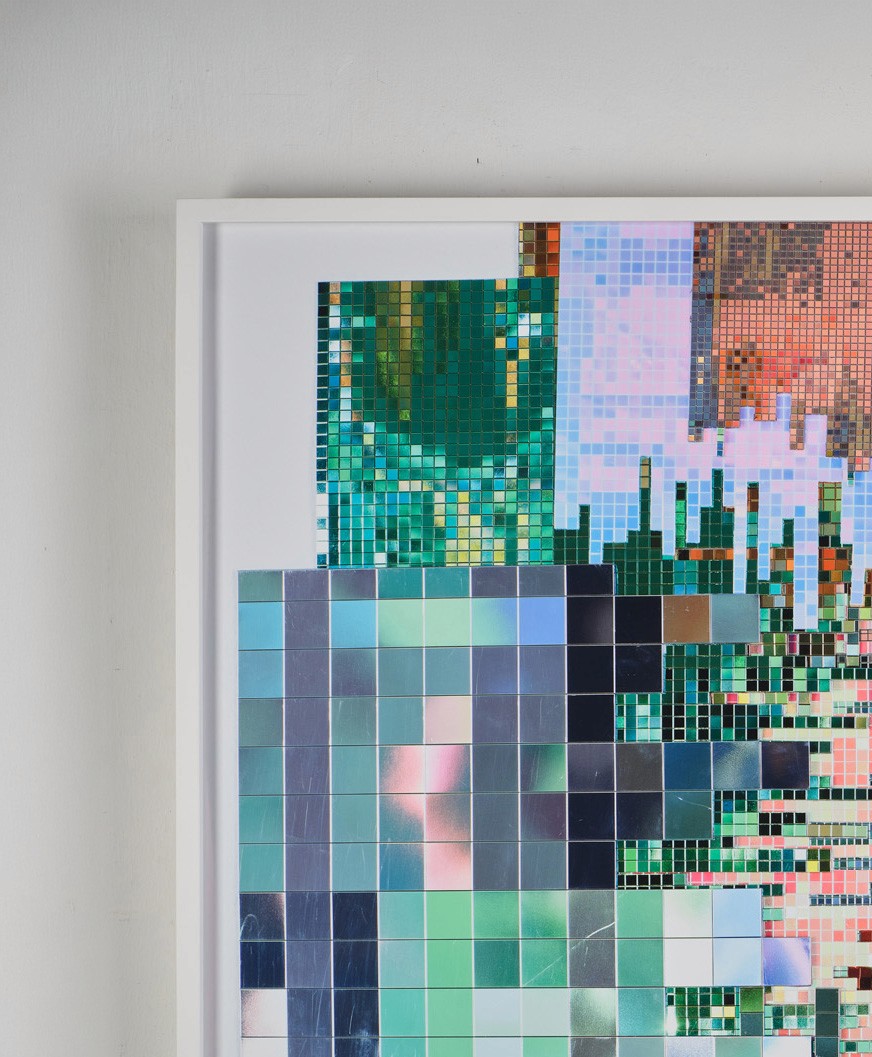
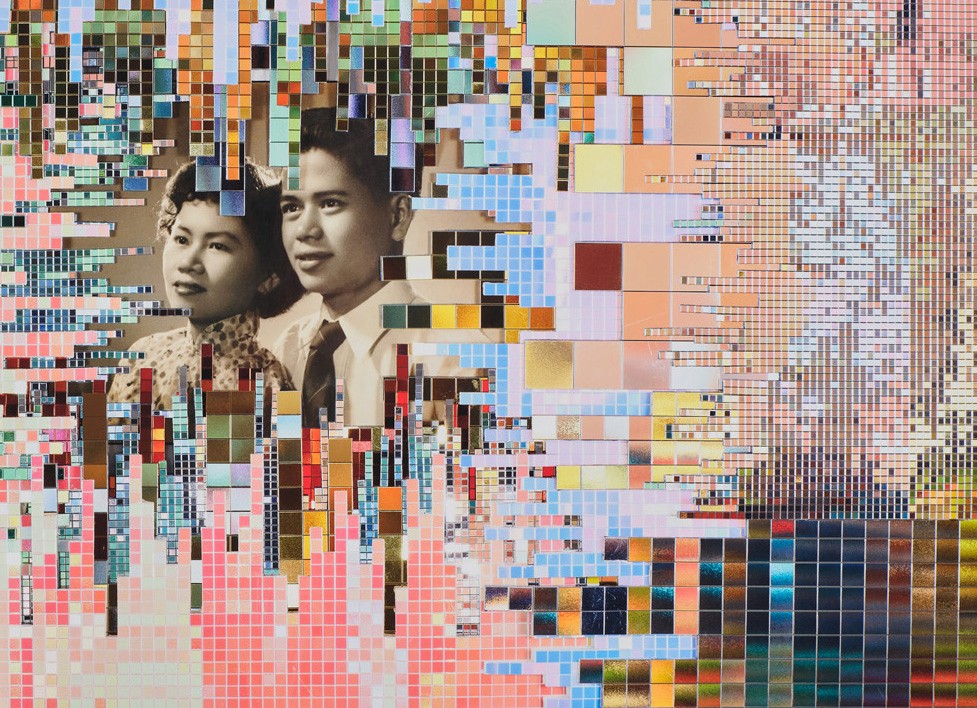
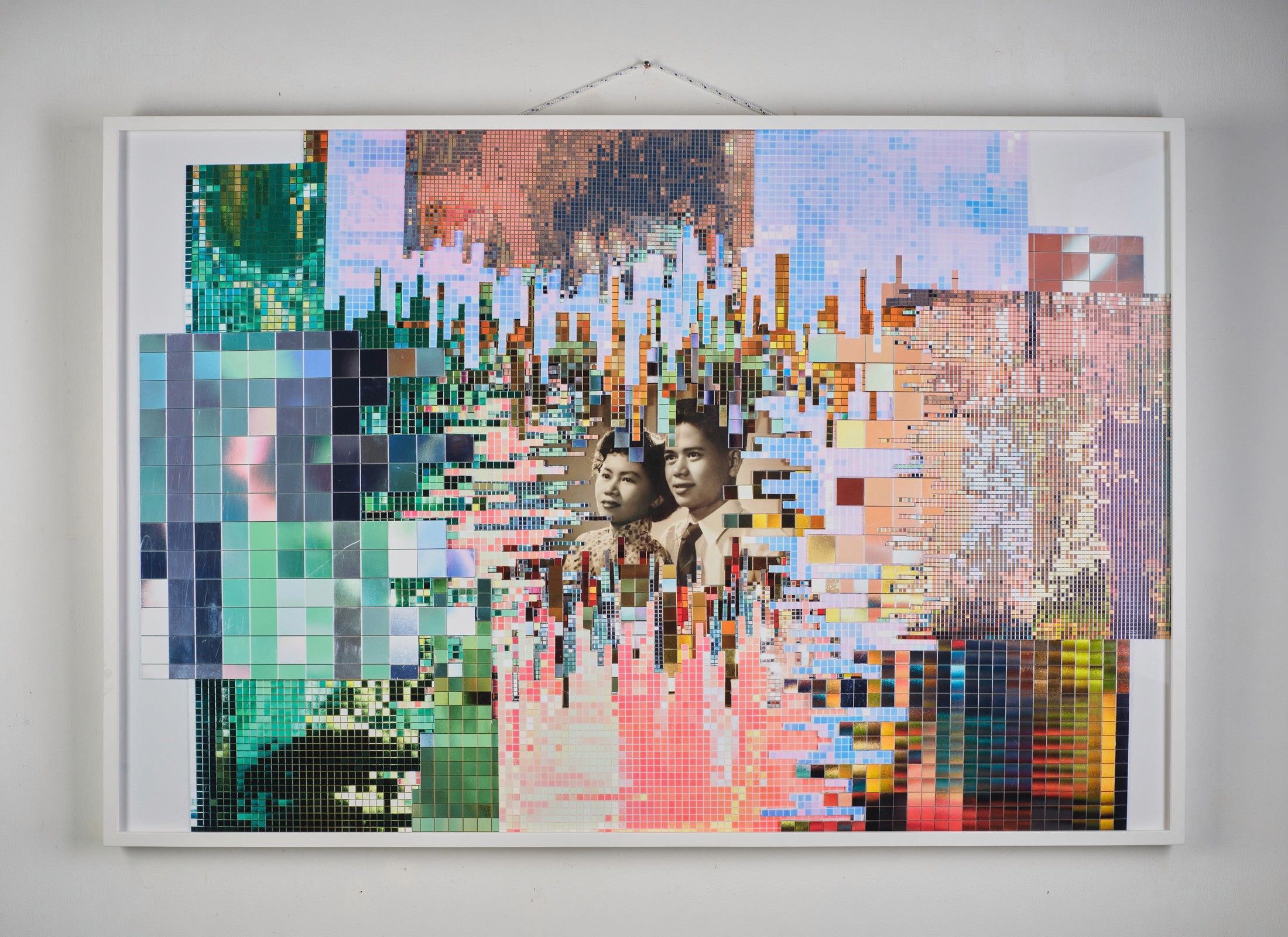
At the centre of my work in the exhibition is a found photograph, taken in a photo studio in Singapore in the 1960s; it looks like they are a mixed-race couple, and they are lit in a way that is reminiscent of Hollywood glamour shots. Their eyes are focused dreamily into the distance, the picture emanates a sense of hope and intimacy from a bygone era; the couple from the past seem to have a lot to look forward to in the future. I frame the couple with a sense of expectation, of being part of a newly formed nation, by collaging their image with layers of colored building blocks of light, like pixellated sunrays radiating outwards from the couple, or even like digitised fireworks of a future landscape coded by an artificial intelligence. The actual colors you can see in the work were produced by the interaction of light on various materials surrounding the vintage analog photograph in my studio.
CNTRFLD. Looking back to your childhood and early years in Singapore, what formative influences—be they cinematic, familial, or cultural—led you down the path of becoming an artist working across performance, film, and installation?
MW. I grew up with early Singapore TV, flipping channels across four official languages; I watched re-runs of American sitcoms and Hong Kong TV series that were at first in Cantonese and which later got dubbed in Mandarin. I listened to the BBC World Service. I watched Chinese opera performances with my grandmother. These experiences led to me experimenting with language and communication in my early professional work as a playwright in the English language theatre scene in Singapore in my mid twenties, which eventually informed my subsequent artistic practice in time based media for exhibitions and performances.
CNTRFLD. Your seminal project Life of Imitation interrogated Singapore’s multicultural landscape through cinema and miscasting. How have your methods or thinking evolved since then, especially in the context of AP60 and Singapore’s 60th year of independence?
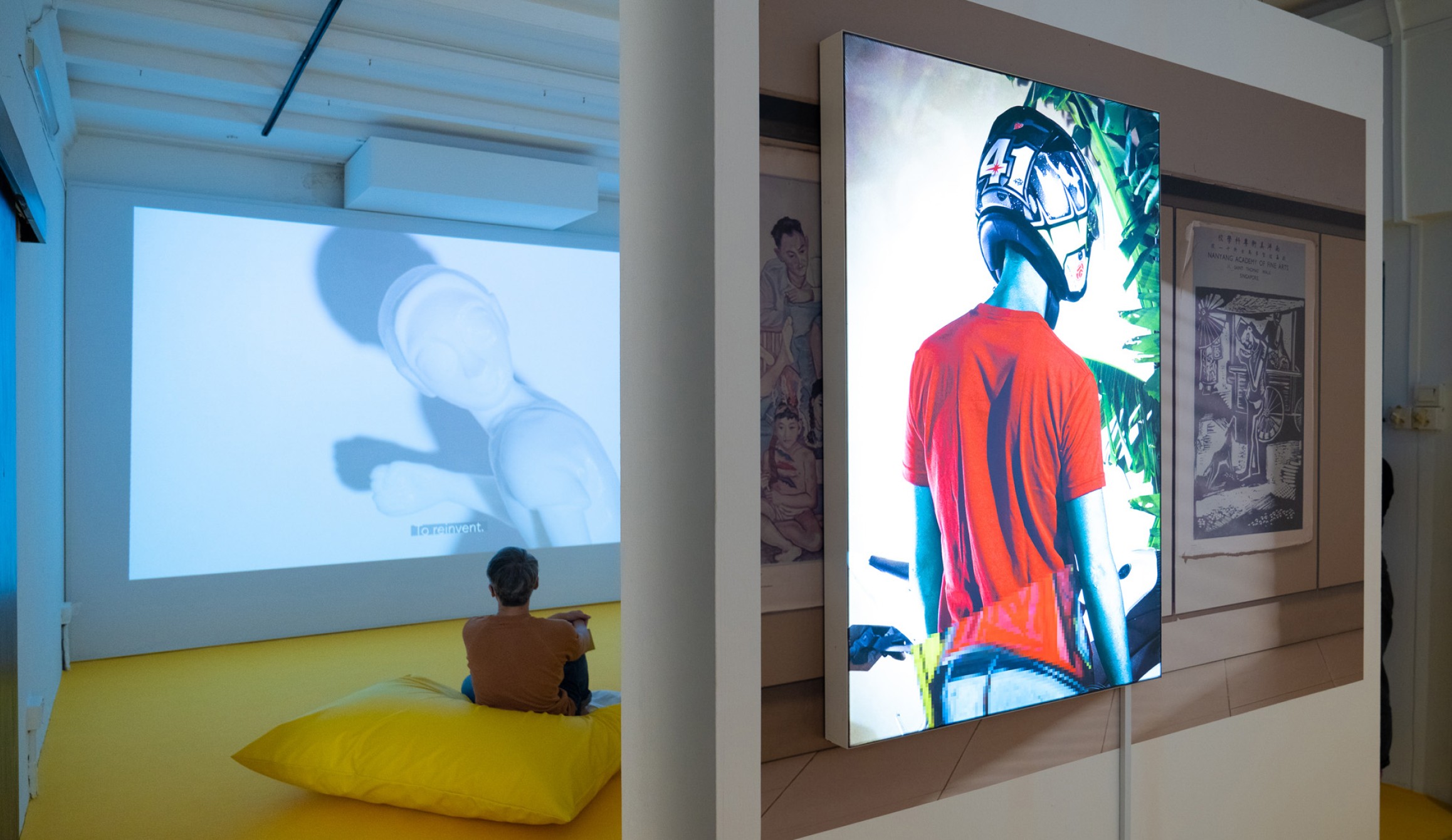
MW. I still work on issues of Race and Belonging and Discrimination as they continue to surface in society, including Singapore. The impact of global solidarity movements with Black, Women, Trans and Palestinian identities in recent years inevitably find local resonances in different societies across the globe. In addition, the covid-19 pandemic made the disparities of care and privilege starkly clear. I work with the idea of miscasting, to play a role that is deemed entirely unsuitable, whether it is about gender, race, nationality, body type, class, age, etc. However I think that to put yourself (or another person) in the shoes of somebody completely different, allows for a radical empathy, in the embodiment and identification of the Self and the Other.
CNTRFLD. This year you are also the Artist in Residence at the National Gallery in London. Could you share a bit about your experience working within this institutional and art historical context, and how your response to the Gallery’s collection is taking shape?
MW. The National Gallery in London is celebrating its bicentennial in a grand manner, having just reopened all of its galleries after a major renovation, and with a radical re-hang of its entire collection, which has not been attempted on such an extensive scale since after World War II. In contrast to a more chronological display in terms of art history and painting schools, there are now more cross collection conversations and connections across multiple centuries, geographies and themes, which help us understand the influences and relationships of arts and culture across time and space.
The timing of my year-long tenure as Artist in Residence coincides with this momentous occasion of national pride in arts and heritage in Great Britain, and it is an important moment for self reflection on the past, present and future of their cultural achievements. For the moment, I am studying how stories are being told about painting, artists and the museum, by past and present curators and educators in a range of different media. I find it interesting to discover what gets represented and what goes unmentioned, and the ways that civilisation and mythology are so intertwined. It also helps me to think about how Singapore presents itself for its 60th anniversary, for which this exhibition was also conceived.