"When I came to Limehouse, only to find a row of flats and Bet-freds and nothing remaining of the Chinese, there was an almost palpable sense of loss and bereavement, that such a vibrant and internationally famous community was not only dead and gone but obliterated without trace. I wanted to resurrect this lost Chinatown and make it renowned again..."—TienAn Ng
CNTRFLD. Limehouse’s Chinatown emerged in the late 19th century through seafaring communities, yet today almost no visible trace remains. When you first became aware of that disappearance—living so close to its former centre—what struck you most on a personal level, and how did that moment begin to shape your work for Chinese Limehouse at St Anne’s?
TN. I was born and brought up in Singapore at the tail end of empire, and even there Limehouse Chinatown was well known to us through literature and popular culture. For all its flaws, that vision of river mists, forbidden love, opium dens and Sherlock Holmes was intriguing and alluring. When I came to Limehouse, only to find a row of flats and Bet-freds and nothing remaining of the Chinese, there was an almost palpable sense of loss and bereavement, that such a vibrant and internationally famous community was not only dead and gone but obliterated without trace. I wanted to resurrect this lost Chinatown and make it renowned again, and this has been the inspiration for my recent work.
CNTRFLD. Your sculptures in this exhibition evoke a place that has largely disappeared. How do you approach translating fragmented histories—oral, archival, imagined—into physical form?
TN. Researching archives has been illuminating and fascinating, but there is always a sense of distance, looking at black and white photographs and the antiquated prose from contemporary newspaper clippings. Interviewing descendants of these original Chinese pioneers, and seeing their family heirlooms, gave better insight. But it is in really living in the area, walking its streets, and assimilating the environment with its rich history, that I find best inspiration – the odd street sign, a long closed school, some old cobblestones, and even the indestructible shards of porcelain retrieved from the foreshore of the Thames, that evoke not only the voices of the past but the smells, and its sounds, its resilience. Is it imagined? Perhaps, but there is a sense in Limehouse of the weight of history and a burden to tell these stories to the world.
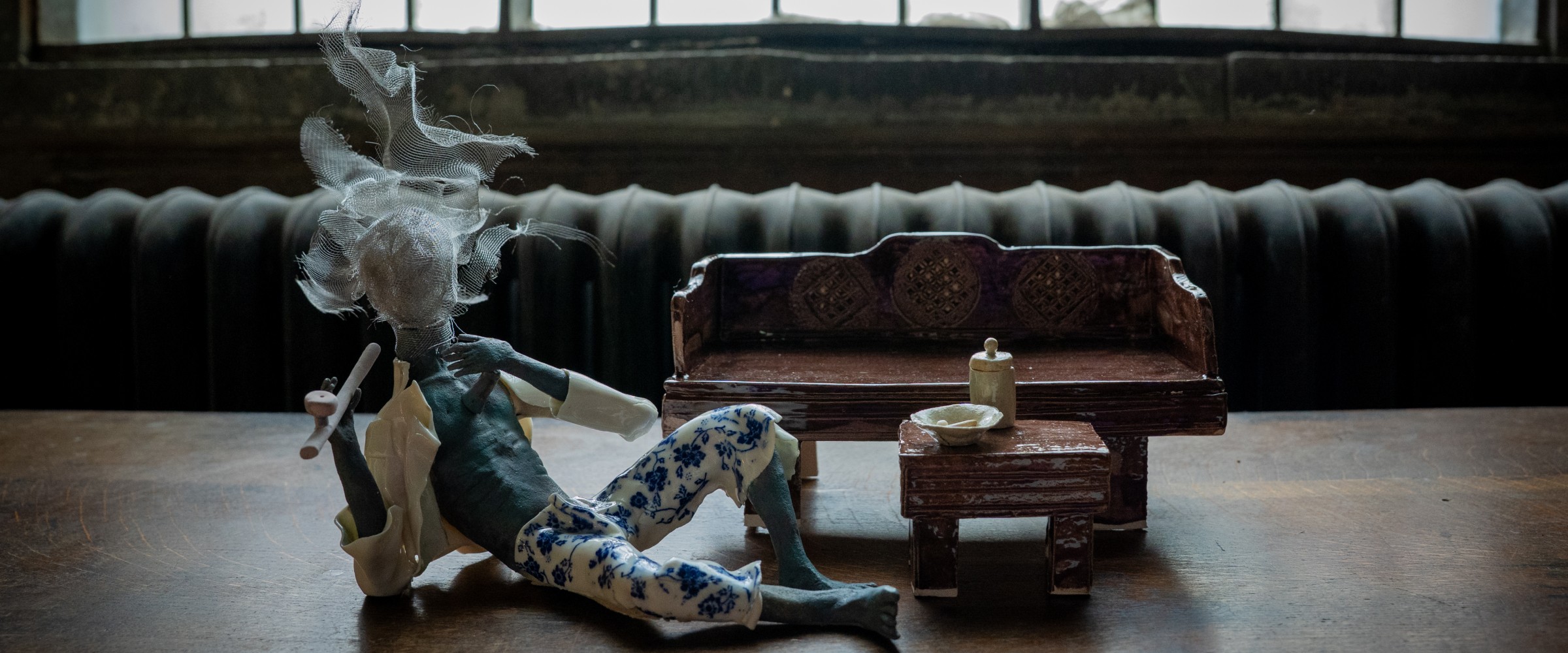
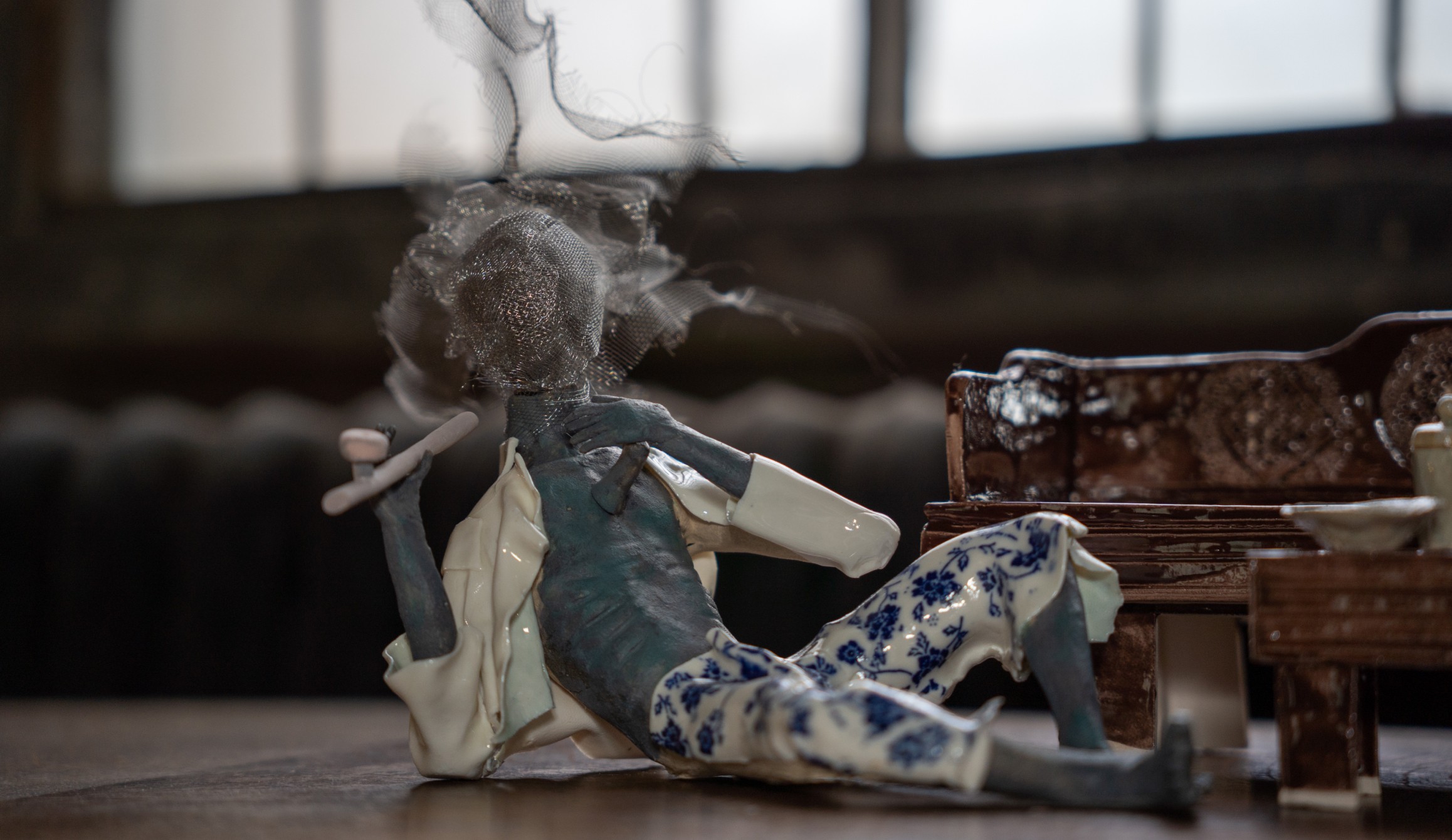
My sculptures represent the coming together of time, space and matter. Here I am, a Chinese person researching the history of the Chinese, having travelled halfway across the world to be here, where they once were 100 years ago, and working with the same medium, porcelain. Limehouse has long associations with both China and china; the East India Company brought in Chinese sailors to these Thames-side docks to import porcelain. Limehouse itself was named for its lime kilns to burn chalk, but also later to fuel the local pottery industries of Bow and the like. And amazingly, one of the first "manufactories " to attempt to copy bone-china was set up in Narrow Street in Limehouse in the 1740s. It seemed fated that I should materialise Chinatown history using clay as my medium. Moreover, I discovered that the second recorded Chinese visitor to Britain was, of all things, an artist, and a ceramicist to boot. He exhibited at and was included in the famous Zoffany group portrait of founder RA members and established a shop making porcelain bust heads for Englishmen. My sculpture of an opium smoker with his head disappearing in a puff of smoke, is my response to Tan Chi Qua, and to the British who returned the favour by turning a generation of Chinese into "Dopeheads".
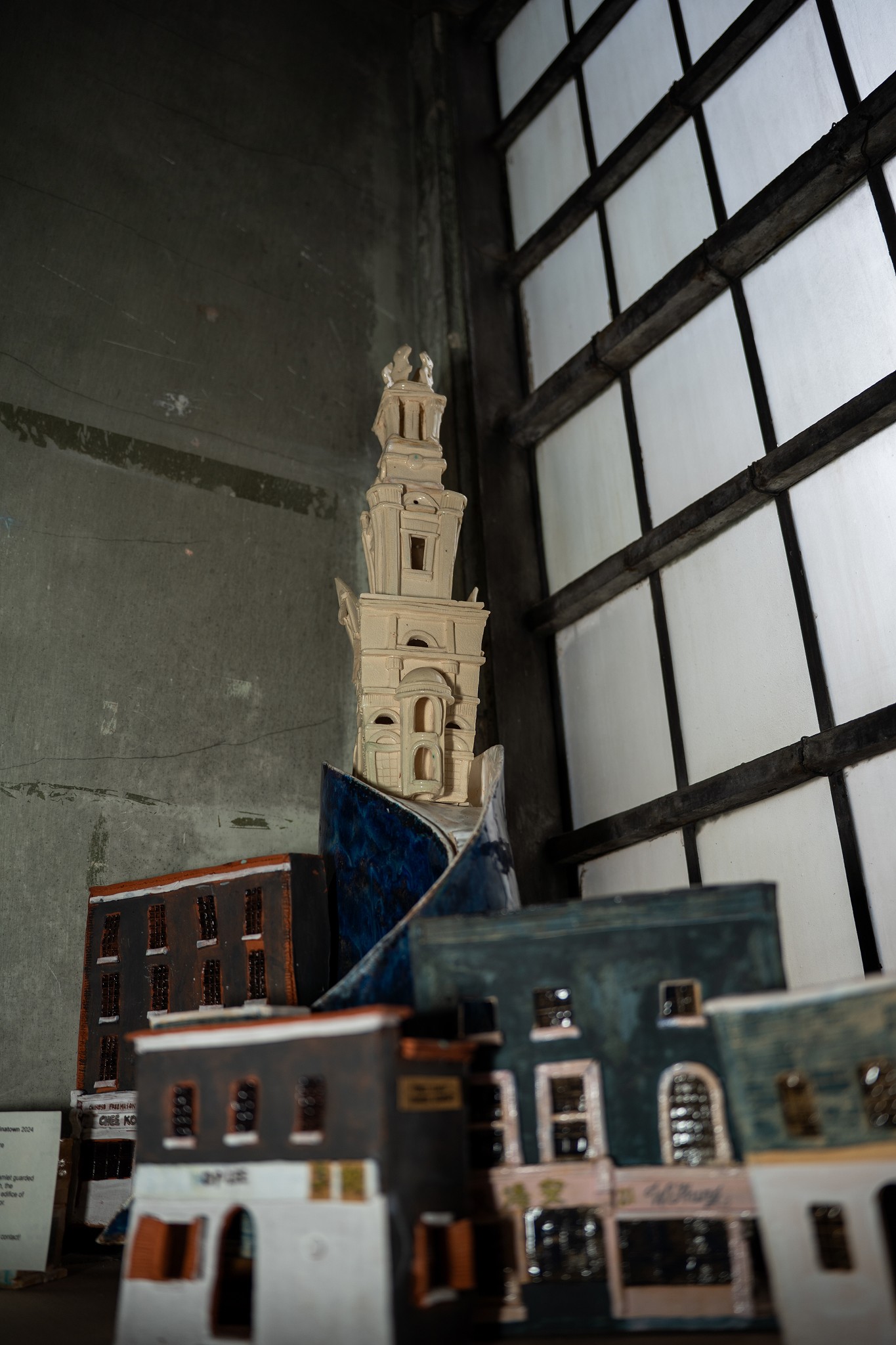
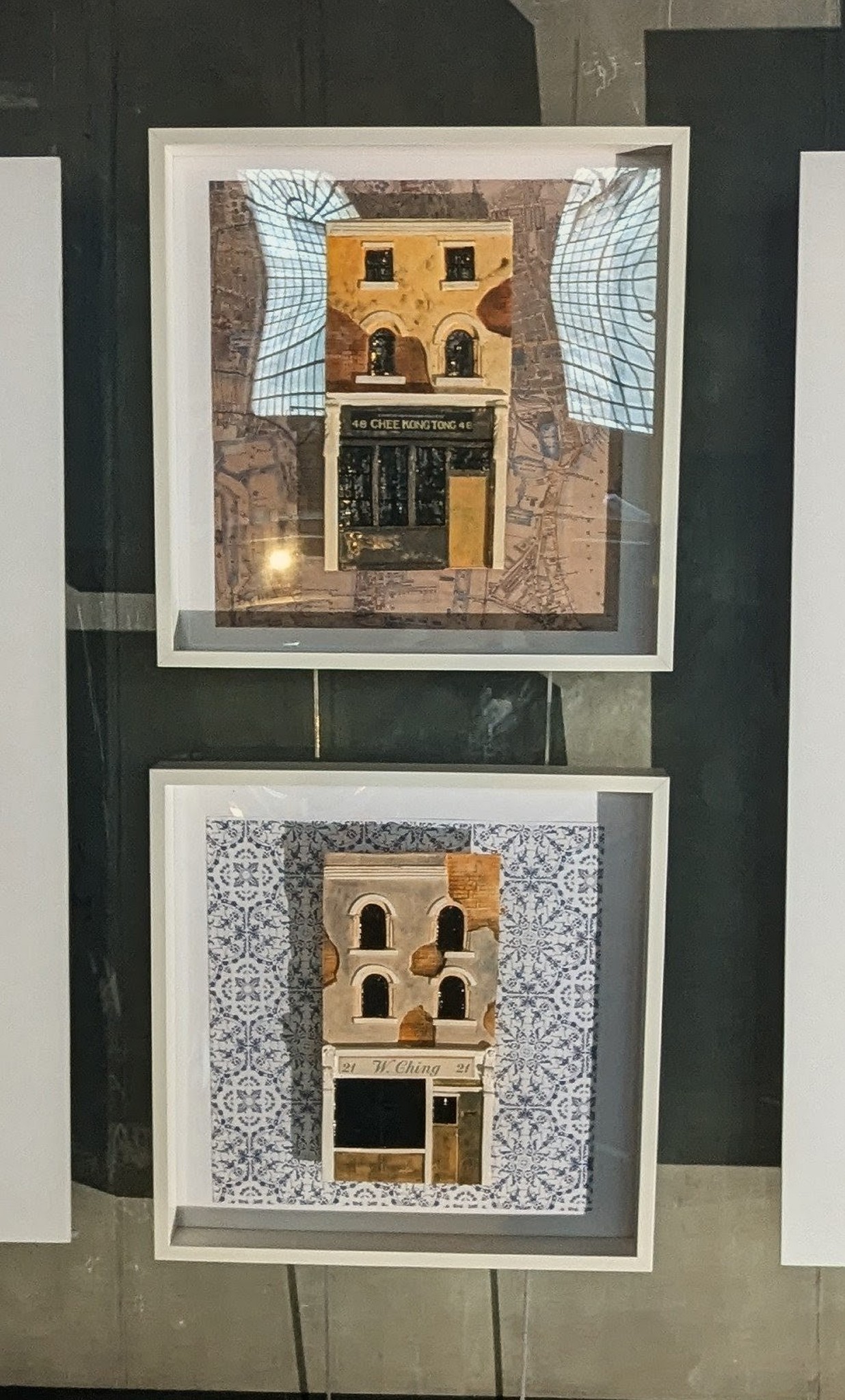
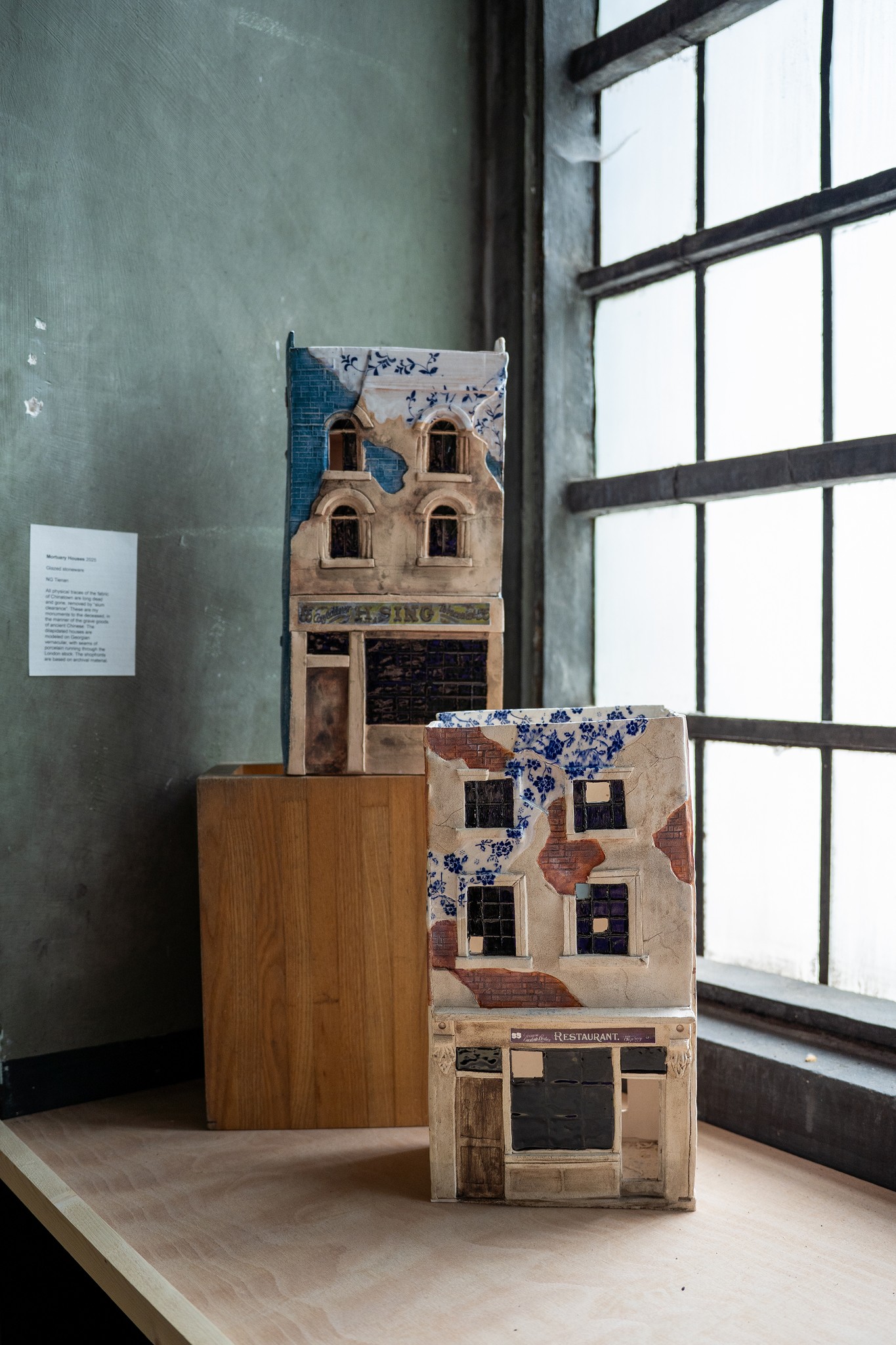
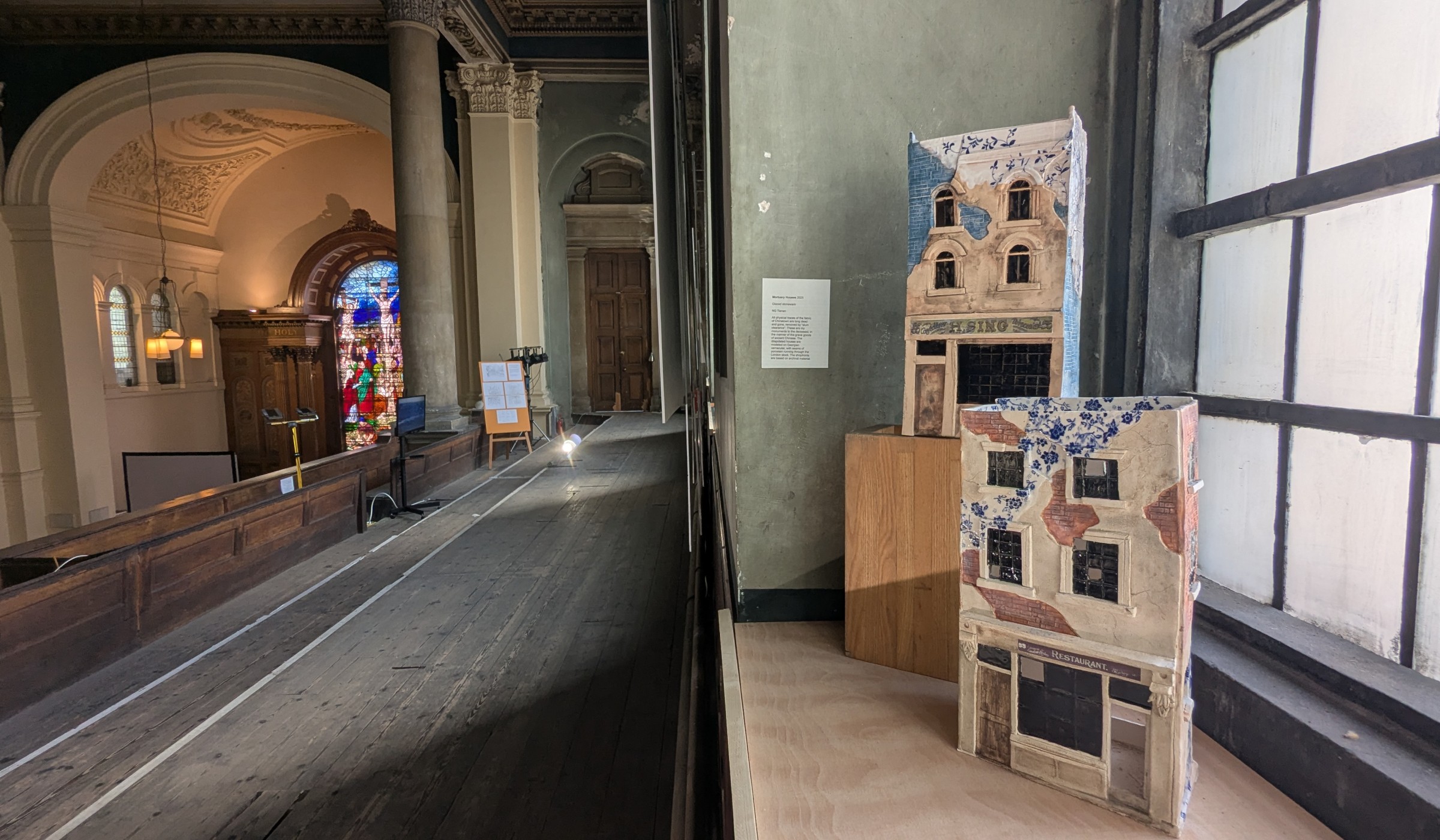
The main problem in putting together displays was the complete lack of anything physical surviving from the old Chinatown. The solution was to recreate some of the Chinatown buildings as ceramic sculptures from archival photographs to give a more tangible physical manifestation. These “mortuary houses” allude to the traditional grave goods of ancient emperors, such as the ceramics of the Tang dynasty, and I hope they are appropriate (and beautiful) monuments to a dead and gone Chinatown.
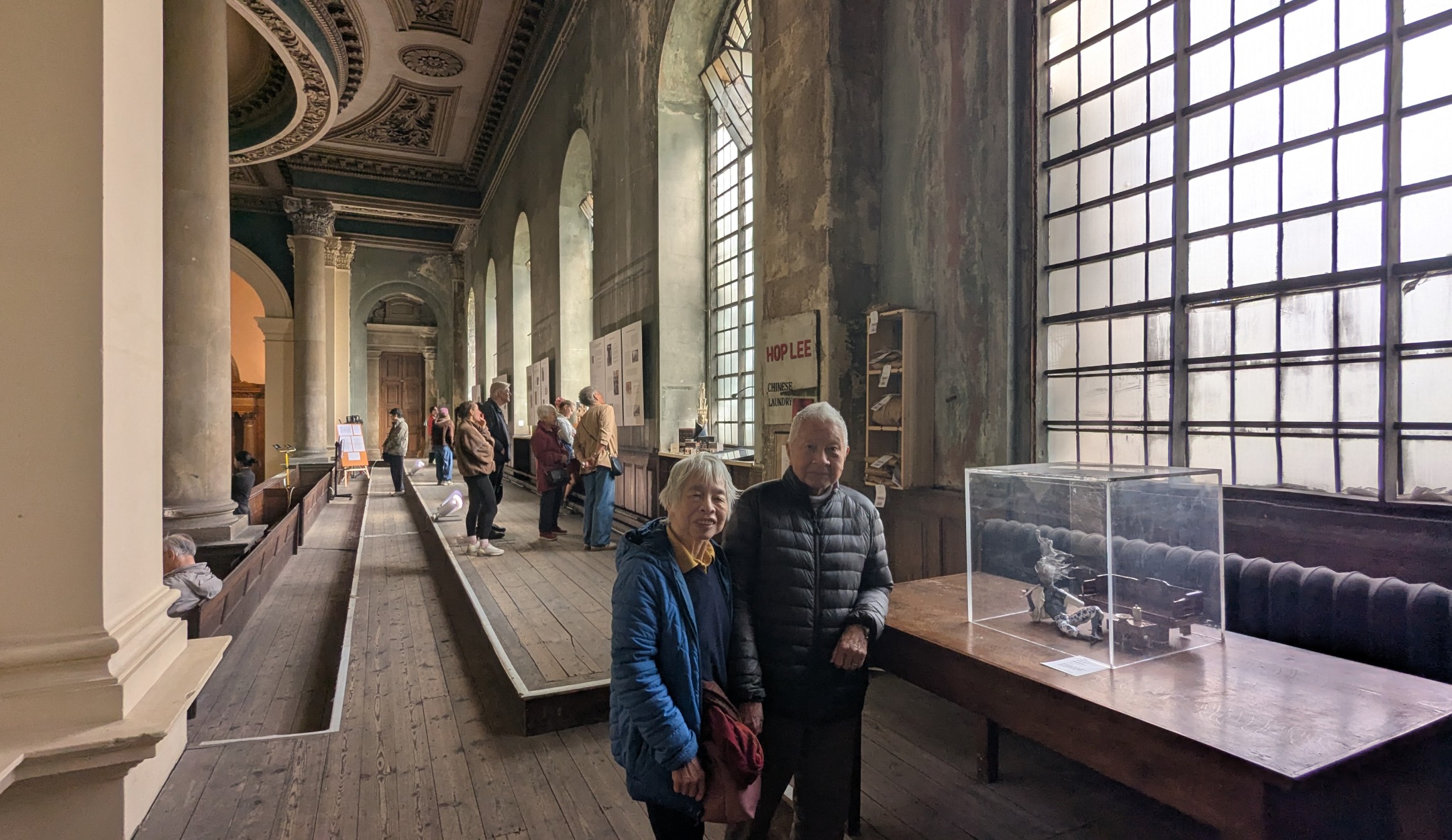
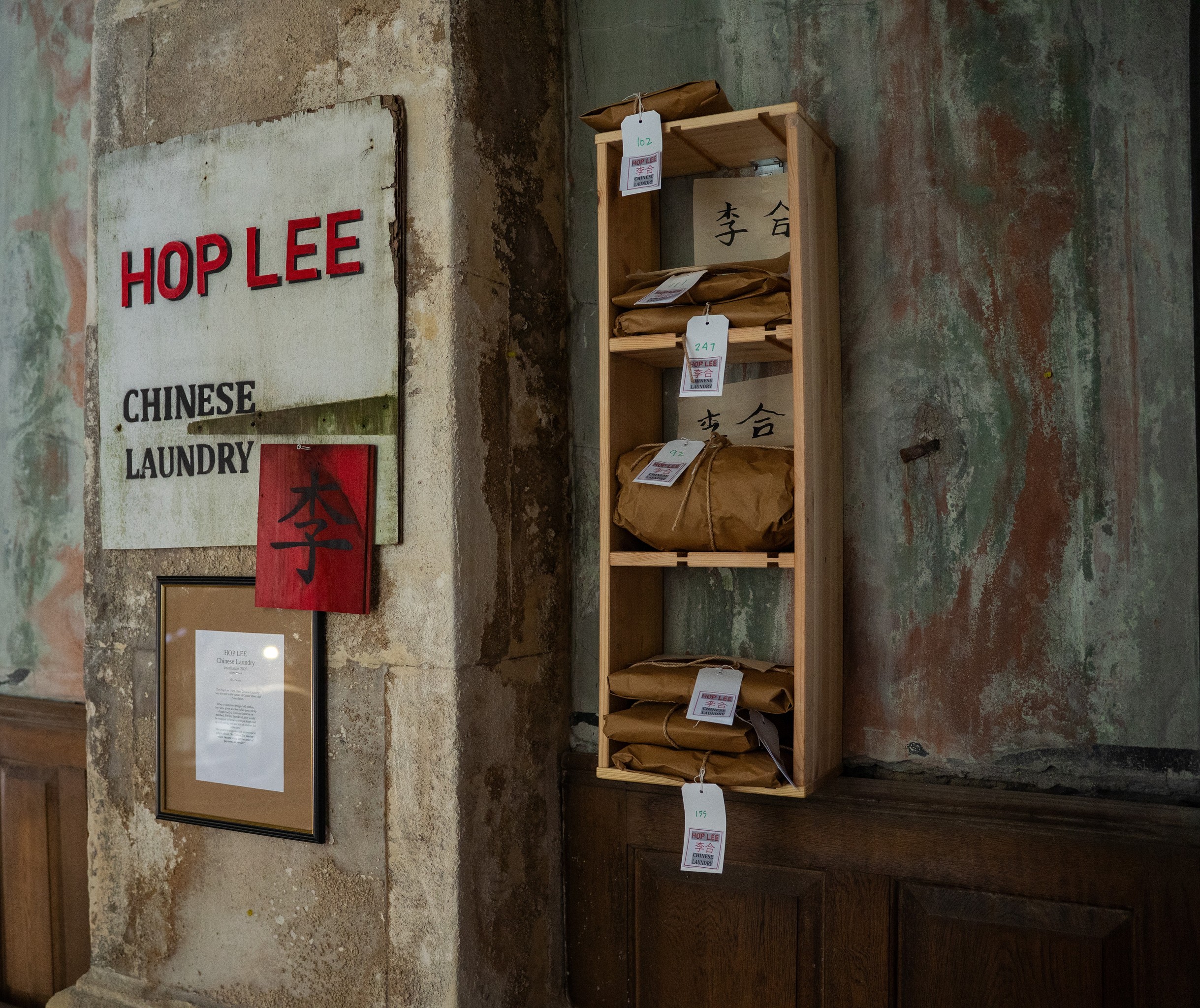
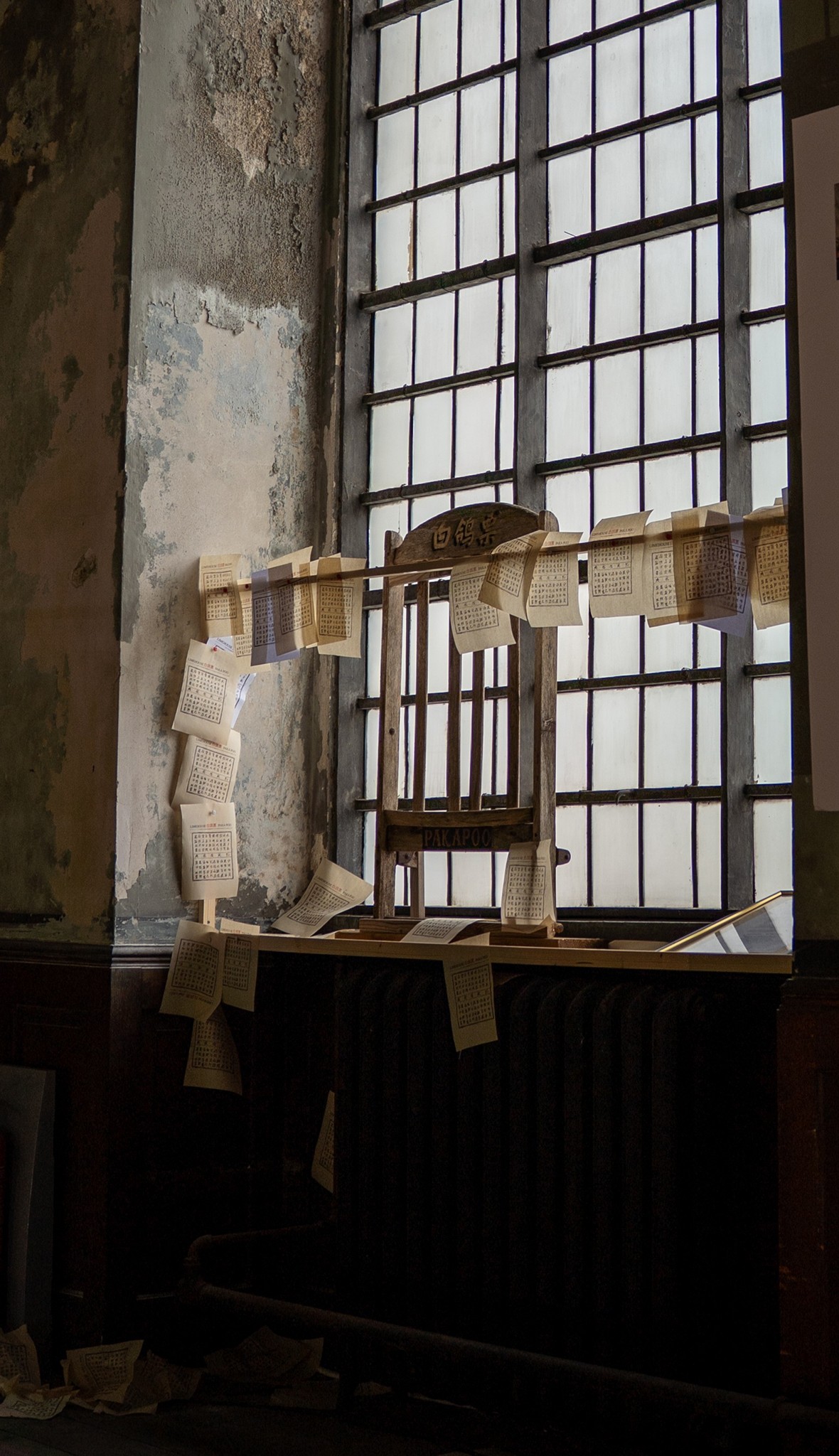
I also wanted to recreate some of the iconic Chinese shop interiors such as the Hop Lee Laundry and the PakaPoo gambling house. Whilst these started off as immersive props to illustrate the history of the urban community, the ancient walls of St Anne’s, with its fantastic patina derived from multiple layers of centuries of historic accretion, provided a sublime backdrop that elevates these installations into pieces that I am proud to show.
CNTRFLD. Growing up in Singapore, you had a very different image of “Chinatown” shaped by colonial histories and popular culture. Looking back, how did your childhood environment influence the way you now think about place, memory, and representation?
TN. My childhood home couldn’t have been more different from London. Growing up surrounded by tropical forests and reefs, in a huge extended family of gregarious aunts uncles and cousins, playing through the shops, hawker centres and festivals of a multicultural city, left me with many happy recollections. Although I return regularly, the passing of older generations, wholesale redevelopment of Singapore, and even the spread of affluence has combined to leave them only memories. I have learnt how transient and precious these moments are, to live in the moment and to value and preserve them for the future.
CNTRFLD. Much of this exhibition moves between myth and lived reality—between Fu Manchu caricatures and the everyday lives of families who built communities here. How do you navigate that tension in your work without simplifying either side?
TN. We approached this by having separate curators for the Myth and Reality sides of the exhibition. Philip and Jude Reddaway presented all the material from popular culture and press of the time, of course pointing out all the prejudices and injustices that much of this was built on. Whilst I put together the historical displays from actual facts, I couldn’t help as an artist finding the fictional side of Chinatown, even with all its negative aspects, so much more colourful and seductive. But this was always tempered by the knowledge that these Western confections had real and adverse effects not only on the residents of Chinatown but worldwide repercussions in Sinophobia, the Opium wars, and the like. This tension is one of the themes of the exhibition, and something we would like visitors to think about contemporary world affairs and take away with them.
CNTRFLD. Your work often engages with identity and diaspora in fluid, understated ways rather than fixed definitions. Having lived across different cultural contexts, how has your understanding of identity evolved over time, and how does that perspective surface in your practice today?
TN. My ancestry is Chinese, I was brought up Singaporean in culture, and I have been anglicized by 40 years in this country and a “colonial” upbringing. I suppose I could regard myself as a stranger and an alien here, but I have learnt to value every moment in every time and every place and to live them to the full. In this age of jet travel I don’t think we have to be defined by a country or race, and I wouldn’t want my work to be merely representative, or worse, tokenistic, but to stand on their own merits (or not).
Having said that, art can only ever be a product of all one’s life experiences, and I think my USP would be in bringing different worlds together. One example would be my “mortuary houses”. I have seen Chinese houses, and Limehouse Chinatown houses, and I was struck by how little it took to transform the ambience of a standard Georgian street into Chinatown; just a pasted-on shop sign, a lantern in the window, the smell of joss sticks.
The look of Chinatown was achieved by superficial application of decoration, but it was the life and business of the Chinese inhabitants that made Chinatown. I have attempted to express this in my pieces, with a thin seam of porcelain running through the London stock. Appearances are only skin-deep. Identity need not be tribal; it can be derived from fusion of many influences but is always unique.