CNTRFLD. Can you share more about your journey as an artist? It would be great to hear a little about your childhood, where you grew up, and how your upbringing may have influenced you to pursue becoming an artist. From your BFA at The School of the Art Institute of Chicago to your training in foundry work in California and the architectural industries of New York, how have these experiences influenced your sculptural practice?
YM. I find myself constantly circling back to aesthetics and concepts absorbed early in life. I was born in Canada, but we moved to Michigan when I was still a baby. Michigan is part of the rust belt of the United States, where American industry fell in the 70’s. The automobile market and manufacturing was "taken over” by Japanese companies, that’s why Vincent Chin was killed. Around the same time the Vietnam war was officially ending. So that’s’ the environment that my parents moved into. We lived in a college town, East Lansing, very international and at the same time conservative. Lots of punk shows and house parties and yelling “fuck the police”. Reagan and AIDS was happening. So all this before I was 17 created an intrinsic awareness of racial and capitalist hegemony. Around the time I graduated high school, Re/Search magazine came out with its Modern Primitives edition. I was very into industrial music culture, and these possibilities of transcendence beyond or through physicality, picked from indigenous knowledge. I think now, in retrospect, I rejected my physical self because of race and AIDS. Even though it was filtered through white guys basically, it opened a world I was reflected in, recognizing that it was possible to find alternative ways of being inside of a contemporary culture still driven by the industrial revolution and colonialism.
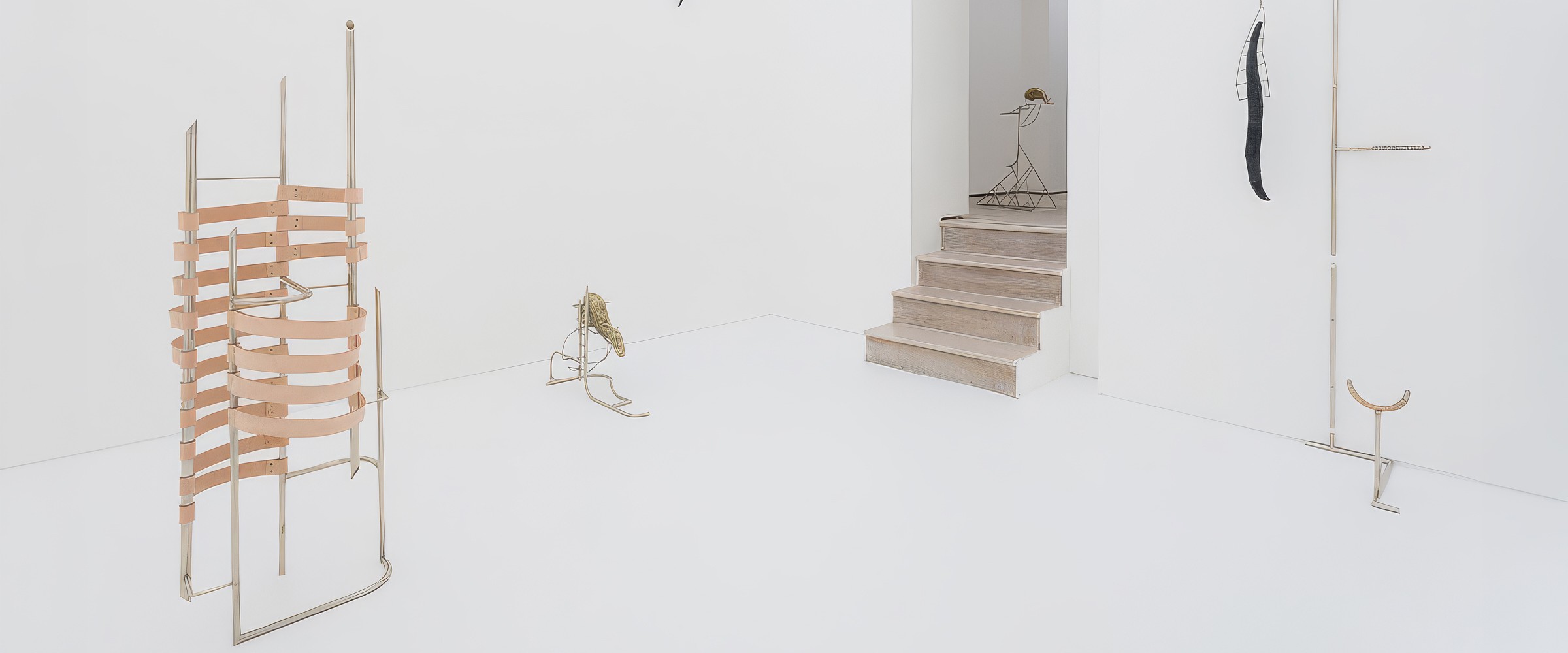
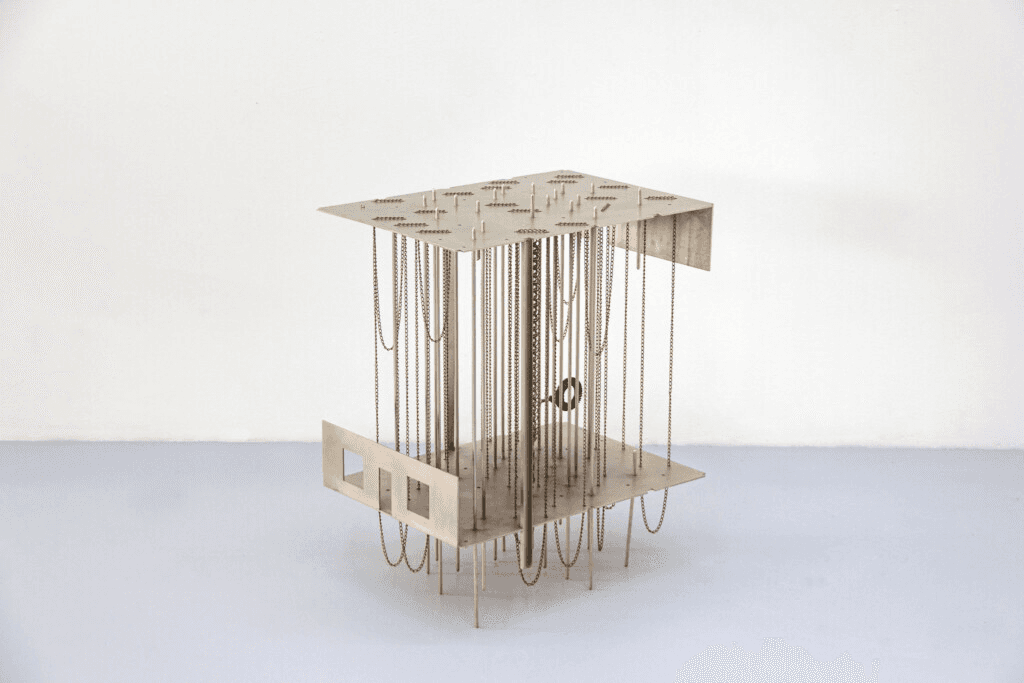
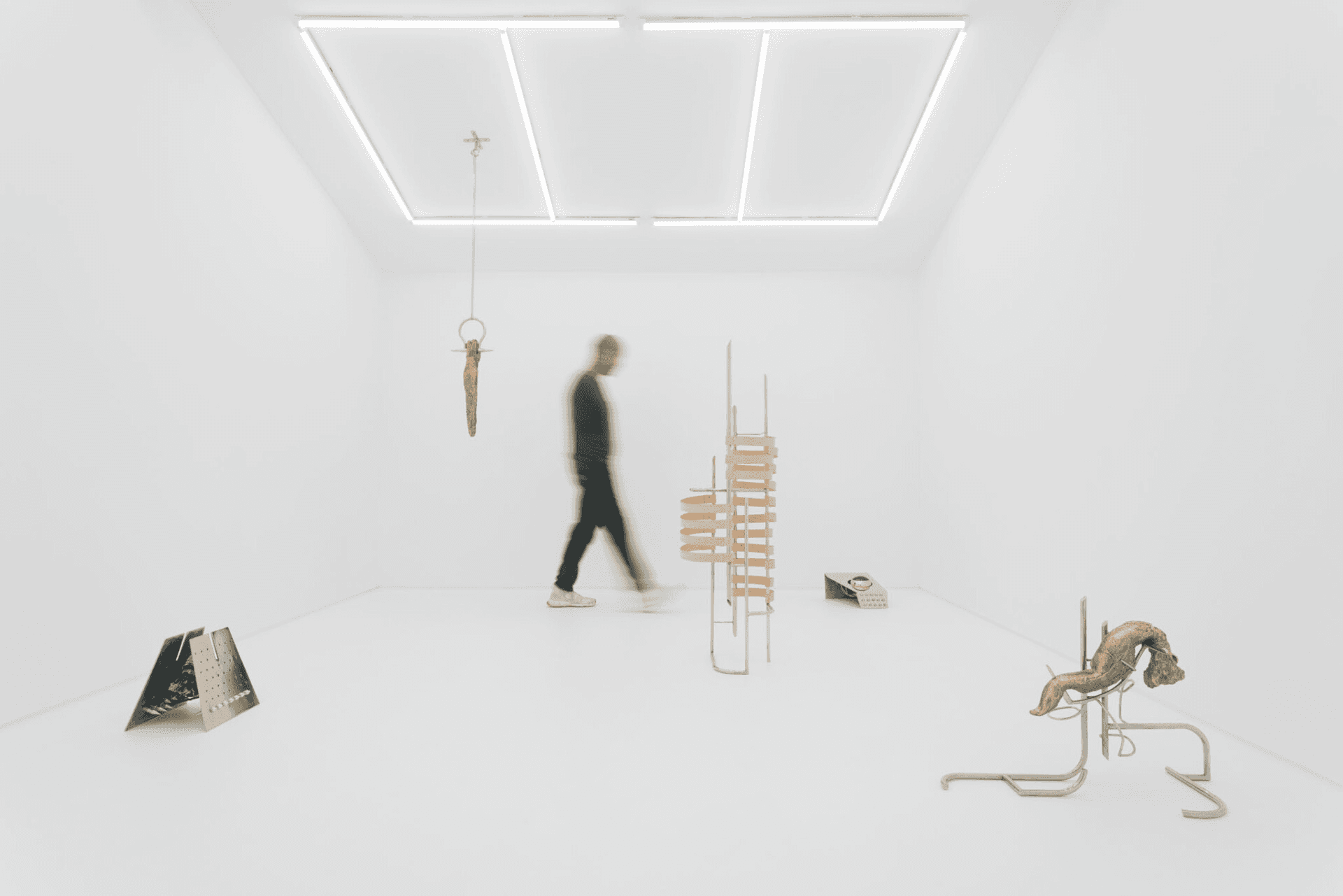
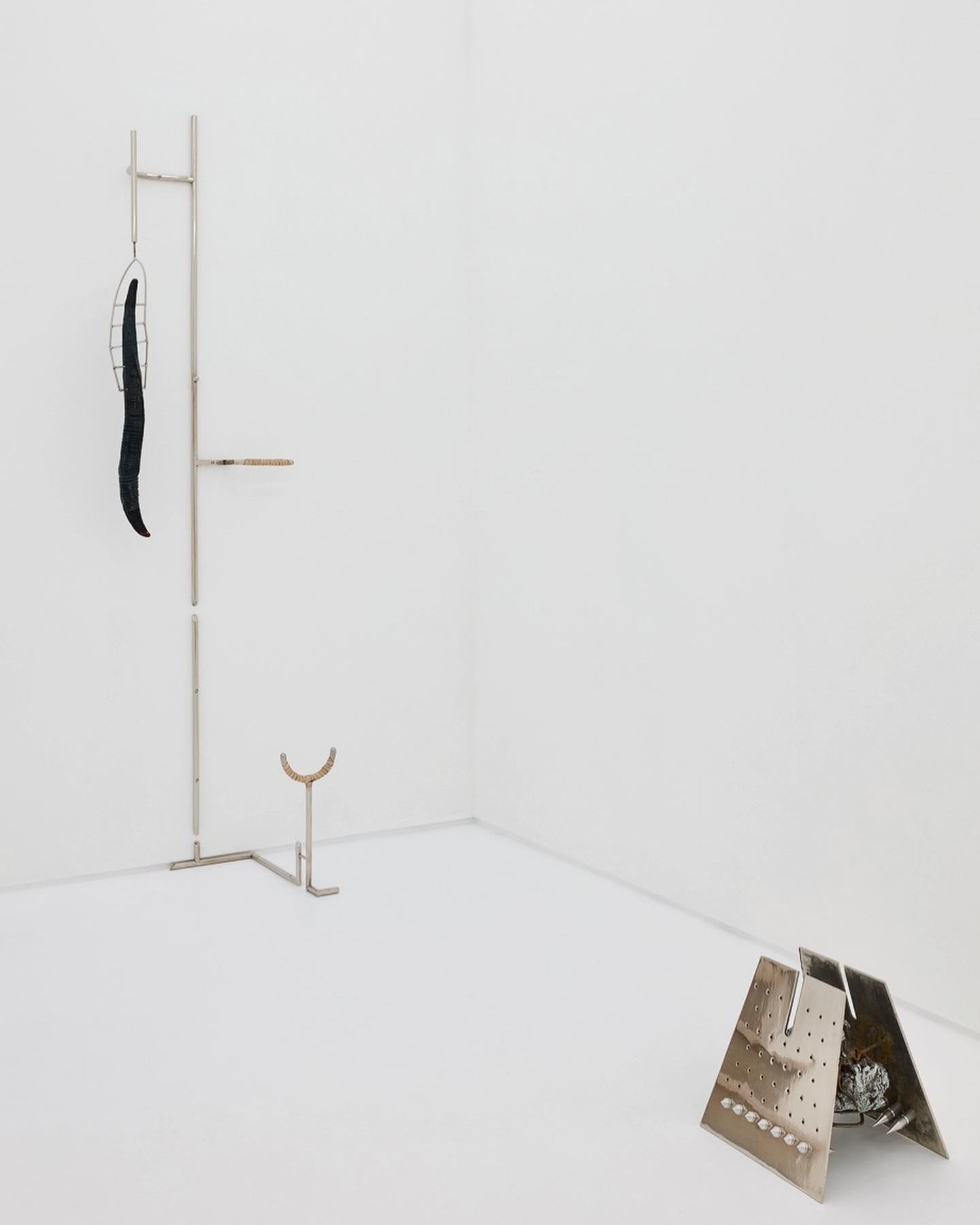
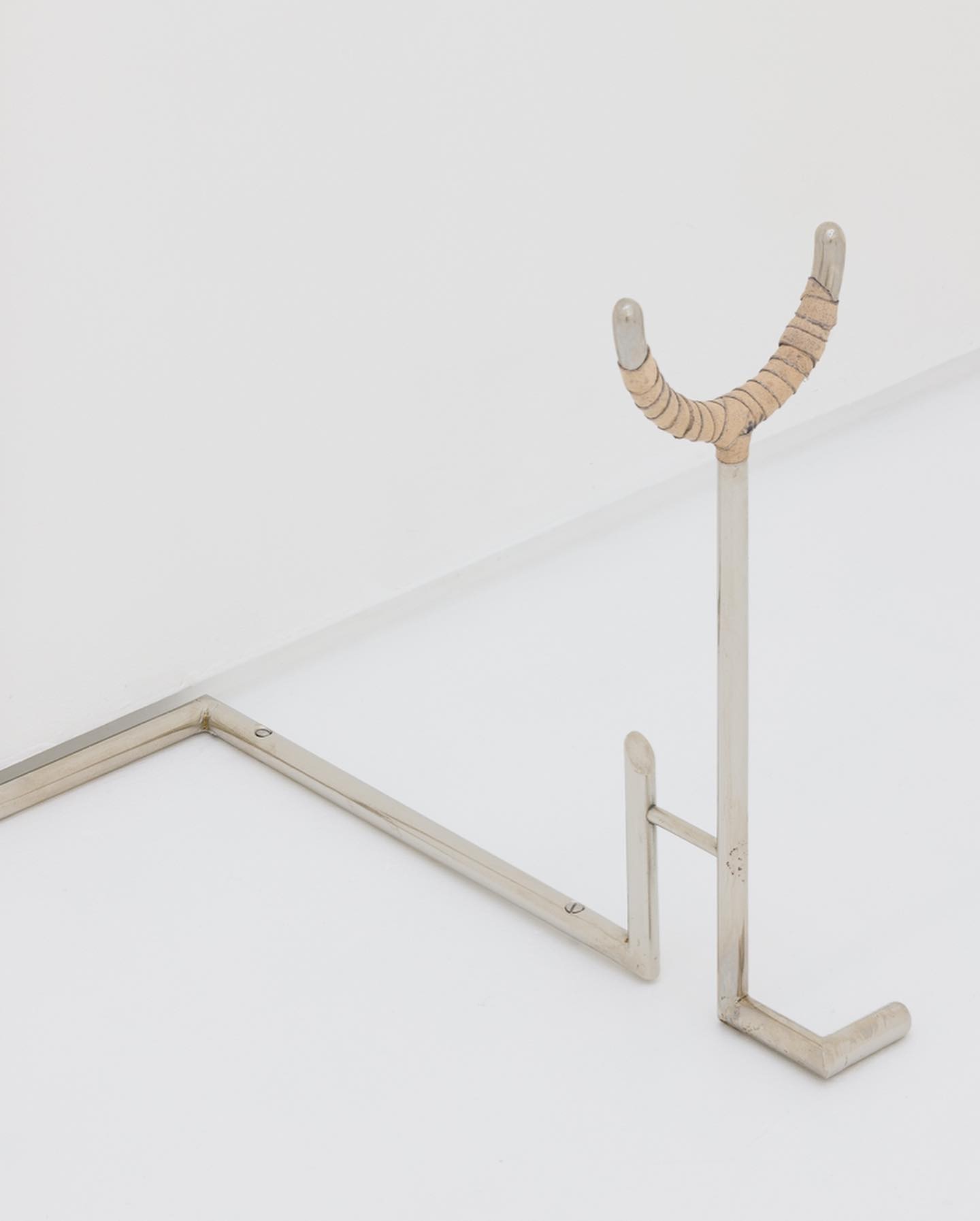
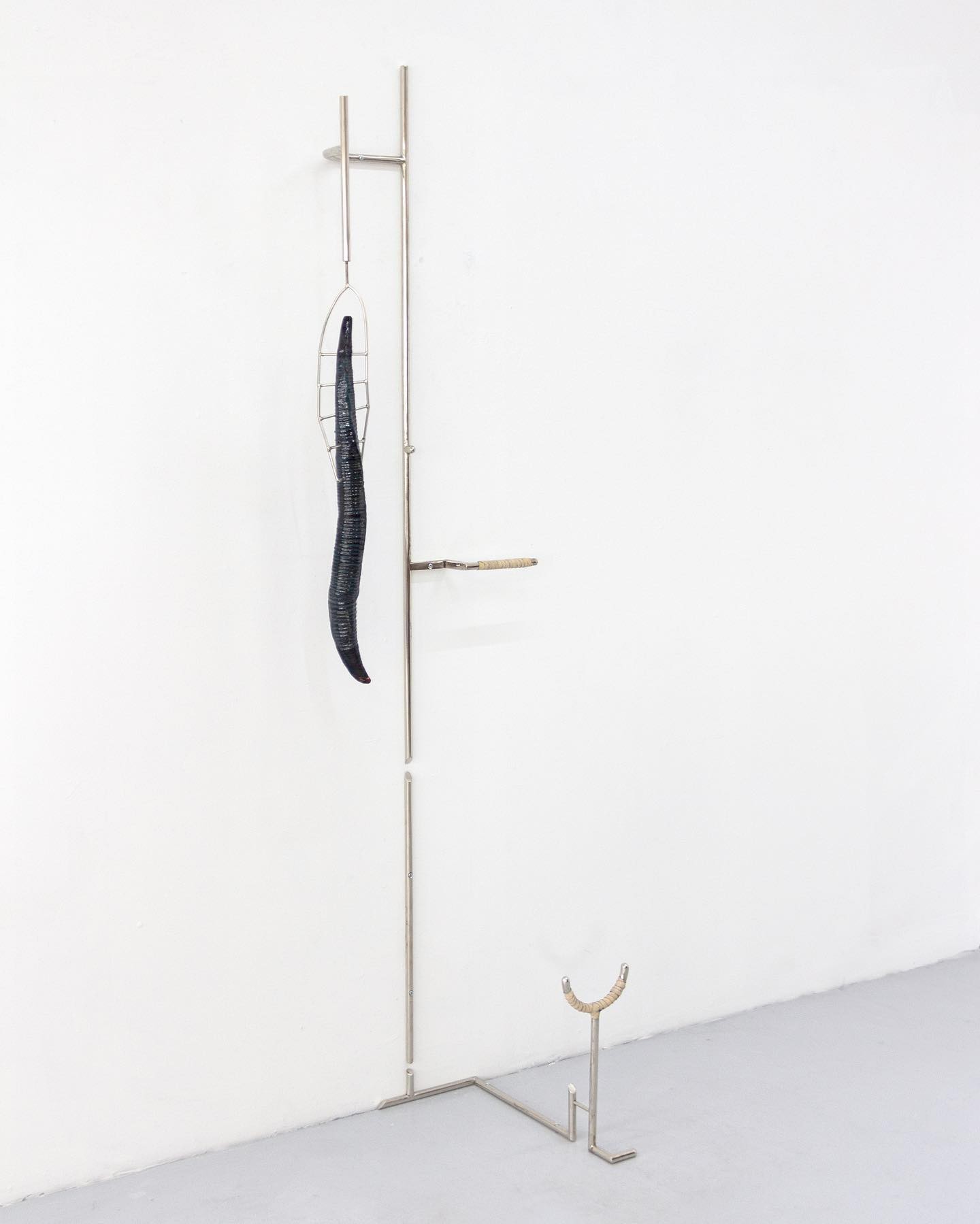
At SAIC I wanted to study sculpture, but was intimidated by the heavy-duty Dad energy in the basement sculpture department. The foundry was run by a woman, Carolyn Ottmers. As a queer Asian kid, this was my in. I mention this because these ideas of safe spaces and holding space is real, and it gets passed on, I would not have been able to start my career without that opportunity. After SAIC I didn’t want to continue for my MFA, so I went to San Francisco and worked in a foundry for a couple years. I moved to New York in 1996, all the time loving contemporary art and hating and not understanding the art world. To make ends meet I worked in fabrication, and fell in with a design-build architecture firm, young architects obsessed with the international style and Jean Prouvé. I worked in the shop, cutting and welding extrusions, building vocabularies. I was interested in ideas of utopia, especially in regards to immigration, and the post-minimalist attitude towards material and construction. Eventually I was able to quit and concentrate on my artistic practice, and in 2015 I relocated to Mexico City. All my current sculptures use steel as the base, I’m thinking through form by building an armature, an armature that can restrain, hold, exalt, hold together fragments. All these experiences place the objects that I make outside of sculpture, with the potential to stand as self-reflective, esoteric objects.
CNTRFLD. Your sculptures are frequently described as autobiographical, especially in relation to your transnational background. Could you discuss how personal histories, family mythologies, and social positioning inform your recent projects?
YM. This is a recent thing, it was during the pandemic that I really started to think about who and what we hold close, and what “ancestral“ really means. I had always felt that my access to my heritage was through self-made mythologies, that it was always a couple steps away from me, and filtered heavily though whatever means I was getting my info. That coupled with this instilled urge to be new and assimilate, a subtle, taught, rejection of my race. Maybe I didn’t feel like personal stories were valid enough, but I tried to respect that real change was through all of our personal accounts, not despite them, through dogma. The pandemic was a period of real reckoning for a lot of us, an intense exploration of interiority.
I did two projects that directly related to my family. “I desire the strength of nine tigers” at Fierman in NYC was based on interviews with my mother. Really I was using her as a medium to access my grandfather, who died young, I never met, and I am supposedly the most alike. It centered around the Japanese invasion of Malaysia during WWII, my mother was only 2 or 3 at the time. The Japanese invaded their village in Borneo, my family fled the village and lived with the indigenous Sea Dayak. Eventually they returned to the village. That’s the general gist, there are several parts that I still draw on. One in particular is the relocation of the school my grandfather ran during reconstruction, the center of the Chinese community. They disassembled the building bit by bit and rebuilt on another site. I think this story is so poetic, the dismantling and the re-construction, memory, bodies, architecture, home, movement, all very relevant things to us, now.
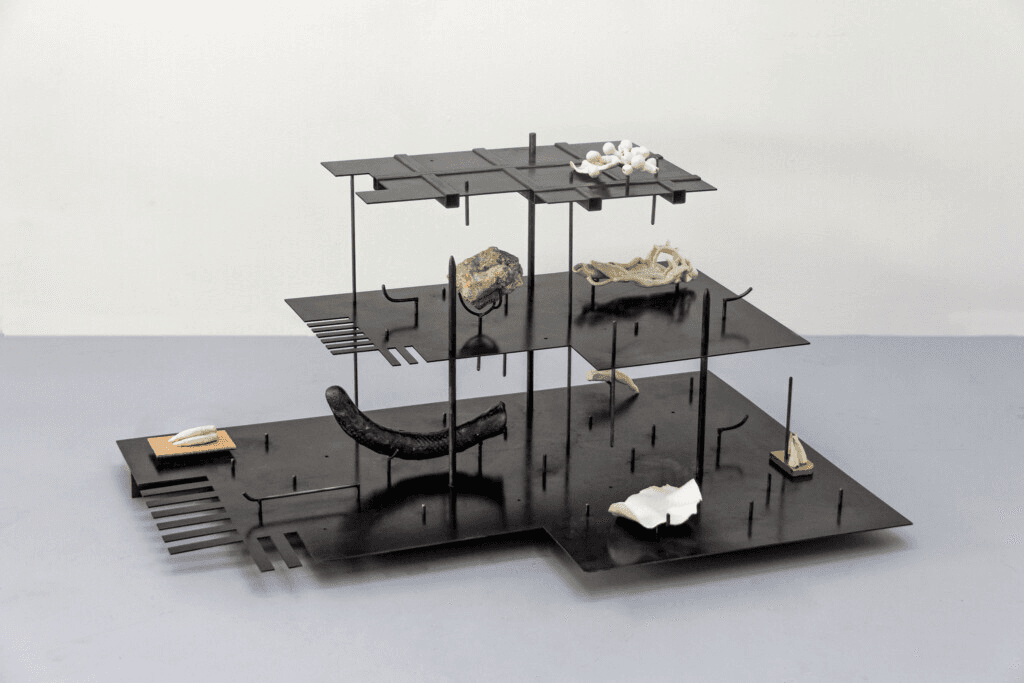
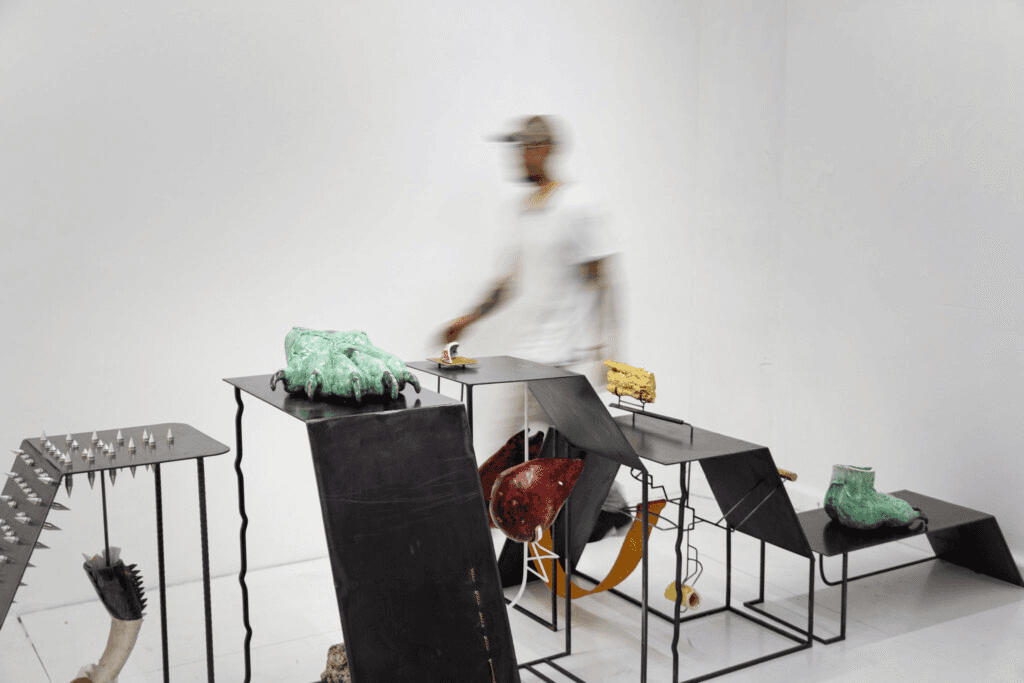
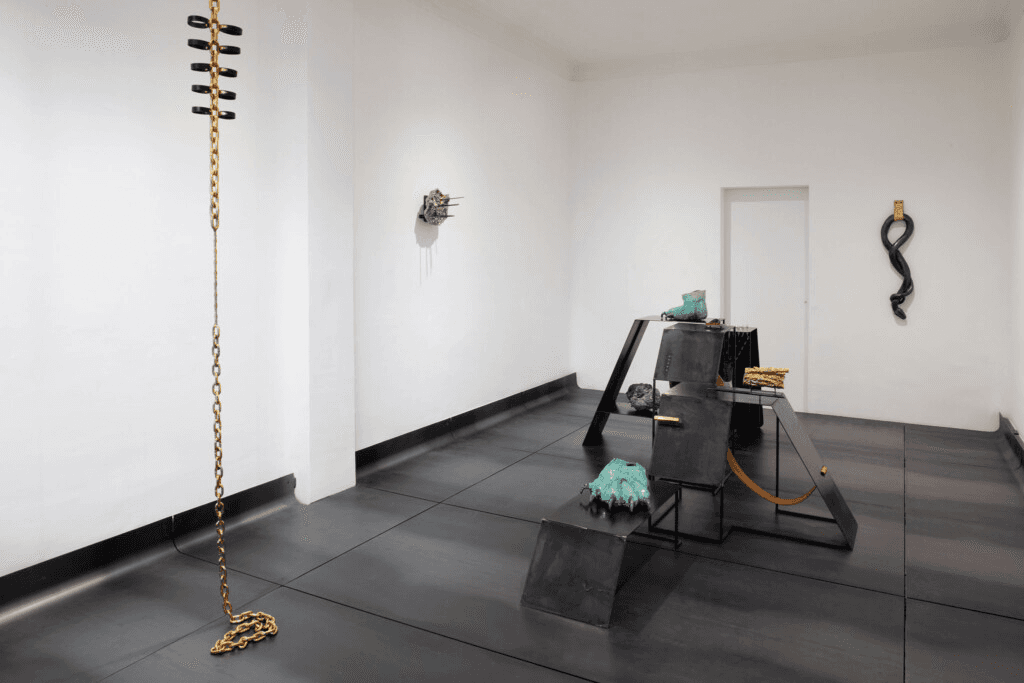
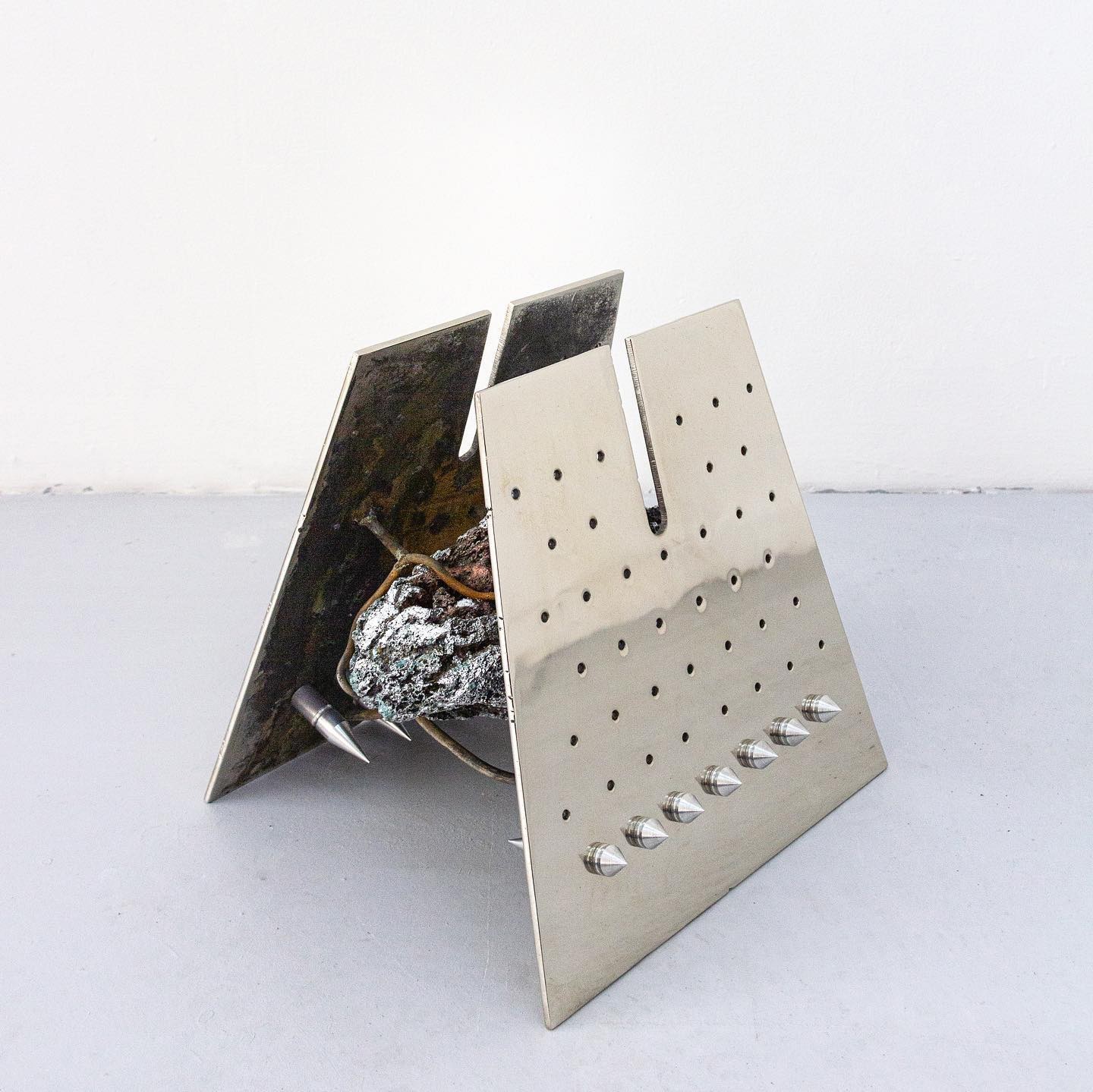
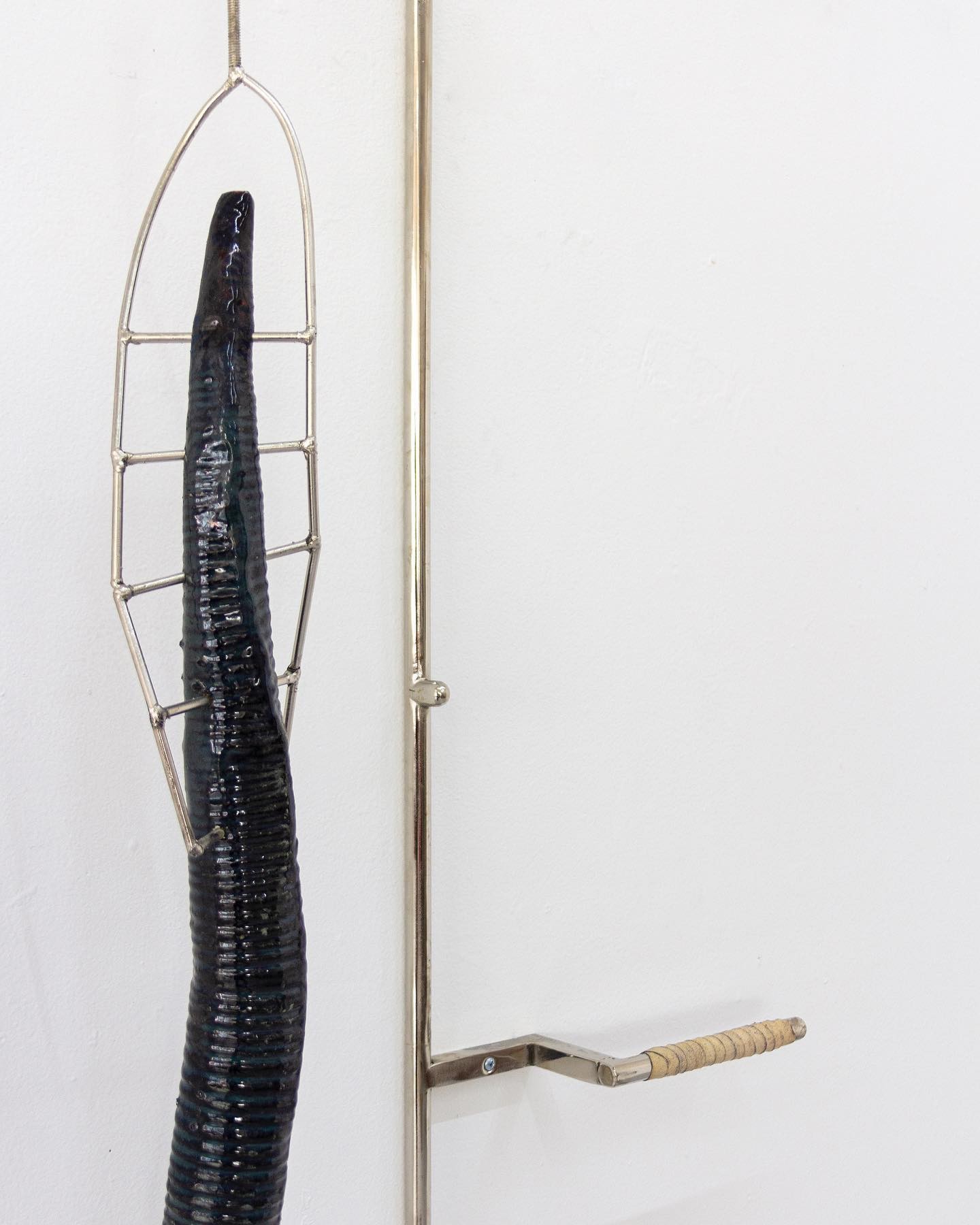
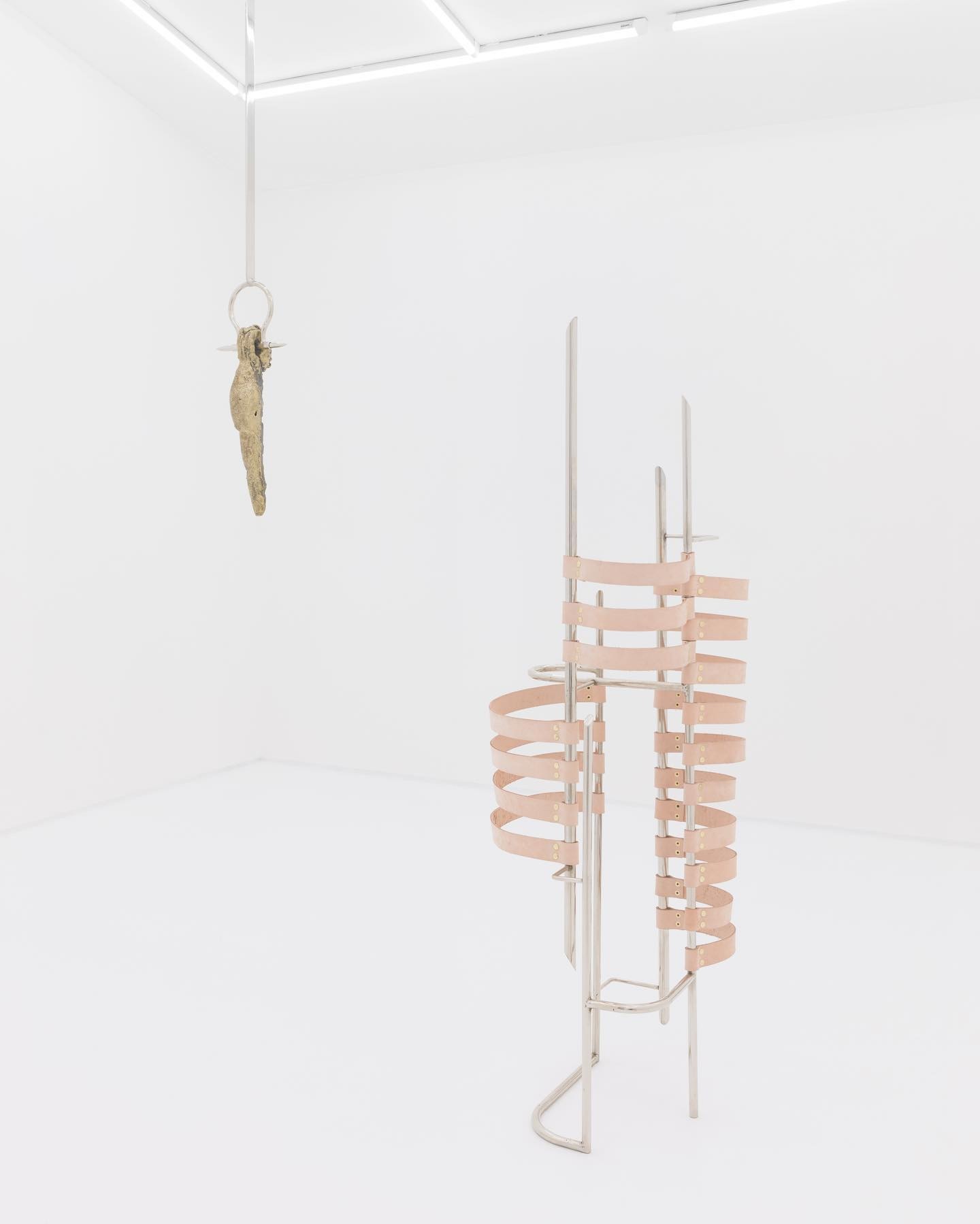
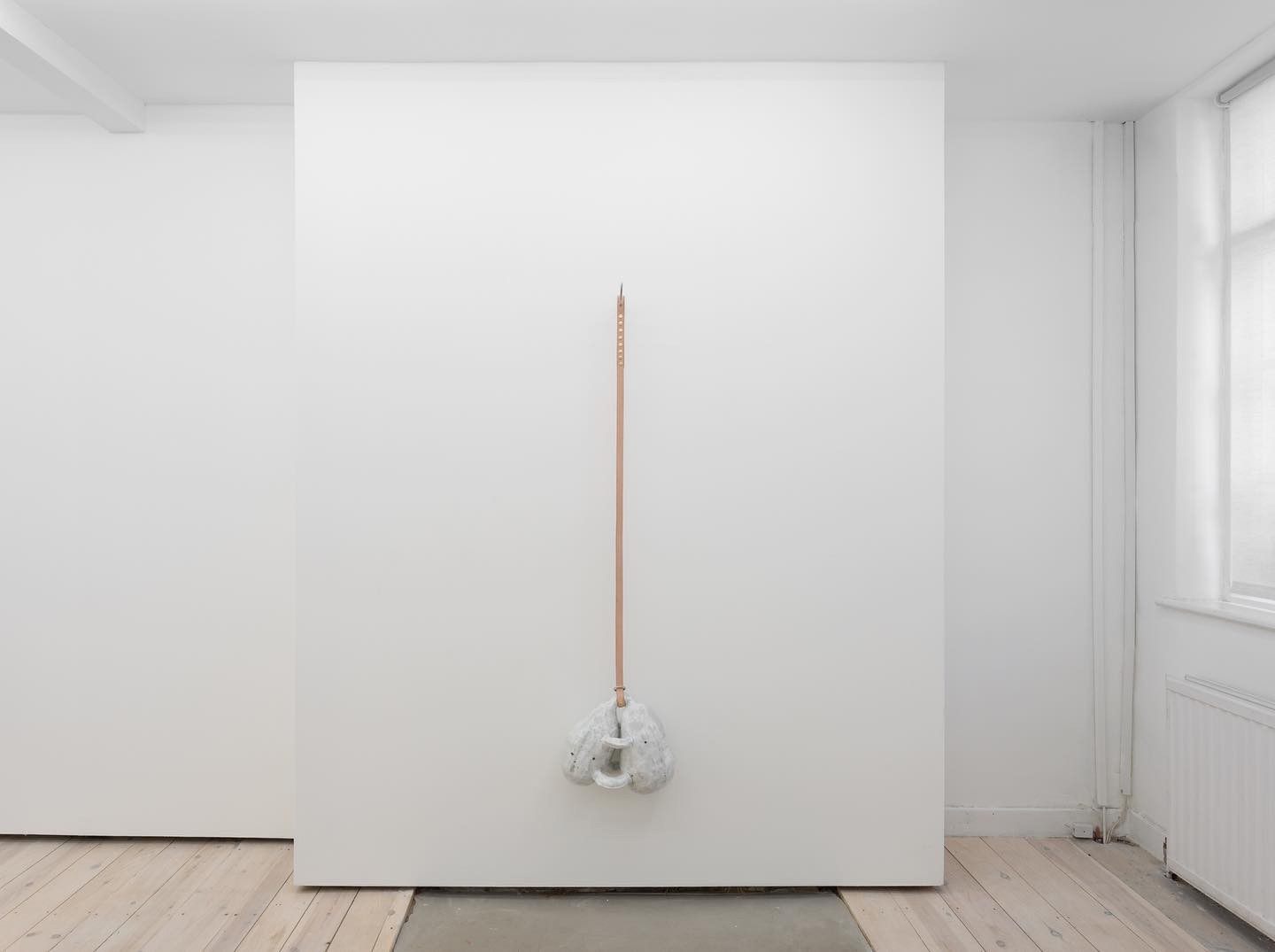
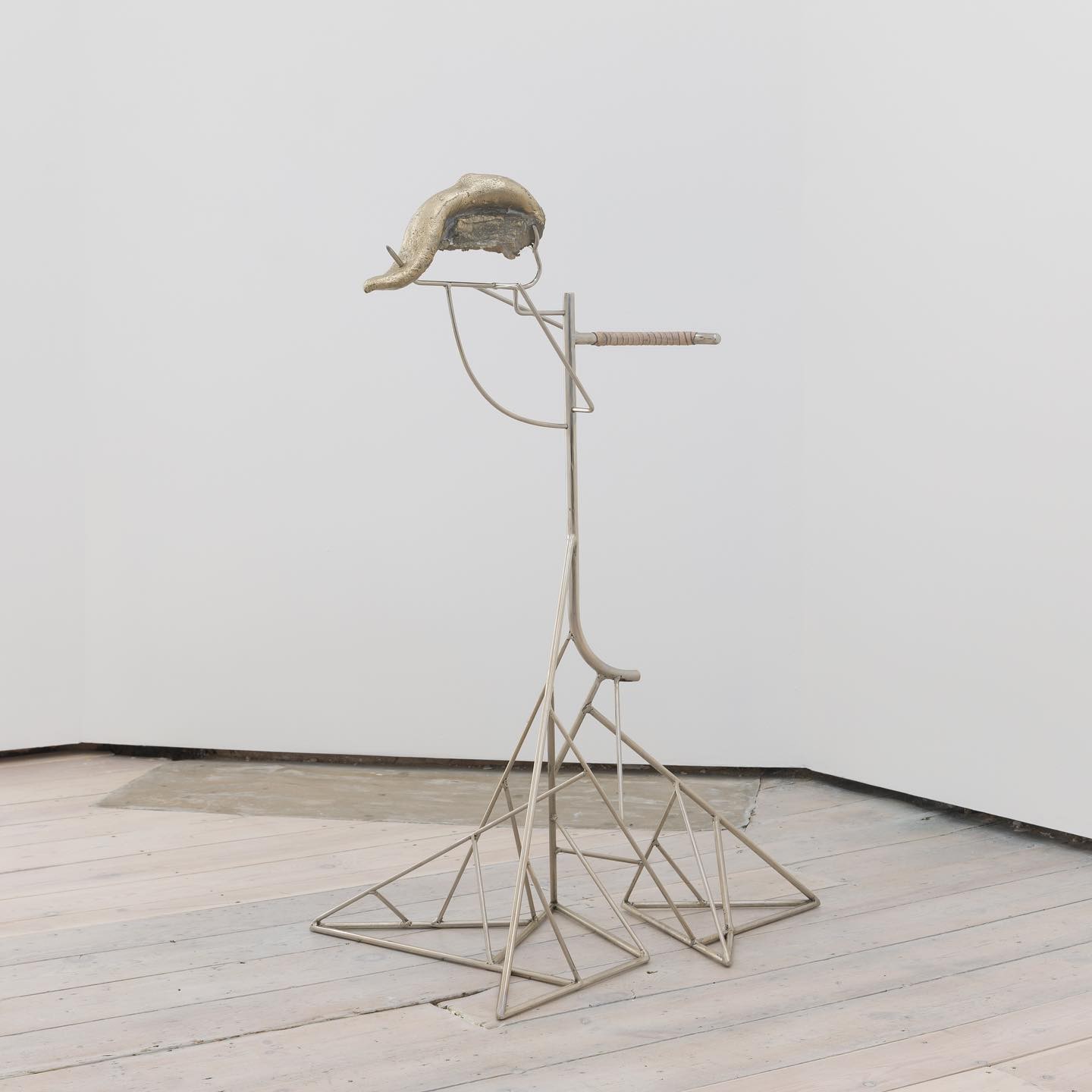
The second project was “Yerba Mala” at Campeche in Mexico City. I decided to approach my paternal side. The main installation was modular, pyramidal series of steel platforms intervened with ceramics, leather, and electro-plated volcanic rocks. My practice in general deals with equations between the body and architecture, a universal, human body. With “Yerba Mala” I started to think of our bodies and mythological creatures as one expression, that our condition is basically animal. I based the installation on the tattoo on my left arm, which I got not to remind me of my patriarchal heritage but how I am separate from it. The tattoo is a monument, on my skin, so I extracted aspects of it to make this fragmented fu-dog/qilin/dragon/ghost body. In the show I used several electro-plated volcanic rocks. In Mexico these are called “tezontle” and have a very specific cultural reference. I relate this rock to the pacific rim, the ring of fire. By nickel-plating them I am dragging this super primal material through a modern industrial process. The final object is difficult to place, spacey. Its becomes material that stretches temporally, touching on territory and alchemy.
CNTRFLD. Your practice often involves materials suggestive of cultural elements and non-Western traditions. How do these elements contribute to the domestic or industrial character of your sculptures, and how do they reflect your own cultural background?
YM. I am interested in transformation. In objects- in which I am including sculpture, day to day objects, buildings, railings, the sidewalk, etc.- I’m interested in how this final object is guided by who or what is doing the transforming. There are some things that have specific references but those really have to do with the agency of the objects, or how these things are seen- like the tezontle I mentioned before, it has a specific meaning depending on who’s looking at it, where it is, and what’s done to it. That said, there are very few specific cultural references, as you say, they are suggestive. My approach is more open than that. As far as how that reflects my own cultural background, I would say very strongly, as I am finding who I am and what I make becomes malleable in the world, and is, at its core, an amalgamation of both beliefs and inheritances. Because of the focus of this forum CNTRFLD, I would also say that this experience is in particular an Asian diasporic experience. That we are allies or enemies depending on the shifting gaze, and because our often pieced-together pasts, are vulnerable to inaccurate definitions. It’s like we are literally ghosts.
CNTRFLD. How do you perceive the impact and significance of Asians in the arts today, especially in terms of shaping and reflecting global culture? And how do you feel your own background contributes to this broader conversation?
YM. I can only answer this through my personal experience. One of the reasons I left the States was a lack of opportunity and community among the Asian diasporic artistic communities. There was a great fear of “ghettoizing” yourself, or a fear of nepotism, to pay attention to other Asians, between artists and also by the few Asian curators around. Also, there have been studies about how Asian and Latino artists need to be born in an Asian or Latin country to gain gallery representation. Since I have left, almost 8 years now, that has changed. I think it changed not only because it was due, but it was also pushed forward by the BLM movement, the Atlanta murders, and the rise of Asian hate during COVID. This to me is unimaginable, in the best way, to see how this has changed, I never thought I would see that day that Asian diasporic voices would be legitimized as has happened in the past few years. 47 Canal, Commonwealth and Council, Make Room, Micki Meng, Murmurs, Tina Kim, and lots of others are all presenting (some for quite some time) strong exhibitions of artists of Asian descent. And also, most importantly, in the company of other strong BIPOC and white voices. If institutions can follow suit, then perhaps our largely ignored participation in the new world can be recorded.
CNTRFLD. Could you share more about how your move to Mexico City has shaped you over the last 8 years? Do you see Mexico as a base for the foreseeable future, especially considering the positive changes you've noted in the recognition of Asian diasporic voices in recent years?
YM. I do see it as a base for the foreseeable future. I have always thought of Mexico as a permanent move. Even though yes I’m culturally very American, I wasn’t even born there, and when I thought about it in a larger scale, it’s minute in terms of the movement of my people, and the movement of people in general, a stop. So that’s maybe the first epiphany that shaped me, as you say. It is of course not without its challenges, and the conversation about gentrification and how to drop into another country responsibly is quite complicated. Maybe the second epiphany is that I could exist out of the tribal, racial binaries that is the states. Here I’ll always be a foreigner no matter what, and in some way that’s freeing, whereas in the states there is always this facade that you belong.
I would say the most important part about the move, that is really interwoven with two ideas above, is the understanding of the porosity of history and my place in it. That the history we learn about not only Asians, but all peoples in the new world, is defined by the current borders and the fabrication of nation states. The current US/Mexican border has only been around as it is for a 150yrs or so. For 400 years, Europeans shipped goods and labor from Asia through the Americas. The coolie system was a replacement for African slavery. There was a series of political walls over centuries that controlled the ebb and flow of our population. To reduce the history of Asians in The Americas to railroads and internment camps is an oversimplification. It’s an appreciation of just how vast the condition of “diasporic” is.