CNTRFLD. In your photographic practice, you explored how objects in our environments can acquire a talismanic quality. Could you elaborate on the significance of this exploration and how it manifests in your current works?
ZW. I grew up around a lot of religious talismans. Seeing these talismans carried on bodies in urban contexts is, to me, a reminder of a base human need to find comfort and express desire through our relationship to objects. I’ve always been drawn to them for their aesthetic properties, while reading the range of metaphysical properties that a talisman allegedly holds as a reflection of the inherent workings of a culture, and the often-outmoded systems of thinking that they perpetuate. For me, considering this is a great way to break out of binary modes of thinking.
I have a broader personal definition of talismans. They are memories, both cultural and personal, externalized into material form, hedges against forgetting and reminders of corporeality.
I’m interested in what happens when I shift these objects and associations into constellations that generate dissonance. Working with jewellery is obviously an ideal way to tap into these narratives.
CNTRFLD. You mentioned participating in two group shows in 2023. Could you share more about the themes or concepts explored in these shows, and how your work contributes to or contrasts with the overall narrative?
ZW. The work in these shows are attempts to resolve my discontents with the nature of image-making: the rectangular picture-frame, and how I was more interested in charting the changing meaning of a single image over time.
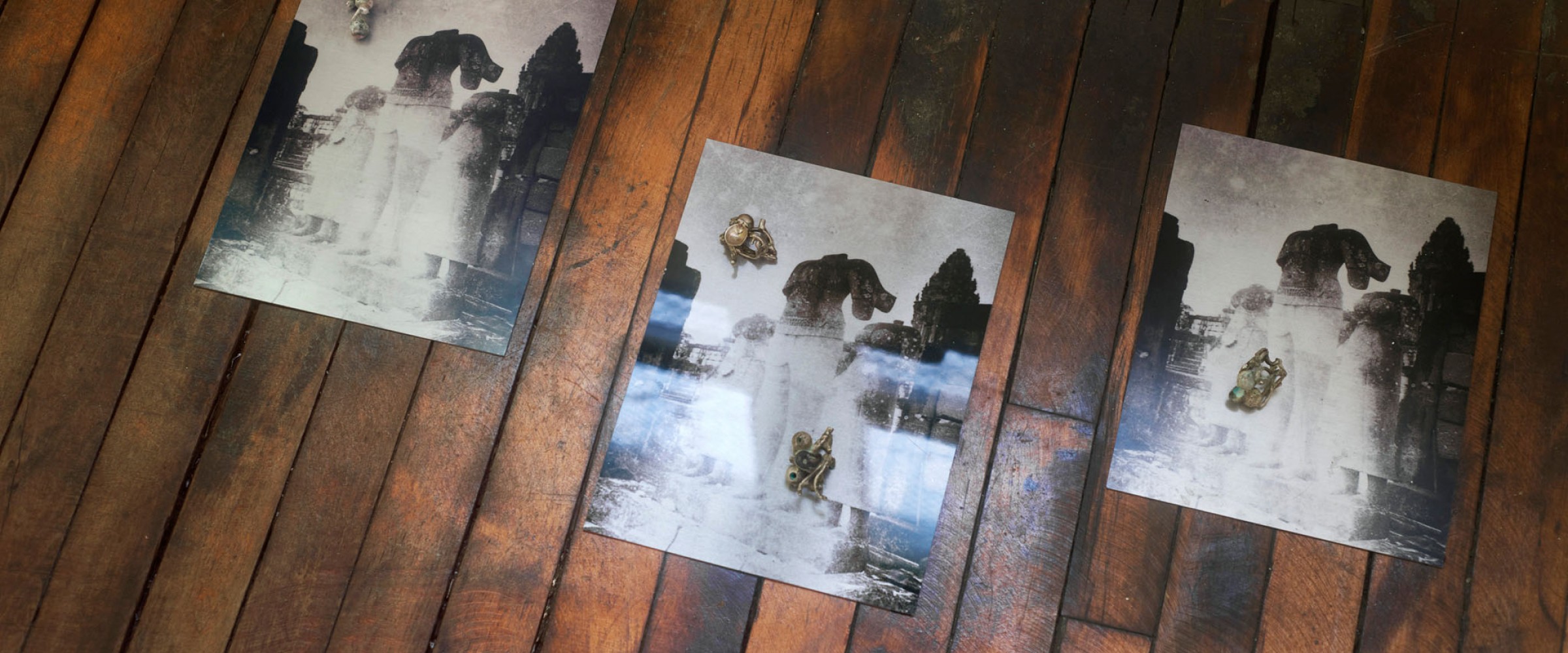
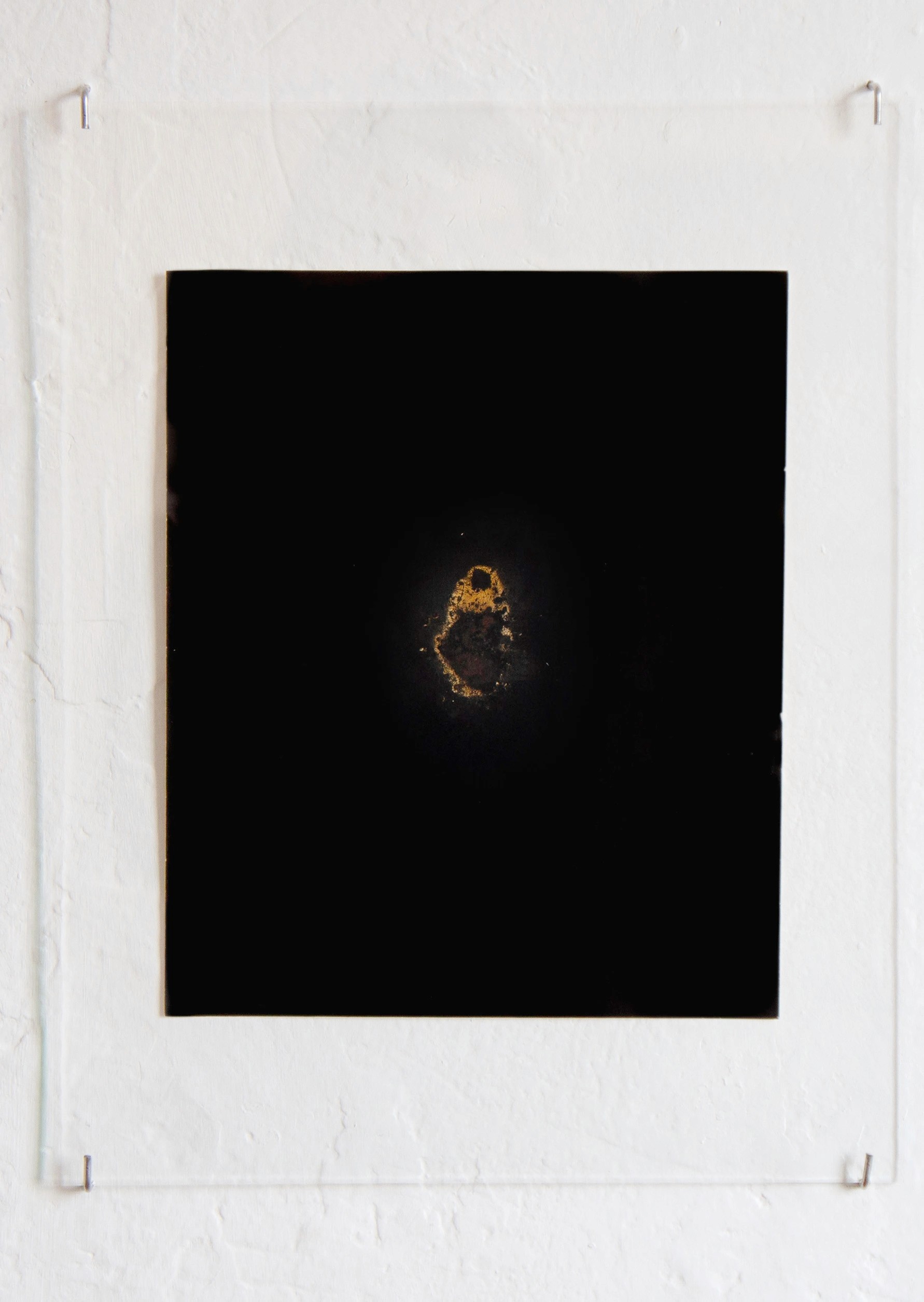
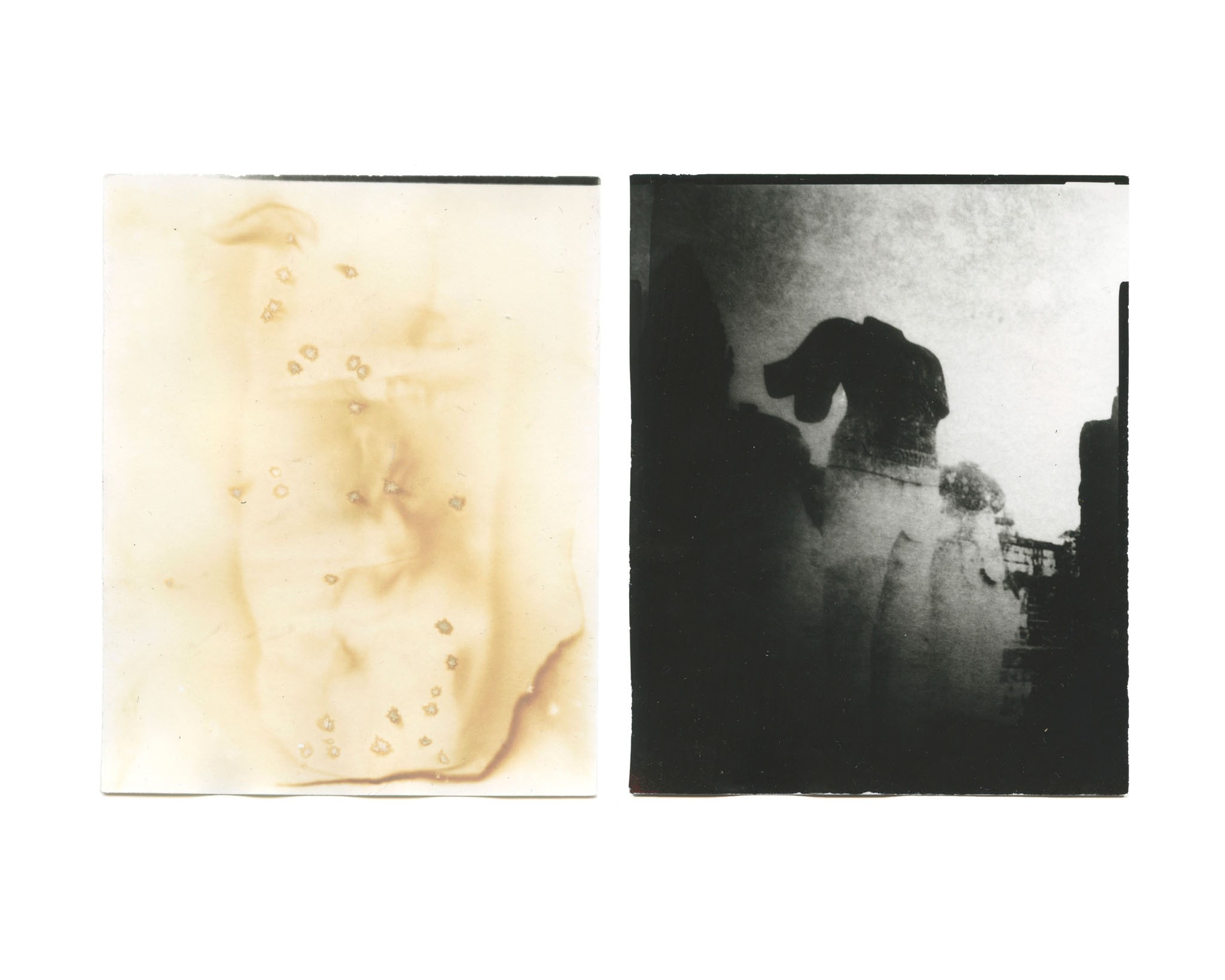
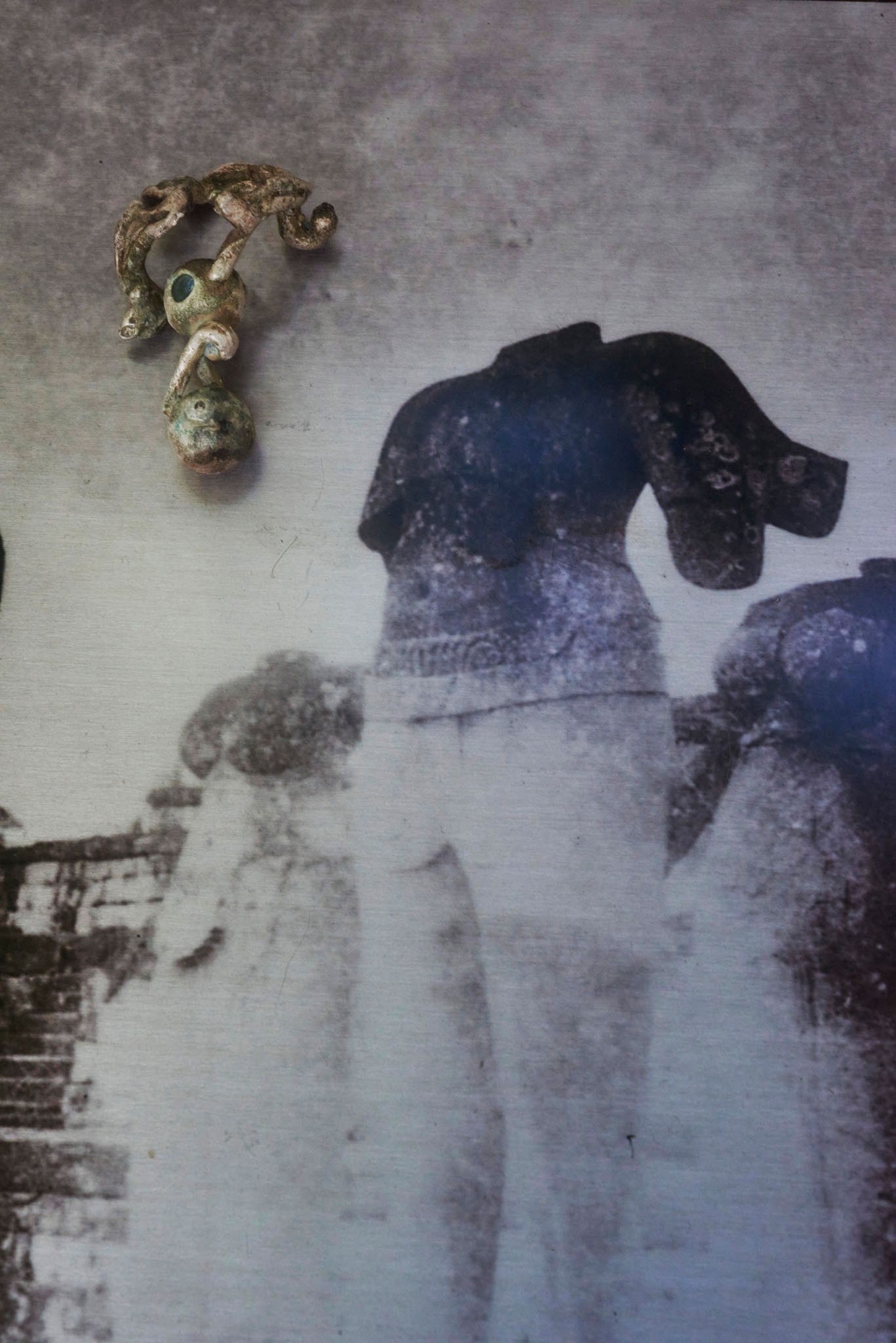
A single image makes an appearance in both shows. I consider this image the foundation stone of my practice. Made by my uncle, the only other visual artist in the family, it depicts three sculptures in Angkor Wat, Cambodia, decapitated and limbless because of looting. Because the negative has been damaged by fungus, every print I have ever made contains these imperfections. However, if you were to visit Angkor Wat today, the statues themselves look almost exactly as they did half a century ago, when this photograph was taken. You’d be able to make an identical photograph, except without the aged quality of mine. I’m thinking about how this ideal point, in a sense of conservation, is almost arbitrary. There have been no efforts to restore these statues, probably because that would not mesh with our mental ideal of these statuary in a suspended state of ruin. Yet this state of conservation is also contingent upon wider cultural forces, as the repatriation of these looted parts is an ongoing process that has its own rules and logic.
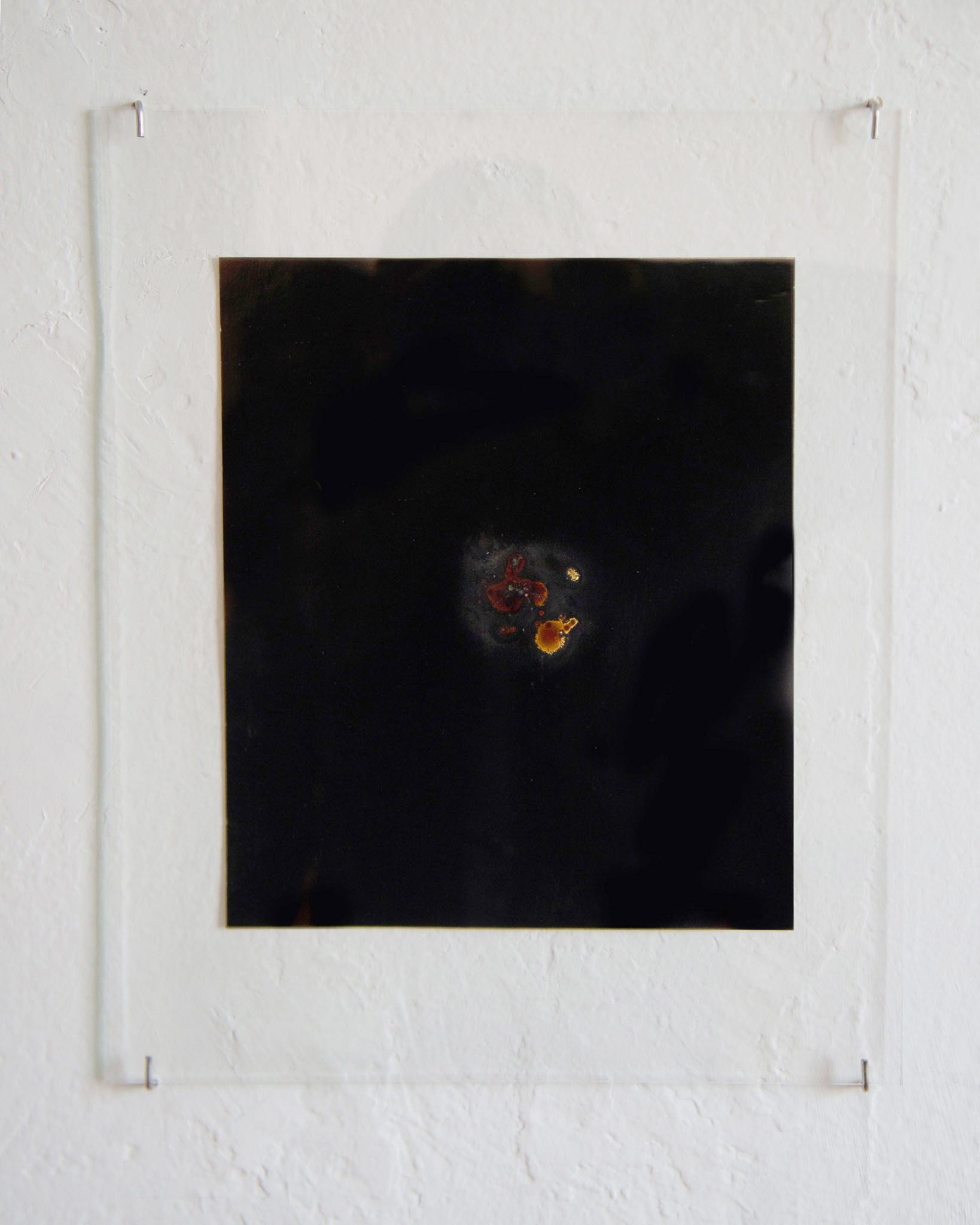
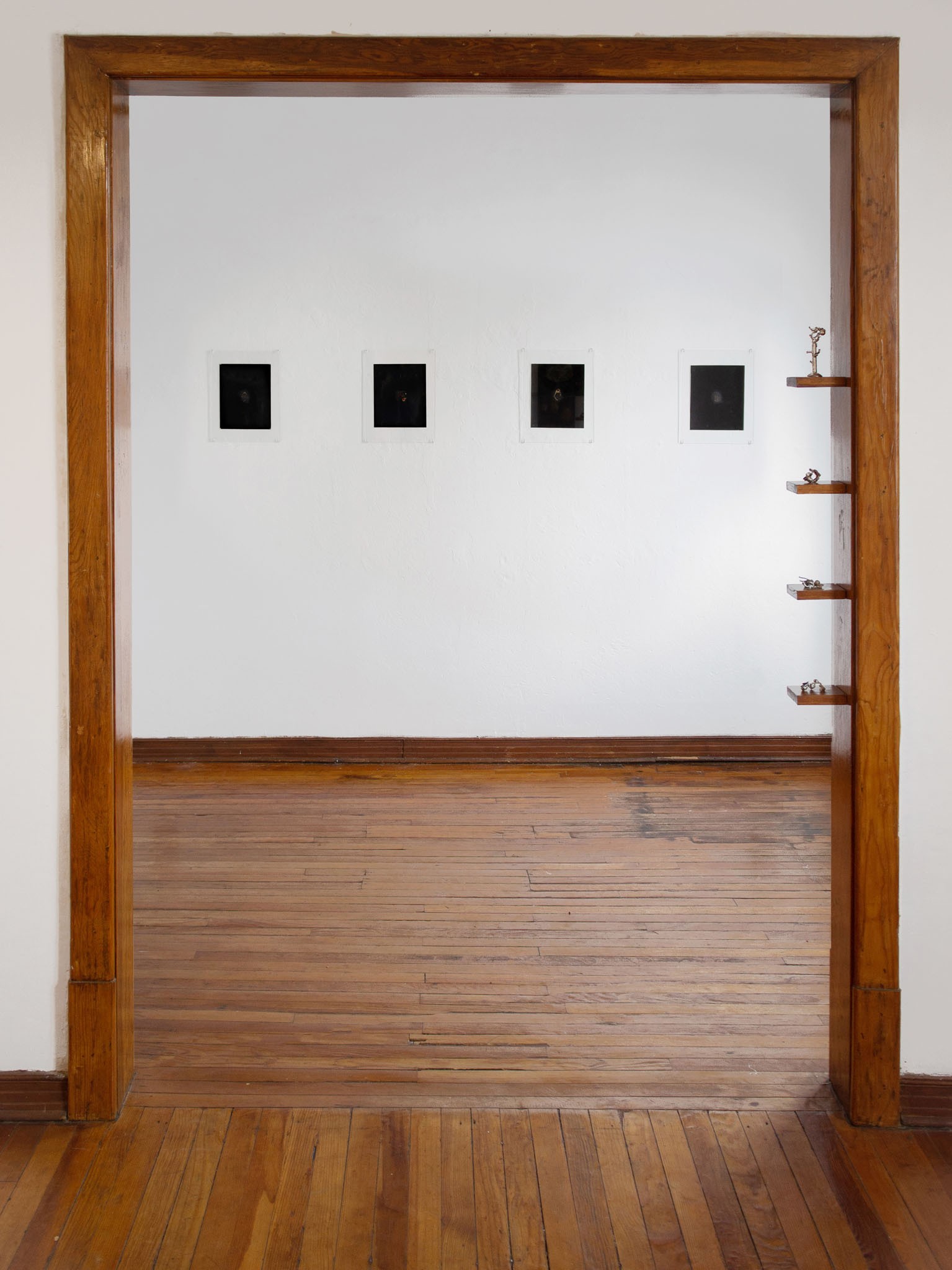
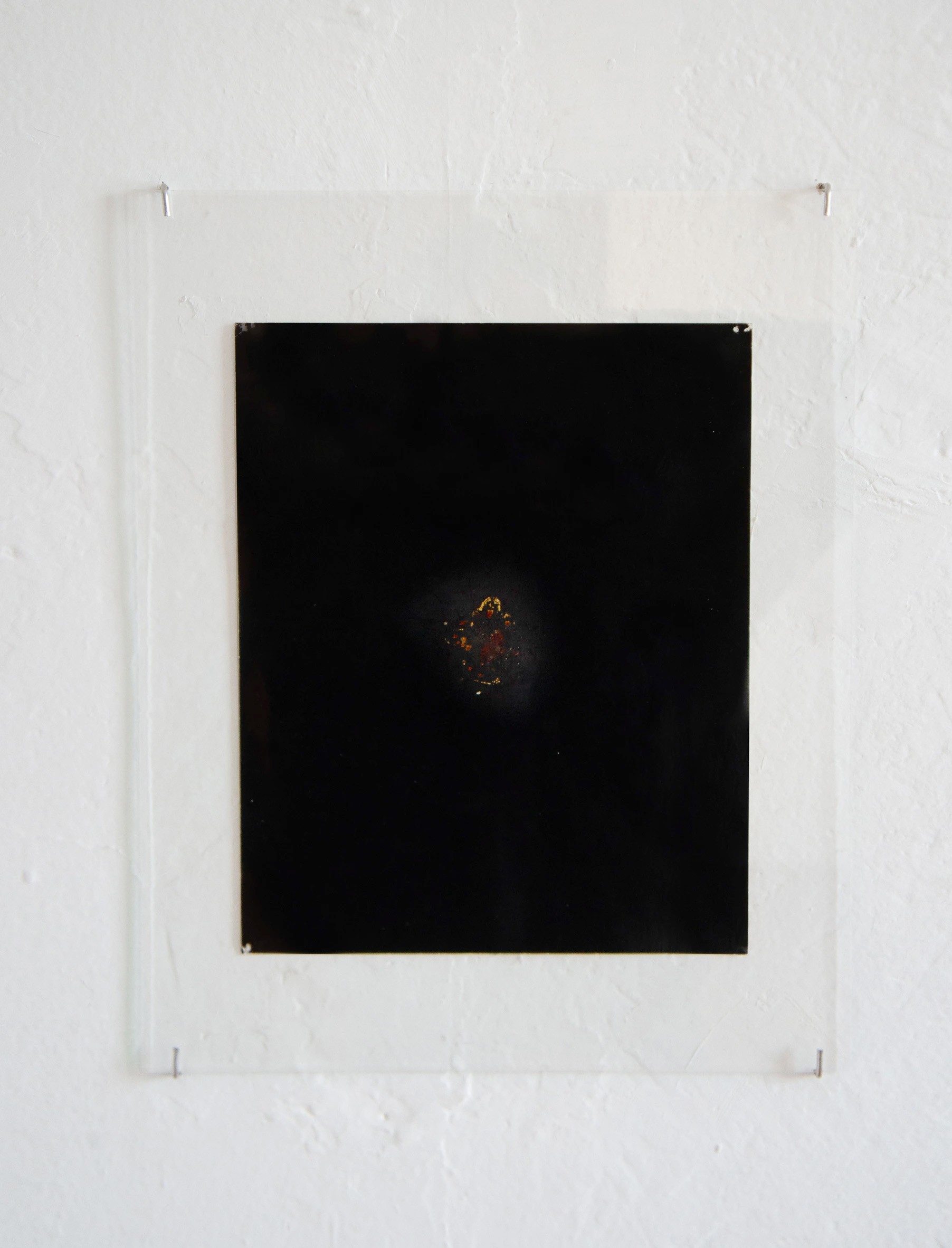
The first presentation of this work was in Oraculo, the first show of Aro, a curatorial project by Enrique Garcia and Isabel Legate. Enrique and Isabel were initially interested in a series of four photograms I had made in 2016, made by exposing photosensitive paper to the light of burning sticks. They were about creating intentionally illogical uses of ritual objects and the property of light.
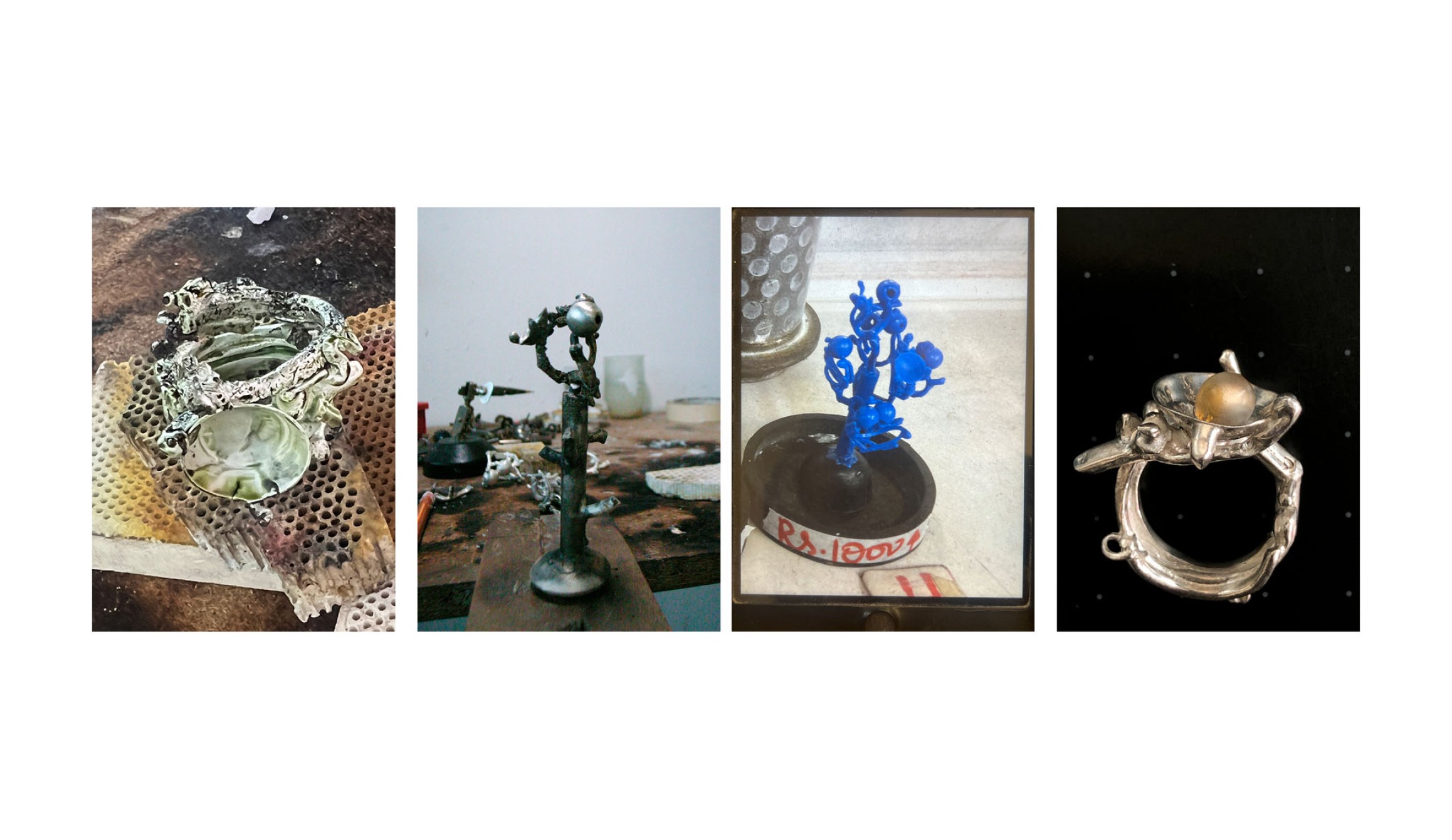
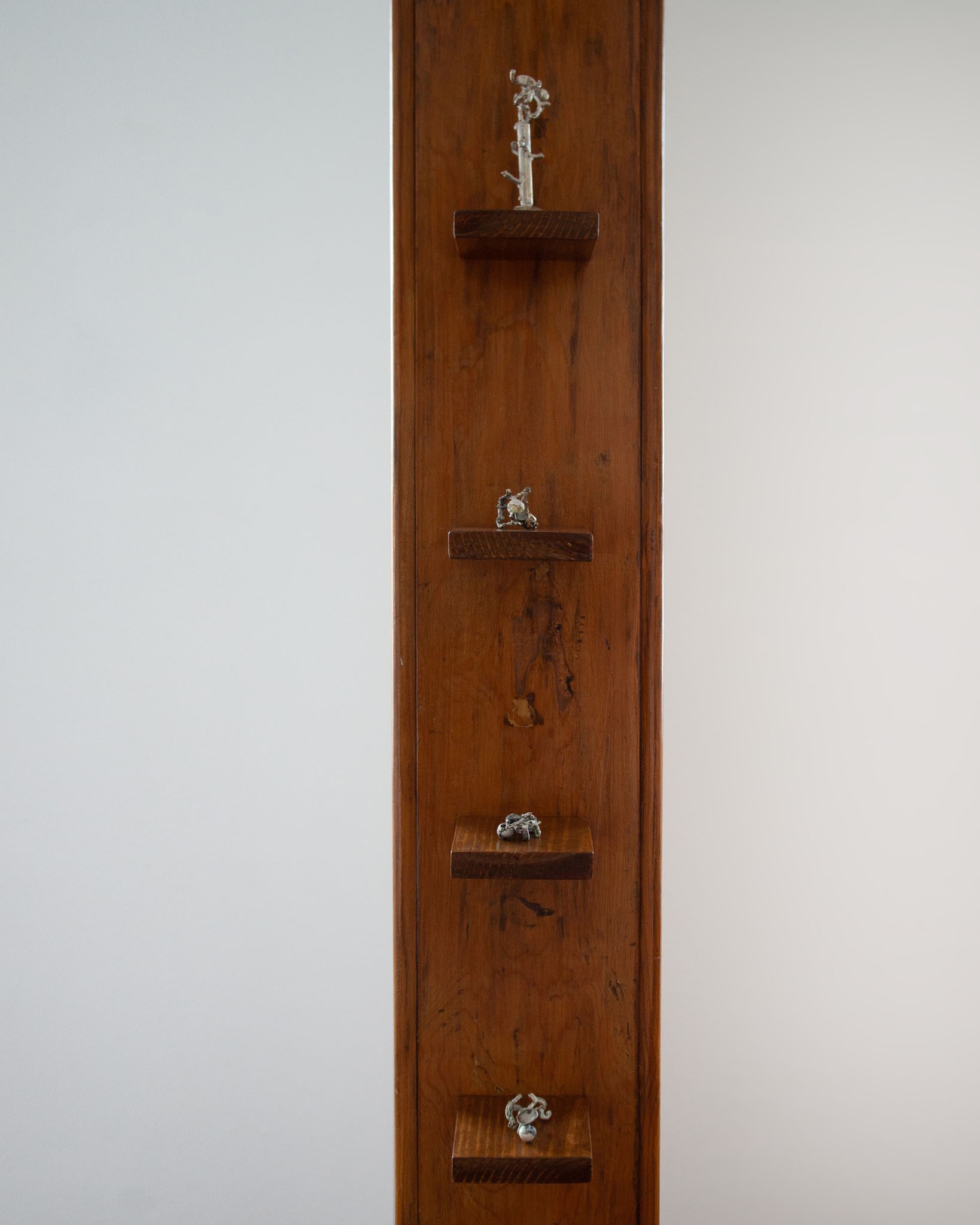
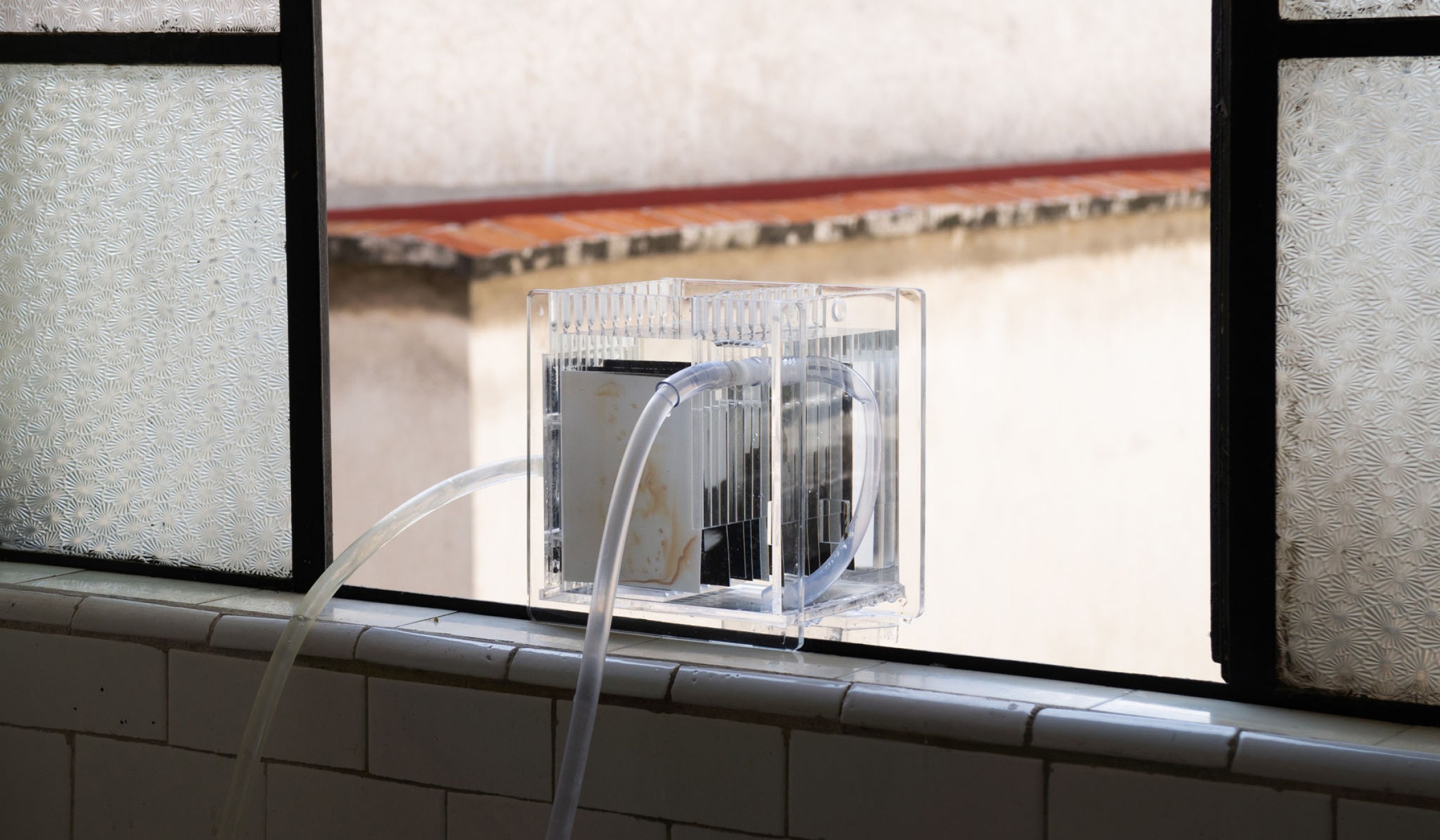
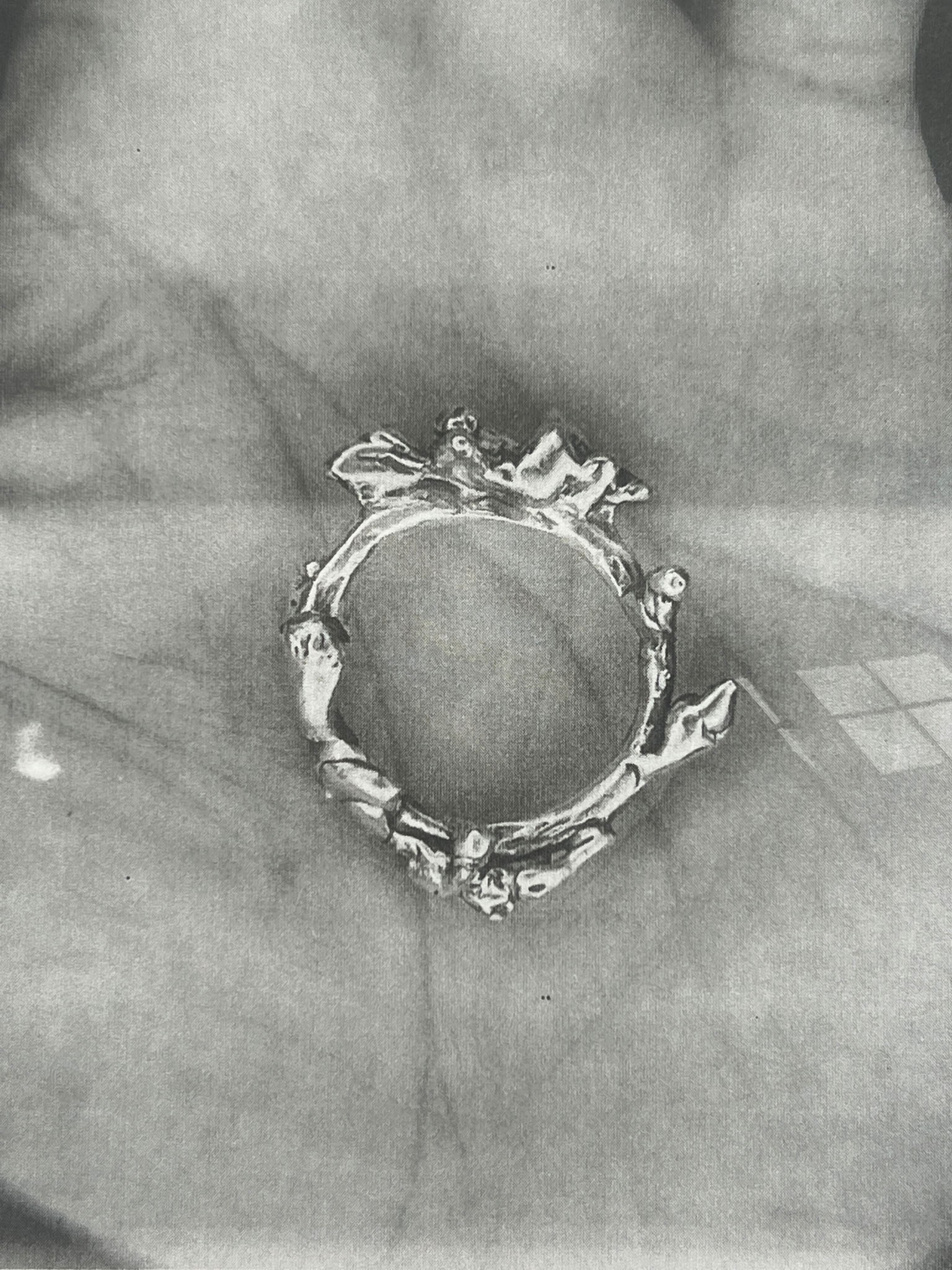
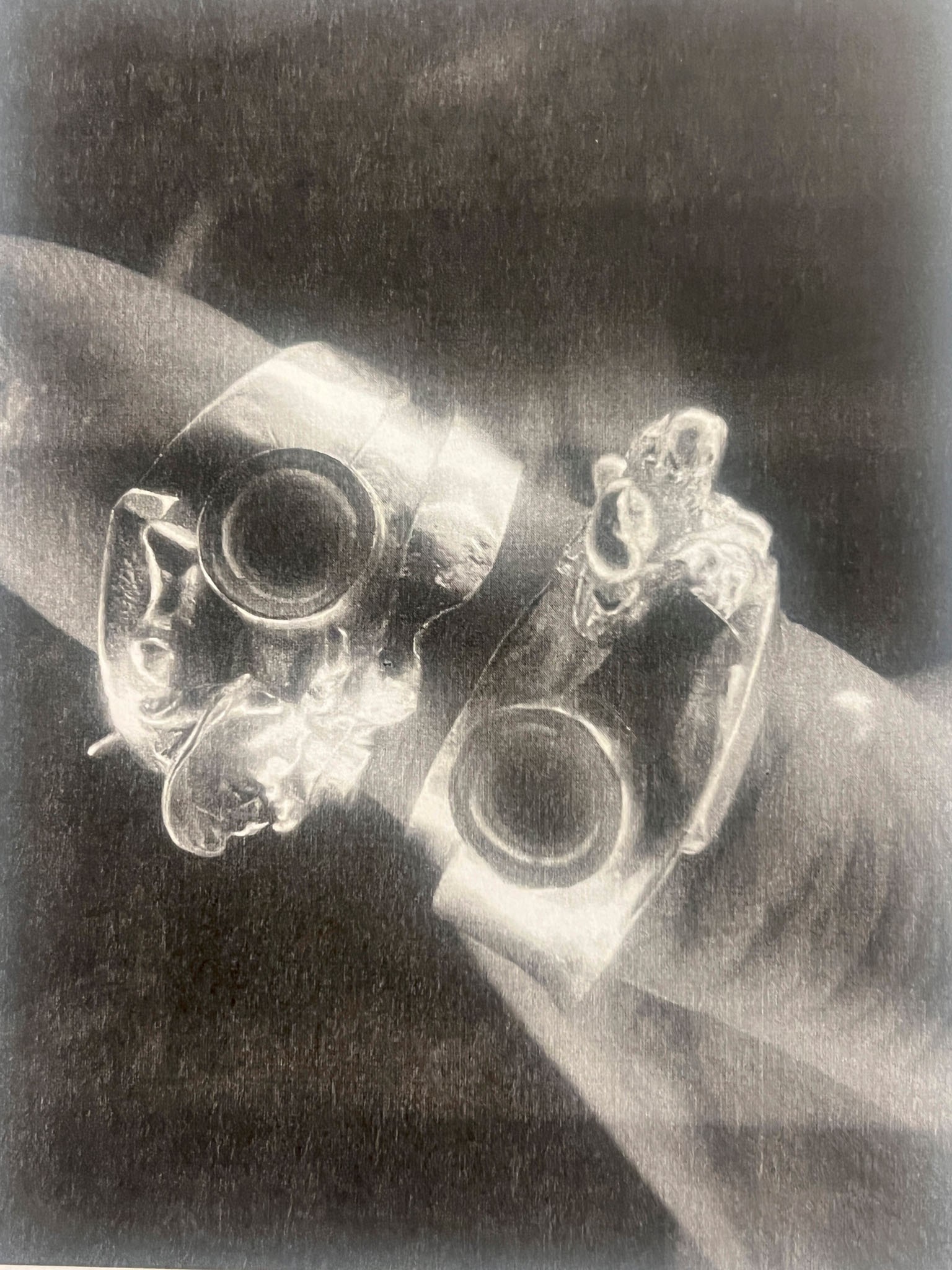
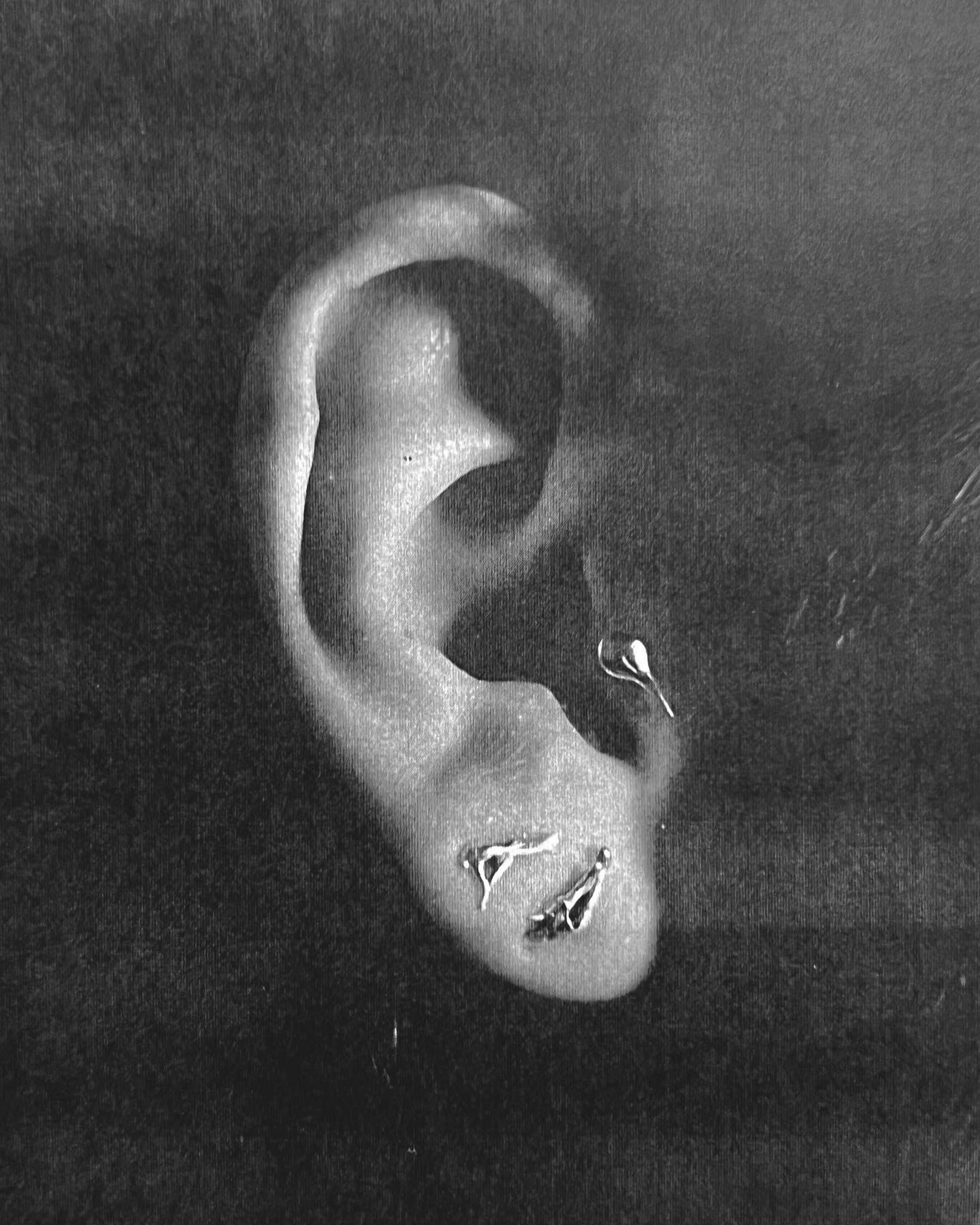
In Untitled (Rinse), seven rephotographed prints of the image from Angkor Wat were left in a standard 4x5 print washer left to run for the duration of the show, which eventually disintegrated the surface of the paper by the flow of water. This piece was shown alongside Untitled (Ovum), a series of four sculptures in sterling silver with chemical residue from soldering left on their surface.
In all three works, I either omitted a step that would create a state of permanence in the work, creating a personal definition of a finished state, or chose to extend the application of the process delineated in the step to an illogical conclusion.
Several months later, I presented the same four silver sculptures from Aro, this time laid on three dye-sublimation aluminium prints of the image from Angkor Wat. This work was shown in Conduit, a show I organized with Maite Iribarren Vasquez and Josie Bettman in Maspeth, Queens, a liminal space through which goods and services that sustain the functioning of the city flow. We used verse 11 from the Tao Te Ching as an epigraph:
Thirty spokes join at one hub.
emptiness makes the cart useful.
Cast clay into a pot.
the emptiness inside makes it useful.
Cut doors and windows to make a room.
emptiness makes the room useful.
Thus, being is beneficial,
but usefulness comes from the void.
Working with the same material in a different configuration mirrors the shifting utility of jewellery. Heirloom jewellery with personal, sentimental value also holds monetary value, the latter typically remains latent. In times of war, the sale of jewellery, literally for their weight in gold, can become a determinant of survival. In the context of looted cultural artefacts, however, valuation is far more arbitrary and functions more like a financial instrument.
I’m thinking about my objects in relation to palimpsestic quality of the negative and the image, accumulating layers of meaning over time that are revealed or concealed in varying combinations depending on the context, like sediment in a riverbed.
CNTRFLD. Taking a technical break from image-making is a significant shift. How has this break influenced your creative process, and what new perspectives or challenges has it introduced?
ZW. Defining myself solely as a photographer meant that my experience of reality was primarily mediated through the possibility of making images. In making a conscious decision to pause, I was able to create the space necessary to conceive of new ways of relating to the world. In my studio, I adopt an active, generative frame of mind, while I tend toward moving through the world in a passive, observational state.
I now prefer to use the term image-maker as opposed to photographer, as it implies that the process of making images does not have to be lens-based.
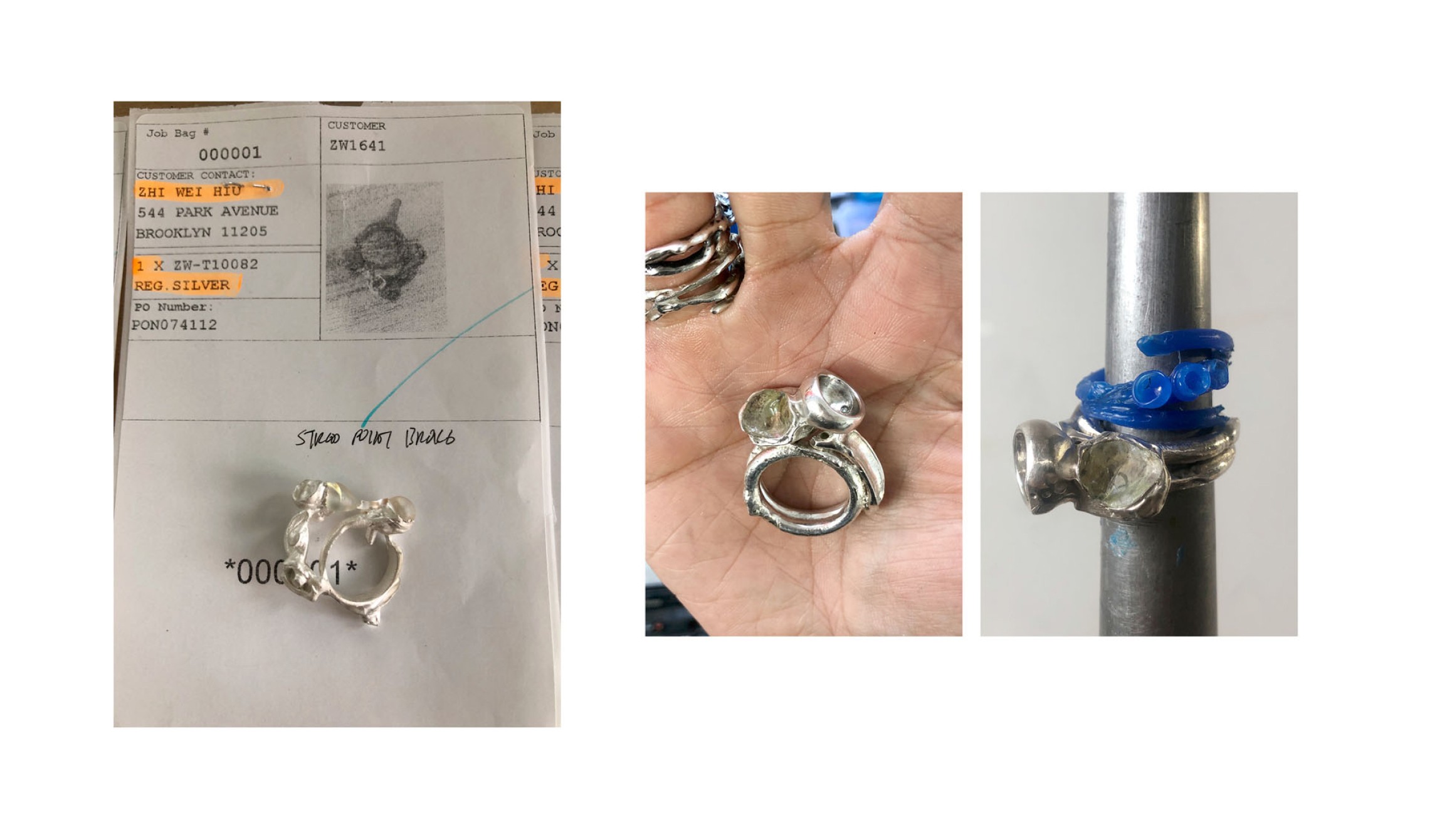
CNTRFLD. You mentioned working on silver pieces that would exist more comfortably in the design world. How do you balance the artistic and functional aspects of these pieces, and what considerations come into play when creating work for a design-oriented audience?
ZW. The difference lies in purity of intention. With design, my work is edited based on aesthetic coherence of the final product. There is no need for each decision and deviation to be accounted for, it doesn’t concern me if the final form of the piece is far from my initial conception of the work. The function of the object can be the sole justification for its existence.
It’s a loose set of rules that is based around my engagement with the material. Like so many other points I’ve touched upon, I don’t think my work in design could exist without my work in art. Each fulfils a desire that the other cannot.
It’s also intriguing to see what happens when work initially intended as design is adapted to suit art contexts through a series of gestures. The silver sculptures I showed in Oraculo began as jewellery, with the properties of wearability and surface lustre removed, shown in a state that reveals the process of making.
CNTRFLD. Looking ahead, what are your plans for the first half of this year in terms of producing more work in the art sphere? Are there specific themes or projects you're excited to explore?
ZW. The work I presented in 2023 is the foundational text of the conceptual threads I’m interested in. In the same way that I ran up against the constraints of what photography could do for me, there are so many layers of meaning packed into each of these pieces that need to be unravelled for clarity. I’d say that this is what my work this year will be about.
Design Dysphoria
Curated by Erica Sellers, Jeremy Silberberg, Liz Collins & Grace Whiteside
53 Scott Ave. Suite 401
Brooklyn, NY 11237
Opening: May 17th, 7pm - 10pm
By appointment until May 25th