DATE

2026/04/24

ARTICLE

Maria Chen

PHOTOS

Courtesy of the Artists

Of Thread and Stone: Reweaving Histories, Reframing the Museum

At New Taipei City Art Museum, curators Tsou Ting and Wang Han-fang assemble a transnational constellation of artists to examine how material—textile, fibre, stone—carries memory, labour, and resistance across time.

“If memory and technique had a shape, how would it take form, unfold, endure, or collapse?”

Of Thread and Stone unfolds as both exhibition and proposition: a museum not as a repository of fixed knowledge, but as a living, shifting structure—composed through fragments. Drawing from New Taipei City’s intertwined histories of mining and textile production, the exhibition traces how industry shapes not only economies, but bodies, identities, and collective memory.

For Tsou Ting—whose research spans curatorial histories, archival practices, and transdisciplinary exhibition-making—the exhibition extends an ongoing inquiry into how knowledge is constructed and displayed. Her collaborator, Wang Han-fang, brings a complementary lens shaped by investigations into technology, subjectivity, and the infrastructures that quietly reorganise contemporary life. Together, their curatorial approach resists singular narratives, instead proposing a field of relations—material, historical, and affective.

“A part of something is for the foreseeable future going to be better than all of it. Fragments over wholes.” — Edward W. Said, literary theorist

Across the exhibition, thread and stone operate less as opposites than as parallel carriers of time: pliable yet enduring, intimate yet industrial. From Austronesian weaving traditions to conflict debris and globalised textile economies, materials circulate beyond origin—becoming part of what the curators frame as an “archaeological palimpsest.”
Previous

Next

Previous

Next

CREDITS

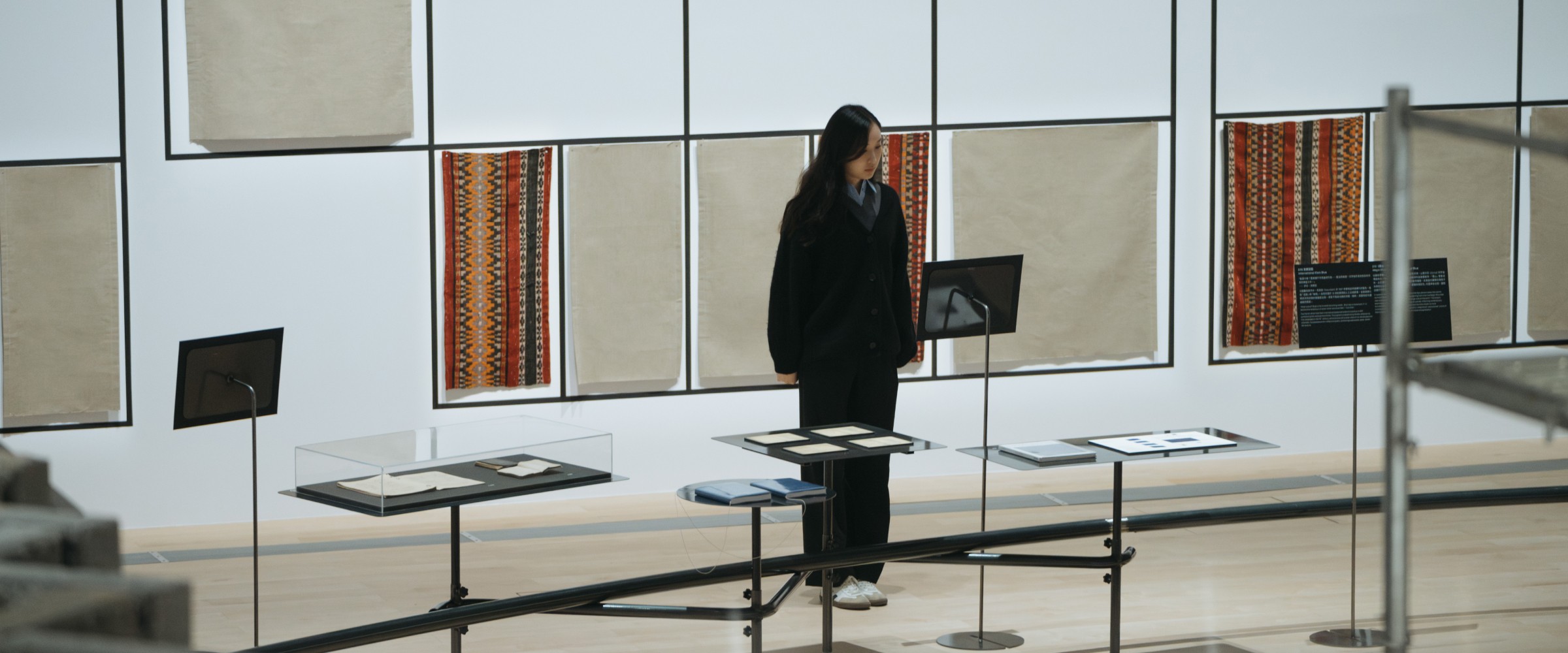
Header: The Exhibition traverses imagery, literature, objects, archives, crafts, and artworks. (Courtesy of NTCAM, Photo Hsuan Lang Lin)

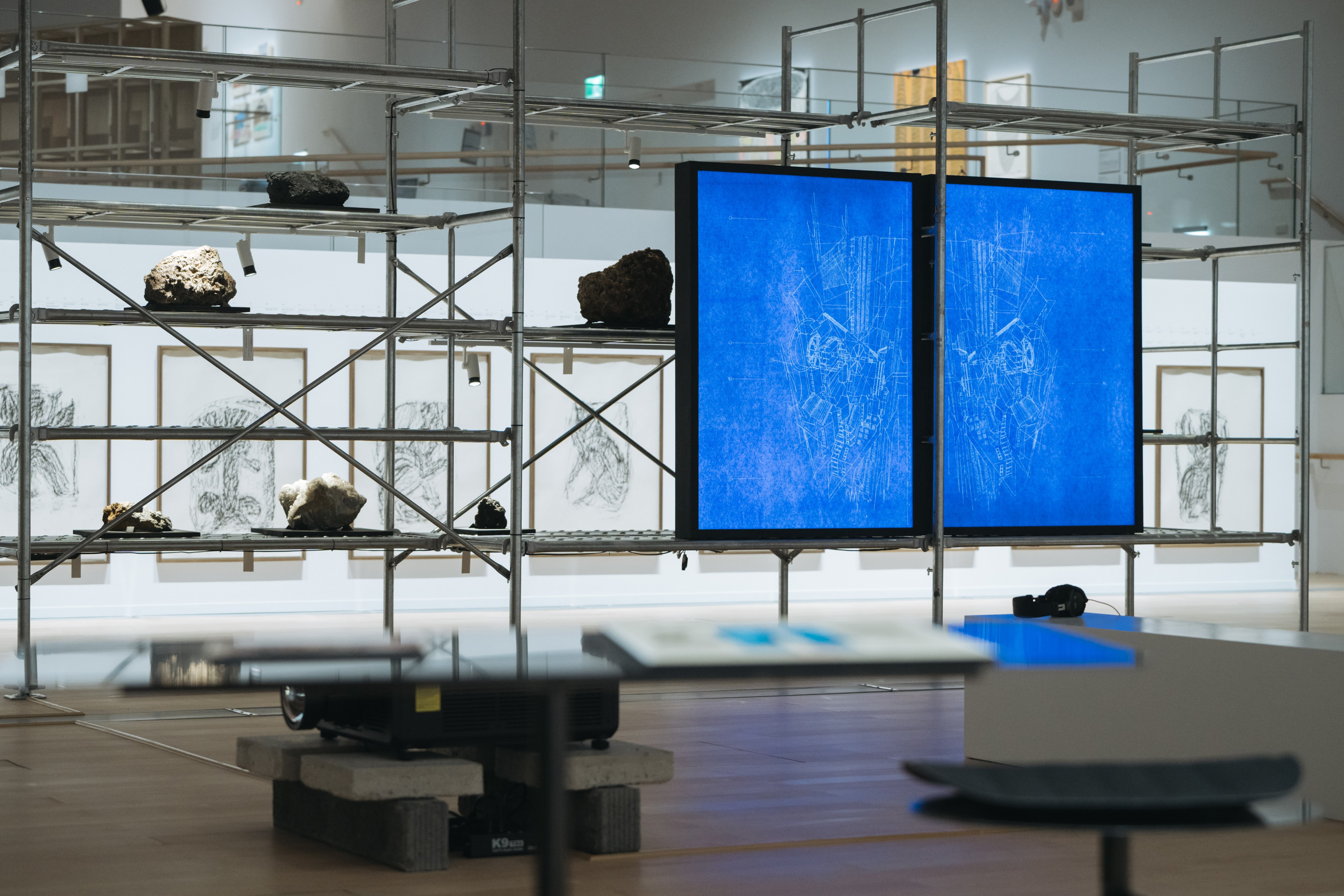
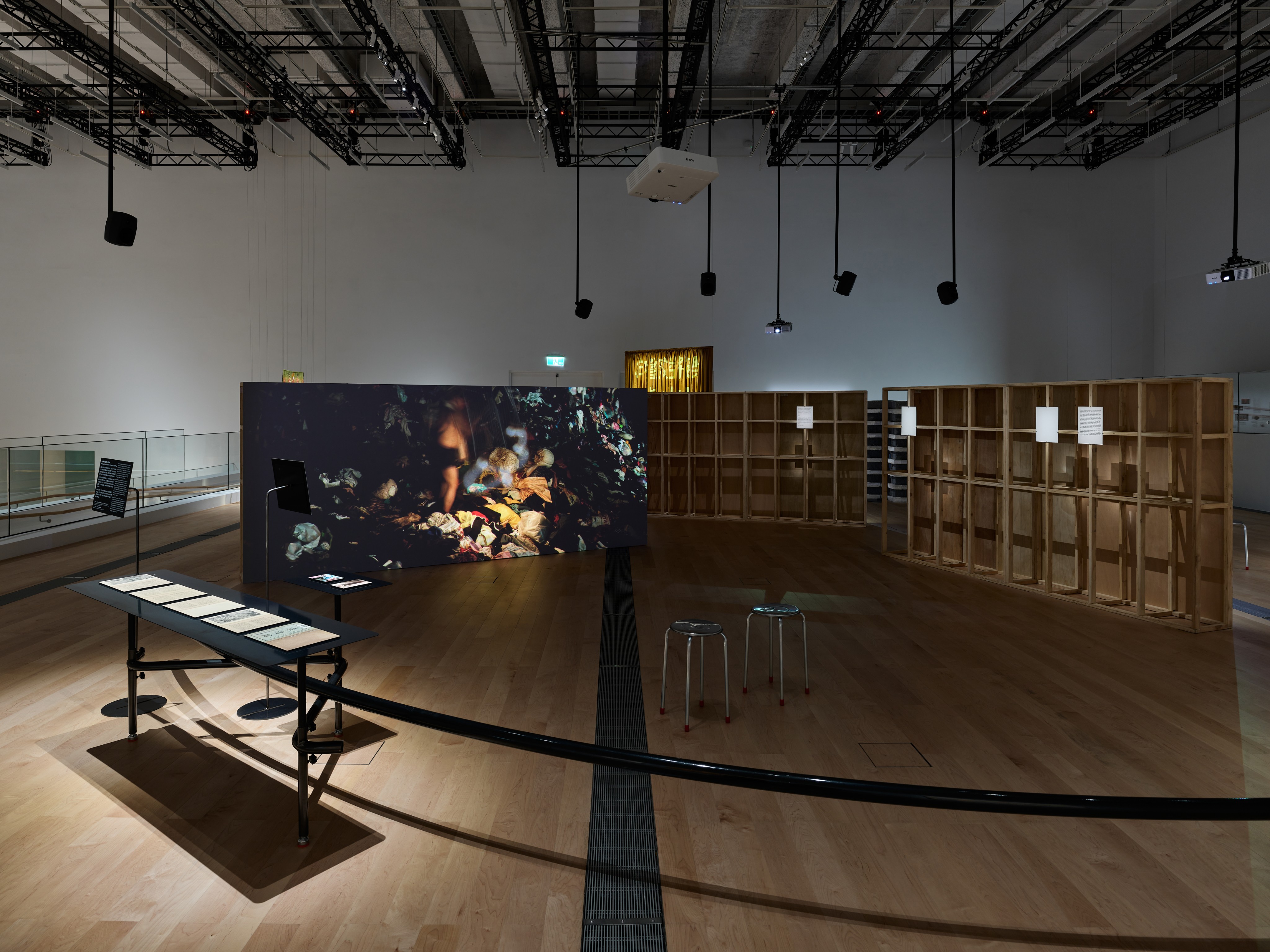
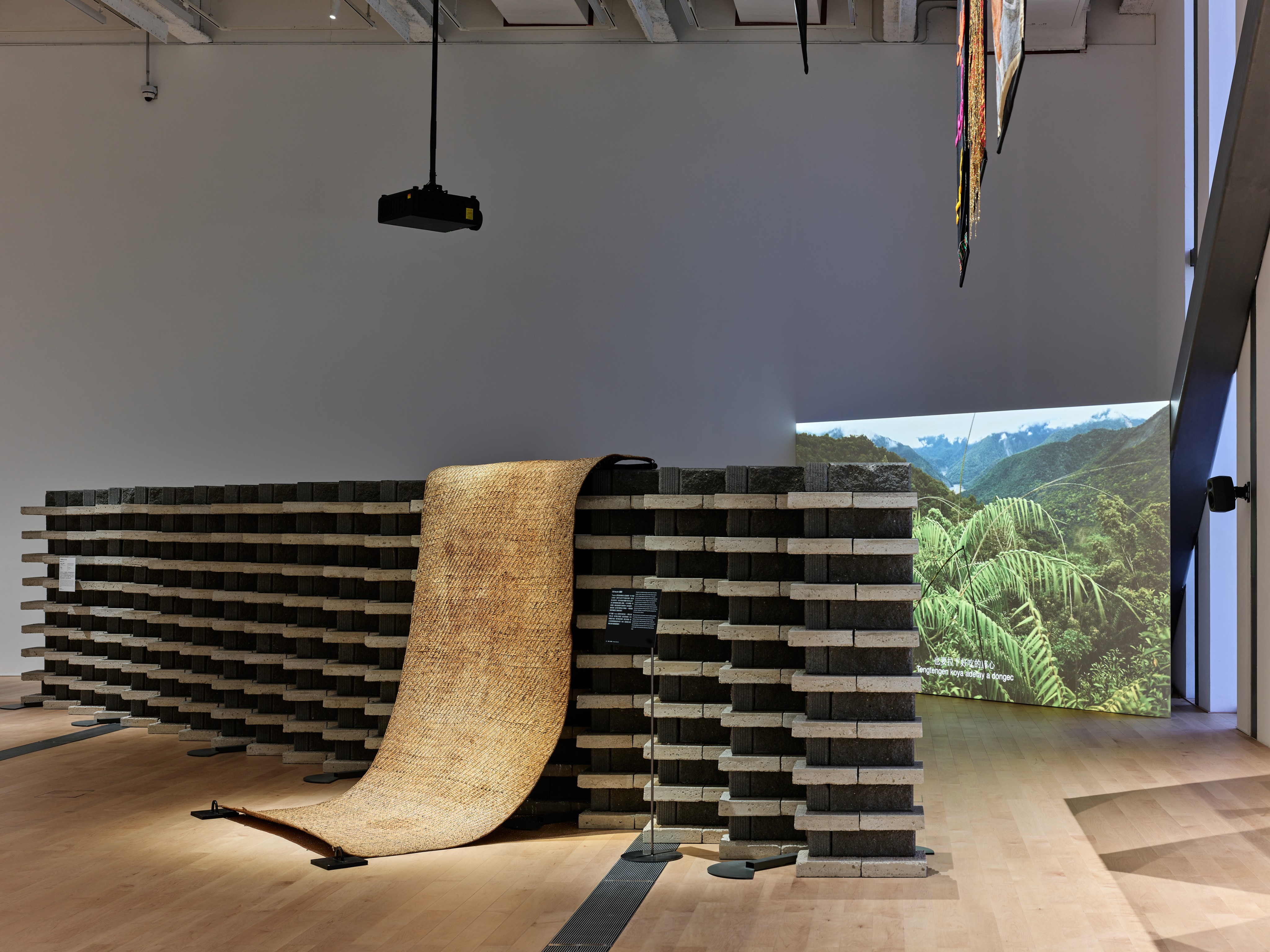
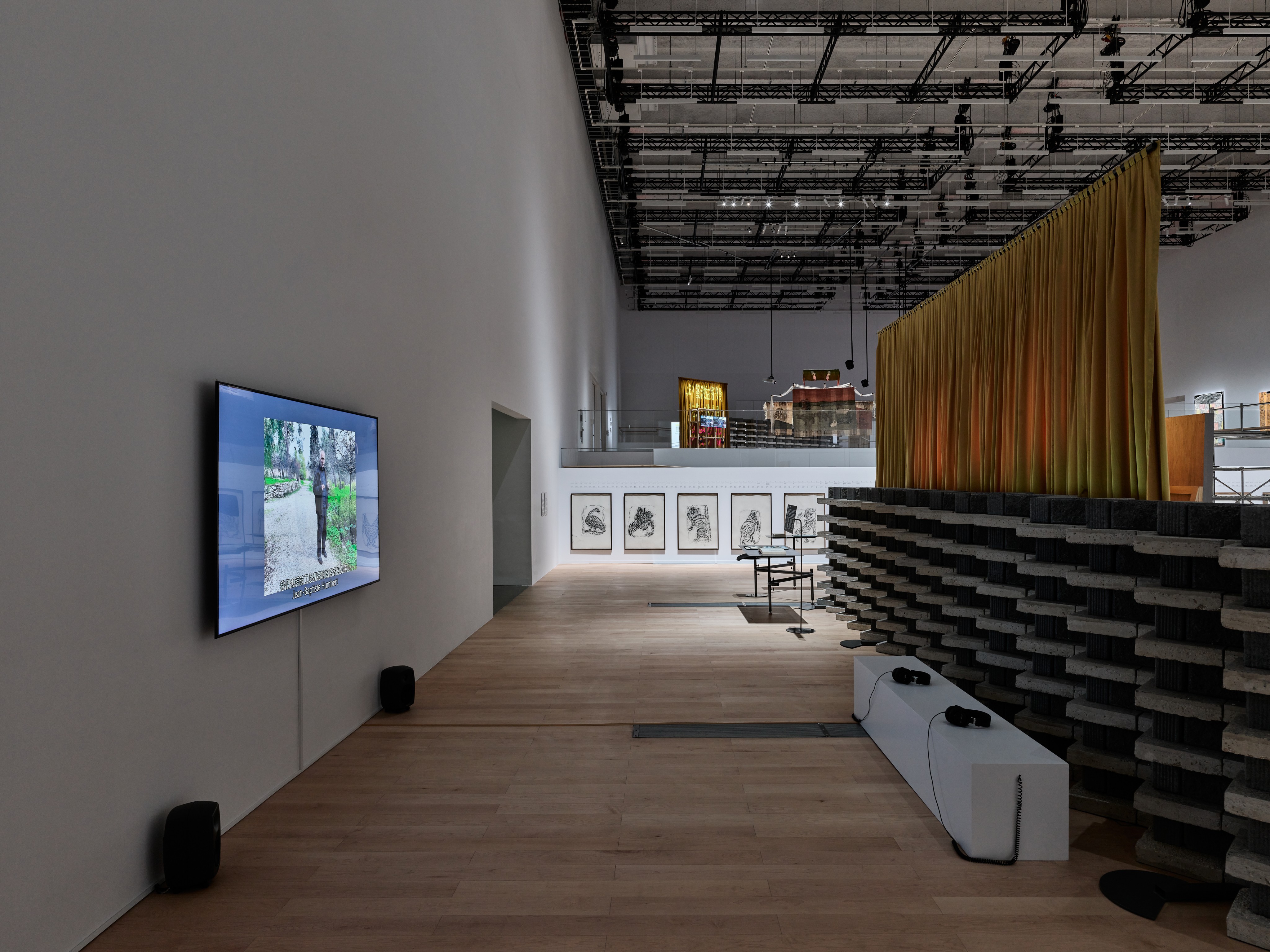
Slider 1: Living Archaeology in Gaza, Forensic Architecture, Installation view of Of Thread and Stone, 2026. Courtesy of the New Taipei City Art Museum. Photo: Studio Millspace

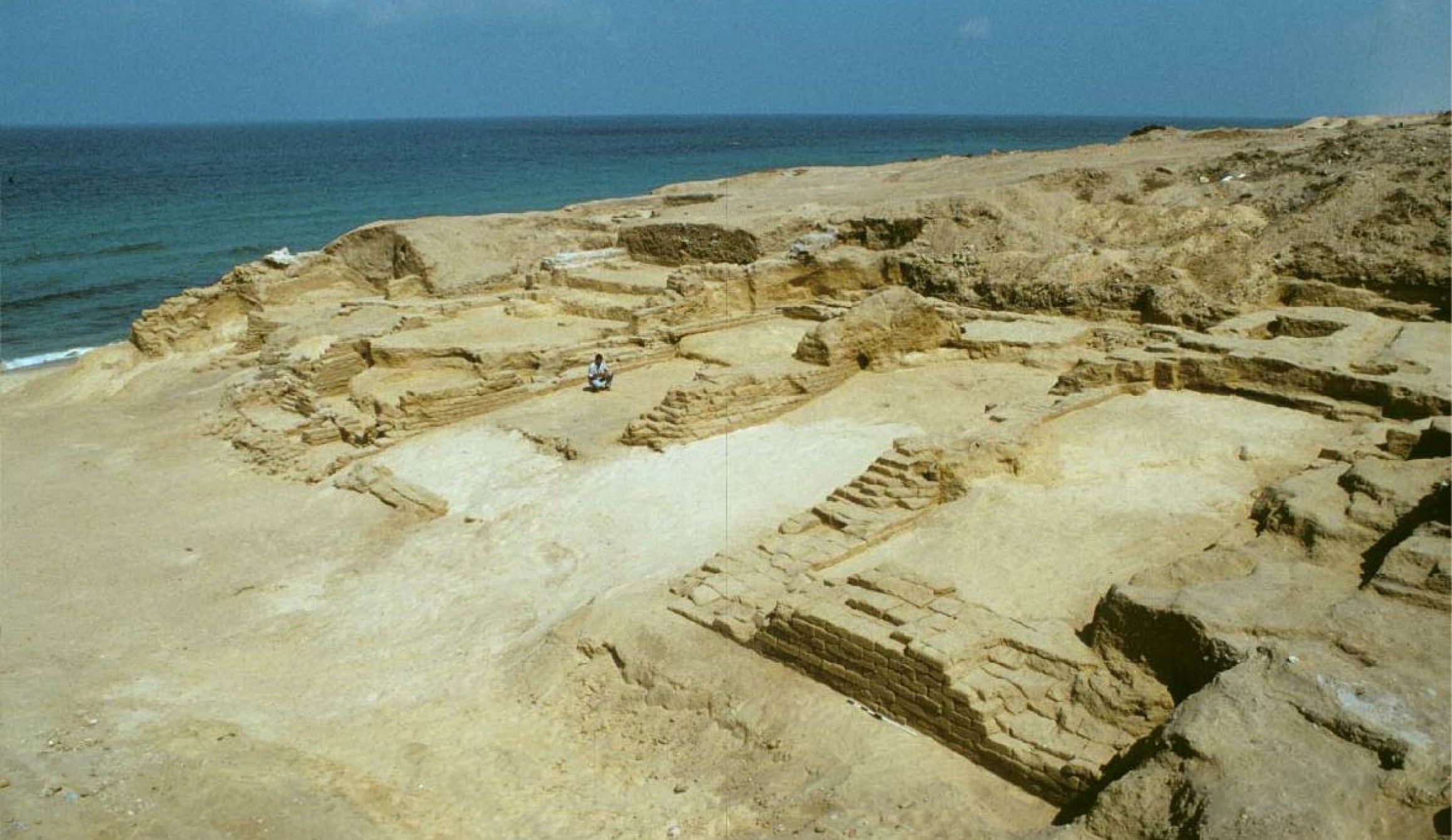
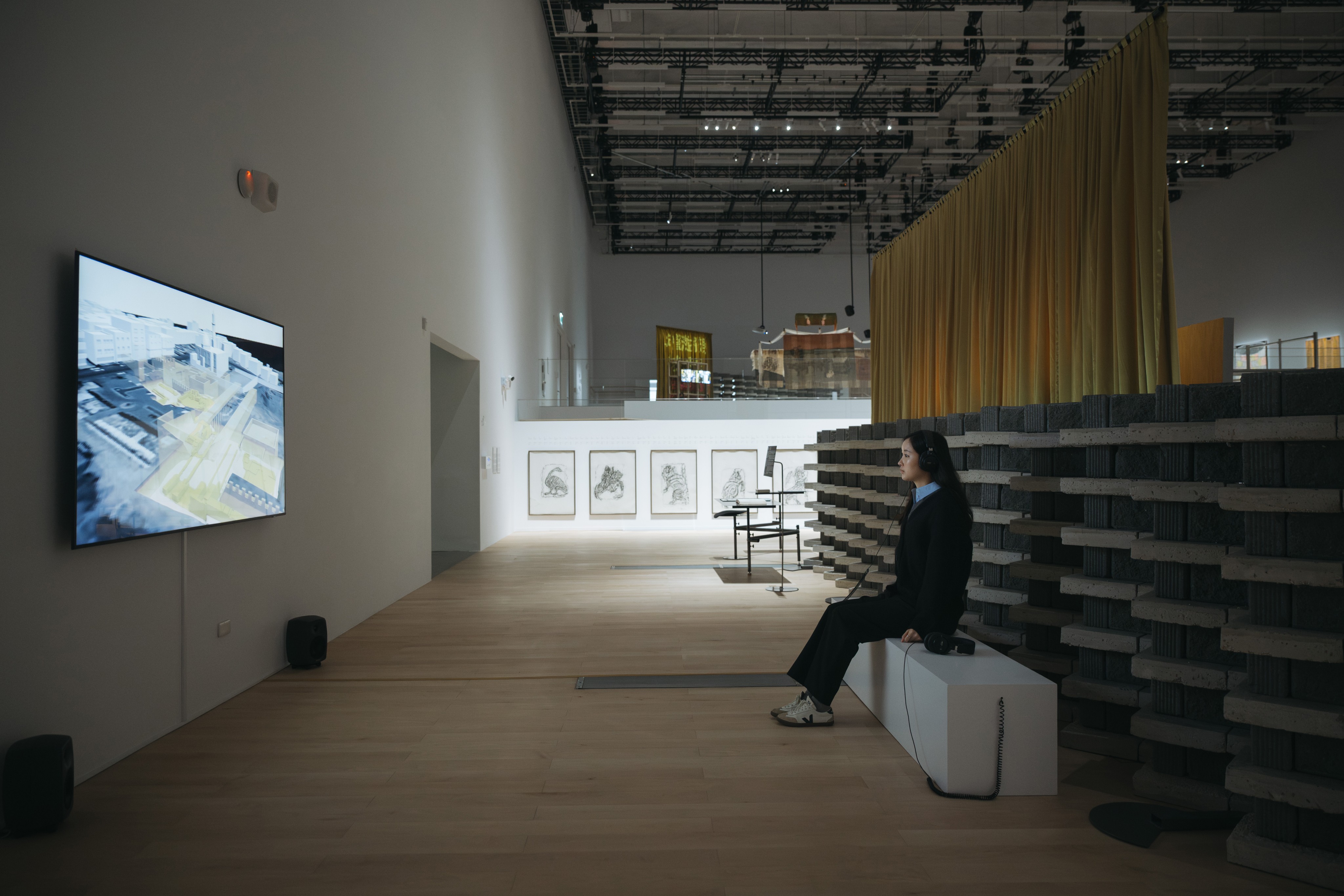
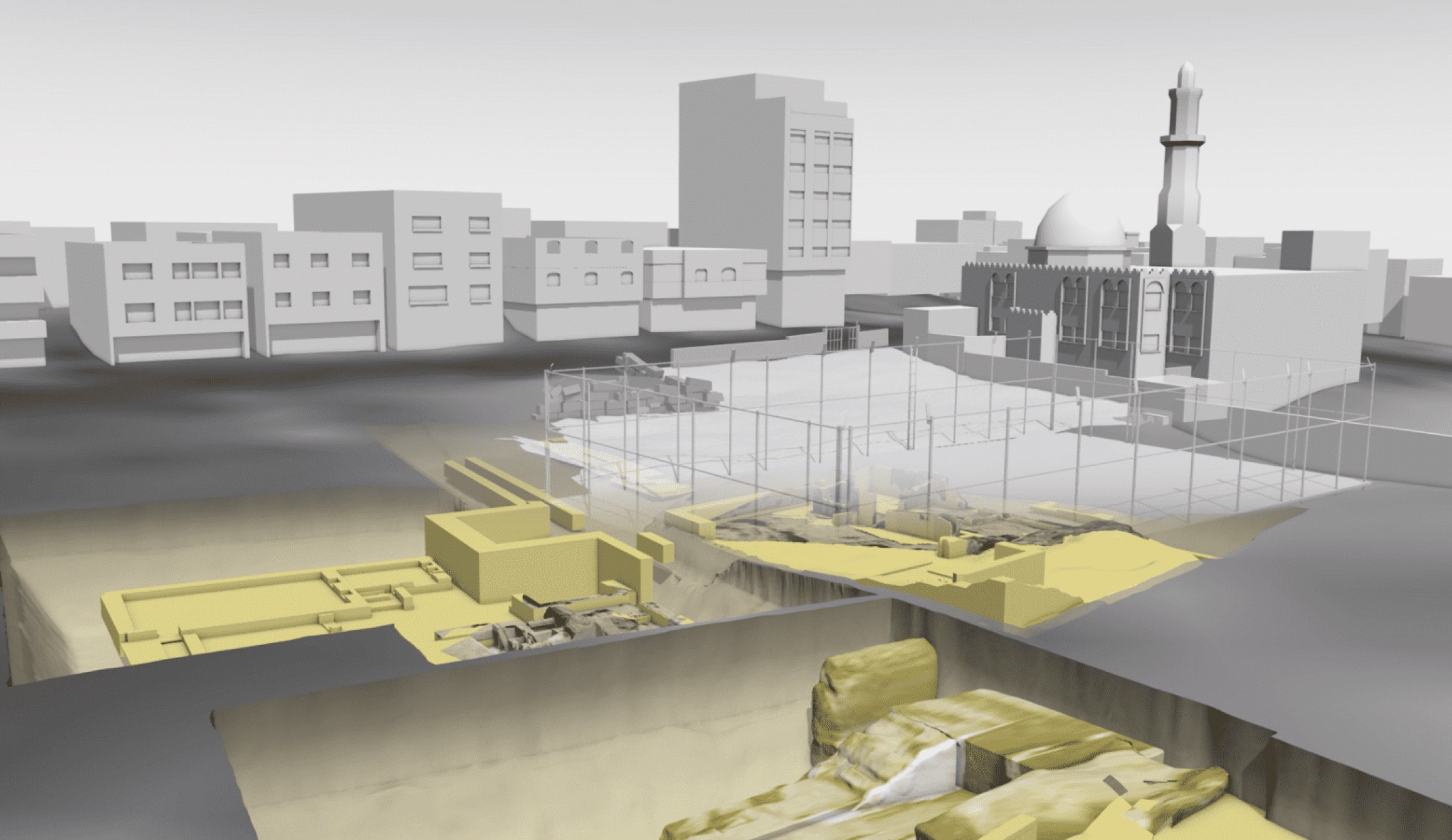
Slider 2: Living Archaeology in Gaza, Forensic Architecture. The layers of the site, ancient past to present. A mosque and public sports facilities, built above the site, can be seen on the right. Image: Forensic Architecture, 2022

Slider 3: Living Archaeology in Gaza, Forensic Architecture. Hellenistic Emporium. Image: École Biblique, Mission Archéologique de Gaza: Coopération Franco-Palestinienne 1995-2005, p. 182-183.

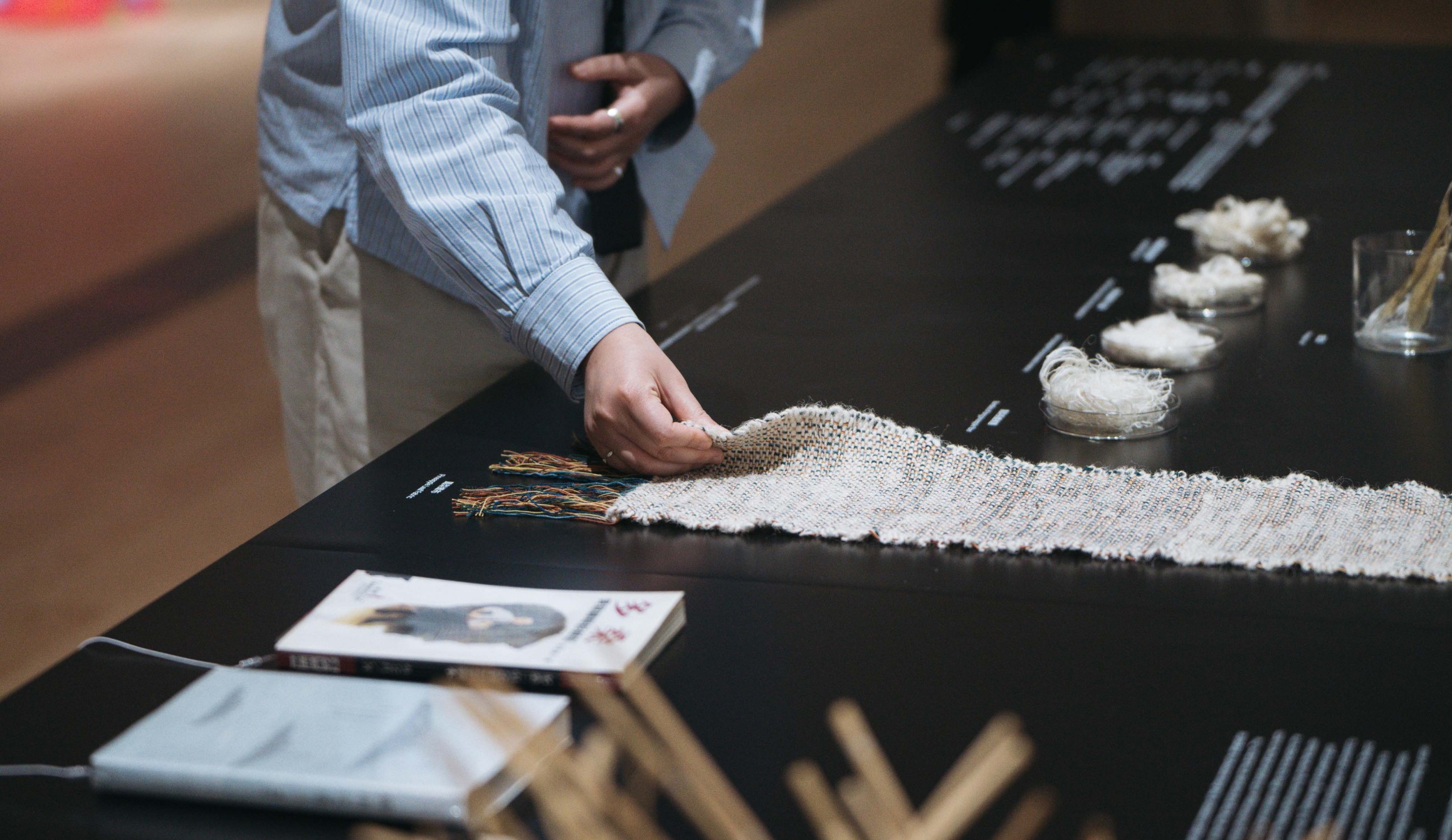
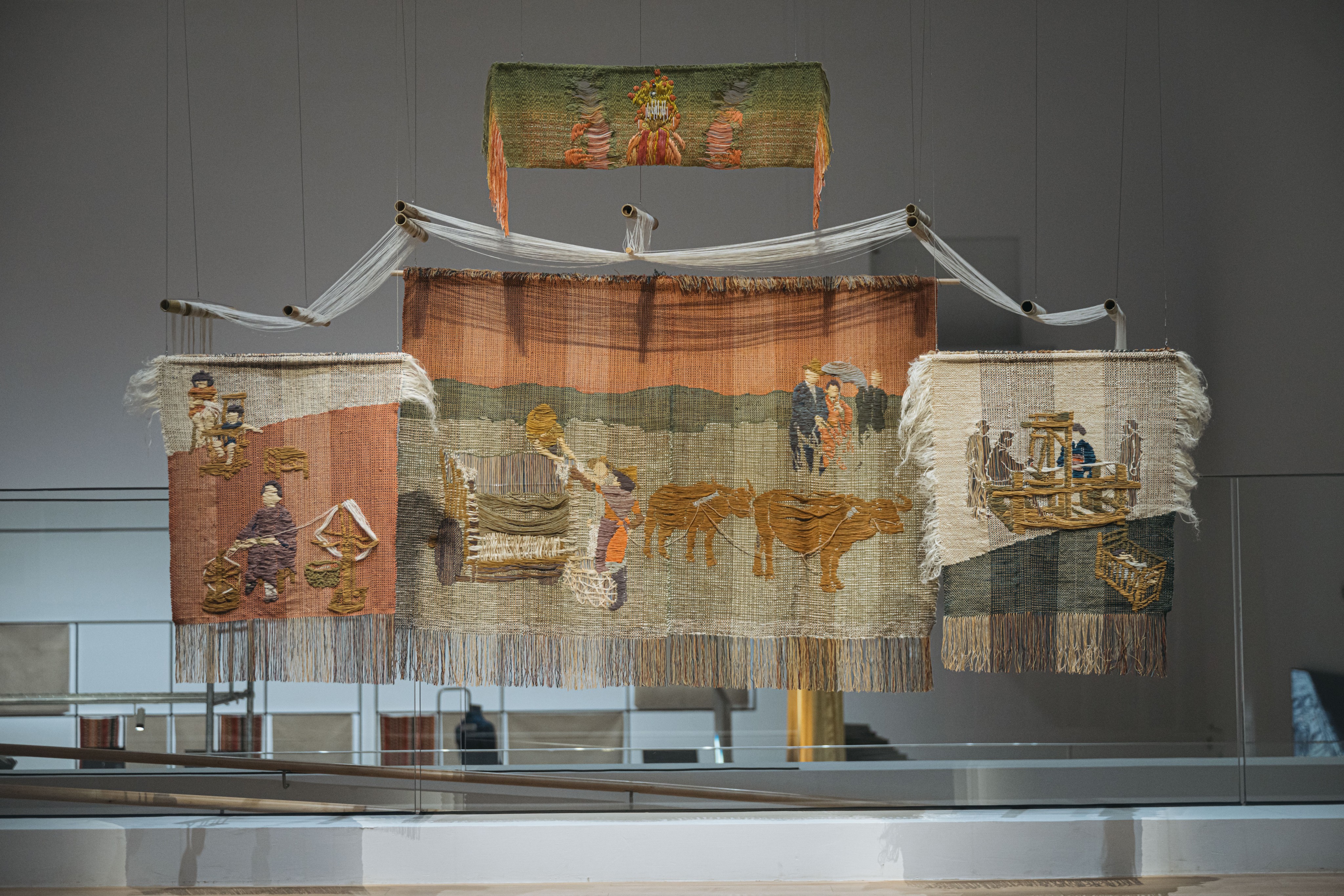
Slider 4: The exhibition features works related to textile tools and the use of natural fibres, as well as mining-related implements and local craft practices. (Courtesy of NTCAM, Photo Hsuan Lang Lin)

Artists & Practices

The exhibition brings together artists whose practices move fluidly between craft, research, and socio-political inquiry:

Jam Wu
Working across paper, video, and participatory projects, Wu approaches image-making as a poetic and communal act. His practice foregrounds the universality of creative impulse while maintaining sensitivity to cultural specificity—where metaphor becomes a form of lived, emotional knowledge.

Kieren Karritpul
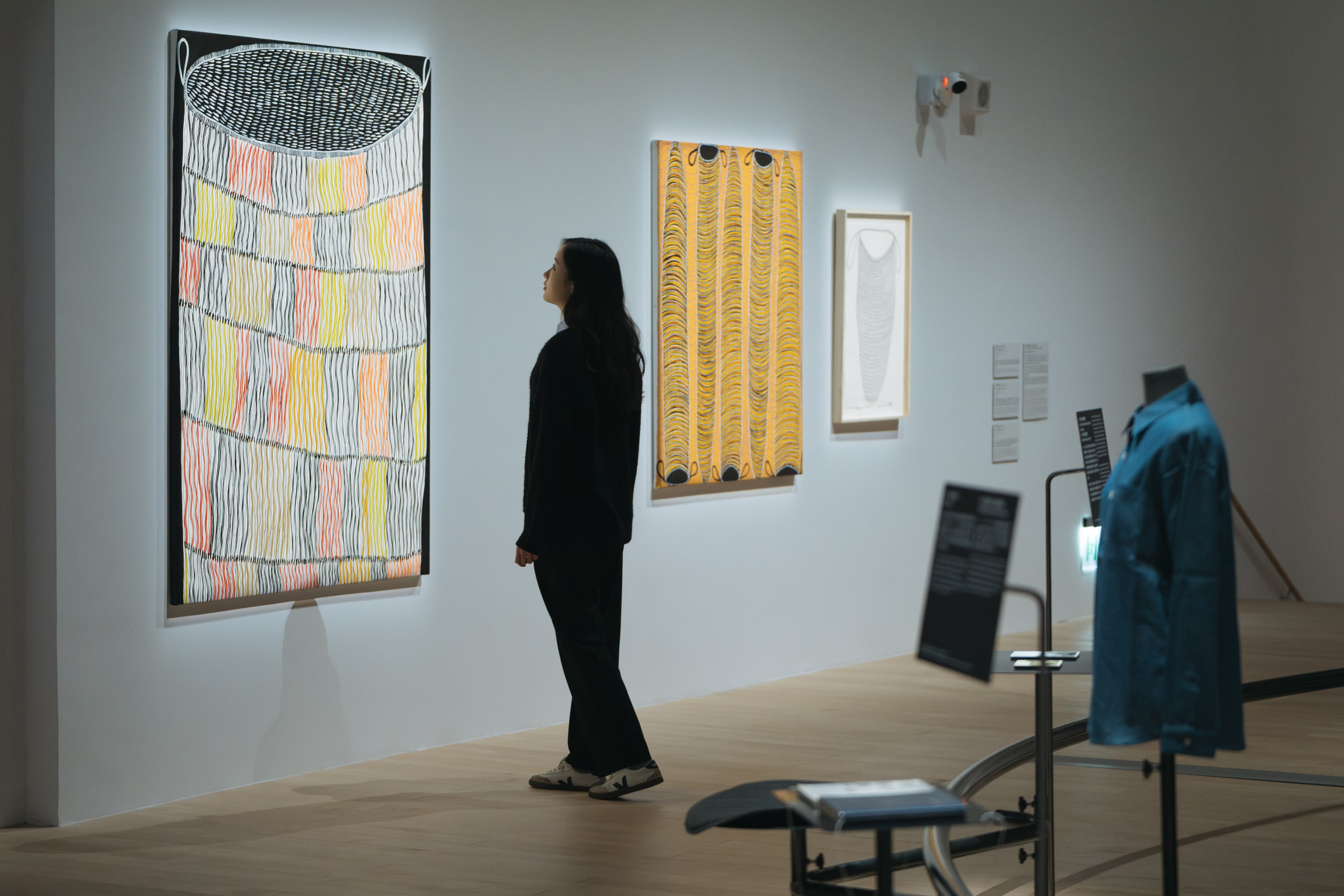
Based in Nauiyu/Daly River, Karritpul translates weaving—traditionally restricted within his community—into painting. His enlarged, spiralling depictions of fibre structures become both abstraction and cultural memory, offering an intimate mapping of land and lineage.

Forensic Architecture
Operating at the intersection of art, architecture, and human rights, the London-based collective investigates state and environmental violence through spatial analysis and digital reconstruction. In this exhibition, rubble is not residue but evidence—an archive of conflict inscribed in material form.

Chiu Chen-hung
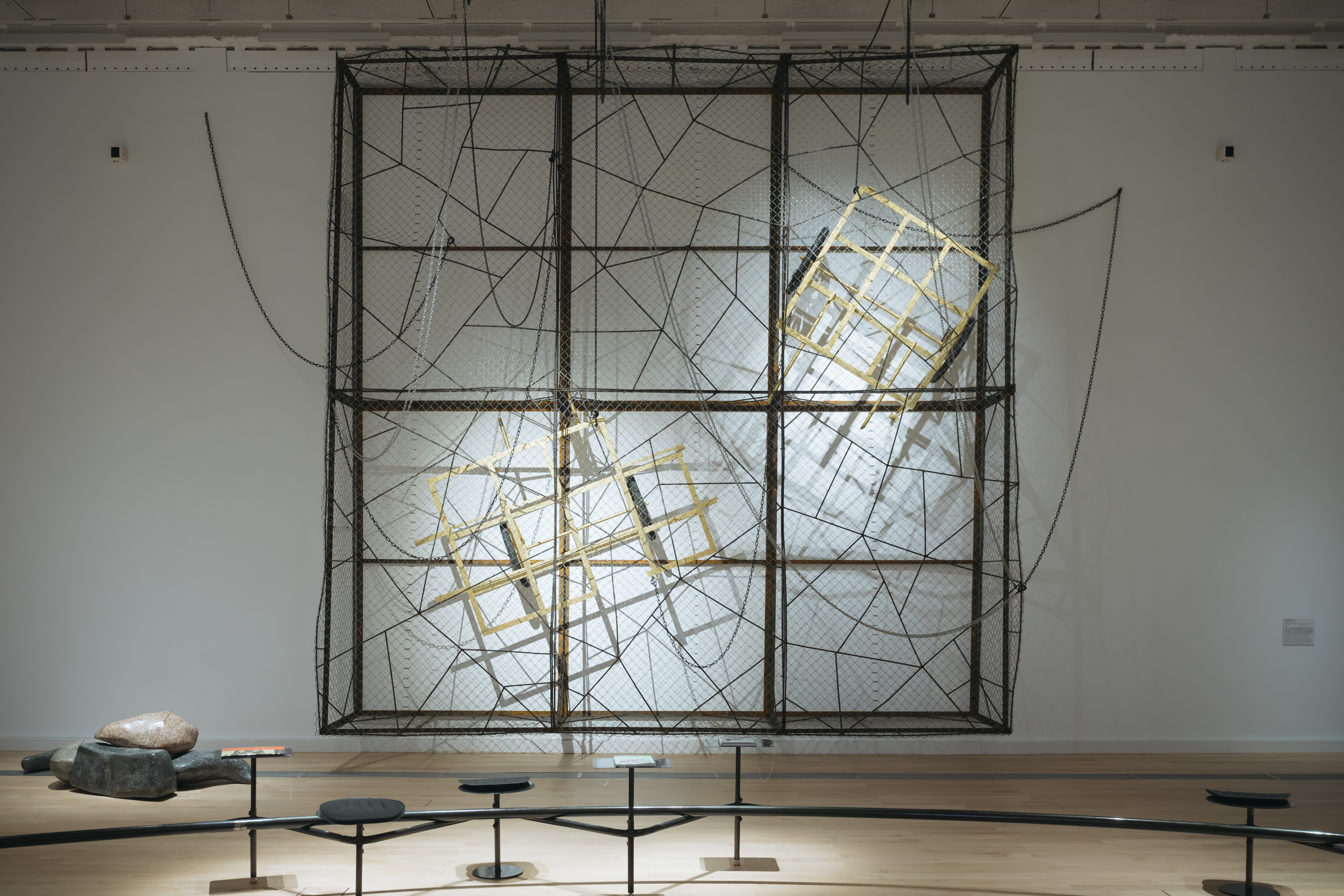
Chiu’s sculptural installations function as acts of excavation. Reassembling fragments of abandoned structures and forgotten systems, his work proposes a form of “memory repair,” where absence is reconstituted through material imagination.

Kao Ya-ting
Through embroidery and layered imagery, Kao navigates intergenerational memory, faith, and identity. Her works merge personal archives with historical visual languages, holding emotional ambiguity within delicate, tactile forms.

Cheong See-min
Cheong’s fibre-based practice treats weaving as both method and metaphor—an act of communication linking past and present. Drawing on archival research and oral histories, her work unravels the narrative structures embedded in textiles.

Akac Orat
Grounded in Indigenous knowledge systems, Orat works across craft, curation, and education. His use of natural materials and weaving techniques reflects lived experience, situating cultural continuity within contemporary discourse.

Slavs and Tatars
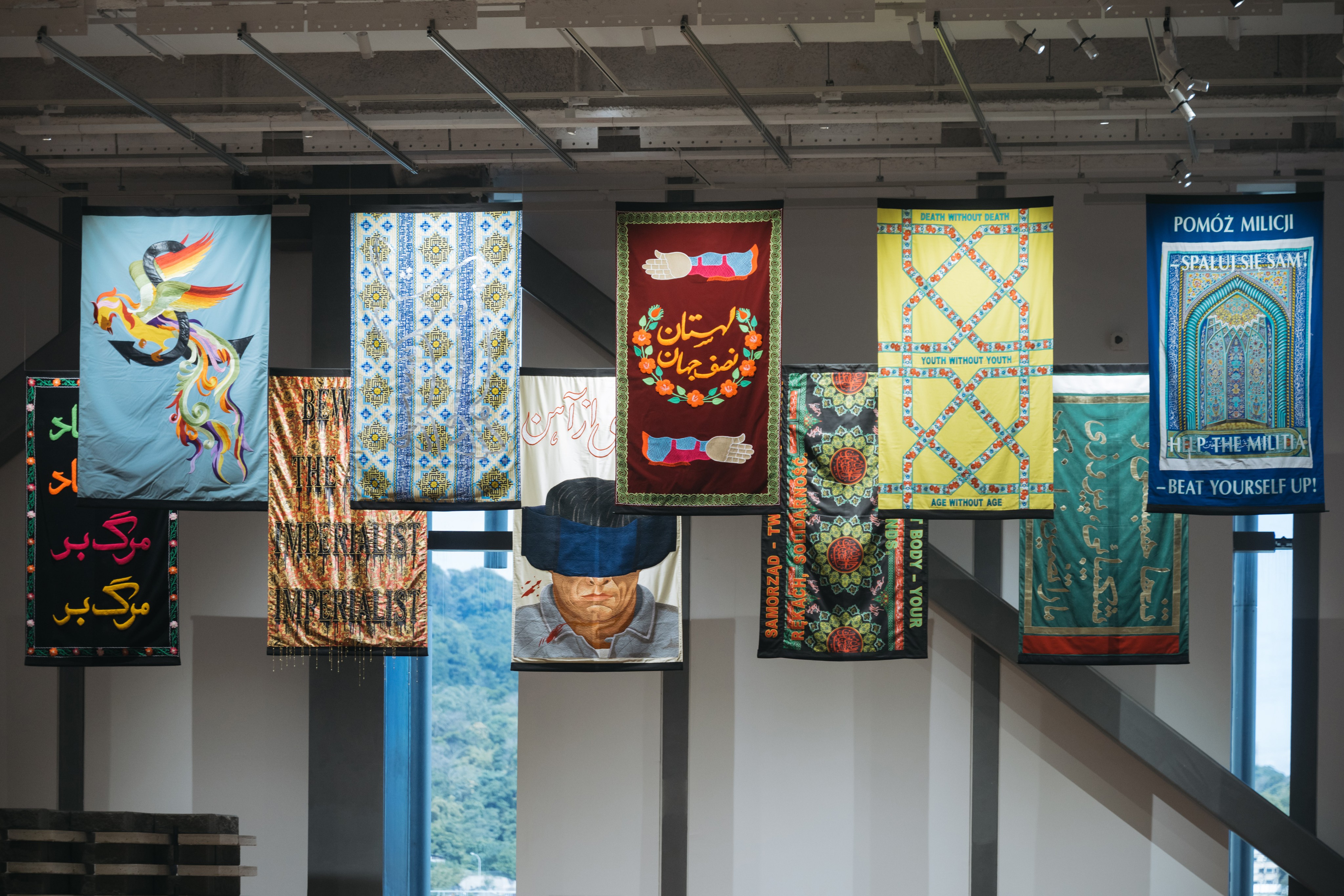
Engaging the Eurasian “borderlands,” the collective merges scholarship, humour, and performance to interrogate language, belief systems, and ideology—transforming exhibition space into a site of shared knowledge production.

Huang Po-chih
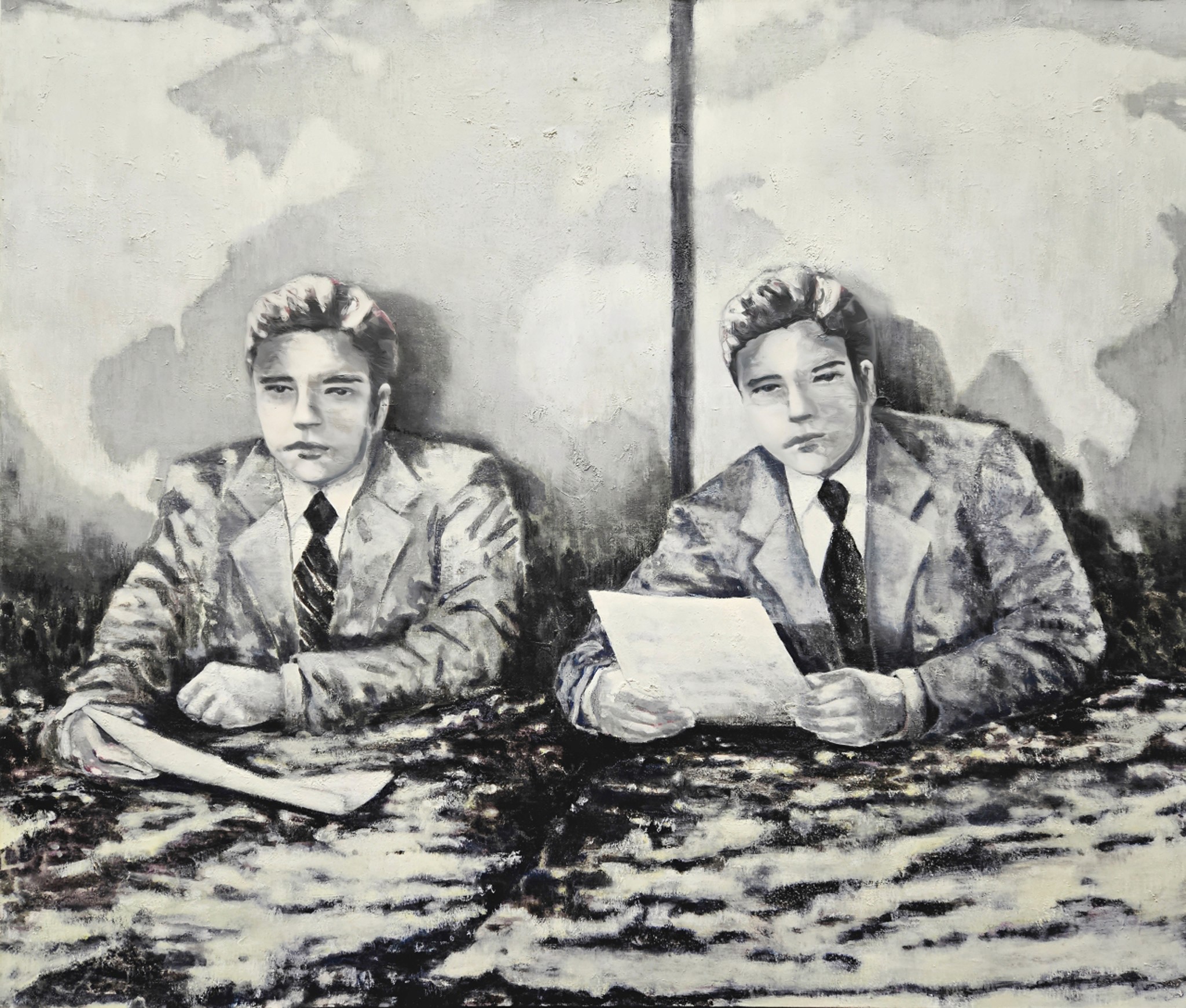
Huang’s practice connects personal narrative with broader economic histories. Through stories of labour—particularly within Taiwan’s garment industry—he reveals how global production systems are lived at the scale of the family.

Rayyane Tabet
Working through installation, Tabet reconstructs historical and political narratives via personal experience. His works destabilise linear time, drawing attention to the tensions embedded within architecture and place.

jiandyin
This research-driven duo engages overlooked social realities—marginalisation, political histories, and collective memory—through collaborative, interdisciplinary methodologies that blur art and curatorial practice.

Nii Nami
Meaning “We are here,” Nii Nami foregrounds Indigenous presence through installation, film, and documentary. Their work bridges environmental, cultural, and social concerns, grounding contemporary discourse in lived community experience.

Jiandyin, Magic Mountain The Lost of Golden Pumpkin, 2025-2026. (Courtesy of NTCAM, Photo Hsuan Lang Lin)

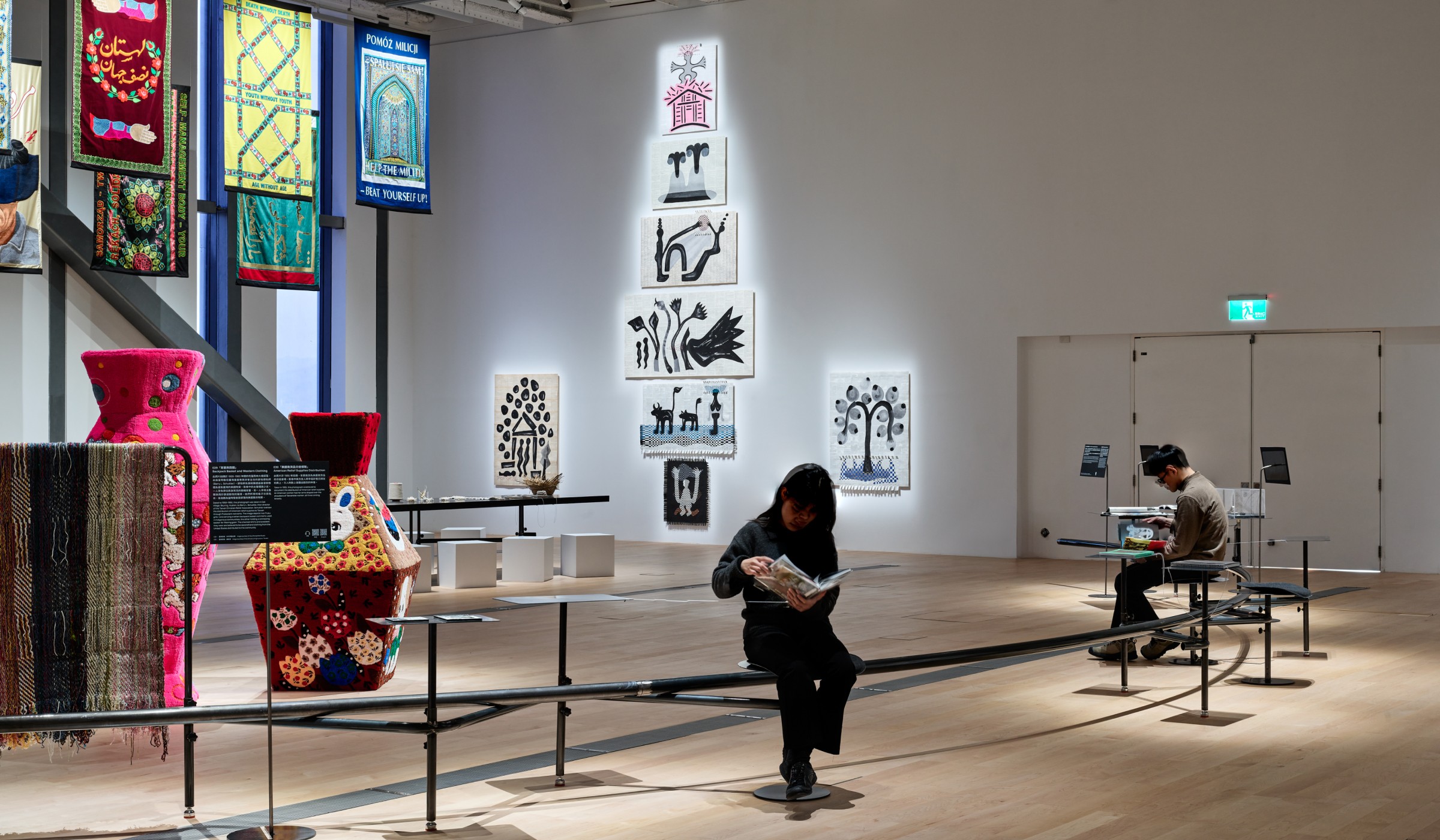
Slavs and Tatars, Friendship of Nations Polish Shi_ite Showbiz, 2011. (Courtesy of NTCAM, Photo Hsuan Lang Lin)

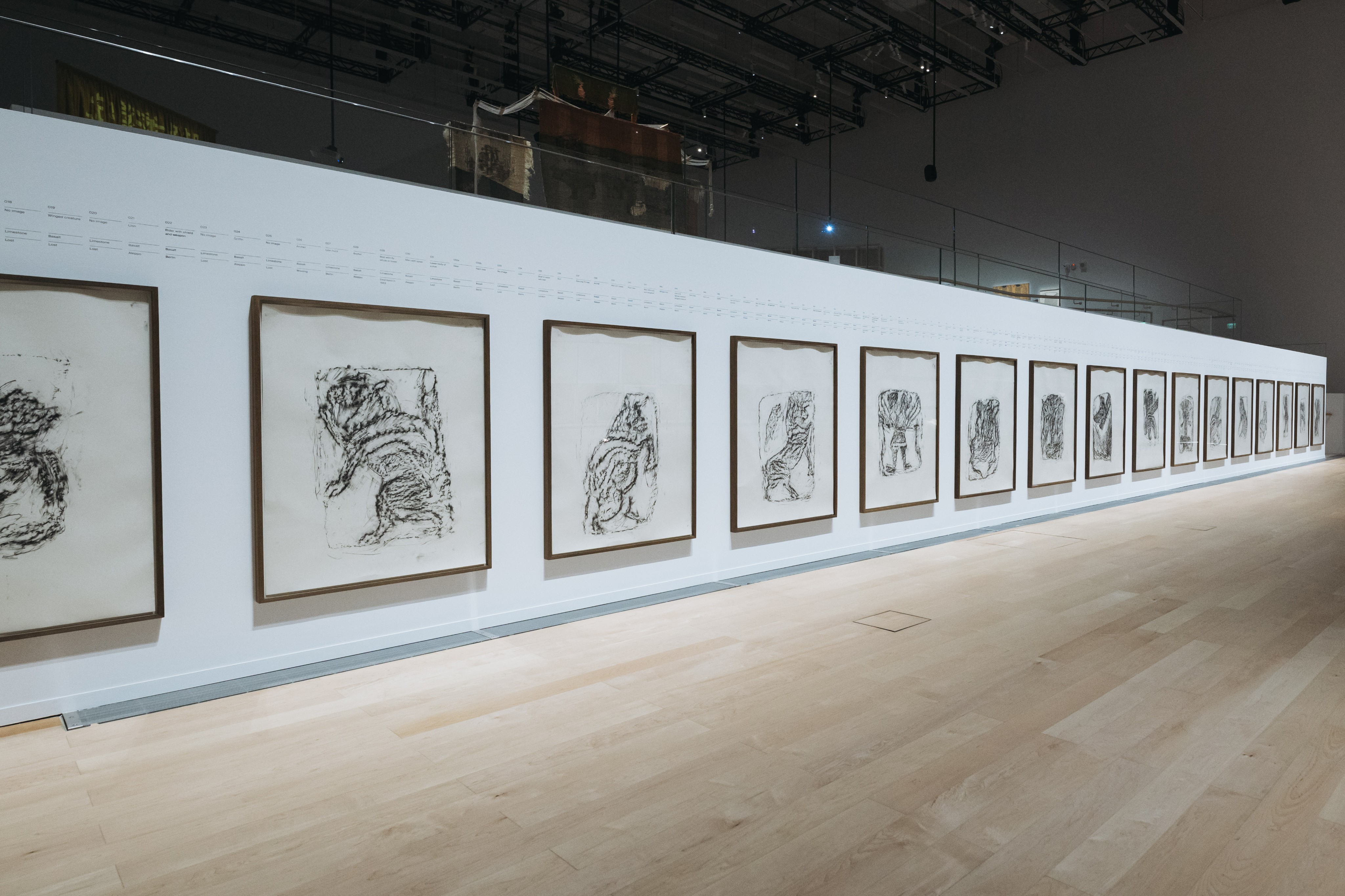
Rayyane Tabet, Orthostates, 2017- ongoing. (Courtesy of NTCAM, Photo Hsuan Lang Lin)

Kieren Karritpul, Five Fish Traps, Big Dilly Bag and Yerrkerre Syew, 2025. (Courtesy of NTCAM, Photo Hsuan Lang Lin)

CREDITS

Divider: Installation view of Of Thread and Stone,2026. Courtesy of the New Taipei City Art Museum. Photo Studio Millspace

Material as Witness

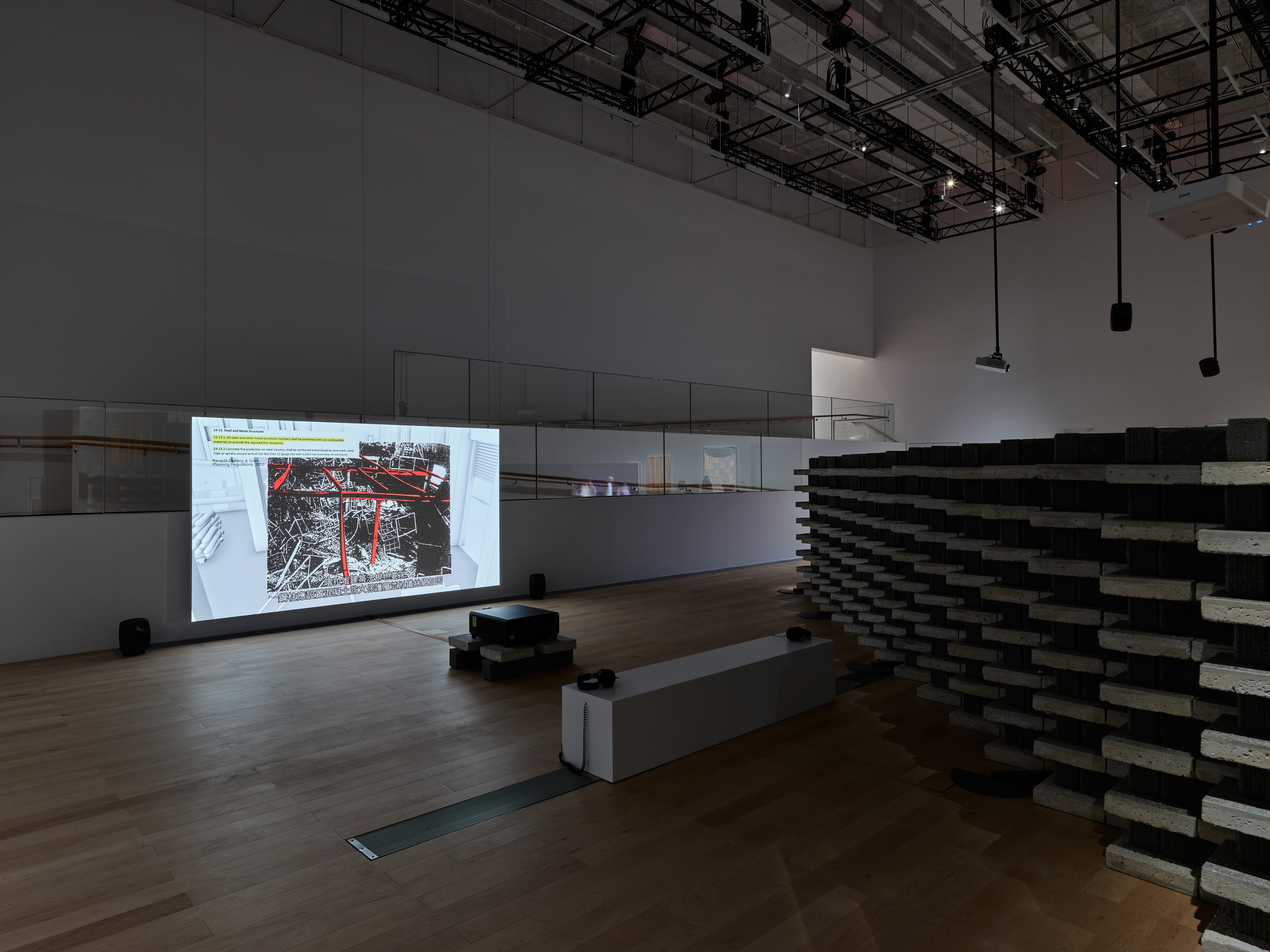
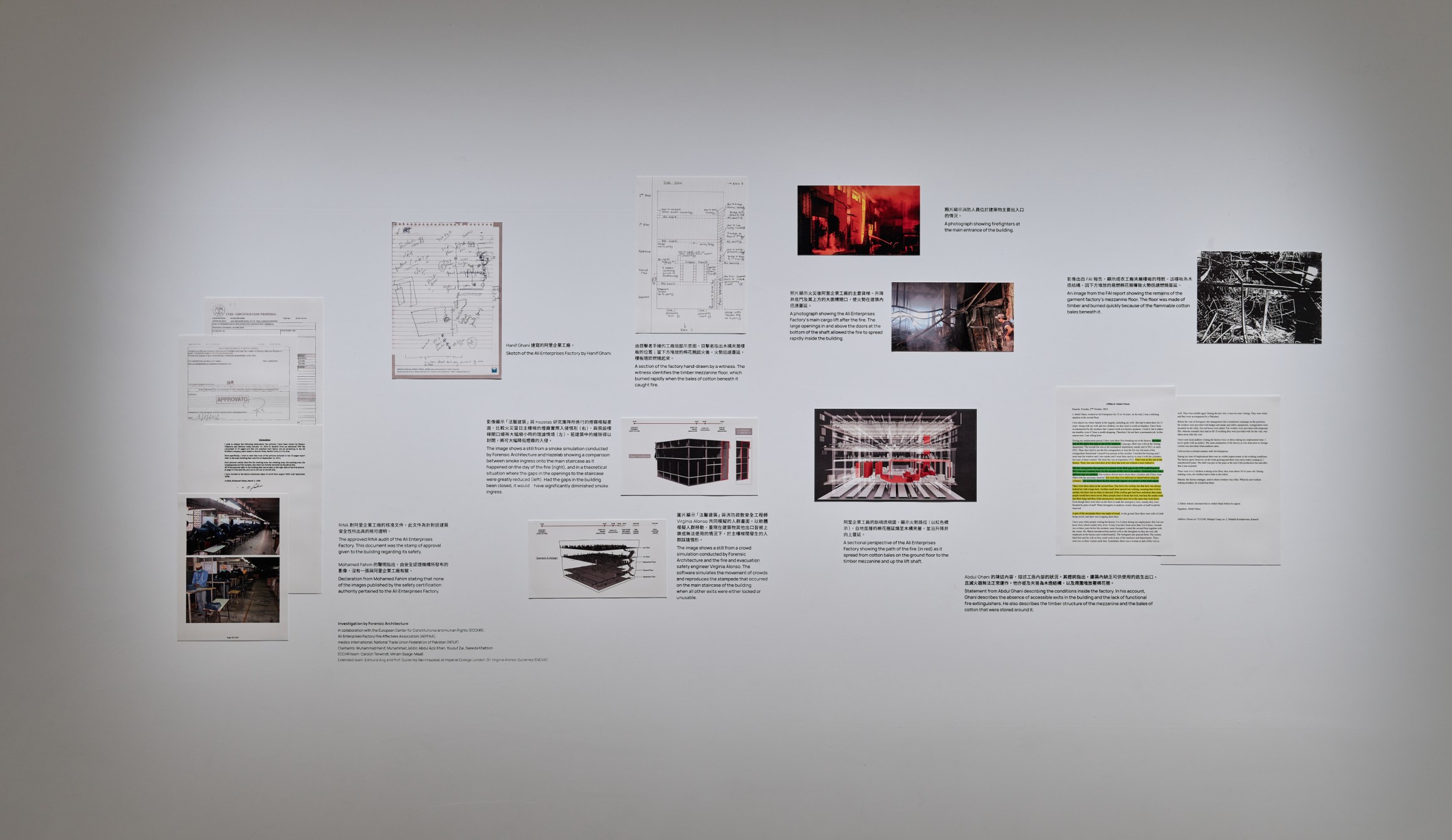
Throughout Of Thread and Stone, materials are never neutral. Pineapple fibre recalls colonial economies; denim gestures toward industrial labour; stones evoke protest, displacement, and territorial conflict. From textile factory fires in Pakistan to contested borders in the Middle East, these elements carry layered histories of violence and resilience.

Rather than resolving these narratives, the exhibition holds them in tension. Meaning emerges not through didactic framing, but through proximity—objects, images, and stories accumulating into a quiet yet insistent critique of modernity.

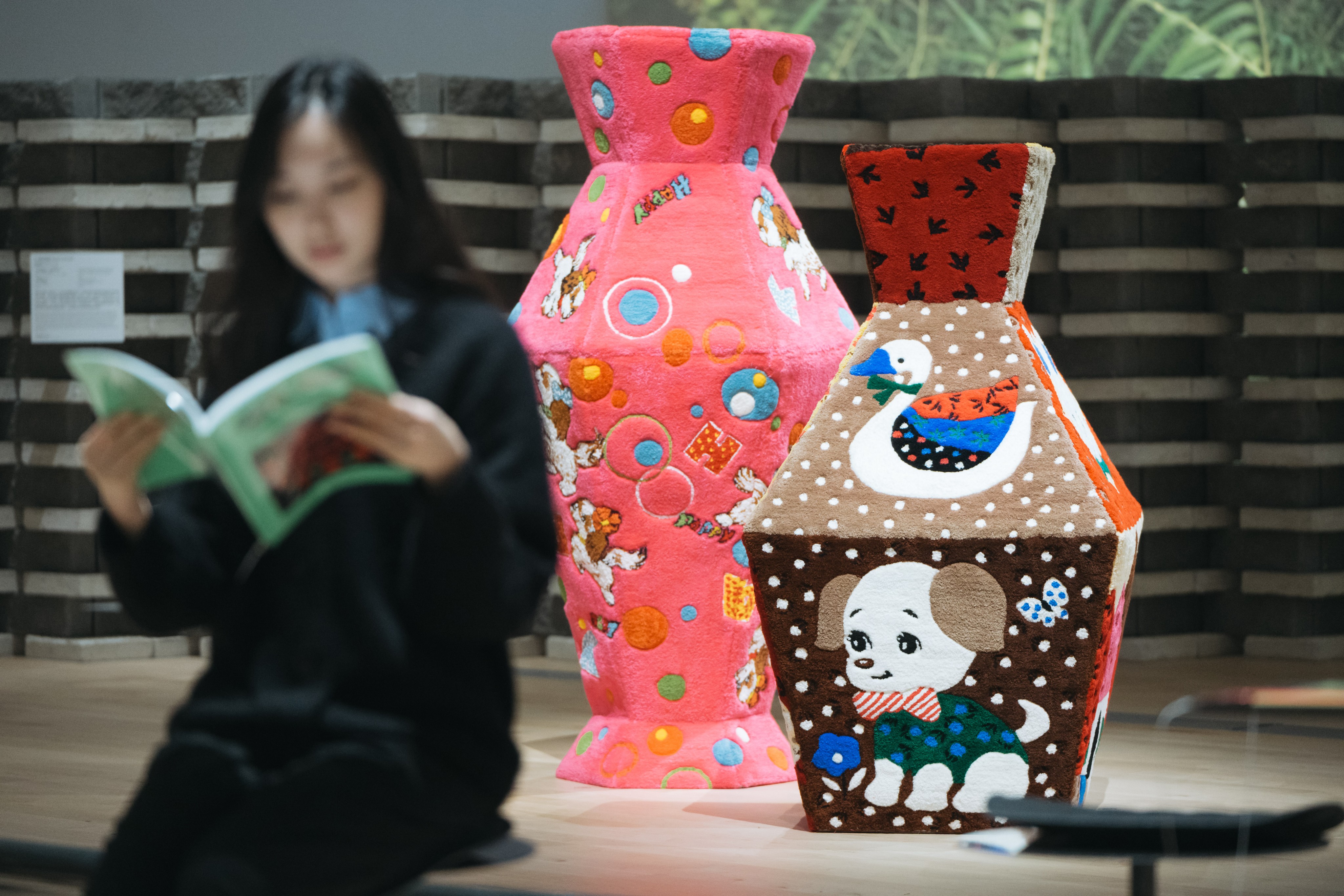
Kao Ya-ting, Vessel of Dream, 2026. (Courtesy of NTCAM, Photo Hsuan Lang Lin)

Huang Po-chih, Seven People Crossing the Sea, 2019-2026. (Courtesy of NTCAM, Photo Studio Millspace)

Forensic Architecture, Living Archaeology in Gaza, 2022. (Courtesy of NTCAM, Photo Hsuan Lang Lin)

Chiu Chen-hung, Around Us, 2025. (Courtesy of NTCAM, Photo Studio Millspace)

Cheong See-min, A Lost Textile Ong Lai Si (Pineapple Fiber), 2025. (Courtesy of NTCAM, Photo Hsuan Lang Lin)

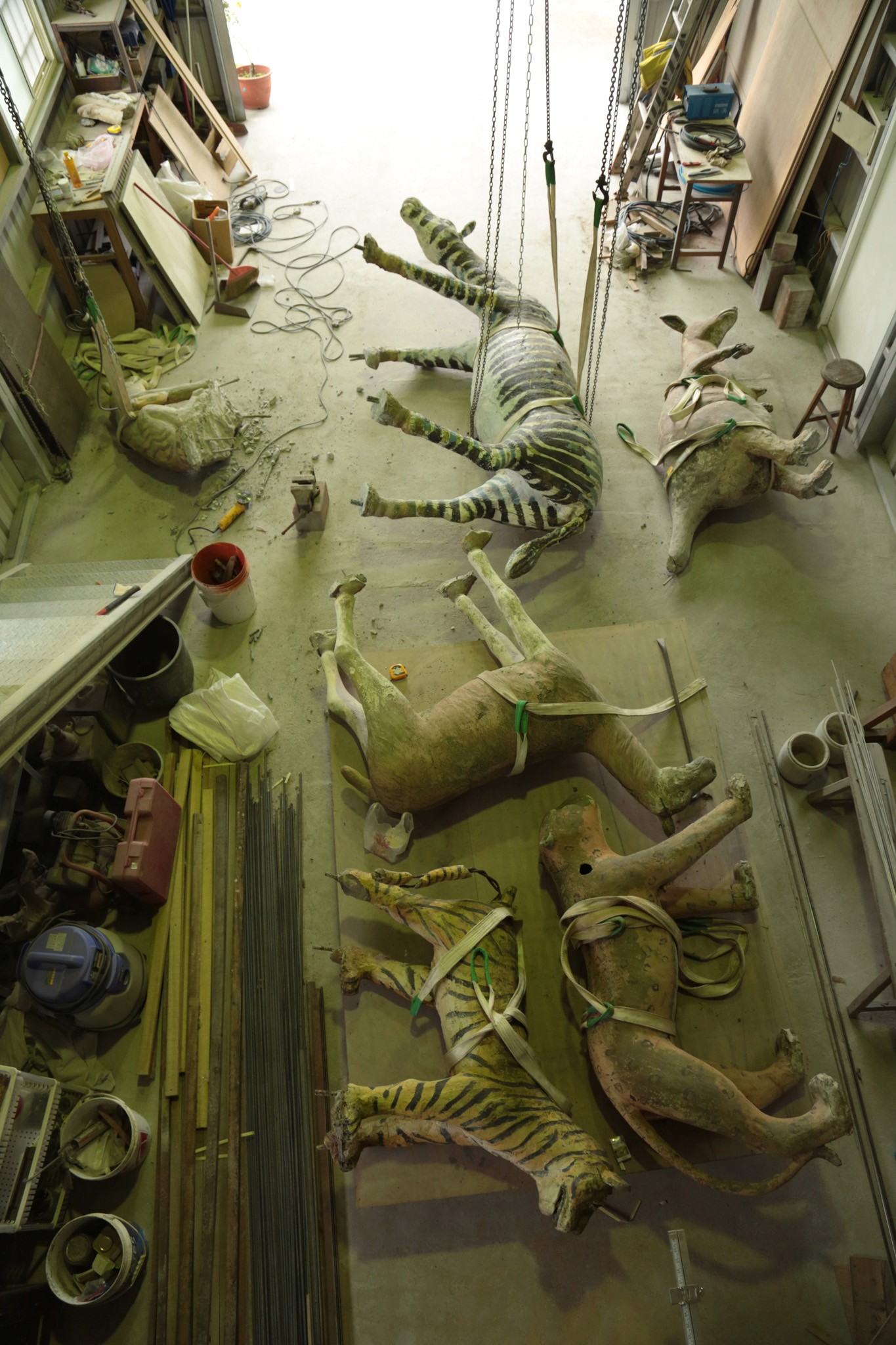
Akac Orat, o lalan no oway (Becoming Human in Rattan), 2024. (Courtesy of NTCAM, Photo Studio Millspace)

The Ali Enterprises Factory Fire, Forensic Architecture. Installation view of Of Thread and Stone, 2026. Courtesy of the New Taipei City Art Museum. Photo: Studio Millspace

The Ali Enterprises Factory Fire Archive Table, Forensic Architecture. Installation view of Of Thread and Stone, 2026. Courtesy of the New Taipei City Art Museum. Photo: Studio Millspace

Exhibition Details

Of Thread and Stone
Dates: 7 February – 14 June 2026
Venue: New Taipei City Art Museum, Galleries 3A, 3B, 4B
Address: No. 300, Guanqian Road, Yingge District, New Taipei City, Taiwan
Hours: Tuesday–Friday 10:00–17:30; Weekends 10:00–18:00

Share Article

Share Article

More to Read