Li Yi-Fan illustrated by Maria Chan

DATE

2023/05/29

ARTICLE

Maria Chen

PHOTOS

Courtesy of TFAM

Li Yi-Fan at the Venice Biennale: Screen Melancholy and Contemporary Image Culture

Taiwanese contemporary artist Li Yi-Fan’s Screen Melancholy, presented by Taipei Fine Arts Museum, explores AI, algorithmic culture, and the psychological condition of living through screens at the 61st International Art Exhibition – La Biennale di Venezia.

Presented as part of the Biennale, Screen Melancholy marks a defining moment in Li Yi-Fan’s practice—positioning him at the forefront of contemporary discourse surrounding technology, perception, and the instability of images in the digital age.

Staged as Taiwan’s official Collateral Event, the exhibition unfolds within the charged architecture of Palazzo delle Prigioni—a former prison whose history of surveillance, confinement, and systems of control becomes inseparable from the work itself.

As Venice continues to reflect on the social and political consequences of technological acceleration, Li Yi-Fan’s presentation feels particularly resonant. Rather than framing digital culture through spectacle or futurism, Screen Melancholy examines its quieter psychological effects: alienation, emotional fatigue, overstimulation, and the gradual flattening of lived experience into screens and interfaces.

Previous

Next

Previous

Next

CREDITS

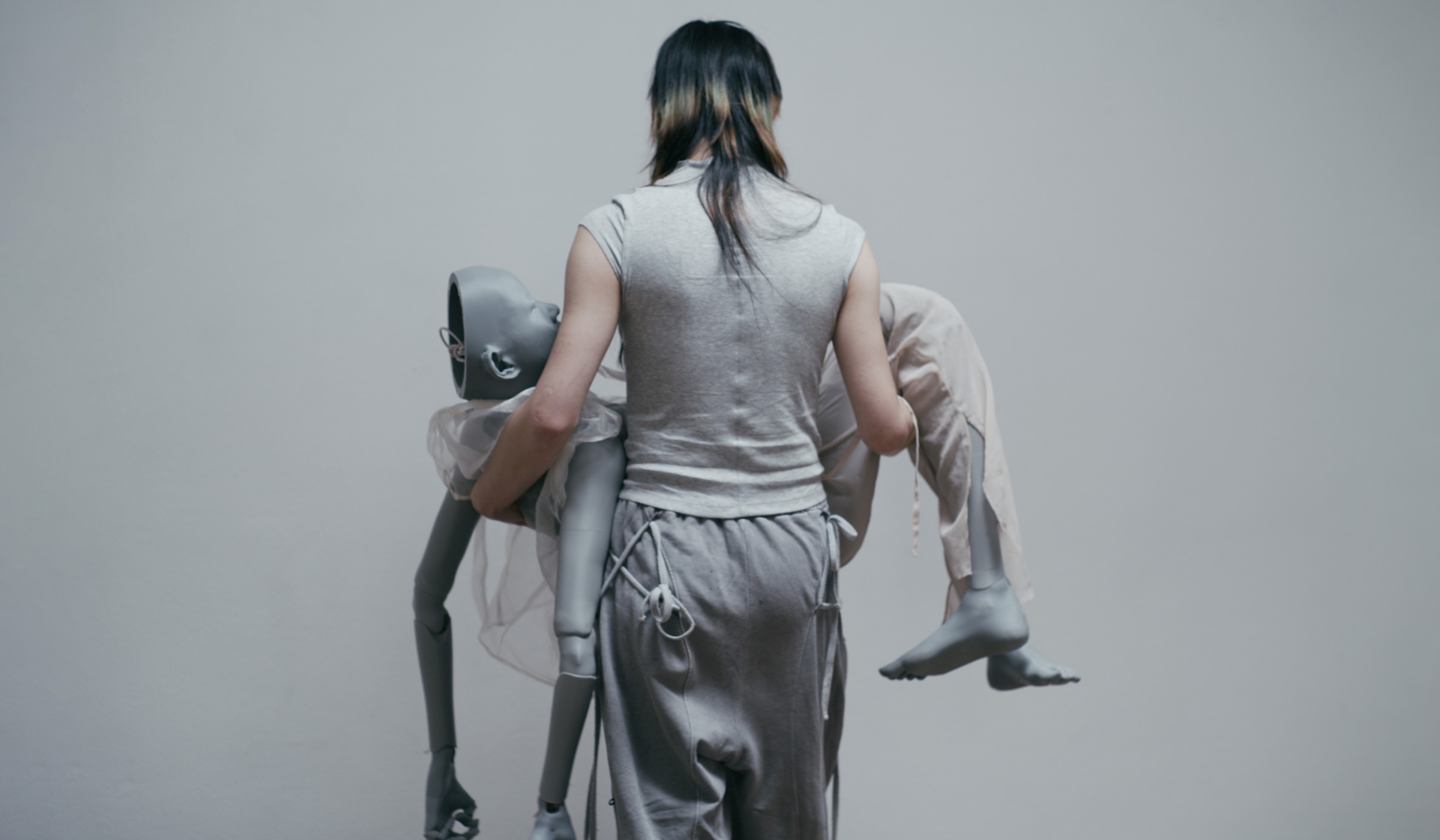
Header: Li Yi-Fan, Screen Melancholy (installation mockup image for reference only). © Li Yi-Fan. Courtesy of the artist and TFAM of Taiwan Collateral Event 2026.

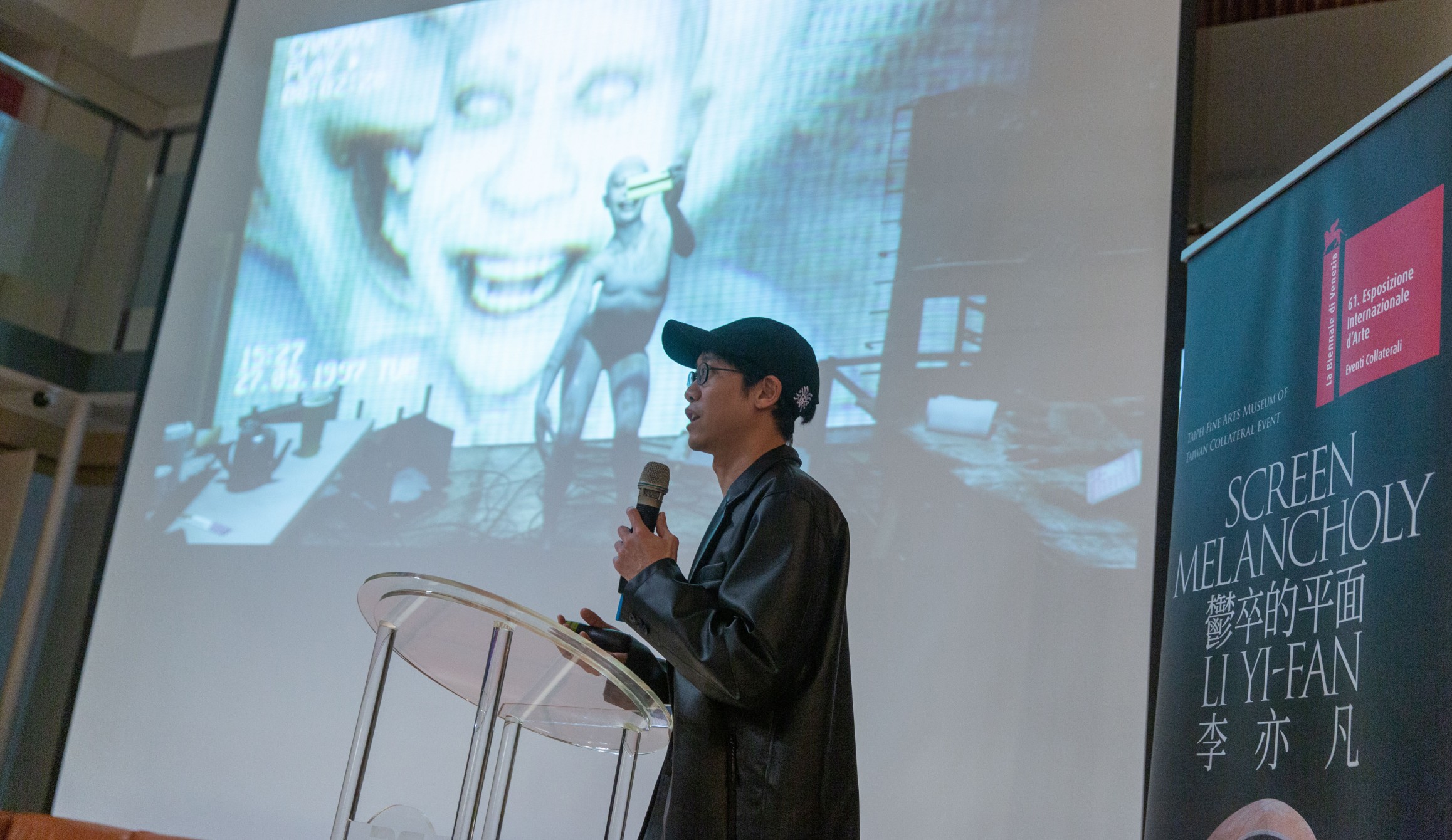
Slider Image 1: Representative artist for the Taiwan Collateral Event at the 2026 Venice Biennale, LI Yi-Fan. Image courtesy of Taipei Fine Arts Museum, Taiwan Collateral Event at the 2026 Venice Biennale.

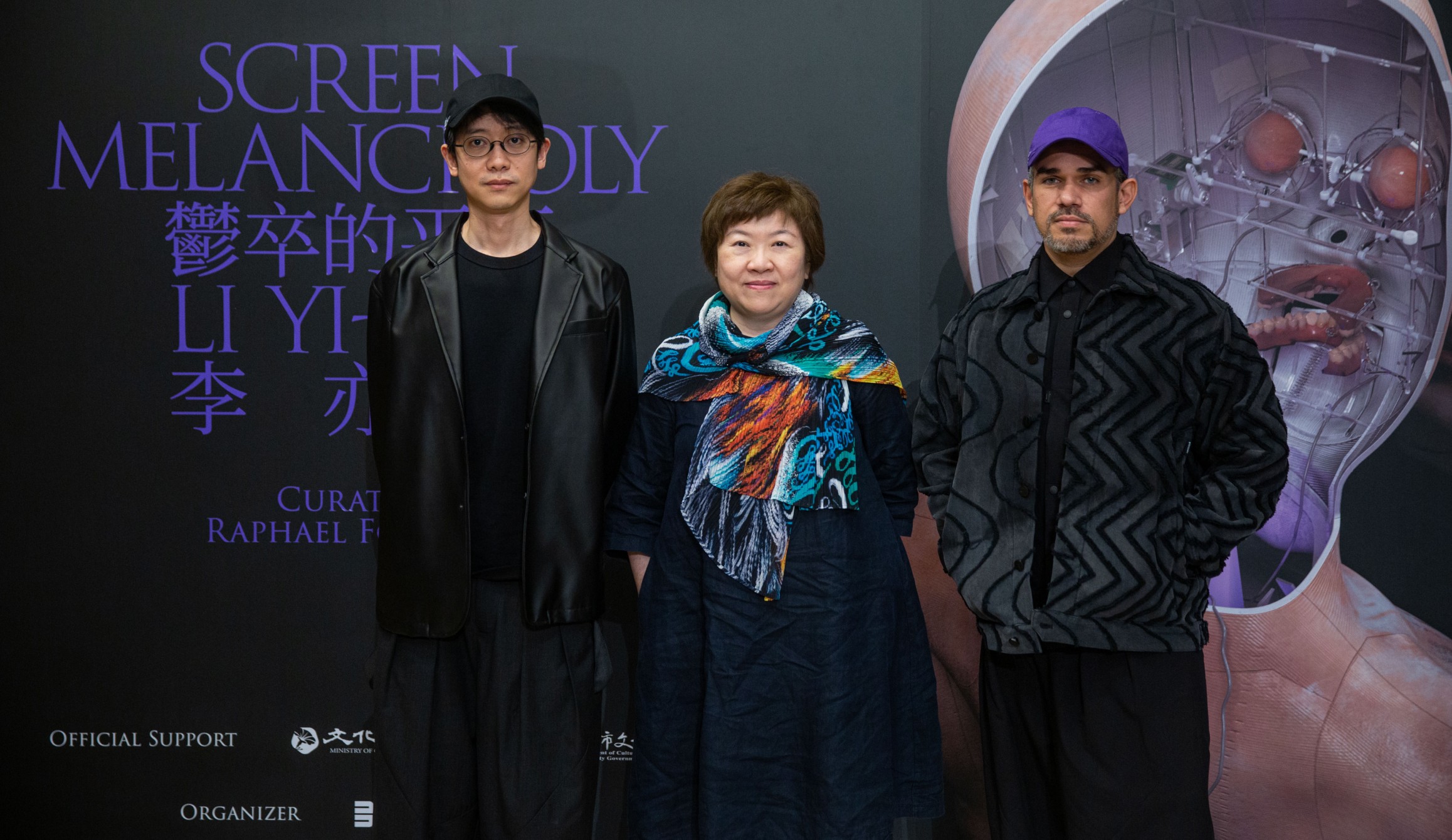
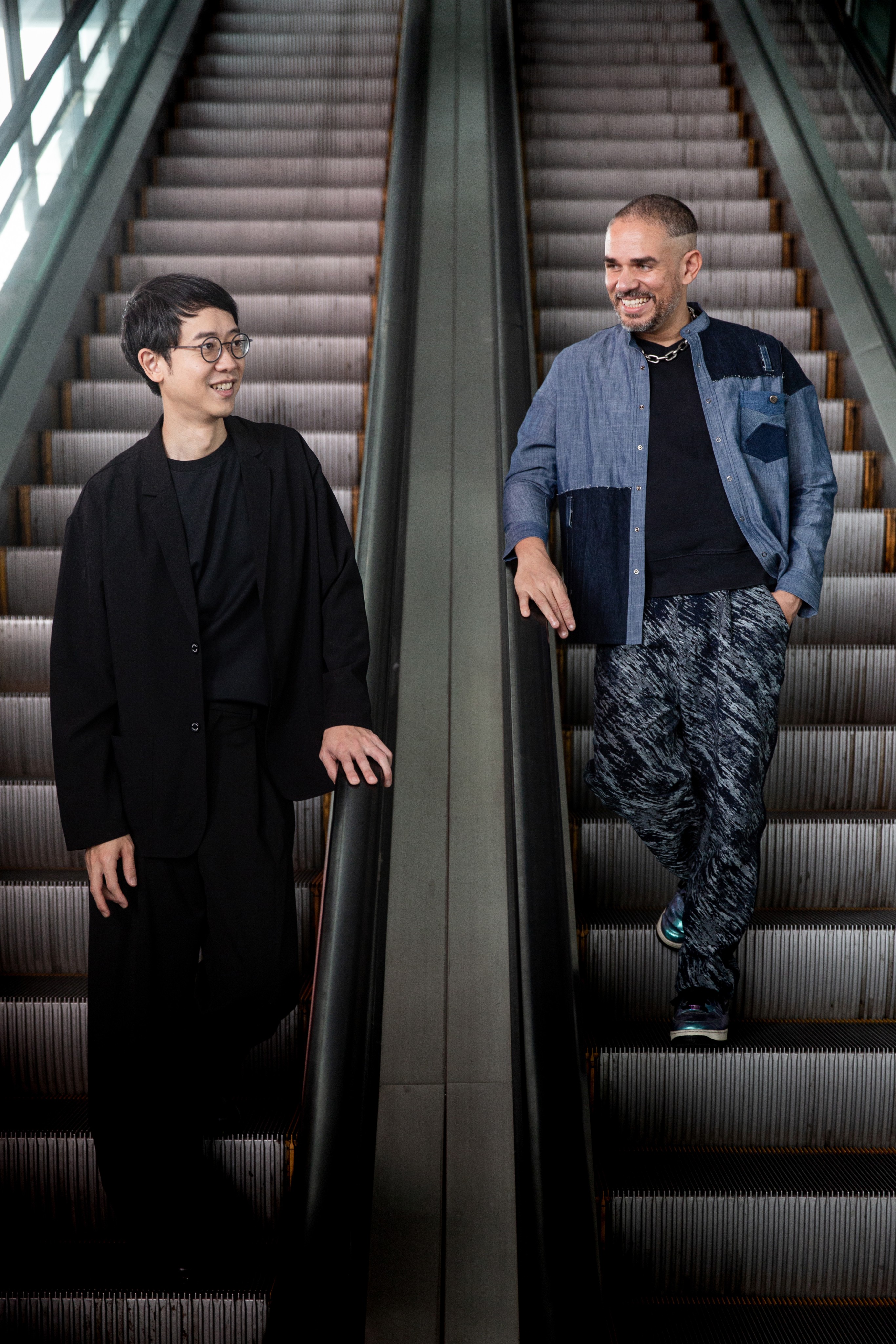
Slider Image 2: Representative artist LI Yi-Fan (left), Taipei Fine Arts Museum Director Li Chen LOH  (centre), and curator Raphael Fonseca (right), Taiwan Collateral Event at the 2026 Venice Biennale. Image courtesy of Taipei Fine Arts Museum, Taiwan Collateral Event at the 2026 Venice Biennale.

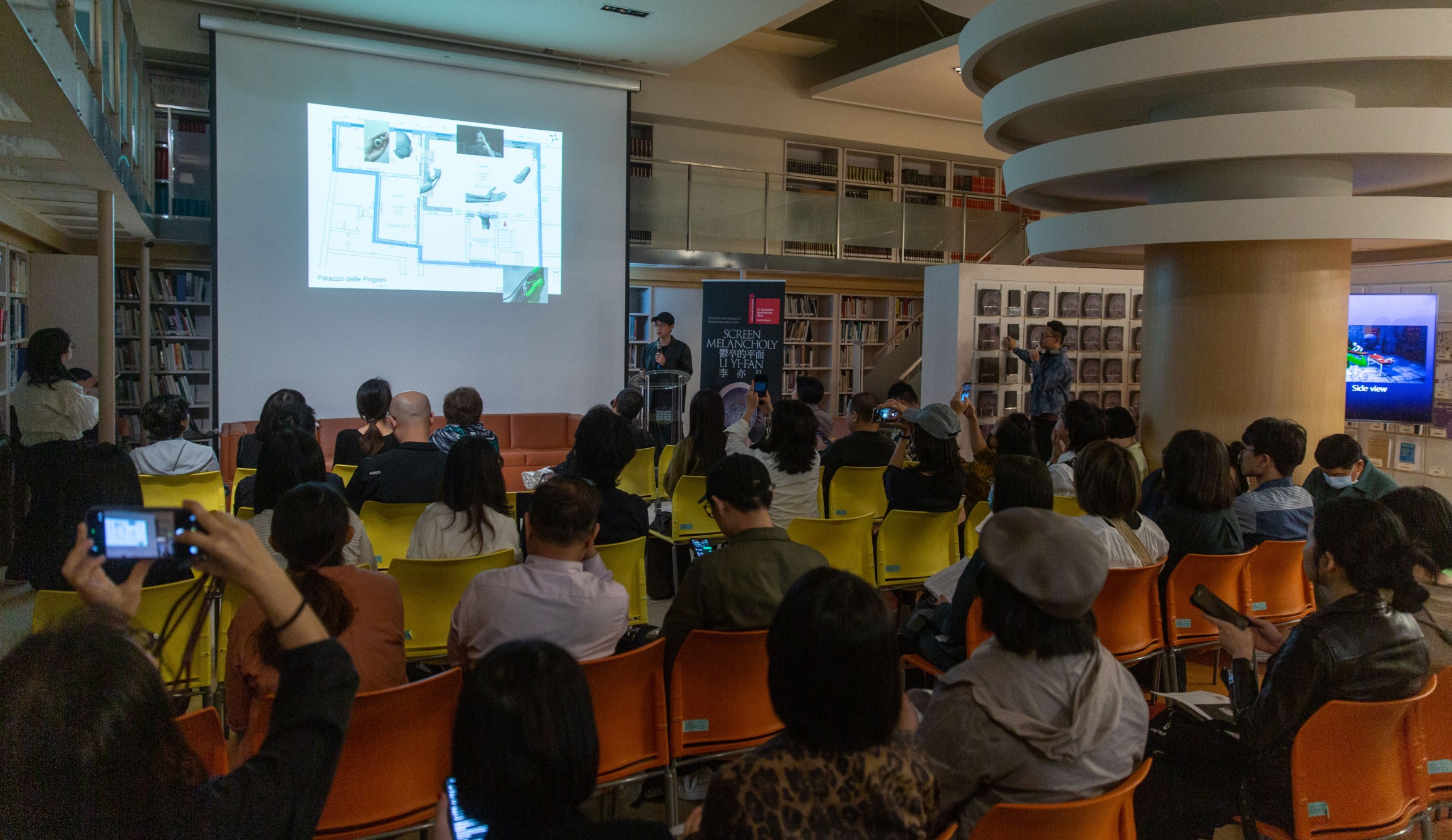
Slider Image 3: Press conference for the Taiwan Collateral Event at the 2026 Venice Biennale. Image courtesy of Taipei Fine Arts Museum, Taiwan Collateral Event at the2026 Venice Biennale.

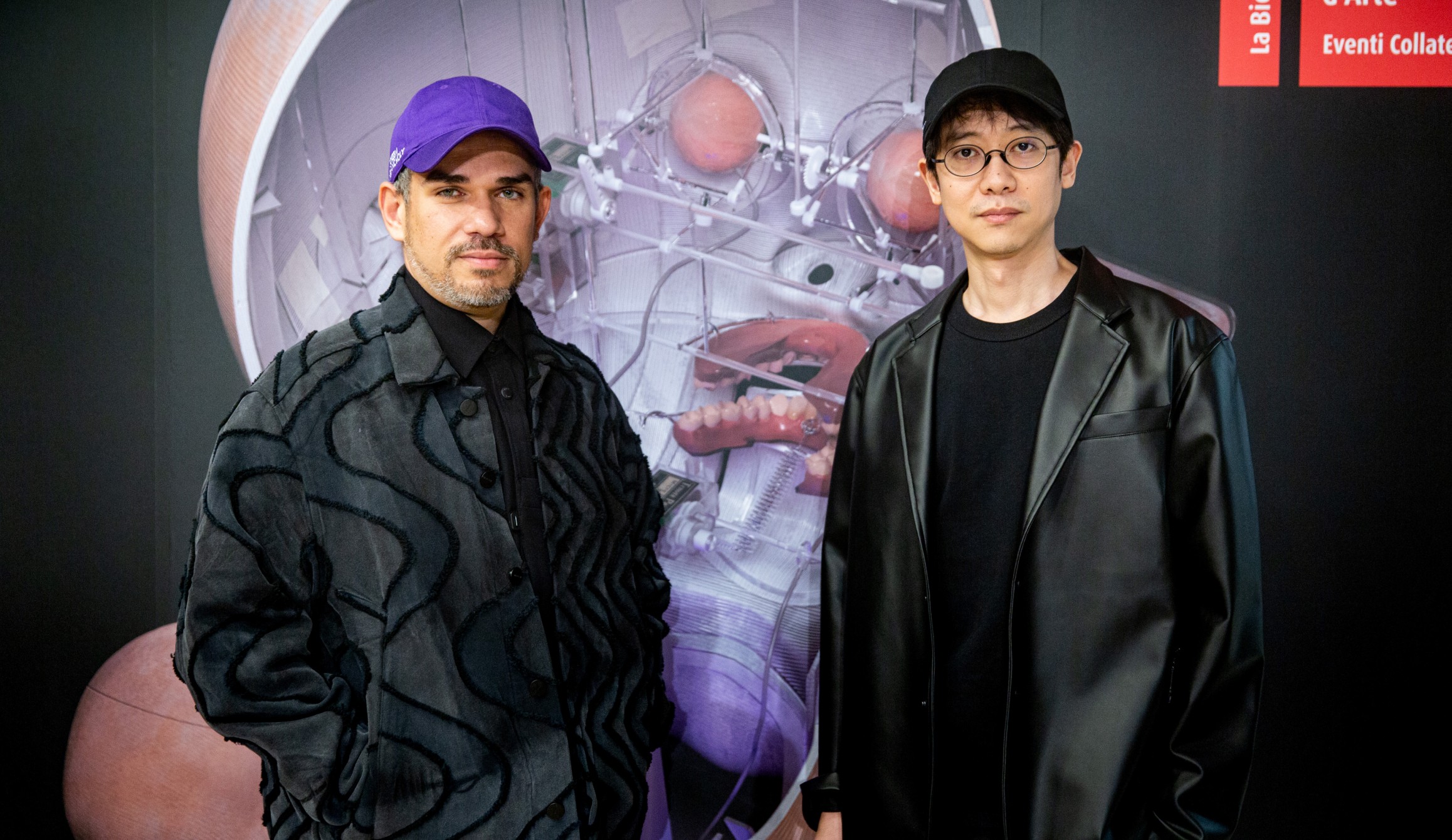
Slider Image 4: Representative artist LI Yi-Fan with curator Raphael Fonseca, Taiwan Collateral Event at the 2026 Venice Biennale. Image courtesy of Taipei Fine Arts Museum, Taiwan Collateral Event at the 2026 Venice Biennale.

The Condition of the Screen

Born in Taipei in 1989, Li Yi-Fan belongs to a generation shaped by Taiwan’s rapid transformation into one of the world’s most technologically connected societies. Growing up amid the expansion of internet culture, gaming environments, digital labour, and hyper-connectivity, his work reflects a lived familiarity with systems that increasingly mediate how reality is experienced and understood.

Taiwan occupies a uniquely complex position within global technology culture—not only as a major centre of technological production, but also as a place shaped by layered histories of political precarity, global visibility, and cultural negotiation. Within Li’s practice, technology never appears as neutral. Instead, it emerges as something deeply psychological: a structure shaping behaviour, memory, identity, and emotional life itself.

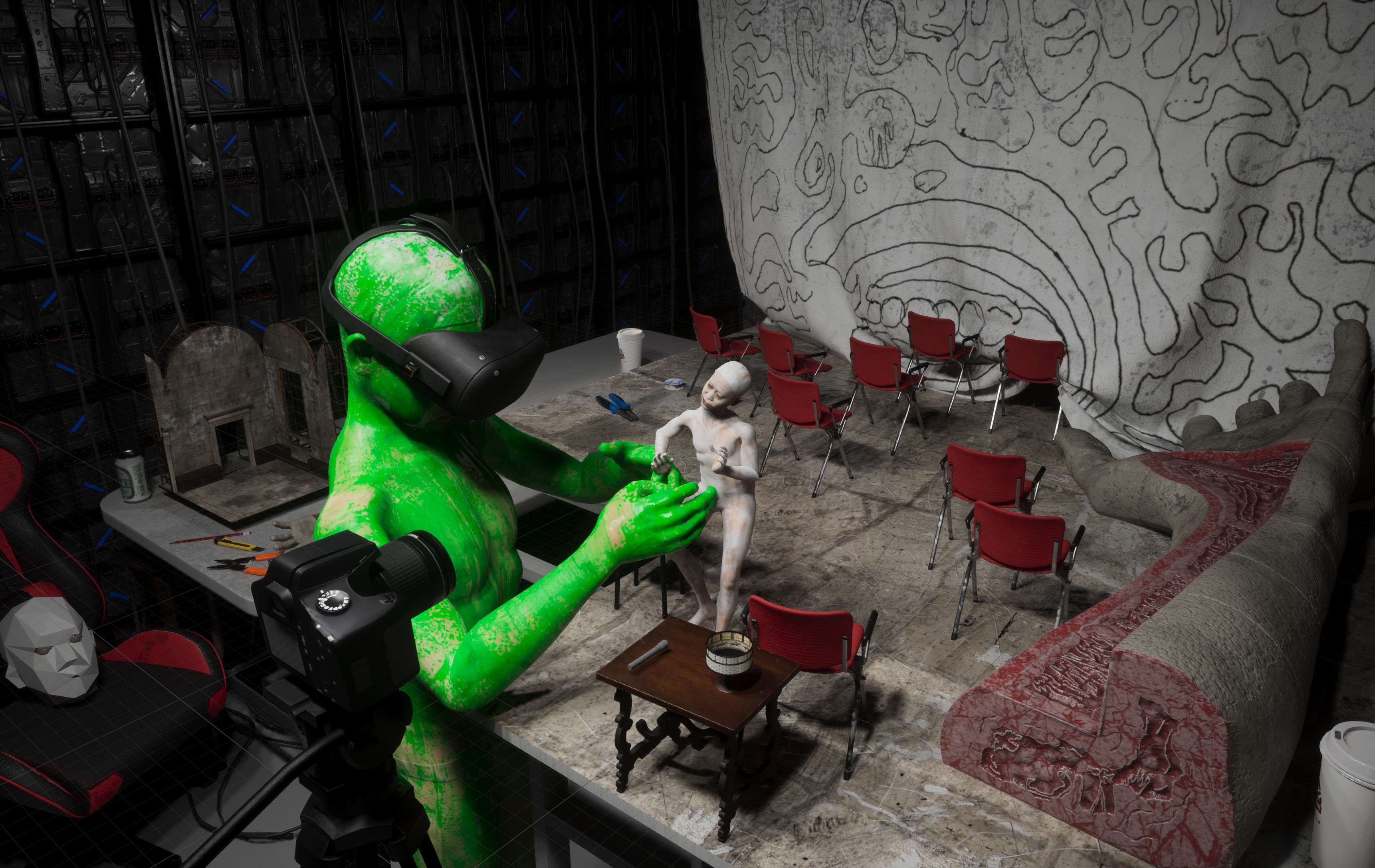
Rather than rejecting or celebrating these systems, Li works from within them. Using self-developed tools, game engines, machinima aesthetics, and what he describes as “digital puppetry,” he constructs immersive environments that expose the mechanics of image production itself.

“My practice has always been rooted in personal emotions,” Li Yi-Fan explains, “but in this project, I ask how these intimate thoughts resonate collectively with others from my generation.”

“I hope viewers of Screen Melancholy embrace both a solitary journey and a shared venture into the world we all live in right now, reshaped by technology and dictated by algorithmic systems.”

The result is a body of work that moves fluidly between absurdity and unease—simultaneously humorous, melancholic, and psychologically disorienting.


From Dürer to Digital Excess

A key conceptual thread within the exhibition is its dialogue with Albrecht Dürer’s Melencolia I (1514), the iconic engraving depicting a figure paralysed by intellectual overwhelm.

Li Yi-Fan reinterprets this condition through the logic of contemporary image culture. If the Renaissance melancholic suffered from limits of knowledge, today’s condition is defined by excess: endless streams of information, images, notifications, and algorithmically generated content.

The exhibition reflects this state of saturation. Images no longer function as stable windows onto reality, but as endlessly circulating surfaces detached from physical experience.

Li articulates this shift directly:

“Image was once so important. It connects us with the world like a window. But now that we realize this window is nothing but a flat surface, how should we respond?”

Within Screen Melancholy, melancholy becomes less an individual emotion than a shared social atmosphere—distributed across networks, feeds, interfaces, and systems of perpetual visibility.


Digital Puppetry and the Visible System

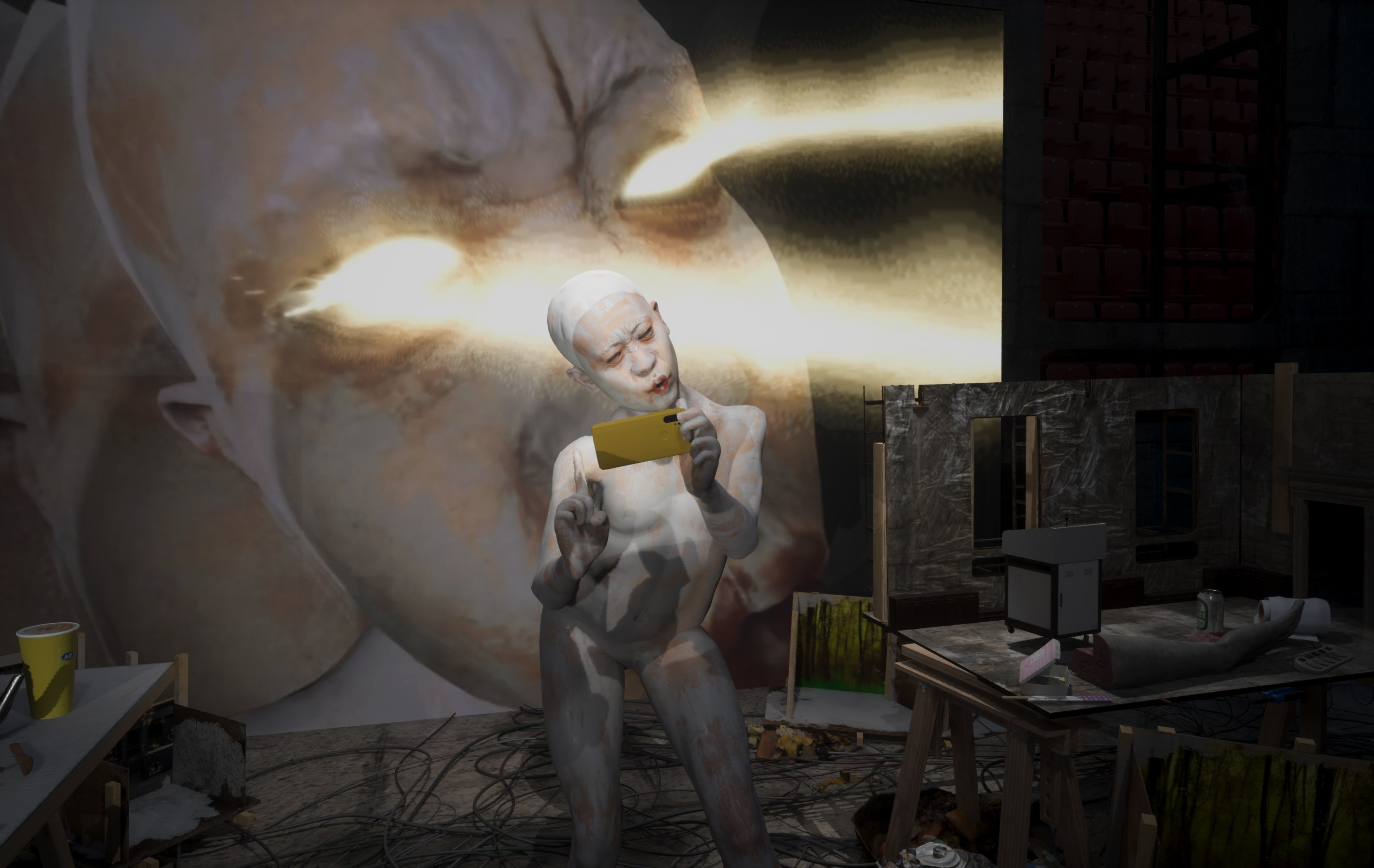
Li Yi-Fan’s practice is defined by a desire to make invisible systems visible. His concept of “digital puppetry” foregrounds manipulation, construction, and control—disrupting the illusion that digital systems are seamless or objective.

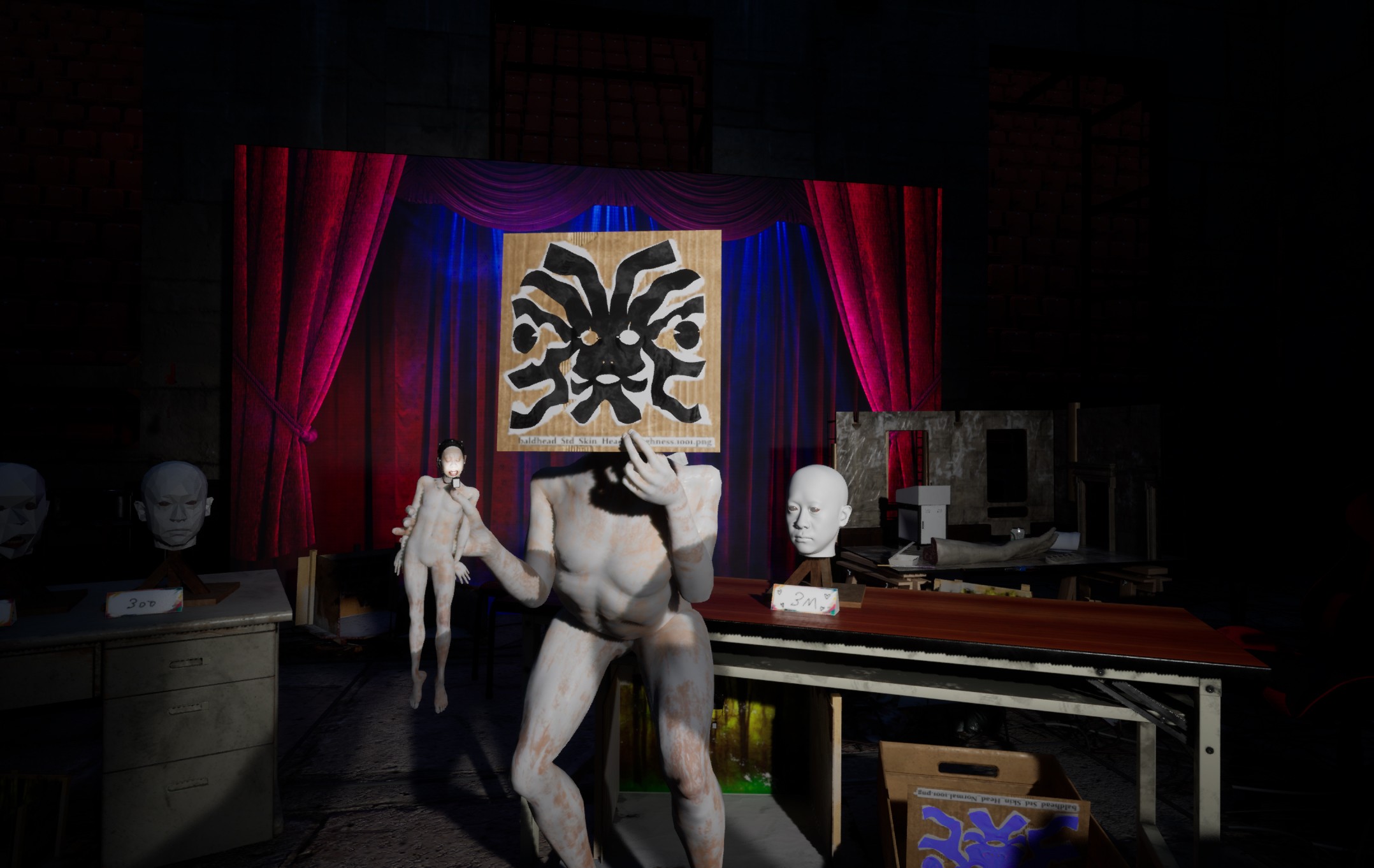
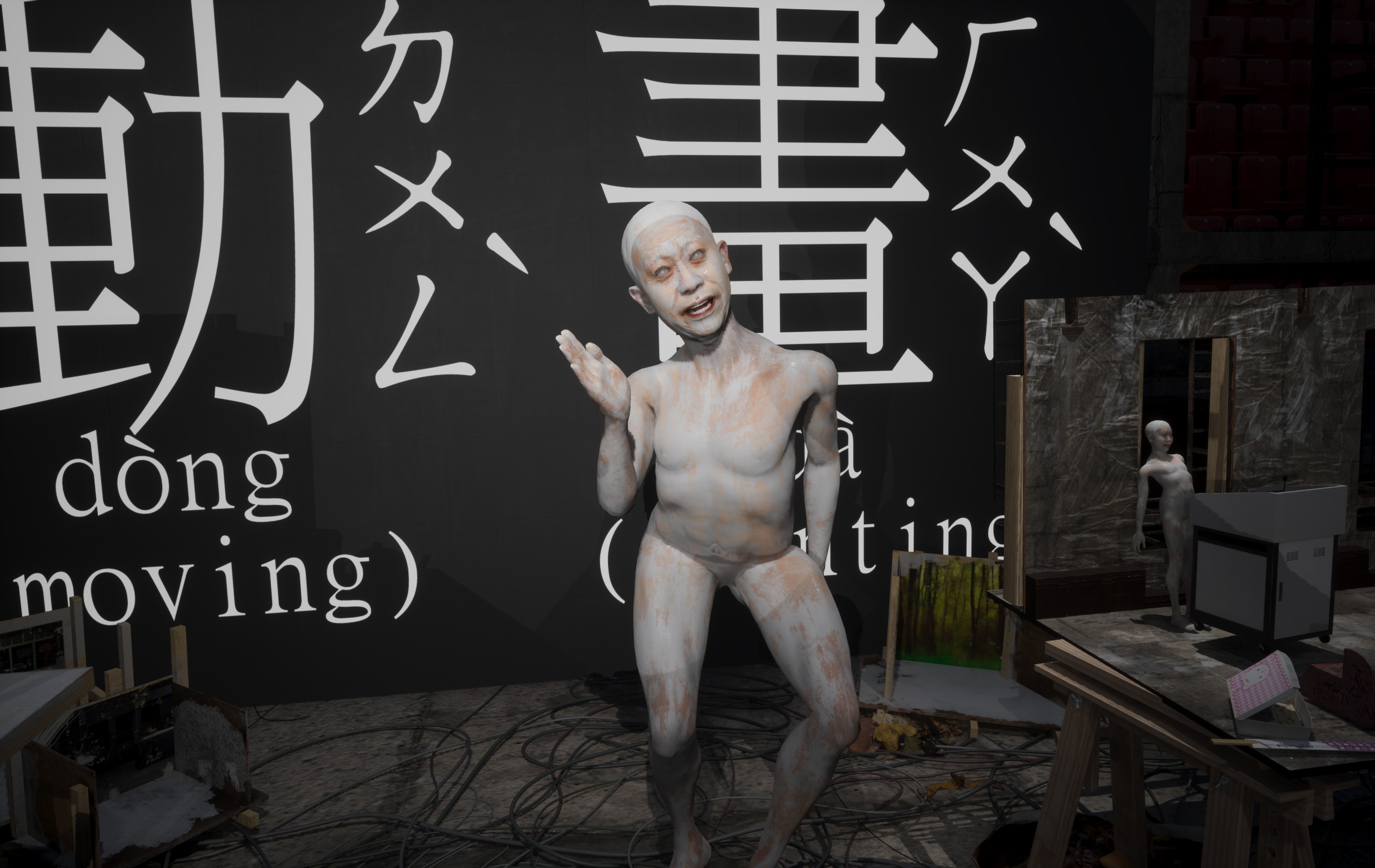
Working with self-built game engines and improvised virtual environments, he intentionally leaves traces of process exposed. Glitches, repetitions, artificial movements, and fragmented bodies become part of the visual language itself.

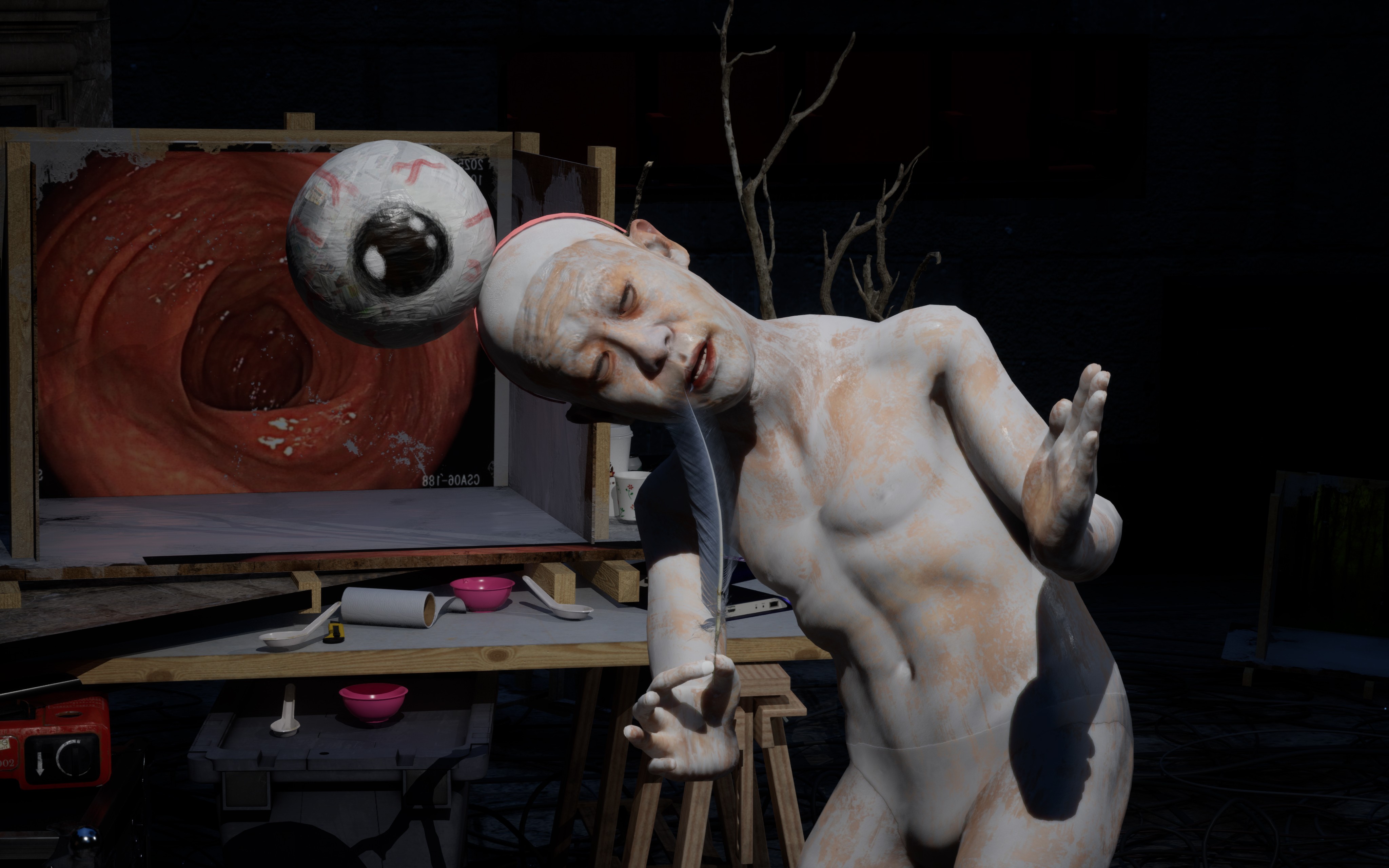
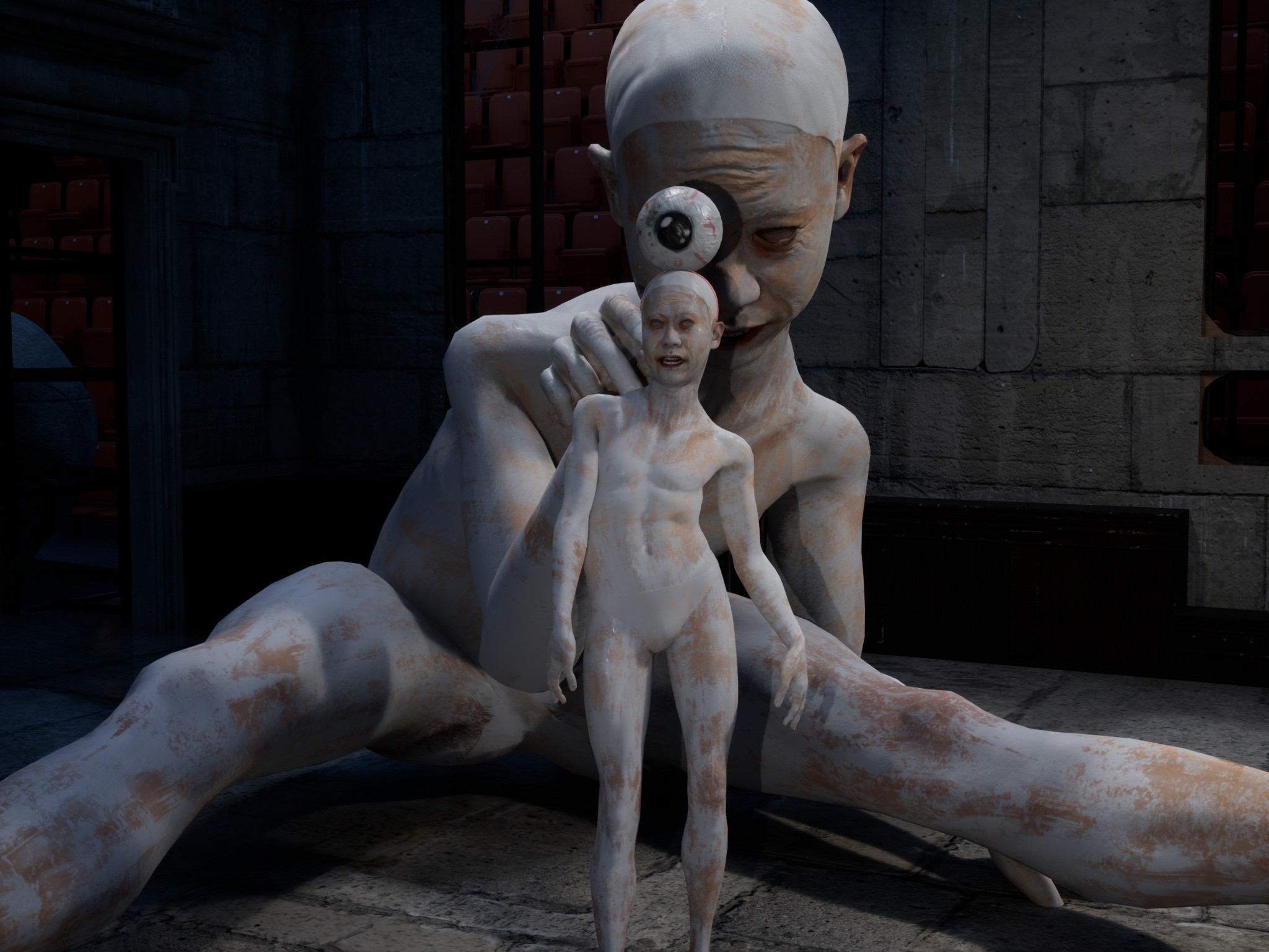
At the centre of the exhibition is a 60-minute video work accompanied by additional moving-image installations and large-scale 3D-printed body fragments—hands, limbs, and heads distributed throughout the space. These sculptural forms double as seating, collapsing distinctions between viewer, object, and performer.

The exhibition’s central narrative—an “eyeball” returning home—operates less as a linear story than as a surreal psychological journey through systems of perception, surveillance, and image construction.

Rather than immersing viewers in technological fantasy, Li continually reminds us of the systems operating beneath the image.
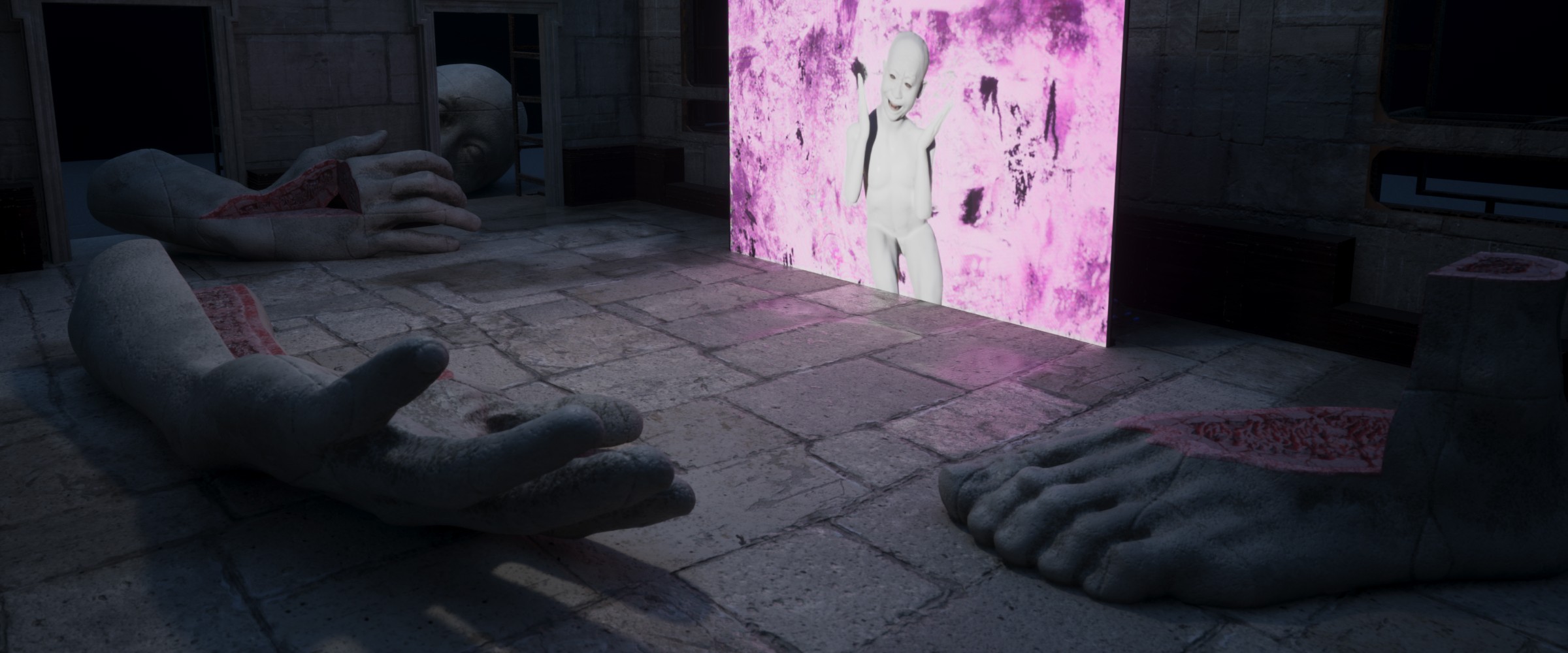
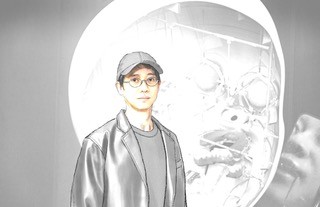
Image 1

Image 2

Image 3

Image 4

CREDITS

Divider: Public program Eunju Hong, She seemed devastated when I was weeping with Joy (video still), 2025, performance, 30mins. Courtesy of the artist.

Image 1: Li Yi-Fan, Screen Melancholy (screenshot), 2026, 60min, video installation © Li Yi-Fan. Courtesy of the artist and TFAM of Taiwan Collateral Event 2026

Image 2: Li Yi-Fan, Screen Melancholy (screenshot), 2026, 60min, video installation © Li Yi-Fan. Courtesy of the artist and TFAM of Taiwan Collateral Event 2026

Image 3: Screen Melancholy:Li Yi-Fan, 2026 © Li Yi-Fan. Courtesy of the artist and TFAM of Taiwan Collateral Event 2026

Image 4: Li Yi-Fan, Screen Melancholy (screenshot), 2026, 60min, video installation © Li Yi-Fan. Courtesy of the artist and TFAM of Taiwan Collateral Event 2026

Watching and Being Watched

The choice of Palazzo delle Prigioni is integral to the work’s emotional and conceptual impact. Built in the early 17th century and historically connected to the Doge’s Palace, the former prison embodies historical architectures of surveillance and control.

Within Screen Melancholy, this history becomes a metaphor for contemporary digital existence. Surveillance is no longer experienced only through physical institutions, but through invisible systems embedded within everyday technologies—algorithms, platforms, interfaces, and networks that continuously shape attention and behaviour.

As viewers move through the exhibition, positions remain unstable: observer and participant, spectator and subject, controller and controlled.

This tension feels especially urgent today, as AI-generated content, predictive technologies, and platform economies increasingly mediate contemporary life. Li Yi-Fan does not present technology as dystopian spectacle; instead, he reveals how deeply it has already entered the emotional texture of everyday existence.


Beyond Identity, Toward Shared Conditions

While deeply shaped by Taiwan’s social and technological landscape, Screen Melancholy resists simplistic readings of identity or nationality.

Instead, Li Yi-Fan speaks to broader global conditions increasingly shared across generations: image saturation, digital alienation, algorithmic dependency, and the erosion of distinctions between virtual and physical experience.

Yet his perspective remains distinctly informed by Taiwan’s position within global culture—highly networked, technologically advanced, politically complex, and continuously negotiating questions of visibility and representation on the international stage.

This tension between visibility and instability quietly underpins the exhibition itself. The work moves between intimacy and fragmentation, humour and exhaustion, connection and isolation—capturing emotional conditions that feel increasingly universal.


A Shared Melancholia

Despite its conceptual complexity, Screen Melancholy remains emotionally accessible. Humour operates throughout the exhibition as both coping mechanism and critique, allowing moments of absurdity to coexist with deeper unease.

The figures populating Li Yi-Fan’s virtual environments often appear suspended between agency and helplessness—caught inside systems they neither fully control nor entirely understand.

This ambiguity gives the work much of its power. Rather than offering solutions or moral distance, Screen Melancholy reflects back the contradictions of contemporary technological life itself.

As curator Raphael Fonseca observes, “Each of us contains something of the prisoner, the puppeteer and the puppet.”

In Li Yi-Fan’s world, we are simultaneously spectators, performers, users, products, and participants.


Why Screen Melancholy Matters Now

At a moment defined by AI acceleration, image excess, and increasingly unstable notions of truth and reality, Screen Melancholy feels less like speculative fiction than a portrait of the present.

What distinguishes Li Yi-Fan’s work is its refusal of simplification. Rather than framing technology as either utopian or catastrophic, he focuses on its psychological residue—how systems quietly reshape perception, emotional life, memory, and human relationships.

In doing so, Li Yi-Fan emerges not only as a significant voice within Taiwanese contemporary art, but as an artist articulating the emotional condition of a global, screen-mediated generation.

CREDITS

Video: “What Is Your Favorite Primitive” at Taipei Biennial 2023

Image 1

Image 2

Image 3

CREDITS

Image 1: Li Yi-Fan, Screen Melancholy (screenshot), 2026, 60min, video installation © Li Yi-Fan. Courtesy of the artist and TFAM of Taiwan Collateral Event 2026

Image 2: TFAM of Taiwan Collateral Event, Artist LI Yi-Fan and Curator Raphael Fonseca, at the 61st International Art Exhibition – La Biennale di Venezia 2026. Courtesy of Taipei Fine Arts Museum.

Image 3: Li Yi-Fan, Screen Melancholy (screenshot), 2026, 60min, video installation © Li Yi-Fan. Courtesy of the artist and TFAM of Taiwan Collateral Event 2026

About the Artist, Li Yi-Fan

Li Yi-Fan (b. 1989) lives and works in Taipei, Taiwan. His practice explores the evolving relationship between people, technology, and image culture in the digital age, often through a distinctive sense of black humour and self-reflexive world-building.

Working extensively with self-developed game engines and machinima-based production methods, Li frequently operates as a one-person production crew—improvisationally constructing narratives that expose the hidden mechanics behind image-making itself. Across recent projects, he has developed a series of game-engine-based image production toolkits through initiatives including the National Culture and Arts Foundation’s “WSAD” and Taiwan Contemporary Culture Lab’s “Toolkit of Madness.”

His major works include important_message_360.mp4, rewiring, howdoyouturnthison, and What Is Your Favorite Primitive. His work has been presented internationally in exhibitions including the 2020 Taiwan Biennial Subzoology, the 2020 Digital Art Festival Taipei 01_LOVE, the 2021 Asian Art Biennial Phantasmapolis, and the 2023 Taipei Biennial Small World.

In 2024, his work was featured in Dream Screen at the Leeum Museum of Art in Seoul. The same year, he received the 8th Tung Chung Prize from the Hong Foundation for a newly commissioned work, and began a 2024–25 residency at the Rijksakademie van Beeldende Kunsten in Amsterdam.

Previously, What Is Your Favorite Primitive received the 46th Golden Harvest Award at the Taipei Golden Horse Film Festival in 2024, while howdoyouturnthison (2021) earned the Visual Arts Award at the 2022 Taishin Arts Award.


Curator

Raphael Fonseca is Curator and Head of Modern and Contemporary Latin American Art at the Denver Art Museum. He was Chief Curator of the 14th Mercosul Biennial (2025) and is currently involved in major international projects including Counterpublic 2026 in St. Louis and the 13th Sequences Biennial in Reykjavik. From 2023 to 2025, he was named among ArtReview’s 100 most influential figures in the global art world.

Share Article

Share Article

More to Read