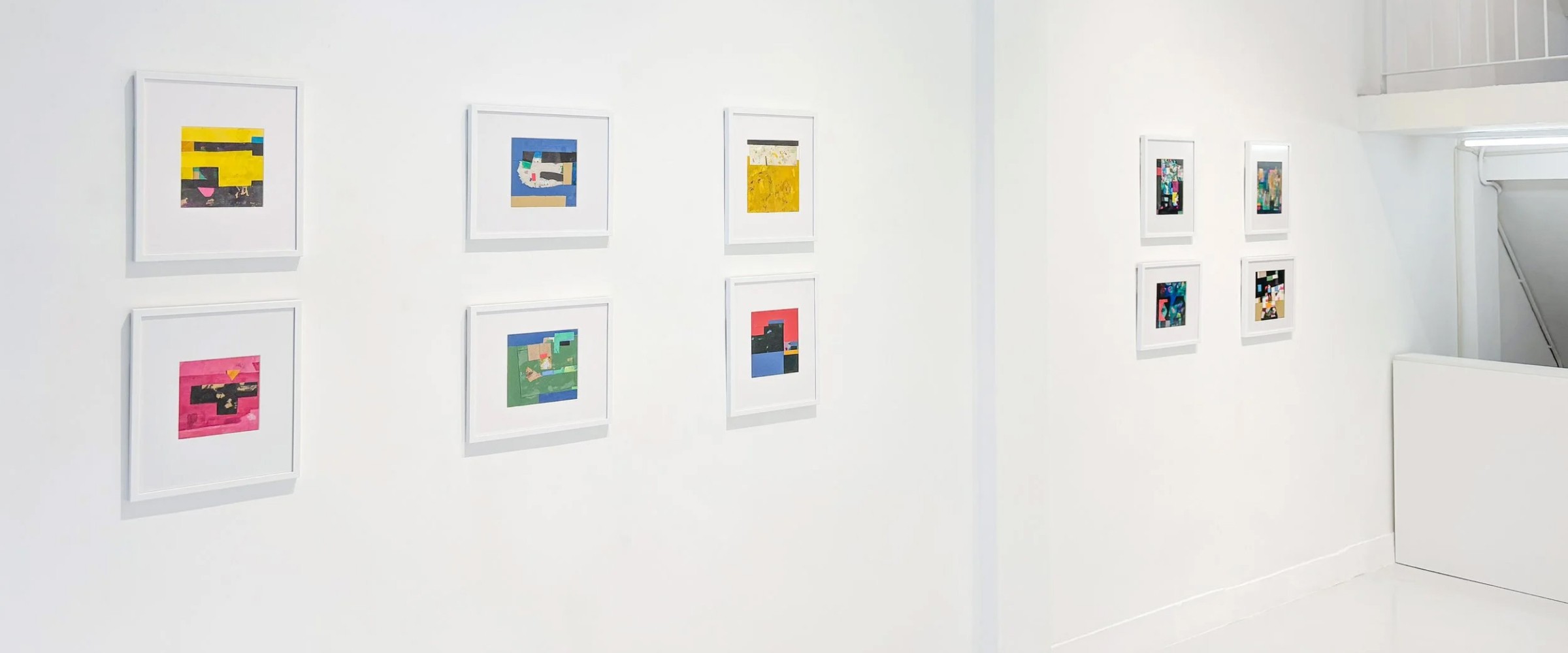
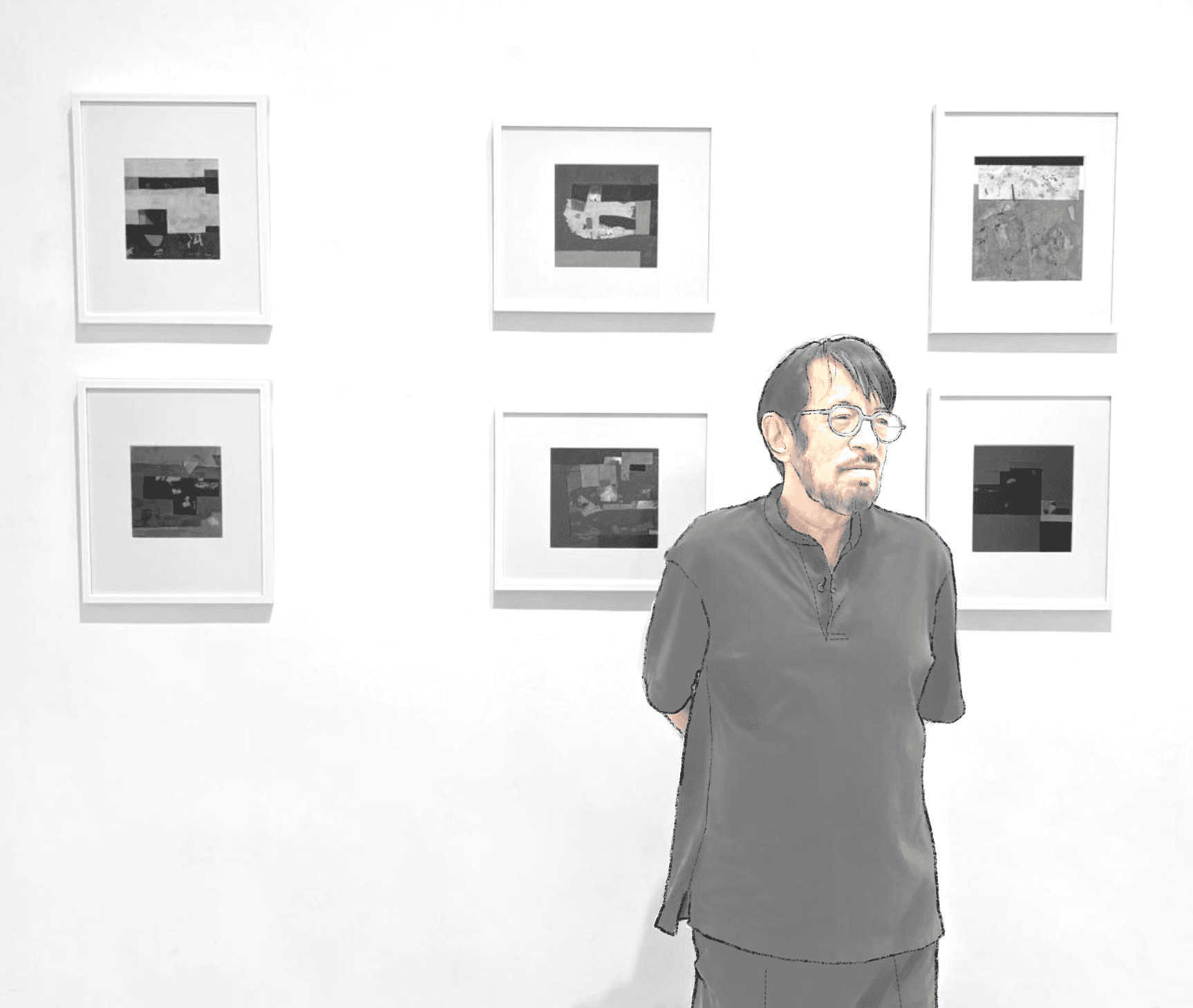
CNTRFLD. Your 2024 solo show Suggestions at Supples Gallery marked your first in over a decade. What drew you back to the gallery space now, and how did the concept for this series come about
AA. Louis from Supples Gallery reached out to me at a time when I was deep in my collage work and producing prolifically. I was drawn to the gallery’s focus on Southeast Asian artists. While I wouldn’t call myself an “emerging” artist, perhaps I’m re-emerging—and I appreciated that the gallery saw something in what I was doing.
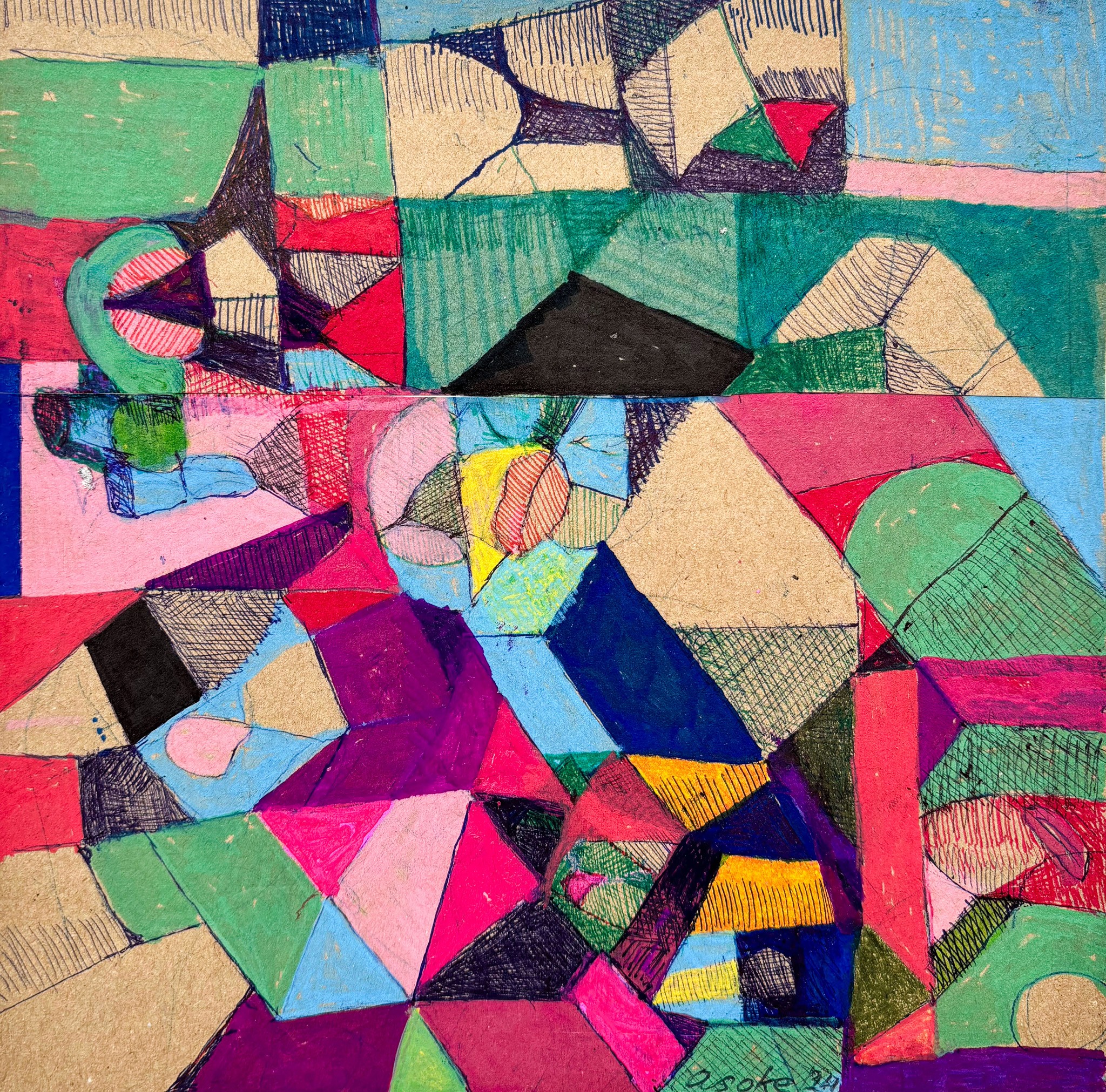
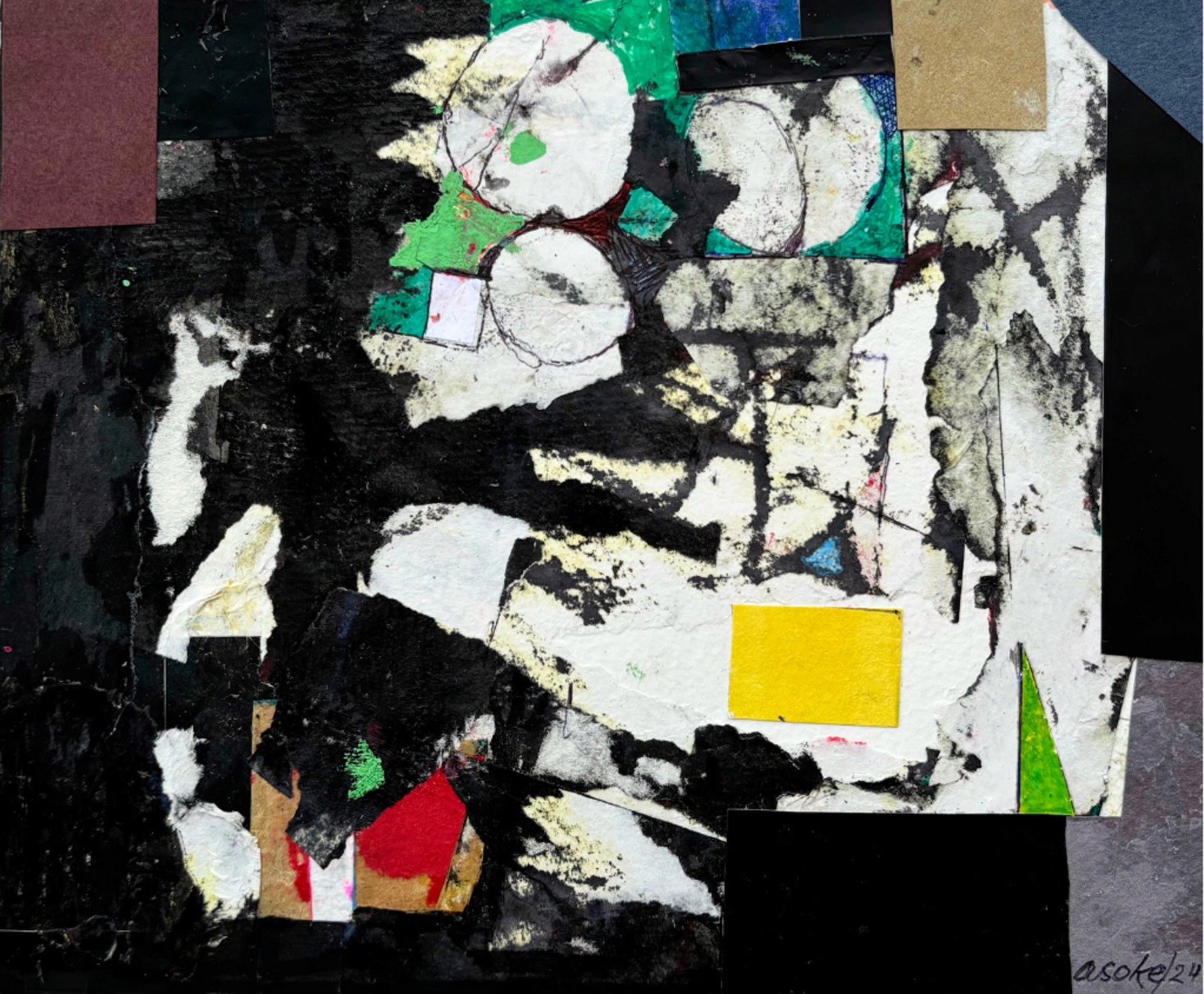
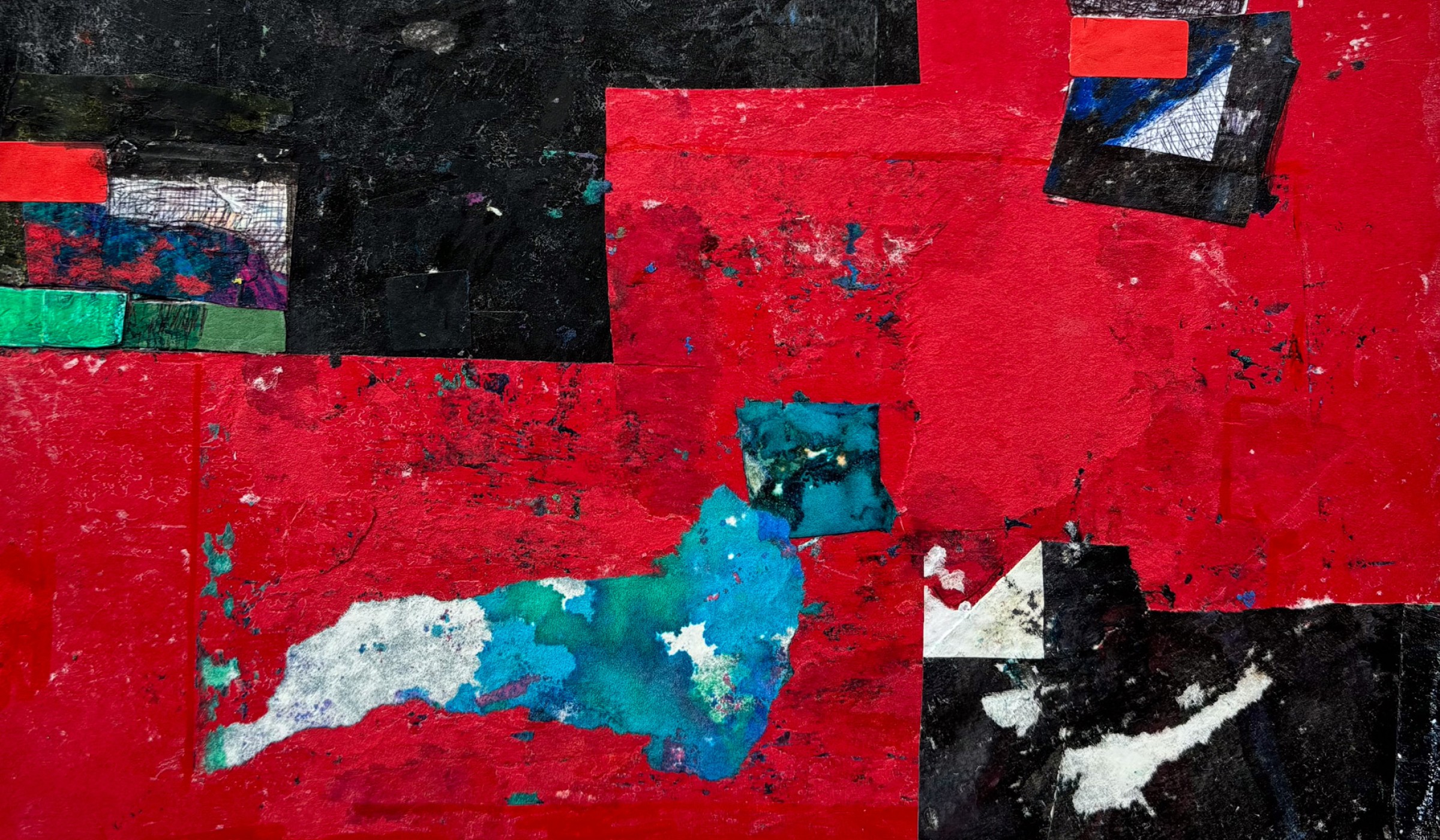
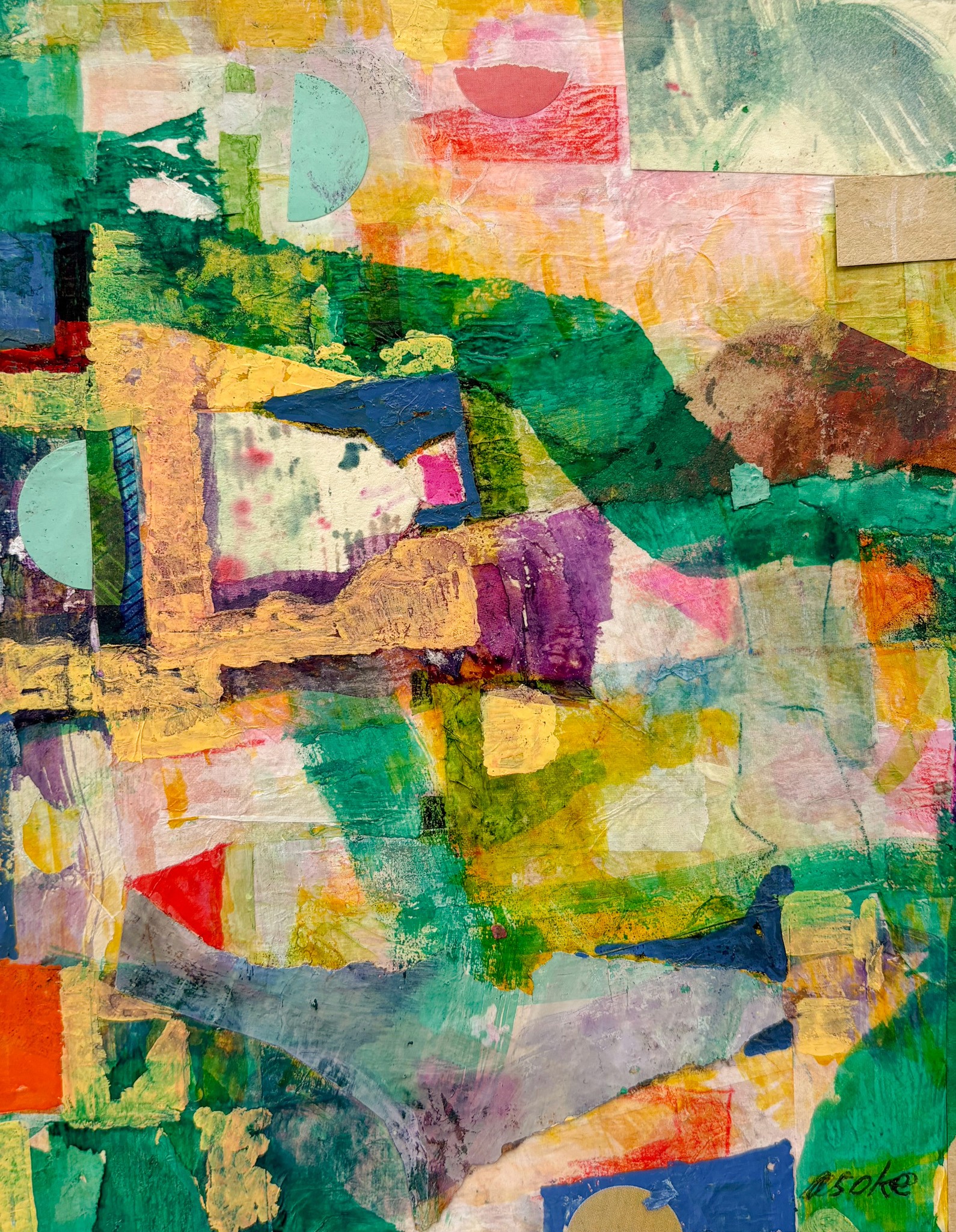
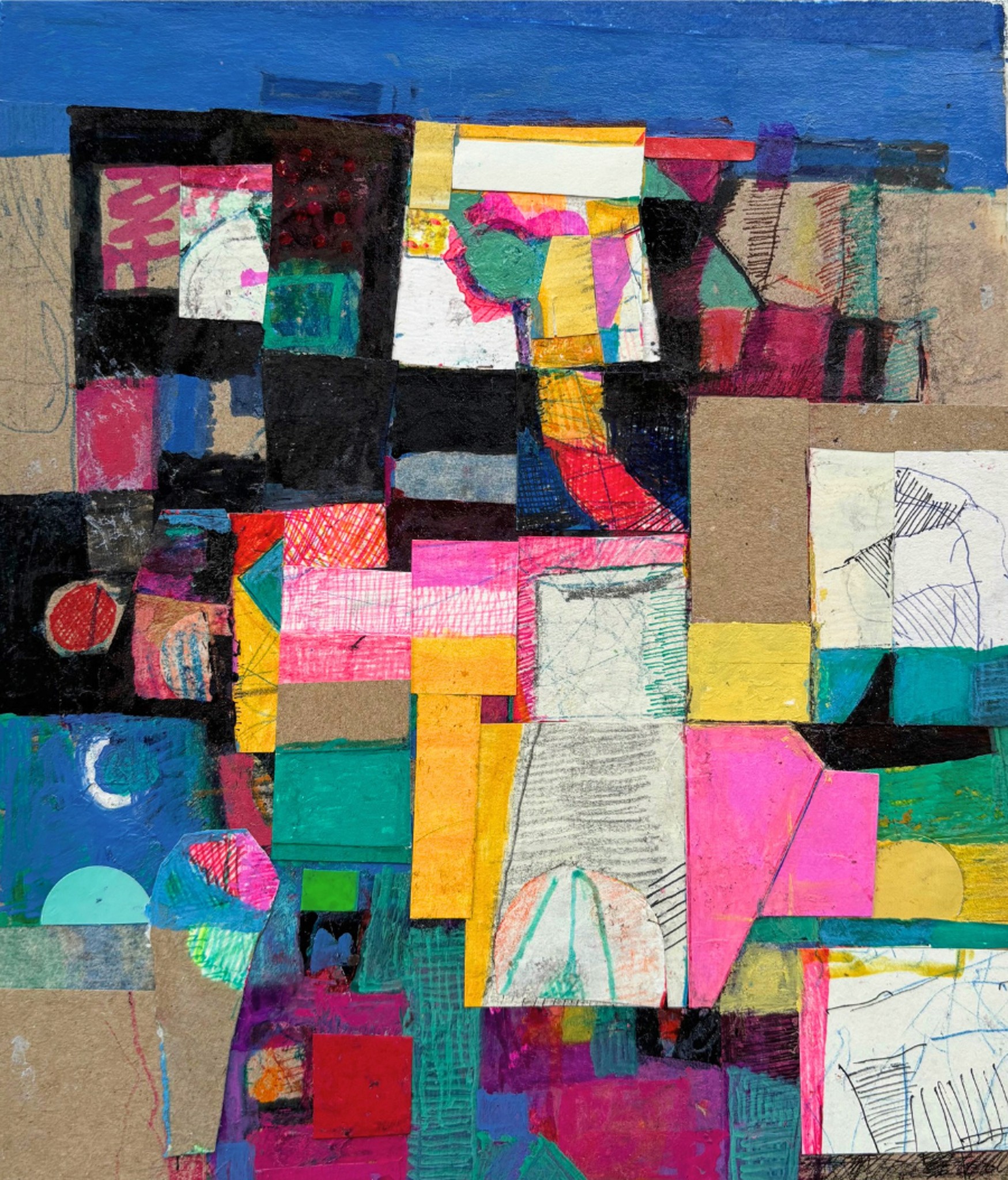
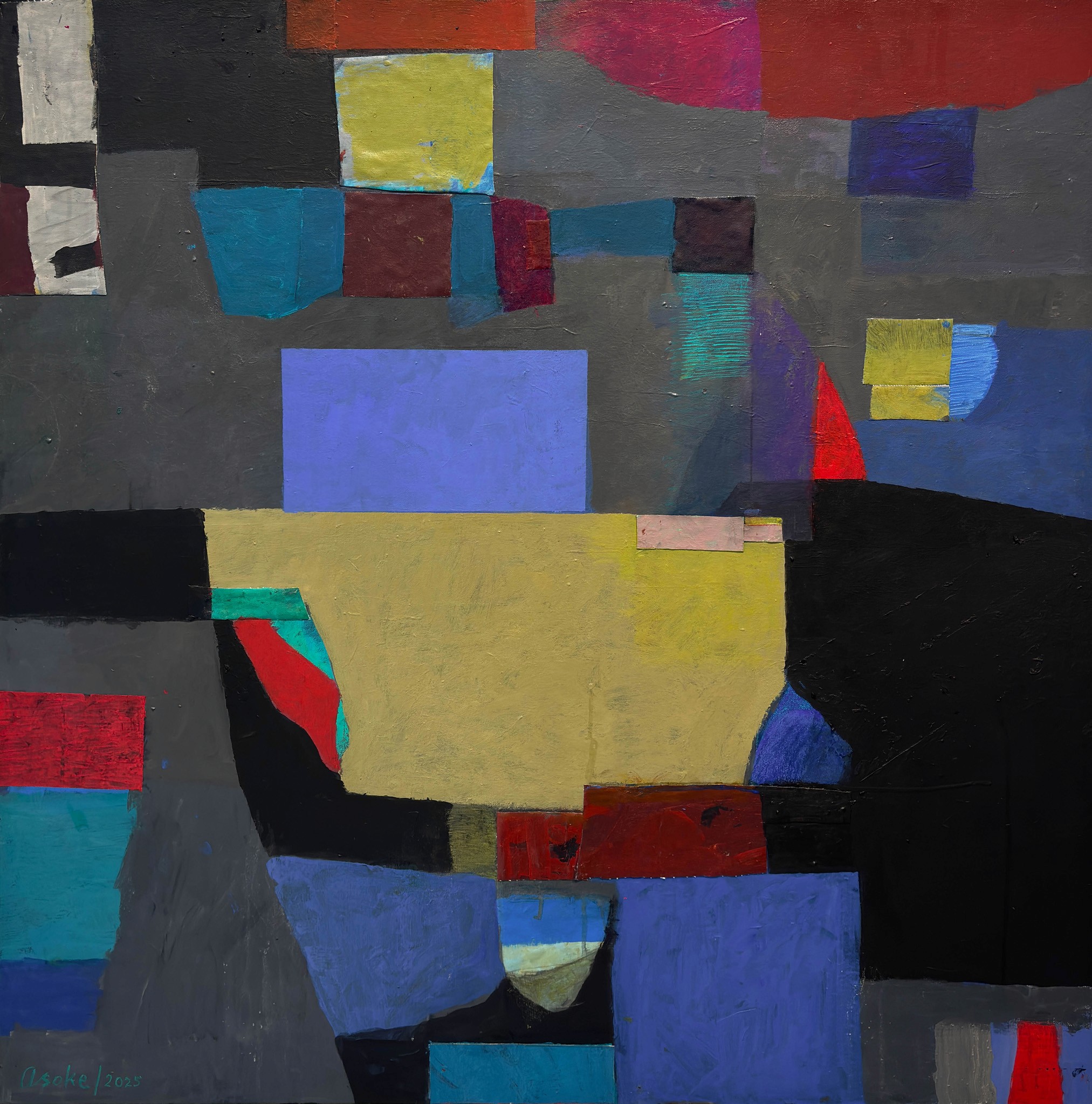
Together, we reviewed five years of work and curated a selection that spanned old and new. The pieces were unified by their mediums but left a lot open to interpretation—hence the title, Suggestions.
CNTRFLD. In Suggestions, you draw inspiration from the Rorschach inkblot test, inviting viewers to complete the work through their own interpretations. How do you see the relationship between artist, artwork, and audience in this context?
AA. When a painting is overtly realistic, the mind registers it at face value. But when you suggest something, you activate the viewer’s imagination—and that makes it personal. Hitchcock was a master of this; he created fear through suggestion rather than explicit gore.
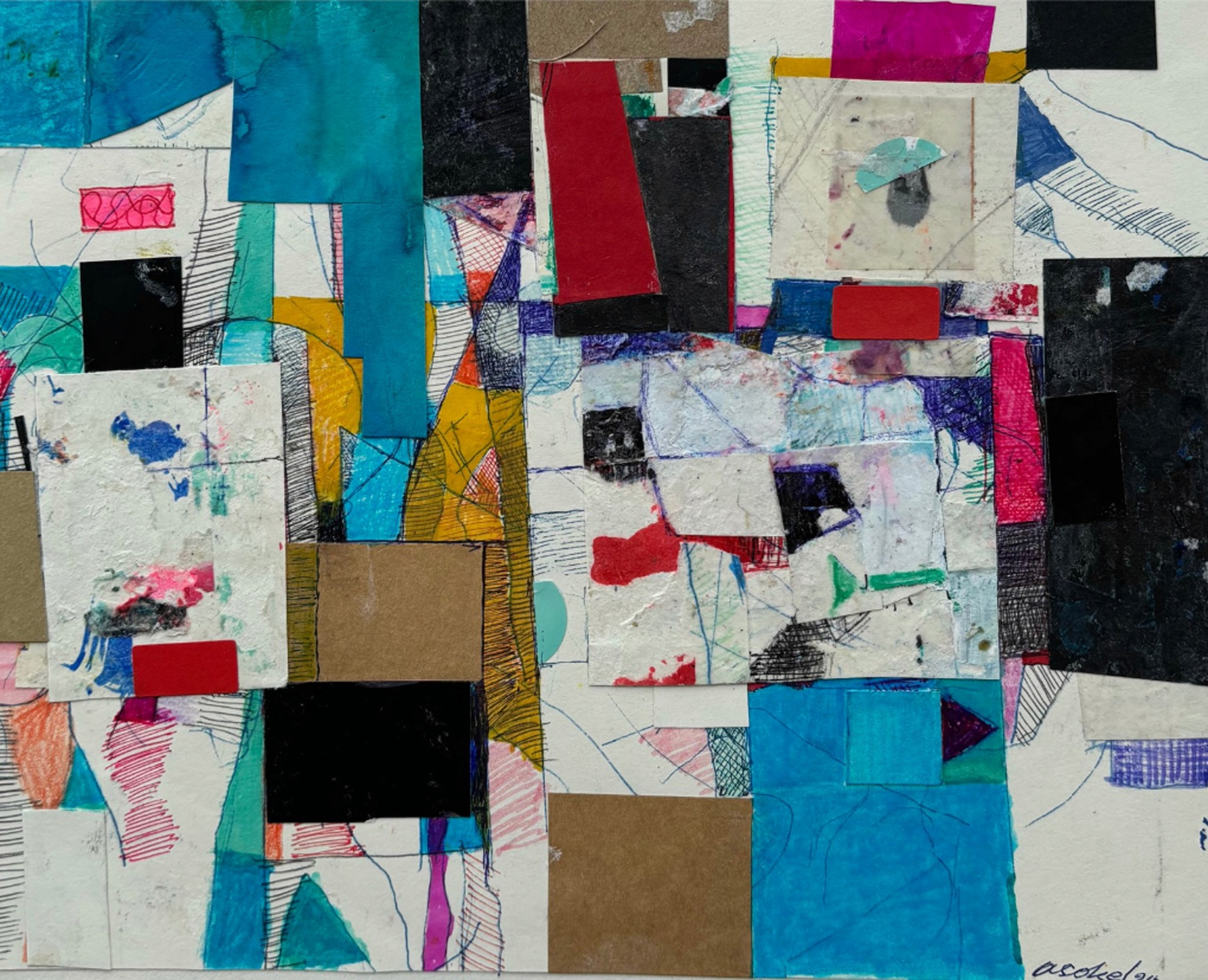
The inkblot became a perfect metaphor for what I was trying to do. I created visual cues—spaces, shapes, lines, hints of water or landscape—without spelling anything out. The rest is up to the viewer.
CNTRFLD. Your choice of mediums is remarkably eclectic—from traditional brushes and inks to rolling paper. What inspires this experimental materiality, and how does it reflect your broader artistic philosophy?
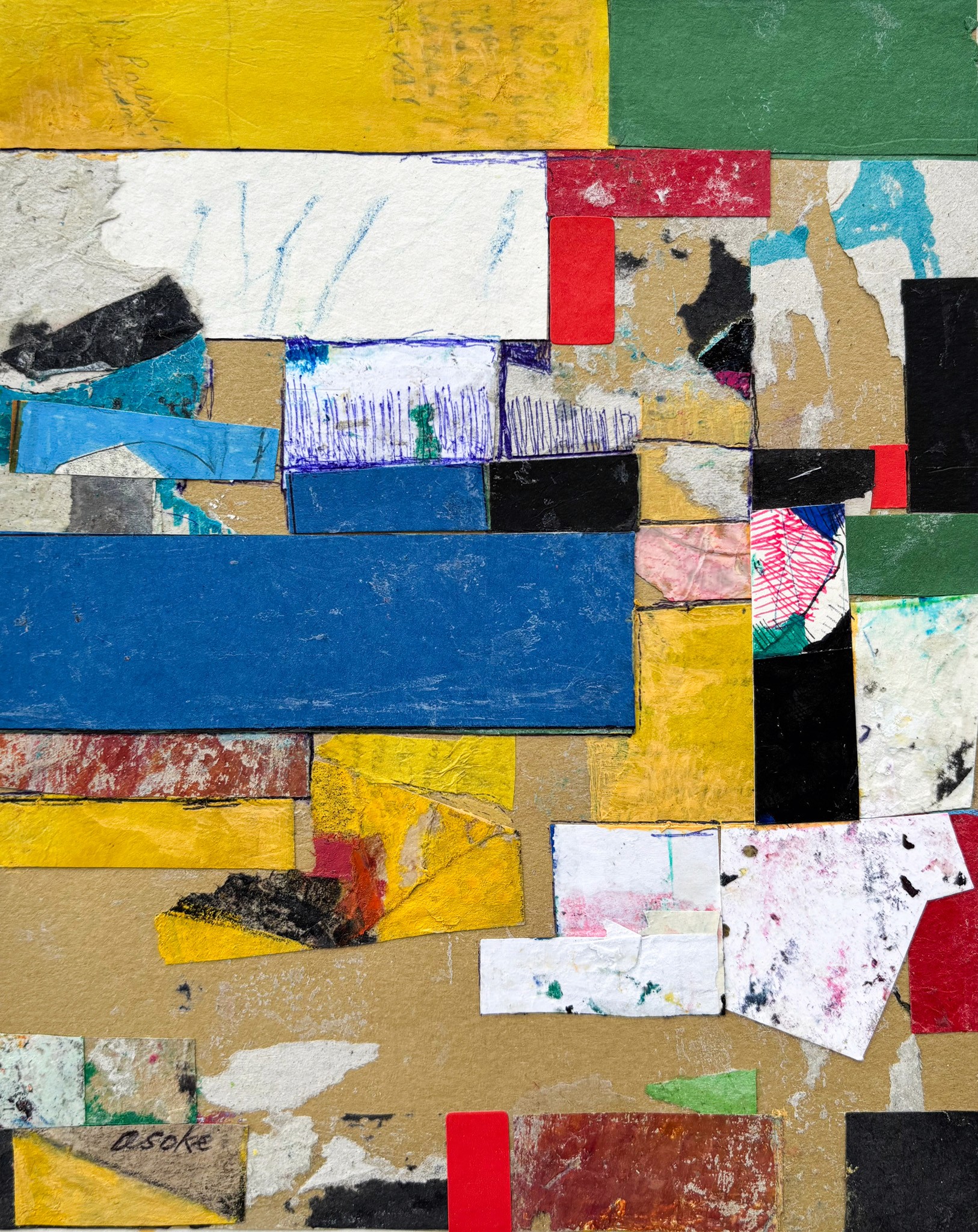
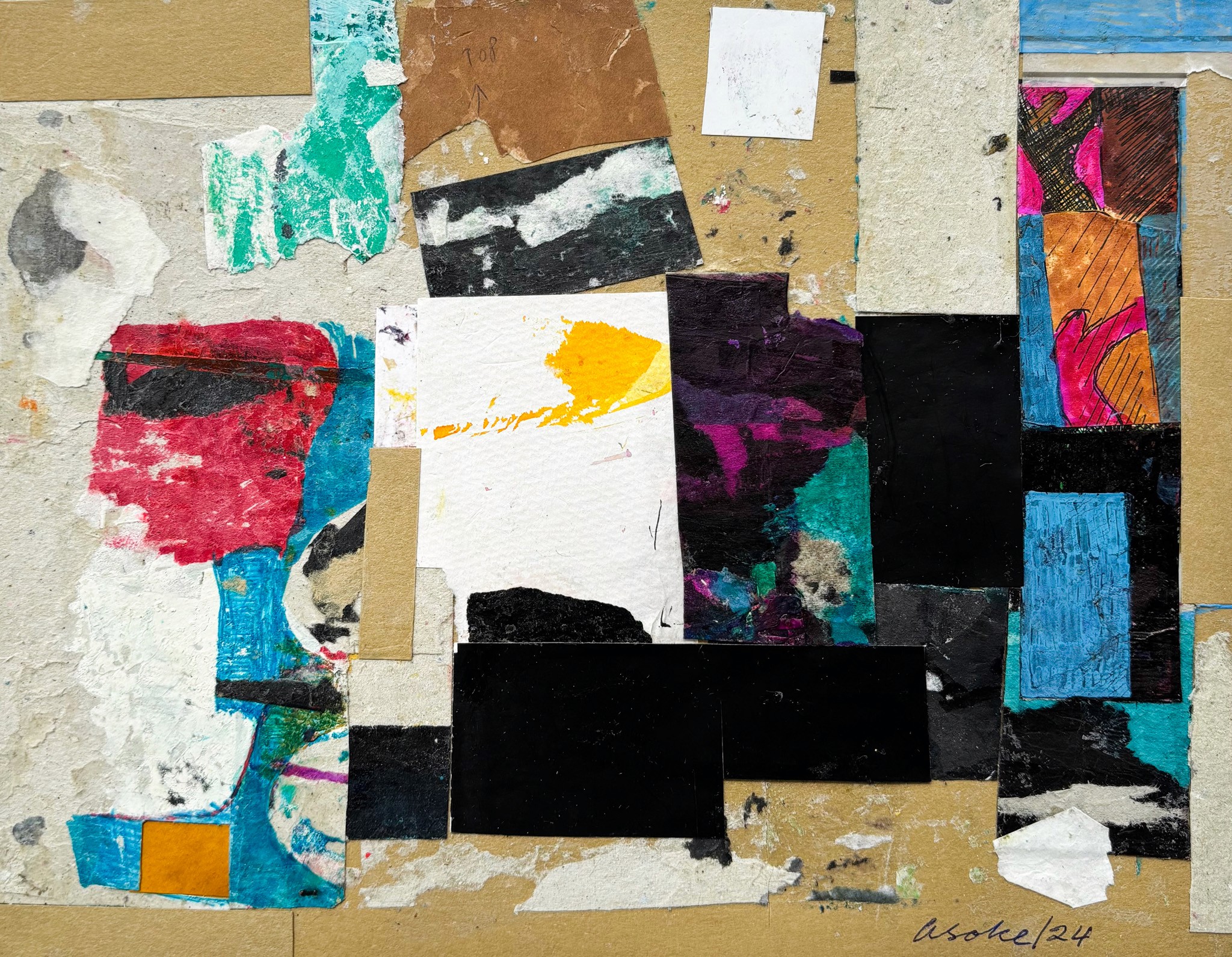
AA. Whenever I created with too much intent, the result often felt contrived and uninspiring. But I learned to embrace “happy accidents”—the unplanned moments that revealed something new. I began saving everything: scraps of paper, textures, bits I’d written or pasted. Anything with character.
I was inspired by Kurt Schwitters, a German artist who lived near my college in the Lake District. He used ticket stubs and bits of rubbish to make collages. I’ve been doing the same in my own way—collecting, experimenting, and now translating that experience into larger-scale works.
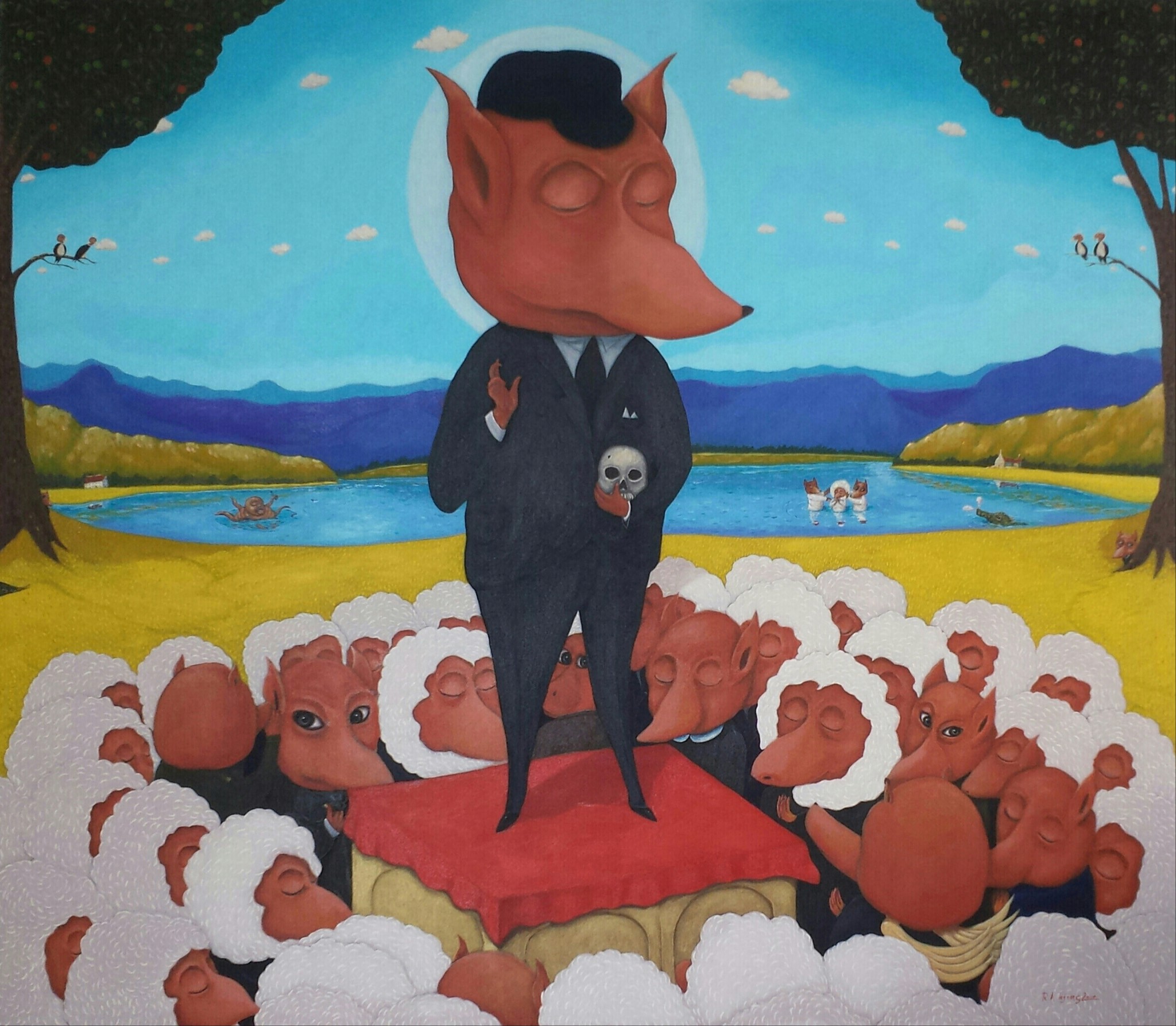
CNTRFLD. You’ve had a parallel career as a social and political cartoonist, publishing The Book of Rodent and contributing to the Bangkok Post. How do you navigate these different visual languages, and do they ever intersect in your work?
AA. That work happened alongside my business life—it was a creative outlet. I drew cartoons in my spare time, and that led to The Book of Rodent. The cartoons were very figurative, with clear social commentary. They don’t intersect with my art practice, which is much more abstract and introspective.
CNTRFLD. Your work navigates abstraction while occasionally hinting at recognisable landscapes or figures. Has this balance between the seen and unseen always been part of your visual language, or did it evolve over time?
AA. My early work was semi-figurative, then it moved toward pure abstraction. More recently, I’ve begun reintroducing small touches of realism—just enough to suggest something familiar without defining it.
CNTRFLD. Looking back on your artistic journey—across countries, styles, and mediums—what has remained constant in your practice, and what has evolved most significantly?
AA. In the beginning, I worked with extreme precision—fine pens (0.1mm), detailed graphic work. I developed strong technical skills, but eventually, they became a constraint. I had to rely on accidents to break free from my own style.
There’s a book by Krishnamurti called Freedom from the Known, which really resonated. That’s the goal: to step into the unknown. I get restless when I go back to what I know, so I’m always seeking new ground, looking for that “eureka” moment. My approach is constantly evolving—and so are the mediums I use.
CNTRFLD. What advice would you offer to emerging artists—particularly those from Thailand or with dual heritages—who are navigating questions of identity while seeking to build a career in the arts locally or internationally?
AA. There’s often social pressure not to become an artist—it’s seen as a one-in-a-million path. So, your motivation has to come from genuine passion. Open your mind completely. Immerse yourself in what others are doing. Build a visual vocabulary, and over time, you’ll learn to translate that into your own language.