CNTRFLD. Your artistic practice integrates sound, light, and movement into immersive installations. What initially drew you to this medium, and how has it evolved over time?
BP. Whilst studying at the Sculpture Studio of the Bandung Institute of Technology, I became fascinated by the sculptural process—the hands-on engagement, the material exploration, and the way forms gradually took shape. Over time, however, my excitement seemed to disappear once the sculpture was complete. I started to question what truly interested me in the process: was it the final object or the act of making itself?
During my university years, I encountered an installation work by the Japanese artist Ujino Muneteru. His approach to sound, movement, and repurposed materials completely shifted my perspective. It made me realize that sculpture didn’t have to be static or confined to traditional materials. It could be something dynamic, something that interacted with its surroundings in real time. Though focusing still on completing my studies as a sculpture student—my priority at the time was simply to graduate—I found myself drawn to exploring sound, kinetics and light, elements that I hadn’t deeply engaged with before.
Starting this new journey was challenging. I had no background in mechanical, electrical, or technical knowledge, so everything was unfamiliar. However, I did have one small connection to electronics: my father, an electric guitar collector, often asked me to fix or resolder broken cables and jacks. At the time, I didn’t think much of it, but looking back, that experience introduced me to basic circuitry and problem-solving with electrical components.
From there, I started asking questions, discussing ideas with people who had more expertise, and slowly learning through hands-on experience. Each step led to new discoveries, and I gradually built my technical understanding. My goal was not just to acquire technical skills for the sake of it, but to ensure that technical limitations wouldn’t become a bottleneck or a burden on my creative ideas. I wanted the freedom to experiment, to bring my concepts to life without being held back by what I didn’t know.
This continuous learning process shaped the way I approach my work today—seeing art as an evolving exploration rather than a fixed endpoint.
CNTRFLD. Growing up in Jakarta and working in Bandung, how have your Indonesian heritage and upbringing influenced your approach to art?
BP. Growing up in Jakarta and working in Bandung, my Indonesian heritage and upbringing have influenced my approach to art in a more practical way rather than through traditional cultural references. I don’t come from a deeply rooted cultural background or engage in traditional artistic practices, so there’s no visual "exoticism" in my work. Instead, what has shaped my process is the influence of small, urban DIY industries that exist out of necessity rather than craftsmanship.
In cities like Bandung, there are countless small businesses—metalworking shops, electronic repair services, lathe and endmill workshops, and even motorcycle repair shops—that operate not as centers of refined craft but as practical, no-frills services that keep things running. They aren’t about artistry; they’re about function and survival. This environment has had a strong impact on how I approach making art. I often rely on these services, learning from their straightforward, problem-solving approach. It has taught me to be resourceful, to work with what’s available, and to prioritize efficiency over perfection.
Motorcycle services, in particular, are everywhere in urban Indonesia. These shops are not just places to repair bikes but hubs of improvisation, where mechanics find quick, affordable, and often unconventional solutions to technical problems. Seeing how they diagnose and fix issues with minimal resources has influenced the way I think about building my own works—breaking things down, modifying parts, and finding practical solutions within limitations.
My experience in Jakarta also contributed to this mindset. Growing up in a fast-paced urban setting, I was surrounded by overlapping sounds, dense structures, and an ever-changing cityscape. While this doesn’t translate directly into cultural imagery in my work, it has shaped my sensitivity to movement, rhythm, and material interactions—elements that are central to my exploration of sound, kinetics, and light.
Ultimately, my artistic practice is more influenced by the practical realities of urban life than by traditional narratives. The accessibility of these small industries allows me to experiment and develop ideas in a way that is grounded in the everyday mechanics of the city rather than in heritage or historical craft.
CNTRFLD. Your work often engages with industrial and mechanical systems while incorporating natural elements. What inspired you to explore this intersection?
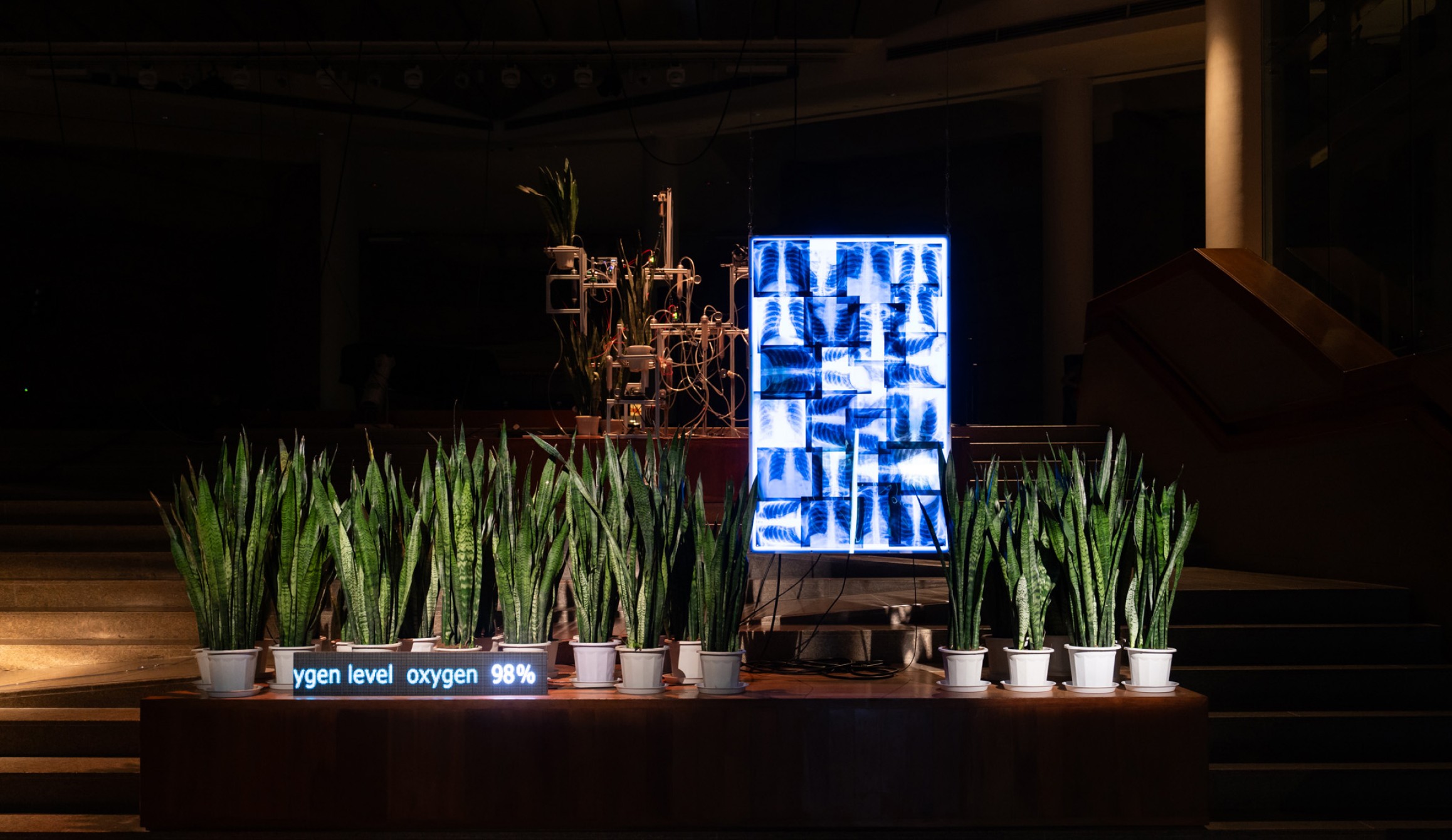
BP. I was most aware of our deep dependence on nature during the COVID-19 pandemic. When there was a medical oxygen shortage in my city, people had to queue for hours, sometimes paying more than twice the usual price just to get oxygen. It was a moment that made me reflect on how fragile our human systems are—how, despite all our technological advancements, we still rely on the most fundamental elements of nature to survive.
The pandemic also felt like a temporary pause in human-driven destruction. With industries slowing down, urban air became noticeably cleaner, and nature seemed to reclaim spaces we had taken for granted. But after COVID-19, the cycle of exploitation resumed—this time under the justification of economic recovery. In Indonesia, we have an abundance of natural resources but accessing them often comes at the cost of large-scale rainforest destruction. Government policies and large-scale investments prioritize economic growth, often at the expense of the environment. Many of these decisions are made in urban centers like Jakarta, where economic planning is centralized and detached from the direct impact of deforestation. The forests—home to diverse ecosystems of plants, animals, and insects—are not just a local treasure but one of the world’s main oxygen producers. Yet, their destruction is framed as a necessity for progress.
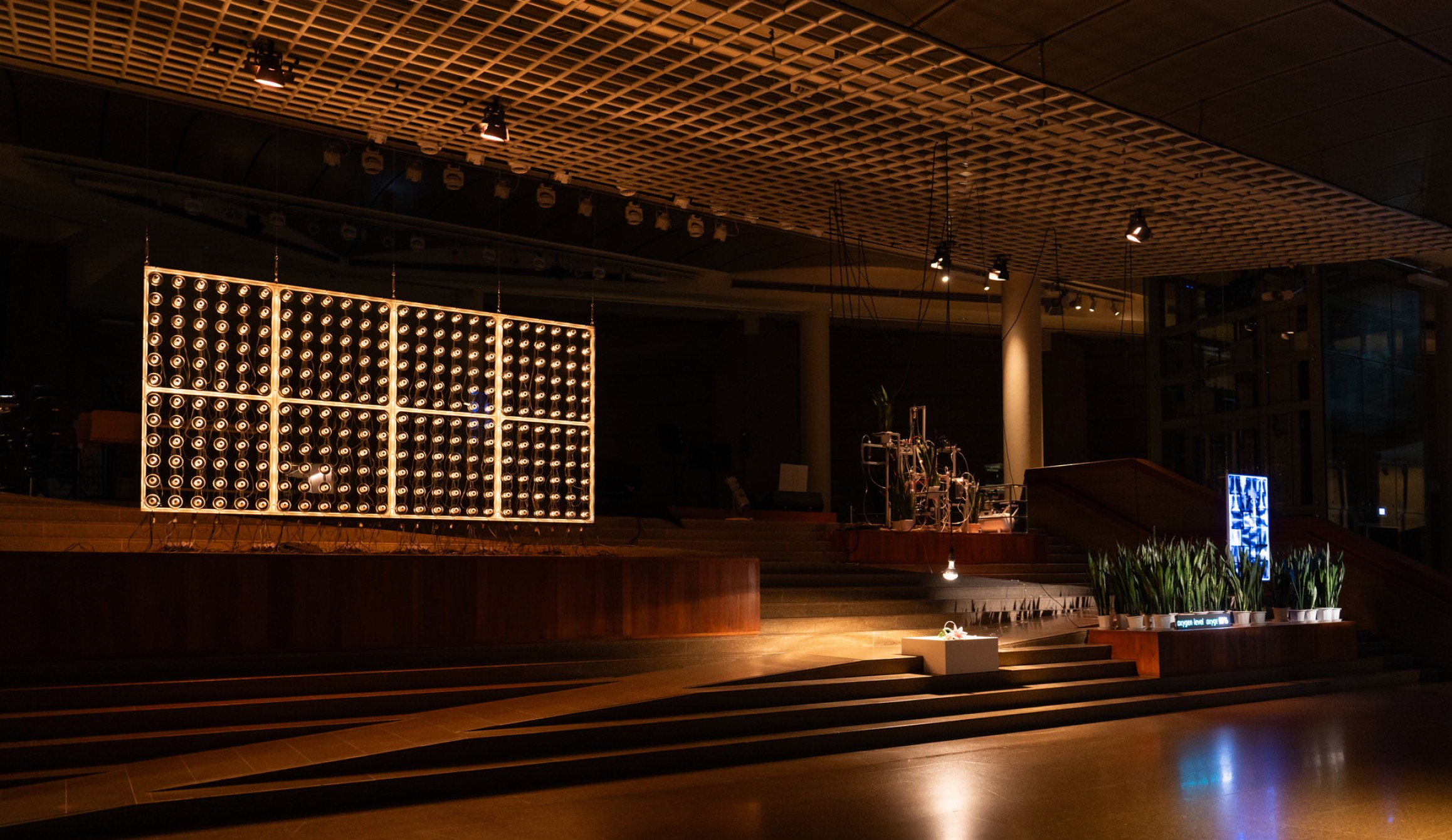
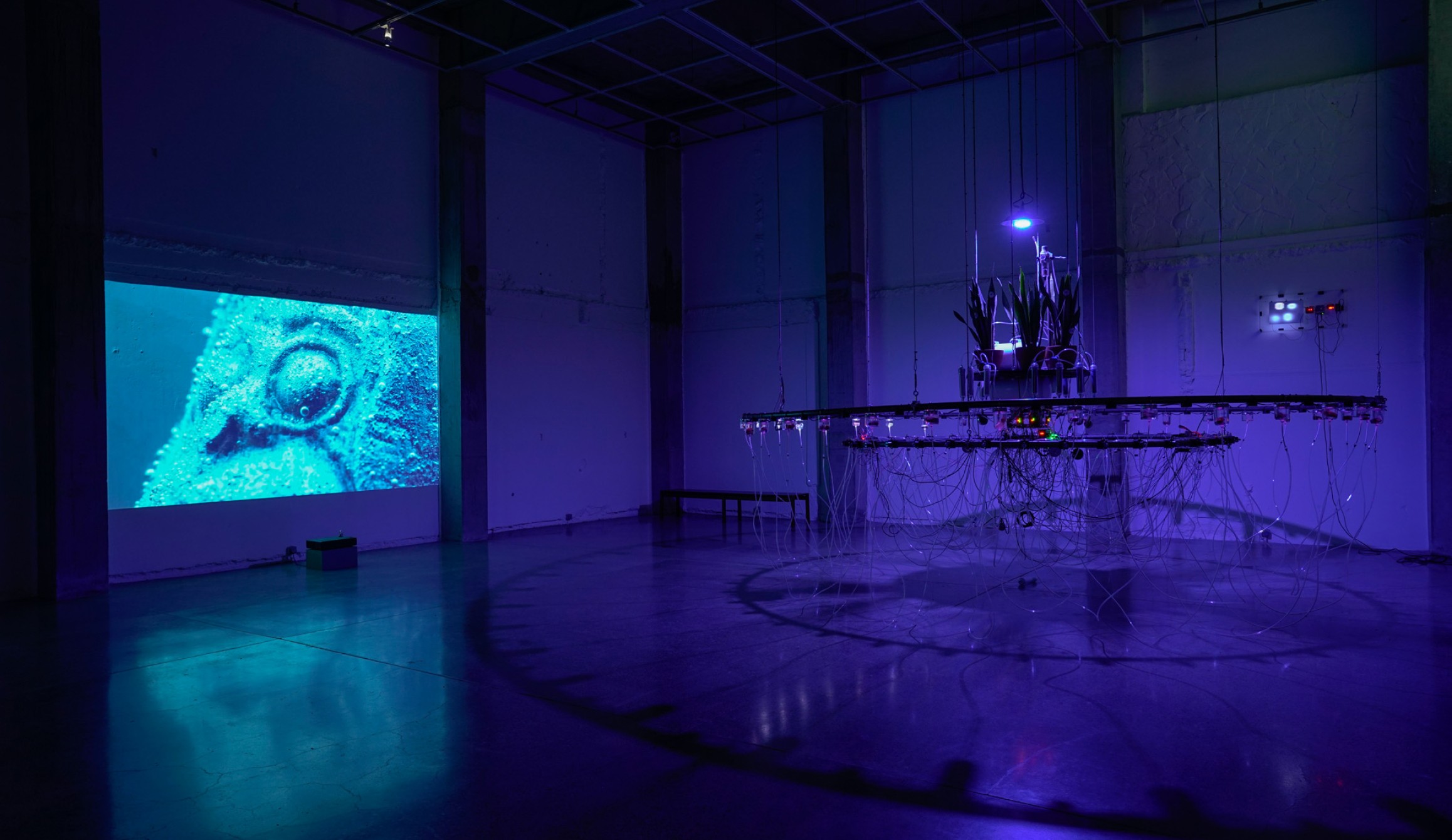
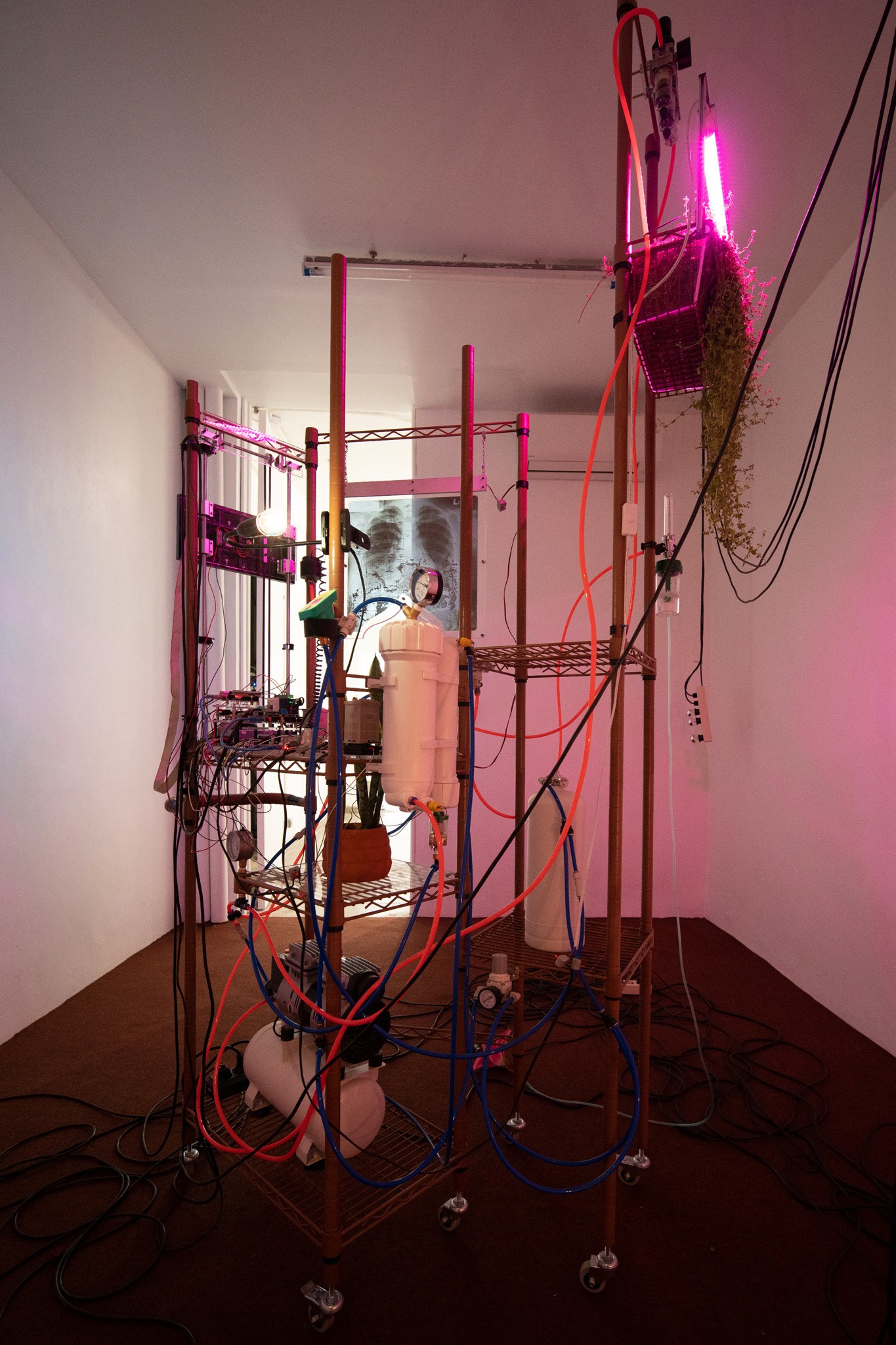
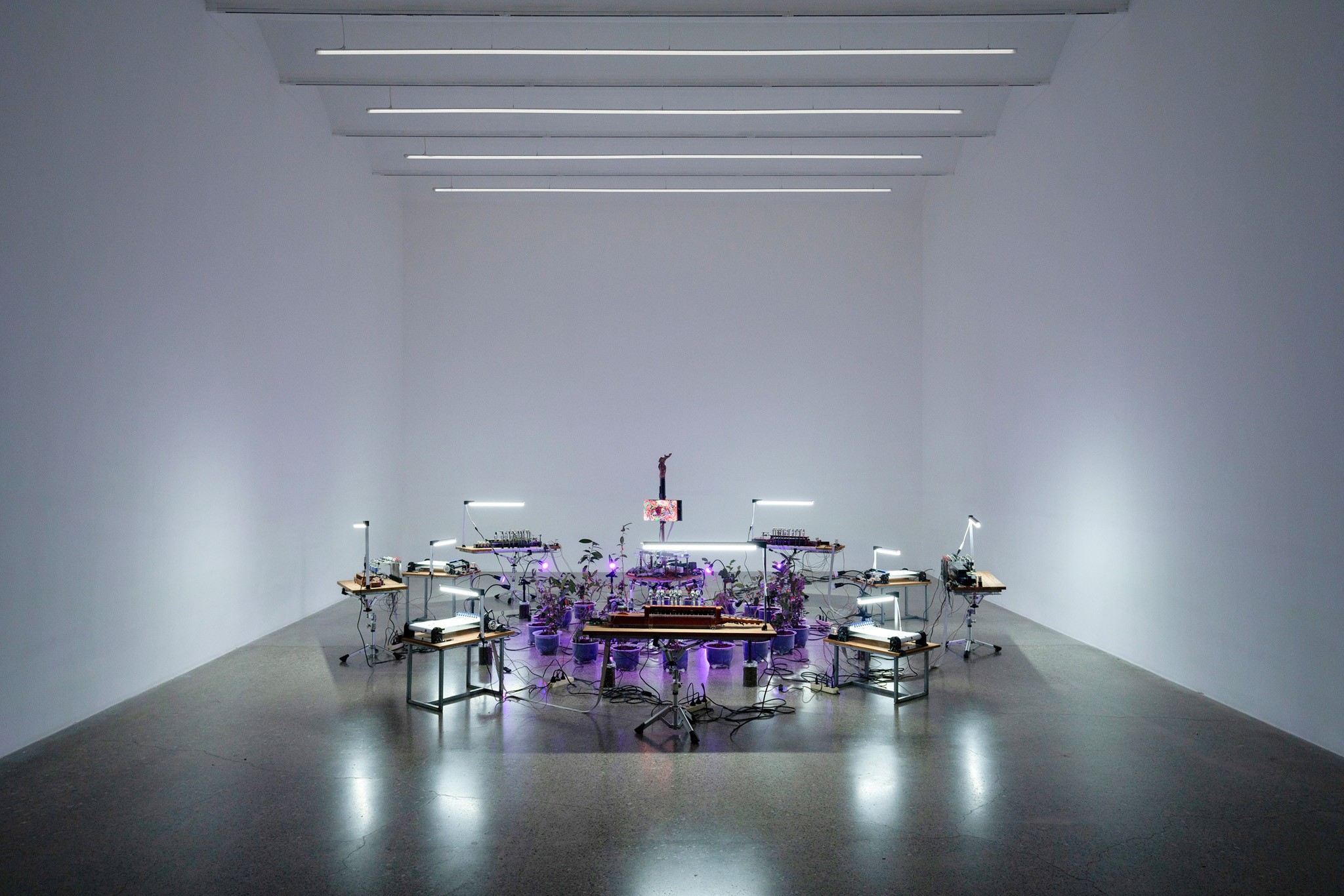
This awareness has influenced my approach to art. My work often brings together industrial and mechanical elements with natural components, reflecting this tension between human systems and the environment. I don’t see nature as something separate from technology but rather as something deeply intertwined—something we depend on but often take for granted. By incorporating plant-based elements, sound, and kinetic components into my installations, I try to highlight these hidden connections, making people more aware of the delicate balance we are a part of.
Ultimately, my exploration of this intersection is about questioning how we engage with nature in an increasingly mechanized world. Are we using technology to coexist with natural systems, or are we just accelerating their destruction? Through my work, I want to challenge these ideas and explore ways in which humans, machines, and nature can exist in a more balanced and sustainable relationship.
CNTRFLD. How has your experience exhibiting and working abroad compared to Indonesia? From your perspective, how do different environments—whether in terms of artistic infrastructure, curatorial approaches, or audience engagement—shape the way your work is received?
BP. Exhibiting and working abroad has given me valuable insights into how different environments shape the way my work is received. The differences aren’t just about geography; they extend to artistic infrastructure, curatorial approaches, and audience engagement.
In Indonesia, the art scene is dynamic but operates within certain limitations. The infrastructure for experimental or interdisciplinary work—especially those involving technology, kinetics, or sound—is still developing. Many spaces are more accustomed to traditional mediums, and access to specialized equipment or materials can be a challenge. However, what Indonesia lacks in infrastructure, it makes up for in flexibility and improvisation. Artists often work collectively, supporting each other in production, exhibition-making, and knowledge-sharing. This collaborative culture is a big part of the art scene, as many artists rely on informal networks rather than institutional systems to make things happen. Working within collectives fosters a sense of shared resources and mutual learning, which has influenced the way I approach my practice.
Abroad, particularly in places with more established contemporary art institutions, I’ve noticed a stronger emphasis on curatorial frameworks and research-based approaches. There is often more access to resources, technical support, and specialized expertise, which allows for deeper experimentation with materials and technology. In terms of audience engagement, there’s also a difference in how people interact with the work. In some contexts, audiences are more familiar with conceptual and process-based art, which can lead to more in-depth discussions about the ideas behind the work. Meanwhile, in Indonesia, engagement often comes from a more immediate, instinctive response, which I also appreciate because it brings different layers of interpretation.
Another key difference is how institutions abroad approach exhibition-making. There is often a clearer structure in terms of production timelines, funding, and technical support. This allows for a more focused development process, whereas in Indonesia, things tend to be more fluid and sometimes unpredictable. While this can be challenging, it has also taught me to be flexible and to embrace uncertainty as part of the creative process.
Ultimately, both environments have shaped the way I think about my work. Working abroad has expanded my perspective on artistic discourse and given me access to new tools and collaborations. At the same time, my experience in Indonesia has grounded me in a more hands-on, adaptable approach to making art. I see my practice as existing between these different worlds—navigating structured systems while drawing from the spontaneity and resourcefulness of Indonesia’s small urban service industries.
CNTRFLD. Indonesia has a vibrant but complex art ecosystem. What are your thoughts on the current support for contemporary artists in Indonesia, and what changes would you like to see?
BP. Indonesia’s art ecosystem is vibrant but complex, with strong artist communities in cities like Jakarta, Bandung, and Yogyakarta. Each of these cities has its own unique characteristics: Jakarta, as the economic and cultural hub, offers more institutional and commercial opportunities but can feel more market driven. Bandung has a strong experimental and academic influence, with many artists emerging from ITB and engaging in research-based or interdisciplinary practices. Yogyakarta, with its deep-rooted artistic traditions and strong independent scene, has long been a center for artist-run initiatives and collectives.
Despite this diversity, contemporary artists across Indonesia still face challenges, particularly in terms of long-term support. Institutional and governmental funding remains limited, and many opportunities are project-based rather than geared toward sustaining artistic practices in the long run. While residencies and grants exist, access is often concentrated in certain networks, making it difficult for emerging or unconventional artists to benefit from them.
The strength of Indonesia’s art ecosystem lies in its resilience and collaborative spirit. However, more sustainable funding structures, broader public engagement, and improved technical support could further empower contemporary artists to push their work beyond current limitations.