CNTRFLD. Personal Heritage and Artistic Roots.
Your upbringing spans both the United States and Vietnam, and your work often reflects a transcultural experience. How has growing up in these two cultures shaped your artistic identity and practice?
PO. I think seeing things from different cultural perspectives can help one think outside of certain boxes. Living and working in Vietnam with lacquer painting really puts into focus time, geography, traditions that made me question many widely accepted assumptions. Sơn ta (Vietnamese lacquer) especially resonated with me when I came to Vietnam because of its relationship with place and climate. It is a geographically specific practice. I do think I carry into my work a little of the pioneering American spirit and punk rock DIY.
CNTRFLD. Discovering the Medium of Lacquer.
Vietnamese lacquer painting became central to your work after your Fulbright research in Hanoi. Can you share what drew you to this ancient craft and how it resonated with your vision as an artist?
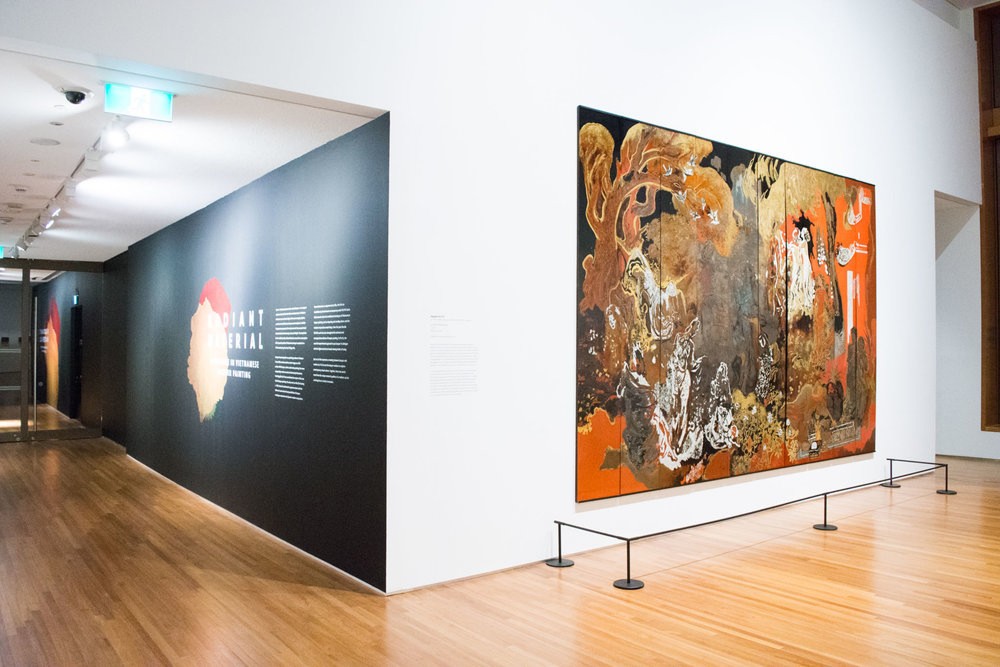
PO. Vietnamese lacquer painting is endlessly fascinating from all perspectives. As a painting medium it is both ancient and new. It was reinvented as a Beaux-arts medium only a hundred years ago. From an anthropological perspective, examples of lacquer artifacts from the past embodied the confluence of different cultures and dialectics that have passed through this region and continues to do so today in the form of Art. From a political perspective its colonial roots, history of otherness and national identity brings into focus questions of ownership and inclusivity. From an ecological perspective, as a plant species, its relationship to its geopolitical environment is a reminder about the diversity of species and agricultural cooperation. Personally, lacquer painting as a practice has actively fostered for me a deep relationship between place and time. In this, there is a philosophical subtext to be explored, but what that is I am still not sure.
From an art historical perspective, well there is a lot to unpack yet the terms are still very vague. But they are all these open assemblages of meaning that, as a contemporary artist, make intervention possible. Moreover, the cherry on top, the studio work process to create a lacquer painting is like alchemy, and there is pure joy in that! There is both pleasure and meaning participating in developing a different genre of painting.
CNTRFLD. Reinventing Tradition.
You’ve described Vietnamese lacquer as having an "entire history of painting 'becoming lacquer.'" How do you balance preserving its traditional essence with your innovative approaches that incorporate new materials and formats?
PO. That statement just tries to address the fact that acculturation works both ways. We always talk about how lacquer was re-invented as a painting medium during the French colonial era as though colonialism only worked one way, but I prefer to think of it as this entire history of painting becoming lacquer as well. Maybe this is a gesture to decoloniality, but through this relationship as an art medium, son ta lacquer acquires agency and symbolic relationships. To me this is very important because it speaks of potential and possibility.
I try not to focus on “traditional essences” because to me its history as painting, only 100 years old, is one of constant modernist re-invention on each artists’ terms following their world view. Perhaps its only traditional essence is the violent redefinition by every lacquer artist since on their given terms.
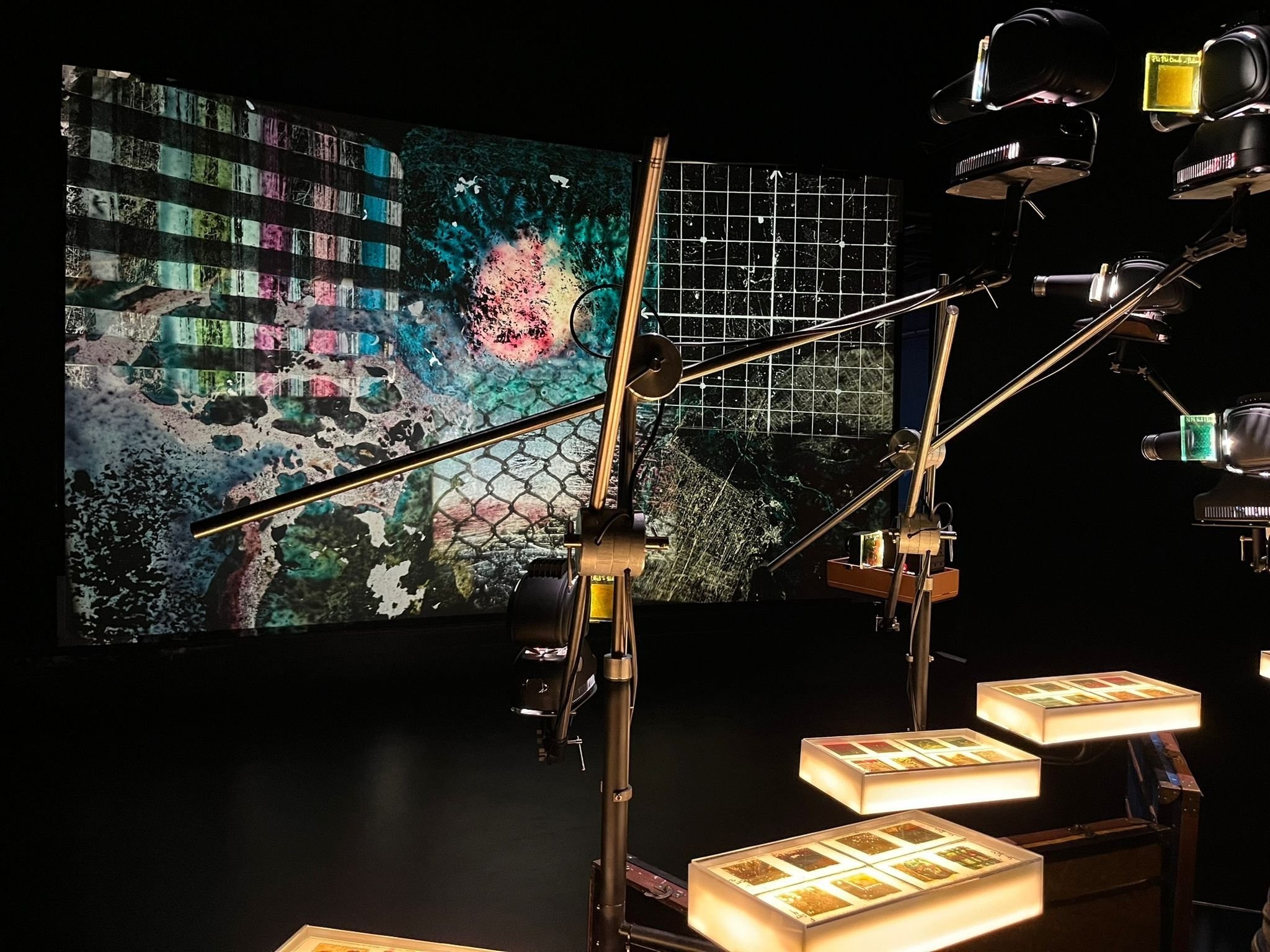
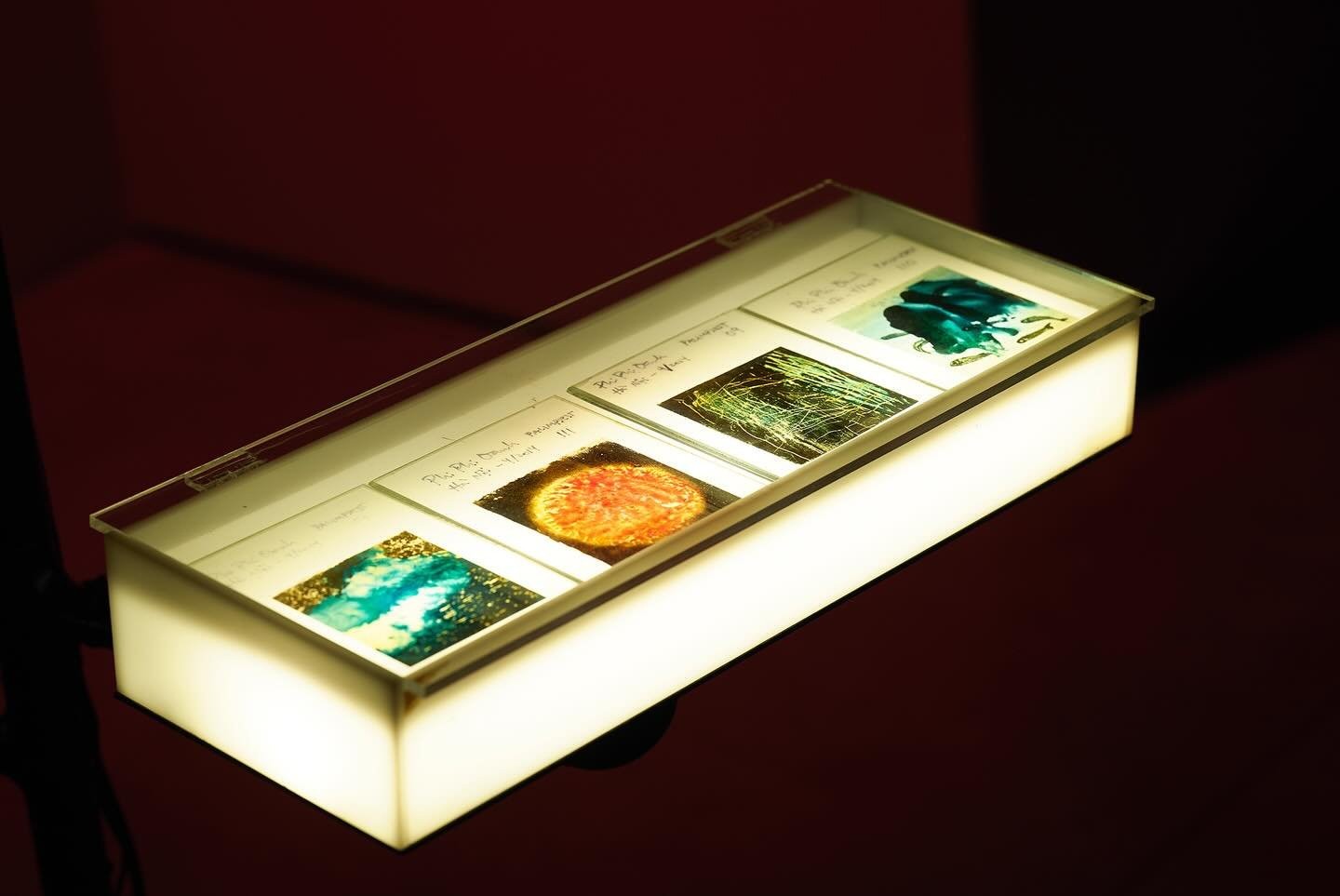
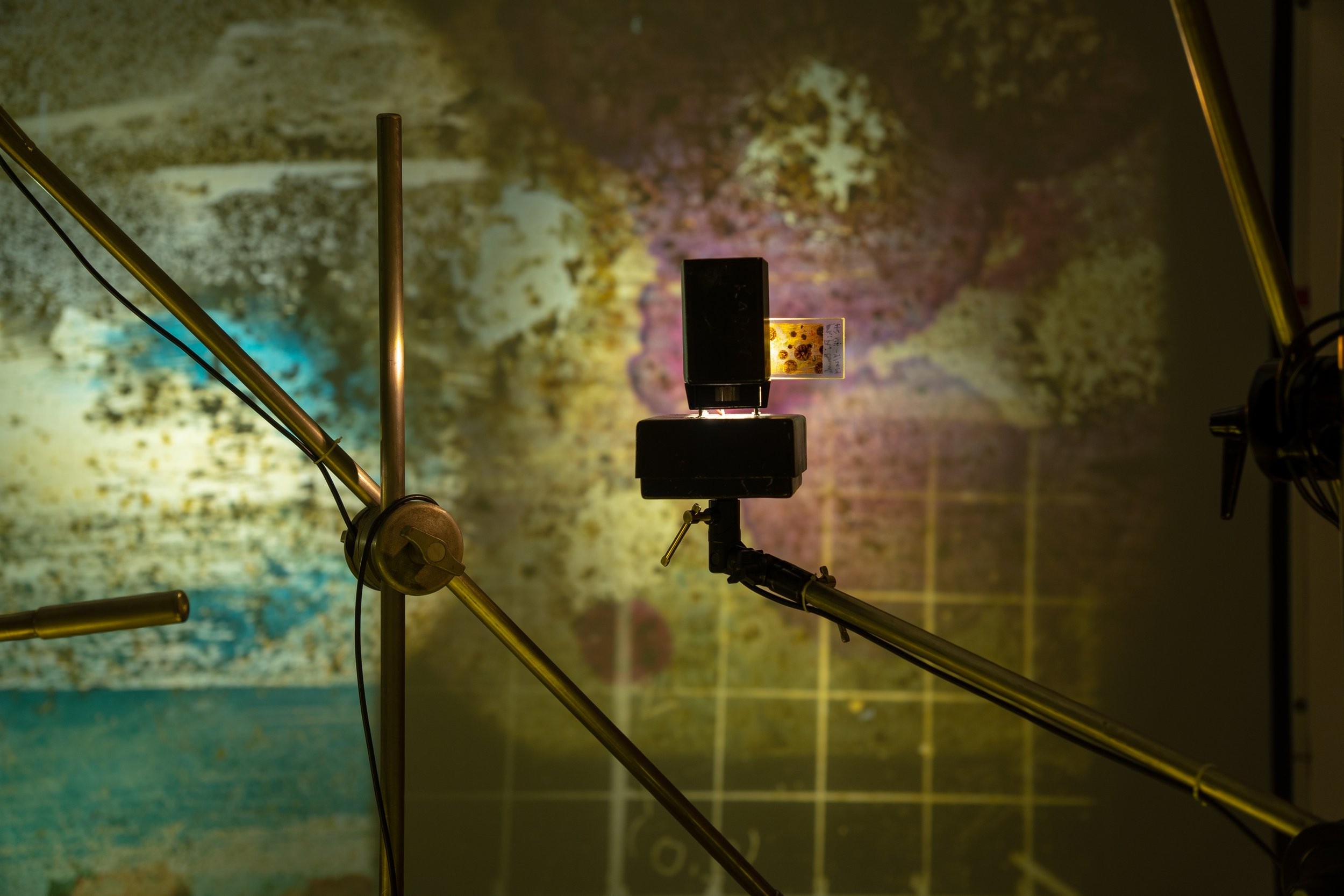
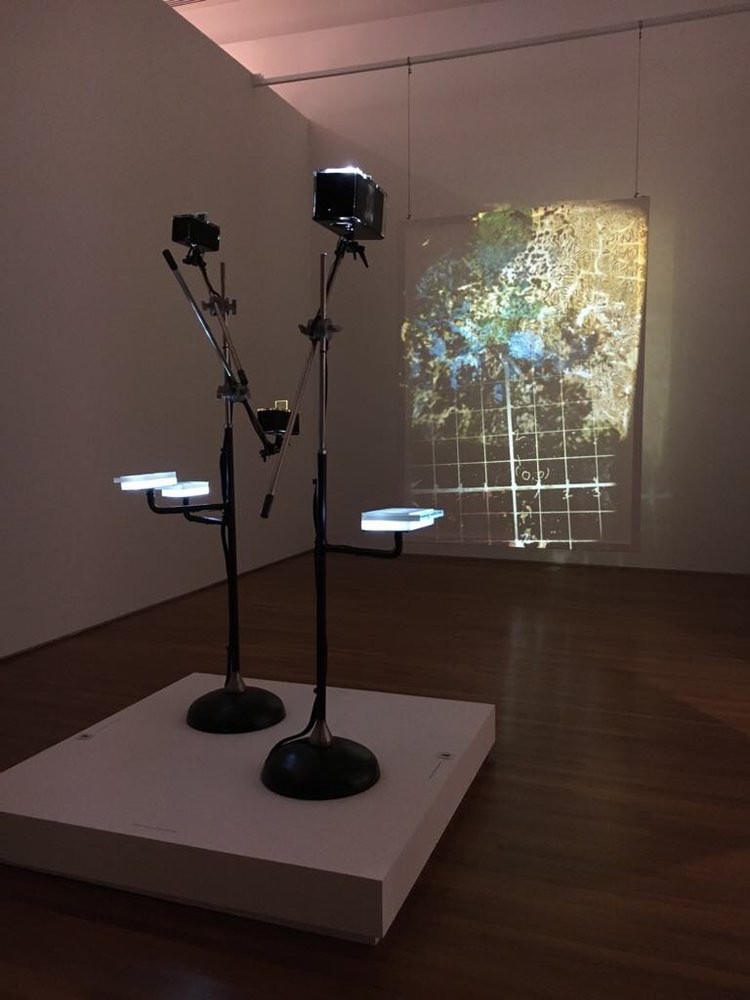
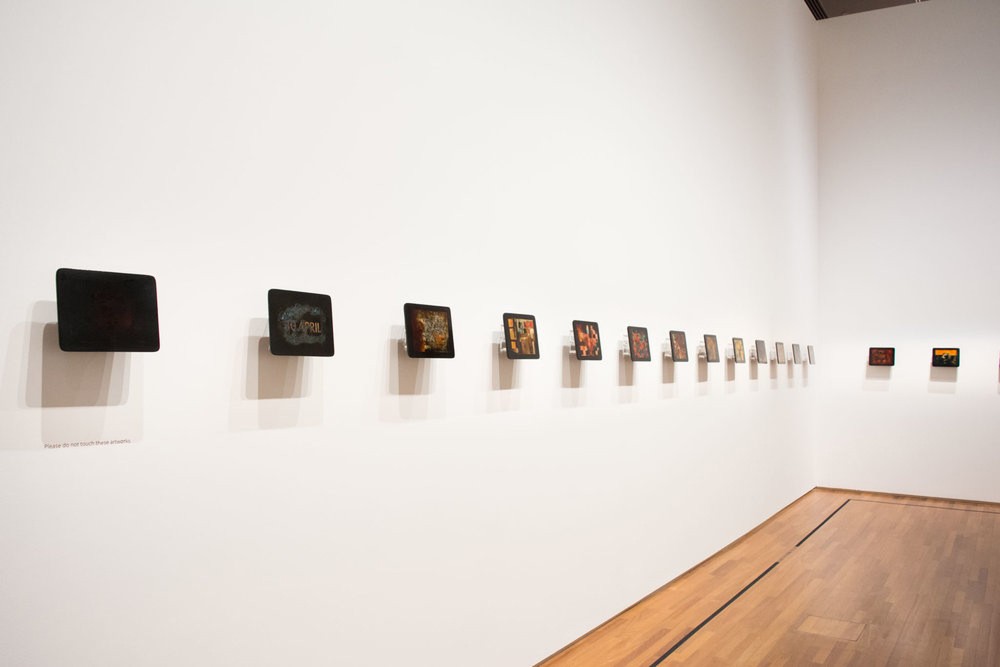
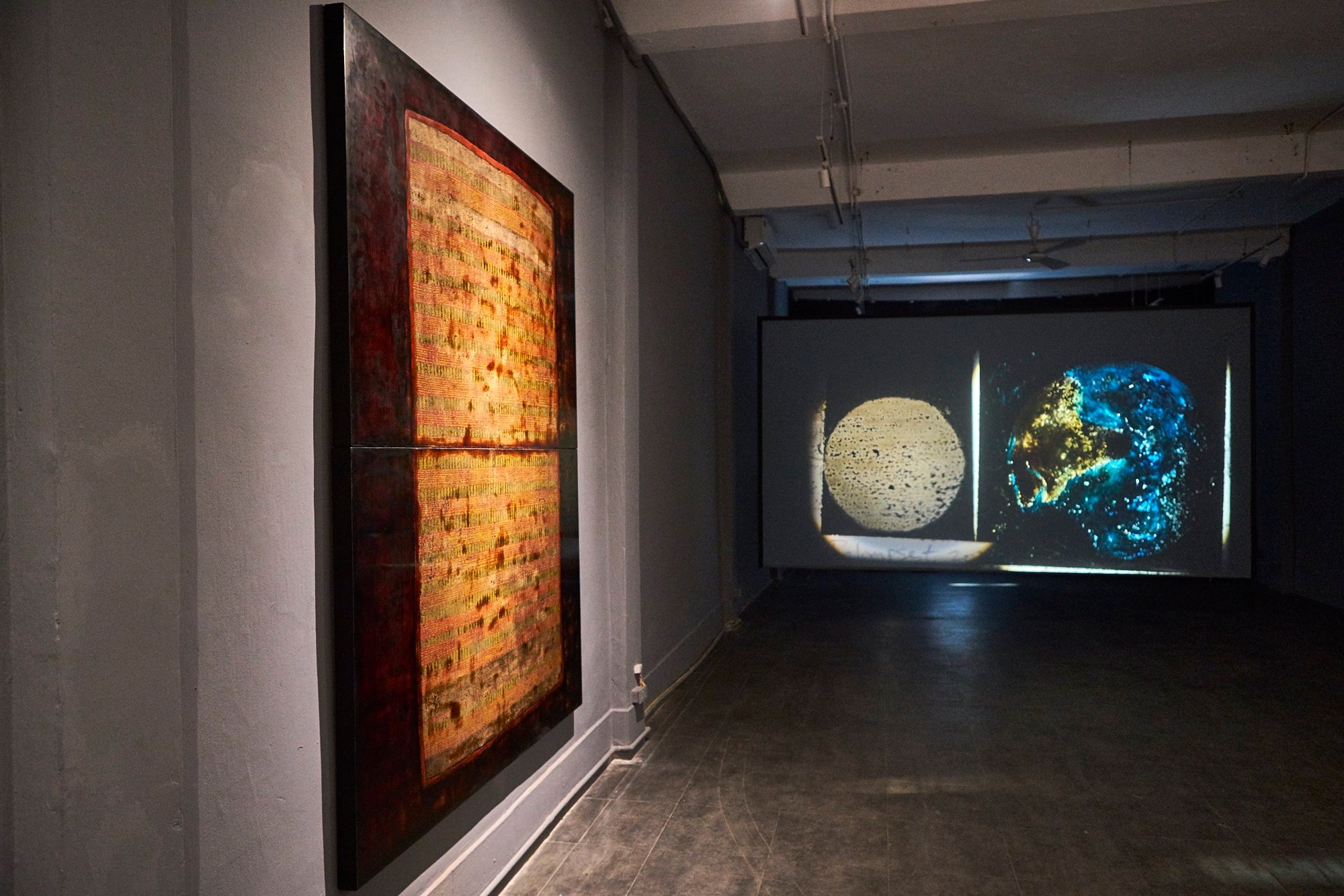
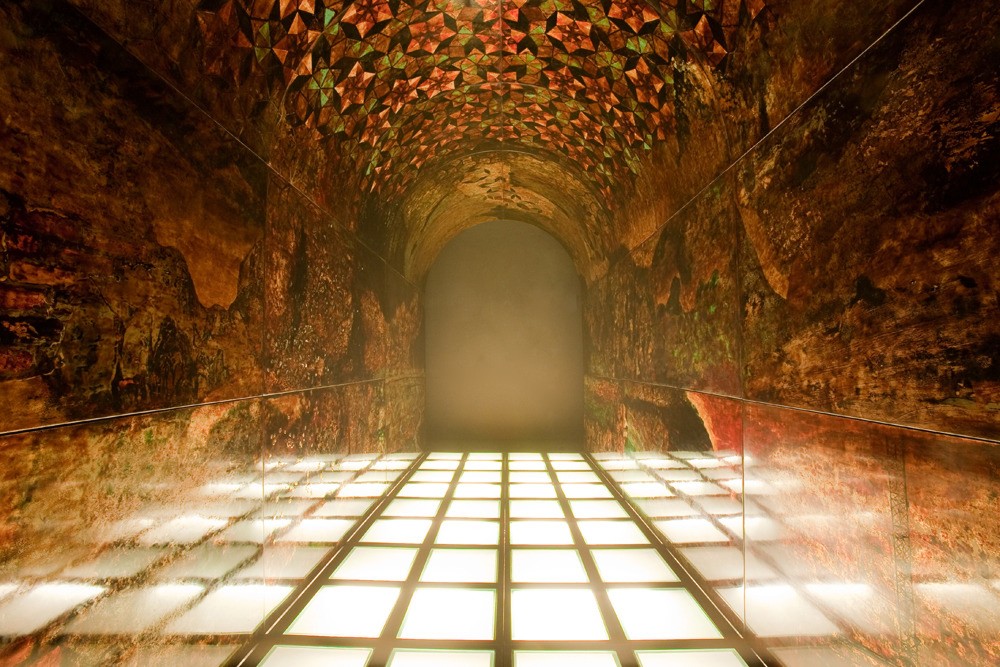
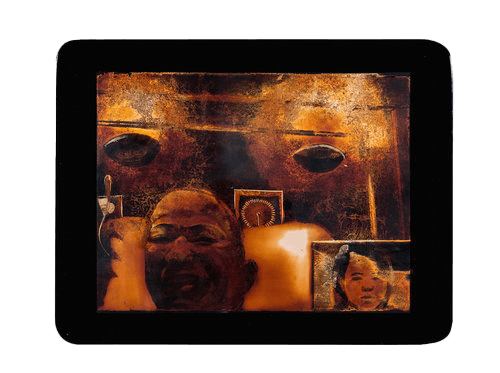
For me, I try to return to the basic qualities of the lacquer and work from there. For example, Palimpsest is a work that finds lacquer painting laminated between glass and then projected with light. This may seem like a conceptual exercise in dematerialization, but in fact it is still very specific to the medium of Vietnamese lacquer. Sơn ta is a natural polymer heat resistant to over 150C which allows for both the glass lamination and withstanding the emitted heat from the projector lamp. This resistance to deterioration under high heat is unique to natural lacquer. Also, the translucent qualities of the resin have been underexplored.
CNTRFLD. On Memory and Reflection.
Your work explores themes like collective memory and reflection. How does the materiality of lacquer, with its deep colours and light-reflective qualities, help you convey these themes?
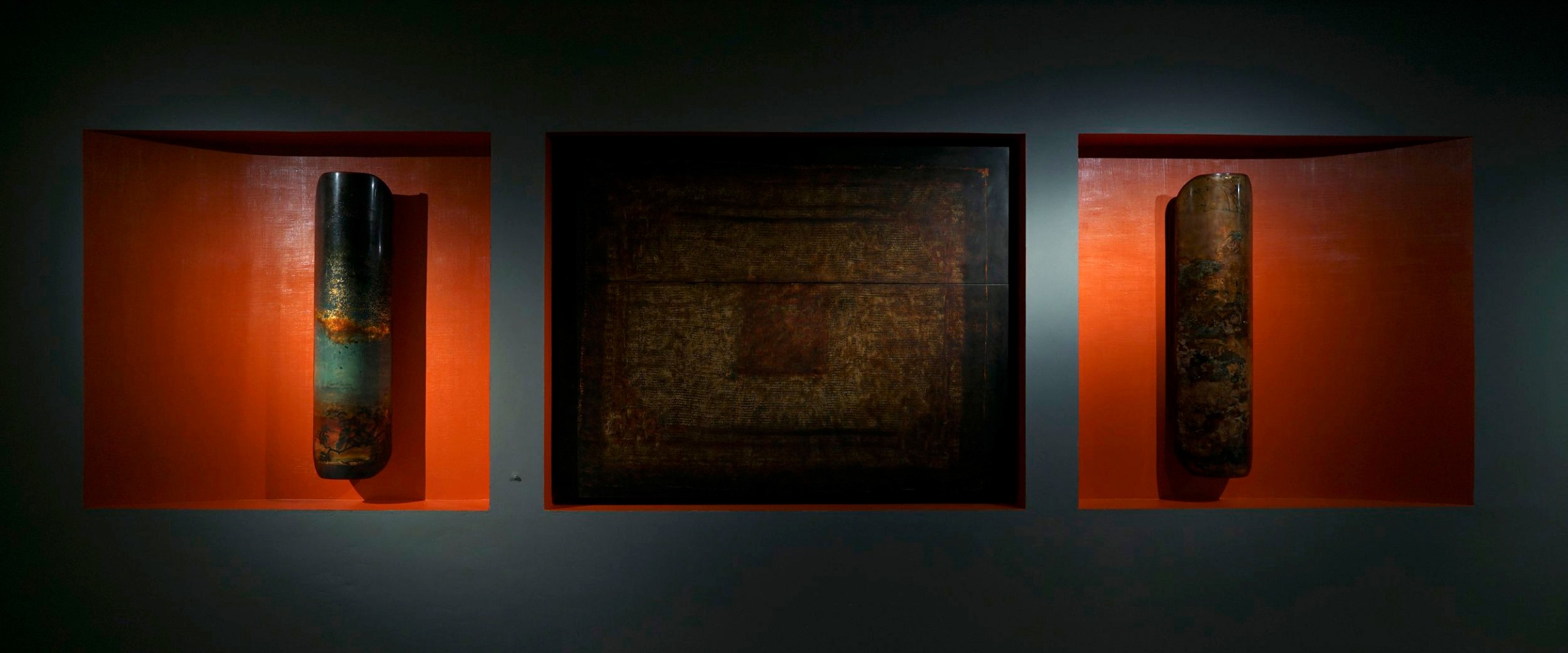
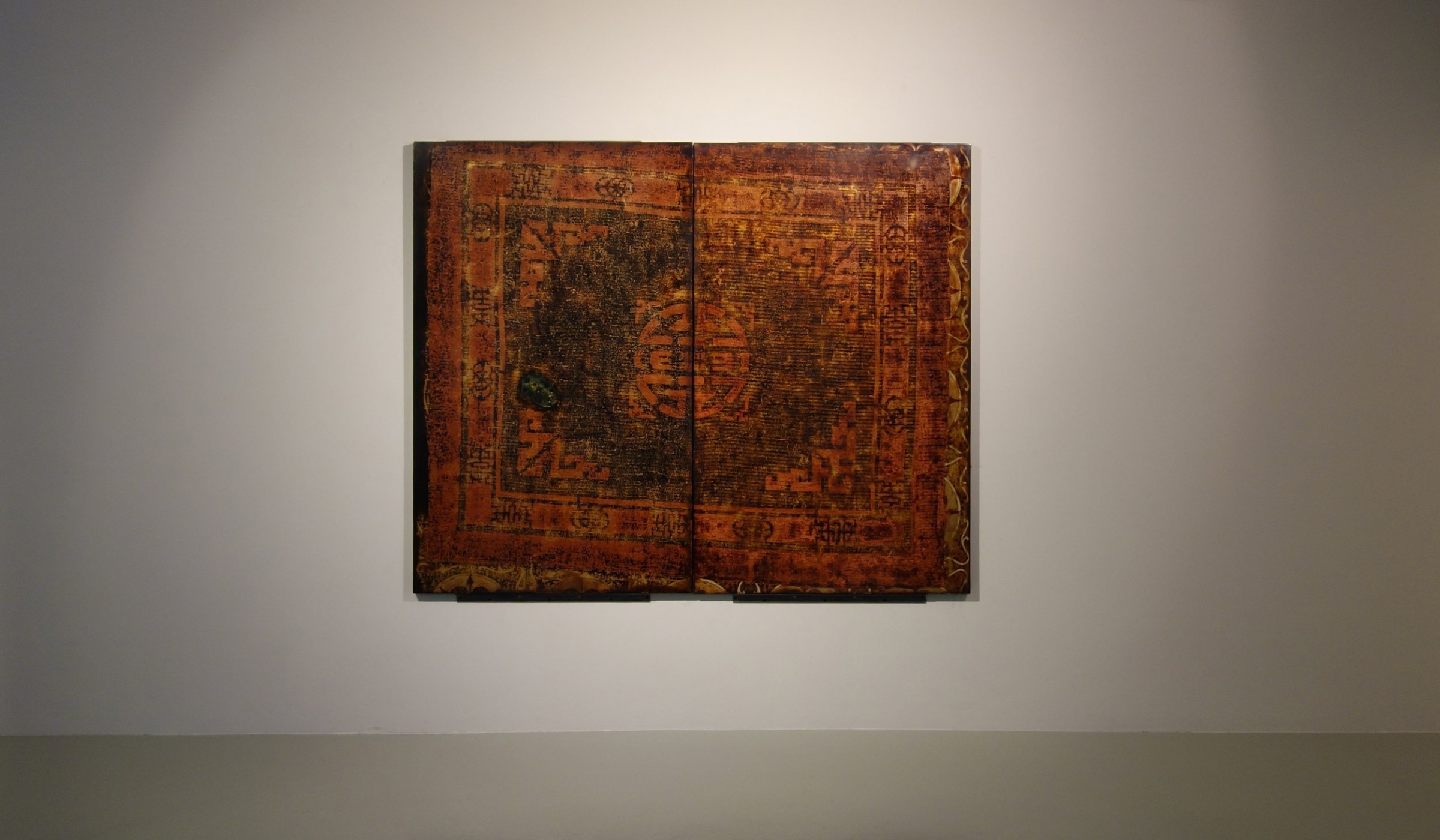
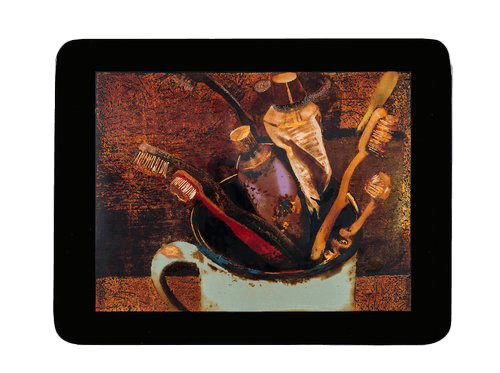
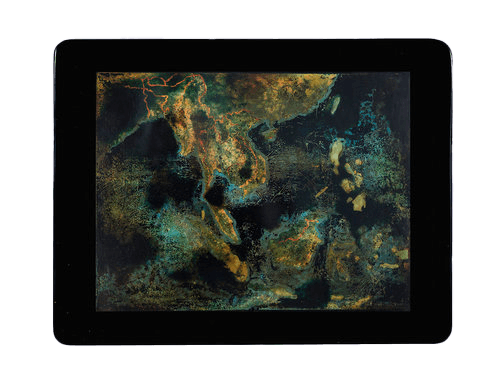
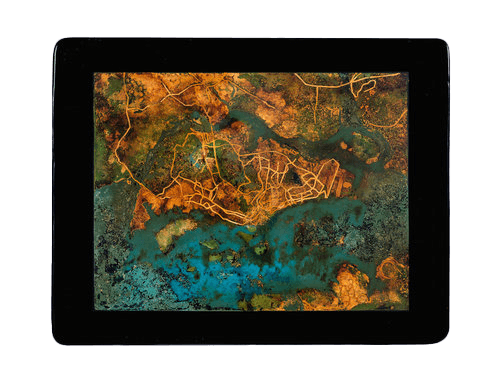
PO. I think we’ve always looked for material metaphors to help us understand the nature of our subjective and conscious experience. To me the enigmatic process of lacquer painting is rich in metaphors. I have always likened the process of lacquer painting—the building up of layers embedded with silver, aluminium, and gold leaf and sanding away—to the natural geological processes of the earth.
The viewer, upon seeing the polished surface might not understand the process but there is something about the flat yet richly textured surface that intimates the collapsing in of time, earth, geology, depth—as though it were a fossil containing the material traces of a conscious existence… which it does, if created in earnest. The final result isn't an art object per se nor entirely experiential but something else in between.
CNTRFLD. Experiential Spaces.
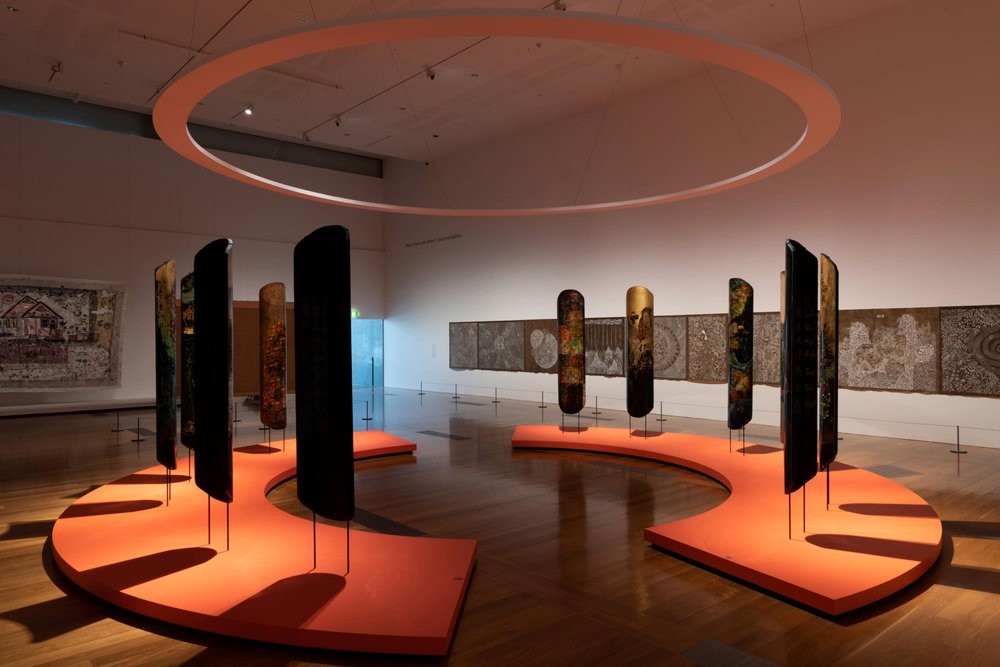
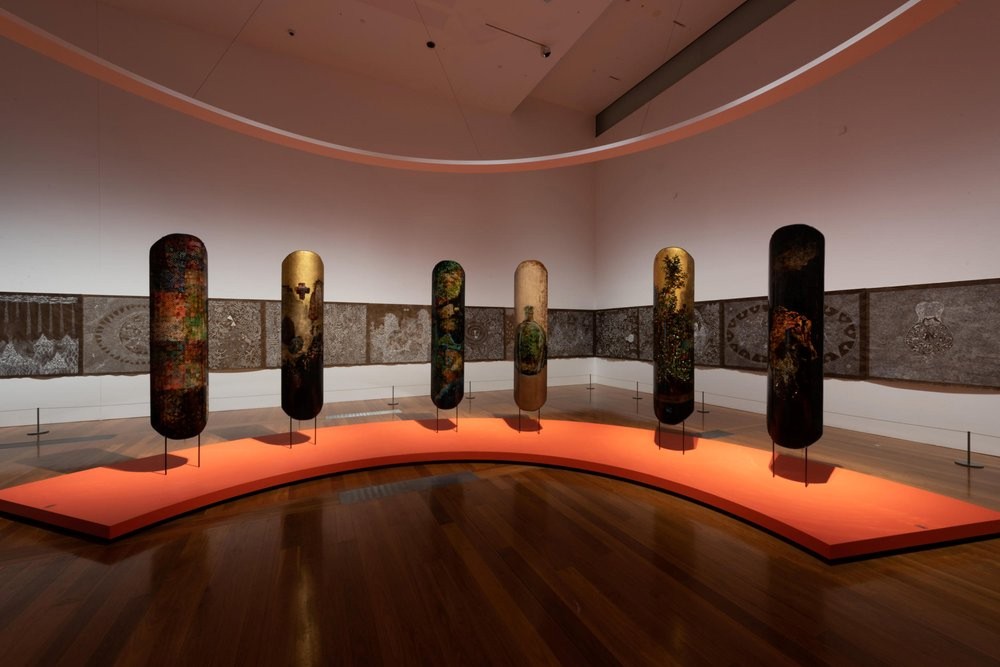
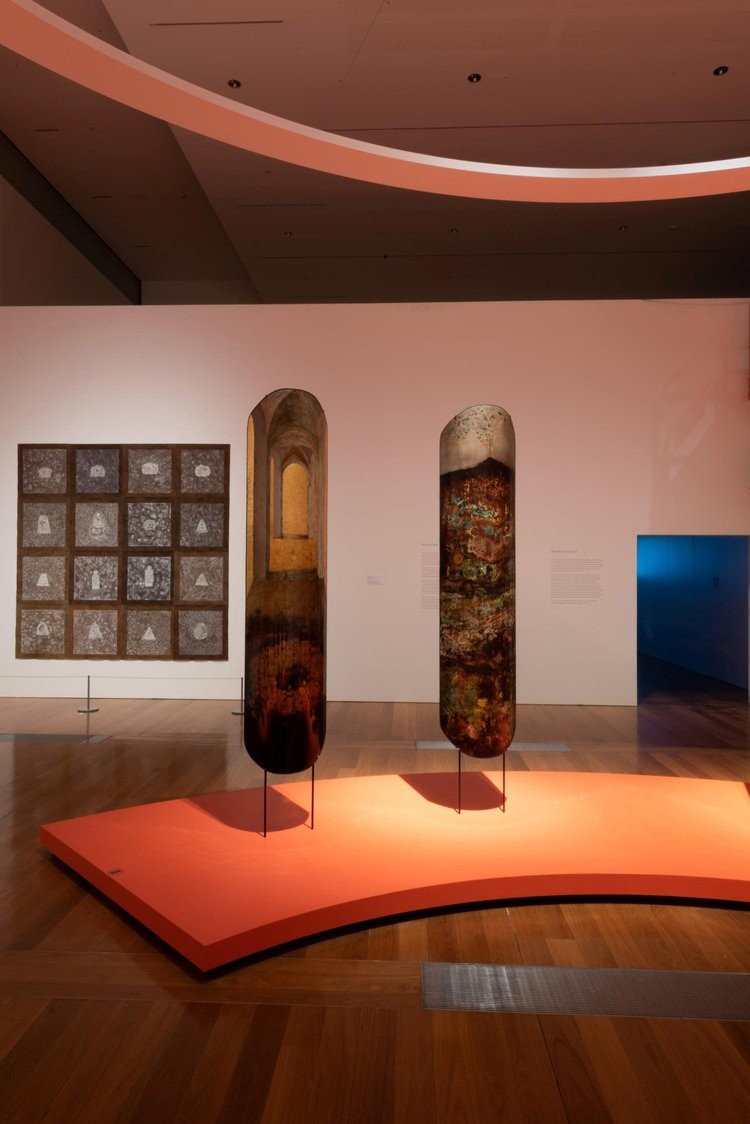
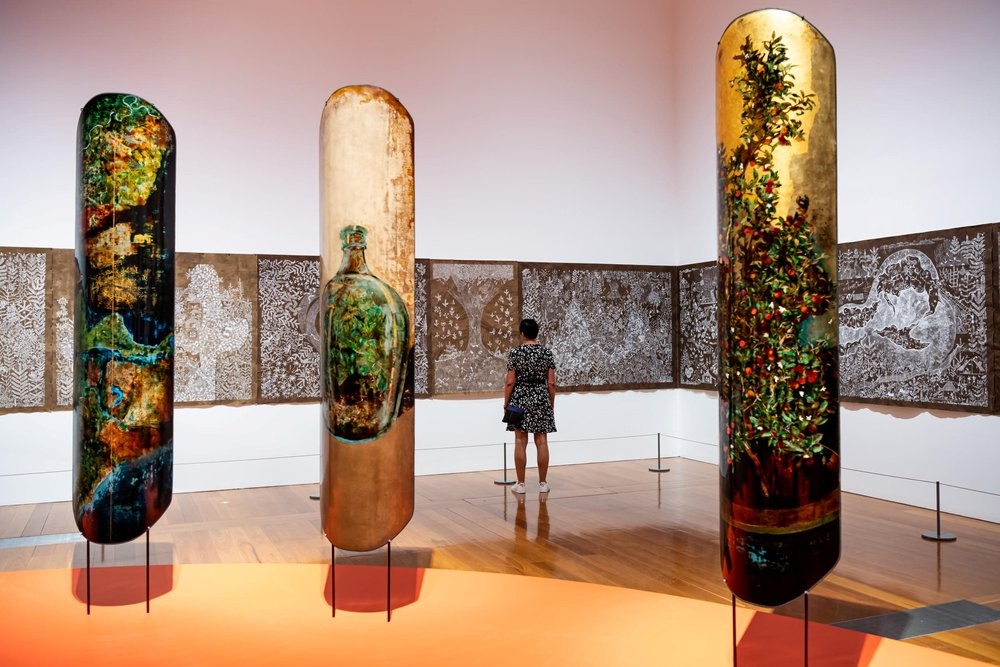
Many of your installations, such as *Specula* and *Palimpsest*, create meditative environments. How do you approach designing spaces that immerse viewers and evoke contemplation?
PO. Like I mentioned earlier, the unique material quality of lacquer painting is that it is both flat but looks impossibly deep. Because of this strange almost holographic effect it seems to resist reproducibility by photographic or digital means. Somehow this resistance to reproduction heightens the experience of being there and lends great feeling to the moment. The embedded gold and silverleaf reflects changes in light as you move around the works, and to me it is this dynamic luminescence in lacquer painting that most succinctly captures the slippery nature of perception and lends itself to the experience of perception as something slow and pieced together (as opposed to be read for content in one glance. Sometimes a work might be quite literal but still escape categorical meaning. This quality to me is lacquer painting’s great contribution to seeing and perception and especially if the painting is grounded in naturalism.