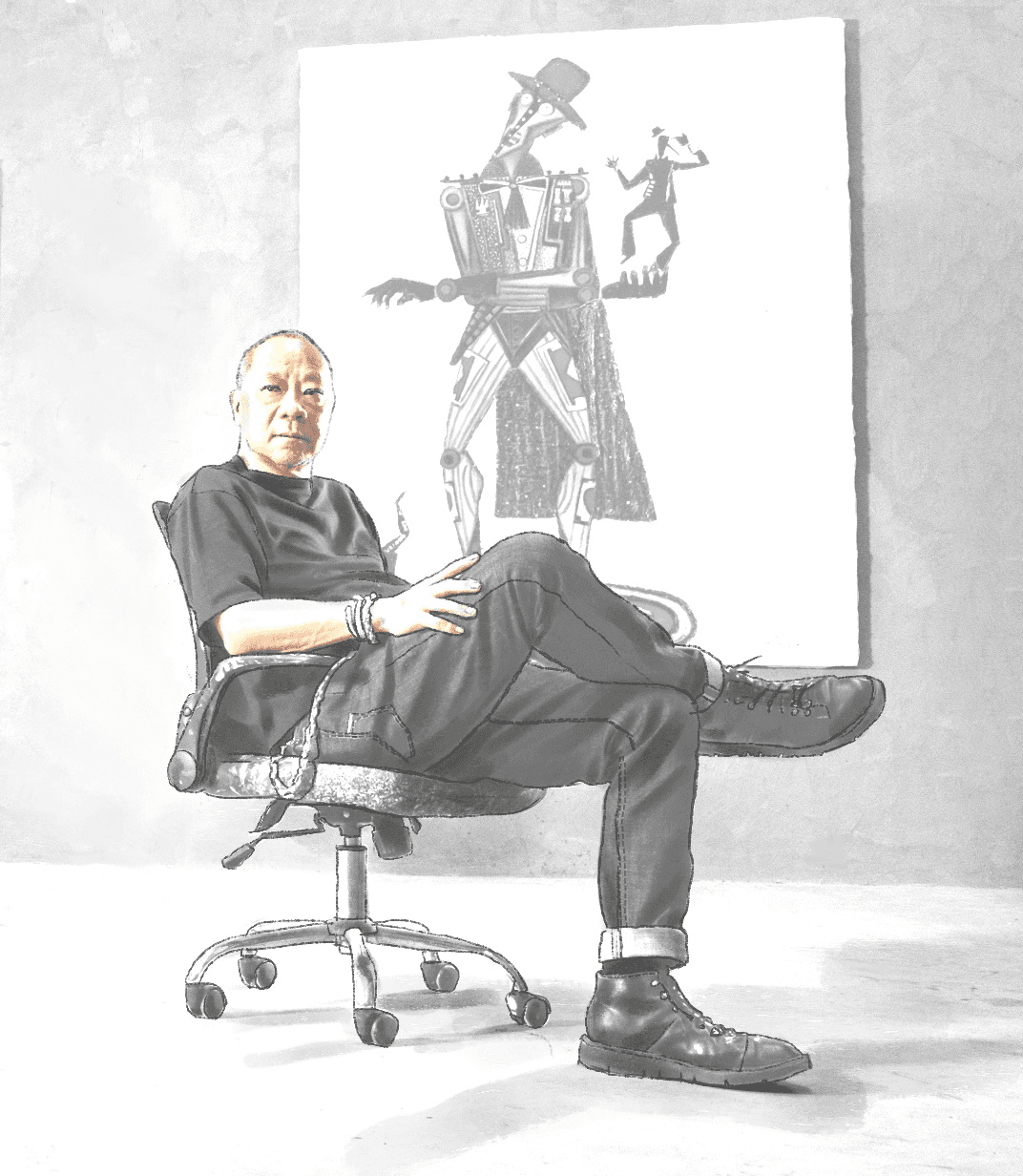
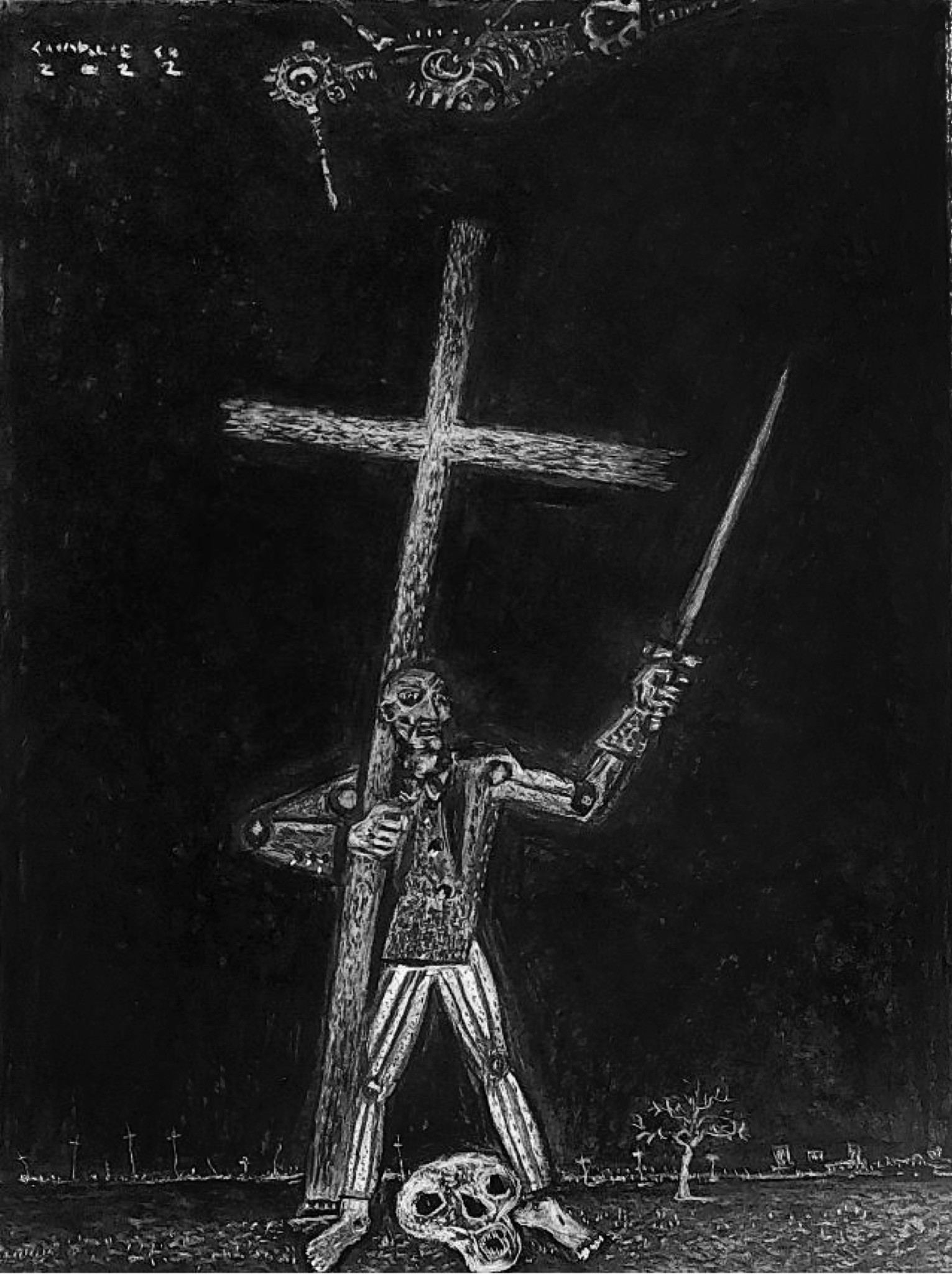
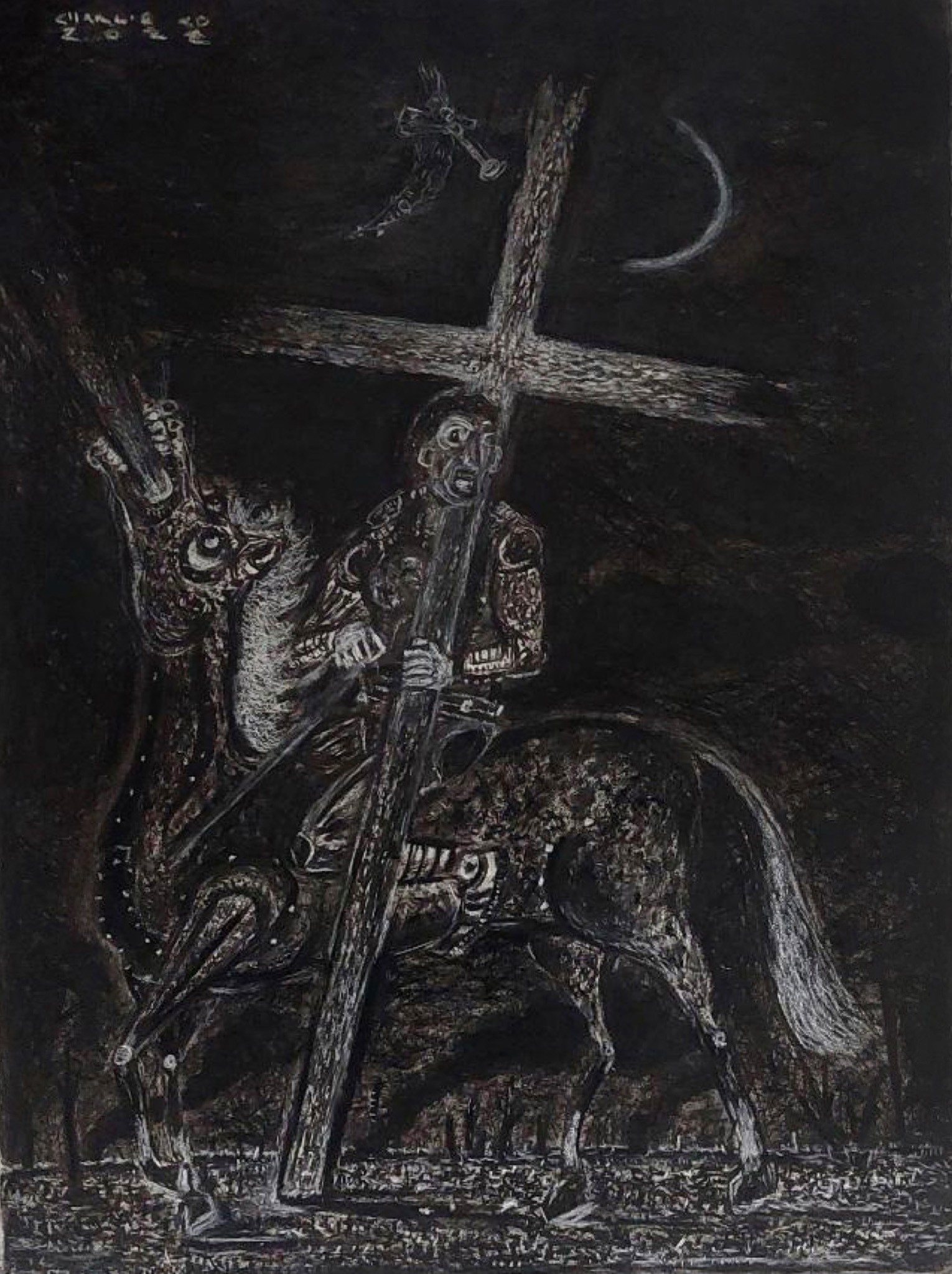
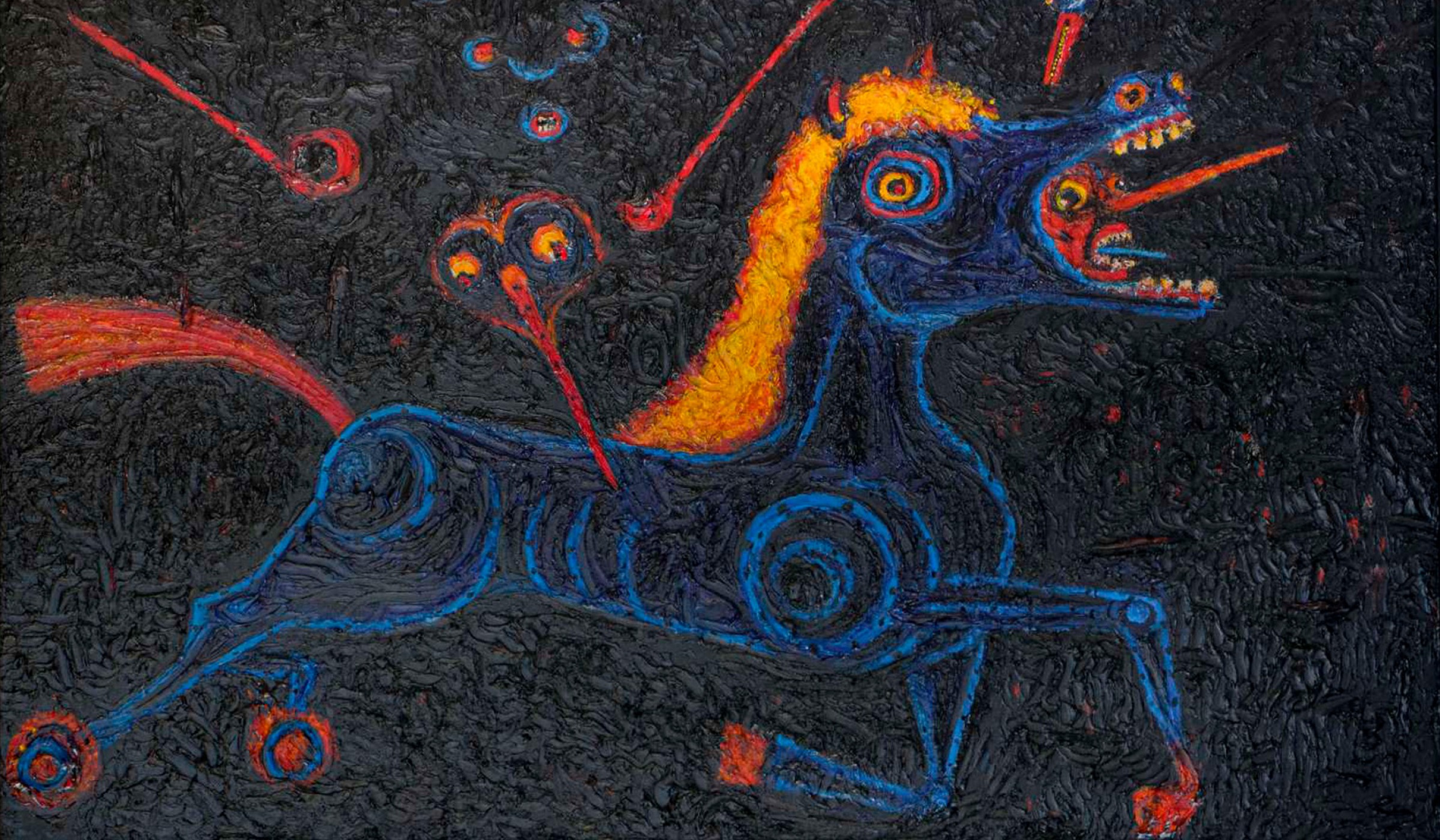
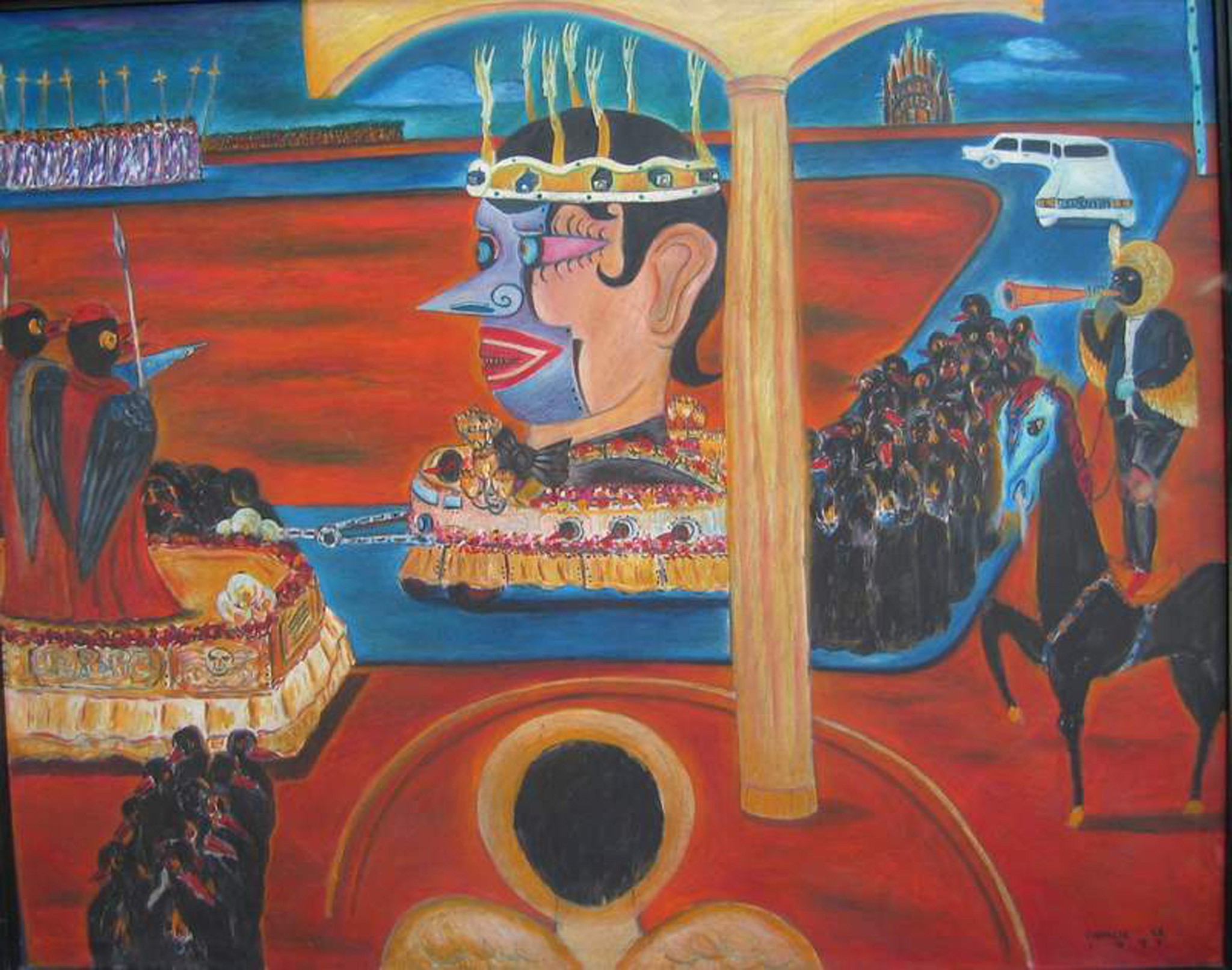
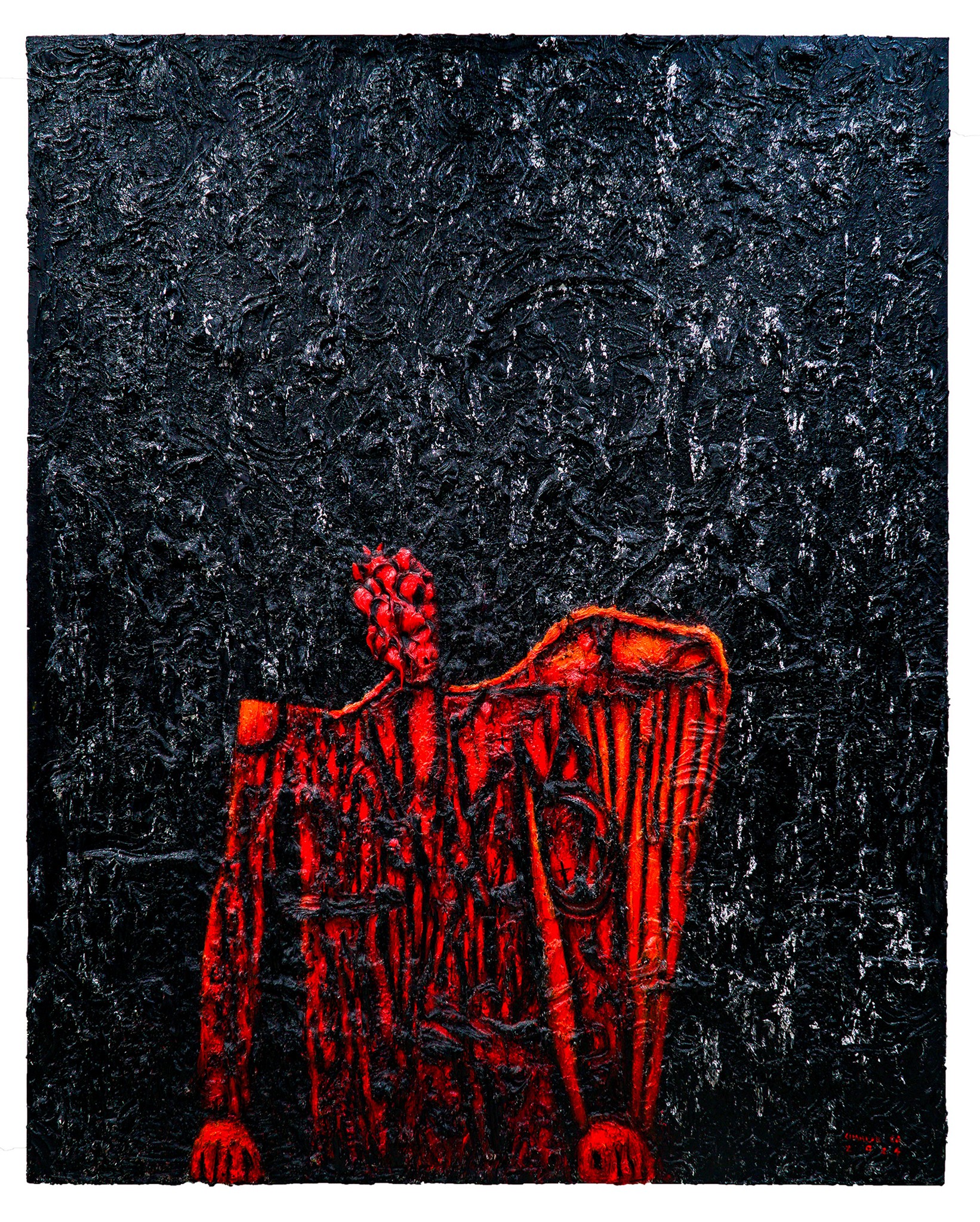
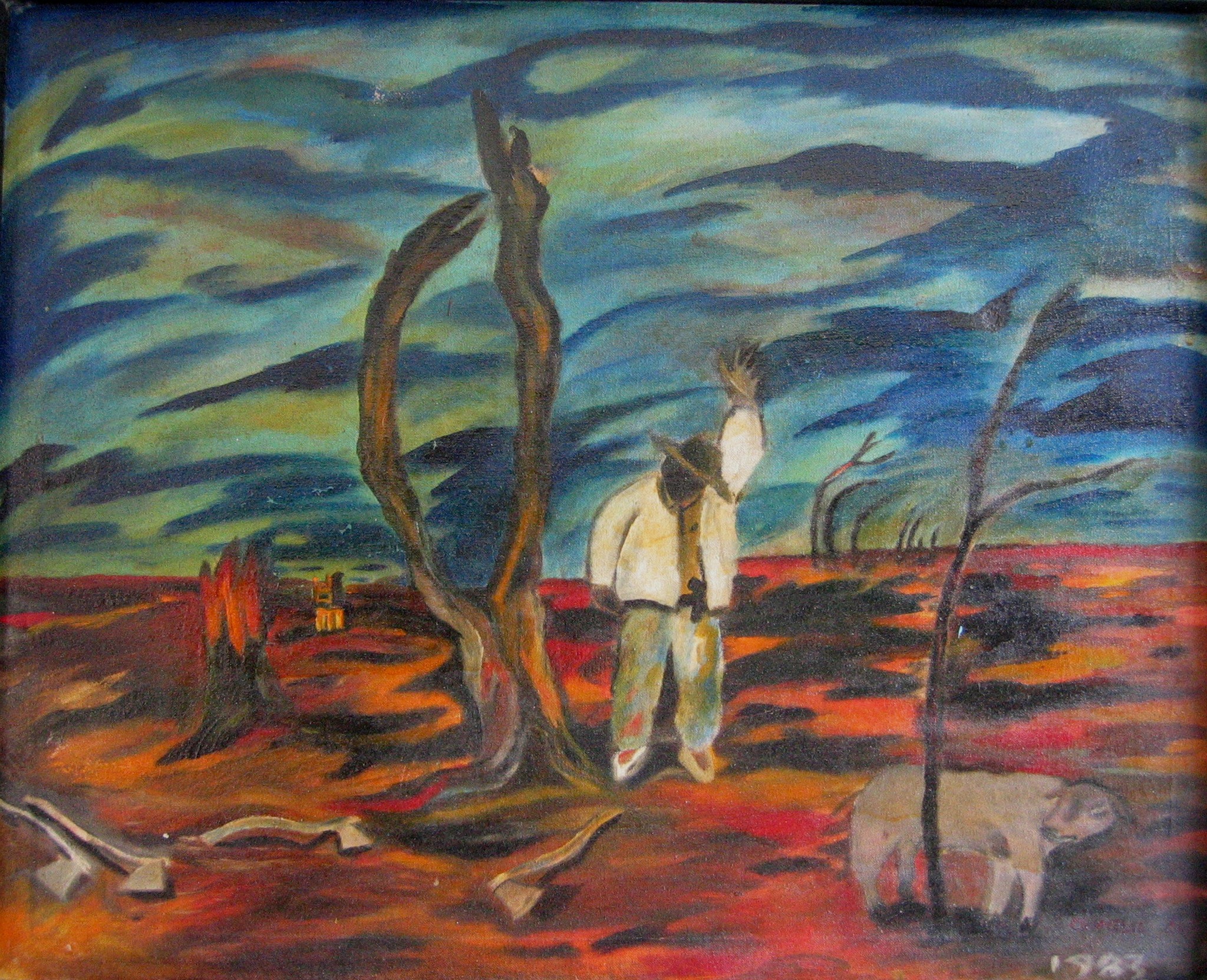
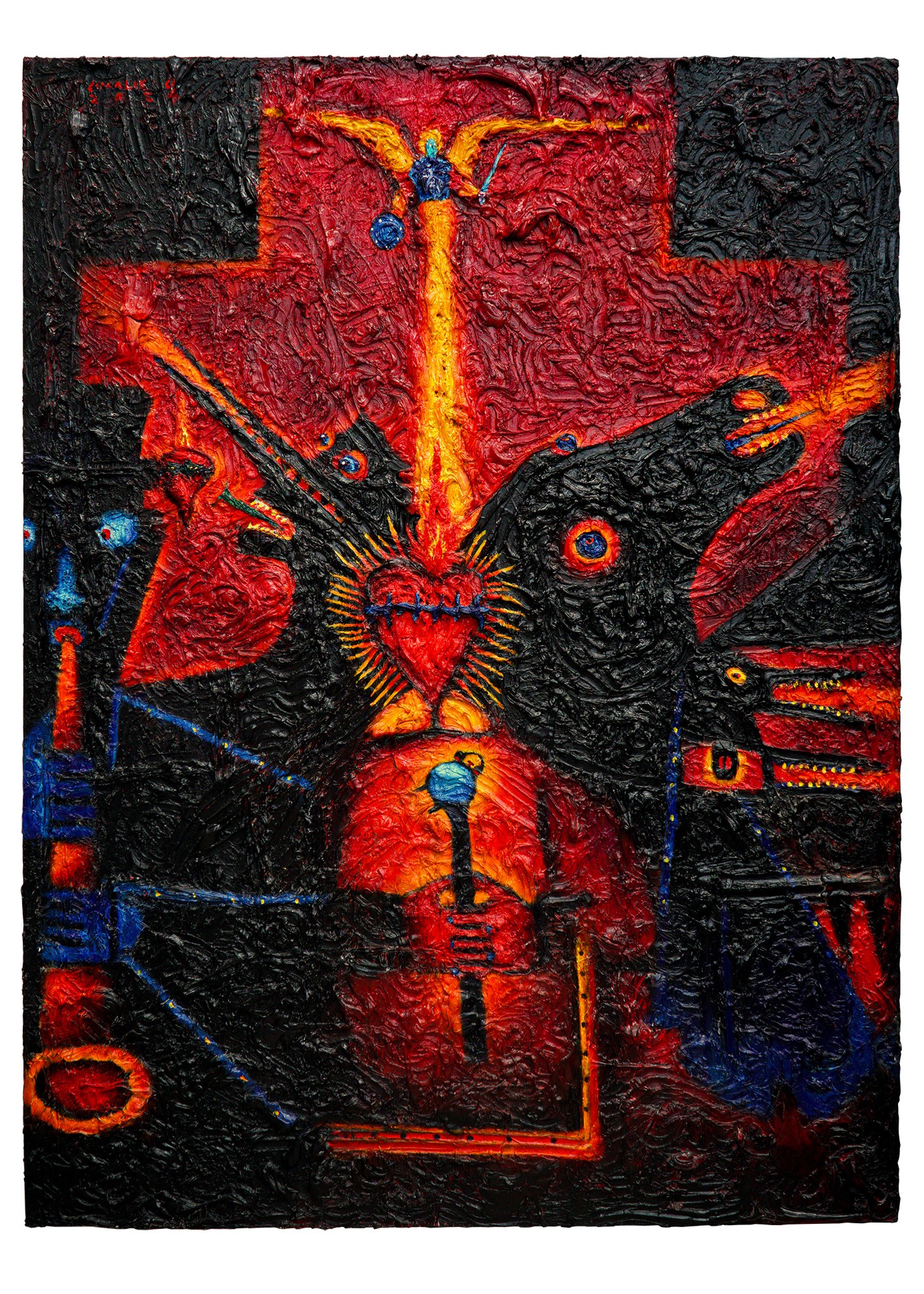
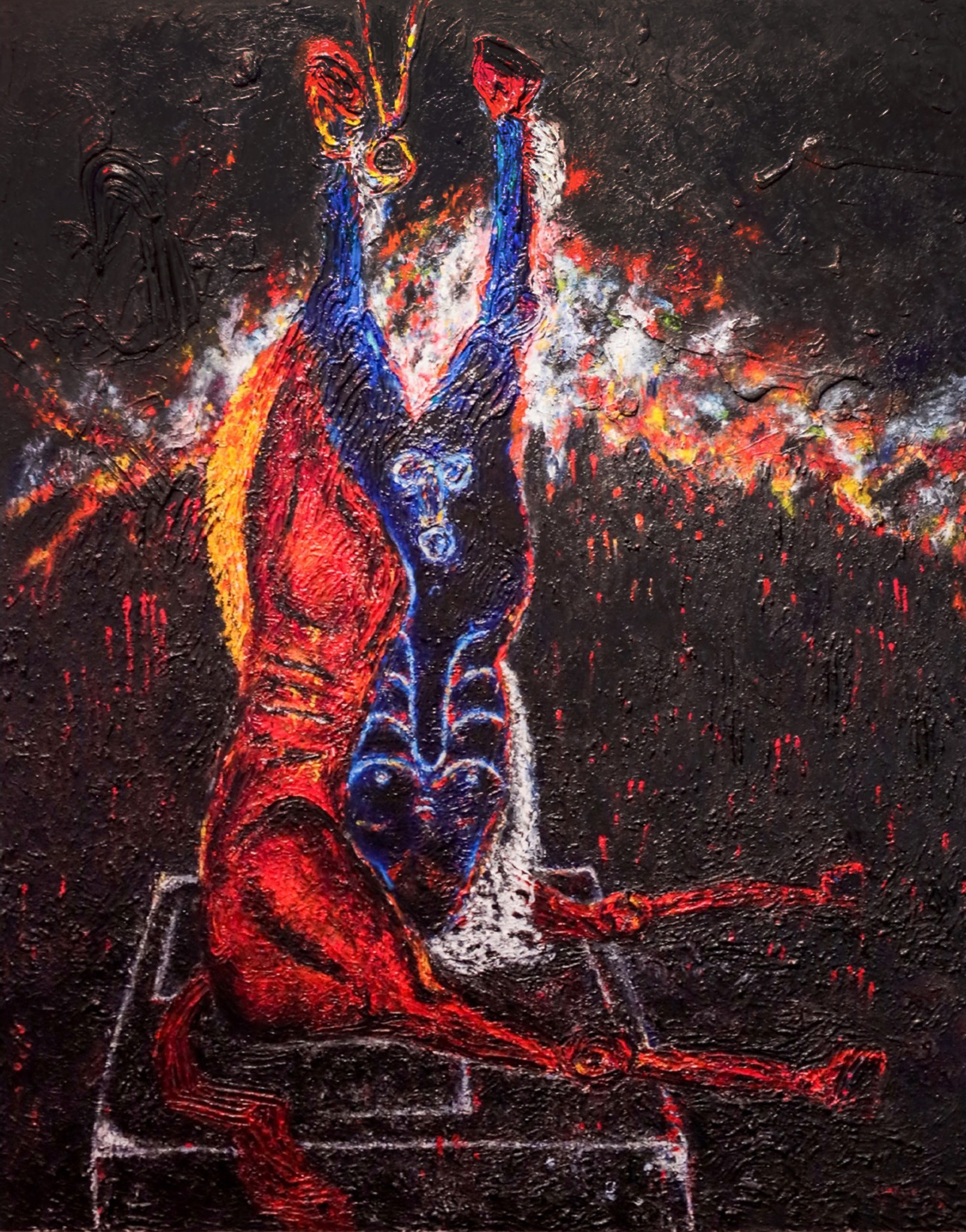
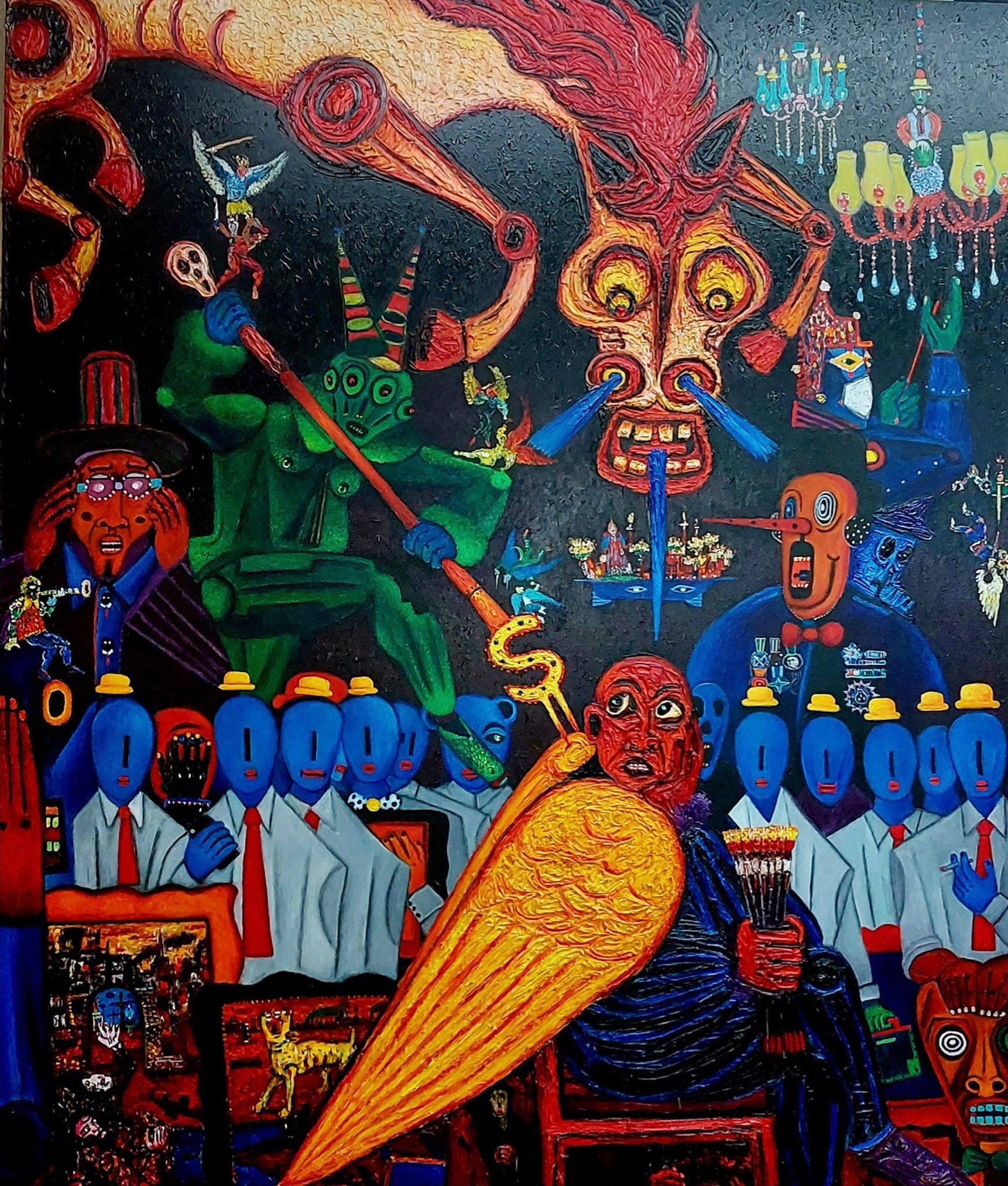
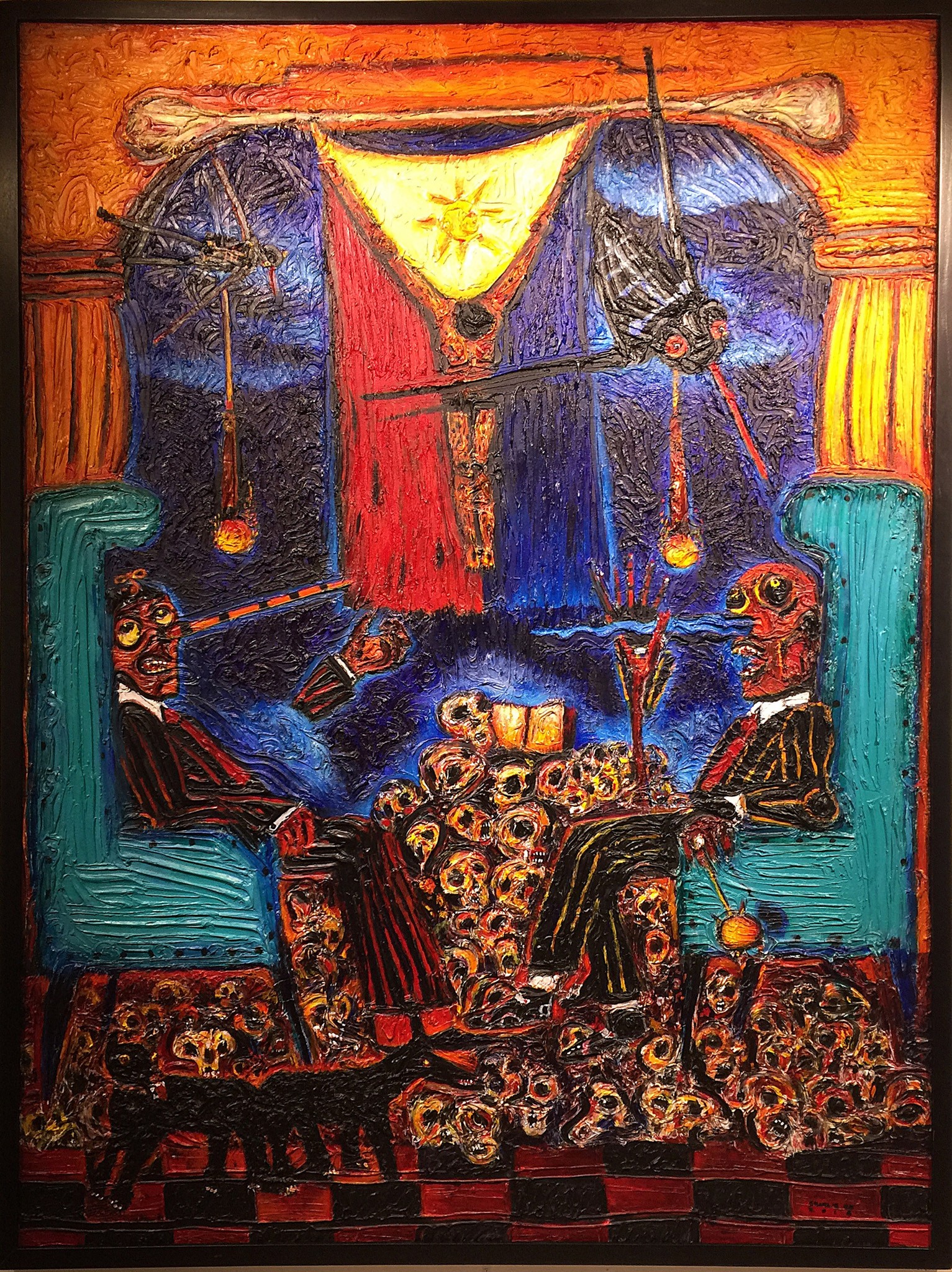
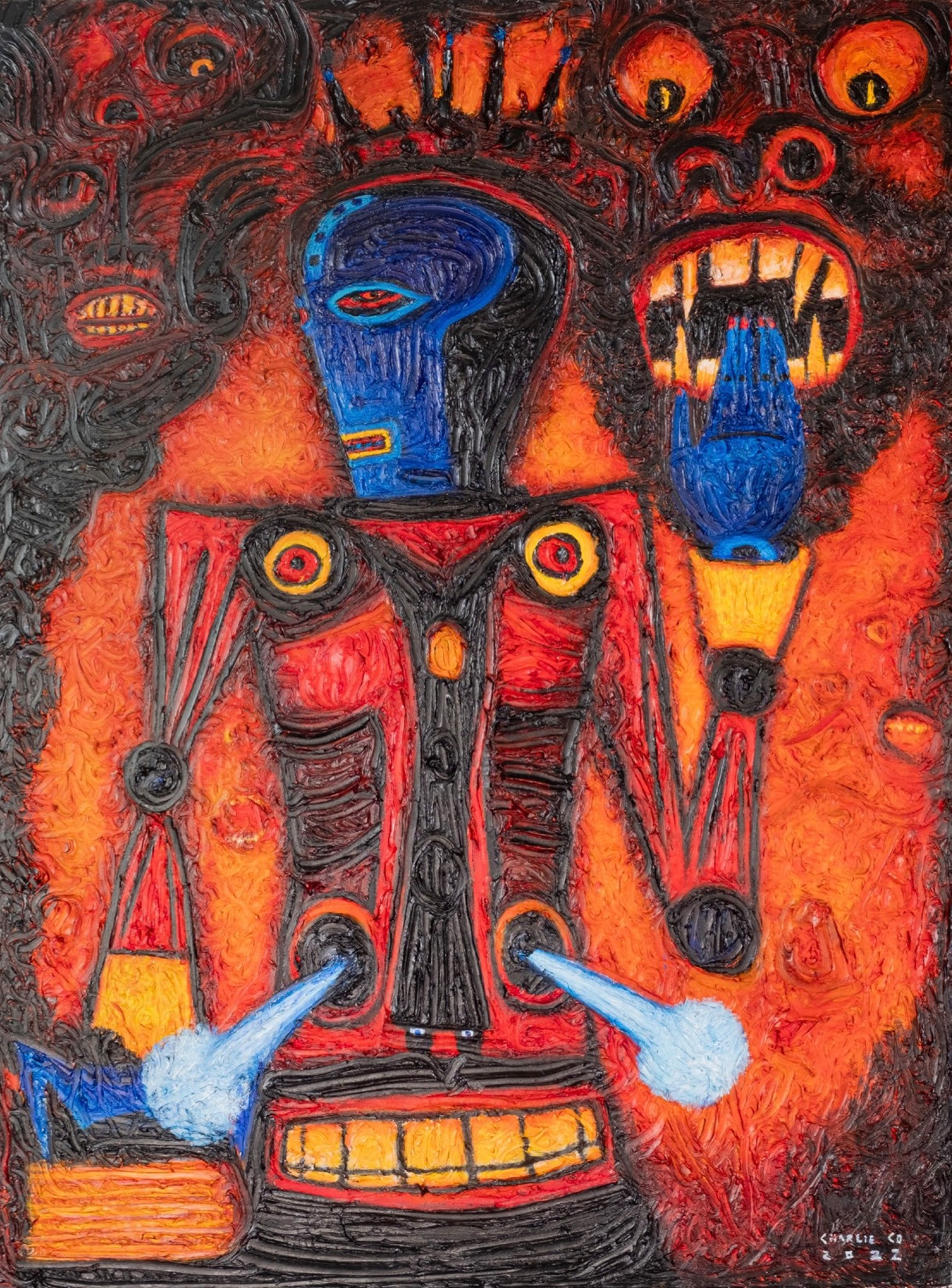
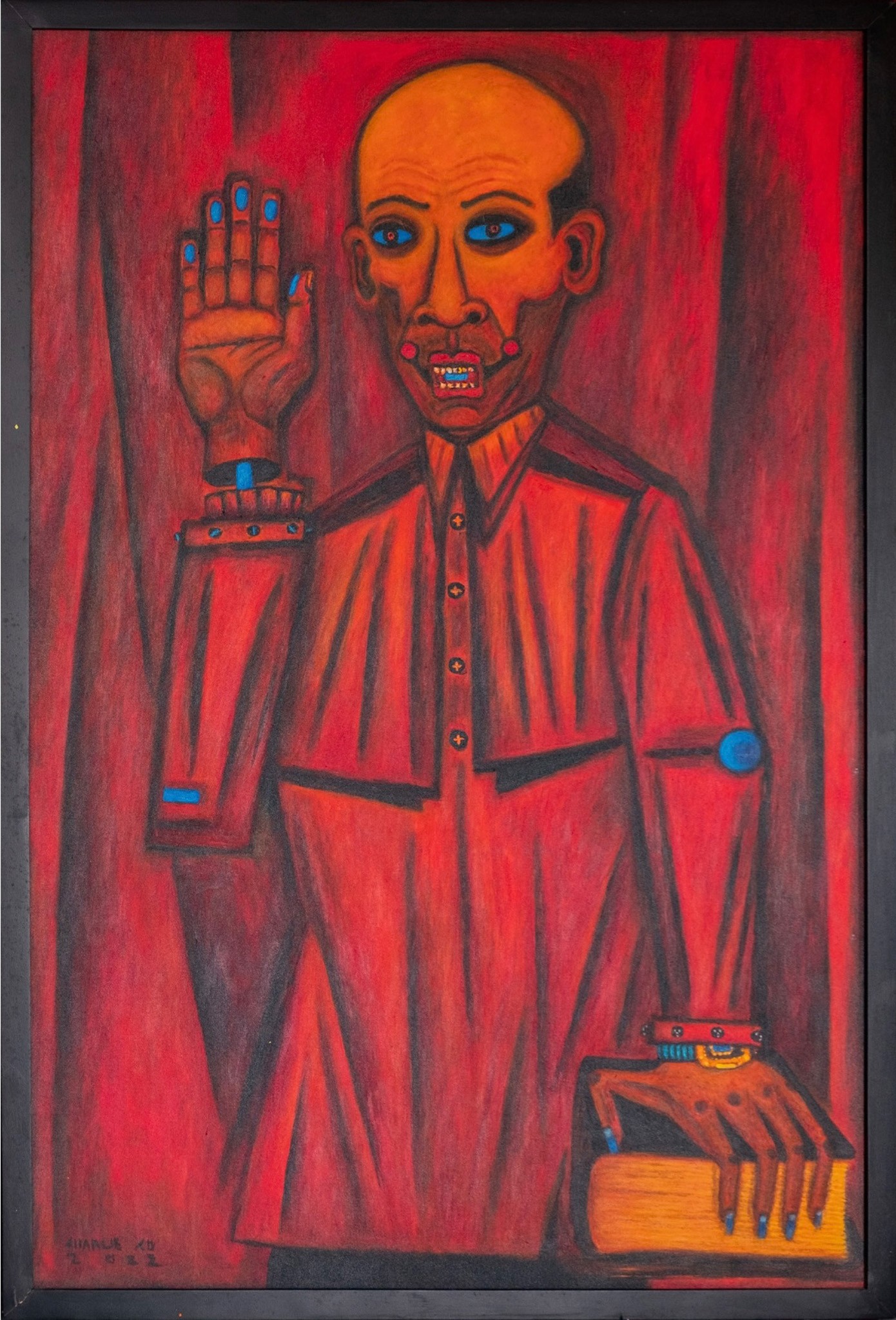
“I have stayed true to myself and my storytelling through my work, whether they have been inspired by personal experience or social commentaries.” – Charlie Co
CNTRFLD. Your upbringing in Bacolod City and the Visayas region has played a crucial role in shaping your artistic journey. How have your early years and heritage influenced your decision to become an artist?
CC. I come from a Filipino Chinese family. My father sailed from China alone at a tender age of 10 years old, escaping communist China. My parents started with nothing and worked through very hard times to build a successful furniture business in our hometown, Bacolod City.
In elementary school in St. John’s Institute, a Chinese School, I think I was in 5th Grade, I was chosen to represent our school in an inter-school art competition. I drew a circus scene with clowns, despite never having been in a circus. I lost in that art competition. The following year in Grade 6, I was again chosen to represent our school in another art contest. Prepared with my art materials, I waited all day long, but I was never called to go to the contest. I asked my teacher what happened, and she replied: “We didn’t let you join because you are going to lose anyway”. I was crushed but that didn’t stop me from drawing and painting. That experience taught me resilience.
All four of my siblings contributed to our growing family business. As the youngest child, it was no surprise that my parents, like many Chinese parents, expected me to help with the business rather than pursue my passion. However, I rebelled against their wishes and decided to follow my dream of becoming an artist.
In the 1980’s my first exposure to contemporary art was because of our furniture business. My father had so many Interior Design and architectural magazines and books.
When I started painting, I would take photos and have them developed and I would cut them out and paste them on the pages, pretending that my paintings are on the walls of a living room in a magazine. Every time my father would see me drawing or making terracotta sculptures, I would be asked by my father to deliver furniture or collect payments from our business’ wealthy customers in Bacolod. Hung inside their homes were works of famous Filipino artists, like Juvenal Sanso, Manansala, HR Ocampo, Ang Kiukok and many others and I enjoyed looking at the works.
In 1980, I enrolled in La Consolacion College in Bacolod to study Fine Arts. There I met senior artist Nunelucio Alvarado, founder of Pamilya Pintura - a school-based artist group that I eventually joined. Pamilya Pintura somehow shaped my creative process. It was a fearless group, experimental and community based.
We mounted exhibitions with themes that matter. It also made me develop my character as an artist because this was where I learned to be stubborn and firm to what I wanted to create. I then knew that to become an artist, it was going to be a very long and difficult journey.
Venturing out on my own while I studied briefly in Manila, I would spend my free time visiting galleries, and I wondered: How would I survive as an artist when I was just starting and there are hundreds of artists with exceptional skills who are much better than me.
I mounted my first one-man show in 1983 in Bacolod. Shortly after, I came to know Bobi Valenzuela at the Hiraya Gallery, and he became one of the very first mentors in my artistic career.
In 1990, I received the prestigious 13 Artists Award from the Cultural Center of the Philippines. I presented the trophy to my ailing father, and from that moment on, he encouraged the rest of the family to support my chosen career. Unfortunately, shortly after that, my father passed away.
Looking back, I believe that my parents’ initial disapproval of my artistic ambitions only strengthened my determination to follow my passion.
CNTRFLD. You co-founded Black Artists of Asia (BAA) in the 1980s. What motivated you to establish this collective, and how did it shape your artistic identity and approach to socio-political themes?
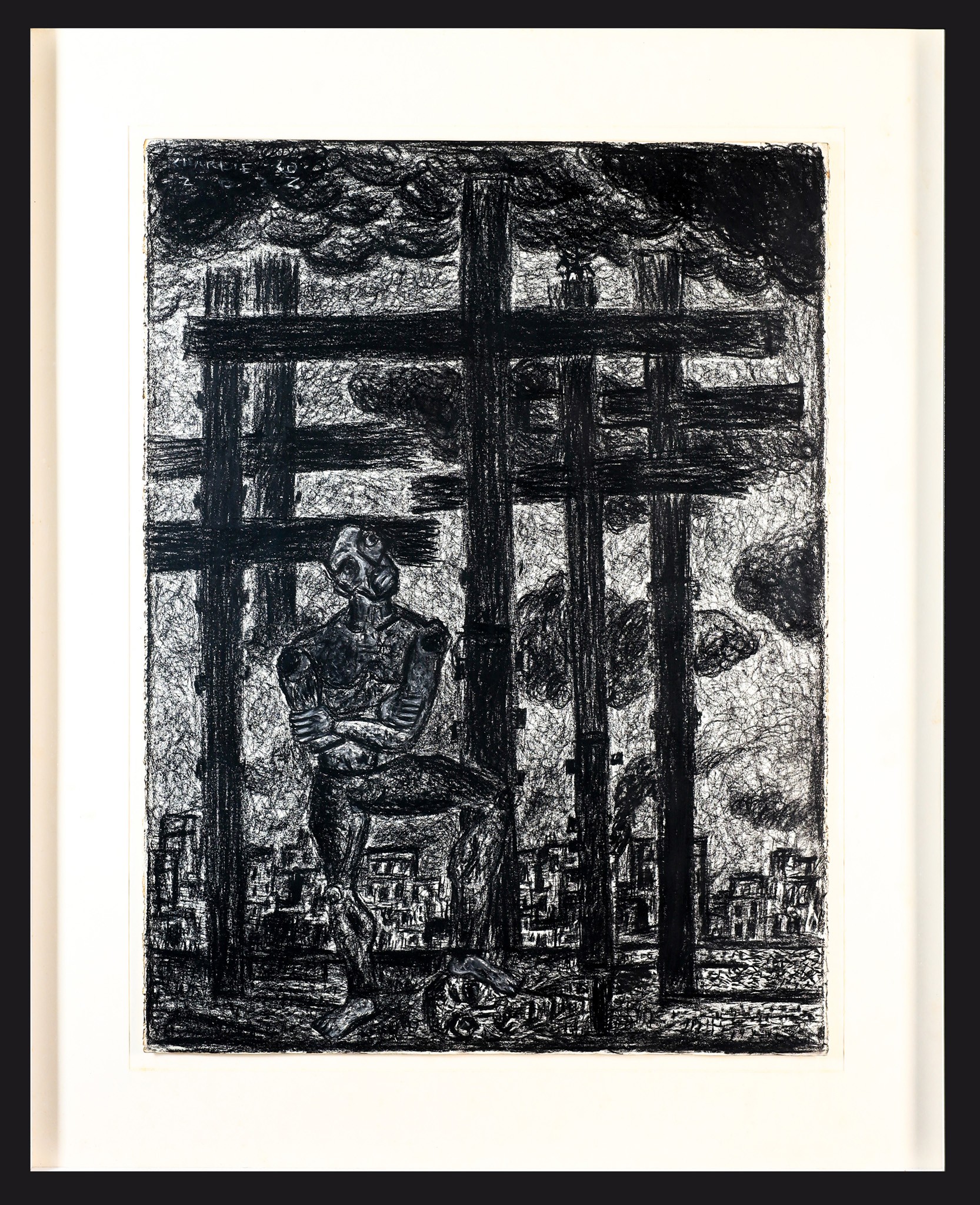
CC. Even in my elementary and high school years, I was already engrossed in social studies. I would draw war scenes, conflicts and current events. My interest in this subject matter all the more strengthened when I joined Pamilya Pintura.
BAA was initiated by Norberto Roldan, then very active as a left-leaning activist artist of the Concerned Artists of the Philippines - Negros chapter. However, even before BAA was founded, my works already had socio-political inclinations and being in BAA did not exactly shape my being known as one of the social realist contemporary artists in the 1980s. I was already deeply engaged and recorded the things what was happening in the political scenes in the Philippines and the world that affected me emotionally through my art.
BAA never really expanded or developed as a group. The name is only mentioned and attached to each of the member’s individual profiles when we have solo exhibitions. It has not been active for decades now as we had gone our separate ways in our careers. Moreover, the belief I had in mind from its inception became a fallacy when Norberto Roldan revealed not just to me but to several people present at a VIVA ExCon meeting in 2023 that BAA was only created at that time to give a legitimate name to the group, he founded to be part of a leftist group. He had a different agenda from the beginning in contrast to what we, the other members, were made to believe. And to be honest, he had already created the name BAA when I was informed that I was part of it.
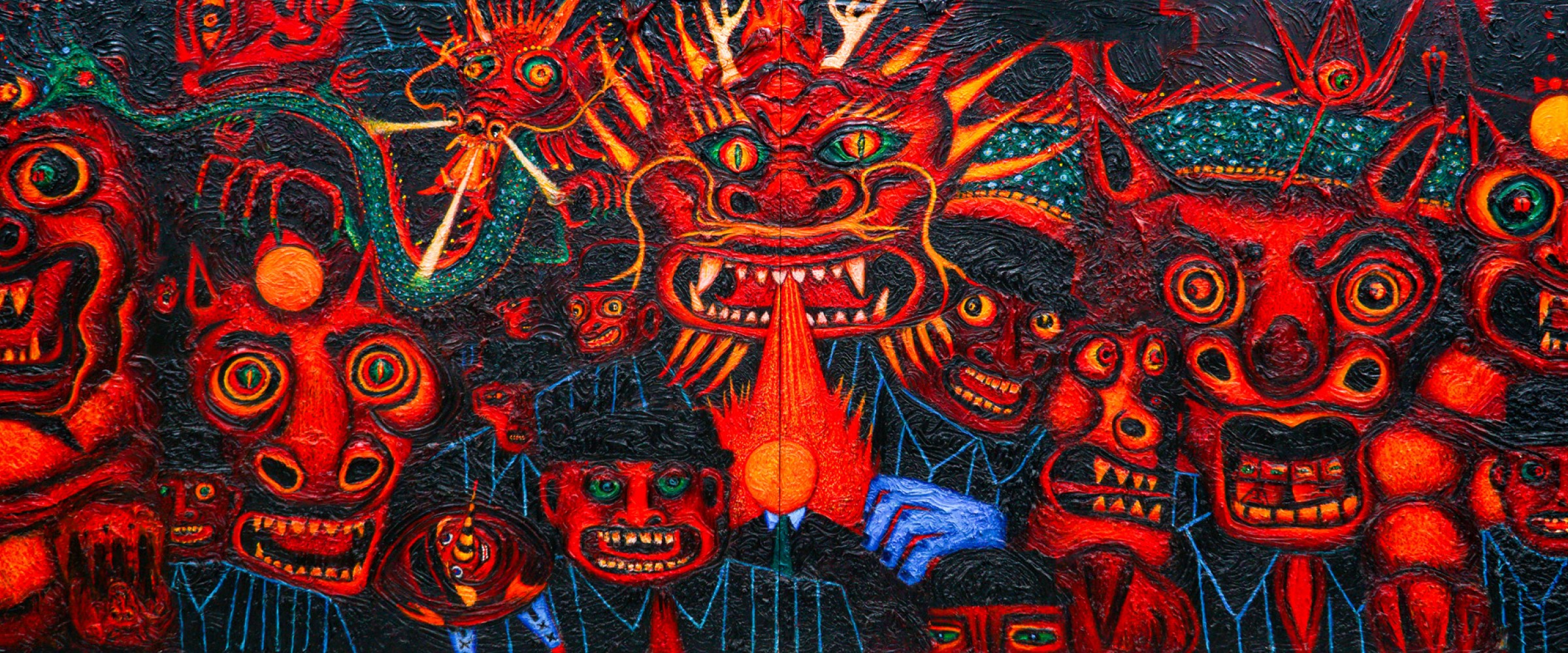
As far as my career is concerned, I have found my own style as an expressionist, surrealist and socio-realist from the very beginning of my artistic journey.
CNTRFLD. Your work often reflects deep social and political awareness. What issues or events have most influenced your art over the years, and how do you perceive your role as an artist in society?
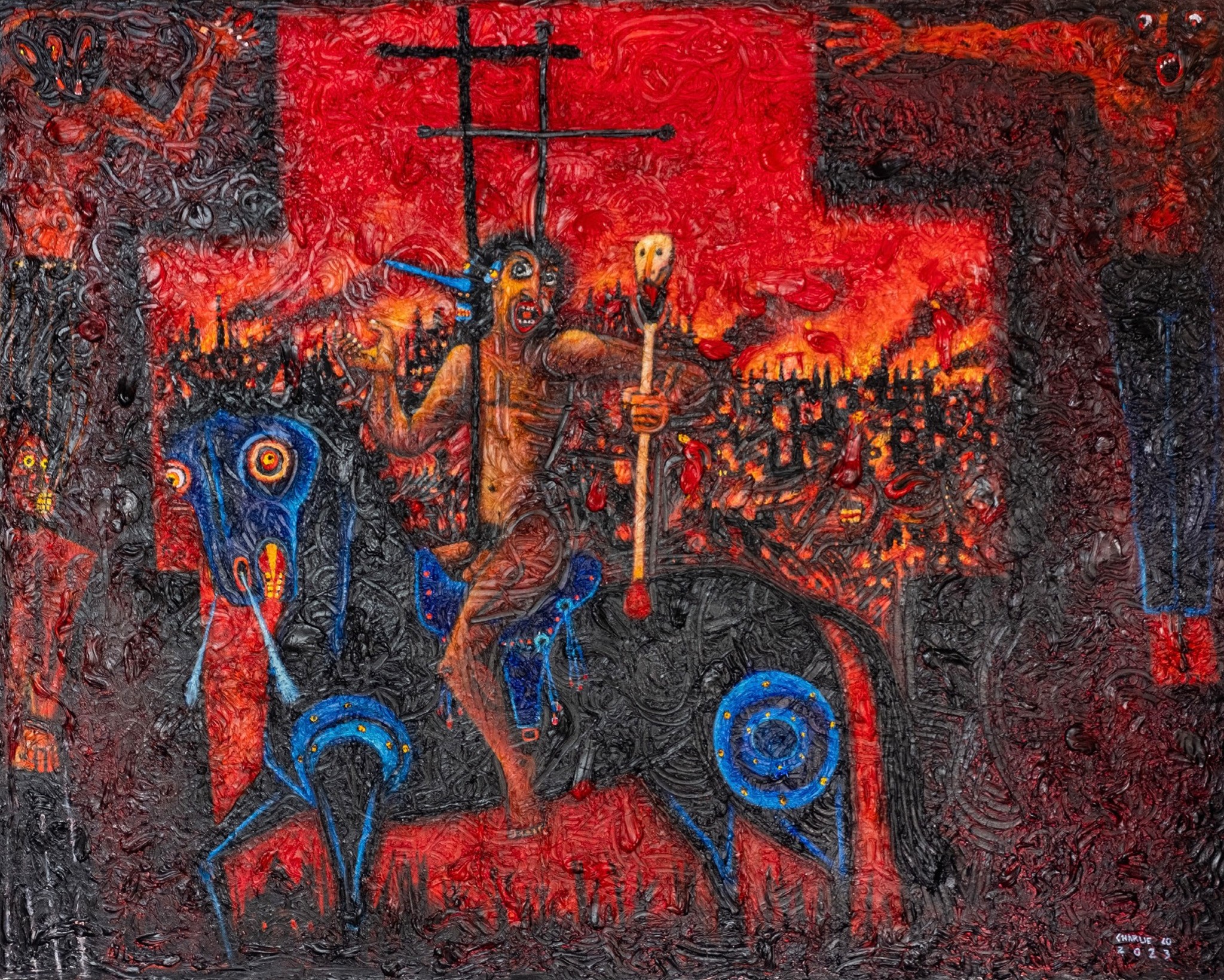
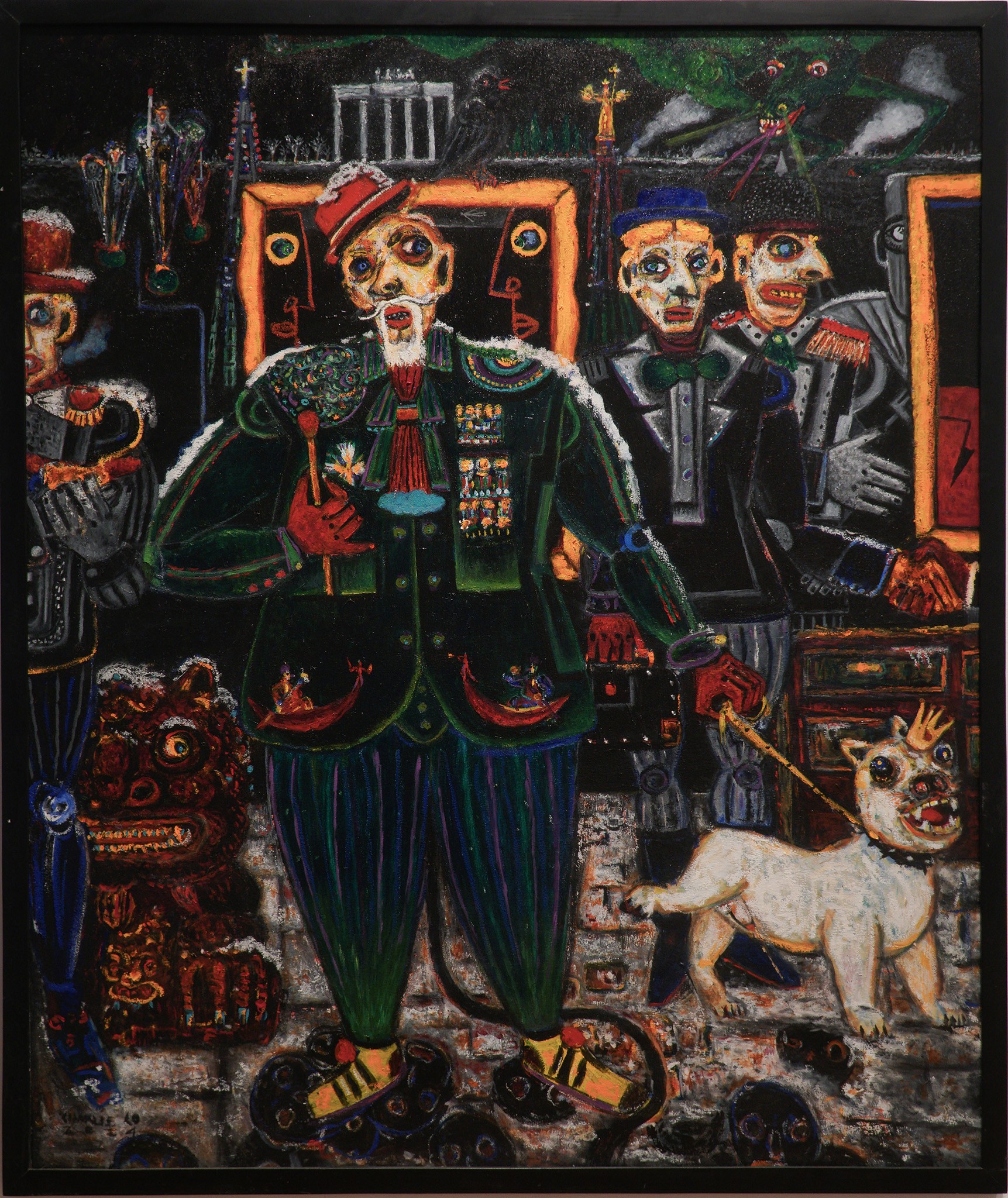
CC. As mentioned above, I just painted what was happening around me. I get very absorbed in current events, whether having experienced them personally or from watching the news on television and the newspapers. From these, I get my own vision that it deeply reflects on my work through my iconography. I become not just a bystander but a social commentator in my artworks. A Japanese curator Ben Misuzawa once wrote that I (was) am a chronicler of time. I believe this is so, but it also deeply involves strong emotions and sensibility from within, physically and mentally. Wars have never changed, even from the olden times up to the present, even getting worse. I get to question myself why do we, as human beings, never learn from our mistakes, and why do these conflicts never change. Why do we have to suffer because of greed and selfishness of a few — all because of politics. I have been to many museums in many parts of the world, and I saw hundreds of paintings showing war and conflict from the ancient times to the present. Although the background and era change, war is still constant.
CNTRFLD. Expressionism, surrealism, and socio-realism have been constant elements in your work. How have your themes and mediums evolved throughout your career, and what drives your artistic choices today?
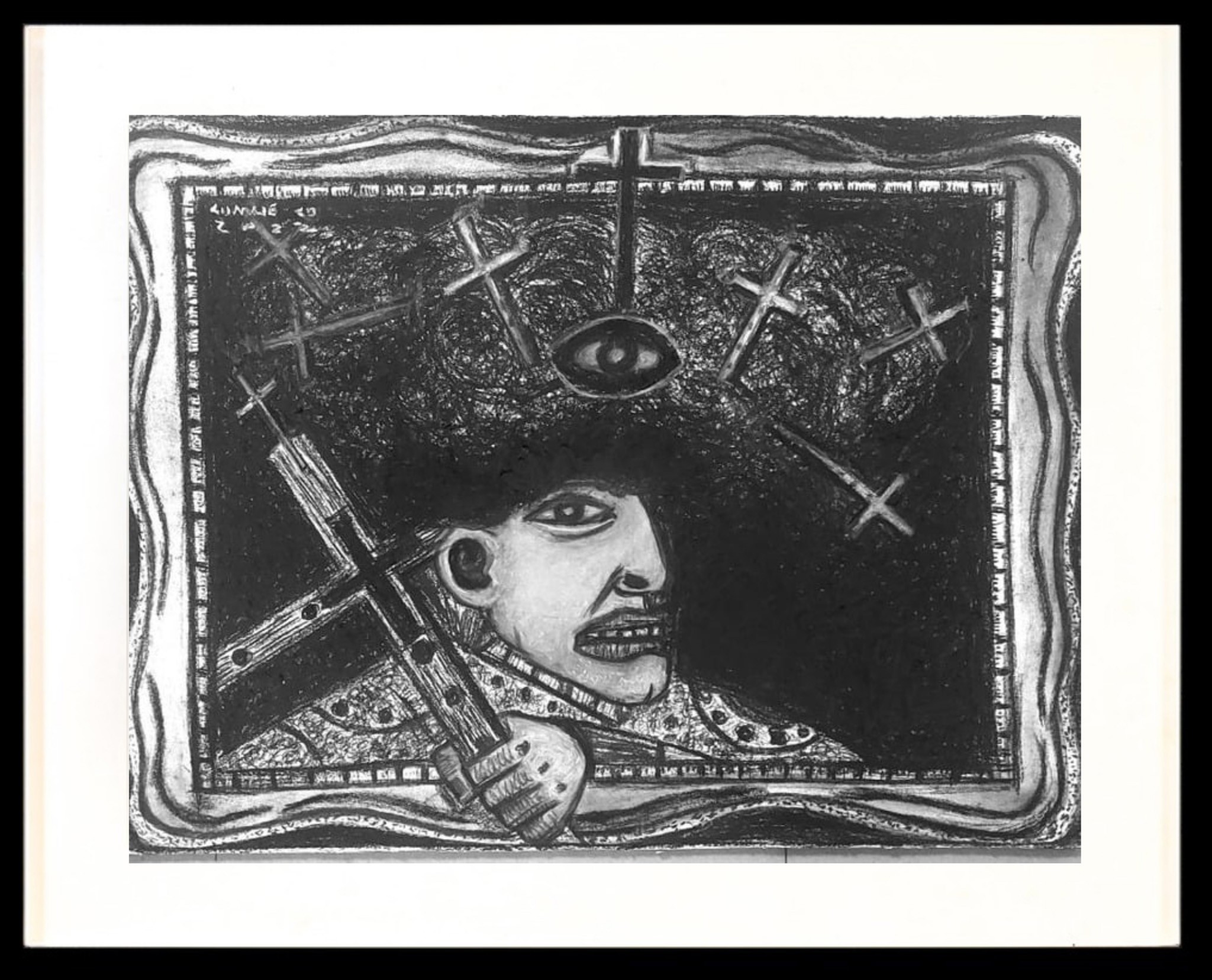
CC. For four decades I work every day, honing my style… and each day for me is a learning process. I have learned to experiment with my medium, putting every ounce of my energy into it. Up until 2013, I have been using oil paint in my paintings, but I had to switch to acrylic paint when I underwent kidney transplant in 2014, upon doctors’ advice because it was safer for me. I also dwell in pen and ink, oil pastels on paper, terracotta sculptures, mixed media and public art. In the past 10 years, I have been also using modelling paste in my artworks. The stronger my subject matter is, the more intense my strokes become.
I have been painting most of my life, 40 years this year to be exact. I’d like to say, I have stayed true to myself and my story telling through my work, whether they have been inspired by a personal experience or social commentaries. My work may be dream-like but exudes a lot of satire in them - giving the viewers hints of answers to their questions, a sense of reality of the world around us.
In 1988, in a group show in Sydney, Australia, a writer wrote an article about my work and these exact three definitions: expressionism, surrealism and socio-realism were used to describe my art. So yes, these best describe my art.
CNTRFLD. Orange Project has become a thriving hub for contemporary art in Bacolod. What inspired you to establish it, and how do you see it contributing to the local art community beyond Manila’s mainstream art scene?
CC. Orange Project is the result of a simple dream shared by two individuals—Ben (Bong) Lopue III and myself. Our partnership may have started in an unusual way, but in many ways, it is close to perfect as far as running Orange Project is concerned yet still work in progress. Back then, Bacolod only had a handful of art spaces. Artists exhibited their works in hotel lobbies, restaurants, and small galleries. One of my hopes then was to have a proper gallery for local artists to exhibit their work.
Bong, who is 17 years younger than me, had been assigned by his parents to build commercial spaces in their family-owned complex, Lopue’s Mandalagan. We met by chance at a gas station, and he proposed the idea of opening a gallery together as partners. By sheer serendipity, we realized we both had the same vision and passion.
In 2005, we opened Orange Gallery in a 60-square-meter space in one of the spaces his buildings. Since then, we’ve held at least 10 exhibitions a year and expanded to several areas in the complex. In 2018, Bong built the largest contemporary art space in Bacolod, which we renamed Orange Project. The space has since attracted not only local artists but also artists from mainstream Manila and other art groups both locally and internationally.
With the help of our lean but dedicated gallery team, we’ve expanded our reach through collaborative efforts, artist residencies, and exchange programs. Through these initiatives, we’ve not only brought contemporary art to our local community for them to experience and appreciate, but we’ve also shown the world what our local art community is capable of.
I’m proud to say that whenever people in the Philippine art world mention Negros or Bacolod, they always acknowledge the strength of our art community. It has also inspired many artist-run spaces outside of Manila, that it is possible to create an artist hub in their own region.