CNTRFLD. Heritage & Upbringing. Can you share a bit about your upbringing and how your heritage has shaped your artistic perspective?
PS. I grew up in a small family and was always surrounded by art, both through my family’s profession and my older siblings, who loved to draw from childhood. I am the youngest, with a much older brother and sister. As a child, I wasn’t particularly interested in art—I preferred playing with my friends. However, when I was around 14 or 15, I realised my love for art at the same time I discovered my dislike for mathematics. From that moment, I became engrossed in the art room.
After that, I made an effort to immerse myself in art and chose to study it from the age of 16. I explored various artistic skills, including drawing, painting, sculpture, and design. At that time, I was deeply passionate about all these subjects, to the point where I would keep redoing my work until I felt it was perfect. This dedication earned me a quota to study at Silpakorn University. That transition was a turning point for me, as I realised that creating art involves much more than just making something look beautiful.
I chose to major in sculpture, which surprised both my friends and myself because it wasn’t my strongest skill. This decision led to some difficult experiences during my studies. Looking back, art has been a part of half of my life. I can’t pinpoint exactly what has kept me committed to it because there were moments when I hated it, yet I still continued. I had to push through and endure. Perhaps it was about overcoming the doubt of whether I could create something good, rather than asking myself what I truly wanted to create. In the end, I realised that I have a lot I still want to explore.
CNTRFLD. Journey into Contemporary Art. What inspired you to pursue a career as a contemporary artist? Was there a defining moment that solidified this path for you?
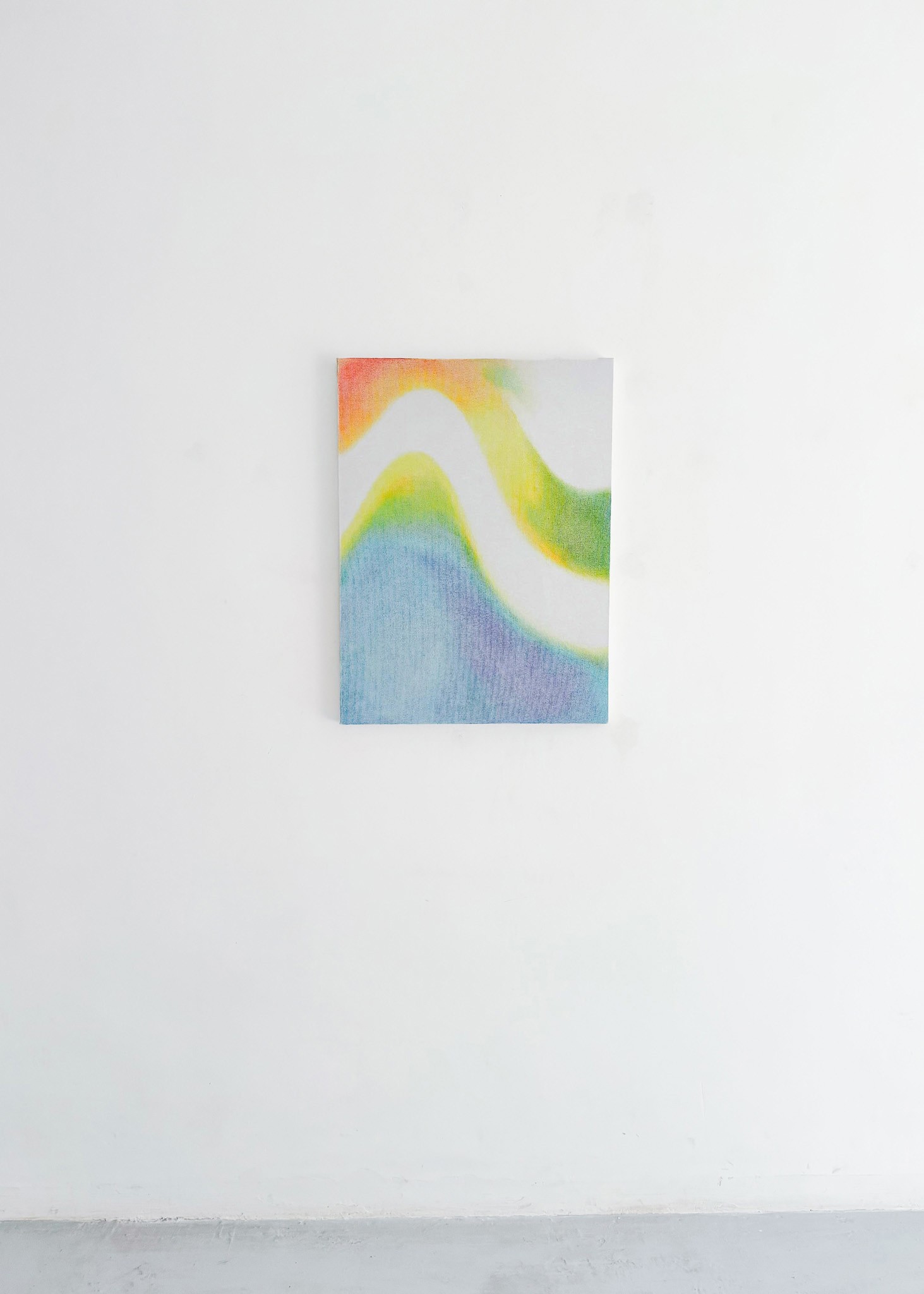
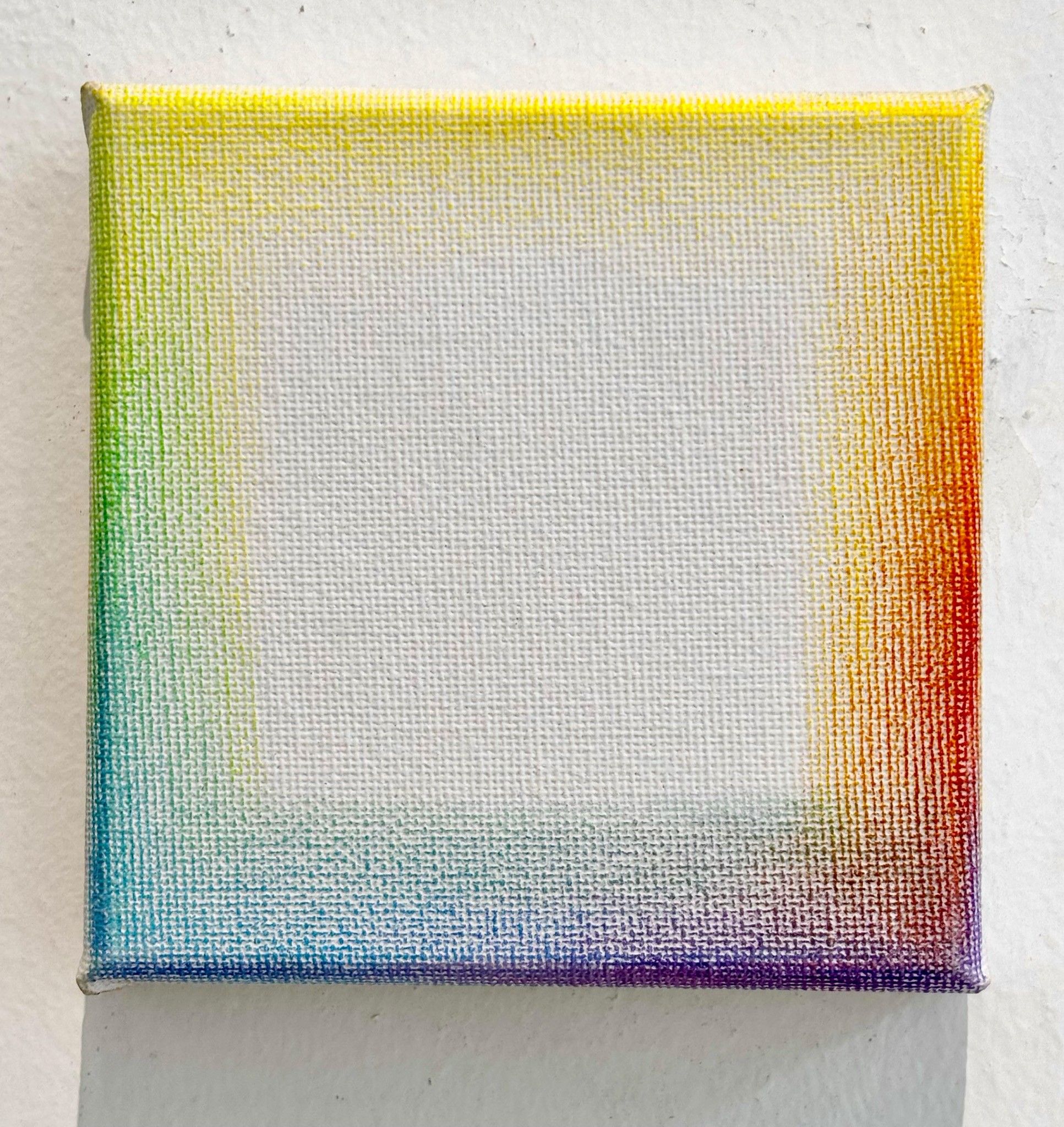
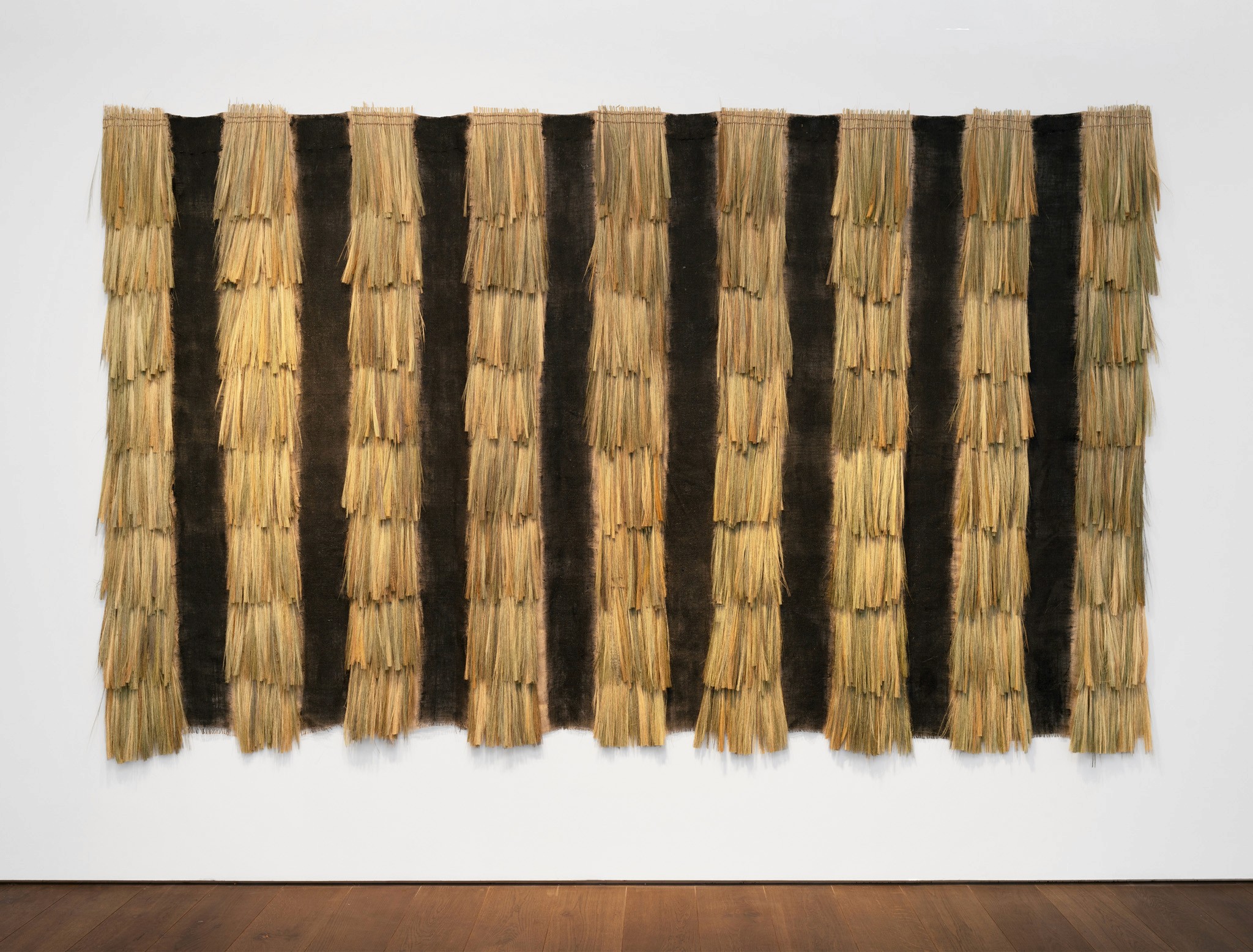
PS. My artistic journey has been shaped by how I perceive art visually, which naturally led me to contemporary art. I never set out to be a particular type of artist. Before I started studying colour and light, I initially explored colour mixing through weaving techniques. That exploration led me to materials with vibrant colours and, eventually, reflective materials. Inspiration changes based on what we observe, but I guess I’m like an insect drawn to the beauty of colourful flowers—I just can’t resist them.
CNTRFLD. Choosing a Medium. Your work is deeply connected to light, colour, and reflective materials. How did you come to choose these as your primary medium, and what draws you to them?
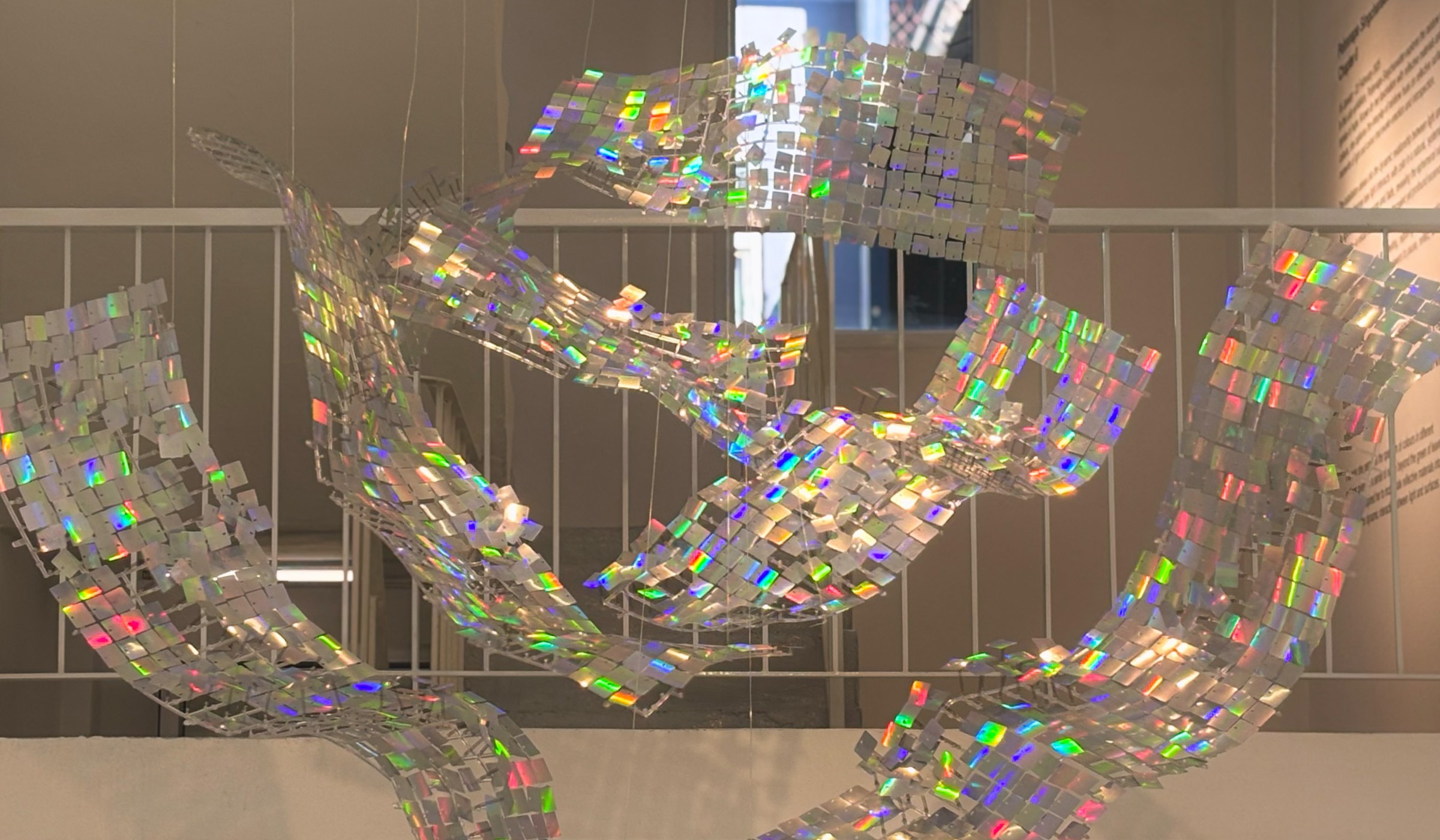
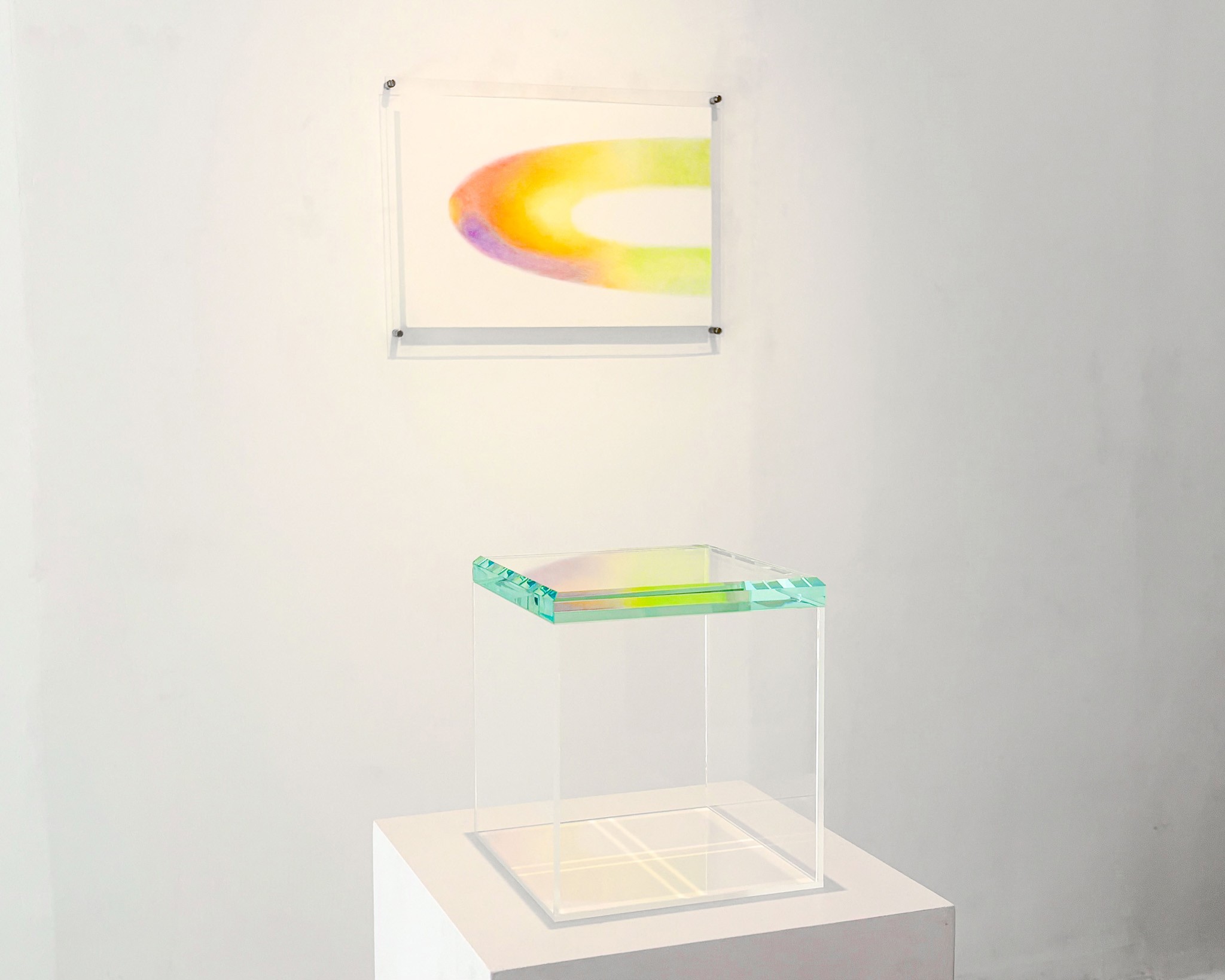
PS. I absolutely love colours. They evoke emotions in me, like deciding what colour I “feel like” on a given day. And since all colours originate from white light, I began my artistic exploration by observing rainbow-coloured and reflective materials. I paid attention to how light interacts with surfaces and processed these observations alongside my emotions, which ultimately shaped my artistic approach.
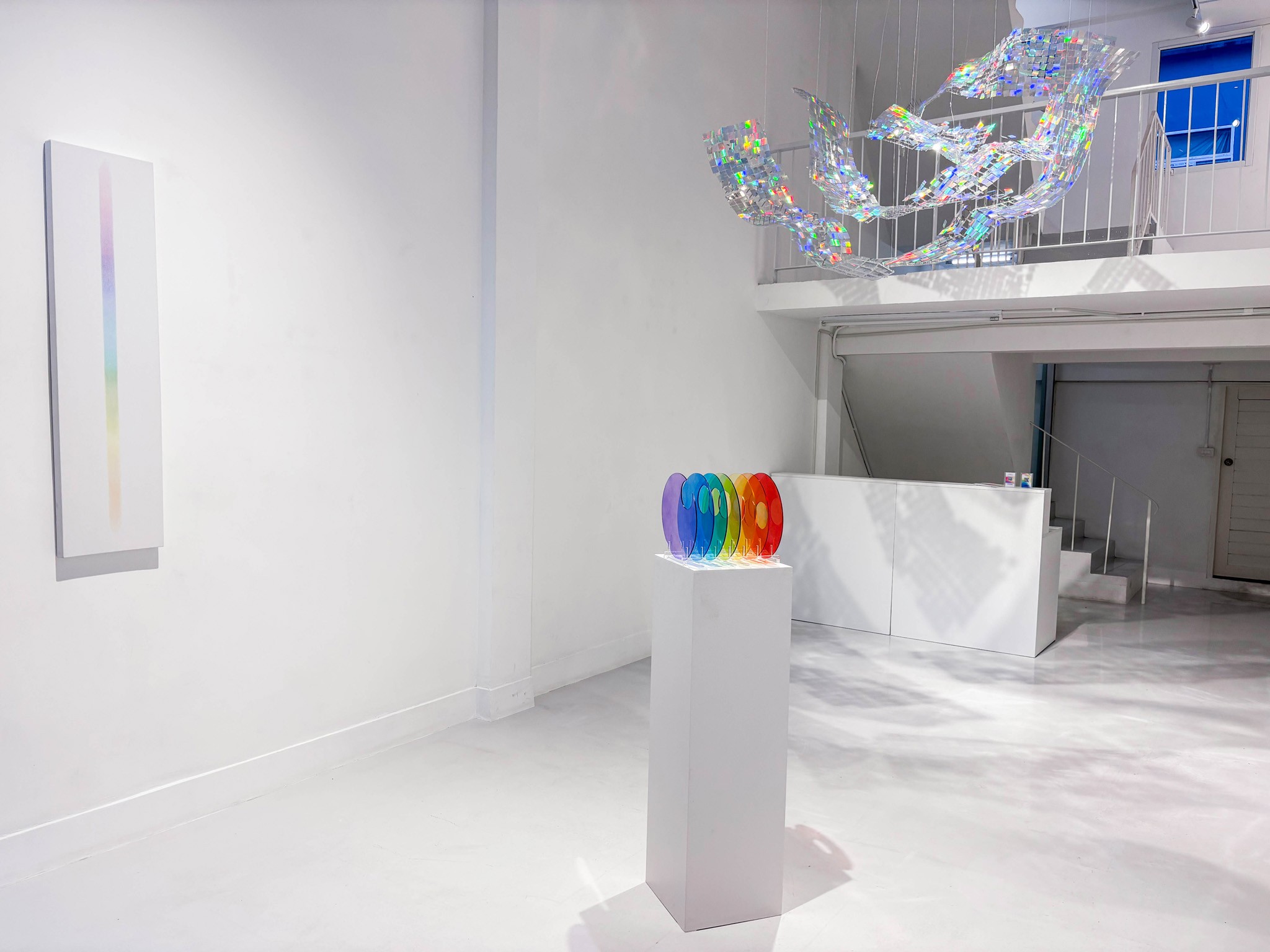
CNTRFLD. Chapter 0 at Supples Gallery. Your recent exhibition, Chapter 0, explores the rainbow as a symbol of hope. What initially sparked your interest in this theme, and how do you hope audiences engage with your work?
PS. This exhibition is a culmination of my observations—what I see and how I feel about it. It also made me reflect on myself and realise that, at times, I don’t pay enough attention to what I see or try to understand it deeply. Through my work, I want to encourage viewers to engage with the act of looking and observing. Sometimes, simply taking a moment to observe can be the starting point of hope. Hope or dreams come and go, but if we pause to reflect, we might notice something meaningful.
CNTRFLD. Artistic Process. You mention being inspired by the way light interacts with water and reflective surfaces. Could you take us through your creative process—how do you translate these fleeting moments into tangible artworks?
PS. I draw inspiration from rainbows that appear in different ways—through reflections on surfaces or light striking materials. However, my most intense inspiration came from a moment underwater. While diving in a pool, I saw a fluid, ever-shifting rainbow on the water’s surface. I could capture it only for a brief moment, but I couldn’t hold onto it entirely. It felt like I had discovered the Room of Requirement at Hogwarts. This experience led me to seek out materials with similar reflective qualities for my artwork.
When creating each piece, I always return to the central question of my concept: If a rainbow represents hope, how should I view it?