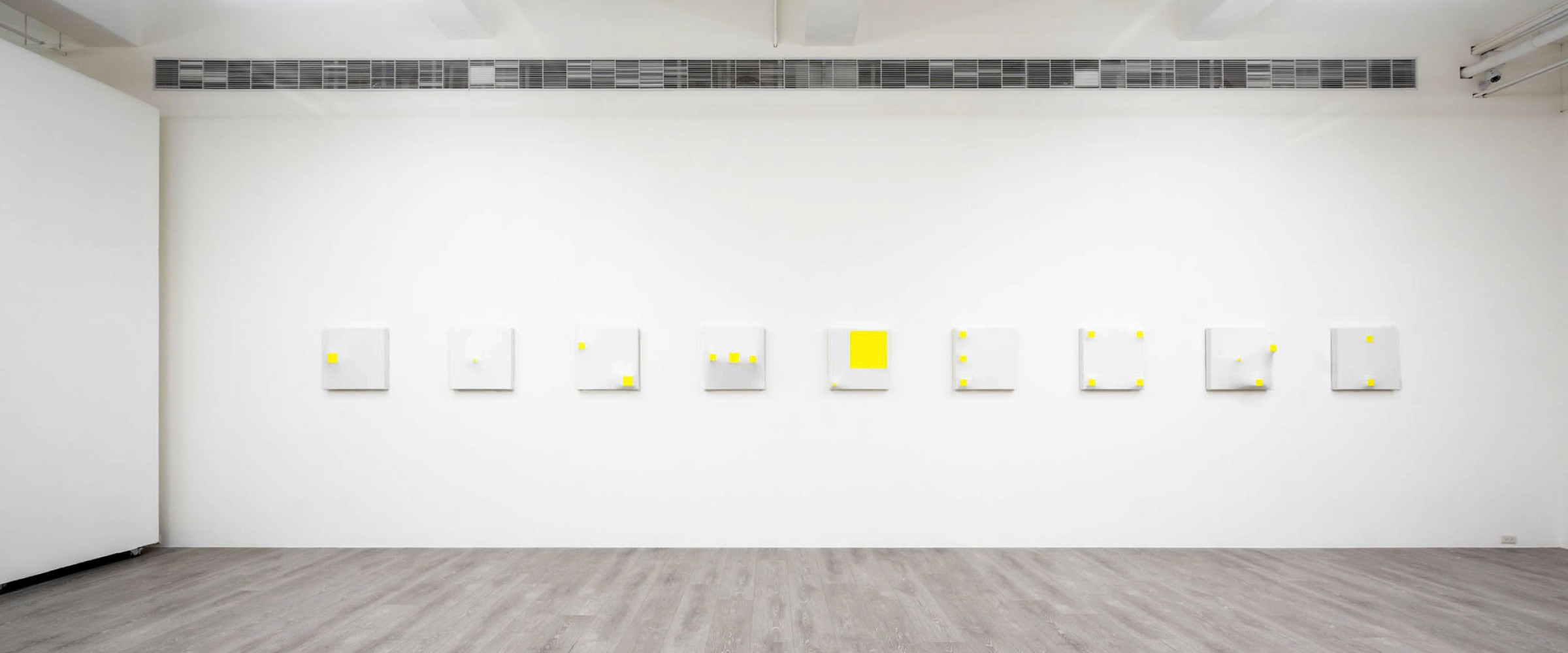
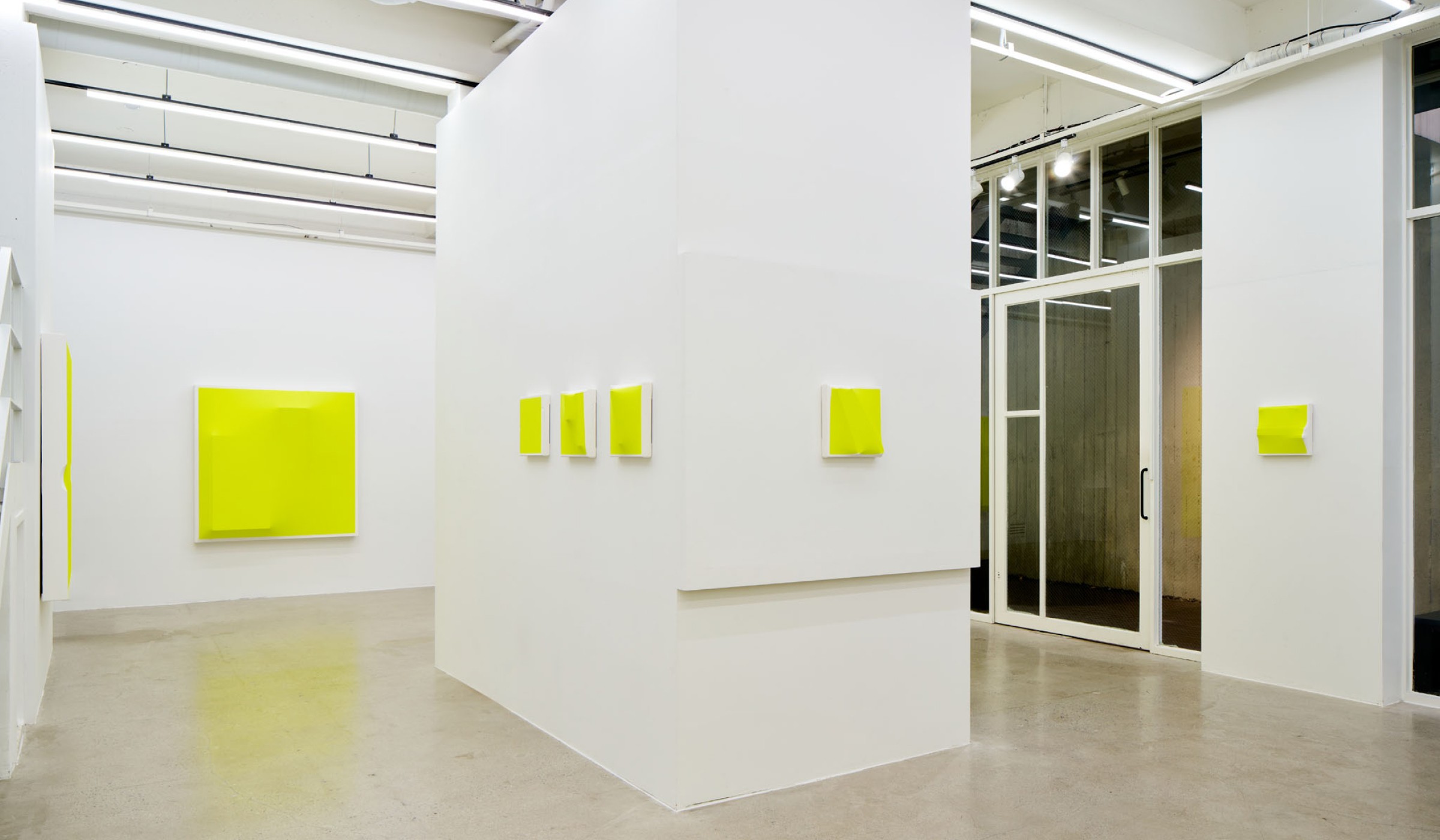
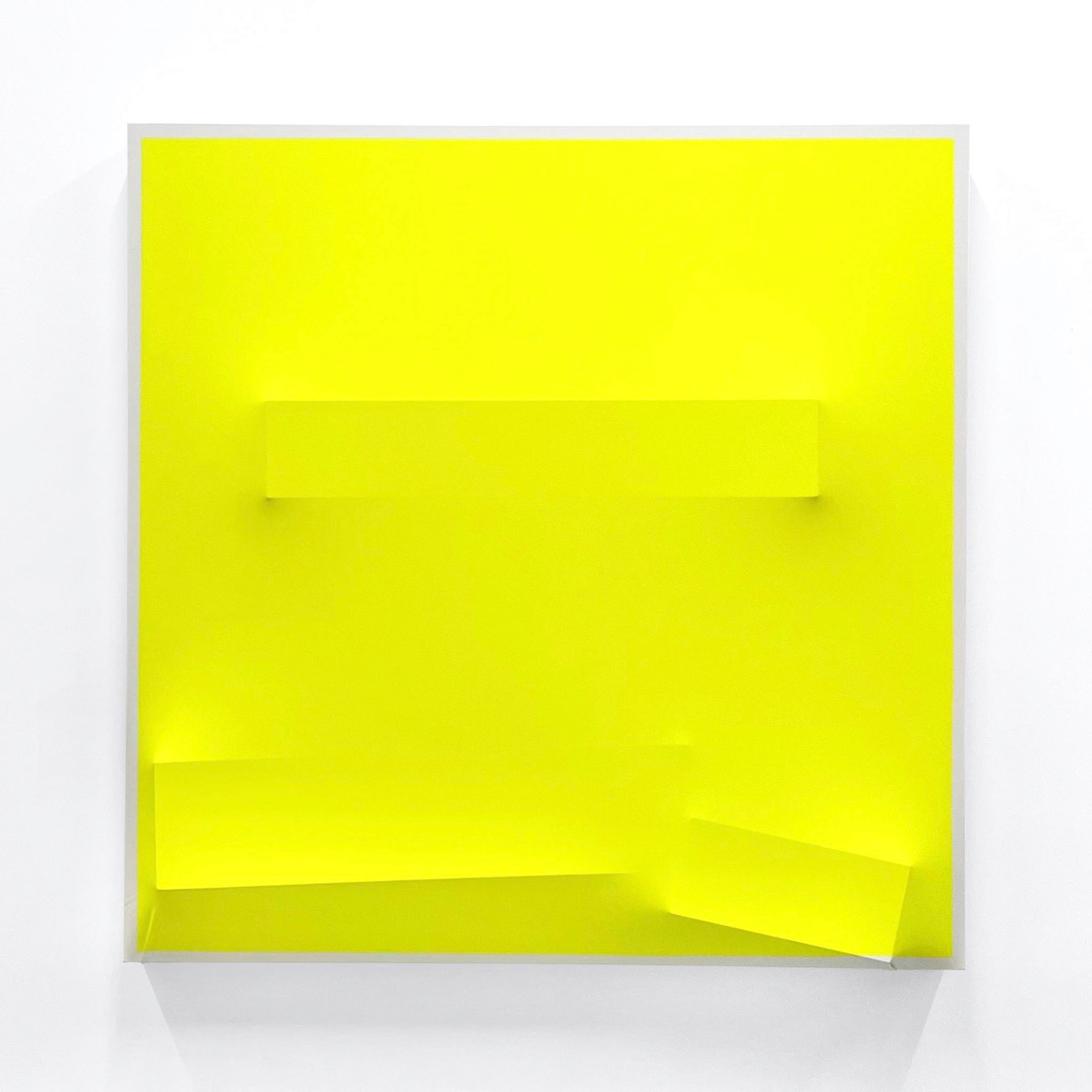
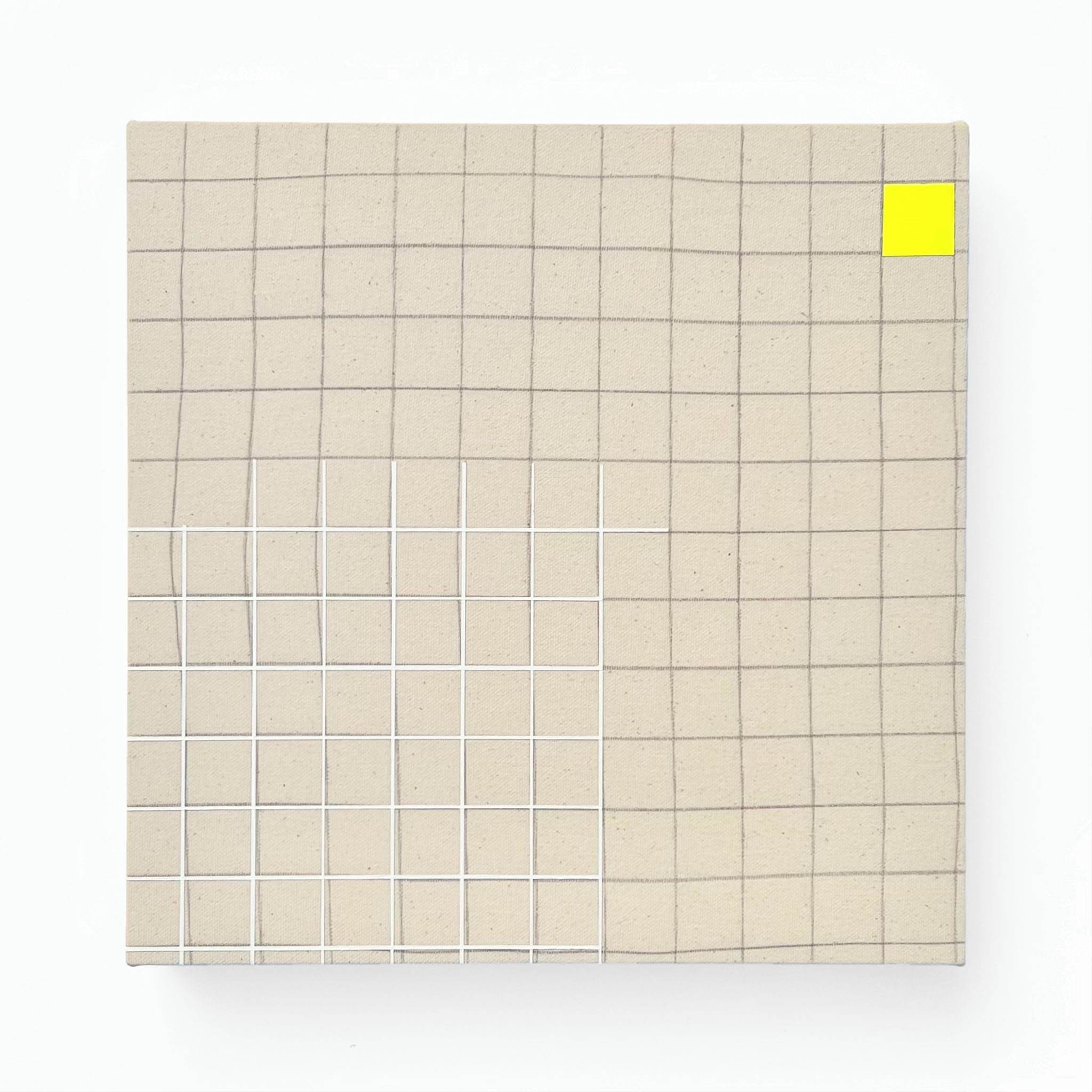
CNTRFLD. Neon yellow is now almost synonymous with your work. What significance does this colour hold for you, and how did you decide to limit your palette so intentionally?
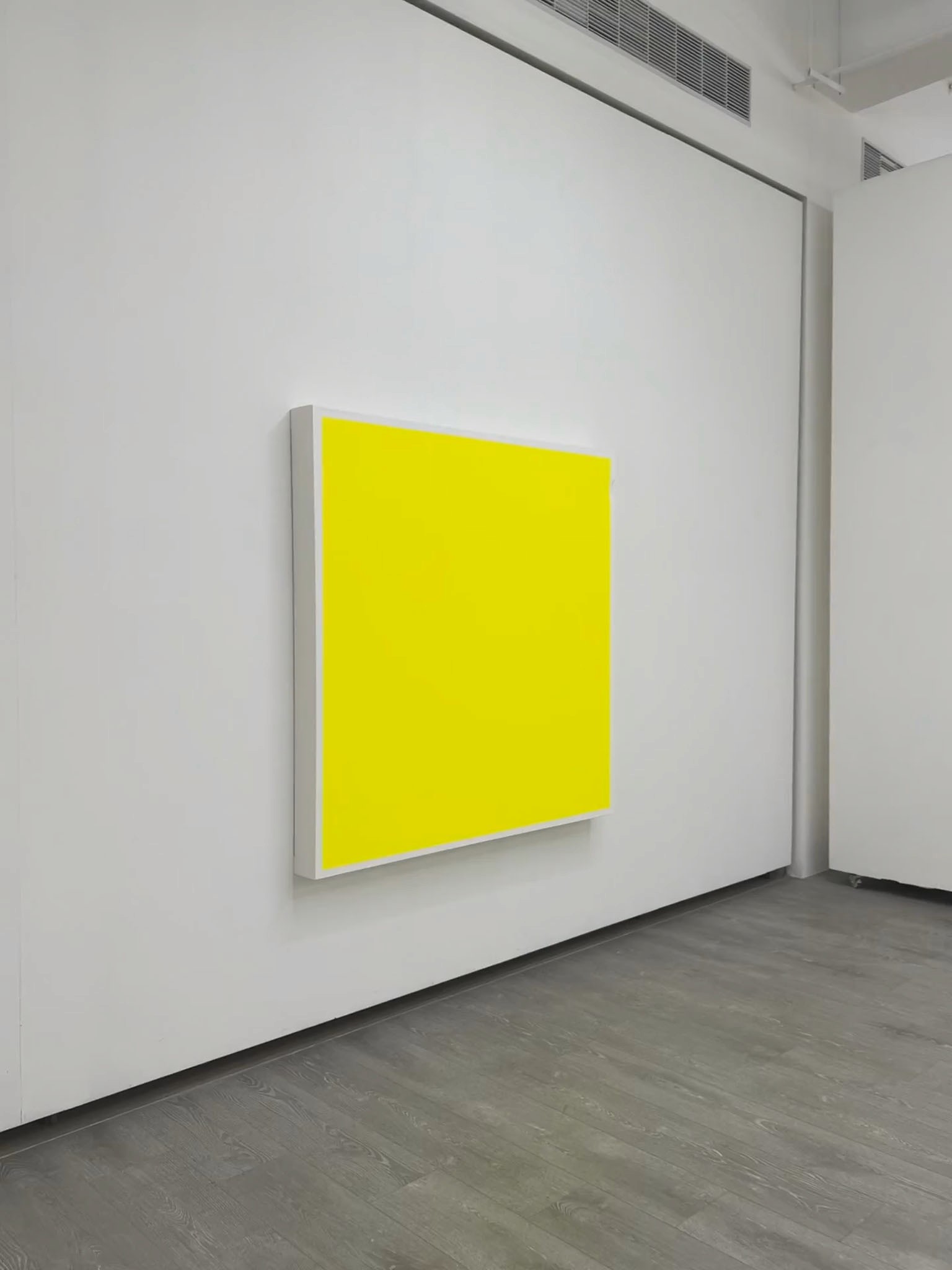
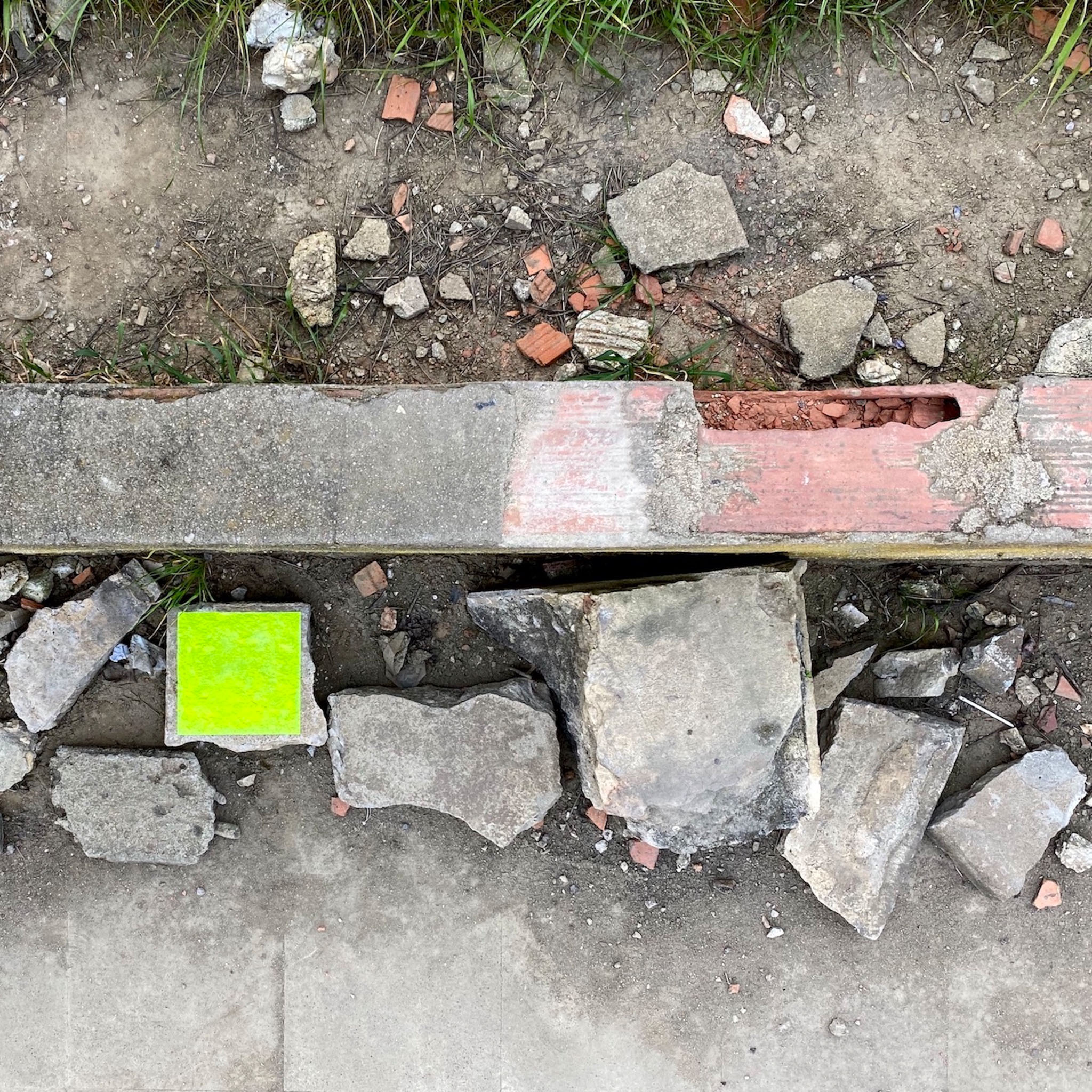
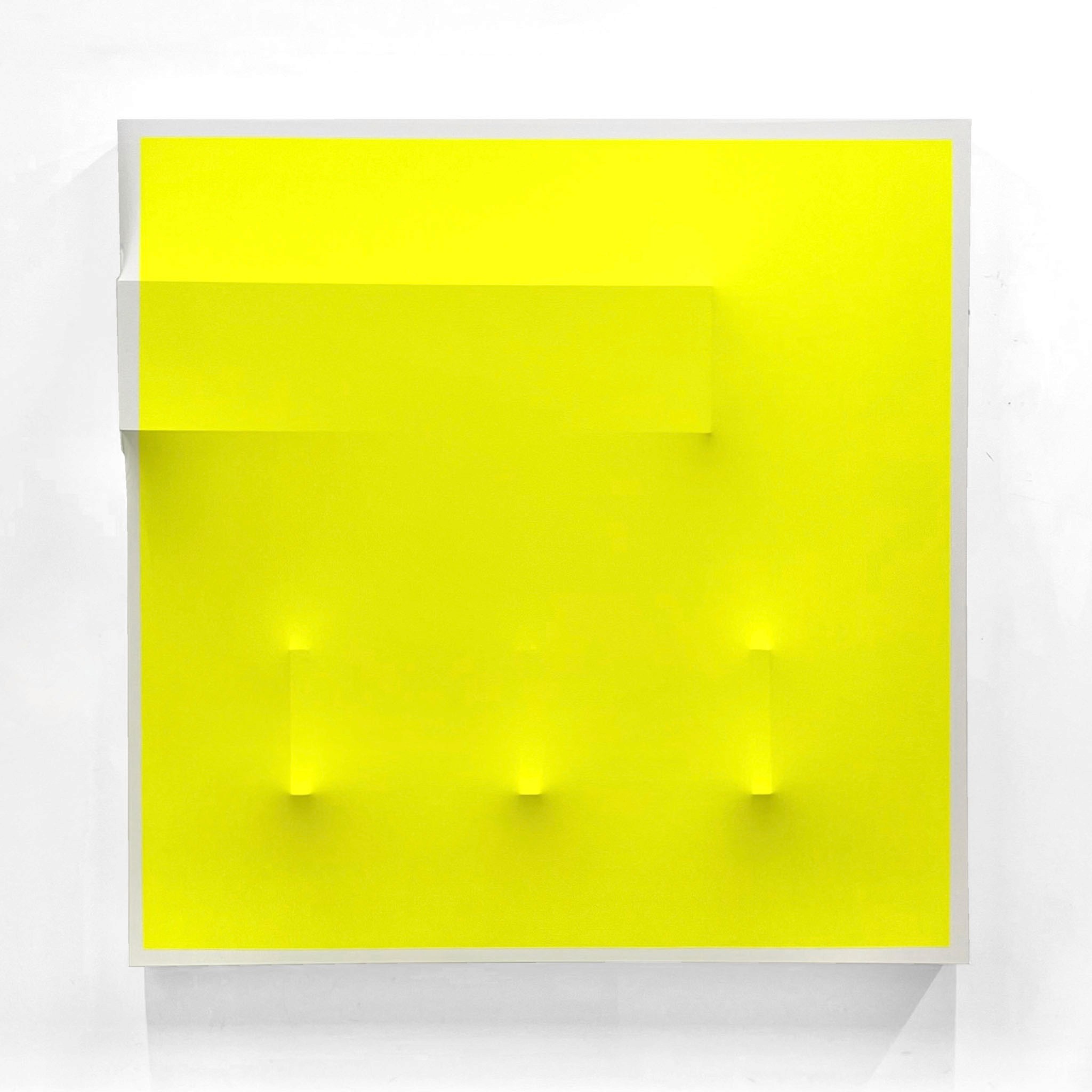
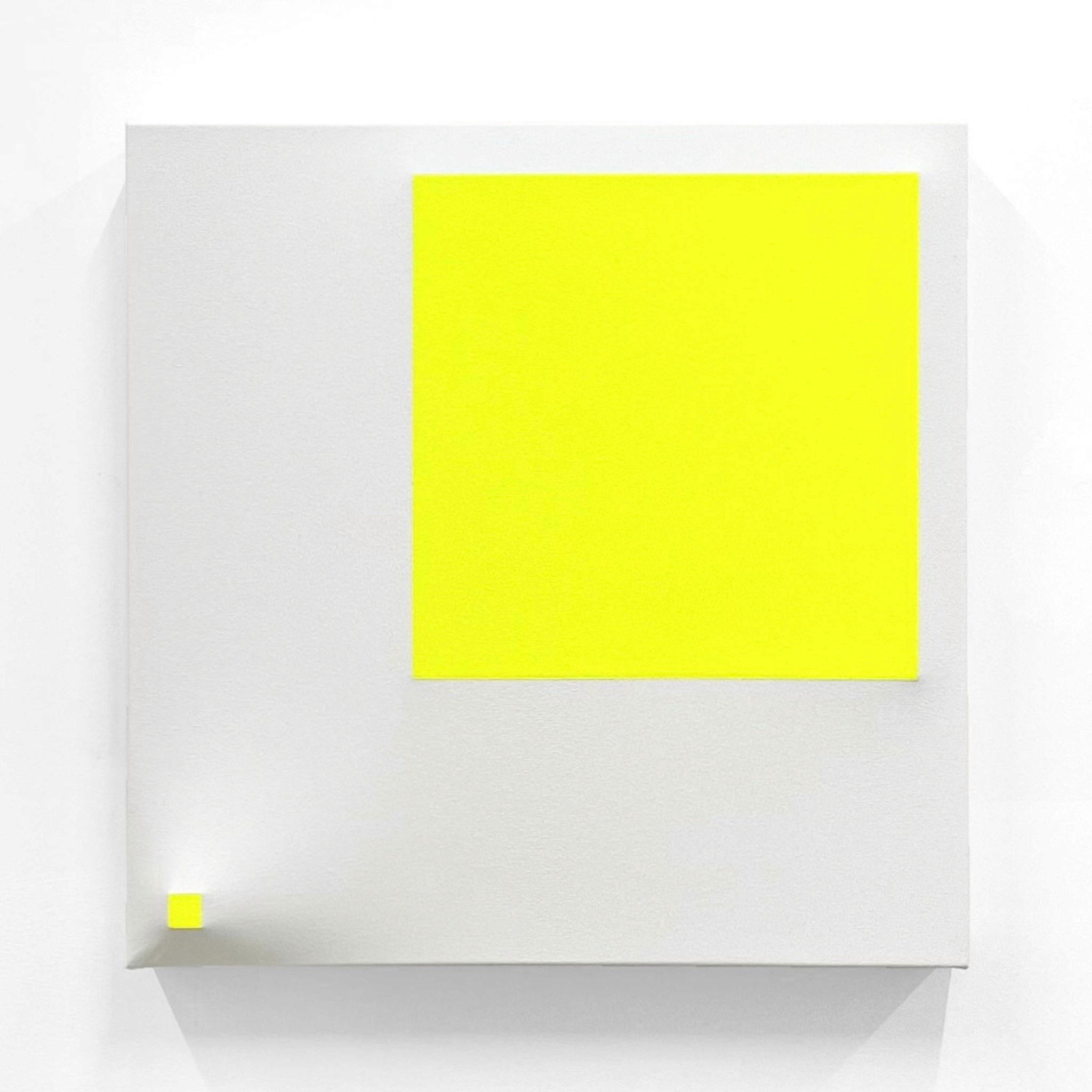
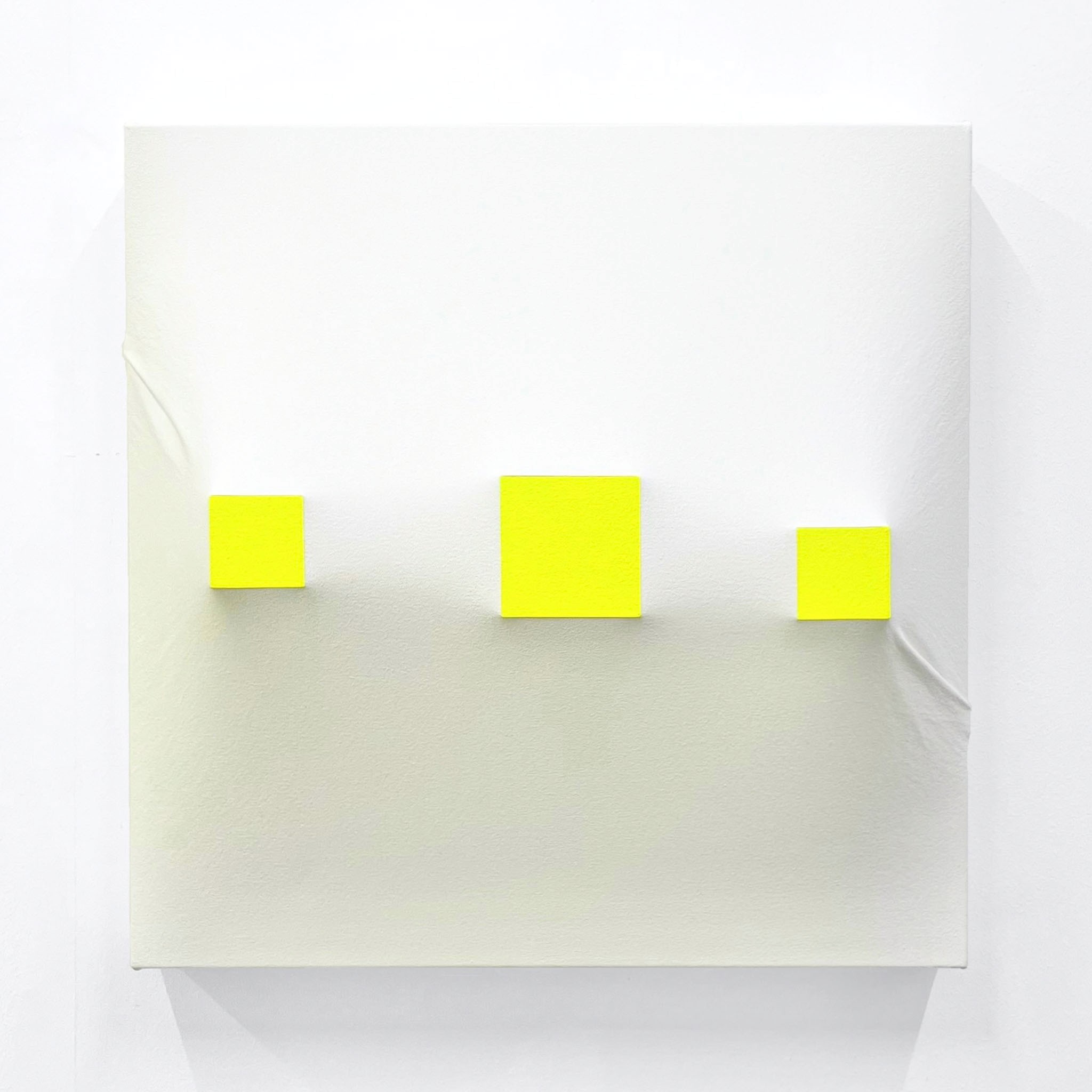
EP. When I moved away from figure, I also wanted to move away from colour theory and all philosophical weight that often comes with it, so limiting my palette started as a kind of rebellion. I first made a conscious decision to strip things down and experimented with other colours as well, but neon stood out as it is loud, abrasive, and visually immediate, which really intrigued me. Over time I realised there was something personal about it too. Back when I was a student, I always used yellow highlighters to mark important things in my textbooks. So, in a way, neon yellow almost unintentionally became a marker of attention, focus, and urgency in my work as well.
Limiting my palette simplifies the surface, but it complicates the process in a productive way. I believe it sharpens the presence of structure, material, and process, allowing them to speak more directly without the distractions of colour relationships or symbolism.
CNTRFLD. Many of your works play with unconventional structures and embrace material resistance. Can you walk us through your process — from building stretchers to finishing a piece?
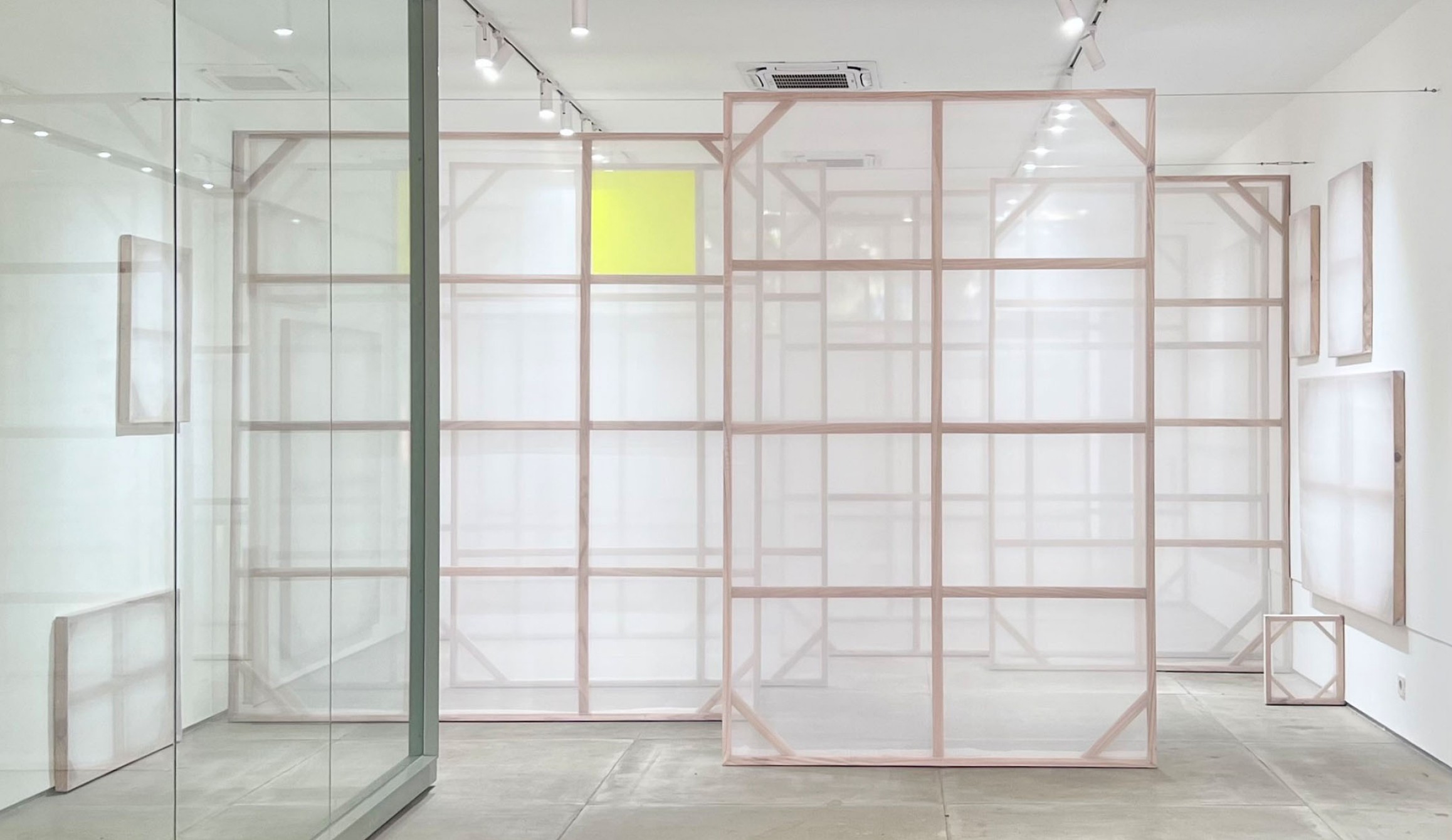
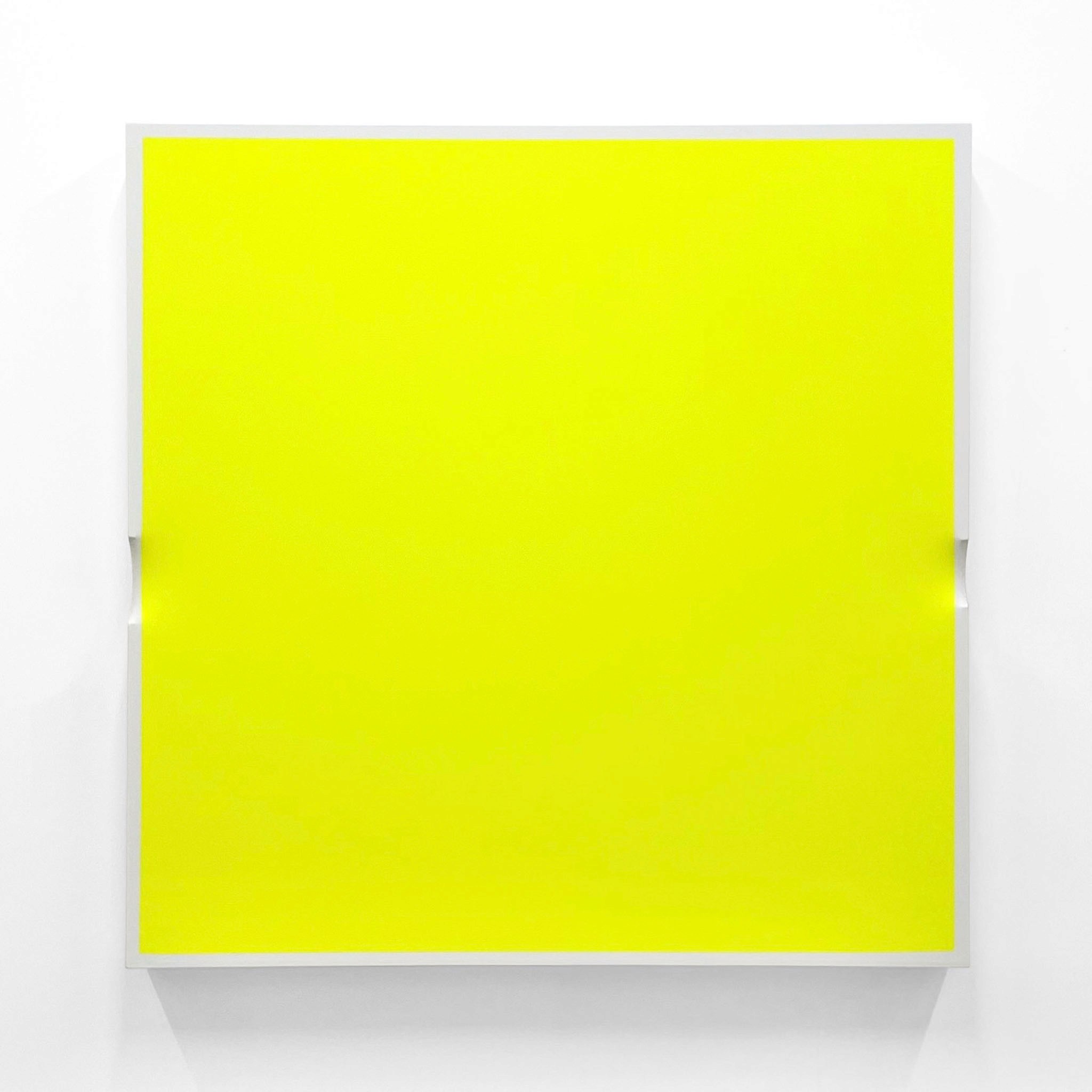
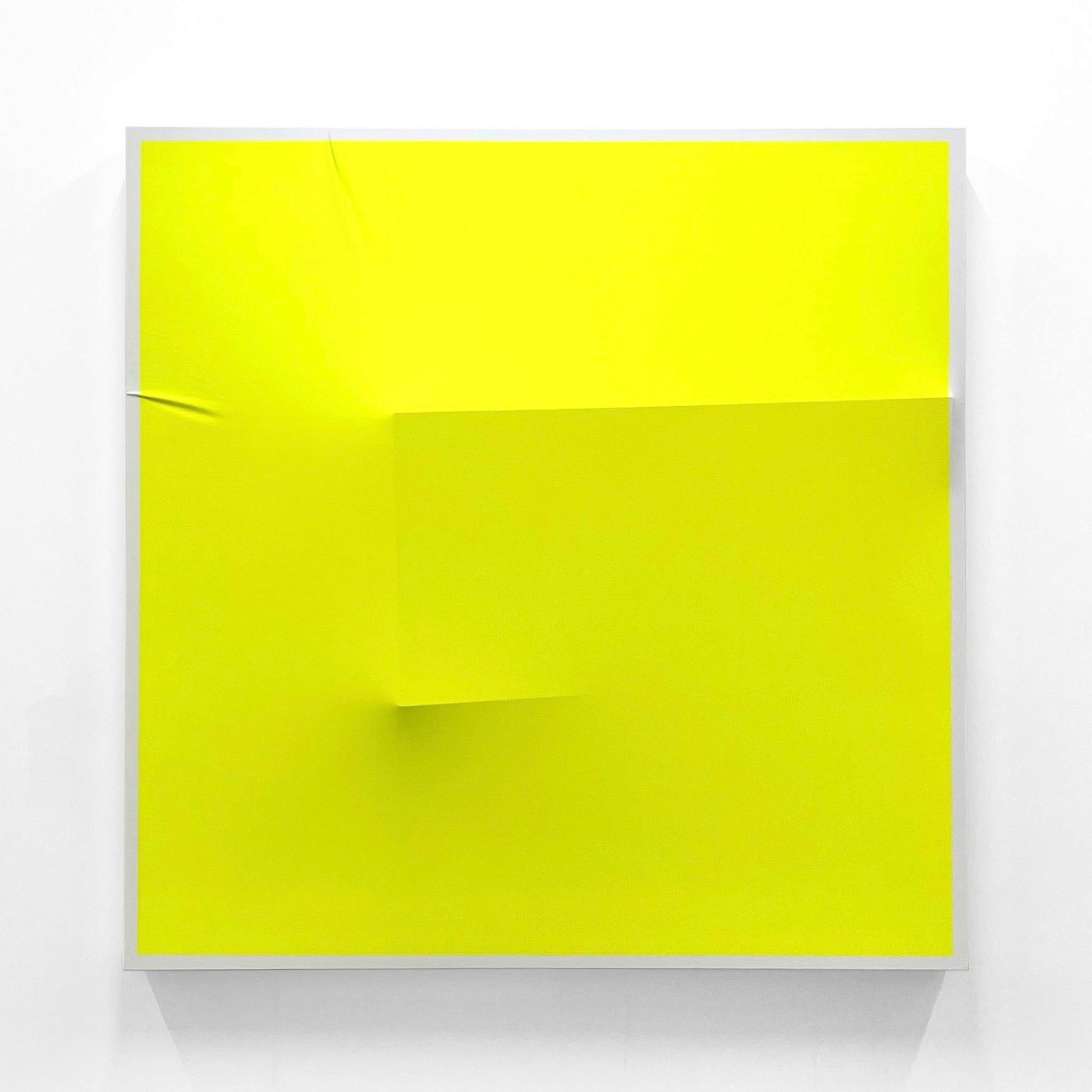
EP. When I work with modified structures, I usually start by altering the stretcher bars by either adding wooden forms or carving into the existing frame. These physical changes shape the foundational tension of the piece. I often make a smaller version first to see if the idea would work before committing to a larger scale. Once the structure is set and secure, I wrap it tightly with canvas. Stretching the canvas can be quite demanding, especially with larger works because I have to pull very tightly but not so tight it rips the fabric. Sometimes, even after everything is stretched, I stand the piece up and realise it doesn’t feel right so I have to un-stretch it to fold differently or even adjust the structure further.
When the canvas is properly stretched, I prime the surface with gesso to get it
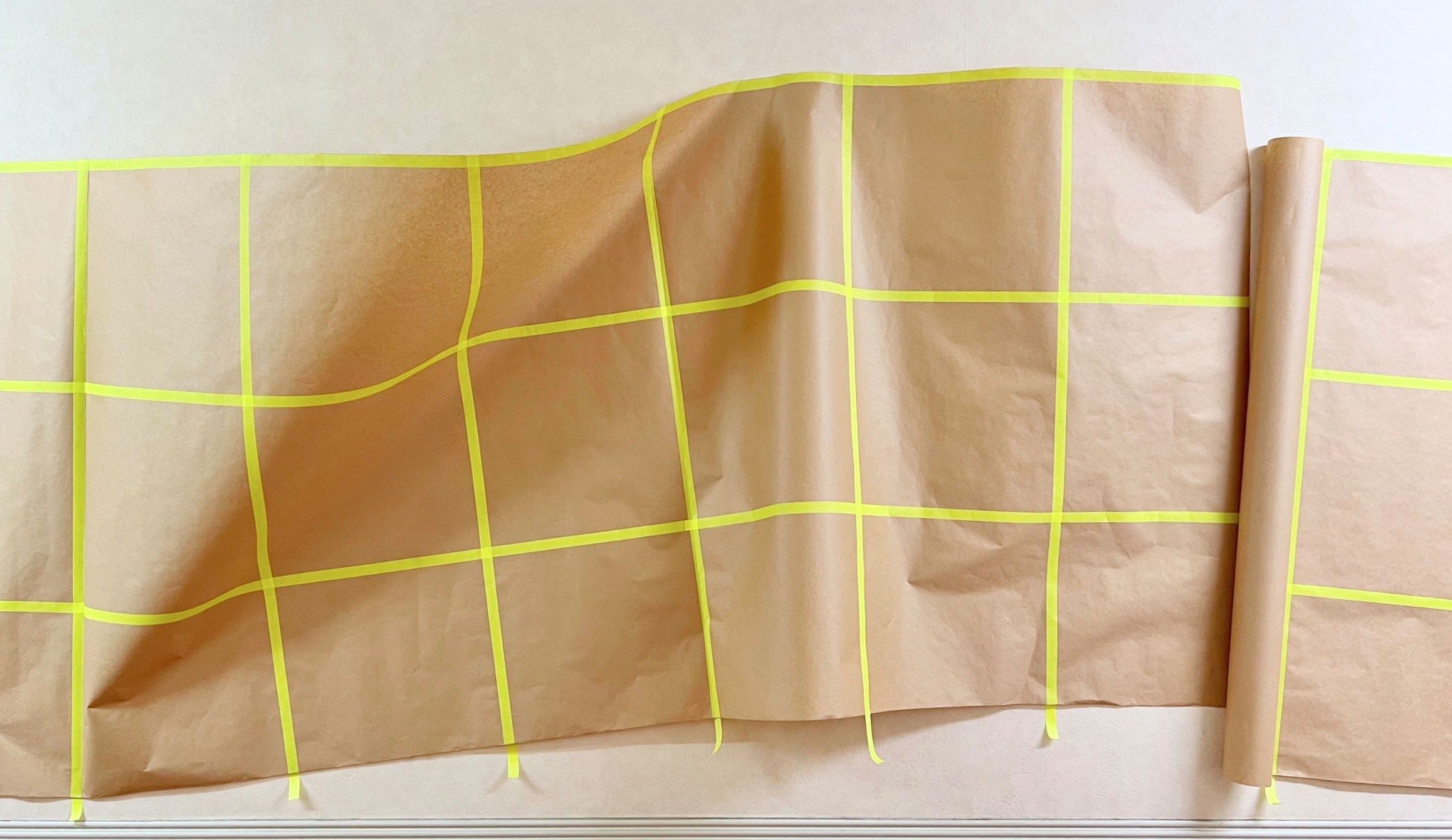
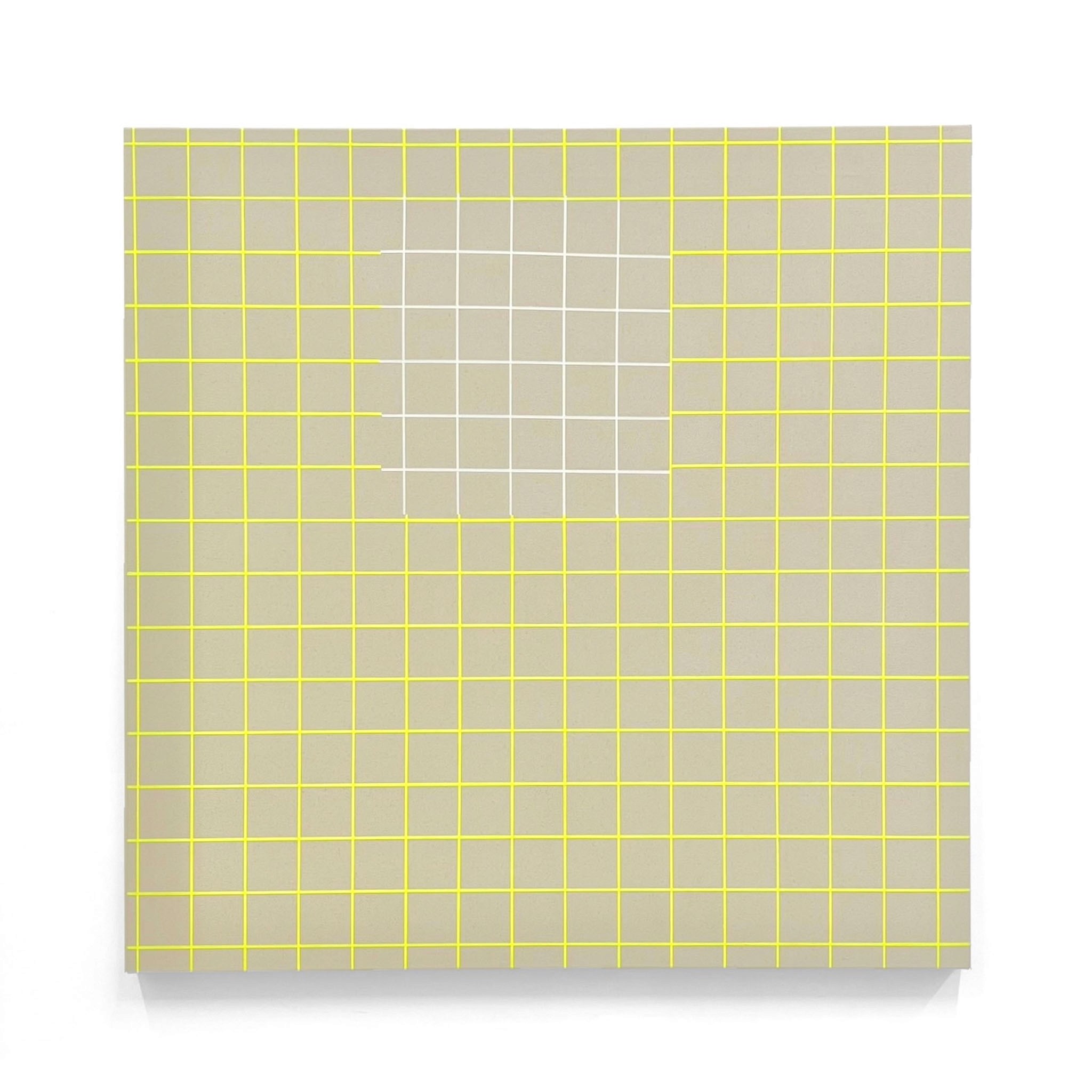
ready for painting. Then I use the help of ruler, level, and grid of my camera to find the square that adapts to the modified ground. It takes a lot of stepping back and forth, trying again and again until I arrive at the “perfect square.” I also work with standard unmodified frames, which actually might be the series I make the most of: Stretched Lines. For these works, I begin by drawing a grid directly onto raw canvas. I then stretch the canvas onto a square stretcher frame, causing the drawn grid to distort. This distortion is key because what starts as a precise, controlled system is pulled, warped, and shifted by the act of stretching. After the canvas is stretched, I prime it with clear gesso and decide how I want to respond to the disruption.
CNTRFLD. You’ve recently exhibited across Asia—including solo presentations in Seoul and Taipei—at a time when many art scenes in the region are rapidly evolving. What are your thoughts on the current state of Indonesian contemporary art within this broader context? Are there artists or movements rooted in Indonesian heritage that you feel are pushing boundaries or resonating on a wider regional or global stage?
EP. There’s a strong sense of momentum in the Indonesian art scene. While it’s still
navigating its own growing pains, I see a lot of potential for more layered and thoughtful conversations to emerge in the coming years. What’s especially exciting is how that energy is beginning to connect with broader regional and global dialogues. A new generation of artists is emerging, deeply rooted in local contexts but unafraid to experiment with form, language, and international references. This hybridity makes Indonesian art increasingly resonant on a wider stage. What I find compelling is how many artists are revisiting elements of Indonesian heritage, not in a nostalgic way but as a way to question and reframe it. Artists like Tromarama, Jompet Kuswidananto, and Maharani Mancanagara are great examples. They work with ideas rooted in local culture whether through materials, mythology, or symbolism, but approach them with a contemporary and critical lens. It’s the balance between specificity and experimentation that I think resonates both regionally and internationally. The broader context is still shifting. While infrastructure and institutional
support in Indonesia can be inconsistent; the strength of the community and the rise of independent initiatives continue to drive things forward. I believe as more regional connections are built, there’s a sense that Indonesian contemporary art isn’t just participating in the global conversation but it’s going to help shape it.
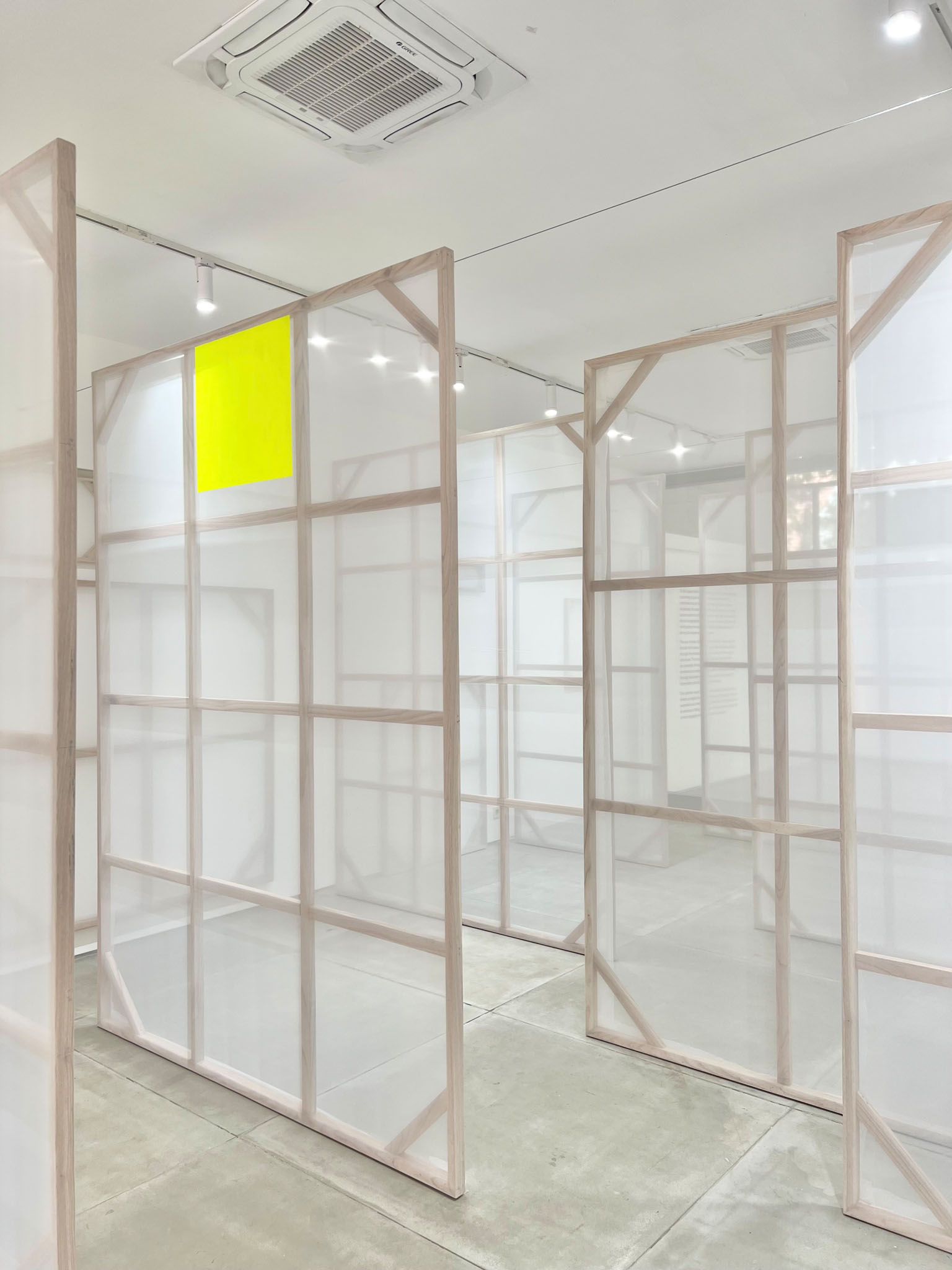
CNTRFLD. Your most recent solo exhibitions—Structure Control in Seoul and Overthinking Squares in Taipei—suggest an ongoing dialogue with form and structure. Can you share what you’re currently working on and what future projects are on the horizon?
EP. I’ve always had an ongoing dialogue with form and structure because it’s something that consistently returns in my practice. I’m drawn to how systems in visual, architectural, or conceptual can both confine and liberate. I like to challenge those boundaries through repetition, rhythm, and spatial play. For me structure isn’t just a visual language but also a way to think through control, instability, and the spaces in between. Coming up, I’ll be returning as an alumnus for a residency with PADA Studios, which I’m really looking forward to. It will allow me to revisit my previously postponed research related to the Unknown Addresses series, which explored ideas of dislocation, imagined spaces, and the tension between presence and absence. Concepts I strongly feel connected to but need to investigate deeper. The residency is also an opportunity for me to challenge myself materially. I want to step outside of my familiar processes and
begin experimenting with new materials and textures, allowing room for unpredictability and surprise. I'm curious to see how these new materials might shift the way I think and make, maybe even lead me to unexpected directions.
CNTRFLD. What challenges have you faced as an emerging artist working between multiple cultural contexts, and how have you learned to navigate—or even use—those challenges as material for your practice?
EP. I feel that in Indonesia my work is often seen as too minimal, too conceptual, or even unfinished, whereas in the UK it might be viewed as fairly typical within the contemporary landscape. That contrast used to make me question where I belong. There’s a sense of always being in-between, too much of one thing for one context and not enough for the other. But over time I’ve realised that this discomfort is one of the emotional engines of my practice. The constant negotiation and trying to make sense of where I stand feeds directly into my work.
I intentionally use basic painting materials like canvas, stretchers, gesso, and paint. I am keeping it simple not because it is easy but because it gives me room to wrestle with bigger ideas. My process is rarely smooth. There’s always a push and pull between what I want and what the work demands. But through that tension, I learn to compromise with the painting itself. The process becomes conversation and collaboration, not just an outcome. This negotiation mirrors my experience of living between cultures. I may not always feel like I fit in, but my practice gives me a space to process and exist in that in-betweenness. In a quiet way, each painting becomes a resolution, or at least a moment of mutual understanding between me and the world.
CNTRFLD. For aspiring Indonesian artists who may be considering a similar path—moving abroad, working in abstraction, or challenging formal conventions—what advice would you offer, especially about staying grounded while pushing boundaries.
EP. I can share what’s helped me so far: to keep experimenting, stay curious, and not rush in understanding my own or anyone else’s work. Moving abroad or working in abstraction can feel disorienting and often times there’s pressure to make your work make sense to others. I’ve learned that explanation doesn’t have to mean simplifying. Being grounded for me just means staying close to what feels honest with your questions, your doubts, your way of looking. Pushing boundaries isn’t about escaping meaning but it’s about finding your own. Just keep going, even if it takes time to make sense to others or to yourself.