“A story can hold multiple, complex emotions at once — fear, warmth, innocence, guilt, and love. That experience made me especially sensitive to themes of light and darkness, loss and redemption. I think that was the beginning of my fascination with uncovering the subtle, authentic textures of humanity hidden within everyday life.”—Harvey Jang.
CNTRFLD. Can you tell us about your childhood and early life? How did growing up in Taiwan influence your interest in storytelling and documenting culture?
HJ. Looking back, my childhood was made up of the smells, light, and sounds of 1980s Taipei. In pursuit of a better education, our family moved from Yonghe to a so-called “star school district” in the city. My memories of that time are deeply sensory: the aroma of braised snacks from the noodle stall beside our house, golden crispy fried chicken legs packed in polystyrene lunch boxes, and the weekend family trips to the now-vanished “Chung Hua Commercial Complex”.
In those days, before the railways were moved underground, I would watch trains rumble through the bustling city centre. We’d go to the market to buy school uniforms, satchels, and canvas shoes, finishing the day with a plate of fried dumplings and a glass of iced soy milk served in a colourful cup. Those images and smells became my earliest imprints of Taiwanese culture — and taught me that a good story should awaken the audience’s senses and memories.
But if I were to name one childhood experience that shaped my way of storytelling the most, it would be a rainy winter afternoon when I was about five or six. I had secretly cycled out and lost my way. Alone in the dark and terrified, I was found by a kind-hearted secondary school girl who brought me home. Her family gave me dinner and let me watch cartoons, and for a moment I forgot all my fear. But when my mother and older sister finally arrived — anxious and tearful — I, in my childish innocence, complained that she had given away a whole crate of fizzy drinks to thank them. That night, I was punished by being made to kneel in the dark alley behind our house, once again confronting my fear.
That experience taught me early on that a story can hold multiple, complex emotions at once — fear, warmth, innocence, guilt, and love. It also made me especially sensitive to themes of “light and darkness”, “loss and redemption”. I think that was the beginning of my fascination with cultural documentation — a desire to uncover the subtle, authentic textures of humanity hidden within everyday life.
CNTRFLD. When did you first realise that filmmaking and visual storytelling would become your career path, and what inspired that decision?
HJ. Rather than saying it was the firsttime I realised it, it was more of a rediscovery— a turning point when I found direction again after a period of confusion. Early in my career, I worked for several television stations. It was a time when the media industry was booming yet slowly becoming rigid. I grew increasingly disillusioned with the state of news reporting — its obsession with appearances, lack of verification, and tendency towards superficiality. I was part of the system, but I felt completely lost.
The true turning point came in 2009, when Jimmy Lai founded Next TV. It was a groundbreaking experience. He brought in not only resources unimaginable in the Taiwanese TV world at the time — such as providing every video editor with a Mac — but, more importantly, a completely different media philosophy. He respected professionalism and had a deep understanding of the power of images. What truly enlightened me, however, was a short documentary project titled Hear His Voice — a three-minute portrait series. Its guiding principle was: “Interviewees may choose not to answer; we respect that — but they must not lie.” Through that project, I learnt that the real power of visual storytelling lies not in recording appearances, but in its ability to question, reflect, and touch the core of humanity. That experience reshaped me entirely and convinced me that this was the path I wanted to follow — a more honest, thoughtful, and compassionate way of telling stories.
CNTRFLD. Your work spans news media, documentaries, and independent productions. How did your early experience as a photojournalist shape your approach to documentary filmmaking?
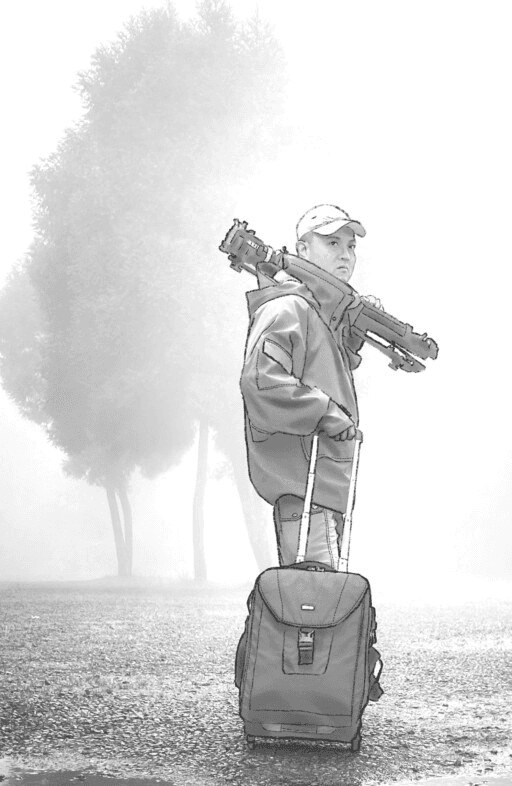
HJ. Nearly a decade working in photojournalism laid the foundation for everything I do. It trained my eye for detail and sharpened my ability to react quickly under unpredictable circumstances. It also gave me a strong command of technical processes in visual production. Yet, that same experience revealed the limitations of news reporting — under the pressure of speed, stories often stayed on the surface, leaving little room to build genuine trust with interviewees. That realisation pushed me to seek a deeper, more sustained way of storytelling.
My documentary practice, therefore, can be seen as both a reflection and a transcendence of my news background. I combine the sharp observational instinct of journalism with the empathy and depth of interview techniques I learnt at Next TV. My current approach is about building long-term, trusting relationships with my subjects — to uncover the emotional and psychological layers beneath the visible event. Journalism taught me what to capture; documentary filmmaking taught me why and how to understand.
CNTRFLD. Many of your projects focus on Taiwanese heritage and social issues. What motivates you to document these stories, and how do you choose the subjects you focus on?
HJ. The driving force behind my work is an endless curiosity about people. I believe that every issue — whether cultural, social, or political — ultimately comes down to human stories.
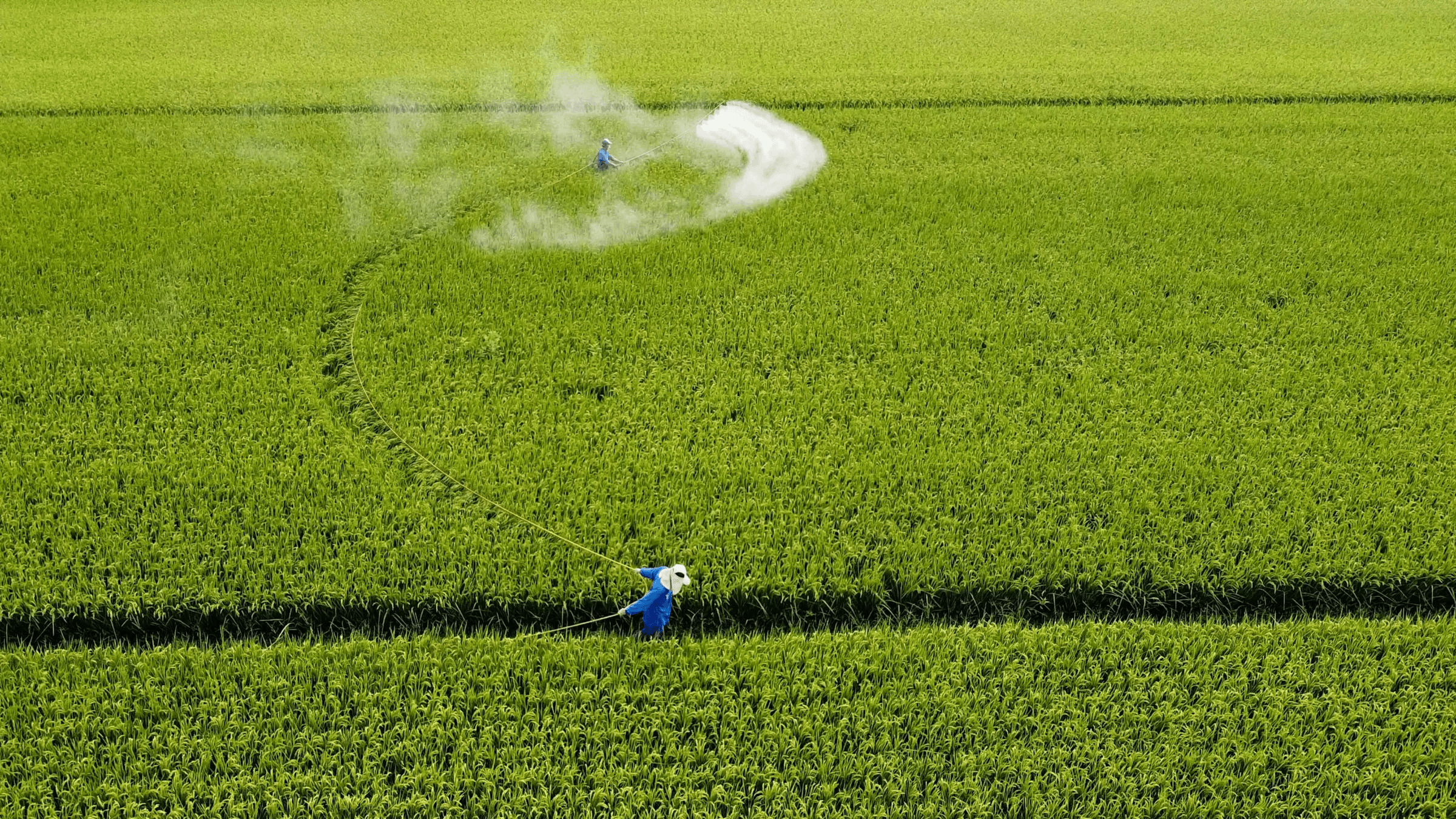
My choice of subject always begins with people who intrigue me. For example, A Forest of Seeds was born from my realisation of how little I knew about Taiwan’s Indigenous cultures. Through the lens, I wanted to understand a Bunun family restoring native forests on their ancestral land. Sometimes, though, a story begins with a cultural puzzle that I find irresistible. The island of Xiaoliuqiu and its “Three Abundances” — temples, headmasters, and captains — is a perfect example. The cause-and-effect among these three forms a web of social logic that reveals the islanders’ resilience and values — a mystery that drew me in.
Ultimately, I believe a creator’s choice of subject is often a projection of their own life. In documenting others, we are in fact exploring and understanding ourselves.
CNTRFLD. Looking back at projects such as Planting a Forest or The Revival of Xiao Liuqiu, what do you hope audiences take away from these films about Taiwanese culture?
HJ. What I hope audiences gain from my work is not merely information, but a sense of empathy and feeling. With A Forest of Seeds, I hope viewers come away with a deep respect for the Rukai people and their profound bond with their land — not just seeing the hard work of planting trees but also sensing their struggle to preserve tradition and navigate modern society.
In the Xiaoliuqiu stories, I want audiences to feel a unique form of cultural resilience — to understand how the islanders find a way of life amid the push and pull of fate (the sea), faith (temples), and hope (education). Beyond the fascinating legends, there lies a wisdom for surviving adversity.
Above all, my greatest wish is that, after watching my films, audiences become more willing to see — to recognise and cherish the complex, real, and profoundly human stories behind every event in their own lives.
CNTRFLD. You’ve collaborated with various domestic and international platforms, including ARTE, CCTV, and RTHK. How do you see your work contributing to international audiences’ understanding of Taiwanese society and culture?
HJ. To be honest, when I first started making films about local issues in Taiwan, I didn’t particularly think about how to make them understandable to international audiences. Even achieving a shared understanding withinTaiwan—for instance, between the north and the south—can be quite challenging. Although Taiwan isn’t a large place, differences in lifestyle, language, and even something as small as preferences for zongzi (rice dumplings) vary significantly. So, over time, I realised that whether I’m making work for local or international viewers, my attitude should remain the same.
At the heart of my practice is always people. Regardless of who or what I’m filming, my goal is to build a relationship through the camera. I place great importance on equality between the filmmaker and the subject. Contrary to what some might think, holding a camera doesn’t grant you power over others. I constantly remind myself to engage with those in front of the lens as equals. I believe it’s only on that basis that people are willing to open up and share their genuine thoughts. For me, the most valuable and fulfilling part of documentary filmmaking lies in this process of building connection. Think about it — being able to meet people you might never encounter otherwise, and hearing them share feelings they may never even express to their families, is a rare privilege, especially in a society where genuine listening is becoming increasingly scarce.
As for my collaborations with international platforms like ARTE, these tend to focus on topical issues. For instance, during the COVID-19 pandemic, when foreign reporters couldn’t enter Taiwan, they wanted to understand how our disease prevention measures worked. Or after the outbreak of the war in Ukraine, we made films exploring how Ukrainians living in Taiwan advocated for their homeland, and how Taiwanese civil groups learned from Ukraine’s experience to prepare for possible conflict. These themes are inherently easier for international audiences to grasp.
In contrast, when I worked with CCTV on A Bite of China, I was more conscious of the political context. I knew that their official perspective often carried the “One Family Across the Strait” narrative, so during production, I tried to let the visuals speak for themselves. When faced with requests for overly staged or emotionally manipulated interviews, our team would be cautious. I still remember how the visiting Chinese director would forcefully demand that interviewees perform certain emotions — something our Taiwanese crew found unacceptable. We would stop filming and explain that we valued our interviewees’ feelings and well-being. That moment highlighted a key cultural difference between the two sides of the strait — in work culture and approach to storytelling alike.
So, returning to your question — have my works “contributed” to understanding Taiwan? I wouldn’t be so bold as to claim that. But I do believe that as long as we stay true to universal human emotions — family, friendship, love — which transcend borders, then even through a Taiwanese lens, those feelings can resonate across cultures. If my work can achieve that kind of connection, that’s all I could hope for.
CNTRFLD. When presenting deeply local stories to international audiences, what challenges have you faced, and how do you bridge cultural differences in your films?
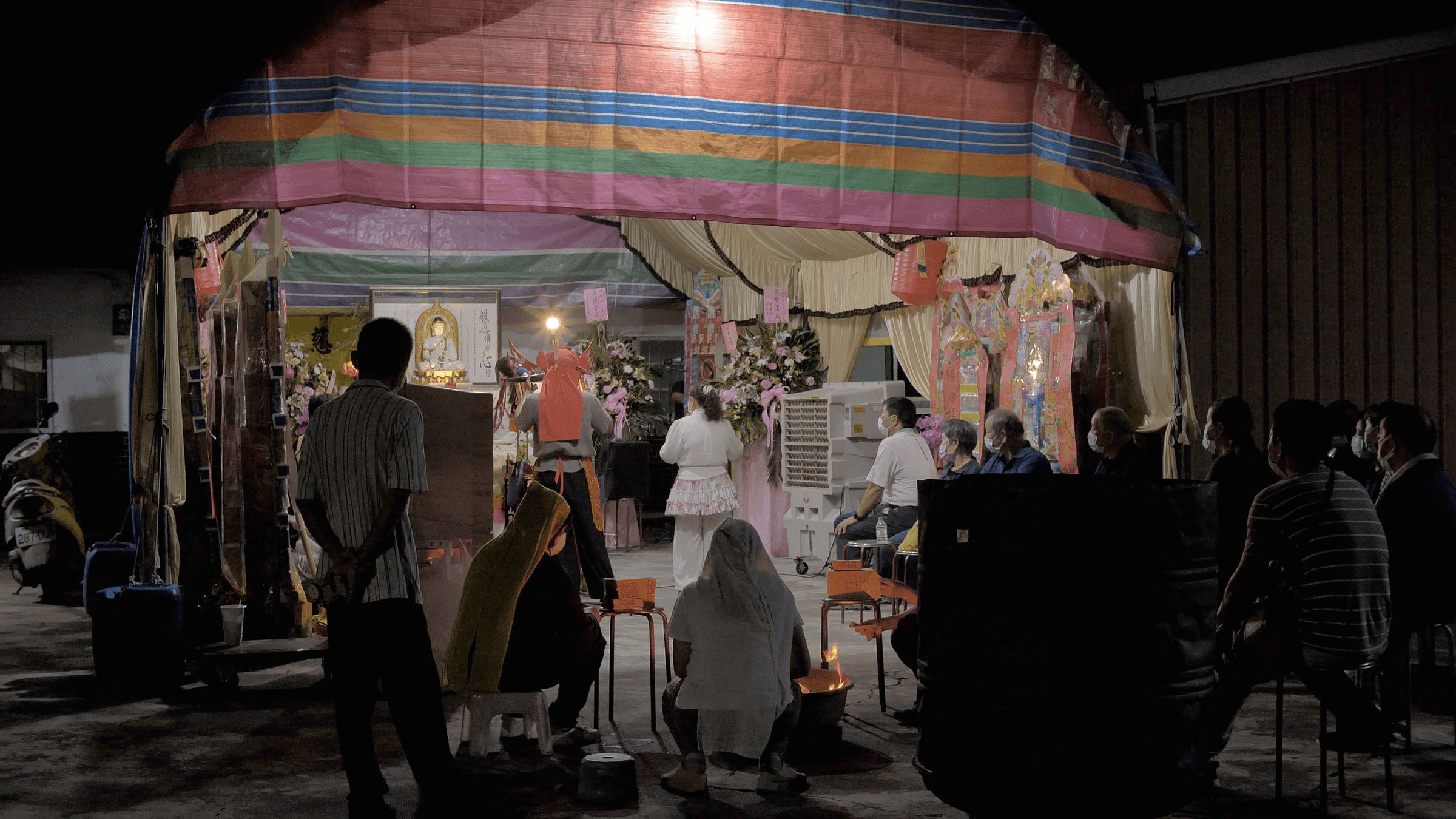
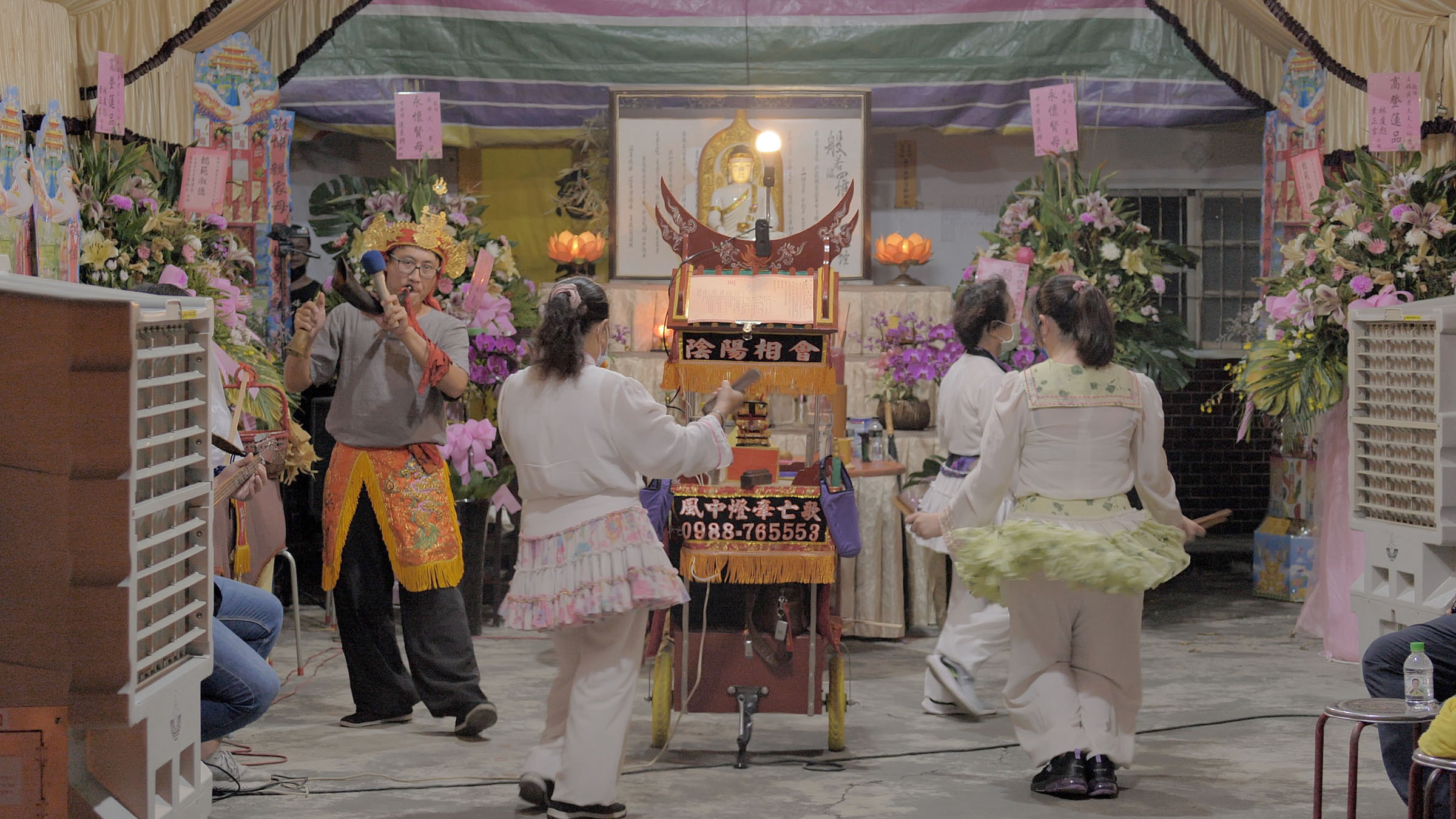
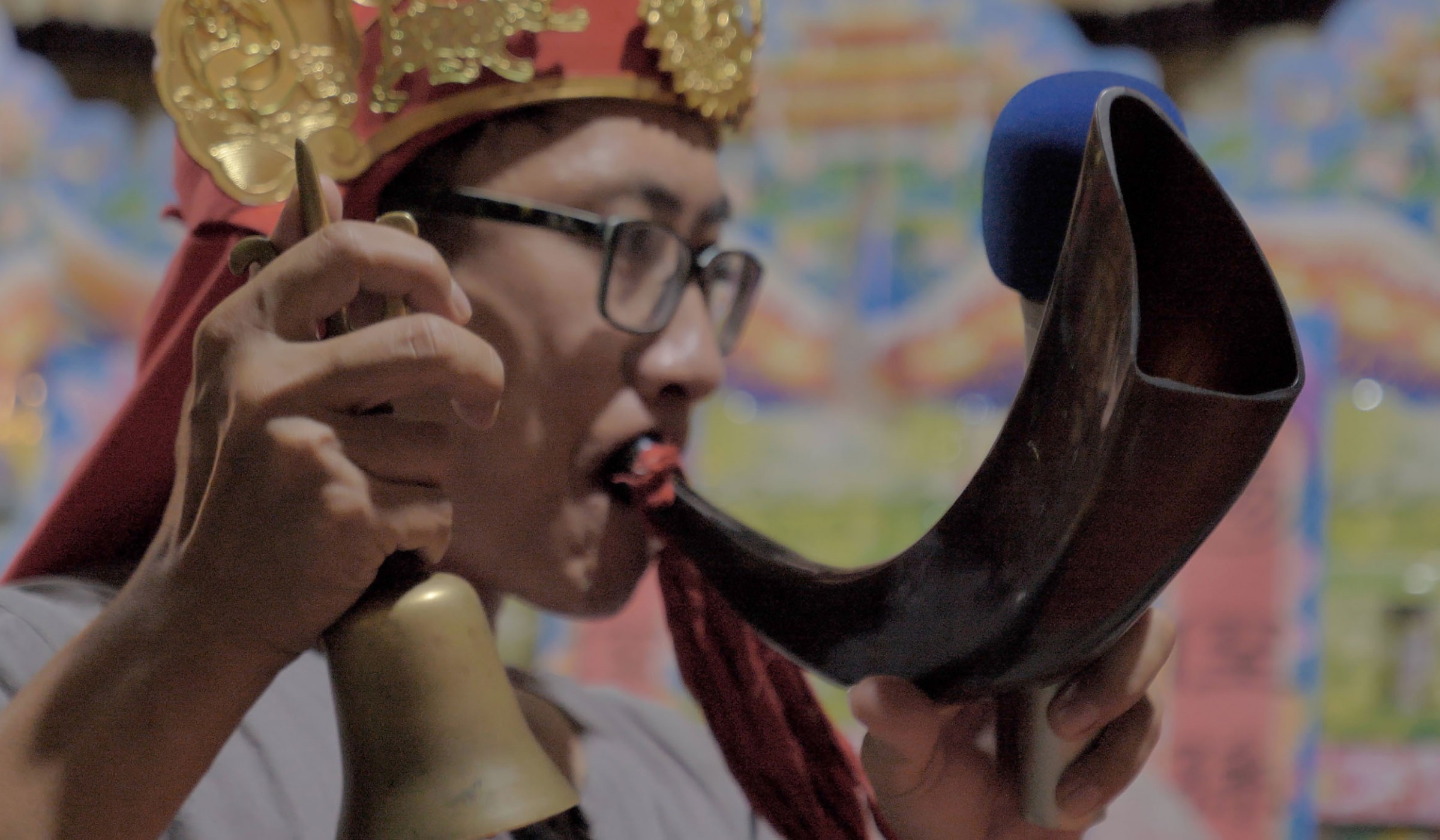
HJ. That’s a very important question — how to tell local stories in a way that crosses cultural boundaries and reaches international audiences. It’s indeed a challenge. As I mentioned earlier, human emotions like love, family, and friendship are universal, and perhaps that’s our shared language. But when it comes to local stories — particularly rituals or customs rooted in specific cultural contexts — conveying them effectively requires careful thought. Take my documentary A Hundred Years Later, about the late master Lin Tsung-Fan, as an example. The film revolves around the Qian Wang Ge— a traditional funeral chant. At first, I wasn’t sure whether international audiences without that cultural background could grasp its emotional and spiritual significance.
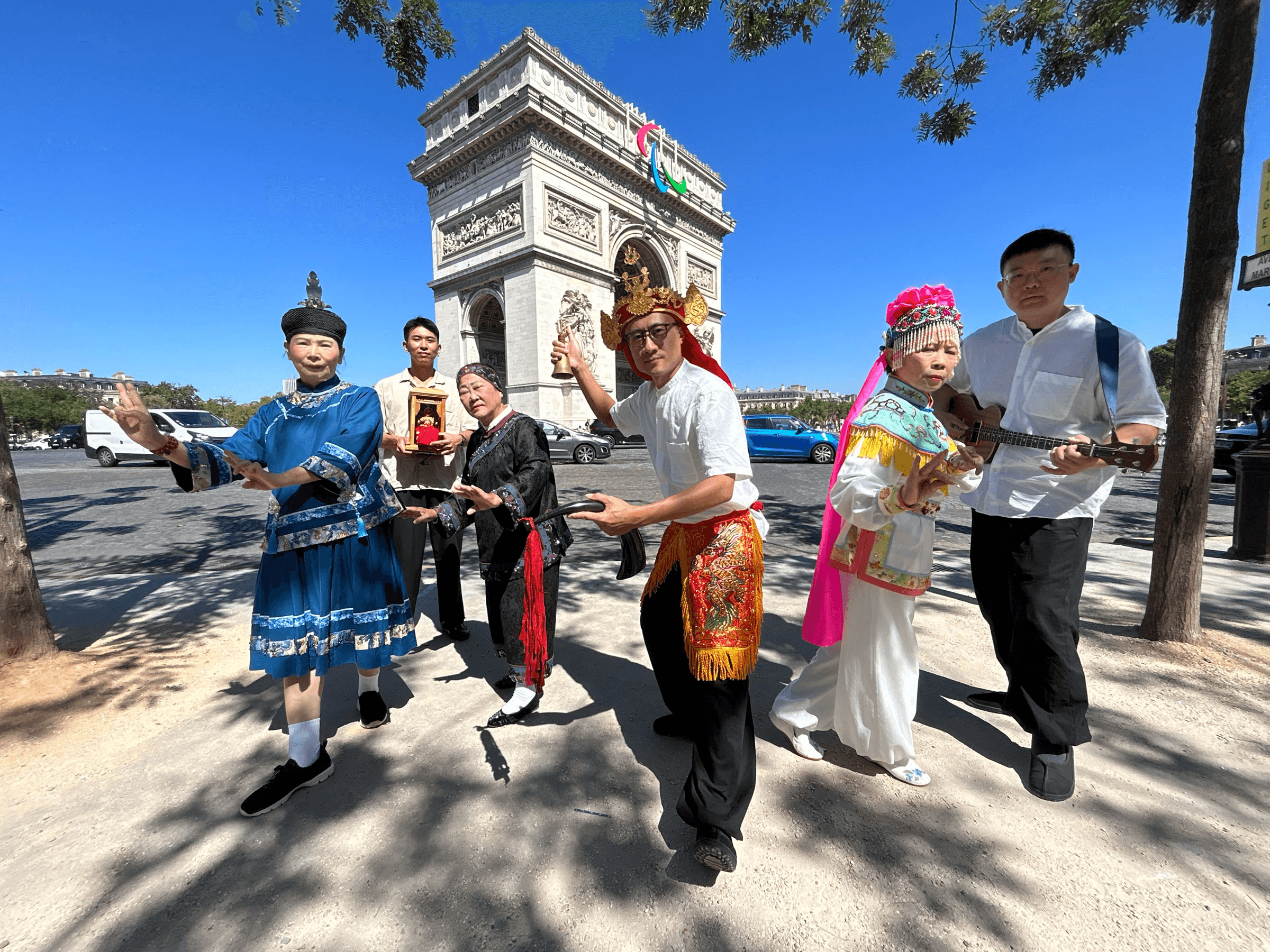
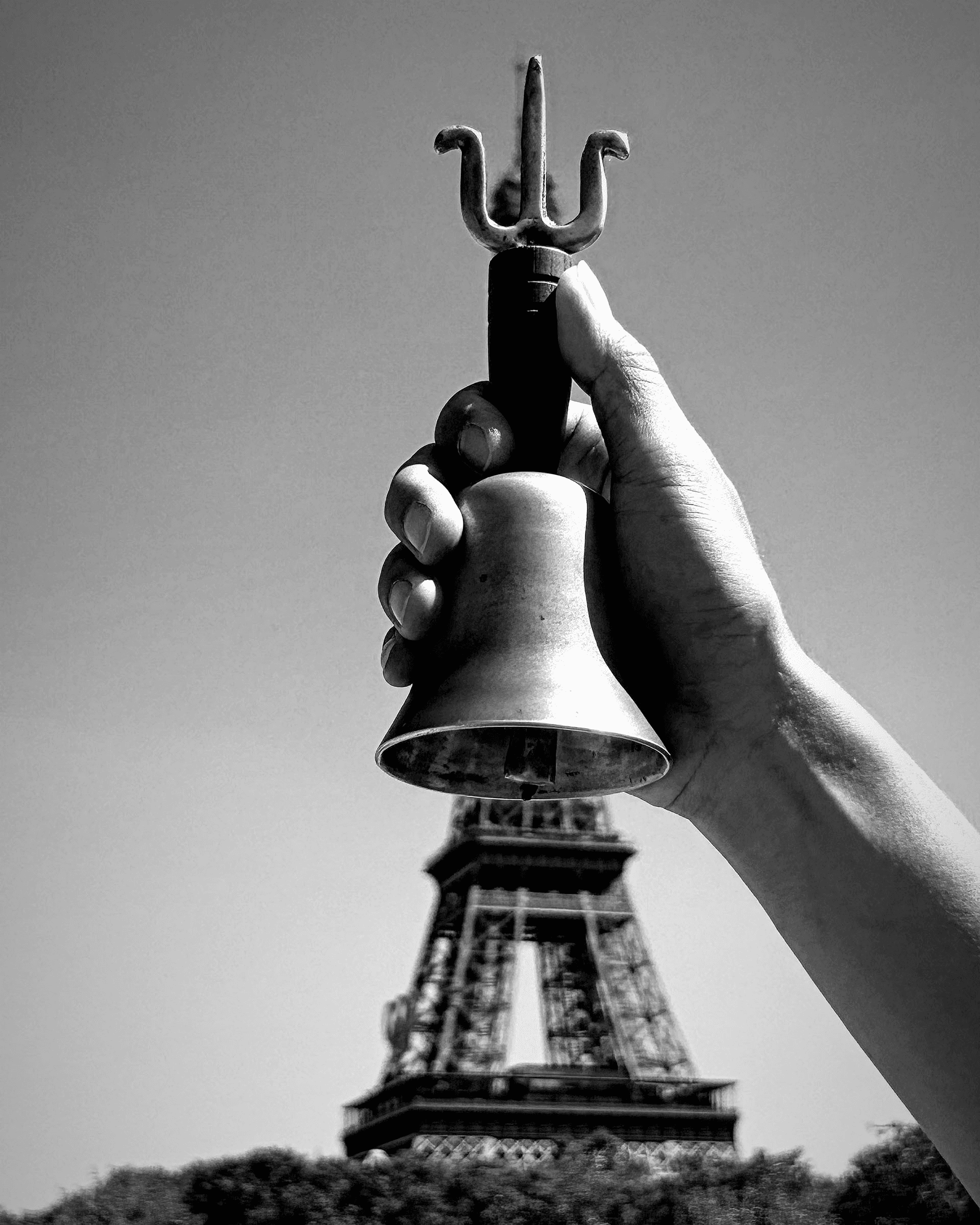
A turning point came in 2024, when the “Wind in the Lantern Qian Wang Ge Troupe” was invited to perform at the Cultural Olympiad in Paris. I observed the audience — people from all over the world, many not of Chinese descent: French, Brazilian, and others. They couldn’t understand the lyrics, but they were deeply engaged, even tapping along to the rhythm. Later, when we interviewed them, they said that through the performers’ movements, expressions, and the music’s rhythm, they sensed it was a story about family. That experience was enlightening for me. I realised that culture isn’t always something that can be explained through knowledge — it must be felt. It brought me back to the essence of documentary filmmaking: we use sound, image, editing rhythm, and even silence to create sensory experiences. So rather than worrying that foreign audiences won’t understand the Taiwanese lyrics, I focus on how to use the language of cinema — imagery, sound, atmosphere — to evoke emotion. Even if they’ve never been to Taiwan, they can still feel the humanity and spirit behind the ritual. That’s what I learned in Paris, and it’s the direction I want to pursue further: using sensory experience to bridge cultural divides.
CNTRFLD. Over the years, how has your filmmaking style evolved, particularly in combining observational techniques with humanistic storytelling?
HJ. I can share a bit about my journey from being a news cameraman to making observational, non-reportage documentaries — and how my mindset shifted along the way.
I often asked myself: am I making a news report or a documentary?
The difference, I think, lies in the “sense of inquiry” — whether we’re truly aware of what our work wants to say. In news reporting, we often maintain a detached, neutral stance — taking what interviewee A says and what interviewee B says, and presenting both sides to appear balanced. But in documentaries, the filmmaker’s voice and perspective are crucial. We can clearly sense where the author stands and what they want to express. They’re not bound by journalistic notions of “balance”; instead, they highlight their personal view. The same subject can be approached from vastly different angles — and that’s what makes documentaries so fascinating.
That said, the two aren’t entirely separate. As the saying goes, “Every step leaves a trace.” Looking back now as a documentarian, my years as a news cameraman were invaluable training. The experience taught me to capture essential footage quickly and to ask precise questions under time pressure. Of course, that doesn’t guarantee satisfying answers — that’s journalism’s limitation. But that daily practice — anticipating a subject’s next movement, reading changing light, interpreting the meaning behind words — trained my reflexes, sharpened my sensitivity, and made my coordination almost instinctive.
So, journalism gave me technical skill and an acute sense of anticipation. Documentary work, with its longer timeframes, allows me to build relationships with my subjects, earning trust and deeper understanding. That mutual trust makes for more honest and layered responses — and creates room to capture more meaningful, poetic moments on camera. In short, the two fields complement each other. Journalism laid my foundation; documentary allows me to go deeper — to explore the heart of the matter and, hopefully, reach a more profound level of storytelling.
CNTRFLD. What advice would you give to aspiring filmmakers interested in documenting culture or heritage, especially as they search for their own voice and direction?
HJ. There are so many talented young filmmakers today, both in fiction and documentary. Many of those in their twenties, fresh out of film schools, are quite different from those of us born in the 1970s. Back then, we tended to separate words and images — writing was writing, and filming was filming. But this generation, as digital natives, know exactly what they want and express it with remarkable energy and creativity. So rather than “advice”, I’ll share some personal reflections. If I were to say one thing, it would be: truly live. Experience life in all its flavours — the good and the bad — and stay present. Try to embrace everything that comes your way without worrying too much about what hasn’t yet happened. Trust that every challenge and difficulty will eventually settle, becoming fertile ground that nourishes your creative work and gives it depth and vitality. Only by genuinely knowing and accepting yourself — all parts of yourself — can you find the creative path that is truly yours, one that allows you to shine.
CNTRFLD. Looking ahead, what are your hopes for your work’s development in Taiwan and internationally? How do you wish it to continue impacting audiences and society?
HJ. “Documentaries can change the world.” I’m not entirely sure I believe that — but I do believe that real power lies in collective action. When more citizens carry a sense of inquiry and pick up cameras to record what’s happening across Taiwan, that collective energy could transform not only Taiwan, but the world. So rather than having ambitions for my “works”, I think more about the act itself — the practice of documenting. I see it as something I’ve been consistently doing and will continue to do. I hope my persistence can inspire those around me — to feel my passion for documentation, and to realise that simply picking up a camera can be a meaningful act of change, one that affects ourselves and our future.
With digital tools now so accessible and affordable, the challenge no longer lies in technology, but in intention — what thoughts we hold when we record. That’s the “sense of inquiry” I keep emphasising. If more people — regardless of age, gender, or occupation — start documenting their surroundings with that sense of inquiry, I believe it could help fill the gaps left by the decline of traditional media in Taiwan. It’s also a crucial form of civic engagement — holding governments, politicians, and institutions accountable. So whether you’re young or old, especially given the challenges we face from an authoritarian power across the strait, I believe that if more people record and examine the political, economic, environmental, educational, and judicial issues shaping our lives, this collective awareness and action will be vital for Taiwan’s future — something truly worth striving for.