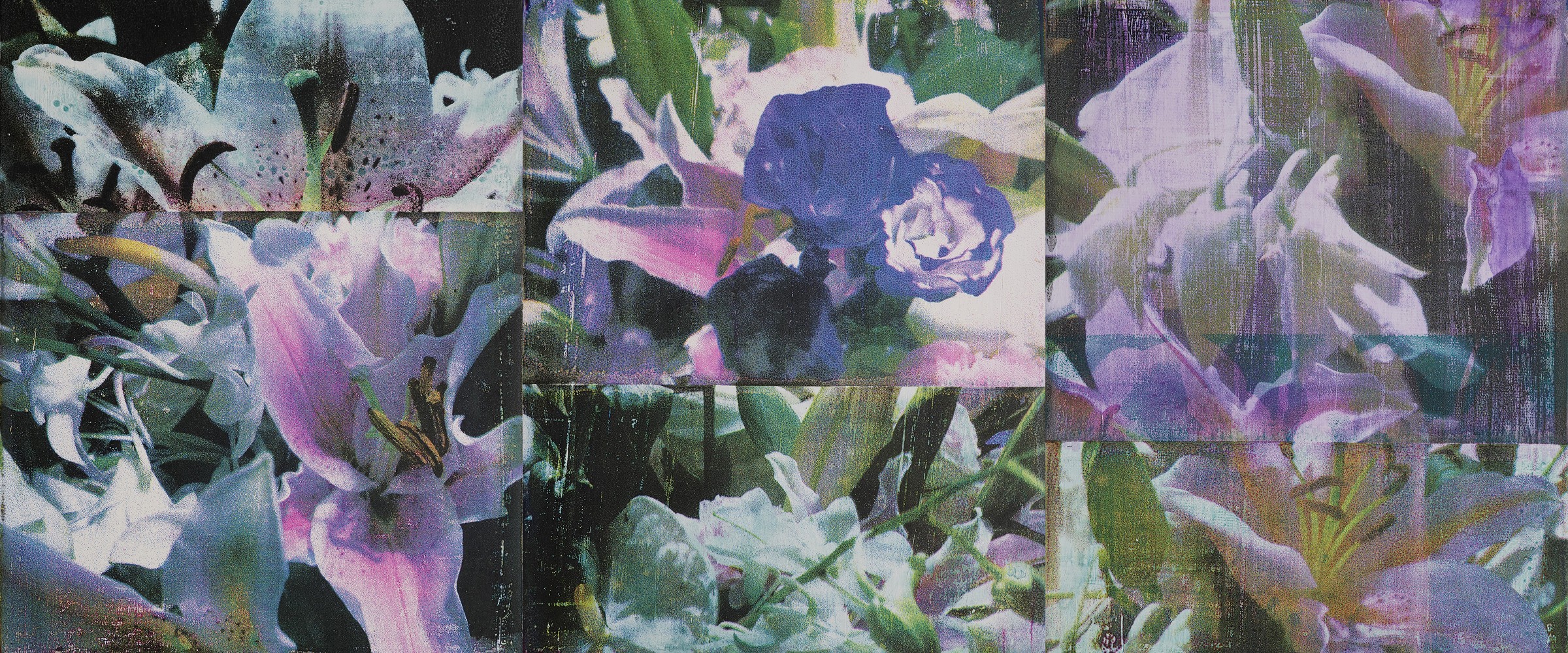
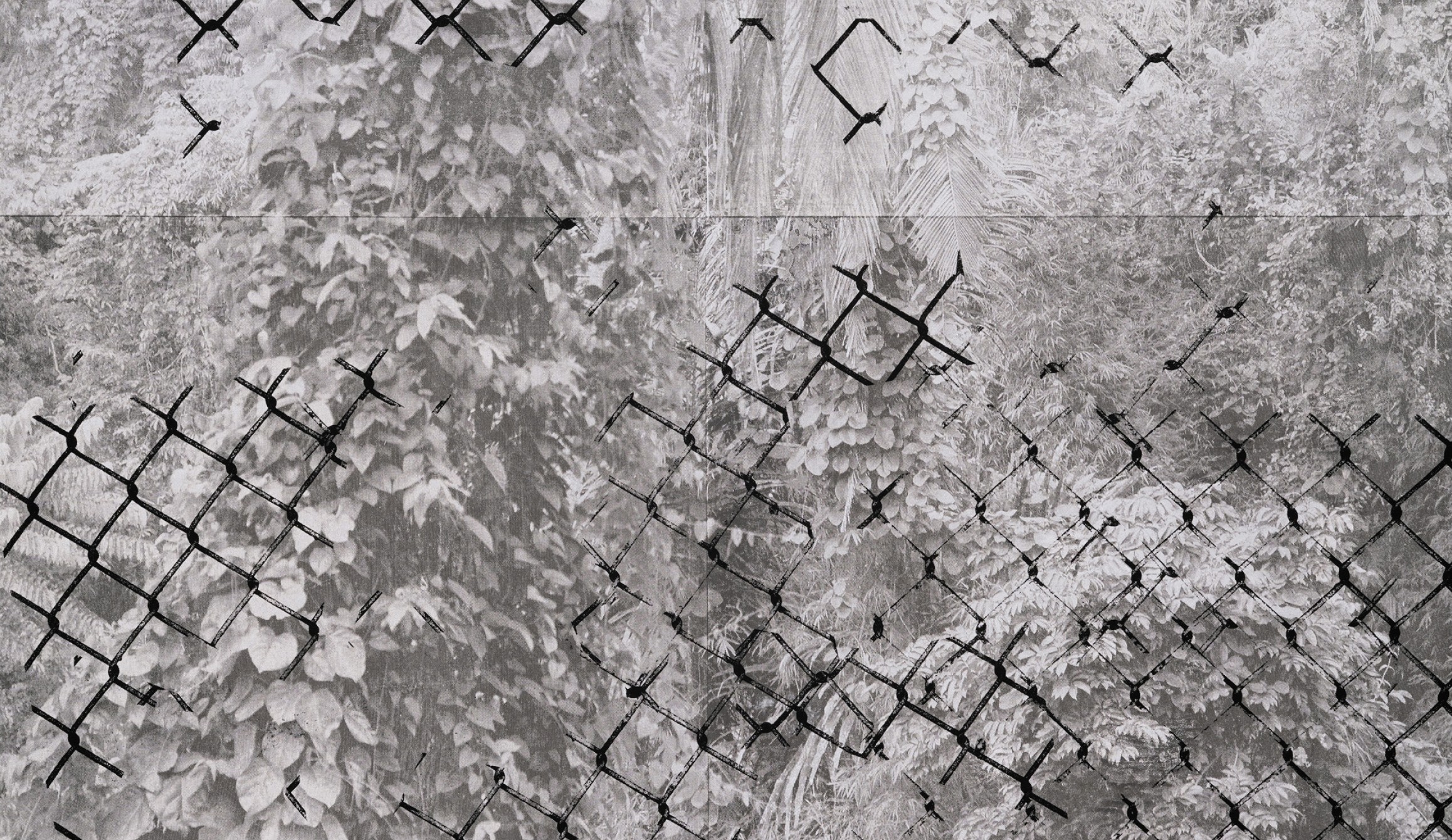
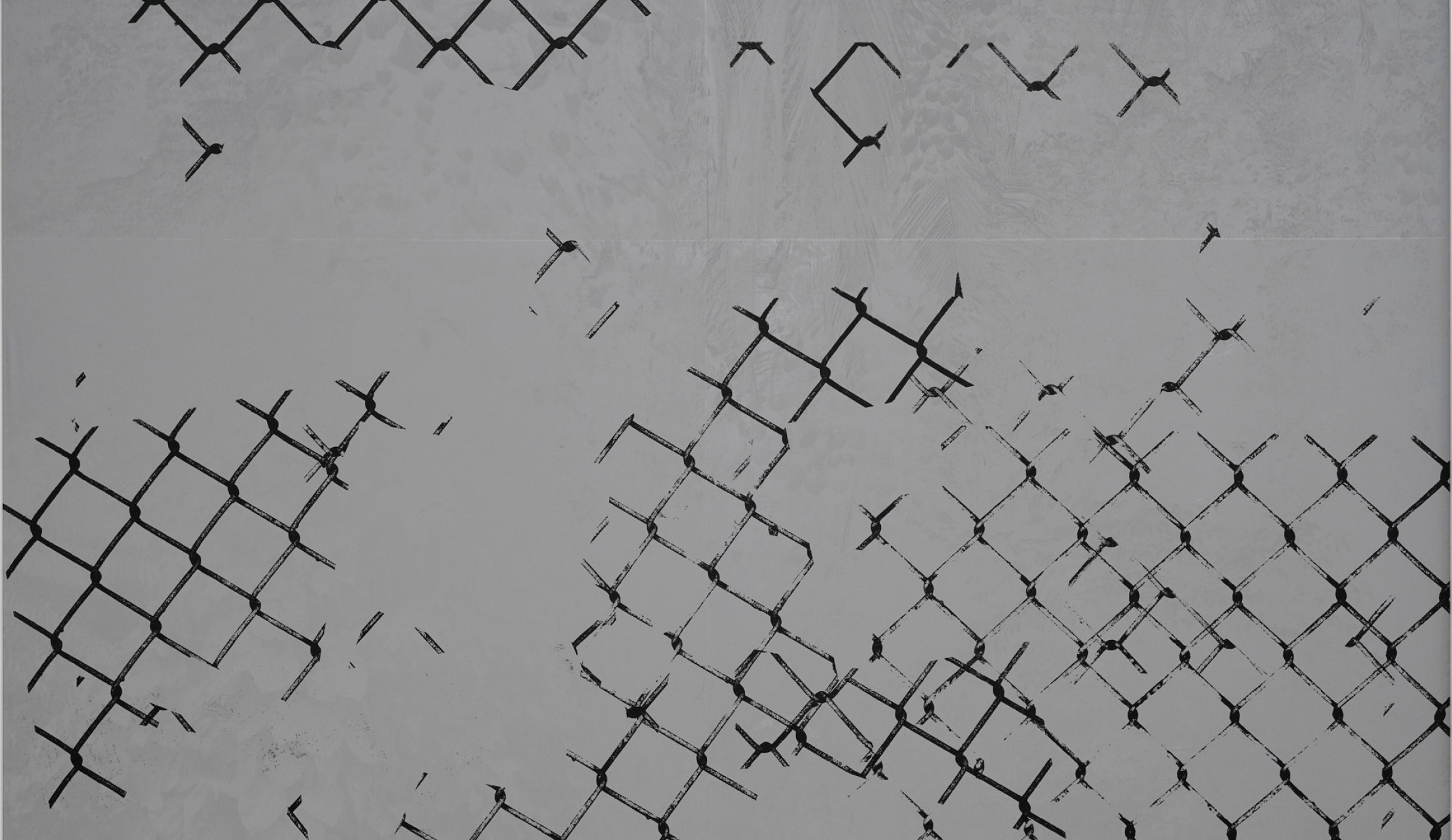
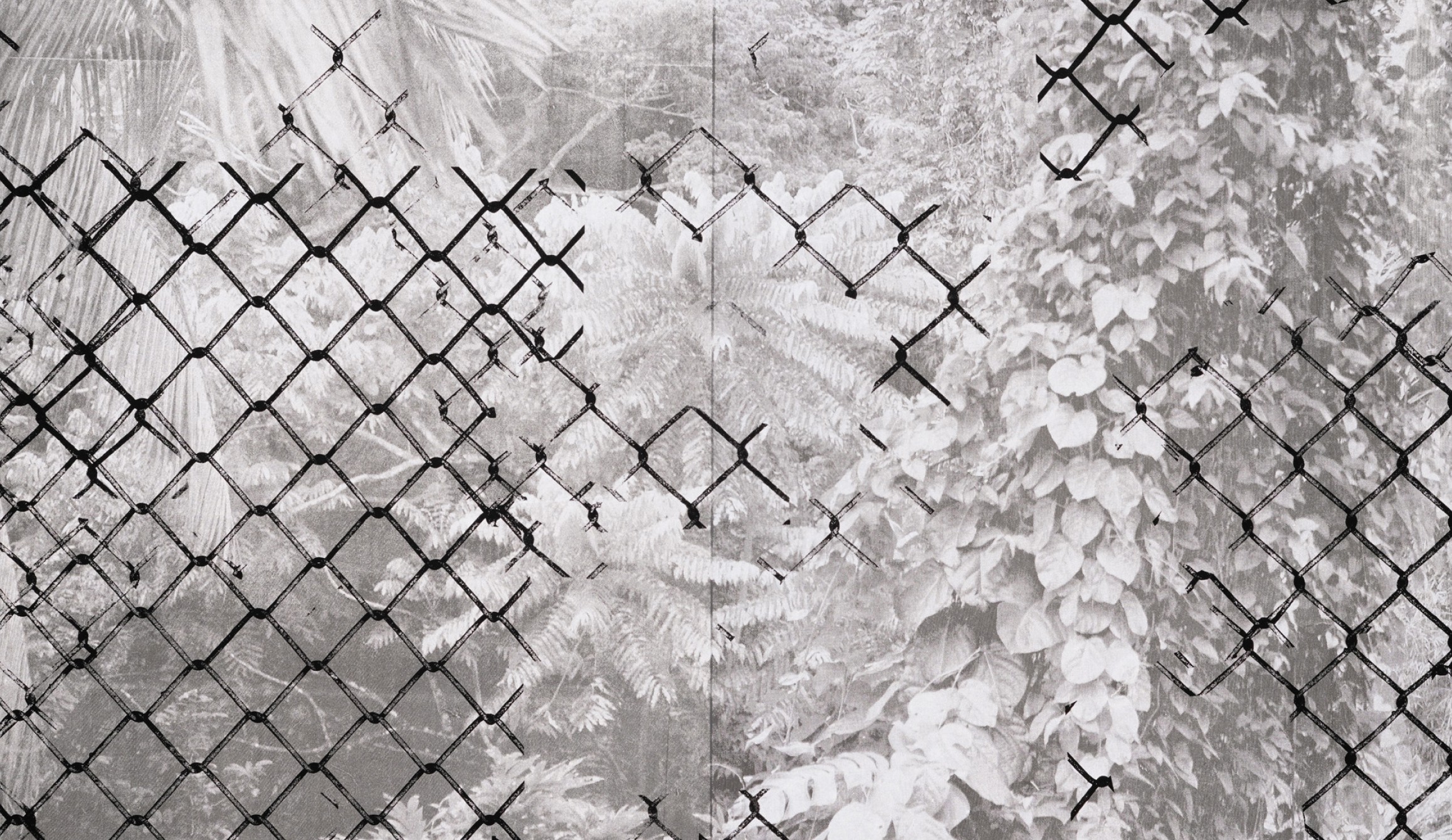
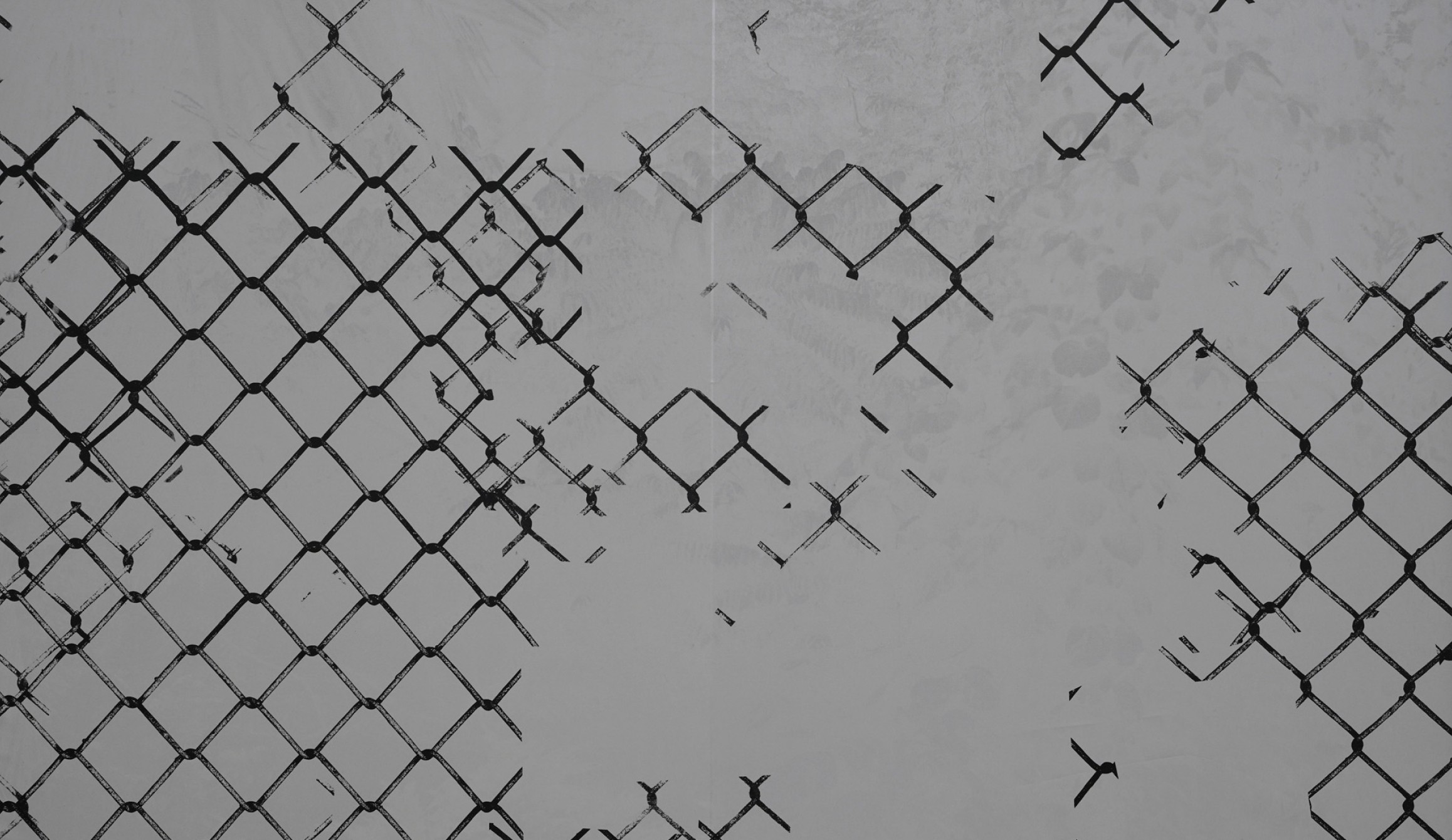
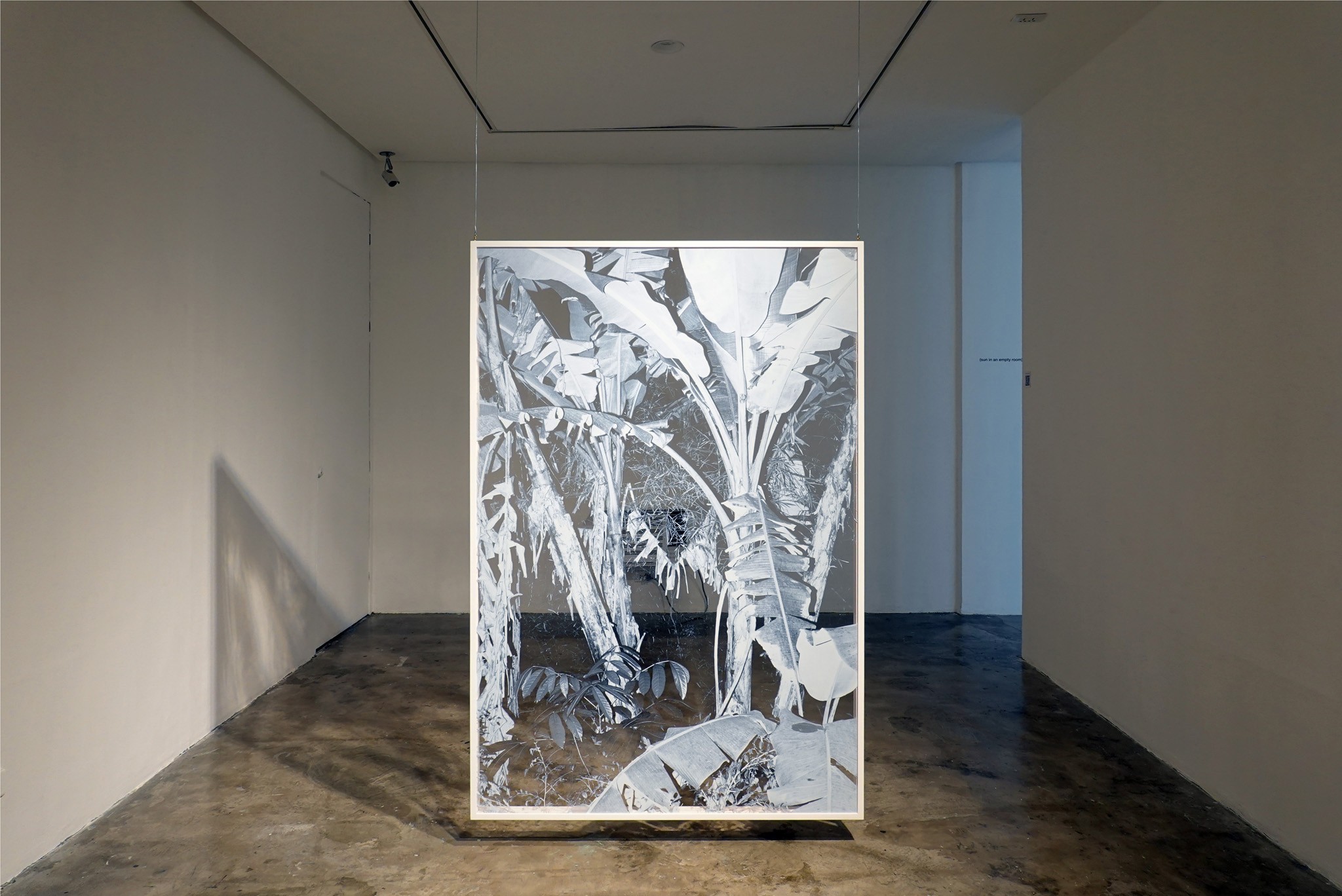
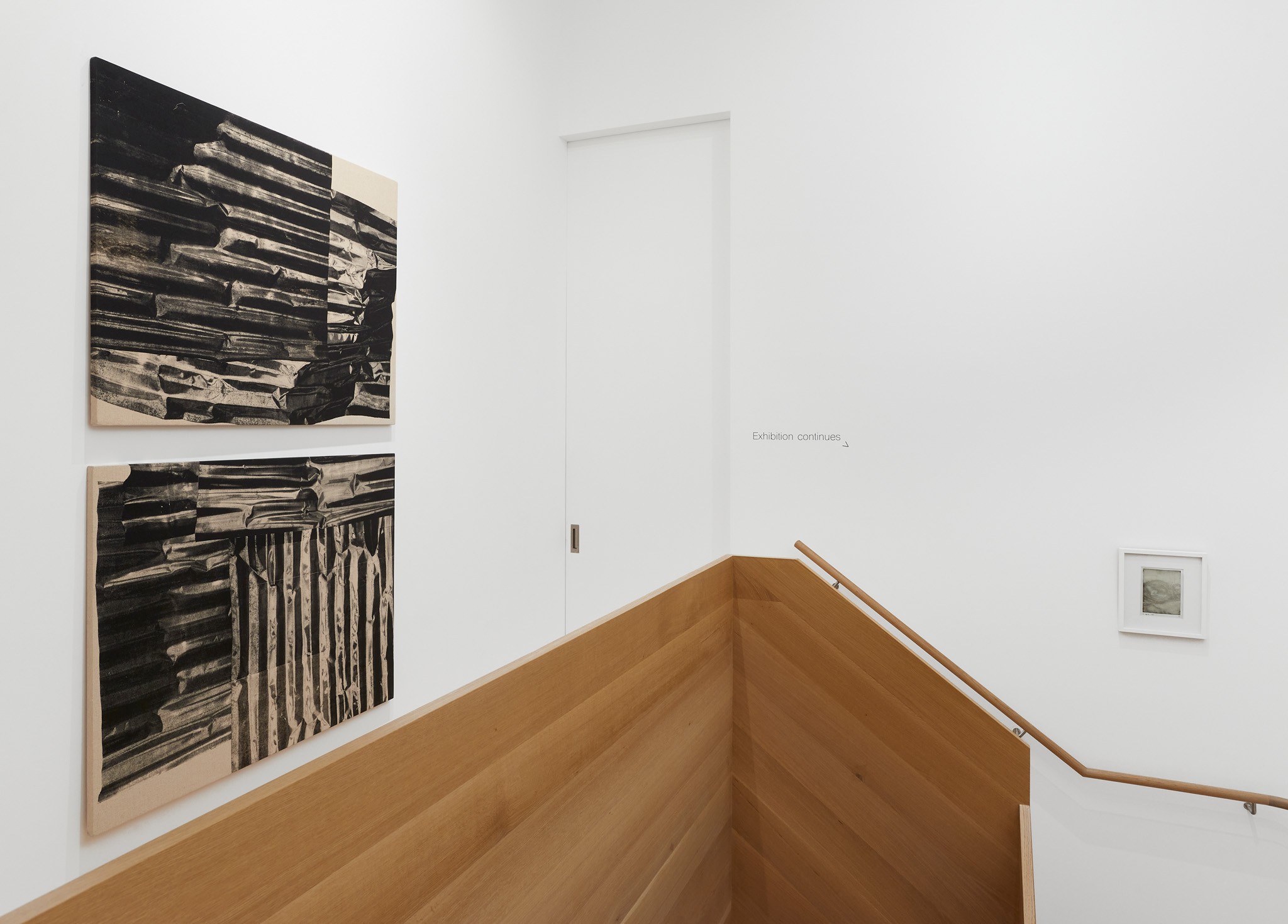
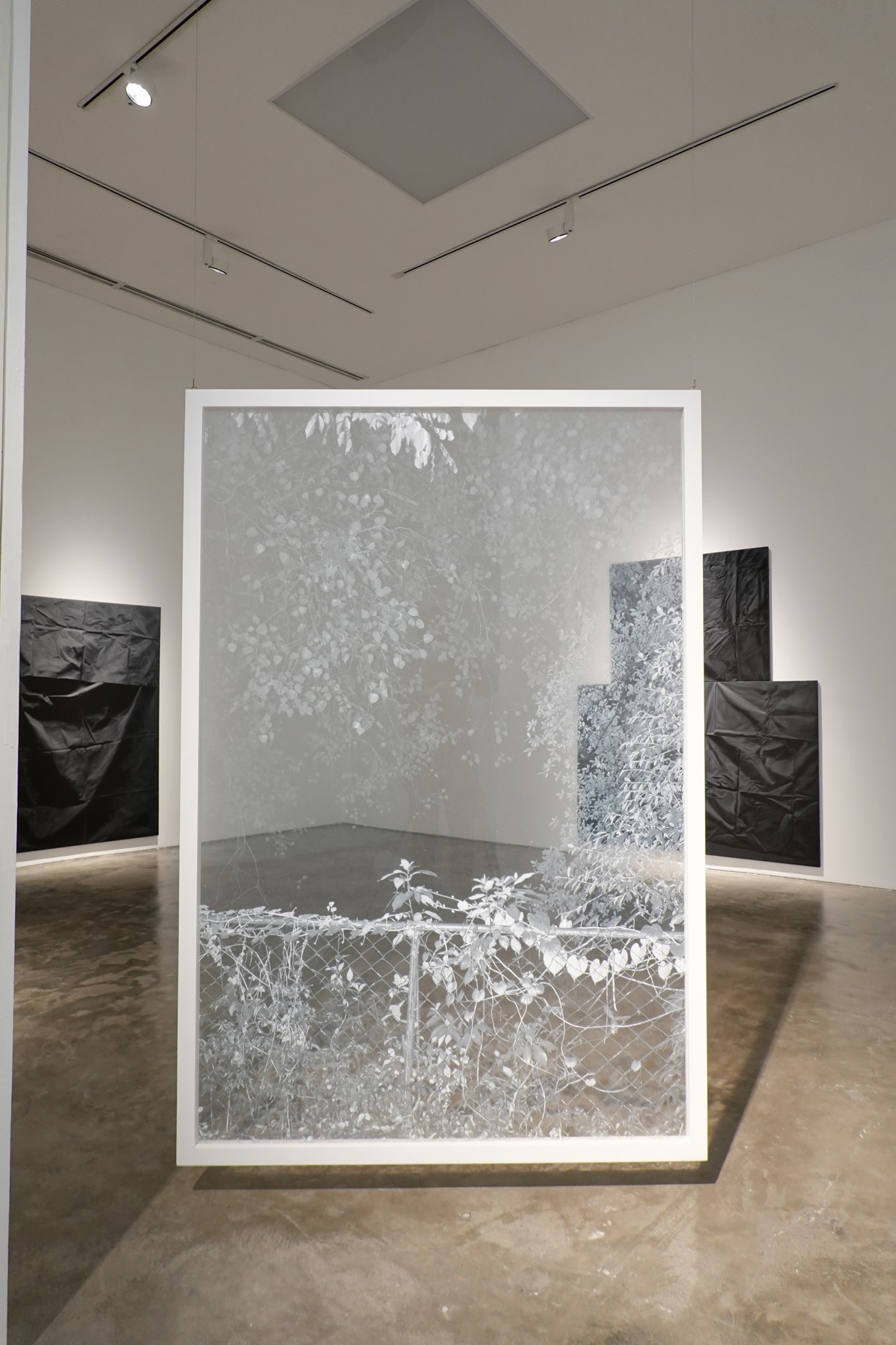
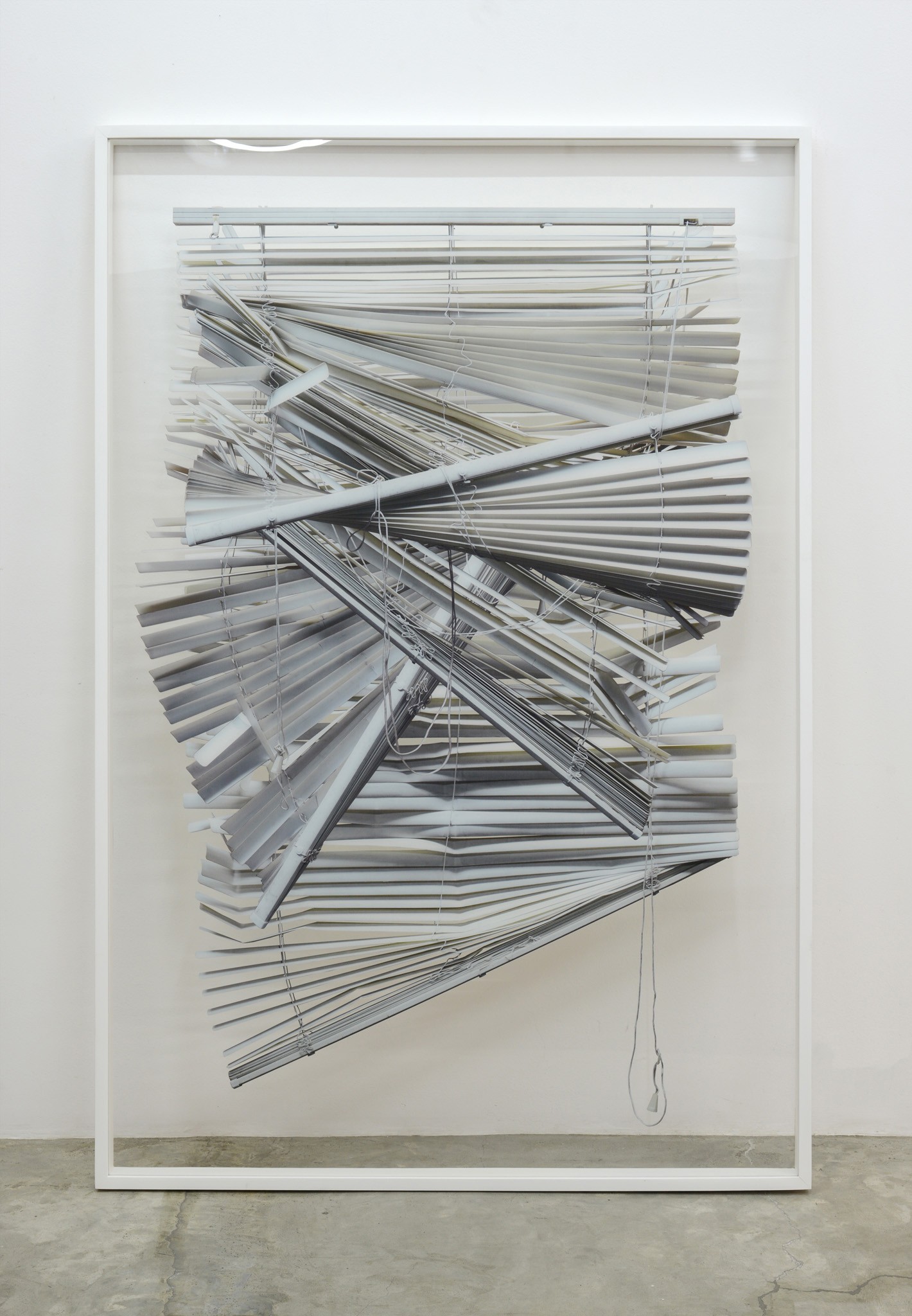
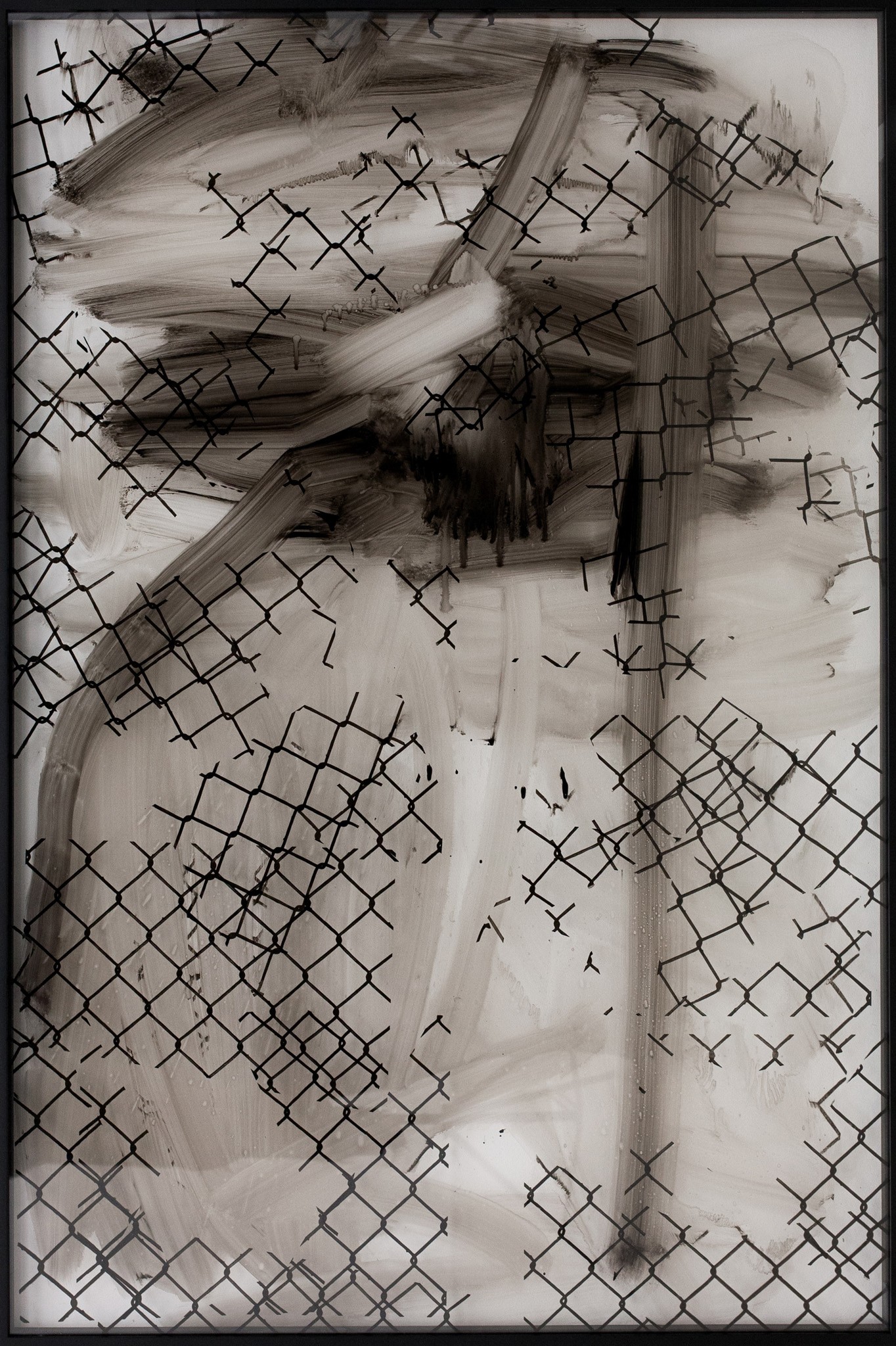
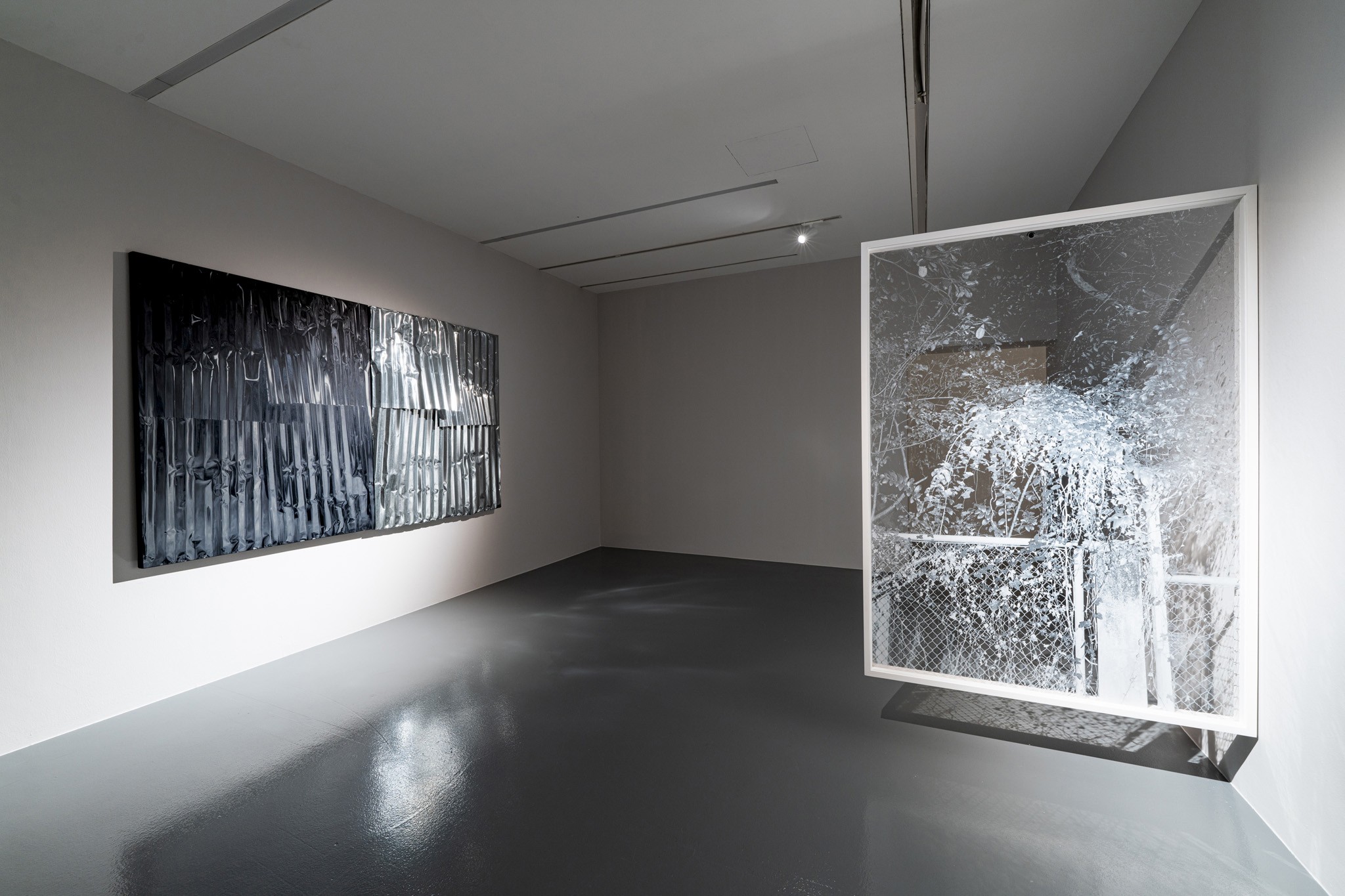
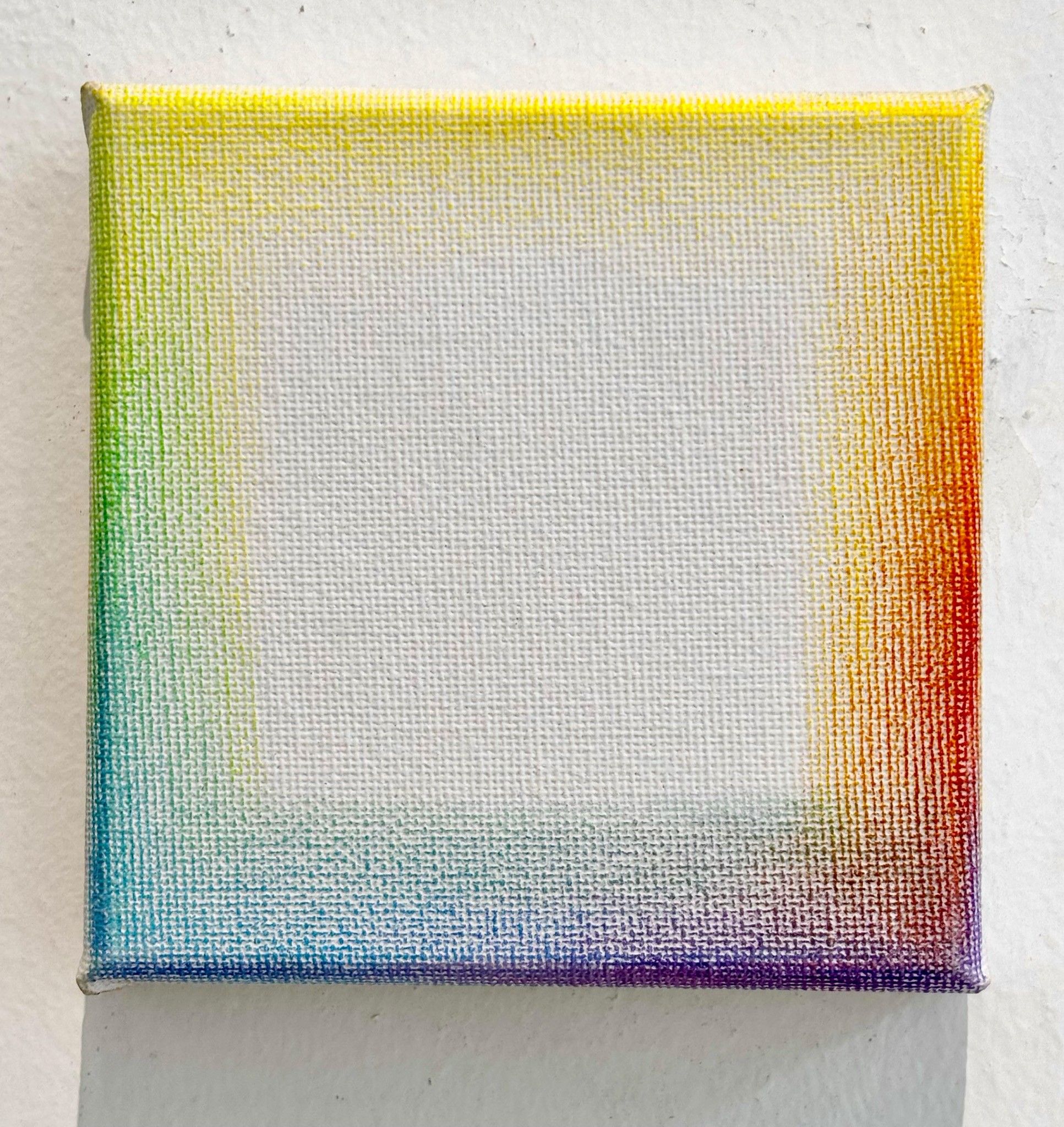
CNTRFLD. In The Flowers are Blooming Again, But They Have No Scent, you explore labour-intensive processes like silkscreen printing and oil painting to replicate industrial materials. What is it about every day, utilitarian objects that resonates with your artistic vision?
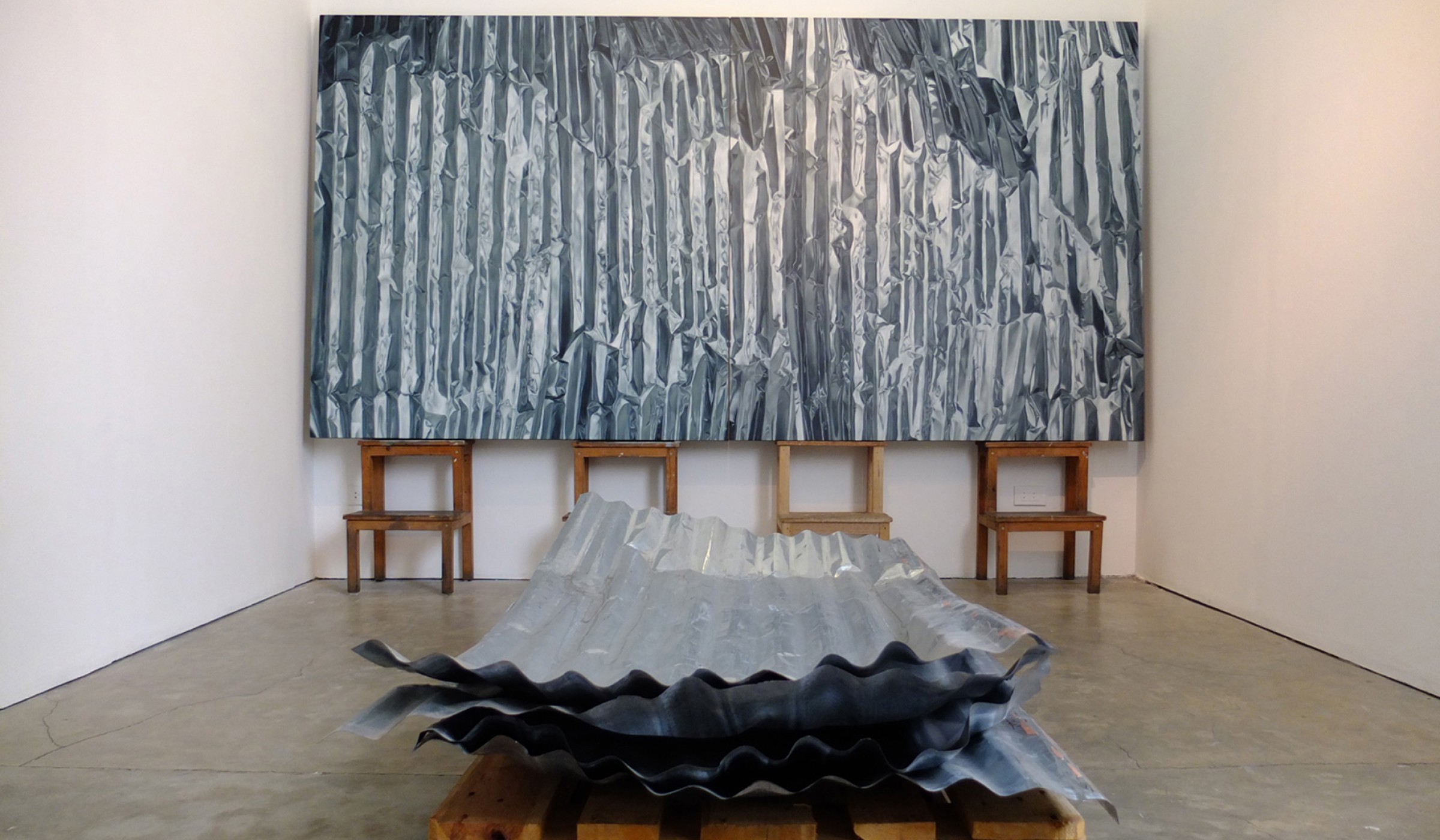
LAS. I’m drawn to materials that people instantly recognize—metal sheets, cyclone wire, plastic tarps. Their familiarity creates a shared baseline, a surface the viewer already knows how to read: how it feels, sounds, ages. In the Philippines, corrugated sheets are everywhere. They’re functional, not decorative — meant to divide, shield, or patch, not to be looked at. That’s what interests me.
I have a fondness for objects so commonplace they become invisible. My work often engages with that invisibility, along with the loss of information and the transience of an image. Corrugated sheets, for example, mark transitions: construction sites, temporary dwellings, spaces in flux. Over time, their surfaces collect rust, debris, graffiti—recording traces of atmosphere and use like a kind of geological data. A memory of a space in limbo.
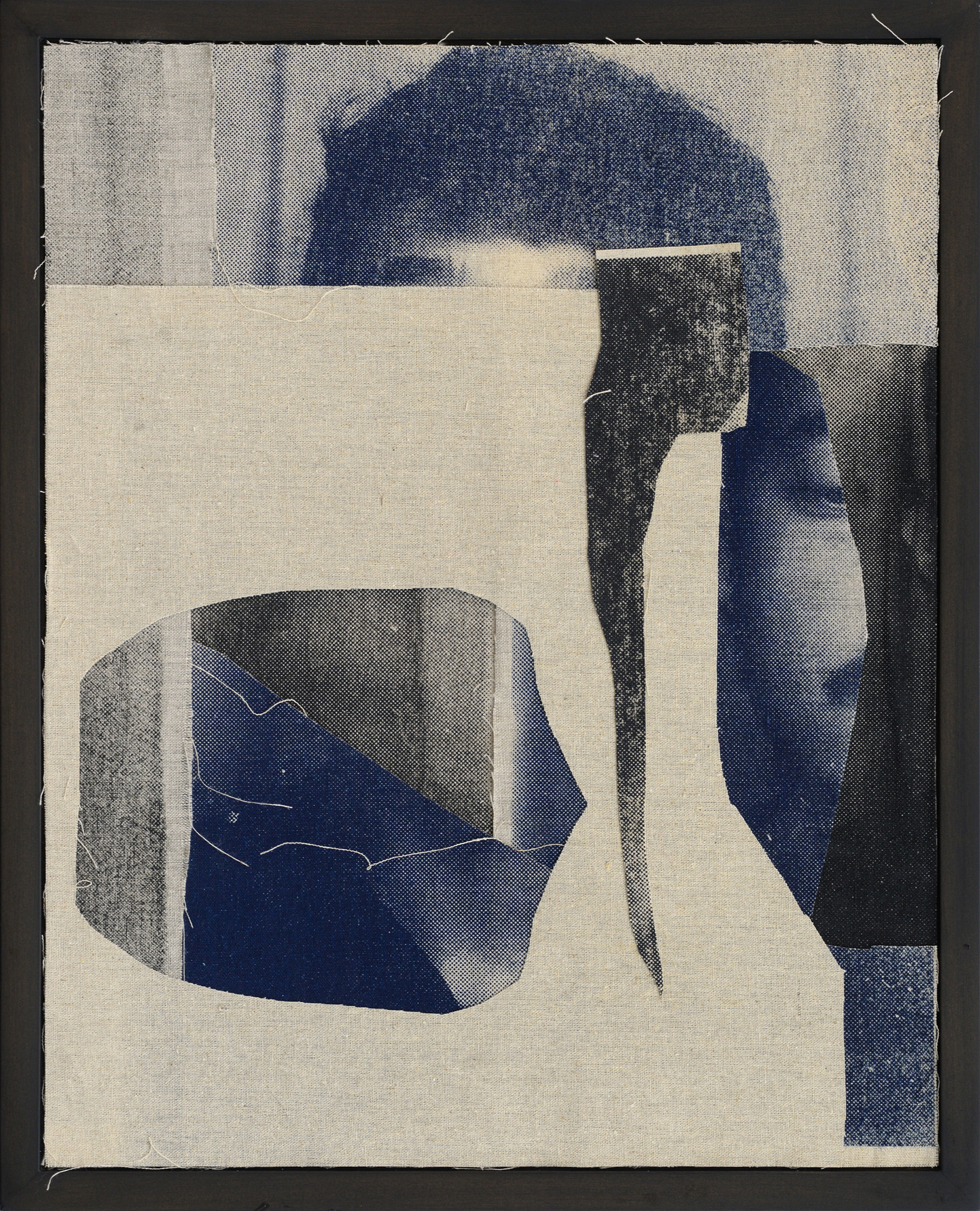
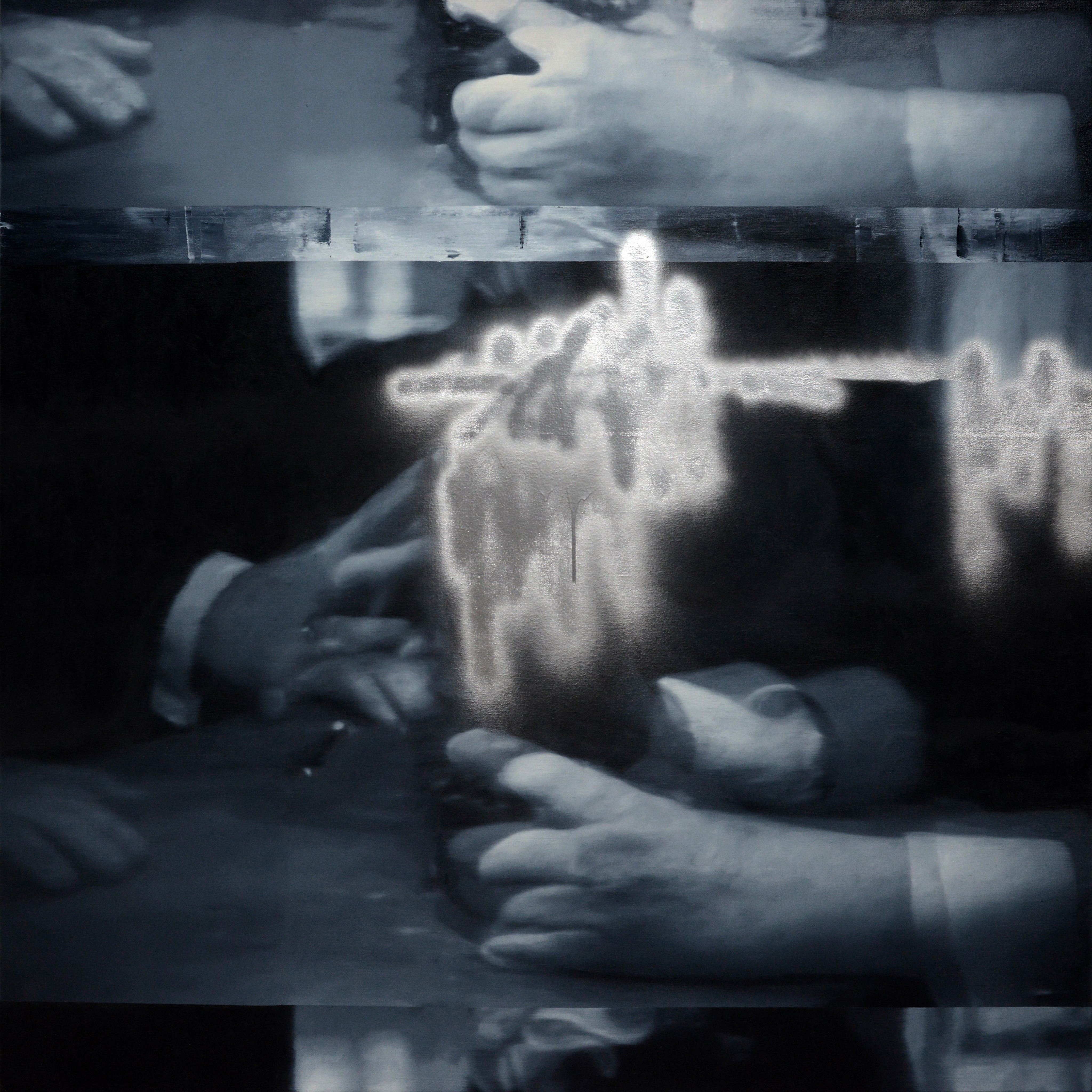
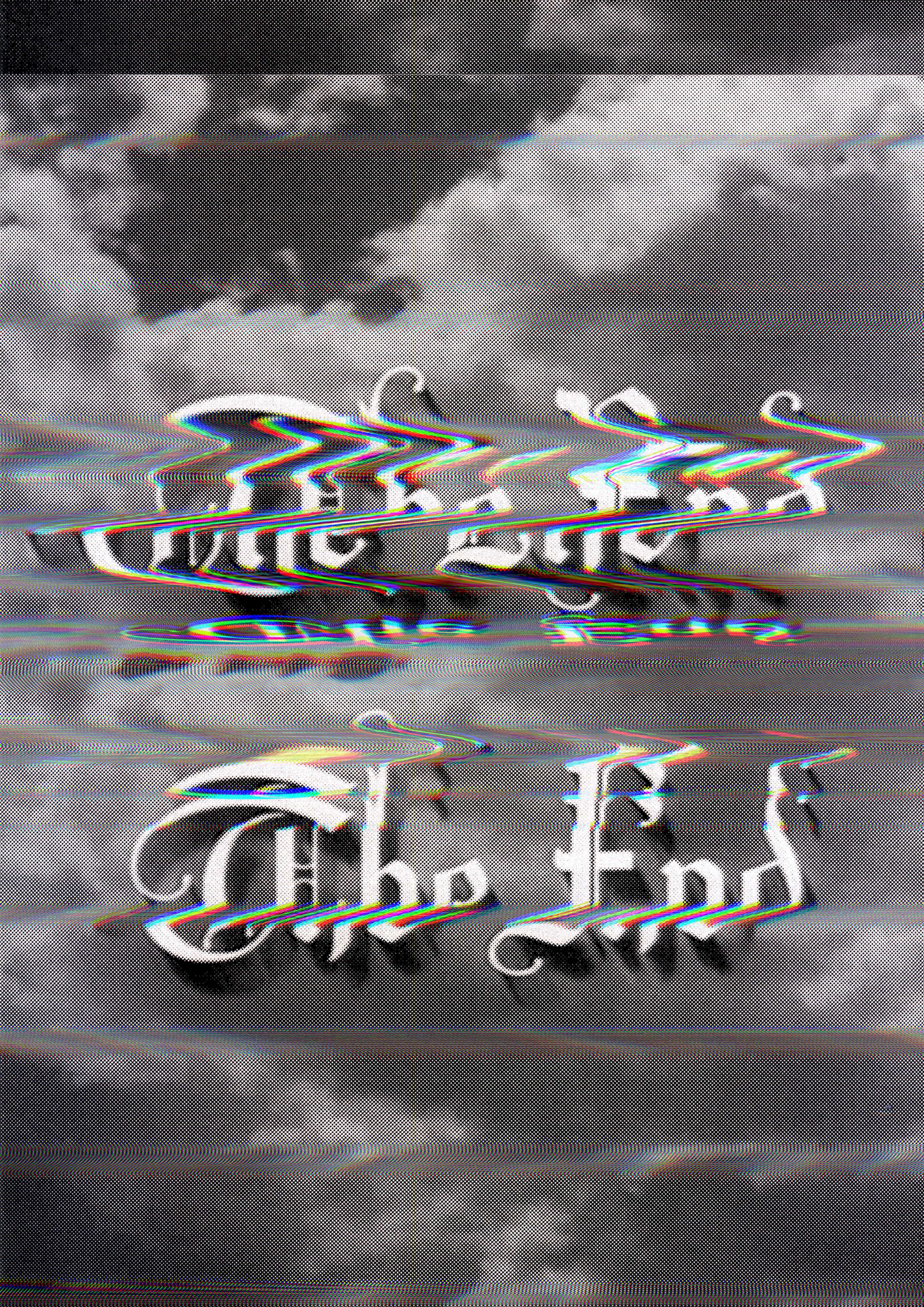
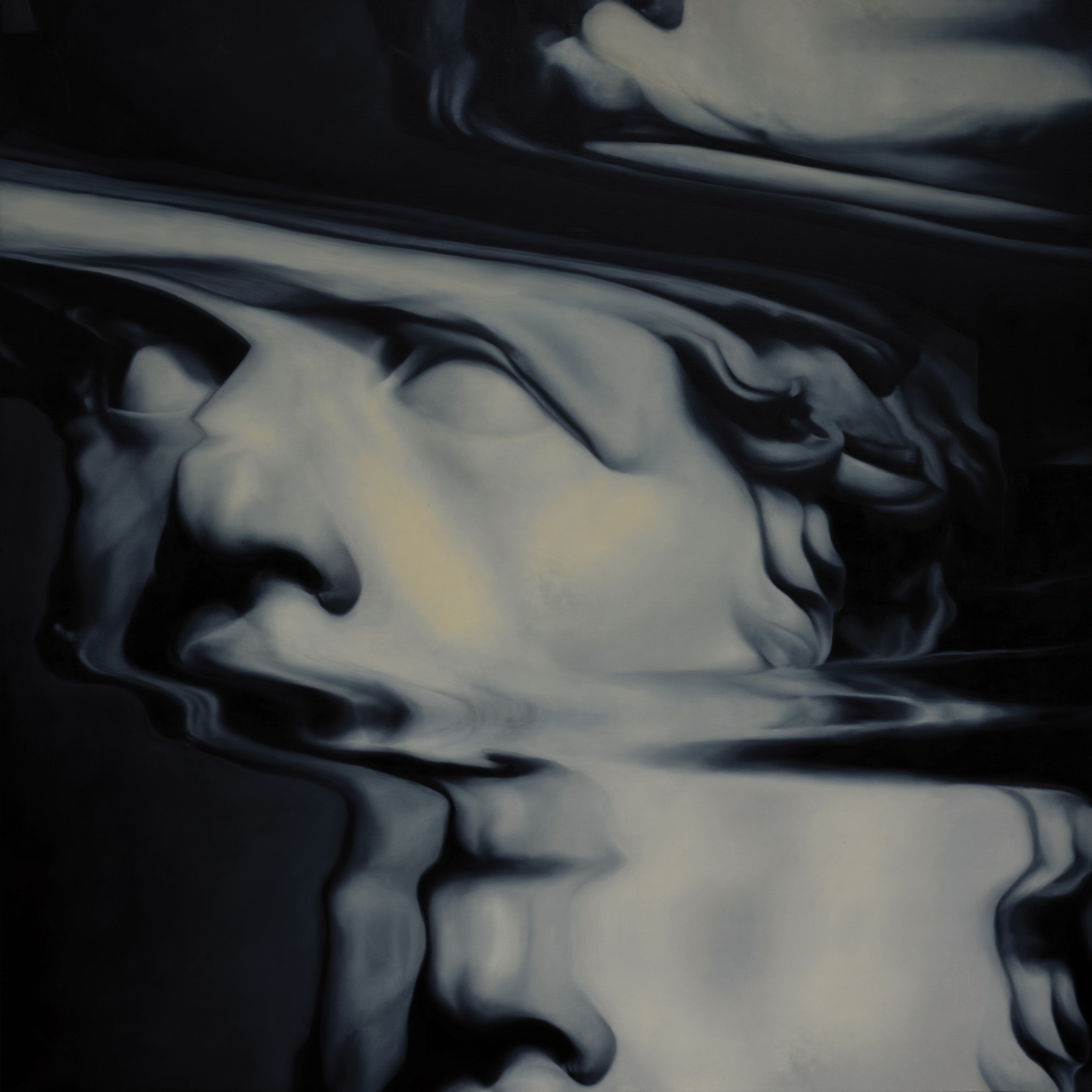
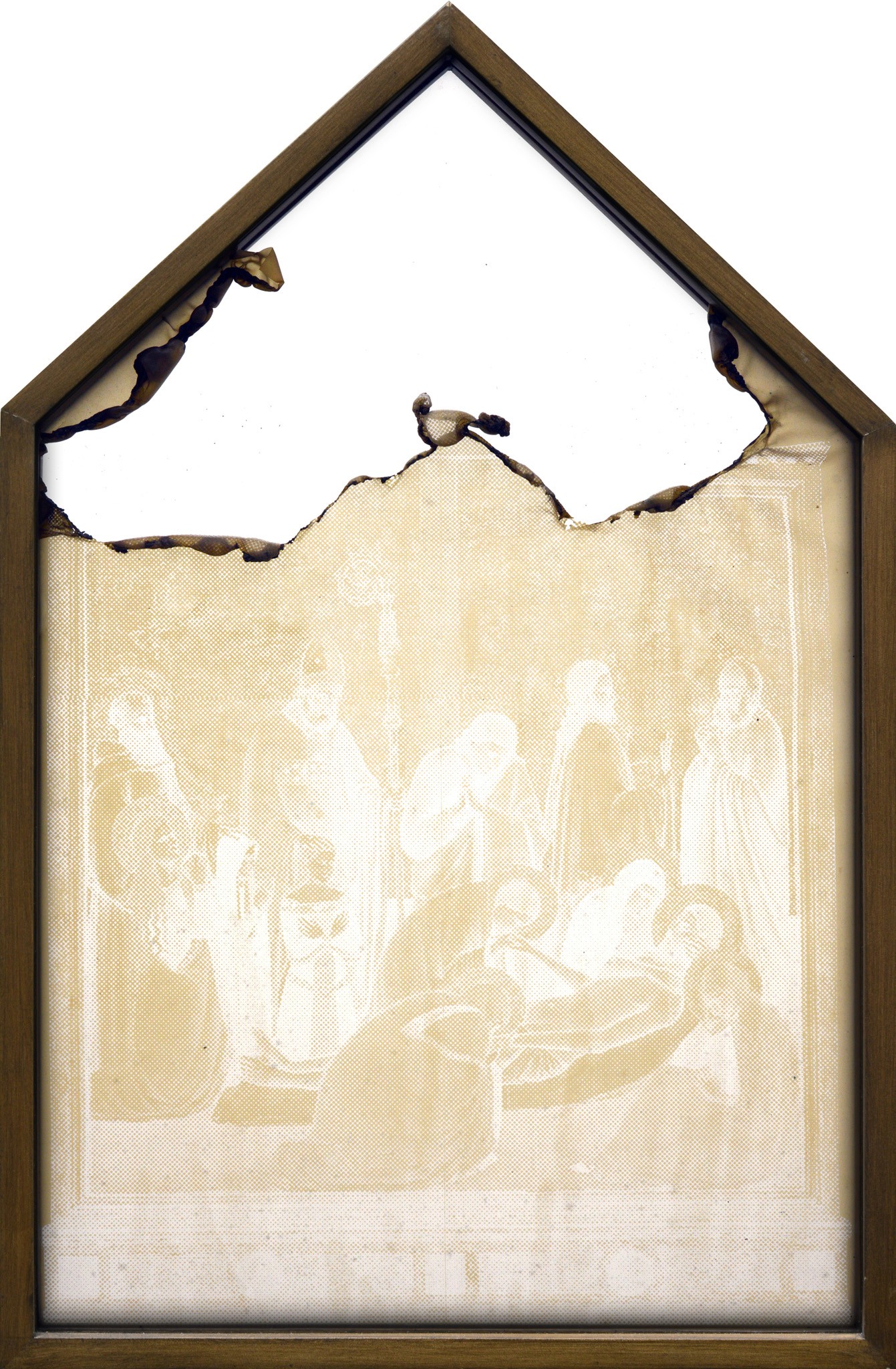
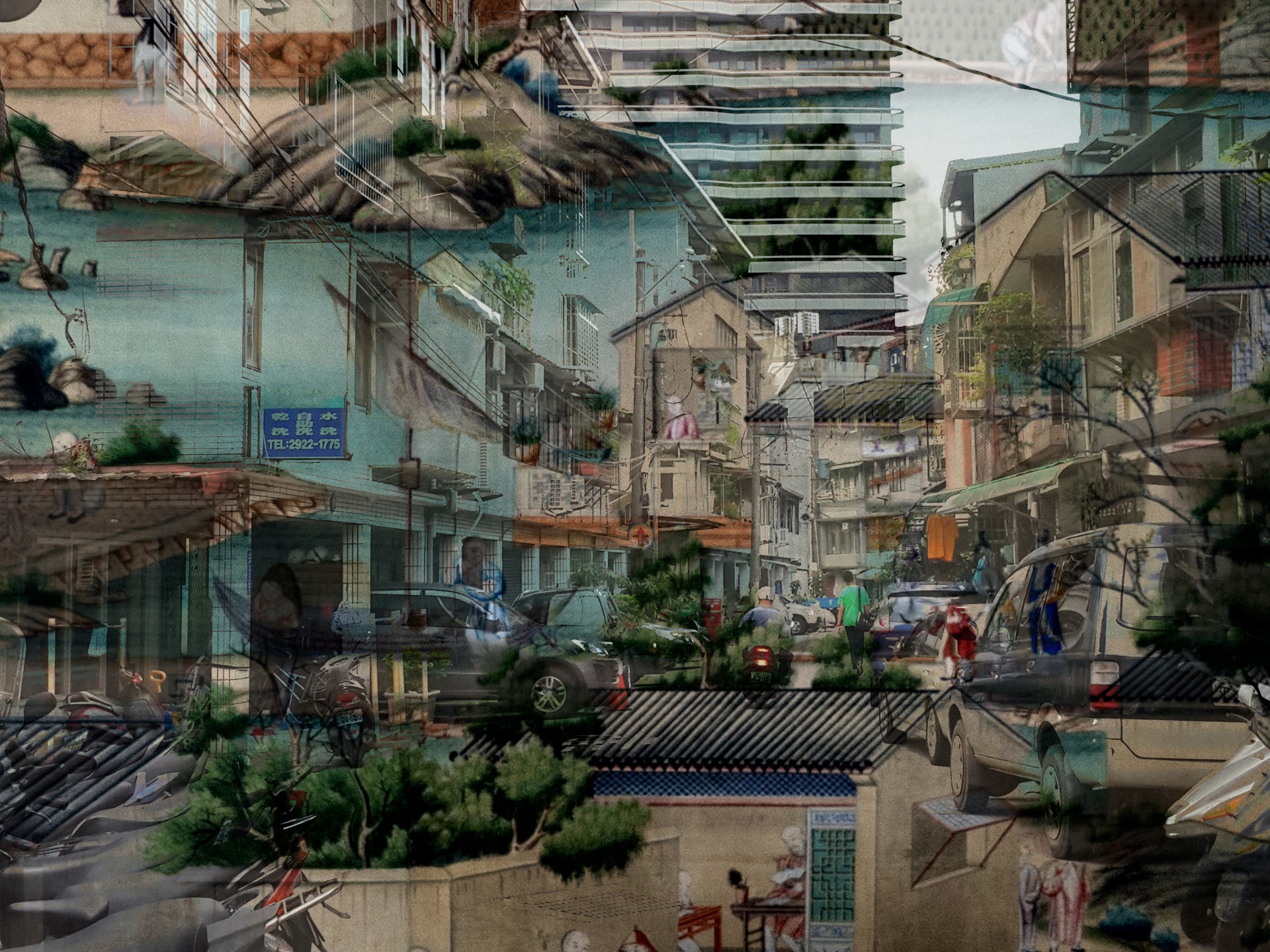
When I translate these materials into other forms, I focus on the errors that occur in the process—whether through meticulous, hyperreal oil painting, the halftones of a screenprint, or even the physical aging of the actual object. The subject becomes the distortion itself. It’s a negotiation between the ordinary and the extraordinary, the real and the hyperreal.
CNTRFLD. Your works often involve a process of distortion—whether through physically altering materials, manipulating imagery, or reversing impressions. What do these disruptions say about how we perceive and remember things? Additionally, many of your paintings and prints engage with themes of barriers, absence, and presence. Do you see these as reflections of personal experiences or are they broader social commentaries?
LAS. I think distortion is closer to how memory actually works—recollection is never neat or complete. It's both an act of remembering and forgetting. It’s always fragmented, reframed, rewritten. Even though some of my works, like the hyper realistic paintings, seem to say otherwise, I’m not interested in accurate representations as much as echoes. The barriers and absences in my work reflect both personal experiences—loss, grief, disorientation—and broader realities. I live in a country where we have a difficult relationship with memory. Things are constantly erased, torn down and rebranded. My works aren’t direct commentaries, but they carry those tensions—personal, historical, material.
CNTRFLD. As an artist based in the Philippines, how has your environment shaped your practice? What unique challenges and opportunities do you encounter in the Philippine art scene, and what kind of support structures exist for artists?
LAS. Being based in the Philippines means living with constant contradiction. As an archipelago, we're physically separated by bodies of water—and in many ways, socially and economically divided too. The landscape, both physical and cultural, is layered, volatile, and often in flux.
There’s a strong sense of resourcefulness here, but also a persistent precarity. Support structures do exist—artist-run spaces, independent curators, occasional grants—but they’re uneven and often unsustainable, especially outside major cities. Still, there’s a real sense of community. Artists here are deeply engaged, and the conversations feel urgent and grounded. We learn to work with what we have—and sometimes, those limitations become part of the methodology.
CNTRFLD. You have exhibited extensively in the Philippines and internationally, including Singapore, New York, and Hong Kong. How do you see Philippine contemporary art evolving, and what role do you think it plays in the global art scene?
LAS. Philippine contemporary art has always been anchored in local stories and histories, yet continuously in conversation with what is happening around the world. Recently, I've noticed a more experimental, process-driven work that are more thoughtful. Artists are increasingly delving into material, identity, and historical narratives with greater nuance. Internationally, there's still a lot of work to be done—not merely in terms of visibility, but also in achieving genuine understanding and dialogue. However, I’m encouraged by the way Filipino artists are carving out space internationally without diluting their complexity. I'm particularly grateful for the risks galleries based in the Philippines—like Silverlens, Drawing Room, and Art Informal—are taking in bringing local artists to key cultural cities like New York, London, Seoul, and Hong Kong. I feel like the role we play isn't about fitting neatly into established categories but rather insisting on the specificity of our perspectives—speaking authentically from our context rather than merely addressing external expectations.
CNTRFLD. What projects are you currently working on, and are there any new themes, mediums, or ideas you are exploring in your upcoming works?
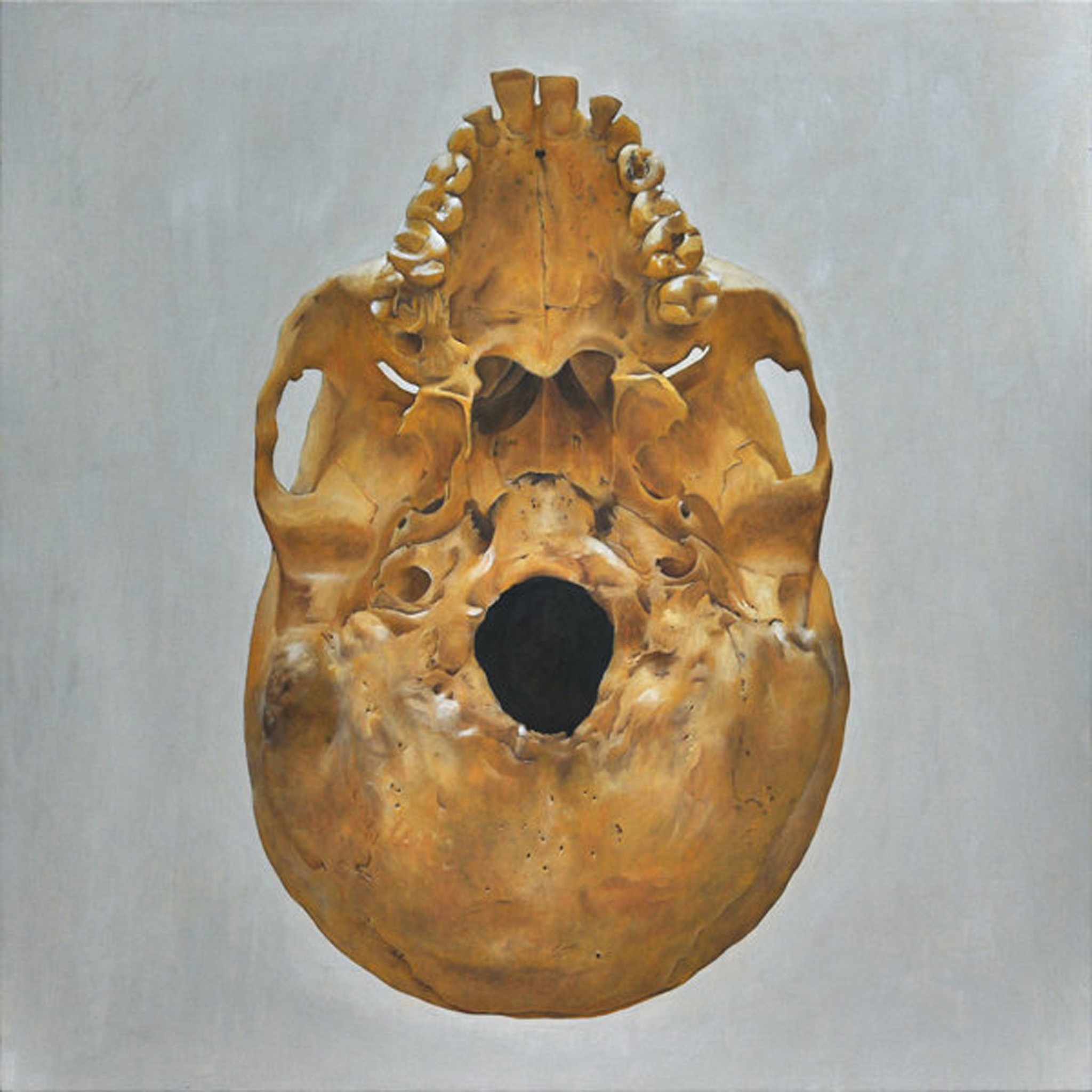
LAS. I'm currently developing new works for the National Museum exhibition featuring the current CCP Thirteen Artists Awardees, where I plan to expand my Index series. I started Index in 2016 as a way to explore memory, perception, and distortion through layered, glitched images drawn from museum artifacts found online thru the museum's archives. This series juxtaposes different narratives, engaging ideas about visibility, invisibility, and how histories are constructed or remembered. For this latest version, I'm incorporating the National Museum’s digital archives and combining my current interests in retroreflective fabrics and watercolor monoprints, pushing the series further into new visual and conceptual territory.
CNTRFLD. Having received numerous accolades, including the CCP Thirteen Artists Award and the Fernando Zobel Prize, what advice would you give to young artists navigating the challenges of building a career in contemporary art?
LAS. I don't think there's a single piece of advice that fits everyone, and I acknowledge that I've been fortunate with my circumstances. But what I am also trying to do now is to develop a daily practice and that also includes rest—it's just as important as productivity. I also think that a good advice is to avoid comparing your artistic journey to someone else’s and invest genuinely in your relationships. I feel like a meaningful art practice grows from authenticity and care.