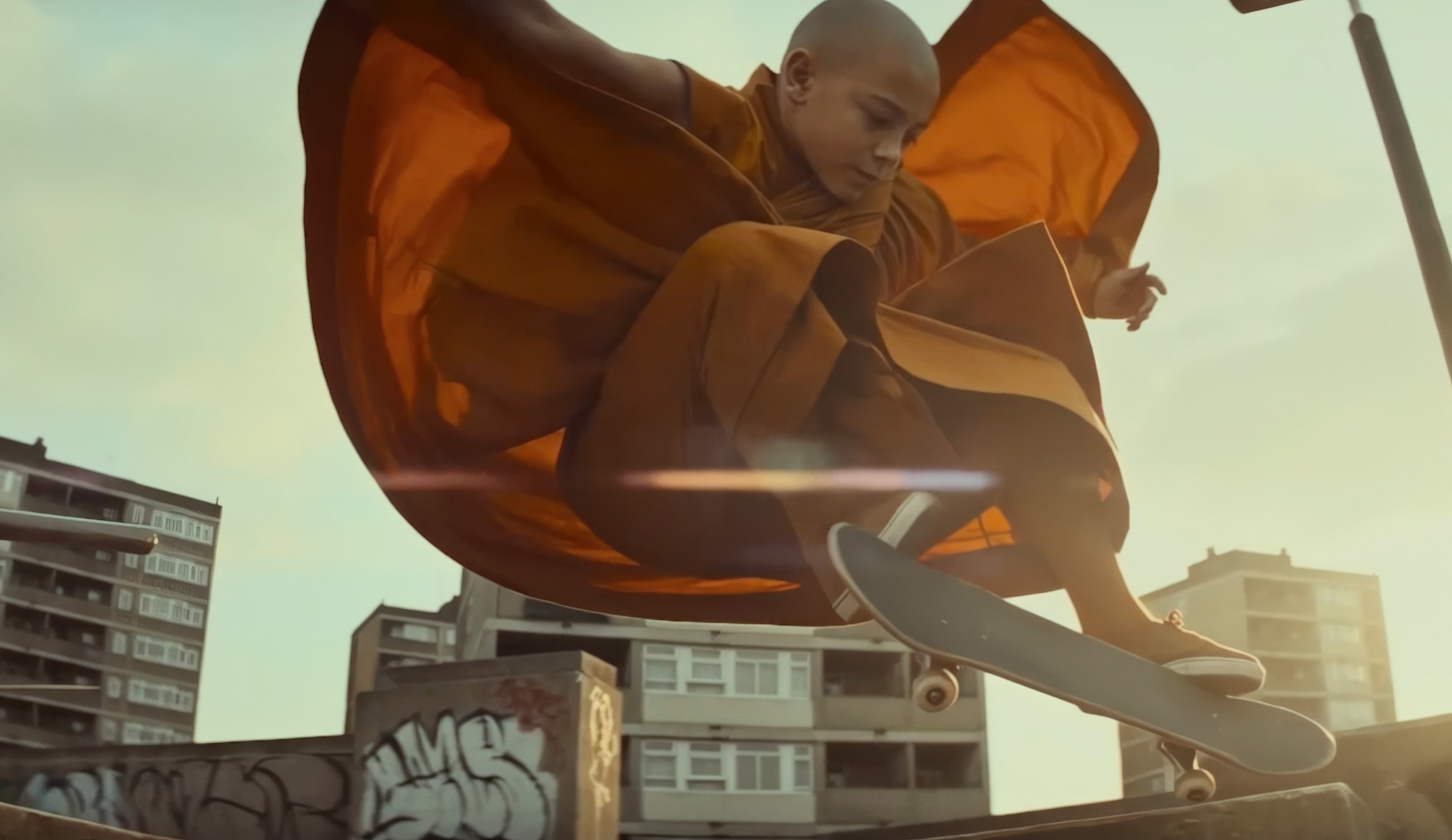
Sandra Tusin, Adrian Calumpang, Tony Chung illustrated by Maria Chen
DATE
2026/09/11
ARTICLE
Maria Chen
PHOTOS
Courtesy of the artists
WHAT WILL CHINATOWN MEAN IN 2046? THREE ESEA CREATIVES IMAGINE THE FUTURE
Adrian Calumpang, Sandra Tusin and Tony Chung explore the future of EASTEND CHINATOWN through art, AI, cultural identity, community and contemporary ESEA creative practice.
What will Chinatown mean in 2046? For Adrian Calumpang, Sandra Tusin and Tony Chung, the question is less about predicting a futuristic neighbourhood than imagining how culture, identity and community might continue to evolve.
Created as part of EASTEND CHINATOWN 2046, a project exploring the future of Chinatown through art, technology and creative practice, the three creatives approach the question from markedly different perspectives. Calumpang draws on a life spent moving between cities, cultures and creative disciplines; Tusin considers the possibilities and ethical questions of artificial intelligence through her work as an AI artist and technology innovator; while Chung looks to the everyday — family, food, clothing, business and East London — to consider what cultural memory might carry forward.
Together, their perspectives challenge familiar narratives of Chinatowns as places defined primarily by nostalgia, heritage or preservation. Instead, they consider Chinatown as something living and unfinished: a space that can absorb new technologies, generations and forms of cultural expression without losing its sense of belonging.
Their visions also speak to a wider evolution in contemporary ESEA creative practice. Across art, design, technology and entrepreneurship, Chinese and East and Southeast Asian communities are increasingly shaping their own narratives and imagining cultural futures on their own terms. From AI-generated futures to family-run businesses, cultural rituals and the ordinary corners of East London, the question becomes not simply what should survive, but what might evolve — and what it means to remain recognisably human as the world changes.
AC. Adrian Calumpang
ST. Sandra Tusin
TC. Tony Chung
CNTRFLD. What drew you to EASTEND CHINATOWN 2046, and what aspect of the project felt most aligned with your practice?
AC. I grew up between a few Chinatowns — different cities, different chapters of my life, different reasons for being there. I trained twenty minutes from one more, in London. None of this read as speculation to me — it felt like homework I'd already been doing all my life. Most of my job is helping brands imagine what they'll look like in five years. This time it was a neighbourhood. Chinatown's spent generations renewing itself on its own terms. I just got to picture the next stretch of that. It doesn't need reinventing from outside. It's been prototyping the future since before that was a pitch deck line.
ST. What drew me to EASTEND CHINATOWN 2046 was the chance to imagine not only how a community might look in the future, but how it might continue to feel. My work often explores AI ethics and what it means to remain human as technology becomes more embedded in everyday life.
TC. What drew me in was that it wasn’t about recreating the past but imagining a future. A lot of conversations around Chinatowns focus on nostalgia or loss. I was excited by the chance to ask, “What if our communities don’t disappear? What if they adapt and evolve while keeping their identity?”
That’s the spine of my own piece for the project, The Same Corner, asking what stays recognisable on a street even as everything around it changes. It’s close to my own work generally. Whether it’s garment care, illustration or storytelling, I’m always trying to celebrate East Asian culture in a way that feels contemporary and rooted in everyday life, not preserved behind glass.
I was especially interested in how AI and automation may change the way communities work, travel and connect, while our deepest needs remain the same: belonging, connection, celebration and passing something meaningful to the next generation. In my vision, technology is everywhere, but human relationships, shared rituals and cultural memory remain at the centre.
CNTRFLD. Could you tell us a little about your upbringing, and how your early environment shaped your creative path?
AC. No single city gets credit for this — everyone I grew up in taught the same thing: you're never a spectator, you're always inside whatever's happening. I learned to make before I learned to explain. Picked up a guitar before I picked up a camera. Turned out I was always better behind the lens than in front of the mic — but the reflex never changed: cut what's boring, keep what moves someone. Directing turned out to be the same instinct, just a different instrument.
ST. I grew up between two cultures. At home, I was surrounded by Indonesian traditions—learning Indonesian dances, music and cultural customs from a young age. At the same time, I was equally influenced by Western culture; my parents loved artists like Tina Turner and Michael Jackson, so there was always a blend of different worlds around me. I also grew up with friends from many different cultures, backgrounds and walks of life, which taught me empathy and a deep respect for people with different perspectives. I was always a creative child, making things from paper, cardboard or whatever materials I could find. Looking back, those experiences shaped not only my creativity but also my fascination with how different communities connect, adapt and imagine the future together.
TC. I grew up in East London in a Chinese family. When I was just a few months old, my parents took over the lease of a Chinese takeaway on Kingsland Road. I’ve been connected to that same building for almost fifty years.
Growing up, I watched my parents build a life through hard graft and sacrifice. The takeaway wasn’t just where they worked, it was where our family grew up. When my parents retired in 2002, I transformed the same premises into a dry-cleaning business. Same building, same place, completely different trade. That continuity has probably shaped how I think more than anything I studied.
I did study Product Design, but the real education was realising you can find creativity in the most ordinary places, a dry cleaner’s counter, a steam press, or the conversations that happen across them. Today the business has become a platform for storytelling through clothing, illustration and design. Growing up between British and East Asian cultures gave me a habit of constantly observing both worlds, and that naturally became part of how I create.