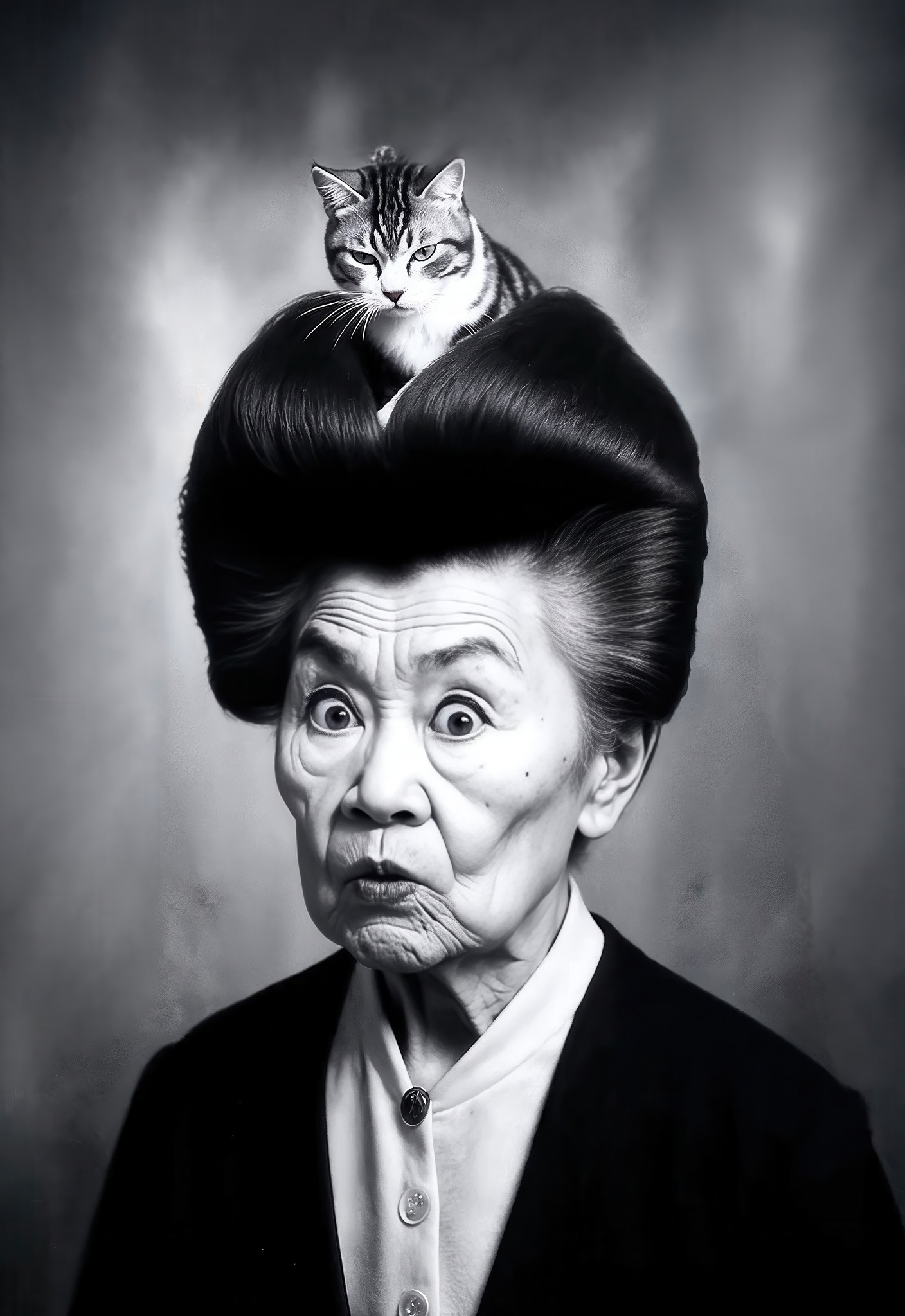
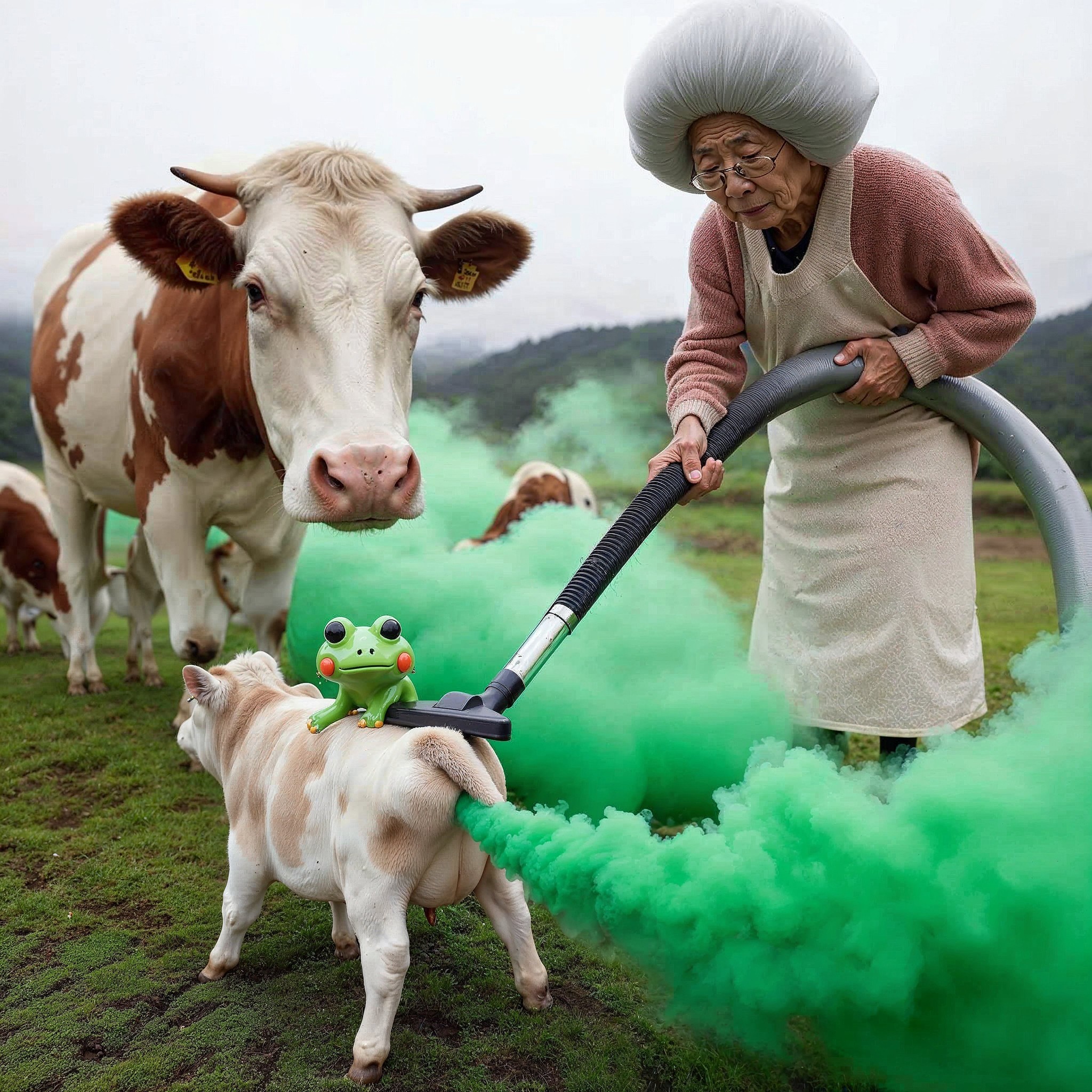
niceaunties (Wenhui Lim) Illustrated by Maria Chen

DATE

2026/09/18

ARTICLE

Maria Chen

PHOTOS

Courtesy of the artist

niceaunties: Reimagining the Auntie Through AI, Art and Cultural Memory

In Conversation with the Singapore-based artist behind Auntieverse on ageing, identity, Asian auntie culture, creativity and finding your own voice.

What happens when an everyday cultural stereotype becomes the protagonist of an imagined future? For Singapore-based artist niceaunties, the answer is Auntieverse — an evolving world that places ageing women at its centre, using AI, digital art and mixed media to explore humour, care, identity and cultural memory.

What began as a playful investigation into the meaning of “auntie” has grown into a deeply personal and expansive artistic practice. Drawing on childhood memories of her grandmother and aunties, niceaunties examines the contradictions within the archetype: sharp-tongued yet caring, practical yet expressive, shaped by tradition yet constantly adapting to change. In doing so, she transforms a once-dismissive stereotype into a figure of possibility.

Her approach is informed by her background in architecture, as well as surrealism, fantasy and kawaii culture, resulting in speculative worlds where aunties move through fantastical cities, workplaces and landscapes. Beneath the absurdity, however, are questions that extend far beyond Asian culture — about ageing, belonging, self-criticism, environmental change and the search for an authentic voice.

AI plays an integral role in bringing these imagined worlds to life, but for niceaunties, the technology is ultimately a medium for ideas rather than the source of them. As Auntieverse expands from digital images into physical works, film and new forms of storytelling, its central questions remain human.

In this conversation with CNTRFLD.ART, niceaunties reflects on the women who shaped her, the cultural forces she has pushed against, the creative value of friction, and why finding your own voice may be the most important part of making art.

Previous

Next

Previous

Next

CREDITS

Header: Snowman

Slider 1: Mirror Into Auntieverse, AMELIA, Paris Photo

Slider 2: Mirror Into Auntieverse, MEOW 1, Paris Photo

Slider 3: Mirror Into Auntieverse, Load Gallery Barcelona

Slider 4: Mirror Into Auntieverse, Load Gallery Barcelona

“At its core, it’s the questions I’m asking about ageing, and the choice to place aunties as the main character. That is the IP of the project. I came up with the idea, not AI.”—niceaunties

CNTRFLD. The Auntieverse feels deeply imaginative but also rooted in memory and lived experience. Looking back, what aspects of your childhood — or the women who raised you — most shaped the artist and world-builder you are today?

NA. I spent most of my childhood watching my grandmother. Doing her chores, crying, screaming at my aunties and uncles. But the thing I remember most is the scoldings, the insults. Aunties have a talent for finding the harshest possible words, and I remember many of them, registered as a funny kind of childhood trauma. Later, and especially while building the Auntieverse, I understood the sharpness was love, just wrapped badly. Really the project started as a way to understand why aunties behave the way they do, to ask questions about ageing, and to figure out what kind of auntie I want to grow up to be.

CNTRFLD. You’ve spoken beautifully about building the Auntieverse as a way of understanding what “auntie” really means. Has your relationship to that word — and to ageing, femininity, or care — changed as your practice has evolved?

NA. It started as a casual, fun inquiry. Just asking what being an auntie actually means. I started making lots and lots of images, putting aunties at the centre of a free universe, sending them on adventures. Back then the word was completely negative. Auntie meant old-fashioned, naggy, a stereotype nobody wants to be labelled with. But the more I explored it, the more complexity I uncovered. There was so much about this archetype I didn't know. And everyone has an auntie in them. It's the voice of your self-criticism. It's how you treat yourself and how you treat other people. It's the intersection of thousands of years of social and cultural conditioning colliding with the modern world and changing times. There is so much to understand there. So, trying to figure out what an auntie is turned into a way of understanding myself. A self-reflection. And not long after, my impression started to transform. It went from a negative stereotype to a positive character with enormous potential, and I only got more excited to keep asking questions and building the Auntieverse.

CNTRFLD. Your work holds humour, absurdity, tenderness, and social commentary all at once — from giant bowls of ramen to themes of loneliness, labour, and environmental collapse. How do you navigate that balance between playfulness and emotional depth in your work?

NA. I never sit down thinking I'm going to make something humorous, or absurd, or tender, or a piece of social commentary. The process is never logical. It's intuitive. I have an idea, I have an opinion about something, and as I'm making it, all these layers come in on their own. The emotions, the memories that get triggered, the things somehow related to the subject. They all get woven into the image without me planning it. Making the work is just what unlocks it. It's a collage of ideas that already exist deep inside us, and creating is how they surface.

CNTRFLD. Identity can be shaped by culture, language, gender, family roles, and the expectations placed on us. How has your own experience informed the worlds you build, and what parts of yourself do you see reflected in the Auntieverse?

NA. The Auntieverse is a reaction to my upbringing and my culture. I grew up in Singapore, a very structured, disciplined society focused on economic growth, security and stability, where success is something, you're supposed to plan out along a straight, wide path. I also come from a Chinese family, where the idea is family and society before self, harmony before your own identity. Then I went into architecture, a profession built entirely on discipline, structure and rules, where a designer with ideas still exists inside a much bigger framework of capitalism and making things work. So, I rarely had an identity that was just me, freely expressing who I really am and what I want to say. Becoming niceaunties and building the Auntieverse is almost a test bed. An experiment in having my own voice. It's me reacting against everything I've known, trying to find the voice I had as a child, before life happened.

CNTRFLD. Your work has resonated far beyond Singapore, with audiences in places like United Kingdom, France, South Korea and the United States. For audiences in the UK and Europe — especially those from diasporic Asian backgrounds — what do you think “auntie culture” reveals about belonging, memory, and community across borders?

NA. I think there are two things that are true for Asian people no matter where in the world they are. First, there are traits buried deep in our subconscious. The way we communicate, the way we criticise ourselves, that feeling of not being enough. It's been programmed into us over thousands and thousands of years. Second, there's the search for our own identity and voice, for who we really are, and maybe the auntie is the one who can help answer that. But that second part isn't only Asian. It connects people across every culture. Some people have told me they resonate with the Auntieverse for exactly that reason, wherever they come from.

Video 1

Video 2

Image 1: Auntie Choo

Image 2: Auntie Tee

Image 3: Auntie Lili, portrait

Image 4: Auntie Amelia, portrait

Image 5: Auntie Siew, portrait

CREDITS

Video 1: niceaunties-portrait,niceaunties-auntieverse-niceburg, niceaunties-auntieverse-tesla, niceaunties-auntieverse-nasa

Video 2: niceaunties-auntieverse-auntiecity, niceaunties-auntieverse-spamenu, niceaunties-auntieverse-factory, niceaunties-auntieverse-fashion, niceaunties-auntieverse-moma

Image 1: Auntie Choo

Image 2: Auntie Tee

Image 3: Auntie Lili, portrait

Image 4: Auntie Amelia, portrait

Image 5: Auntie Siew, portrait

Divider: The Beauty Of Longevity, Loreal

CNTRFLD. You’ve worked across architecture, design, art, public speaking, and emerging technology. Along that journey, what kinds of support systems — whether people, communities, institutions, or chosen family — have been most meaningful to you? And what do you think the arts ecosystem still needs more of?

NA. Honestly, the most meaningful support systems have been the opposing ones. Almost like auntie criticism. When people push back on what you do or what you say, you start asking why they react that way, and you begin to see things from their perspective. It creates a back and forth, a bouncing of ideas that adds another layer to the work. The more you think through and debate these things, the more you grow. Those are the ones that leave the deepest marks. Of course, everyone else mattered too. Social media, my friends, my family, my colleagues and collaborators, everyone who supported me helped carry the journey. But it was the opposing voices that gave me the deepest growth.

As for what the ecosystem still needs, I'd say more critical thinking, more questions being asked and debated, more opinions, more encouragement for artists to voice them. More openness, more forums, more activism, more growth from friction. Either way, more movement from the ground up as much as from the top down. More support for cultural thinkers and movers.

CNTRFLD. You’re now exhibiting internationally while remaining based in Singapore. What keeps you grounded there, and what makes it the right place for you to live and work at this stage of your life?

NA. The best thing about being based in Singapore is family, first and foremost. And it's a secure, clean, easy place to be based out of. You can fly anywhere in the world from here, and all the basics you need to work are in place, great internet, great access, everything. Culturally, for stimulation, I still draw a lot from the environment where auntie culture was born. But beyond that, I love to travel and talk to people all around the world to find new inspiration.

CNTRFLD. What are you currently working on — or feeling most excited about — and where do you see the Auntieverse evolving next?

NA. A few projects have me excited right now. There's a documentary film called The Time of the Nice Aunties currently in production, directed by Hervé Martin-Delpierre, who made the Daft Punk documentary. He's always been drawn to the intersection of emerging culture and technology, and it will be out by the end of this year. I'm also working on more physical works, moving the Auntieverse off the screen. And I'm developing an auntie tarot deck, which I'm especially excited about.

CNTRFLD. Your rise has happened in parallel with intense conversations around AI and authorship. Has your perspective on technology’s role in creative practice shifted over time?

NA. My view on technology hasn't really changed since I started niceaunties, but it has sharpened into something more concrete. It's a medium, and for me the best one to express my creative ideas. I still love the thinking, the ideas, the layering of concepts. As I prompt a direction, I keep adjusting it while the machine generates, so it turns into a back and forth. Working with AI feels like working with a creative and production team, while also being a tool and a medium all at once. It's everything wrapped into one.

When people ask me about authorship, I think about what the Auntieverse is. At its core, it's the questions I'm asking about ageing, and the choice to place aunties as the main character. That is the IP of the project. I came up with the idea, not AI.

CNTRFLD. For aspiring artists, designers, or world-builders — especially those trying to carve out unconventional paths — what advice would you offer from your own journey?

NA. My advice for artists, designers, or world-builders is this. It's easy to make a pretty picture, but it's something else entirely to look into yourself and understand who you are and what you actually want to say about the world. The hardest hurdle to overcome is always ourselves. If you really take the time to look within, you might find that you have something unique to express, something only you can say through your tools and your medium.

Image 1: Along The River In Auntieverse

Image 2: Along The River In Auntieverse

Image 3: Auntlantis Vacation

Image 4: Auntlantis Workshop

Image 5: Auntieverse Jelly

Image 6: Auntieverse Jelly

Image 7: Auntlantis Workshop

Image 8: BusinessIdea

CREDITS

Image 1: Along The River In Auntieverse

Image 2: Along The River In Auntieverse

Image 3: Auntlantis Vacation

Image 4: Auntlantis Workshop

Image 5: Auntieverse Jelly

Image 6: Auntieverse Jelly

Image 7: Auntlantis Workshop

Image 8: BusinessIdea


About the artist.

niceaunties is the moniker of Wenhui Lim, a Singapore-based artist, designer and public speaker whose multidisciplinary practice centres on the cultural figure of the “auntie”. Her ongoing Auntieverse project explores ageing, femininity, care and cultural identity through AI, digital art and mixed media, combining speculative storytelling with humour and social commentary.

With a background in architecture, niceaunties brings a strong sense of spatial thinking and world-building to her work. Surrealism, fantasy and kawaii culture inform her distinctive visual language, while her practice extends from everyday experiences of food, beauty and family life to broader questions of environmental change, consumption and cultural preservation.

Auntieverse was presented in a TED Talk in Vancouver in 2024 and has been exhibited internationally, including at the Louisiana Museum of Modern Art in Denmark, the V&A in London and the AI Action Summit at the Grand Palais in Paris. Her collaborations include Swatch and L’Oréal, and her work has been presented at Christie’s Art + Tech Conference in New York. In 2024, she was commissioned by the City of West Hollywood to create Aunties on Sunset, a public artwork displayed on a billboard along Sunset Boulevard. Her work has been featured in Forbes, The Guardian and The Straits Times.

Share Article

Share Article

More to Read

©2026

CNTRFLD.ART

UK Charity | HMRC Ref: ZD67011