Dini Nur Aghnia illustrated by Maria Chen

DATE

2023/07/17

ARTICLE

Maria Chen

PHOTOS

Courtesy of the Artist and Gajah Gallery

Dini Nur Aghnia: Memory, Material and the Landscapes We Carry

Indonesian contemporary artist Dini Nur Aghnia discusses her debut solo exhibition What Gathers, What Holds, finding spirituality through nature, women's agency, and how clay, resin and stitched textiles become vessels for memory, identity and belonging.

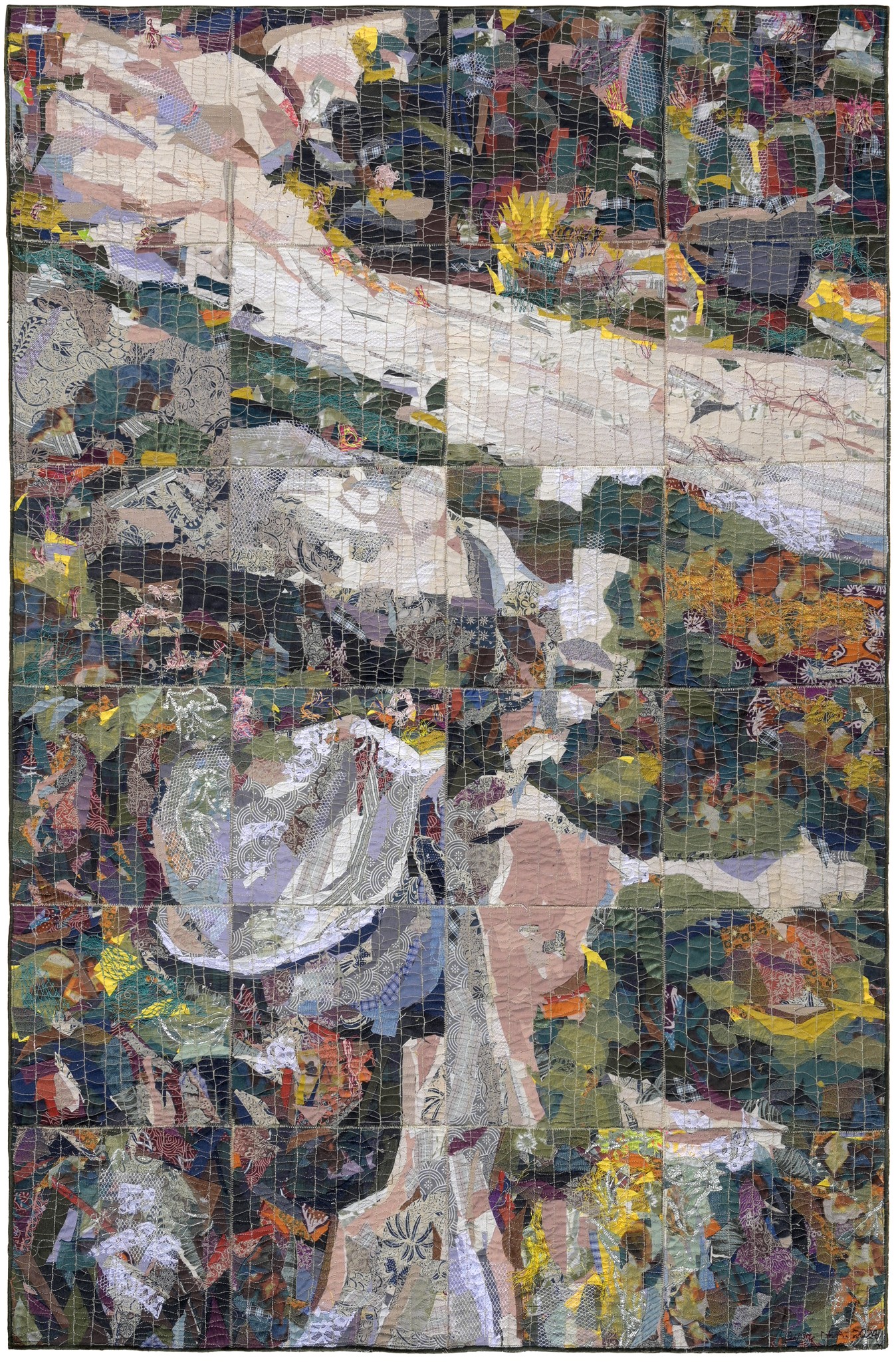
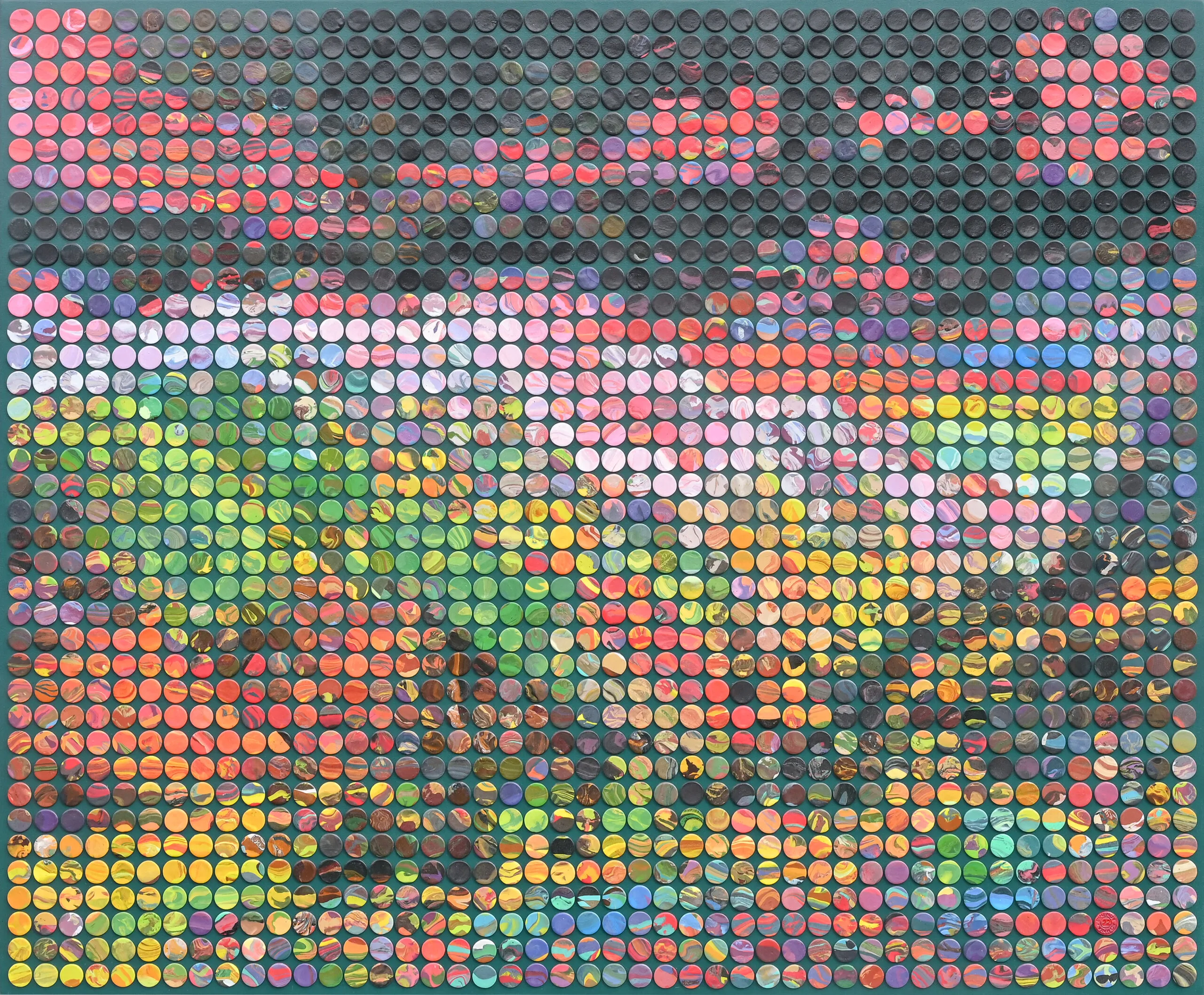
Landscape has long occupied a central place in the history of art. Yet for Indonesian artist Dini Nur Aghnia, it is not something to be observed from a distance or faithfully reproduced. Instead, landscape is lived, remembered and slowly reconstructed through fragments of clay, resin, stitched textiles and the quiet repetition of making.

Based in Yogyakarta, Aghnia has developed a distinctive visual language that transforms everyday encounters with nature into richly layered works. Rather than depicting landscape as fixed, her practice explores how place is shaped through memory, emotion and the passage of time, with hundreds of hand-assembled elements coming together to form shifting, tactile compositions.

Her 2026 debut solo exhibition, What Gathers, What Holds at Gajah Gallery Yogyakarta, marks an important new chapter in this exploration. Bringing together clay, resin and patchwork quilting, the exhibition expands her investigation into landscape and memory while opening wider conversations around care, women's labour, authorship and contemporary Southeast Asian art. 

Presented around Indonesia's Kartini Day, it also offers a timely reflection on agency, devotion and the often-overlooked value of slow, embodied work.

In this conversation with CNTRFLD.ART, Aghnia reflects on finding spirituality through nature, teaching herself technical processes often considered outside traditional expectations of women, and why fragments can reveal more than complete images. She discusses growing up in Gresik, studying at Institut Seni Indonesia (ISI) Yogyakarta, the importance of artistic community, and how making itself becomes a way of understanding memory, identity and belonging.

Previous

Next

Previous

Next

CREDITS

Header: Down the Road 2021 Clay on Canvas 63.5 x 120 cm

Slider 1-4: Images Courtesy Gajah Gallery

"A place only feels whole after I reconstruct it through memory and the touch of my hands."—Dini Nur Aghnia

CNTRFLD. Your latest exhibition, What Gathers, What Holds at Gajah Gallery Yogyakarta, brings together clay, resin, and patchwork into layered, shifting landscapes. How did this body of work come into being—and what were you seeking to “hold” or make visible through it?

DNA. I see nature as a spiritual outlet, and not just something to admire. What Gathers, What Holds came into being through my desire to recreate the sense of peace and reflection that nature gives me. Working with clay, resin, and patchwork became a way of translating those experiences; through this body of work, I wanted to capture not only the image of a landscape, but also traces of time and devotion embedded in the act of making. Every stitch and arrangement carries gestures of repetition and care, almost like a form of prayer. In that sense, the works are reflections of my everyday life and the intimate bond I have with the creative process itself.

CNTRFLD. Presented near Kartini’s Day, the exhibition sits within a wider discourse around women’s agency in Indonesia. How does this context resonate with your use of stitching, repetition, and materially embedded labour?

DNA. I feel empowered when I have the freedom to oversee the entire creative process myself, echoing the belief that we can build our own world with our own hands. I choose to be directly involved in the technical, often considered "heavy", aspects of creation, such as prepping the boards, sanding materials, or maintaining my own machinery. I derive great  satisfaction from knowing that every aspect of the work is shaped through my direct involvement.

Although the process is time-consuming and physically exhausting —whether sewing for hours or working with tricky materials— it is also my way of honouring time. In the silence of the night, this labour becomes a form of meditation. The diligence required in carrying out these demanding tasks is one way I celebrate my agency as a woman. 

CNTRFLD. Your works resist fixed or totalising views of landscape, instead emerging through fragments and accumulation. What draws you to this idea of landscape as relational—constructed through encounter rather than observation?

DNA. When I recall a moment or a place, it rarely comes back as a single, complete image. What stays with me most are the small things; for example, the colour of the soil, the texture of a stone I held, or the color of the sky at a specific hour. That is why I prefer to compose my work from fragments. This process is not about copying a photograph of a view, but about gathering the shards of feeling I experienced while I was there. By assembling them one by one, I feel like I am reweaving a relationship with that environment. The overlapping landscape becomes my way of showing that a place only feels whole after I reconstruct it through memory and the touch of my hands.

CNTRFLD. You’ve spoken about “overlooked geographies” and the poetics of the everyday. Was there a particular moment or earlier work that clarified this direction in your practice?

DNA. I've always enjoyed the process of creating. Even with large furniture, I prefer building my own rather than just buying a ready-made product. The challenge of learning new skills and exploring different materials to meet my needs is something I value deeply.

The moment that clarified this direction was when I began working with clay. I realised then that my artistic practice is rooted in the same curiosity: how to transform the material in front of me into something new. This direction continued to evolve as I began exploring resin and patchwork. My latest works are the result of that ongoing exploration, a way for me to value every second of time I spend creating with my own hands.

CNTRFLD. Growing up in Gresik and later studying at Institut Seni Indonesia, how did these formative contexts shape your approach to landscape and material?

DNA. In Gresik, I often felt my space was limited; there were many rules and judgments about what was appropriate for a woman to do. However, it was precisely because of that pressure that I began noticing the small things around the house—scrap fabric, wall textures, or quiet corners—as spaces of escape and storytelling. 

My direction became clear when I started university at ISI Yogyakarta and realised that art doesn't always have to be about grand subjects. I remember collecting scraps or leftover materials that were often considered worthless. 

Seeing how that "waste” could be transformed into something poetic if given time and attention made me realise this is what I want to voice. I want to elevate the geographies often skipped over—the things we consider ordinary everyday life—which actually can be so beautiful if we are willing to pause and look closer.

Video 1: What Gathers, What Holds 2026 Dini Nur Aghnia Courtesy Gajah Gallery

Image 1: Step to Shore 2025 Fabric Svraps 76 x 55cm Courtesy Gajah Gallery

Image 2: The Space Between The Swells 2025 Fabric Scaps 67 x 84 cm Courtesy Gajah Gallery

Image 3: Land of Scraps 2024 Patchwork Quilting 156 x 104 cm Courtesy Gajah Gallery

Image 4: Luminara 2025 Patchwork Fabric 111.5 x 107.5 cm Courtesy Gajah Gallery

Image 5: Untitled 2024 Patchwork Quilting 102 x 87 cm Courtesy Gajah Gallery

CREDITS

Video 1: What Gathers, What Holds 2026 Dini Nur Aghnia Courtesy Gajah Gallery

Image 1: Step to Shore 2025 Fabric Svraps 76 x 55cm Courtesy Gajah Gallery

Image 2: The Space Between The Swells 2025 Fabric Scaps 67 x 84 cm Courtesy Gajah Gallery

Image 3: Land of Scraps 2024 Patchwork Quilting 156 x 104 cm Courtesy Gajah Gallery

Image 4: Luminara 2025 Patchwork Fabric 111.5 x 107.5 cm Courtesy Gajah Gallery

Image 5: Untitled 2024 Patchwork Quilting 102 x 87 cm Courtesy Gajah Gallery

CNTRFLD. Your works often feel like sedimented memory—layered, partial, and non-linear. How do personal experience and recollection enter the work, and where do you position the boundary between memory, identity, and material?

DNA. For me, memory never appears in its entirety, but as fragments that emerge intermittently. My personal experience enters the work through the way I arrange these materials. The process of layering resin, assembling clay, or joining patchwork becomes my way of reconstructing stored memories.

I don’t see a rigid boundary between memory, identity, and material. The three merge within my practice: memory is the trigger (what I remember), identity is how I respond to it (how I choose to process it independently), and material is the body (the physical form that can be touched).

In this sense, when I am working with materials, I am also processing identity and memory. Material is not merely a tool; it becomes the “sediment” of lived experience that I attempt to manifest into something tangible.

CNTRFLD. As an Indonesian woman working within the contemporary arts landscape, how has your lived experience shaped your perspective and sense of authorship? Do questions of gender or cultural expectation consciously inform your practice?

DNA. My experience as an Indonesian woman shapes my perspective through sovereignty in creation. I tend to teach myself the technical skills needed to process materials, a habit that stems from how I manage my personal space at home. For me, mastering these manual processes is how I build an authentic character in my work.

Regarding gender, I don’t see it as a limitation but as a source of strength. I bring the persistence of everyday experience into the contemporary art landscape. Focusing on small details and the intimacy of process is my way of responding to cultural expectations. By staying honest with the way I work and the materials I choose, I feel I assert my position as a woman artist without being confined to specific labels.

CNTRFLD. While rooted in Indonesia, your concerns around place and fragmentation resonate with diasporic audiences, particularly across the UK and Europe. How do you see your work entering dialogue with these experiences of displacement and belonging?

DNA. While my practice is deeply rooted in the Indonesian context, the themes of place and loss are fundamentally universal. I see displacement or alienation not merely as a matter of geographical movement, but as the increasing distance between humanity and the natural world. The fragmentation in my work responds to a nature that we no longer perceive in its entirety. By reassembling these material fragments, I am attempting to preserve the memory of a landscape undergoing slow, persistent transformation. For me, a sense of belonging is found in the effort to rekindle our relationship with nature, through attention to the small details that remain.

CNTRFLD. Having exhibited across Yogyakarta, Singapore, and Manila, what differences have you observed in artistic support systems—and what has been most vital in sustaining your practice?

DNA. We’re blessed to have a strong artist community In Yogyakarta, where it often feels like one big family, compared to places like Singapore or Manila, where things might run with a bit more structure. What I find most vital in sustaining my practice is the preservation of my internal creative ecosystem. It is about finding or creating an environment that fosters the discipline to maintain a consistent working rhythm. Having a community that understands your struggles, and the mental resilience to keep showing up in the studio every day—this is what truly keeps an artist alive.

CNTRFLD. Looking ahead, what ideas or projects are you currently developing—and what advice would you offer to emerging artists seeking to build a practice that is both sustainable and critically grounded?

DNA. My advice to emerging artists is to be honest with your own process and not rush its development. Take time to understand the materials you work with, and choose those you are willing to spend long hours with. At the same time, take care of your health, your body is what allows you to continue creating and sustaining your practice.

Image 1: Different Motion 2022 Clay on Canvas 100 x 120 cm Courtesy Gajah Gallery

Image 2: Dini Nur Aghnia

Image 3: An Elusive Clash 2022 Clay on Canvas 63.5 x 120 cm Courtesy Gajah Gallery

Image 4: Dini Nur Aghnia

Image 5: Dini Nur Aghnia

Image 6: Resin bead

Image 7: Dini Nur Aghnia

Image 8: Luminous Shore 2025 Resin beads on canvas board 80 x 100 cm Courtesy Gajah Gallery

CREDITS

Image 1: Different Motion 2022 Clay on Canvas 100 x 120 cm Courtesy Gajah Gallery

Image 2: Dini Nur Aghnia

Image 3: An Elusive Clash 2022 Clay on Canvas 63.5 x 120 cm Courtesy Gajah Gallery

Image 4: Dini Nur Aghnia

Image 5: Dini Nur Aghnia

Image 6: Resin bead

Image 7: Dini Nur Aghnia

Image 8: Luminous Shore 2025 Resin beads on canvas board 80 x 100 cm Courtesy Gajah Gallery

About the artist.

Dini Nur Aghnia (b. 1995, Gresik, Indonesia) is an Indonesian artist based in Yogyakarta whose practice explores the relationship between memory, landscape and material through clay, resin, patchwork textiles and other tactile media. Working beyond traditional approaches to landscape, she creates layered compositions that draw on everyday encounters with nature, inviting viewers to consider place as something shaped by lived experience rather than fixed representation.

Aghnia studied at the Institut Seni Indonesia (ISI) Yogyakarta and has exhibited throughout Indonesia and internationally, including in Singapore and Malaysia. In 2026, she presented her debut solo exhibition, What Gathers, What Holds, at Gajah Gallery Yogyakarta, expanding her exploration of landscape, care and material process through a new body of work.

She currently lives and works in Yogyakarta, Indonesia.


With thanks to Gajah Gallery for facilitating this conversation.

Share Article

Share Article

More to Read